Psychology-Key theories
 Call Kai
 Learn
Learn Practice Test
 Spaced Repetition
 Match
Match Flashcards
 Knowt Play
1/5

Earn XP
Description and Tags
Starting with confidence
Name | Mastery | Learn | Test | Matching | Spaced | Call with Kai | Chat |
|---|
No analytics yet
Send a link to your students to track their progress
6 Terms
The Multi store model of memory
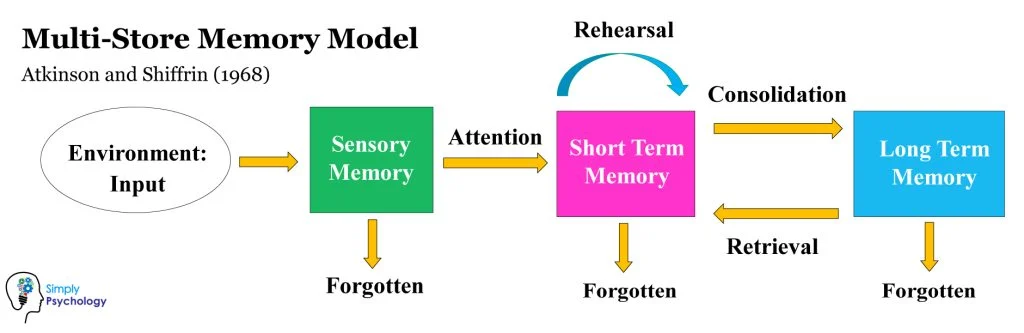
Sensory Memory-
Duration: between 0.25 seconds and 2 seconds.
Capacity: All sensory experience (v. larger capacity).
Coding: Sense specific (e.g. different stores for each sense).
Short Term Memory-
Duration: Information is held in short-term memory for a brief period, typically around 15 to 30 seconds, if it is not actively rehearsed.
Capacity: 7 +/- 2 items
Coding: mainly auditory or phonemic coding (meaning it’s coded based on sound).
Long Term Memory-
Duration: Unlimited (information in the LTM can potentially last a whole lifetime).
Capacity: Unlimited
Encoding: Mainly Semantic (based on what it means), but can be visual and auditory.
Evolutionary psychology; Darwin’s Evolutionary theory as applied to behaviour
Evolution is the gradual change in the inherited characteristics of a species over successive generations. Darwin proposed that evolution occurs through natural selection.
Phobias can be explained by evolution as adaptations because they helped our ancestors avoid threats so that they could survive and reproduce, E.g. spiders, snakes & heights.
Attachment to a primary caregiver is an adaptive behaviour because it increases an infants chances of survival.
Aggression can be explained as an adaptive behavior that evolved because it could increase an individuals chances of survival and reproductive success.
Albert Ellis’ ABC model to explain depression
Irrational thinking refers to unrealistic, illogical or extreme beliefs about ourselves, other people or situations.
The A stands for activating event which is the event or situation that happens to a person. E.g The student fails an important exam.
The B stands for beliefs which is the persons interpritation about the event. E.g "I'm stupid. I'll never achieve anything, and everyone will think I'm a failure."
The C stands for consequences which are the emotional or behavioural consquences resulting from those beliefs. E.g The student experiences low mood, hopelessness and low self-esteem and may withdraw from friends or stop studying.
According to this we should treat depression by challenging and changing irrational beliefs.
Sigmund Freud’s 1923 tripartite theory of personality
Sigmund Freud’s theory consisted of the Id (present from birth), the Ego (first 2-3yrs of life) and the Superego ( after age 5).
The Id seeks immediate satisfaction of basic desires and instincts and is entirely unconscious.
The Ego balances the demands of the id with reality and social expectations and is what we as humans are consciously aware of.
The Superego provides a sense of morality and tells us what is right and wrong and is mostly unconscious.
Abraham Maslow’s 1943 Hierarchy of needs
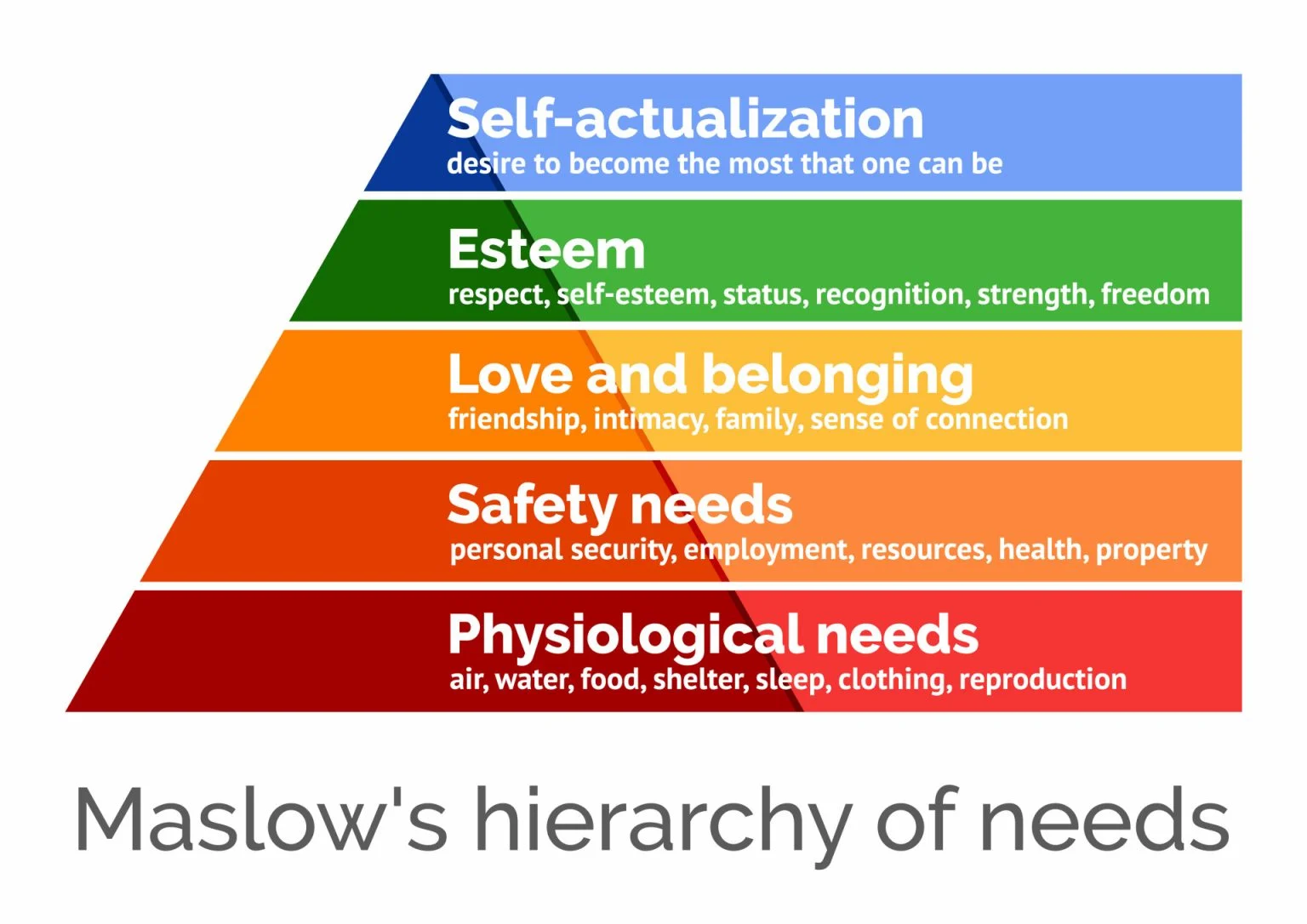
Stage | Definition | Example |
|---|---|---|
1. Physiological | Basic biological requirements needed to survive. | Food, water, oxygen, sleep and warmth. |
2. Safety | The need to feel secure, stable and protected from danger. | Having a safe home, financial security or protection from violence. |
3. Love & belonging | The need for relationships, affection and acceptance from others. | Friendships, family relationships and being part of a group. |
4. Esteem | The need to feel valued, respected and competent. | Receiving praise for an achievement or gaining recognition at school/work. |
5. Self-actualisation | The desire to fulfil your potential and achieve personal growth. | Pursuing a meaningful goal, developing your talents or being creative. |
The first four levels are know as deficienct needs and are physiological, saftey, love&belonging and esteem
David Cantor’s 1990 Data Driven (or ‘bottom up’) approach to offender profiling
It uses evidence from the crime scene to identify patterns in the offender's behaviour. E.g The location of offences, the victim's characteristics, the offender's behaviour during the crime and similarities between different offences.
Interpersonal coherence is the consistency between an offender's behaviour towards their victim and their behaviour in everyday interpersonal relationships.
Geographical profiling involves analysing the locations of crimes to make predictions about where an offender is likely to live or operate.