A. ANALYTICAL CHEMISTRY (copy)
 Call Kai
 Learn
Learn Practice Test
 Spaced Repetition
 Match
Match Flashcards
 Knowt Play
1/71

There's no tags or description
Looks like no tags are added yet.
Name | Mastery | Learn | Test | Matching | Spaced | Call with Kai | Chat |
|---|
No analytics yet
Send a link to your students to track their progress
72 Terms
a. QUALITATIVE ANALYSIS
Reveals the identity of the elements and compounds in a sample
a. QUALITATIVE ANALYSIS
b. QUANTITATIVE ANALYSIS
a. QUALITATIVE ANALYSIS
Presence or absence of a component
a. QUALITATIVE ANALYSIS
b. QUANTITATIVE ANALYSIS
a. QUALITATIVE ANALYSIS
Example: USP Identification Tests
a. QUALITATIVE ANALYSIS
b. QUANTITATIVE ANALYSIS
b. QUANTITATIVE ANALYSIS
Indicates the amount of each substance in the sample
a. QUALITATIVE ANALYSIS
b. QUANTITATIVE ANALYSIS
b. QUANTITATIVE ANALYSIS
Exact amount of preparation of preparation (% purity)
a. QUALITATIVE ANALYSIS
b. QUANTITATIVE ANALYSIS
b. QUANTITATIVE ANALYSIS
Example: Assays
a. QUALITATIVE ANALYSIS
b. QUANTITATIVE ANALYSIS
Ultramicro: < 1 mg
Micro: 1-10 mg
Semi-micro: 10-100 mg
Macro: 100-1000 mg
TYPES OF ANALYSIS Based on Quantity of Sample (4)
Proximate Analysis
Ultimate Analysis
TYPES OF ANALYSIS Based on Sample Desired (2)
Chemical
Biological
Physical
TYPES OF ANALYSIS Based on Materials used (3)
Classical Method
Instrumental Method
Miscellaneous Method
TYPES OF ANALYSIS Based on Nature of Method (3)
Ultramicro - <1 mg
Micro - 1-10 mg
Semi-micro - 10-100 mg
Macro - 100-1000 mg
TYPES OF ANALYSIS Based on Quantity of Sample
Ultramicro: _____ mg
Micro: _____ mg
Semi micro: _____ mg
Macro: _____ mg
a. Proximate Analysis
TYPES OF ANALYSIS Based on Sample Desired
Total amount of a group or class of compounds
a. Proximate Analysis
b. Ultimate Analysis
a. Proximate Analysis
TYPES OF ANALYSIS Based on Sample Desired
Total VO content of peppermint
a. Proximate Analysis
b. Ultimate Analysis
a. Proximate Analysis
TYPES OF ANALYSIS Based on Sample Desired
total alkaloid content of coffee bean
a. Proximate Analysis
b. Ultimate Analysis
a. Proximate Analysis
TYPES OF ANALYSIS Based on Sample Desired
Total glycoside content
a. Proximate Analysis
b. Ultimate Analysis
b. Ultimate Analysis
TYPES OF ANALYSIS Based on Sample Desired
Total amount of a single, specific compound
a. Proximate Analysis
b. Ultimate Analysis
b. Ultimate Analysis
TYPES OF ANALYSIS Based on Sample Desired
Total menthol content of peppermint
a. Proximate Analysis
b. Ultimate Analysis
b. Ultimate Analysis
TYPES OF ANALYSIS Based on Sample Desired
total caffeine content of coffee bean
a. Proximate Analysis
b. Ultimate Analysis
b. Ultimate Analysis
TYPES OF ANALYSIS Based on Sample Desired
Total digoxin content
a. Proximate Analysis
b. Ultimate Analysis
a. Chemical
TYPES OF ANALYSIS Based on Material Used:
Reagents
a. Chemical
b. Biological
c. Physical
b. Biological
live animals, MO
TYPES OF ANALYSIS Based on Material Used:
Living systems
a. Chemical
b. Biological
c. Physical
c. Physical
optical act- polarimeter
refractory index -abbe refractometers
TYPES OF ANALYSIS Based on Material Used:
Instruments
a. Chemical
b. Biological
c. Physical
b. Instrumental Method
c. Miscellaneous Method
a. Classical Method
TYPES OF ANALYSIS Based on Nature of Method:
Based on physical and chemical properties of analyte
Deals with crude drugs or natural products
Based on chemical reactions (stoichiometric)
Choices:
a. Classical Method
b. Instrumental Method
c. Miscellaneous Method
Spectrometry = b. Instrumental Method
Ash Content = c. Miscellaneous Method
Titrimetry = a. Classical Method
Acid Value = c. Miscellaneous Method
Chromatography = b. Instrumental Method
Gravimetry = a. Classical Method
TYPES OF ANALYSIS Based on Nature of Method:
Spectrometry
Ash Content
Titrimetry
Acid Value
Chromatography
Gravimetry
Choices:
a. Classical Method
b. Instrumental Method
c. Miscellaneous Method
d. Accuracy
[ANALYTAL METHOD PARAMETERS]
The analytical parameter referring to the closeness of an actual value to the theoretical or true value
a. Precision
b. Specificity
c. Sensitivity
d. Accuracy
c. Accuracy
[ANALYTAL METHOD PARAMETERS]
The analytical parameter expressed as the error in analysis
a. Precision
b. Robustness
c. Accuracy
d. Specificity
a. Precision
[ANALYTAL METHOD PARAMETERS]
The analytical parameter referring to the closeness of the actual values of two or more test results to each other
a. Precision
b. Robustness
c. Accuracy
d. Specificity
c. Precision
Ex: 180 + 20 mg → range: 160 mg-200 mg
[ANALYTAL METHOD PARAMETERS]
The analytical parameter expressed as standard deviation
a. Accuracy
b. Robustness
c. Precision
d. Sensitivity
a. Robustness
[ANALYTAL METHOD PARAMETERS]
The analytical parameter defined as the capacity to remain unaffected by deliberate variations in methods
a. Robustness
b. Accuracy
c. Sensitivity
d. Specificity
c. Change in temperature in HPLC
[ANALYTAL METHOD PARAMETERS]
An example of a deliberate variation tested in Robustness
a. Change in sample size
b. Change in analyst
c. Change in temperature in HPLC
d. Change in equipment brand
d. Specificity
[ANALYTAL METHOD PARAMETERS]
The analytical parameter defined as the ability to assess the analyte in the presence of other substances
a. Sensitivity
b. Robustness
c. Accuracy
d. Specificity
b. Impurities, degradation products, and excipients
[ANALYTAL METHOD PARAMETERS]
The substances that a specific analytical method must NOT detect
a. The active pharmaceutical ingredient only
b. Impurities, degradation products, and excipients
c. Degradation products and the API
d. Excipients and the API
a. Sensitivity
[ANALYTAL METHOD PARAMETERS]
The analytical parameter defined as the ability to discriminate between small differences in analyte concentration
a. Sensitivity
b. Robustness
c. Accuracy
d. Specificity
c. Analytical Balance (4 decimal places)
[ANALYTAL METHOD PARAMETERS]
The instrument cited as an example of high Sensitivity in analytical testing
a. Vernier Caliper
b. Pycnometer
c. Analytical Balance (4 decimal places)
d. Abbe Refractometer
Reproducibility
Intermediate Precision
Repeatability
[ANALYTAL METHOD PARAMETERS]
Types of precision (3)
d. Repeatability
[ANALYTAL METHOD PARAMETERS]
The type of precision under the same operating conditions over a short period of time
a. Reproducibility
b. Intermediate Precision
c. Specificity
d. Repeatability
c. Intra-assay precision
[ANALYTAL METHOD PARAMETERS]
The other term for Repeatability
a. Inter-laboratory precision
b. Inter-assay precision
c. Intra-assay precision
d. Intra-laboratory precision
b. Intermediate Precision
[ANALYTAL METHOD PARAMETERS]
The type of precision under the same laboratory but with different analysts, apparatuses, and days
a. Repeatability
b. Intermediate Precision
c. Specificity
d. Reproducibility
d. Within-laboratory precision
[ANALYTAL METHOD PARAMETERS]
The other term for Intermediate Precision
a. Inter-laboratory precision
b. Intra-assay precision
c. Inter-assay precision
d. Within-laboratory precision
c. Reproducibility
[ANALYTAL METHOD PARAMETERS]
The type of precision that expresses variation between laboratories
a. Repeatability
b. Intermediate Precision
c. Reproducibility
d. Robustness
c. Inter-laboratory precision
[ANALYTAL METHOD PARAMETERS]
The other term for Reproducibility
a. Intra-assay precision
b. Within-laboratory precision
c. Inter-laboratory precision
d. Intra-laboratory precision
c. E = |X1 − X2|
Where:
o X1 = Actual Value
o X2 = True Value
[ANALYTICAL METHOD PARAMETERS]
The formula used to calculate Absolute Error
a. E = X1 + X2
b. E = X1 / X2
c. E = |X1 − X2|
d. E = (X1 − X2) / X2 × 100
a. ER = |X1 − X2| / X2 × 100
Where:
o X1 = Actual Value
o X2 = True Value
[ANALYTICAL METHOD PARAMETERS]
The formula used to calculate Relative Error
a. ER = |X1 − X2| / X2 × 100
b. ER = |X1 + X2| / X2 × 100
c. ER = |X1 − X2| × 100
d. ER = |X1 − X2| / X1 × 100
d. Absolute Error cannot determine whether the error is large or small without context
[ANALYTICAL METHOD PARAMETERS]
The reason Relative Error is used instead of Absolute Error
a. Relative Error is easier to calculate
b. Absolute Error cannot be determined mathematically
c. Relative Error does not require the true value
d. Absolute Error cannot determine whether the error is large or small without context
c. 20 mg
actual layo ng result sa totoong value
hindi ma determine kung malakai ba yung 20 mg error kaya need % (Relative Error)
[ANALYTICAL METHOD PARAMETERS]
Given X1 = 180 mg and X2 = 200 mg, what is the Absolute Error?
a. 10 mg
b. 380 mg
c. 20 mg
d. 0.1 mg
b. 10%
layo ng result sa totoong value
[ANALYTICAL METHOD PARAMETERS]
Given X1 = 180 mg and X2 = 200 mg, what is the Relative Error?
a. 15%
b. 10%
c. 1%
d. 20%
a. Accurate, not precise
closeness to true value
[ANALYTICAL METHOD PARAMETERS]

a. Accurate, not precise
b. Precise, not accurate
c. Accurate and precise
d. Not accurate, not precise
b. Precise, not accurate
close to each other
[ANALYTICAL METHOD PARAMETERS]

a. Accurate, not precise
b. Precise, not accurate
c. Accurate and precise
d. Not accurate, not precise
a. Accurate, not precise
[ANALYTICAL METHOD PARAMETERS]
BEQ: random error
a. Accurate, not precise
b. Precise, not accurate
c. Accurate and precise
d. Not accurate, not precise
b. Precise, not accurate
[ANALYTICAL METHOD PARAMETERS]
Systemic error
a. Accurate, not precise
b. Precise, not accurate
c. Accurate and precise
d. Not accurate, not precise
c. Accurate and precise
[ANALYTICAL METHOD PARAMETERS]

a. Accurate, not precise
b. Precise, not accurate
c. Accurate and precise
d. Not accurate, not precise
d. Not accurate, not precise
[ANALYTICAL METHOD PARAMETERS]
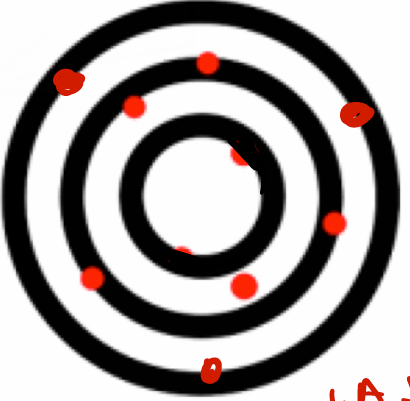
a. Accurate, not precise
b. Precise, not accurate
c. Accurate and precise
d. Not accurate, not precise
a. RANDOM ERROR
difficult to determine error
[ERRORS IN ANALYSIS]
Indeterminate Error
a. RANDOM ERROR
b. SYSTEMATIC ERROR
a. RANDOM ERROR
[ERRORS IN ANALYSIS]
Affects precision
a. RANDOM ERROR
b. SYSTEMATIC ERROR
a. RANDOM ERROR
[ERRORS IN ANALYSIS]
Small differences in measurements which cannot be identified
a. RANDOM ERROR
b. SYSTEMATIC ERROR
a. RANDOM ERROR
[ERRORS IN ANALYSIS]
Difficult to eliminate
a. RANDOM ERROR
b. SYSTEMATIC ERROR
a. RANDOM ERROR
not precise
[ERRORS IN ANALYSIS]
Quantifiable through std deviation
a. RANDOM ERROR
b. SYSTEMATIC ERROR
b. SYSTEMATIC ERROR
[ERRORS IN ANALYSIS]
Determinate Error
a. RANDOM ERROR
b. SYSTEMATIC ERROR
b. SYSTEMATIC ERROR
[ERRORS IN ANALYSIS]
Affects accuracy
a. RANDOM ERROR
b. SYSTEMATIC ERROR
b. SYSTEMATIC ERROR
[ERRORS IN ANALYSIS]
Has definite value, or assignable cause
a. RANDOM ERROR
b. SYSTEMATIC ERROR
b. SYSTEMATIC ERROR
[ERRORS IN ANALYSIS]
Can be eliminated
a. RANDOM ERROR
b. SYSTEMATIC ERROR
b. SYSTEMATIC ERROR
not accurate
[ERRORS IN ANALYSIS]
Quantifiable by difference between mean and true value
a. RANDOM ERROR
b. SYSTEMATIC ERROR
1. Instrumental Errors
2. Methodological Errors
3. Personal / Operative Errors
SOURCES OF SYSTEMATIC ERRORS (3)
d. Instrumental Errors
[SOURCES OF SYSTEMATIC ERRORS]
The source of systematic error due to imperfection in measuring devices or use of instruments under inappropriate conditions
a. Personal Errors
b. Methodological Errors
c. Random Errors
d. Instrumental Errors
c. Acid or Alkali error
[SOURCES OF SYSTEMATIC ERRORS]
An example of Instrumental Error in analytical testing
a. Lack of specificity of reagents
b. Bias or prejudice of the analyst
c. Acid or Alkali error
d. Low purity of reagents
a. Calibration
[SOURCES OF SYSTEMATIC ERRORS]
The method used to correct Instrumental Errors
a. Calibration
b. Self-discipline
c. Standardization
d. Blank determination
c. Methodological Errors
[SOURCES OF SYSTEMATIC ERRORS]
The source of systematic error due to non-ideal chemical or physical behavior of reagents and reactions
a. Instrumental Errors
b. Personal Errors
c. Methodological Errors
d. Random Errors
b. Low purity of reagents
d. Lack of specificity of some reagents
[SOURCES OF SYSTEMATIC ERRORS]
(multiple answers)
An example of Methodological Error in analytical testing
a. Acid or Alkali error
b. Low purity of reagents
c. Imperfection in measuring device
d. Lack of specificity of some reagents
c. Blank determination or standardization
[SOURCES OF SYSTEMATIC ERRORS]
The method used to correct Methodological Errors
a. Calibration
b. Self-discipline
c. Blank determination or standardization
d. Repeat procedure
d. Personal or Operative Errors
[SOURCES OF SYSTEMATIC ERRORS]
The source of systematic error due to carelessness, inattention, or personal limitations of the analyst
a. Methodological Errors
b. Instrumental Errors
c. Random Errors
d. Personal or Operative Errors
c. Bias or prejudice
[SOURCES OF SYSTEMATIC ERRORS]
An example of Personal or Operative Error in analytical testing
a. Acid or Alkali error
b. Low purity of reagents
c. Bias or prejudice
d. Imperfection in measuring device
a. Self-discipline
[SOURCES OF SYSTEMATIC ERRORS]
The method used to correct Personal or Operative Errors
a. Self-discipline
b. Blank determination
c. Standardization
d. Calibration