BIO220 Lecture Exam 3 (Ch 7,8,9)
 Call Kai
 Learn
Learn Practice Test
 Spaced Repetition
 Match
Match Flashcards
 Knowt Play
1/117

There's no tags or description
Looks like no tags are added yet.
Name | Mastery | Learn | Test | Matching | Spaced | Call with Kai | Chat |
|---|
No analytics yet
Send a link to your students to track their progress
118 Terms
Most common elements (6) of living things
CHNOPS (carbon, hydrogen, nitrogen, oxygen, phosphorus, sulfur)
-used to make organic macromolecules: carbohydrates, proteins, lipids and nucleic acids
Essential nutrients
Nutrients necessary for normal body functioning that must be obtained from food.
Two categories: macronutrients & micronutrients
Macronutrients
-required in large quantities; play principal roles in cell structure and metabolism
•Proteins, carbohydrates, lipids
Micronutrients (trace elements)
-required in small amounts; involved in enzyme function and maintenance of protein structure
•Manganese, zinc, nickel (vitamins and minerals)
Organic nutrients
contain carbon & hydrogen atoms and are usually the products of living things
-Methane (CH4), carbohydrates, lipids, proteins, and nucleic acids
Inorganic nutrients
-atom or molecule that contains a combination of atoms other than carbon and hydrogen
-Metals and their salts (magnesium sulfate, ferric nitrate, sodium phosphate), gases (oxygen, carbon dioxide) and water
Carbohydrates
macromolecules that contain carbon, hydrogen, and oxygen in a 1:2:1 ratio (ex: glucose C6H12O6)
-CHO
Proteins
macromolecules that contain carbon, hydrogen, oxygen, nitrogen & sometimes sulfur
-CHONS
Nucleic Acids
macromolecules that contain carbon, hydrogen, oxygen, nitrogen & phosphorus
-CHNOP
Lipids (fats)
macromolecules that contain mostly carbon & hydrogen with very little oxygen and sometimes phosphorous and nitrogen
-CHO NP
Heterotroph
organism that must obtain carbon in an organic form made by other living organisms (organic molecules like proteins, carbohydrates, lipids & nucleic acids)
Autotroph
organism that obtains carbon from CO2 (inorganic gas)
Main/largest reservoir of nitrogen
nitrogen gas (N2) in the atmosophere
fixation
To "fix" an element means that an organism converts it from a form that is not usable to organisms to a form that is usable to that organism and others.
Main/largest inorganic reservoir of hydrogen
water & H2 gas
Growth factors
organic chemicals that cannot be synthesized by certain organisms (Vitamins, Essential Amino Acids)
nutritional types
determined by where organisms get their carbon and energy
chemotroph
gain energy from chemical compounds/molecules
Phototroph
an organism that gets its energy from sunlight through photosynthesis
Chemoheterotroph
organism that must take in organic molecules for both energy and carbon
two categories: saprobes & parasites
Saprobe
free-living microorganisms that feed on organic detritus from dead organisms
parasites
organisms that live on or in a host and cause it harm
diffusion
Movement of molecules from an area of higher concentration to an area of lower concentration.
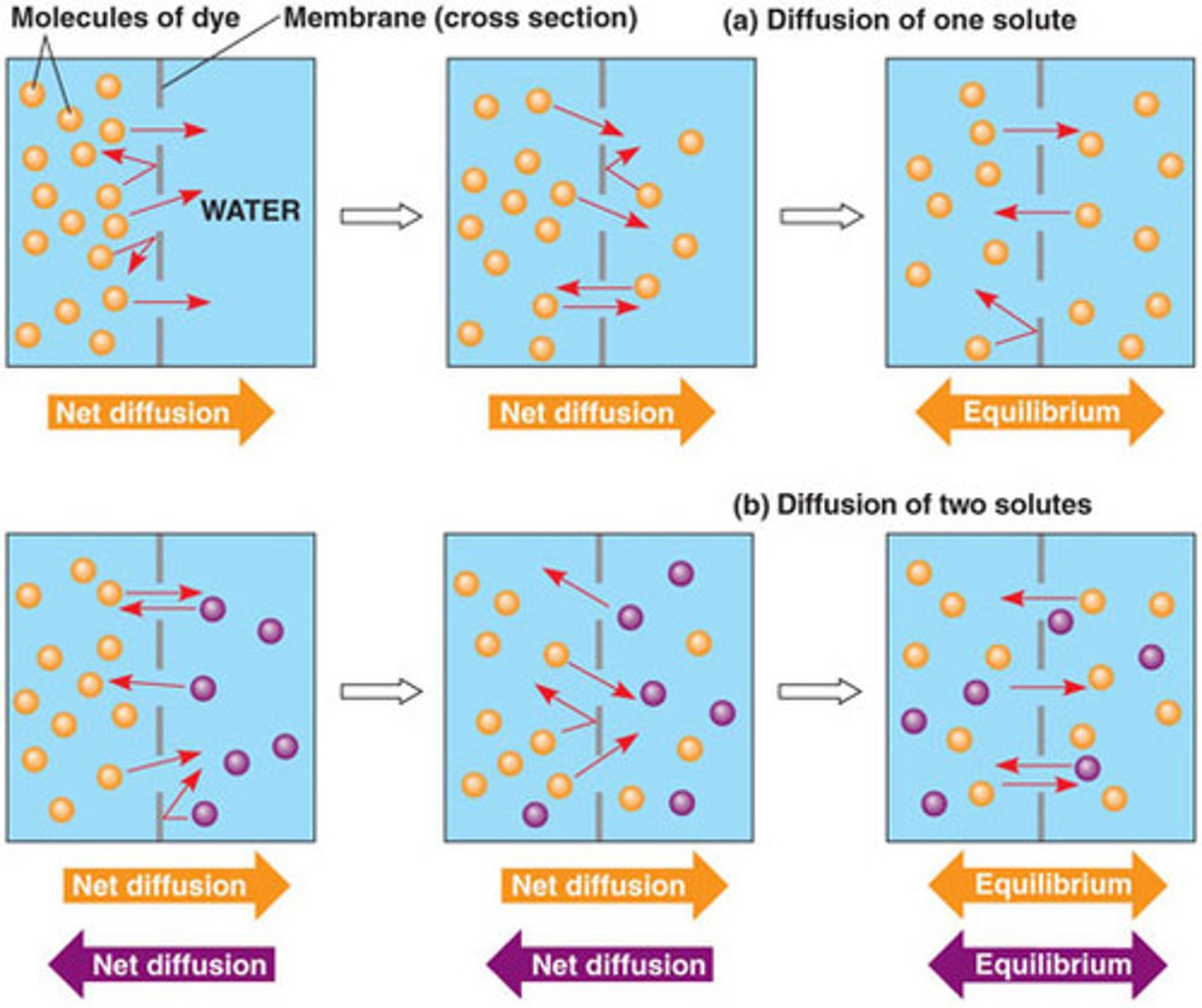
passive transport
Requires NO energy, Movement of molecules from high to low concentration, Moves with the concentration gradient
-diffusion, osmosis & facilitated diffusion
osmosis
Passive transport - Diffusion of water through a selectively permeable membrane (high to low concentration)
(remember Particle Party - water will move towards the area with the most solute particles (party) to reach equilibrium)
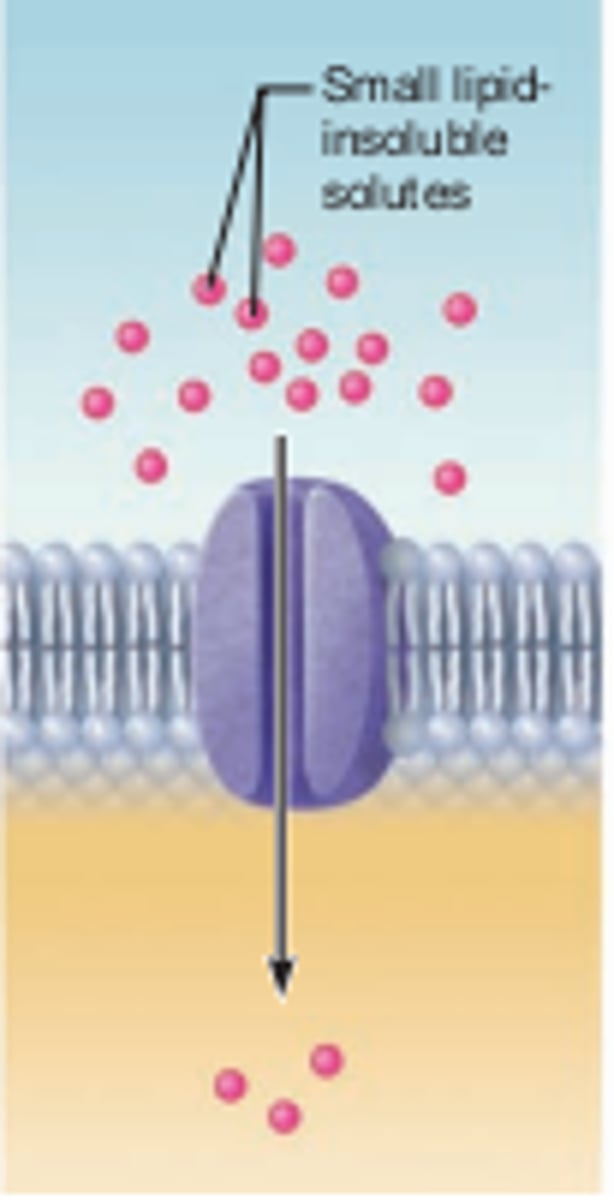
facilitated diffusion
Passive transport - requires a carrier/transport protein (but NO energy required) (from high to low concentration)
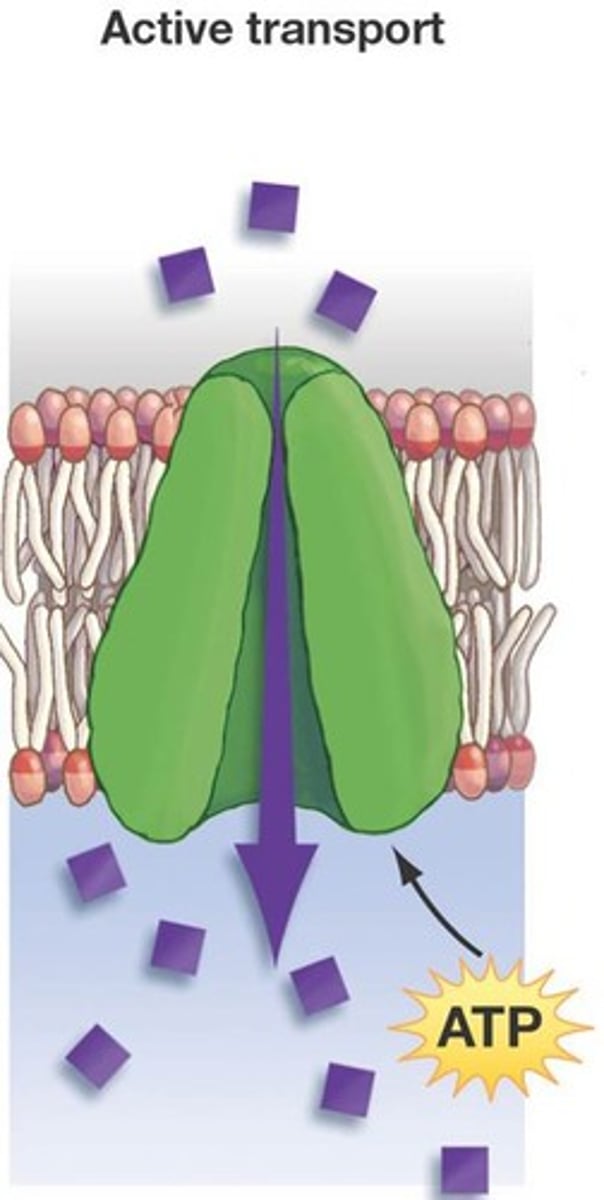
active transport
Energy-requiring process that moves material across a cell membrane against a concentration gradient (from low to high concentration)
- active transport, group translocation, bulk transport
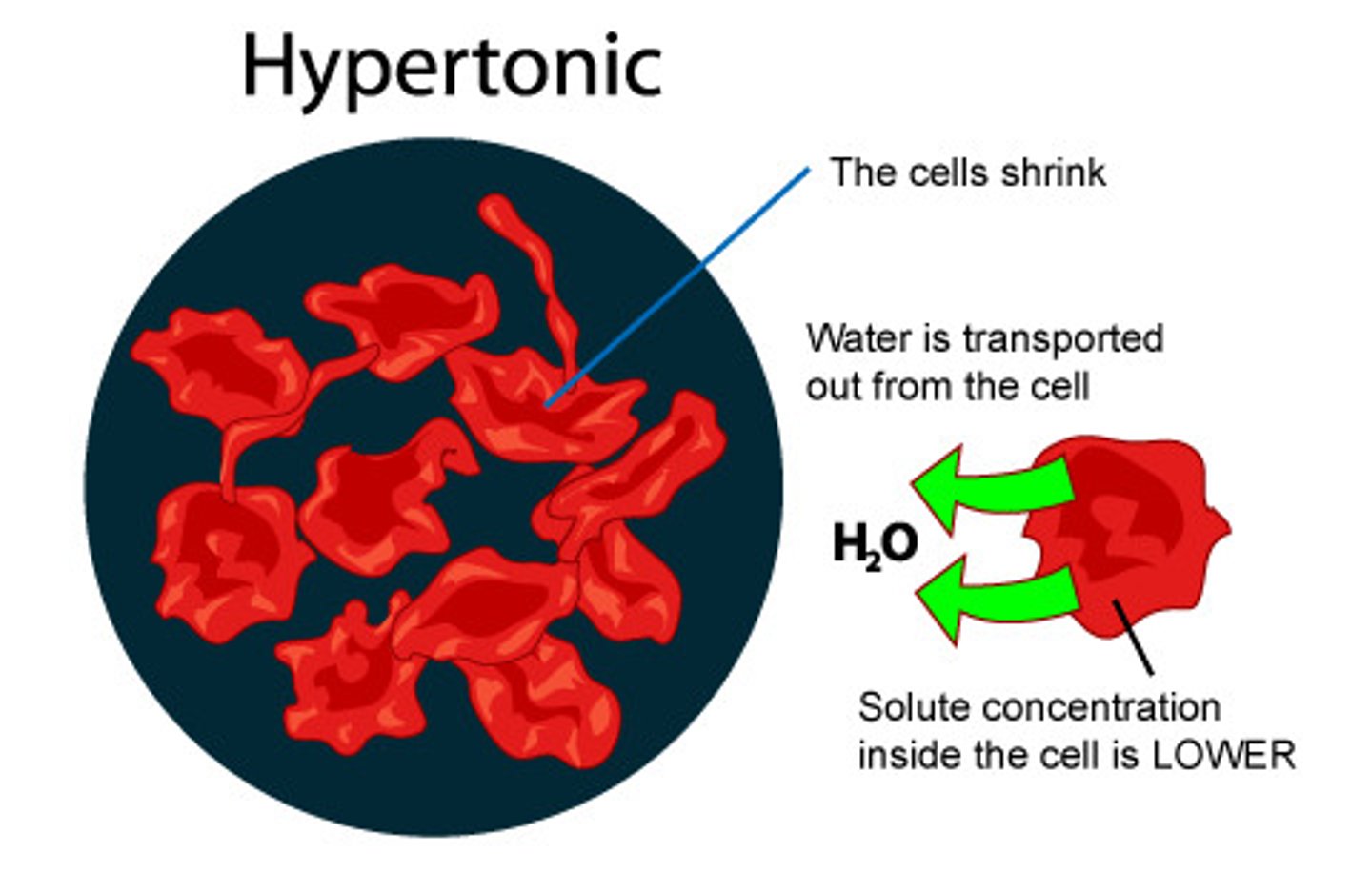
hypertonic solution
Solute concentration is greater than that inside the cell; cell loses water/shrinks
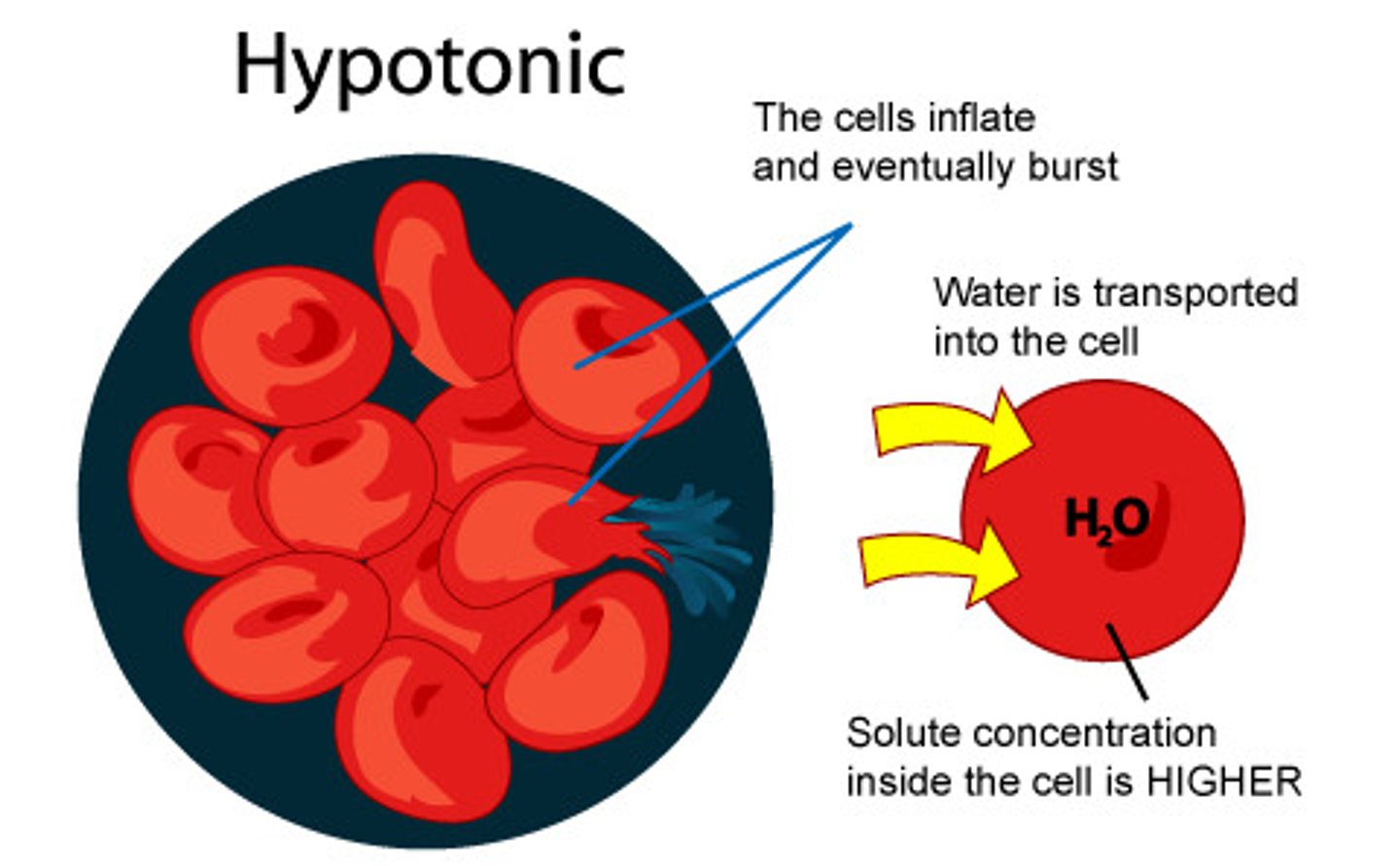
hypotonic solution
Solute concentration is less than that inside the cell; cell gains water/swells & may burst
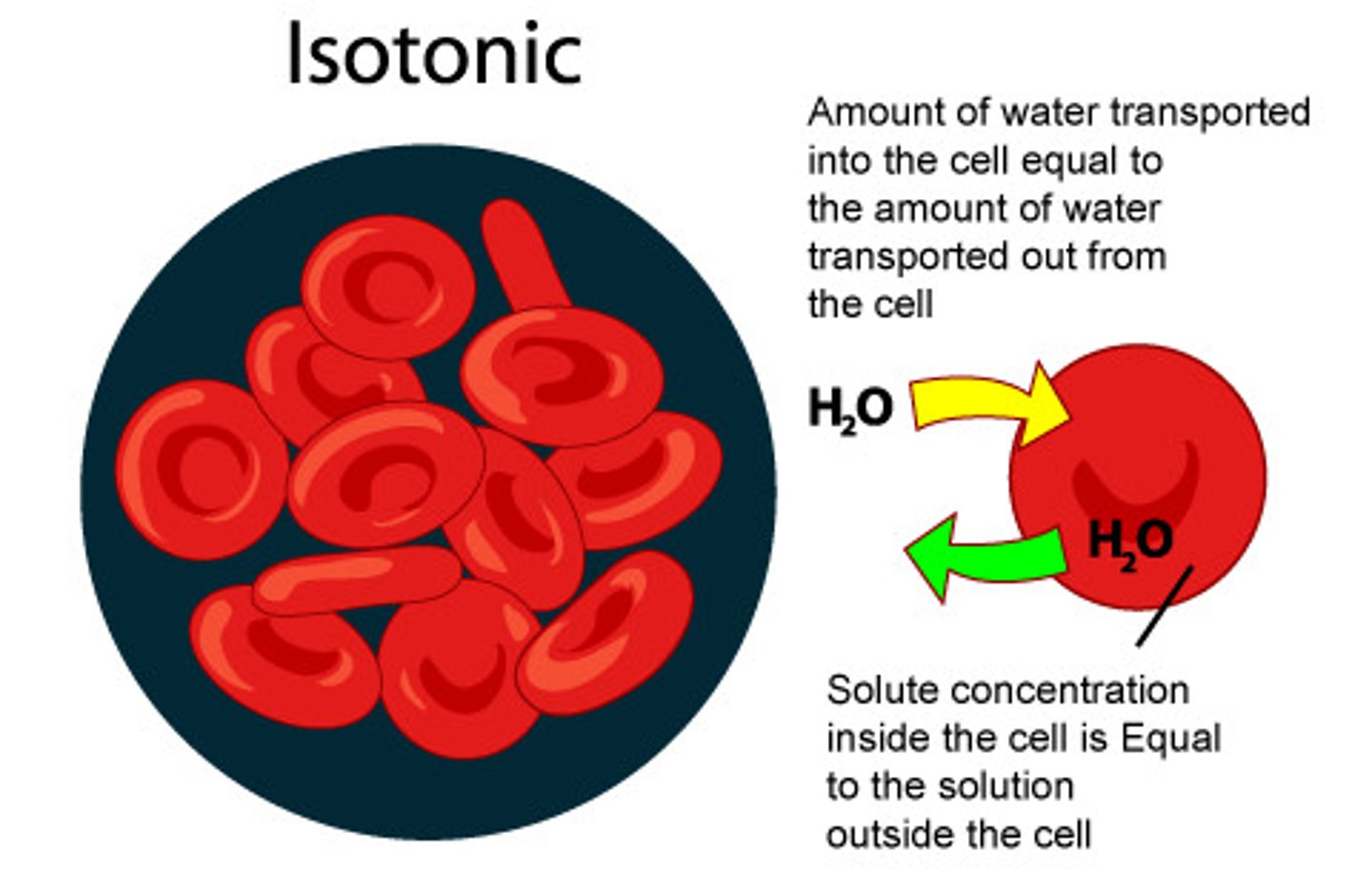
isotonic solution
a solution whose solute concentration is equal to the solute concentration inside a cell
Environmental factors that influence microbes
Temperature
Oxygen requirements
pH
Osmotic pressure
Barometric pressure
Psychrophiles
- below 15 degrees C
Mesophiles
temperature 20-40 degrees C; (human body temperature is optimal)
Thermophiles
- optimum temperature greater than 45 degrees C
- ex. Archaea "extremophiles"
aerobe
aer="air", utilizes oxygen and can detoxify it
obligate aerobe
organism that requires a constant supply of oxygen in order to grow/live
facultative anaerobe
An organism that makes ATP by aerobic respiration if oxygen is present but that switches to anaerobic respiration or fermentation if oxygen is not present.
microaerophilic
requires only a small amount of oxygen
anaerobe
does not utilize oxygen (any organism that is able to live without oxygen)
obligate anaerobe
lacks the enzymes to detoxify oxygen so cannot survive in an oxygen environment
aerotolerant anaerobes
do not utilize oxygen but can survive and grow in its presence
capnophile
grows best at higher CO2 tensions than normally present in the atmosphere
acidophile
an organism that grows best at low pH; typically below pH 6
obligate acidophiles
grow at extreme acid pH (very low pH)
alkalinophiles
grow at extreme alkaline pH (very high pH)
halophiles
require a high concentration of salt
osmotolerant
do not require high concentration of salt/solute but can tolerate it when it occurs
barophiles
can survive under extreme pressure and will rupture if exposed to normal atmospheric pressure
Mutualism
symbiotic relationship in which both species benefit from the relationship
Commensalism
symbiotic relationship in which one organism benefits and the other is unaffected
Parasitism
symbiotic relationship in which one organism benefits and the other is harmed
Synergistic Relationship/Synergism
non-symbiotic relationship, but members cooperate to produce a result that benefits all
Antagonistic Relationship/Antagonism
non-symbiotic relationship, actions of one organism affect or harm the success or survival of others in the same community
biofilms
microbes living and working together on a surface
quorum sensing
The ability of bacteria to sense the presence of other bacteria via secreted chemical signals.
-sense how many others are around them
Biofilm establishment
Microbes:
1. attach to a surface
2. secrete glycocalyx
3. perform quorum sensing
4. become in sync genetically
5. secrete digestive enzymes & harvest food in unison
binary fission
type of asexual reproduction in which an organism replicates its DNA and divides in half, producing two identical daughter cells
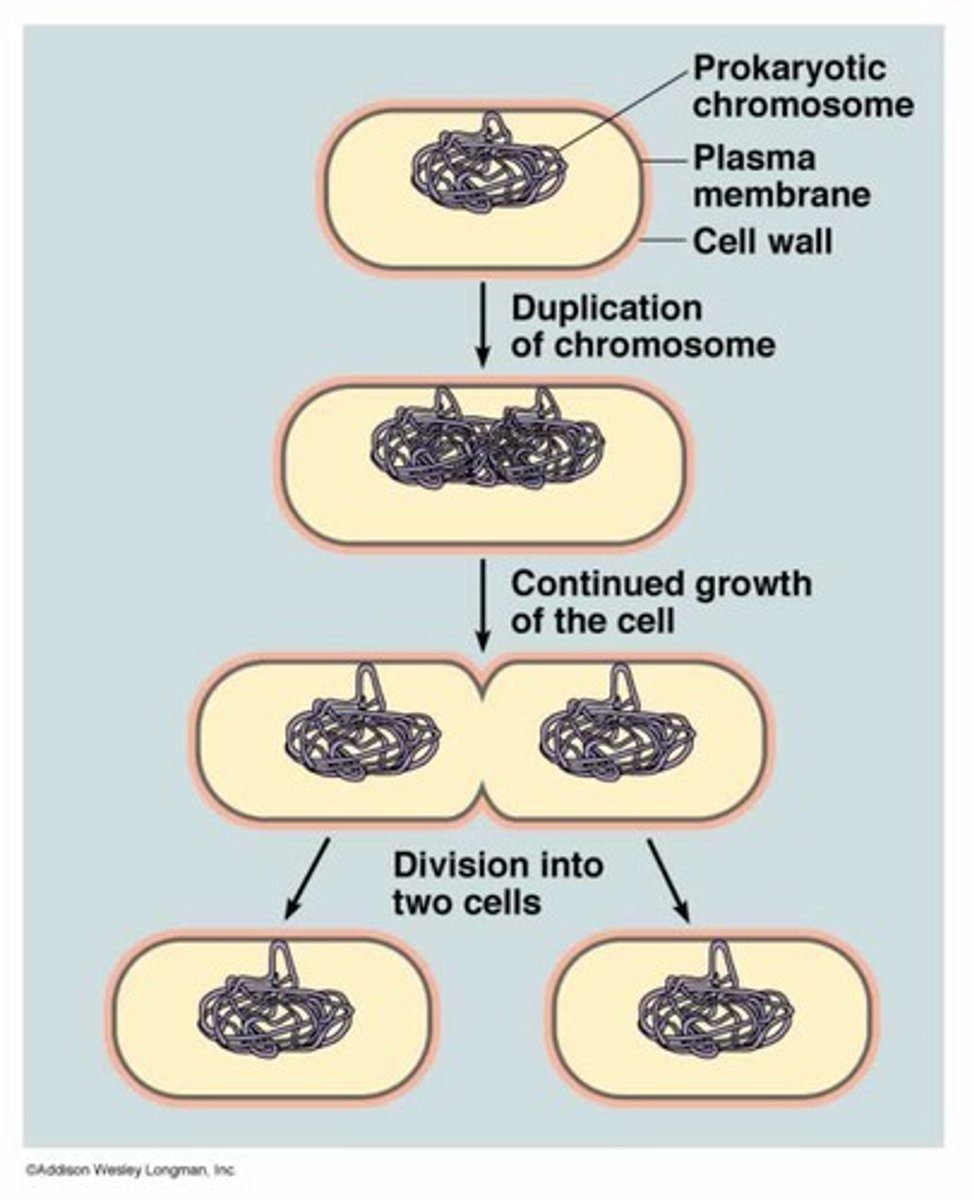
generation time (doubling time)
the time it takes for a complete fission cycle (time it takes for microbial population to double in number)
-examples: E.coli = 20 minutes, Staph. aureus = 30 minutes
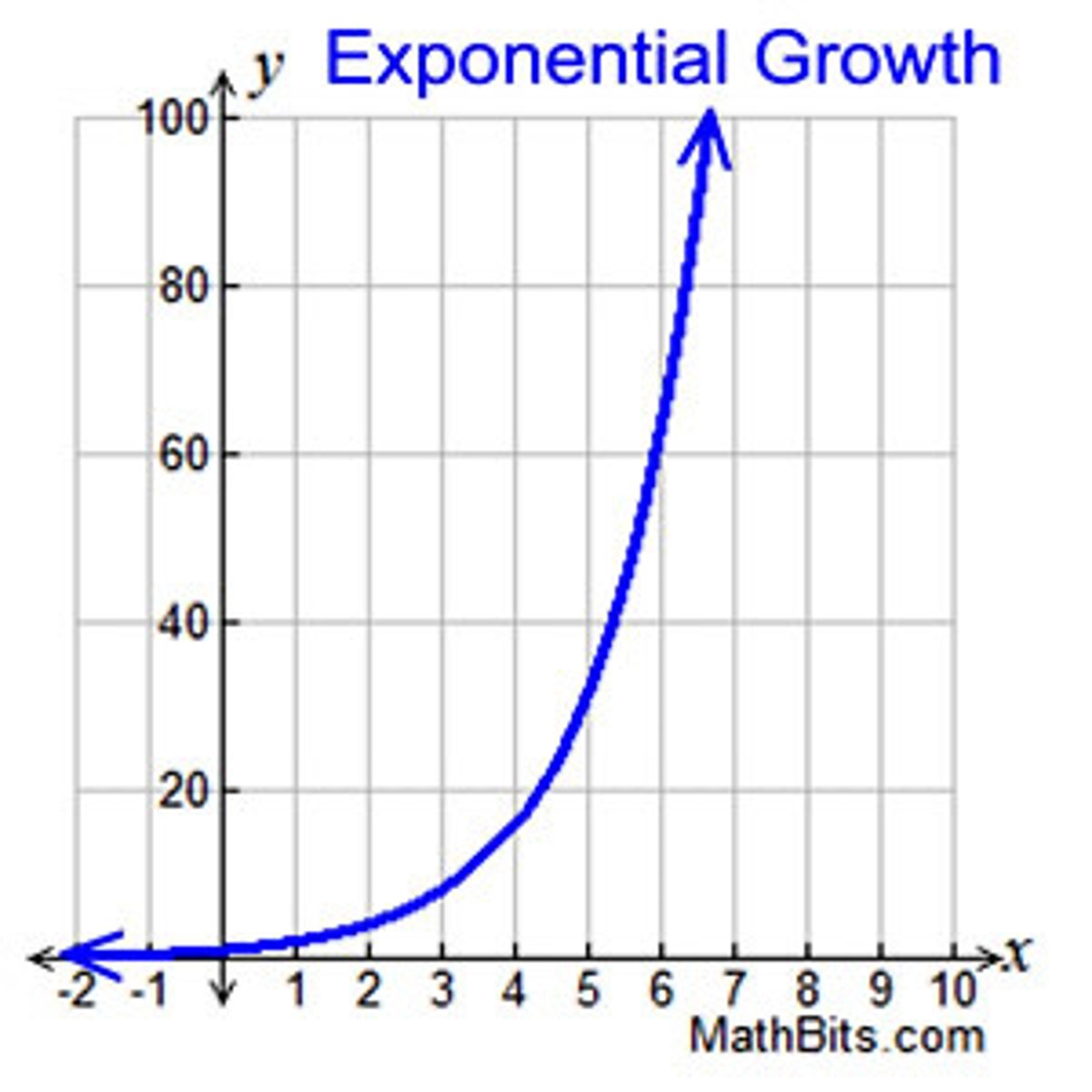
exponential growth
Growth pattern in which the individuals in a population reproduce at a constant rate
Each new fission cycle increases the population by a factor of 2
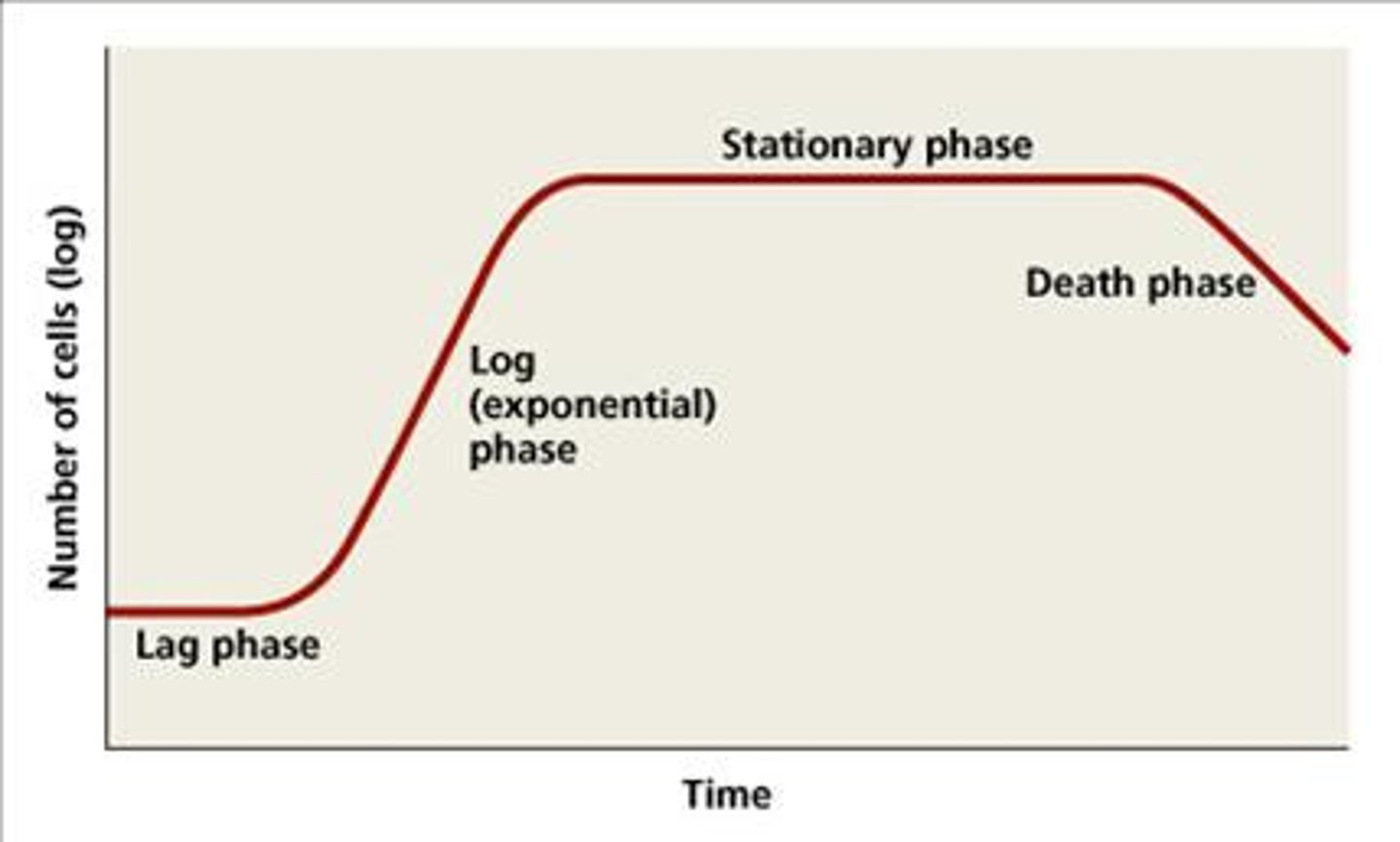
Lag phase (population growth curve)
"flat" period of adjustment, enlargement; little growth
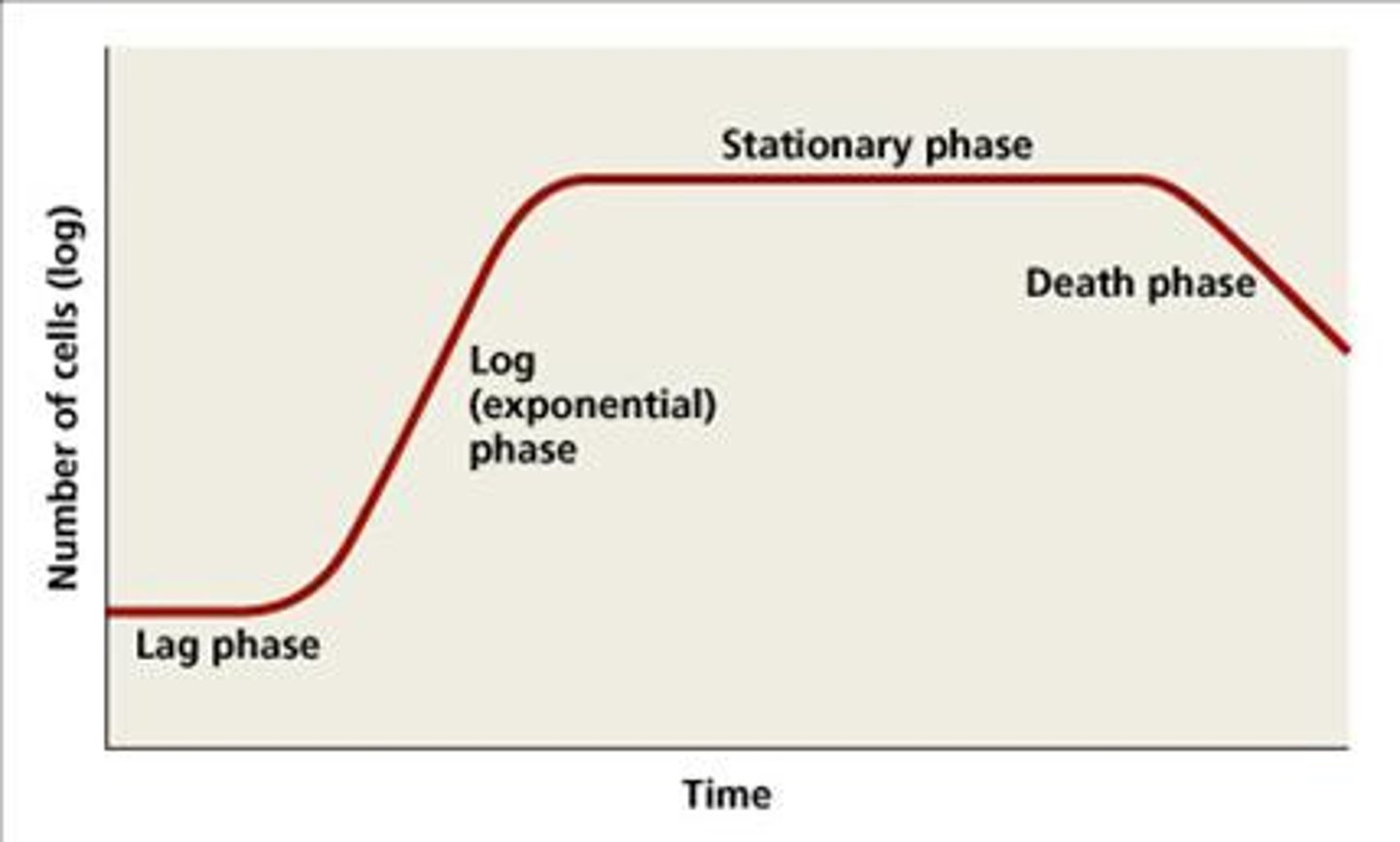
Exponential growth phase (population growth curve)
a period of maximum growth will continue as long as cells have adequate nutrients and a favorable environment
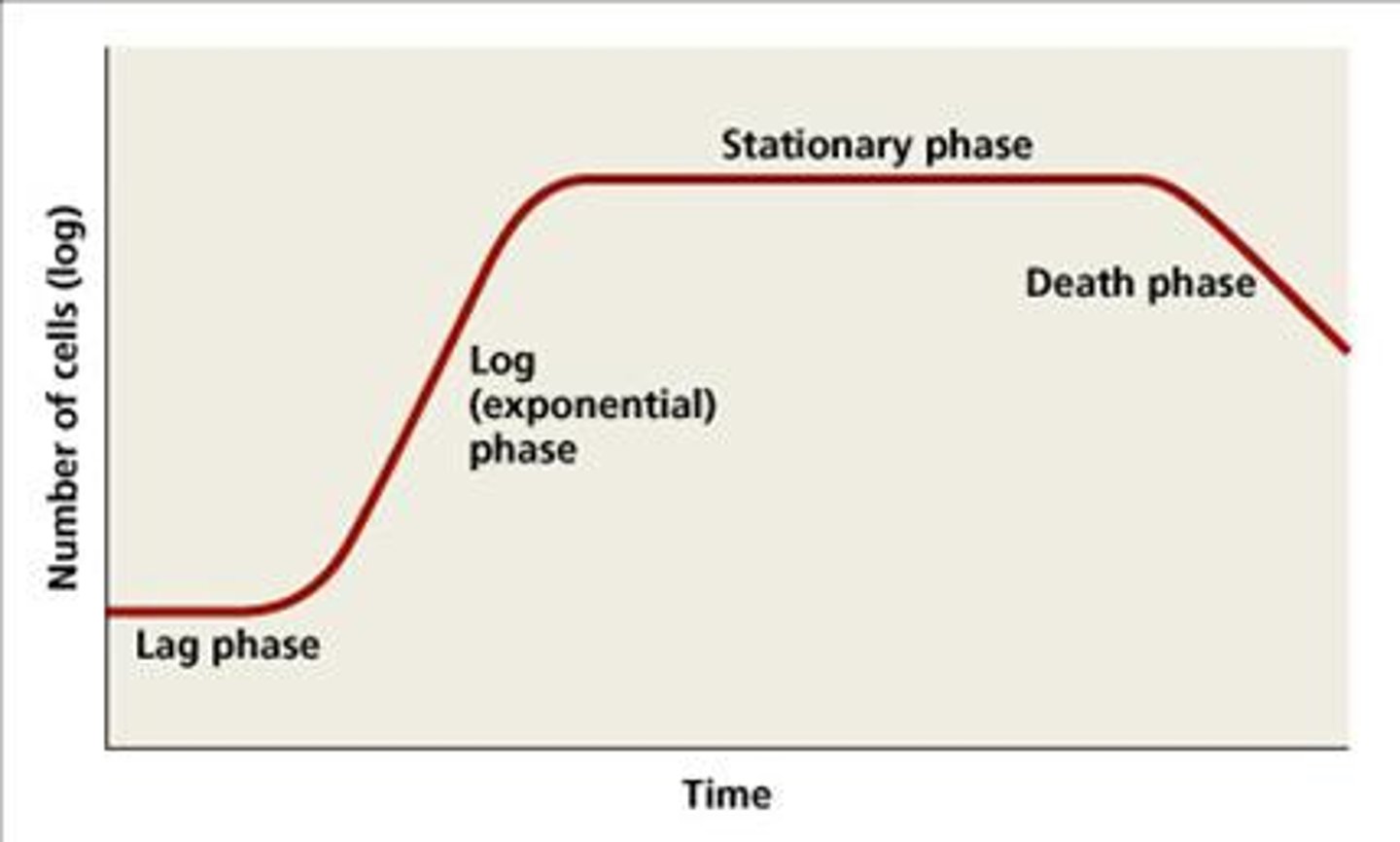
Stationary phase (population growth curve)
rate of cell growth equals rate of cell death caused by depleted nutrients and O2, excretion of organic acids and pollutants
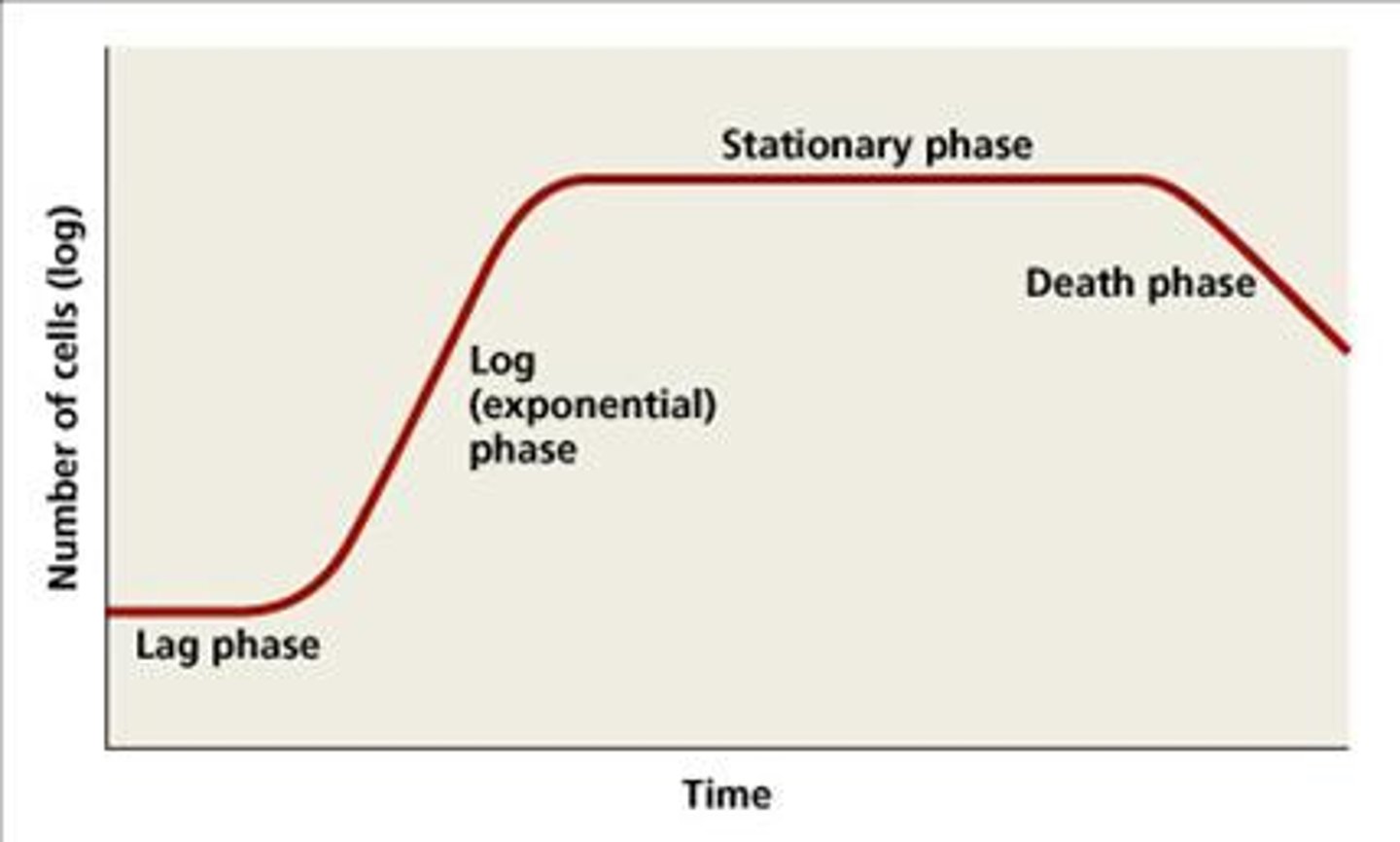
Death phase (population growth curve)
as limiting factors intensify, cells die exponentially
Three Methods of Analyzing Population Growth
-Turbidity
- Viable colony count
-Direct cell count
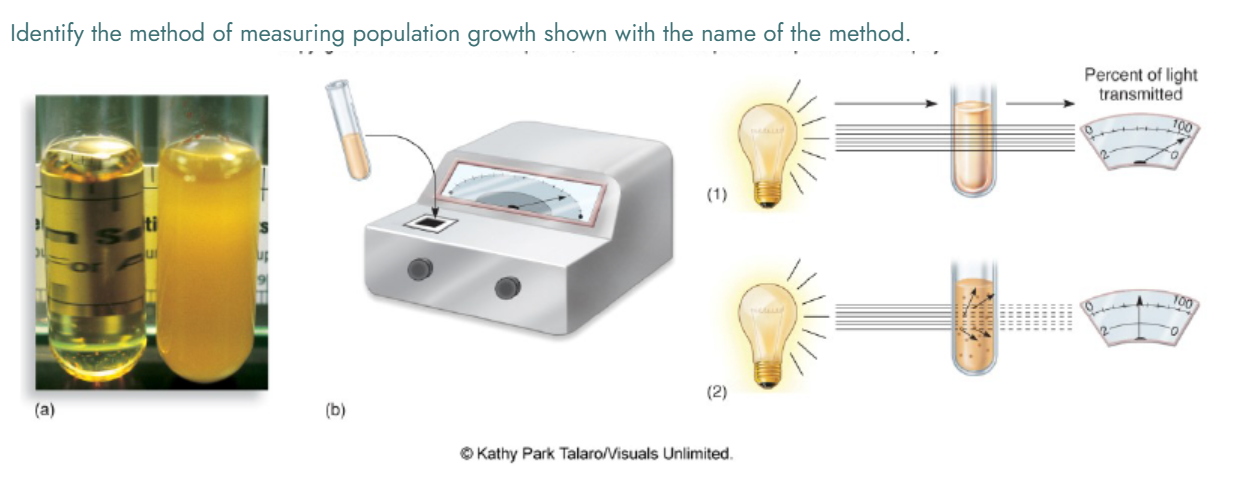
Turbidity
degree of cloudiness; reflects the relative population size
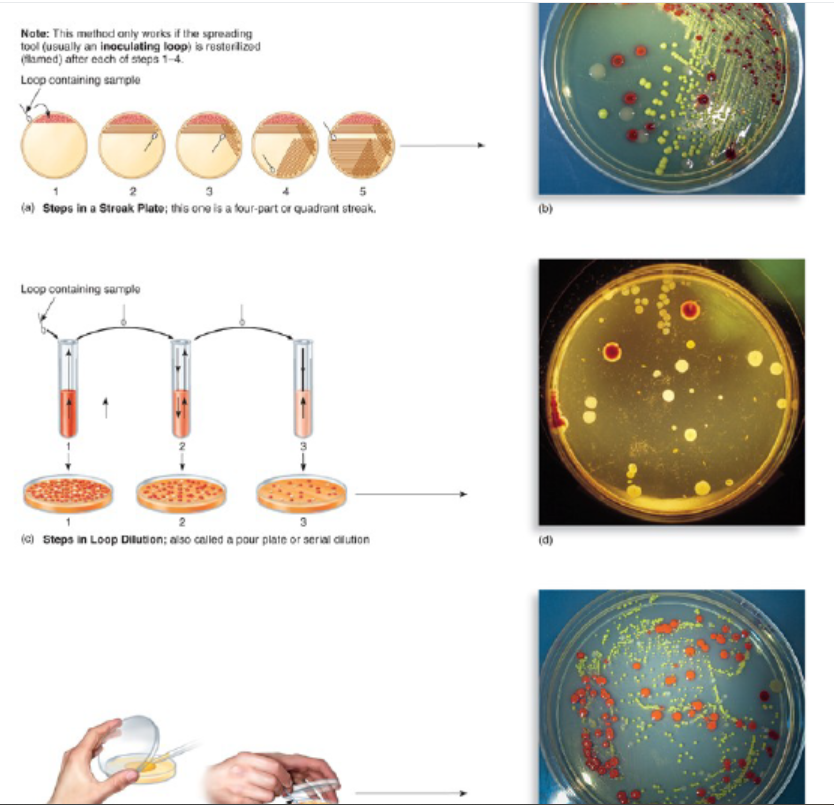
viable colony count
spreading samples on plates, then counting the colonies that grow; counts only live cells
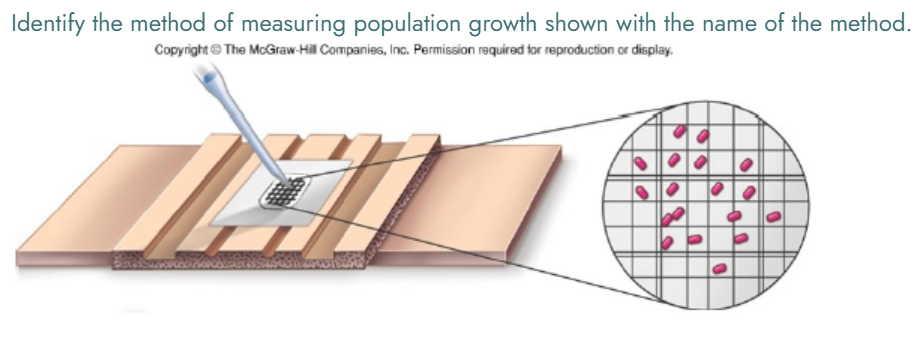
direct cell count
count all cells present; automated or manual
enzyme
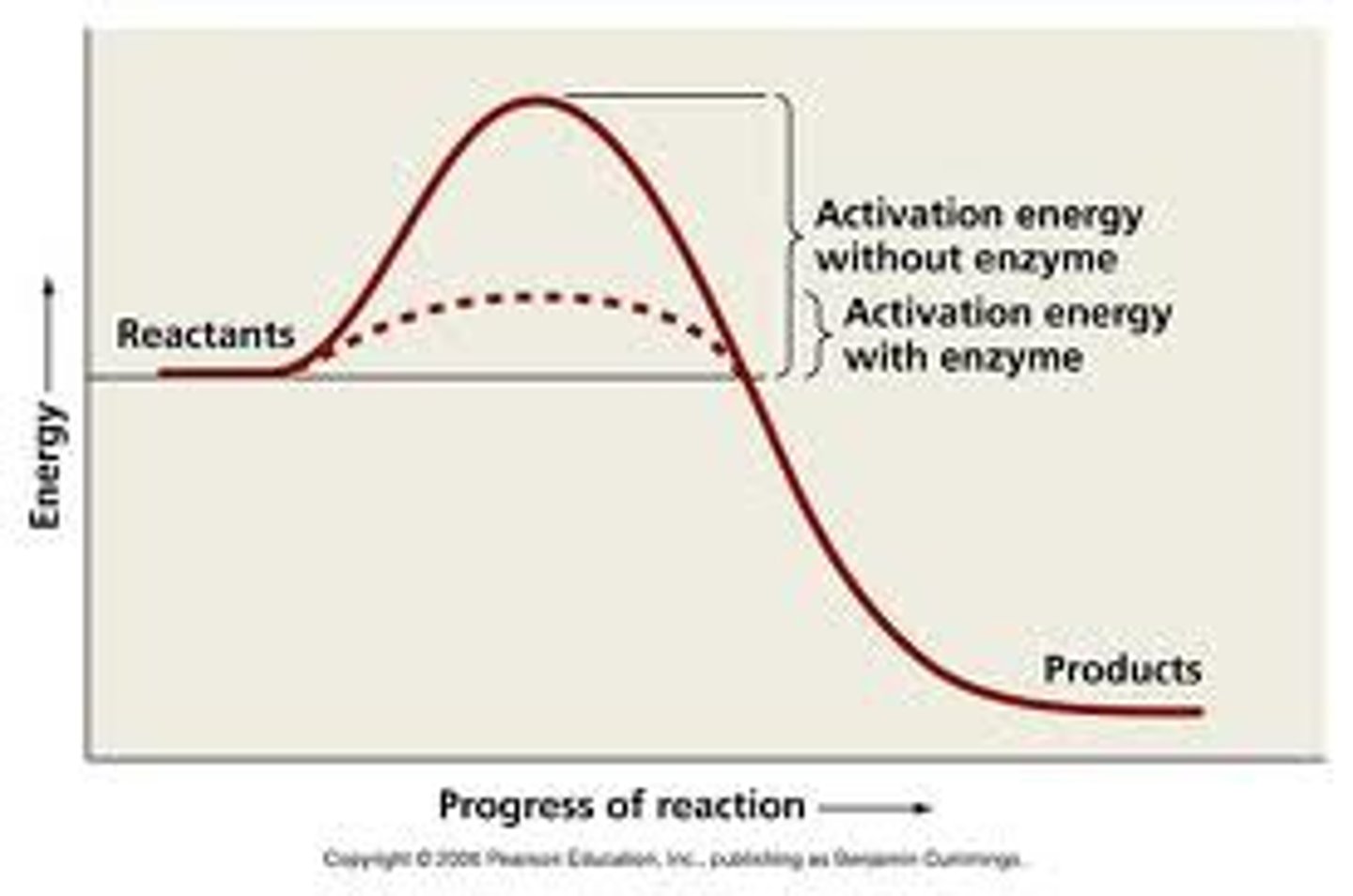
A type of protein that acts as a biological catalyst to speed up (catalyze) chemical reactions in a living thing; not permanently altered by the reaction
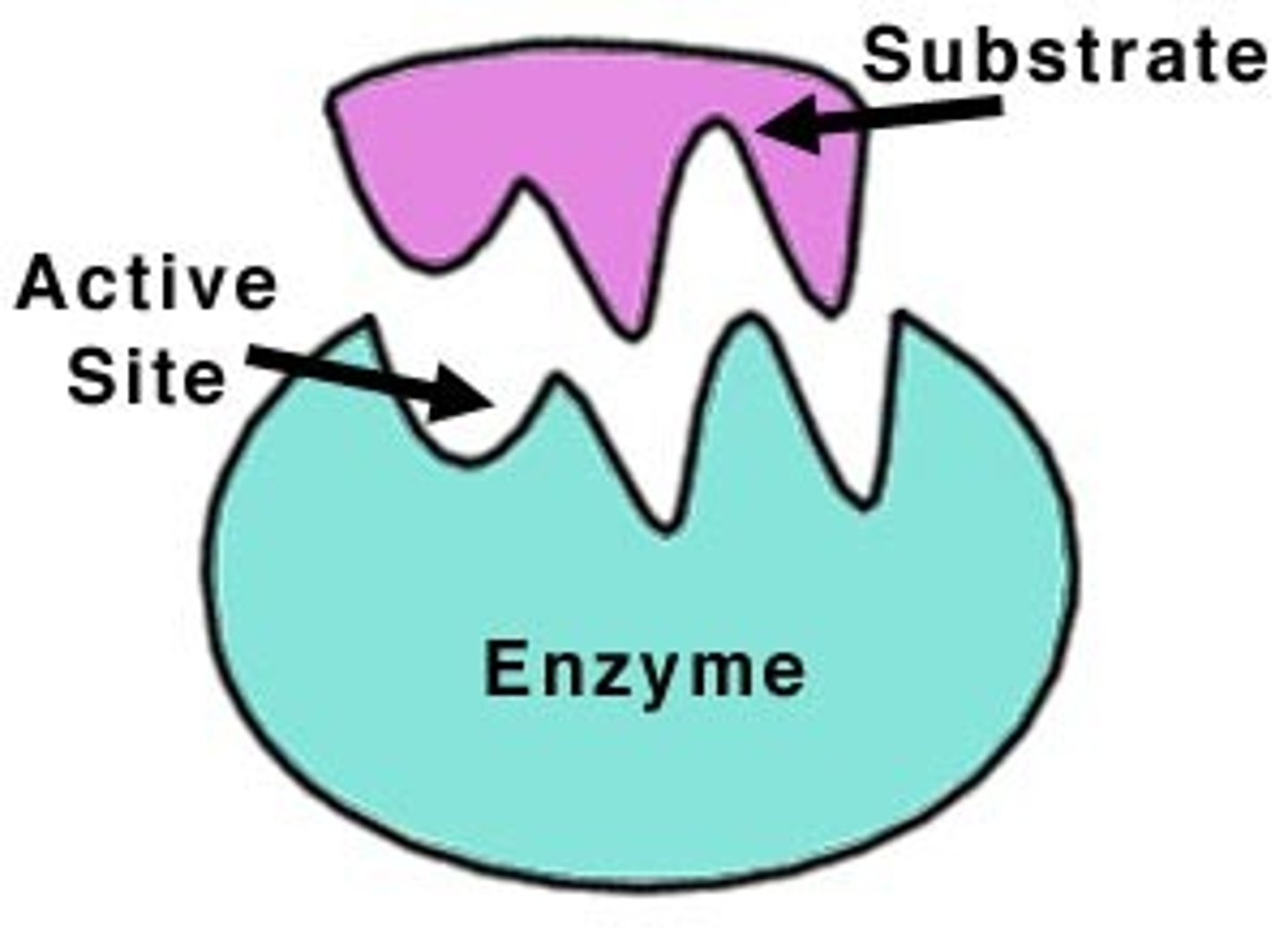
enzymes catalyze (speed up) reactions by
decreases/lowers the activation energy necessary to initiate the reaction
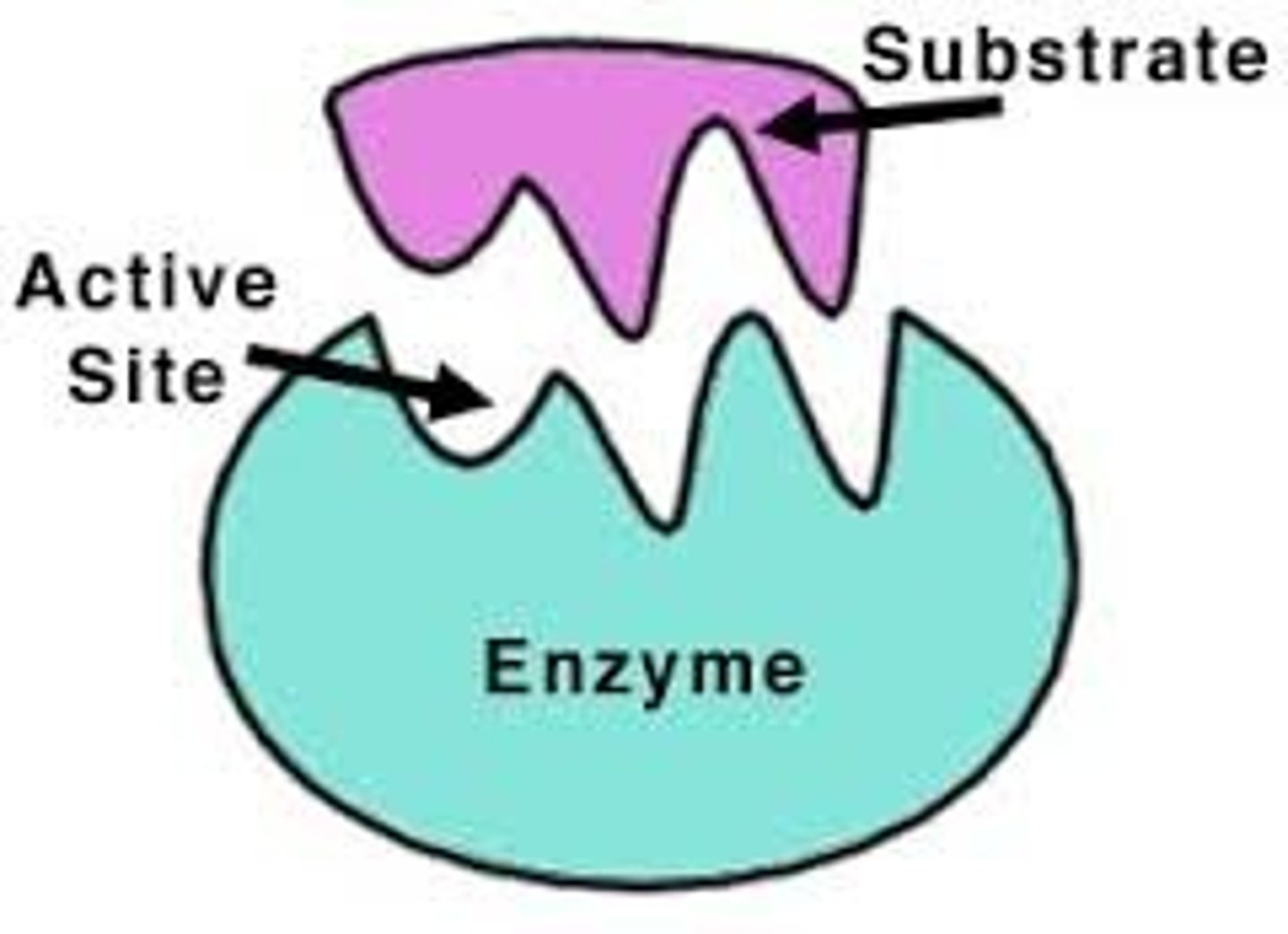
active site
the region on the enzyme where the substrate binds and chemical reaction takes place
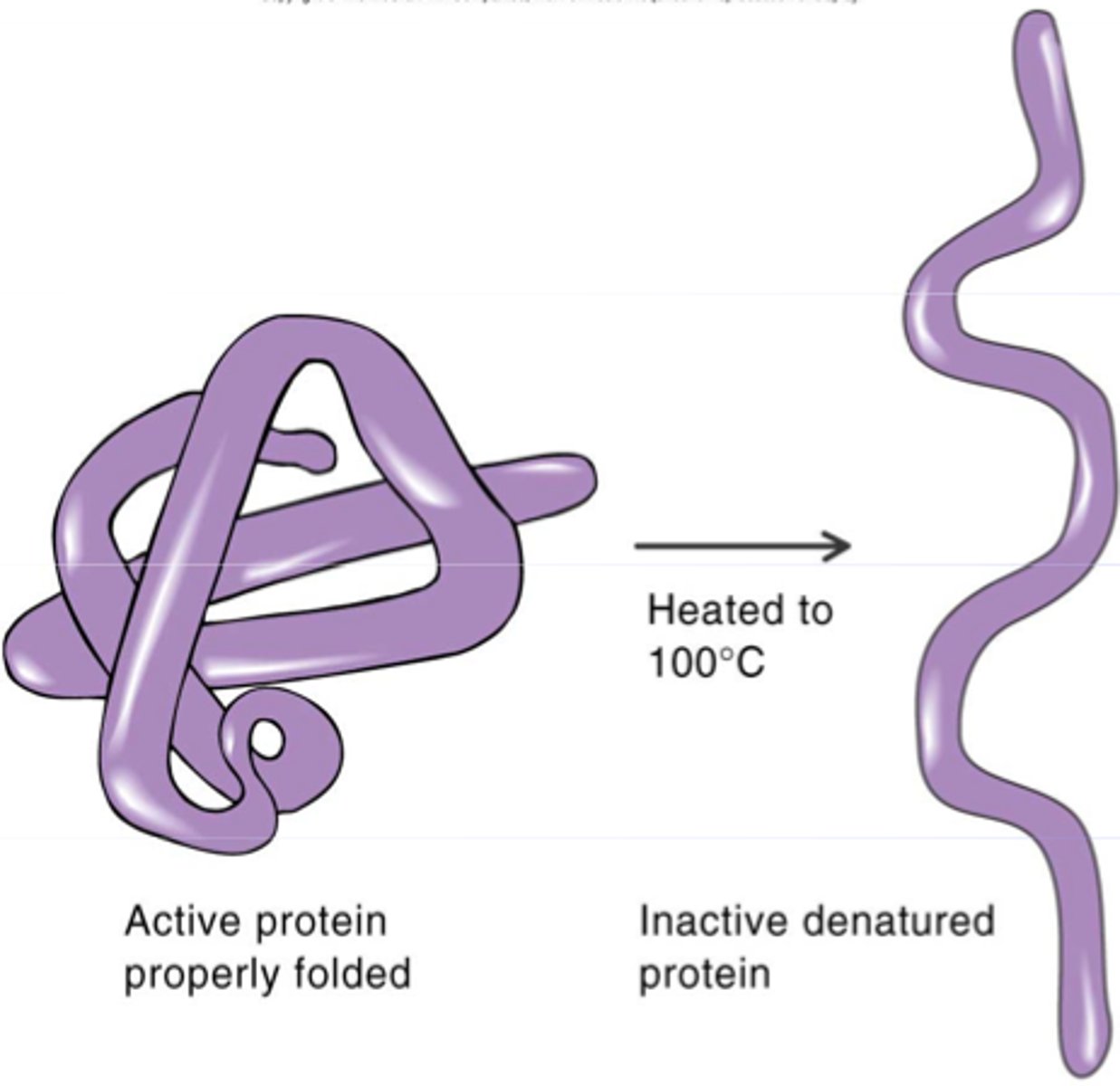
denaturation
protein/enzyme destruction - losing its specific structure and hence function (structure & function is destroyed); can be caused by changes in pH or salt concentration or by high temperature.
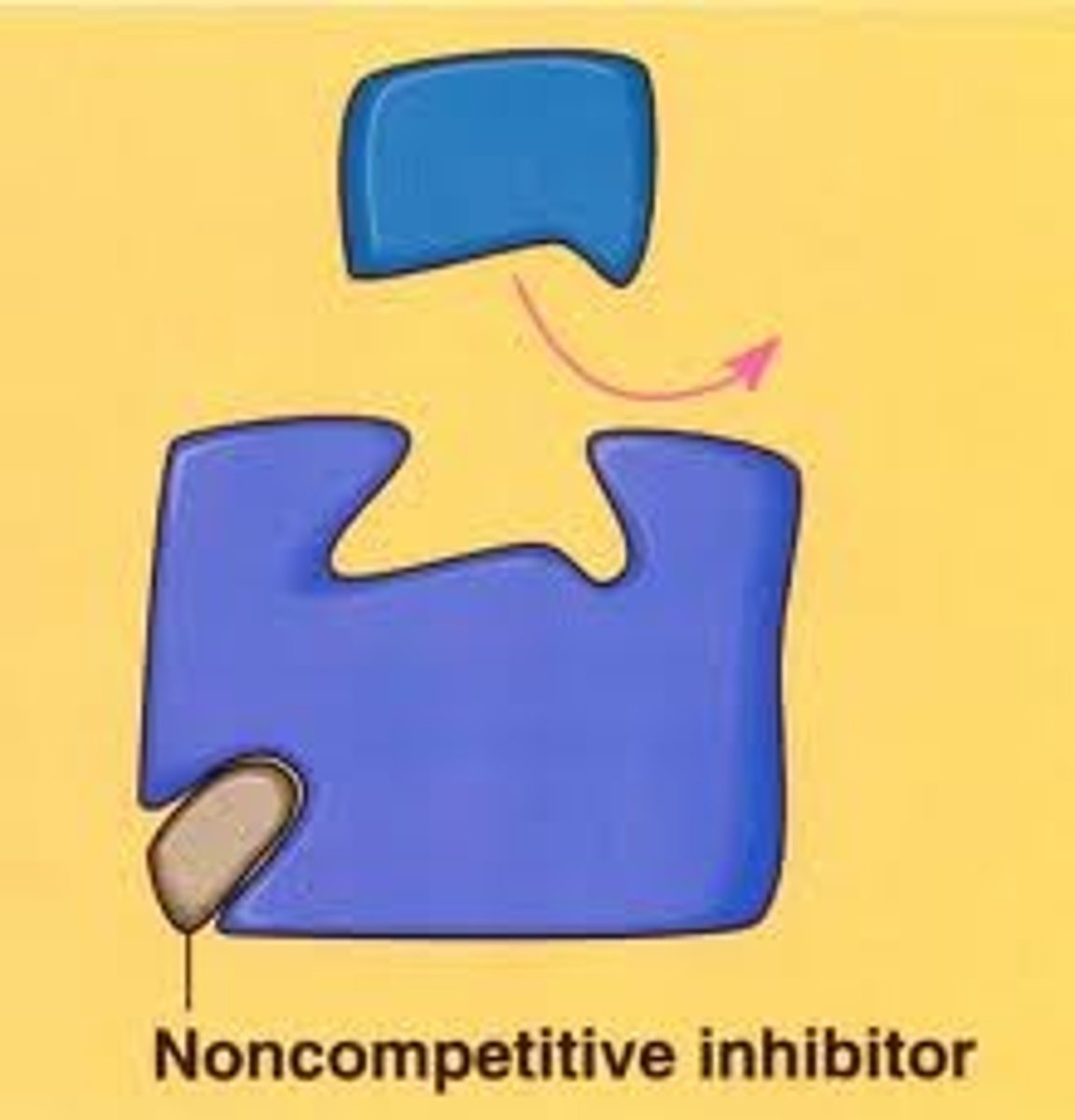
competitive inhibition
inhibitor outcompetes the substrate for the active site so that the reaction can't take place.
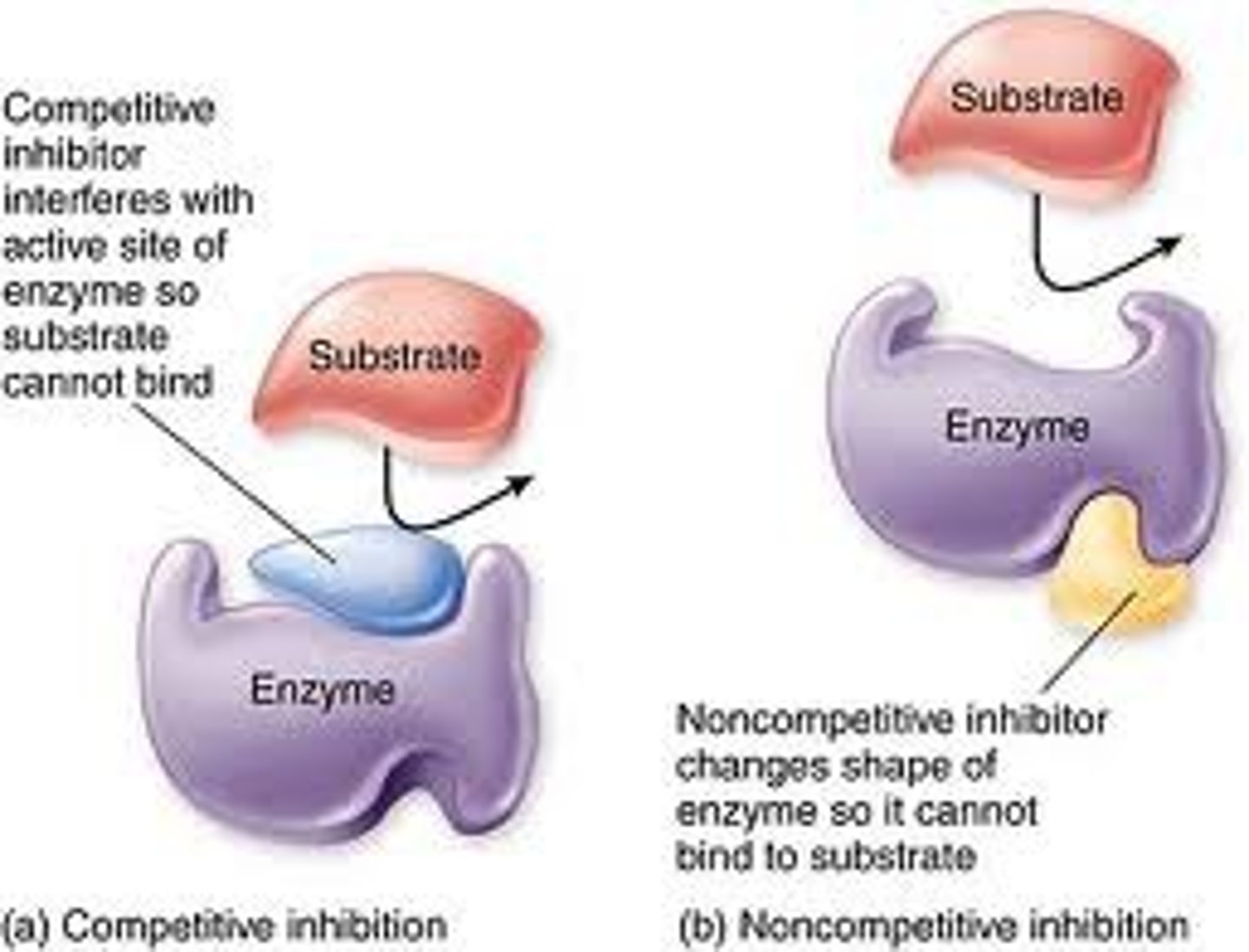
noncompetitive inhibition
regulator molecule "closes the active site for business," by torqueing the enzyme by binding to a regulatory site (it does not bind directly to the active site like a competitive inhibitor).
enzymatic repression
represses at the genetic (DNA) level to stop enzyme production, and therefore, activity.
Aerobic cellular respiration
Producing ATP with oxygen by breaking down glucose (36-38 ATP);
3 steps: glycolysis, Krebs Cycle & Electron Transport Chain (ETC)
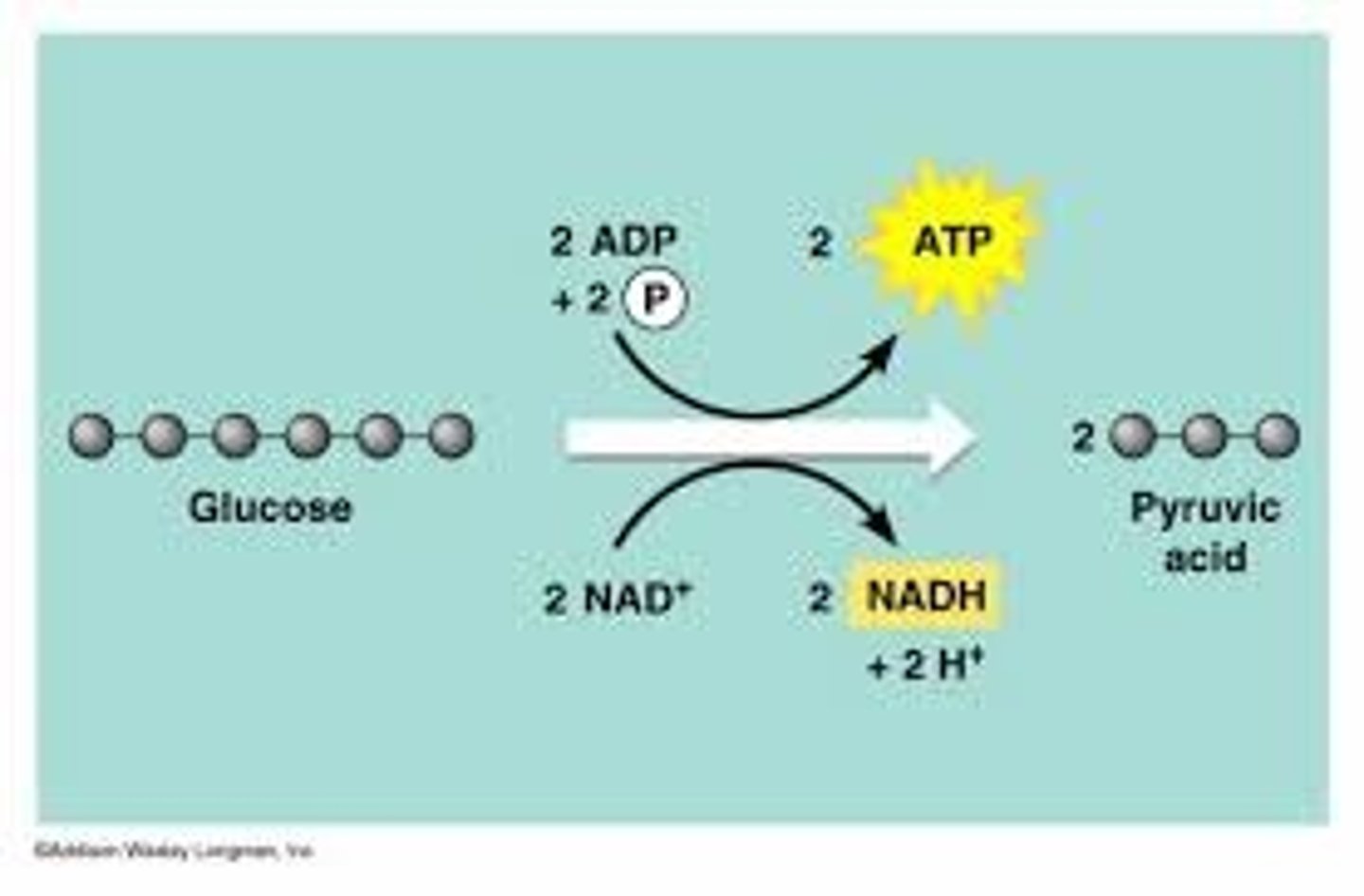
Glycolysis - ATP produced?
net of 2 ATP
produced by substrate level phosphorylation
Glycolysis
-Glucose (6 carbons) broken down into 2 molecules of pyruvic acid (3 C)
substrate level phosphorylation
simple process of using a substrate and an enzyme to make ATP
Krebs/TCA Cycle
•Processes pyruvic acid (pyruvate, 3 C each) and generates 3 CO2 molecules
•Produces: ATP, NADH and FADH2 (electron carriers)
Glycolysis - where does it take place?
-takes place in the cytoplasm of the cell (prokaryotes & eukaryotes)
Krebs/TCA Cycle - ATP produced?
•2 ATPs are generated per glucose that began with glycolysis (1 ATP per pyruvate)
-produced by substrate-level phosphorylation
Krebs/TCA Cycle - where it occurs
-takes place in the cytoplasm of prokaryotes
-takes place in the mitochondrial matrix in eukaryotes
Electron Transport Chain (ETC) - where it occurs
•Eukaryotes: Inner mitochondrial membrane
•Prokaryotes: Cell membrane
Krebs Cycle - what happens to the carbons originally from glucose?
all released as CO2 as a byproduct
Reduction & Oxidation mnemonic: OIL RIG
oxidation is loss (of electrons/hydrogen ions)
reduction is gain (of electrons/hydrogen ions)
ETC - first steps
NADH enters the ETC first and is oxidized to NAD+
FADH2 enters 2nd further down the ETC & is oxidized to FAD
Oxidative phosphorylation
produces a lot of ATP by the oxidation of molecules
ETC - ATP produced?
net 34 ATP
produced by oxidative phosphorylation
ETC final electron acceptor (aerobic respiration)
O2 (to produce water)
Where ETC occurs?
•Eukaryotes: Inner mitochondrial membrane
•Prokaryotes: Cell membrane
Anaerobic respiration
•Functions like aerobic respiration except it utilizes oxygen containing ions, rather than free oxygen, as the final electron acceptor of ETC
-some microorganisms can utilize other electron acceptors instead of oxygen (oxygen is not required)
fermentation
A catabolic process that makes a limited amount of ATP from glucose (2 ATP/glucose molecule) without an electron transport chain and that produces a characteristic end product, such as ethyl alcohol or lactic acid.
-occurs in cytoplasm of cell
purpose of fermentation
to regenerate NAD+ so glycolysis can continue
Alcoholic fermentation
-occurs in yeast
-produces ethyl alcohol & CO2 (waste products) in addition to 2 ATP
lactic acid fermentation
-occurs in human and animal muscles and lactic acid bacteria
-produces lactic acid (waste product) in addition to 2 ATP
Photosynthesis - Light Dependent Reactions
•Light energy is captured and converted to chemical energy: ATP and NADPH
Photosynthesis - Light-Independent (Calvin Cycle) Reactions
•The energy from ATP and NADPH (from the light-dependent reactions) is combined (fixed) with CO2 as a carbon source and stored as glucose which can be used by the organism for energy.
ETC - commonality between Cellular Respiration & Photosynthesis?
Both embedded in membranes:
-Respiration (mitochondria or plasma membrane)
-Photosynthesis (chloroplast)
DNA - complementary base pairing
A-T (Adenine-Thymine)
G-C (Guanine-Cytosine)
(no uracil in DNA)
RNA - complementary base pairing
A-U (Adenine-Uracil)
G-C (Guanine-Cytosine)
(no thymine in RNA)