A&P Lab 1 Terminology
 Call Kai
 Learn
Learn Practice Test
 Spaced Repetition
 Match
Match Flashcards
 Knowt Play
1/88

There's no tags or description
Looks like no tags are added yet.
Name | Mastery | Learn | Test | Matching | Spaced | Call with Kai | Chat |
|---|
No analytics yet
Send a link to your students to track their progress
89 Terms
What is the anatomical position?
Standing upright, head/eyes facing forward, feet parallel and flat on the floor, arms at the sides, and palms facing forward.
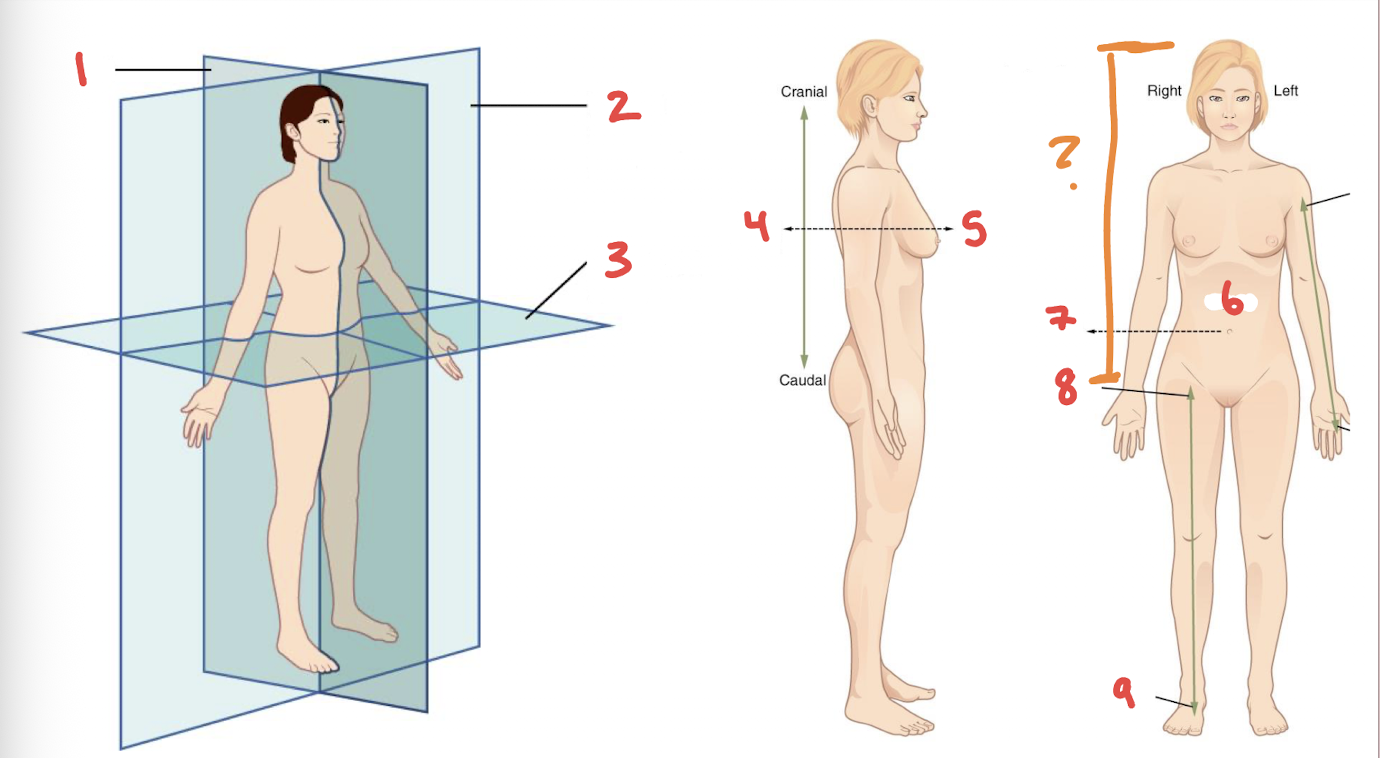
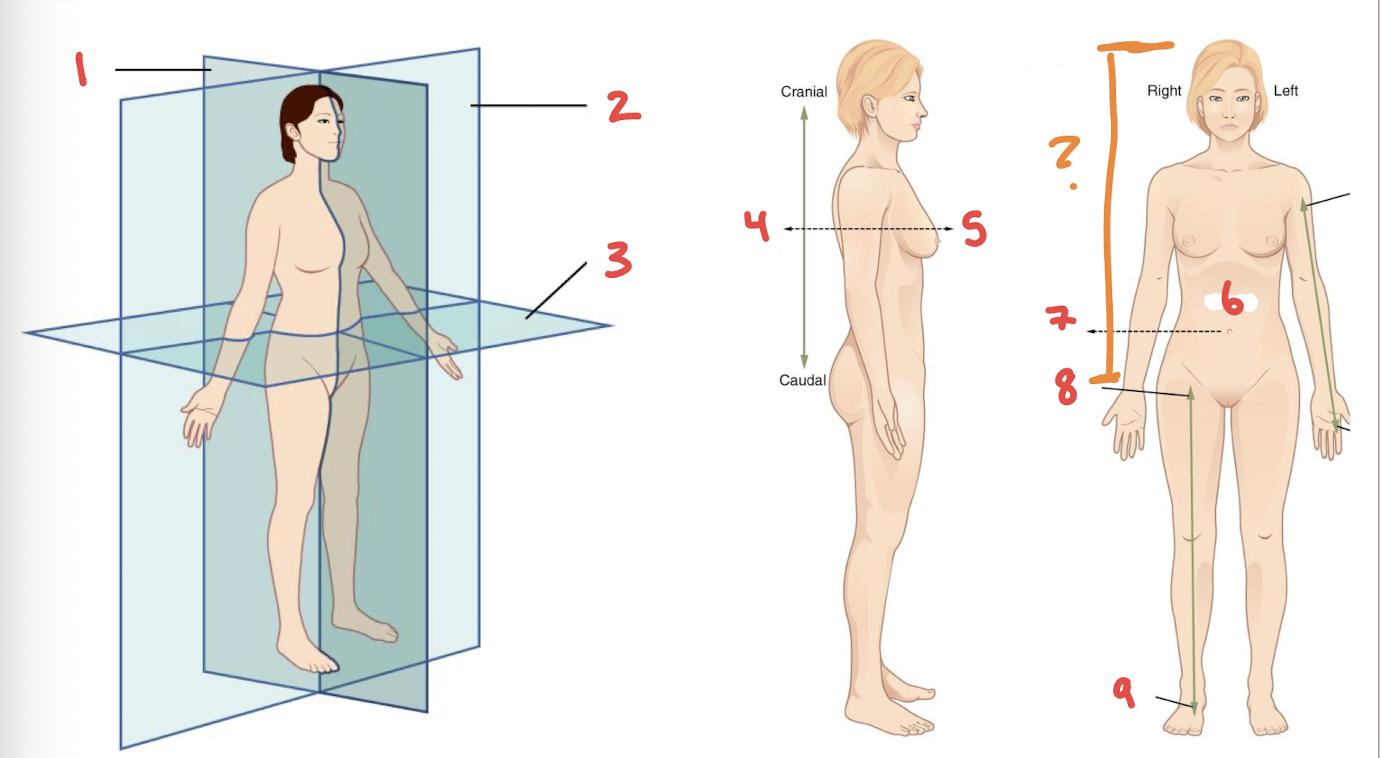
What is number 1?
Sagittal Plane
plane that divides the body into left and right portions.
Midsagittal (median) plane = divides the body into equal left and right halves.
What is a parasagittal plane?
A sagittal plane that divides the body into unequal left and right portions.

What is number 2?
coronal (frontal) plane
plane that divides the body into anterior and posterior portions
What is number 3?
Transverse Plane
plane that divides the body into superior and inferior portions
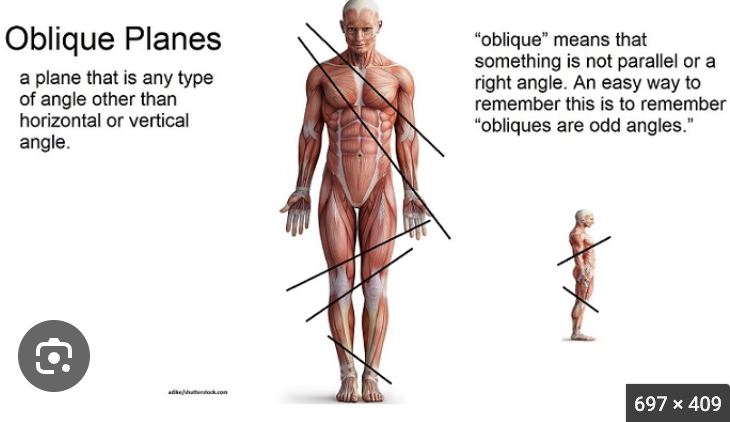
What is an oblique plane?
plane that cuts the body at an angle rather than straight along a standard plane
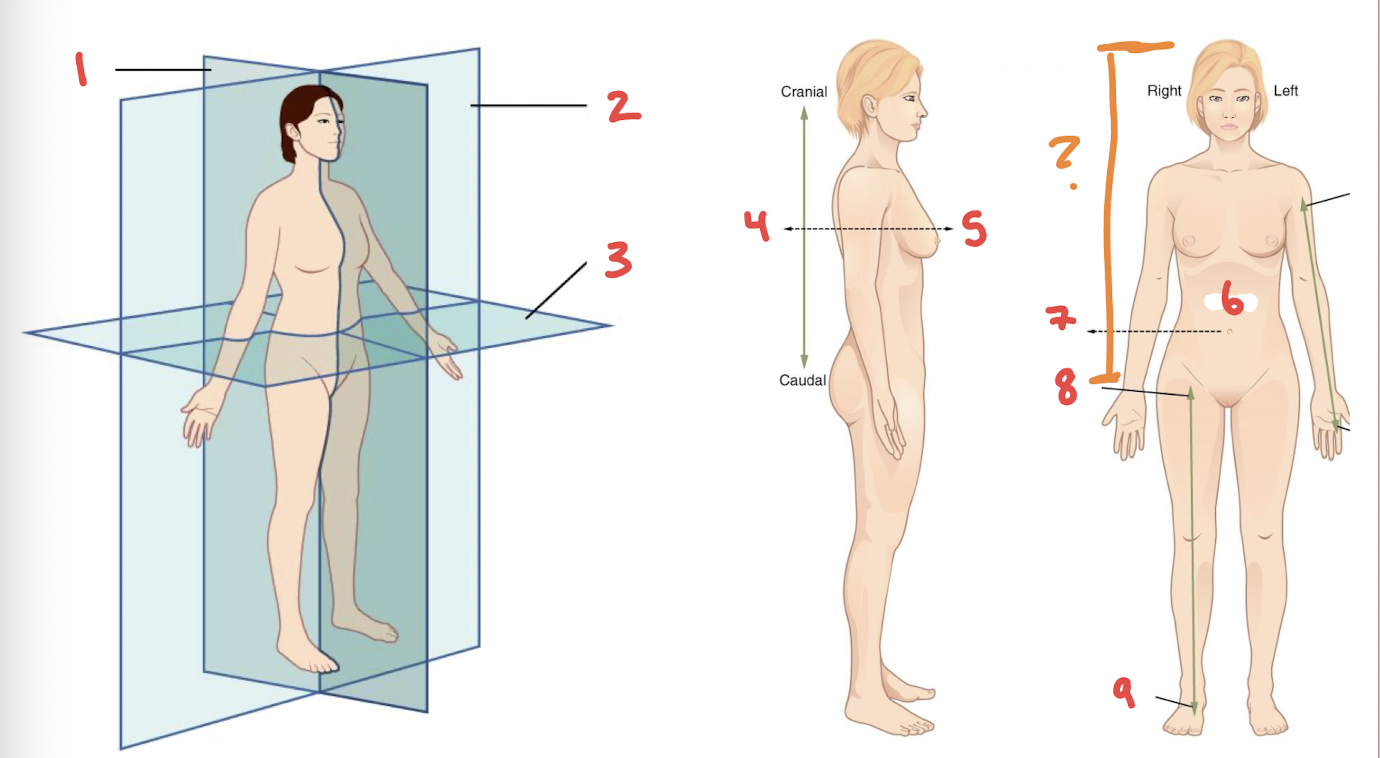
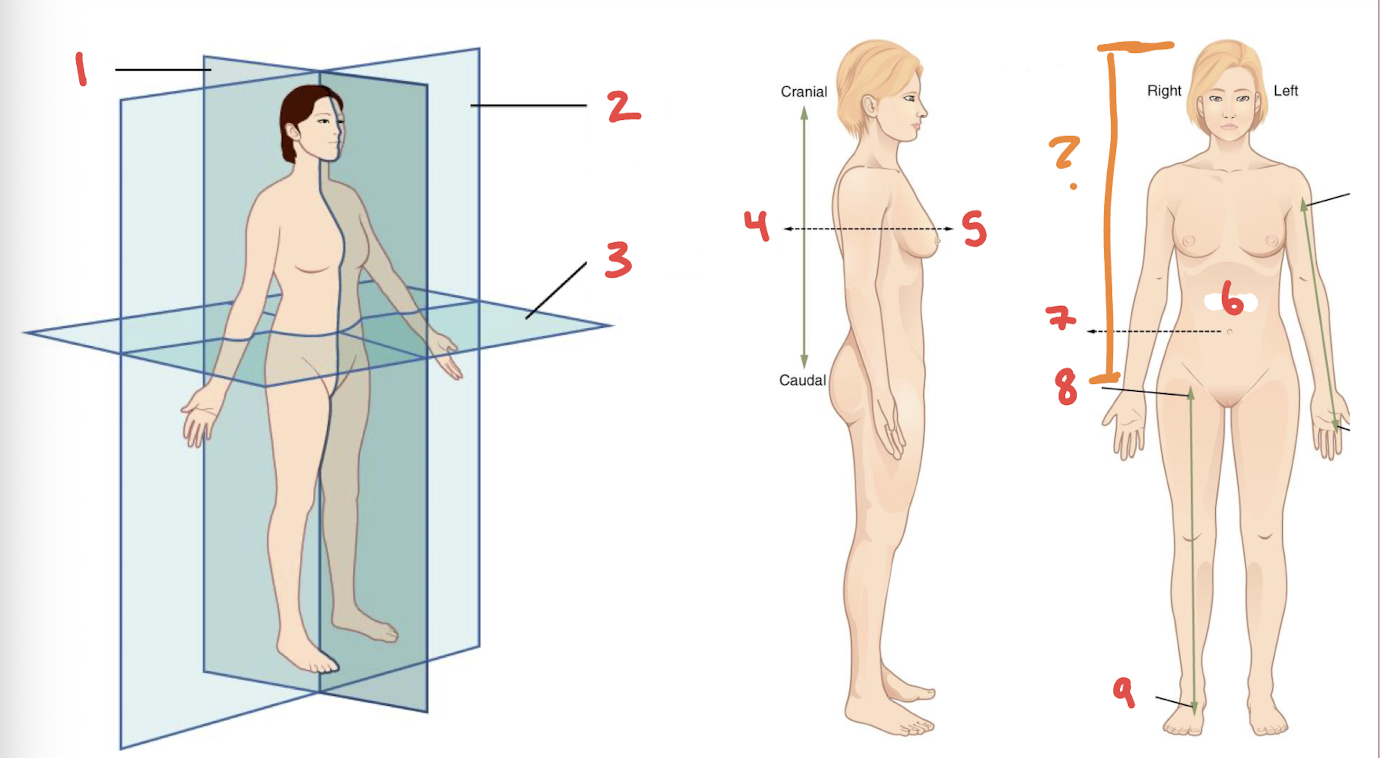
What is number 4?
Posterior (Dorsal)
Toward the back of the body
What is number 5?
Anterior (Ventral)
Toward the front of the body
Use superior and inferior for….
the head, neck, and trunk
use proximal and distal for…
mainly the limbs
What is number 6?
Medial
Toward the midline of the body

What is number 7?
Lateral
Away from the midline of the body

What is number 8?
Proximal
Closer to the point of attachment/origin of a limb

What is number 9?
Distal
Farther from the point of attachment/origin of a limb
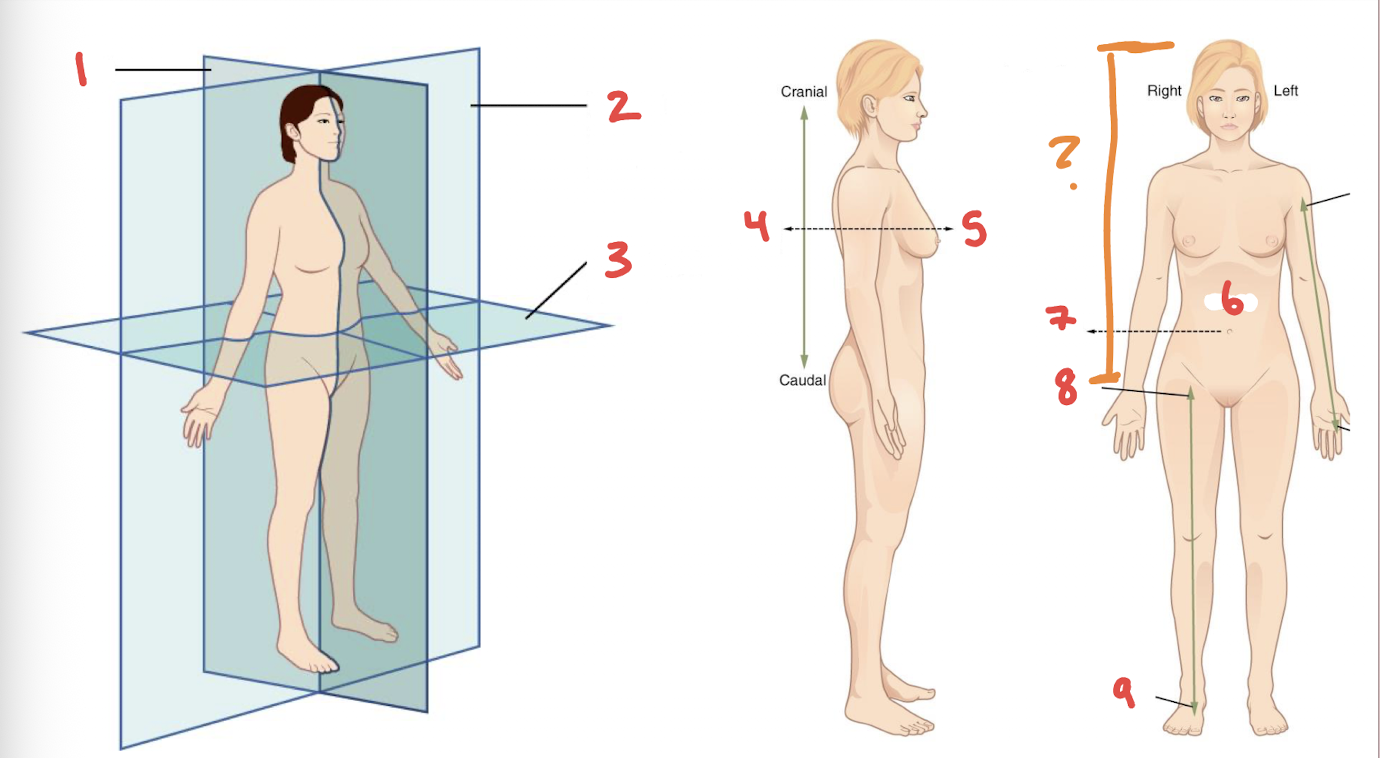
In the orange mark, what is used to describe position?
Superior → Inferior
Medical professionals use superior and inferior mainly for the torso, head, and neck, while proximal and distal are used for the arms and legs
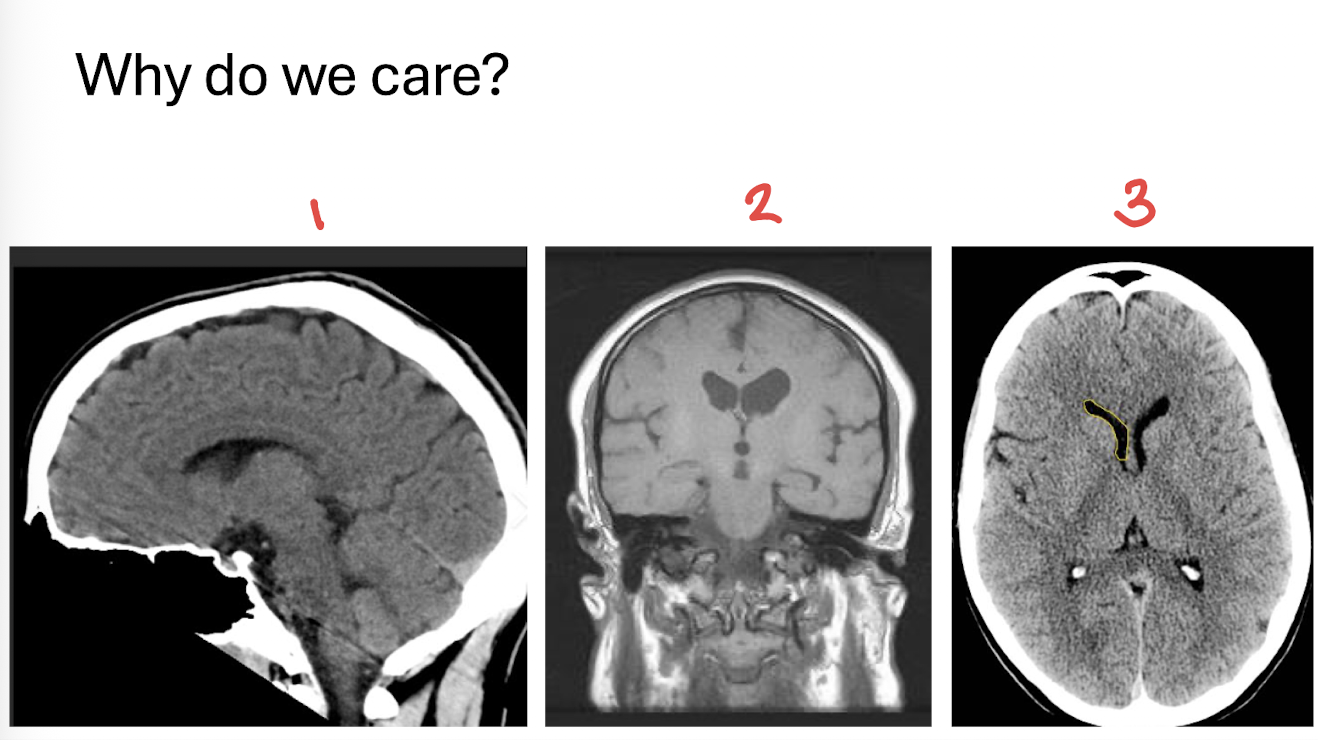
What is number 1?
Sagittal image

What is number 2?
Frontal/coronal image
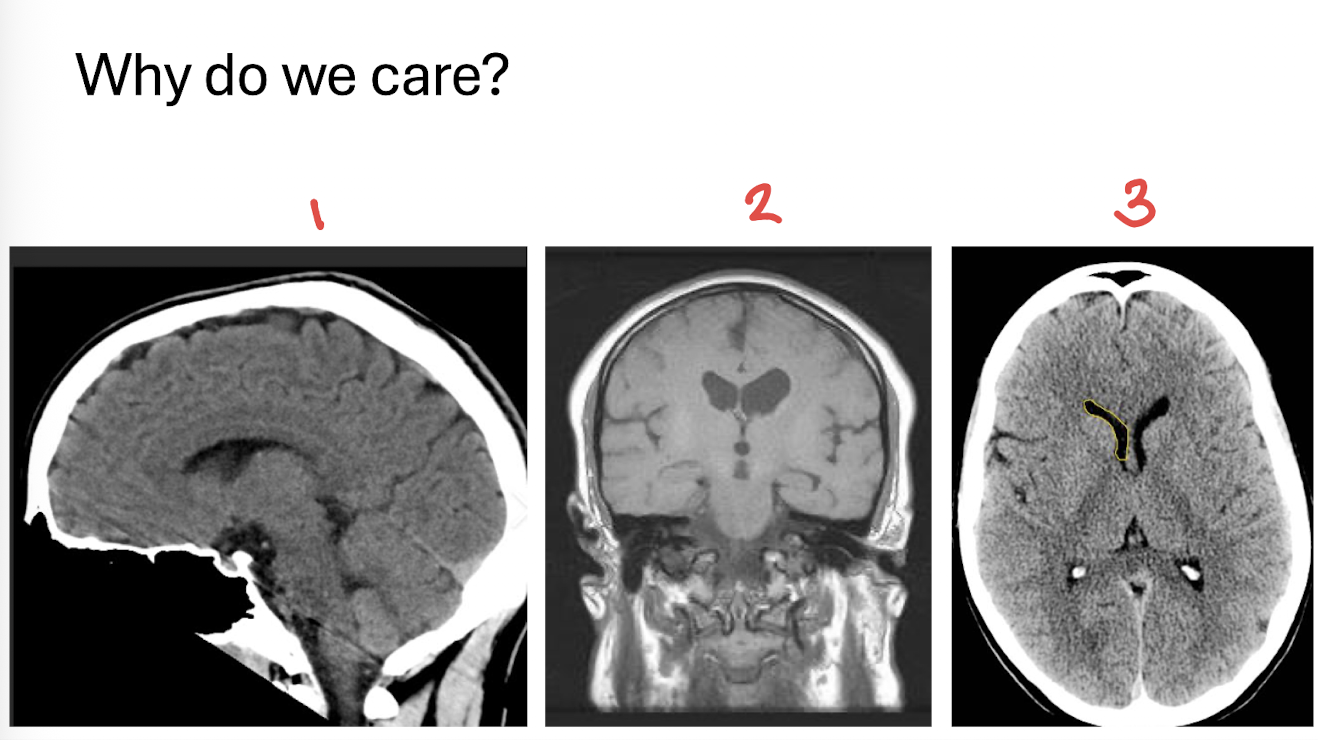
What is number 3?
Transverse Image

What is number 1?
Appendicular Skeleton/Region
limbs and structures associated with the limbs

What is number 2?
Axial Region/Skeleton
central axis of the body, including the head, neck, and trunk
What does acromial refer to?
The shoulder region

What does costal refer to?
The rib region

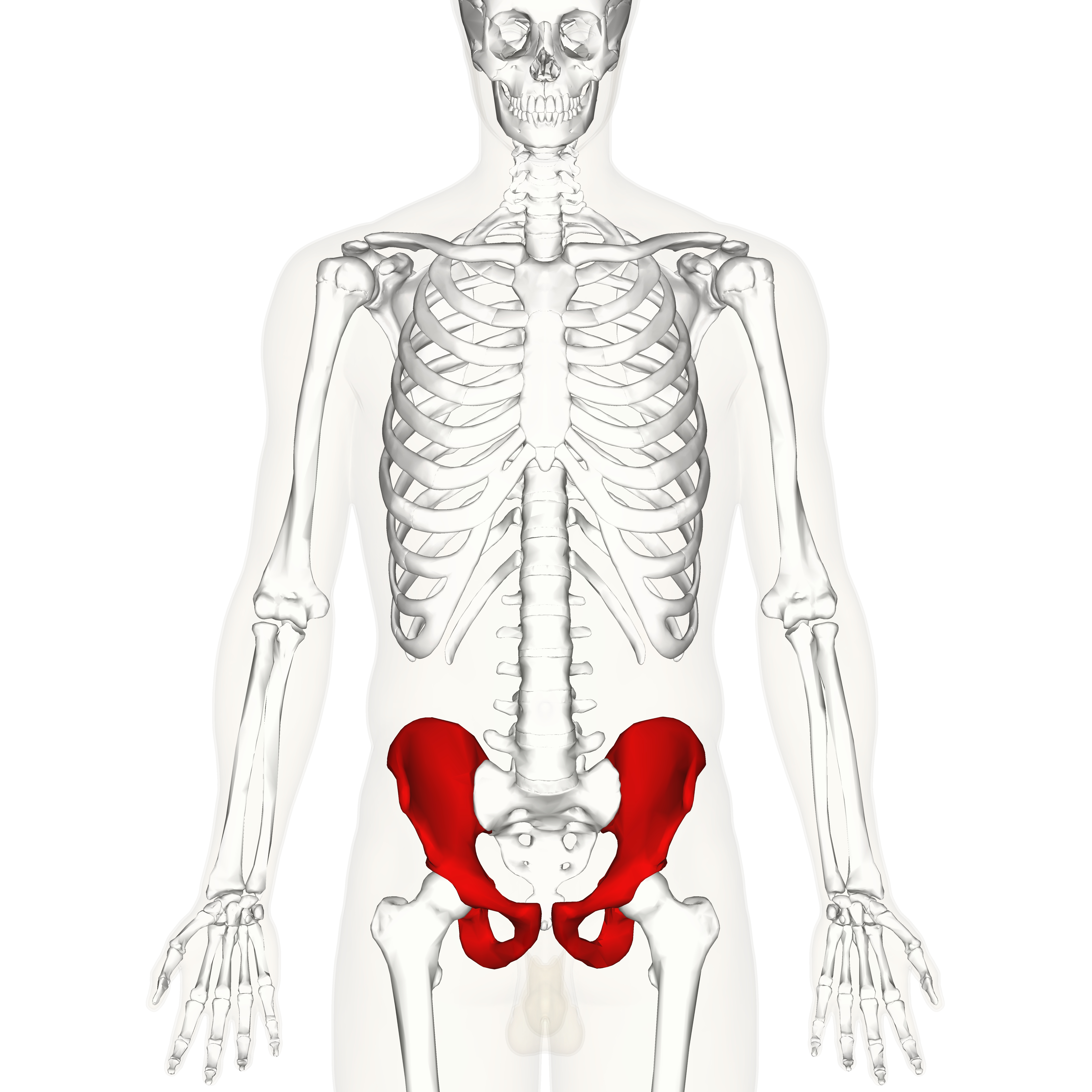
What does coxal refer to
The hip region
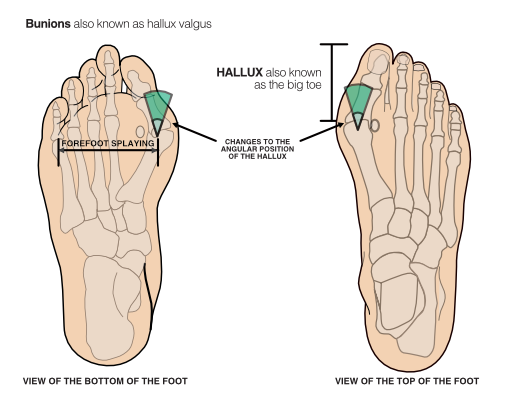
What does hallux refer to?
The great toe
What does pollex refer to?
The thumb

What does umbilical refer to?
The region surrounding the navel (belly button)


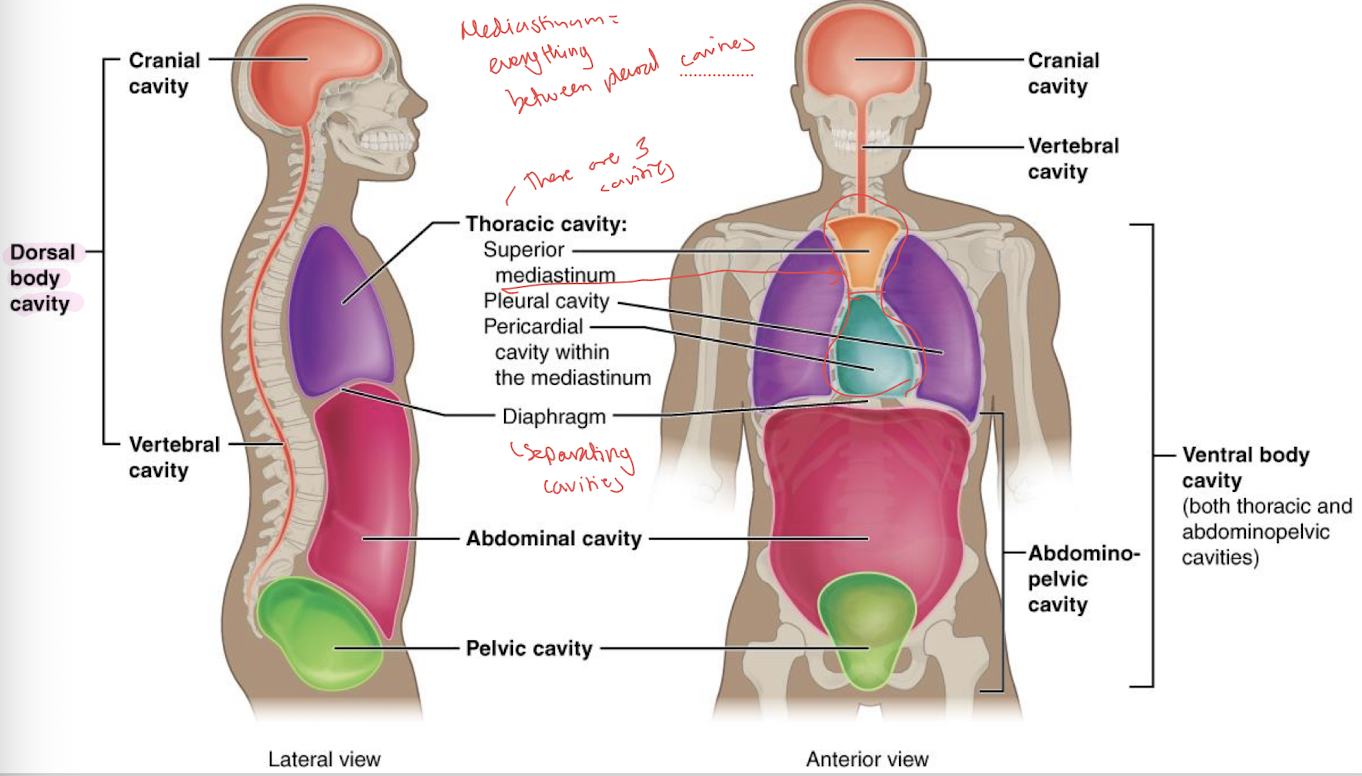
What is number 1?
Dorsal Body Cavity
What does the dorsal body cavity contain?
The cranial cavity and vertebral/spinal cavity.

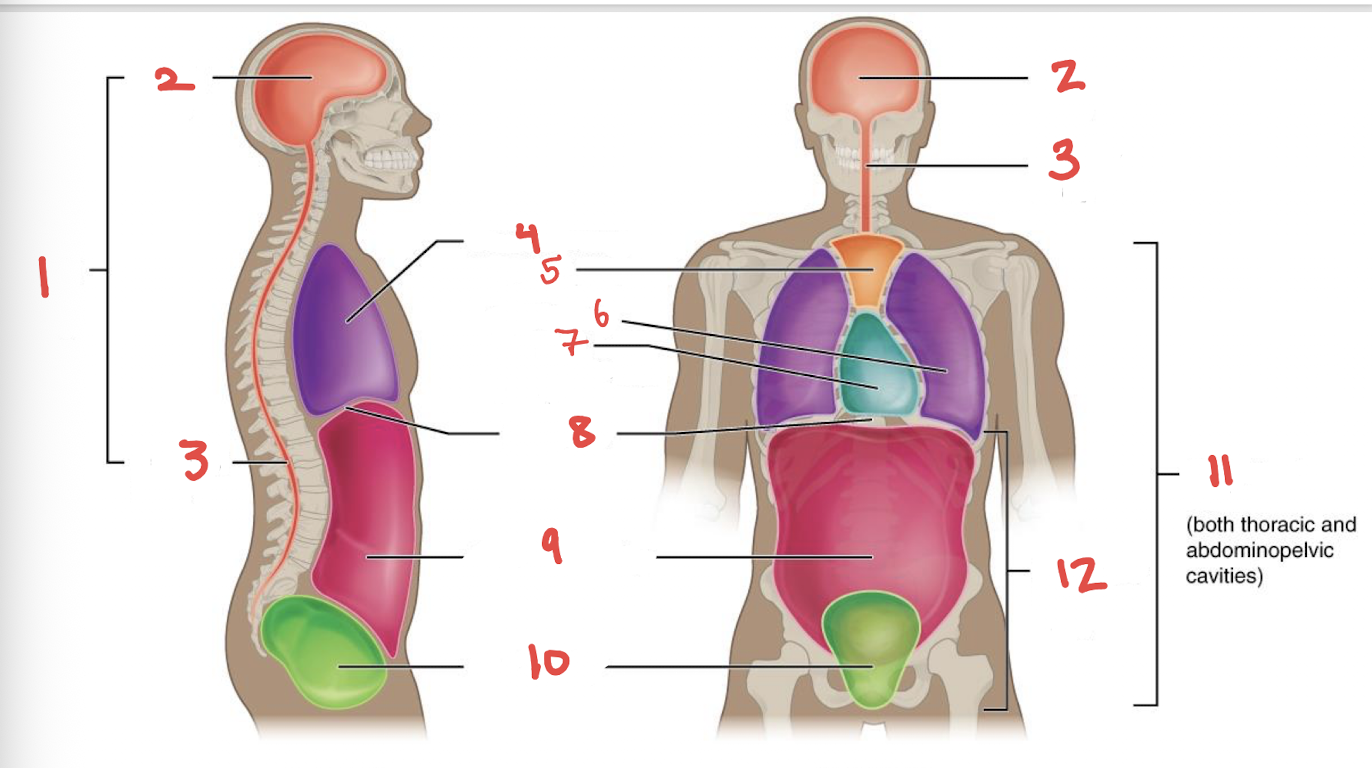
What is number 2?
Cranial Cavity
What does the cranial cavity contain?
the brain
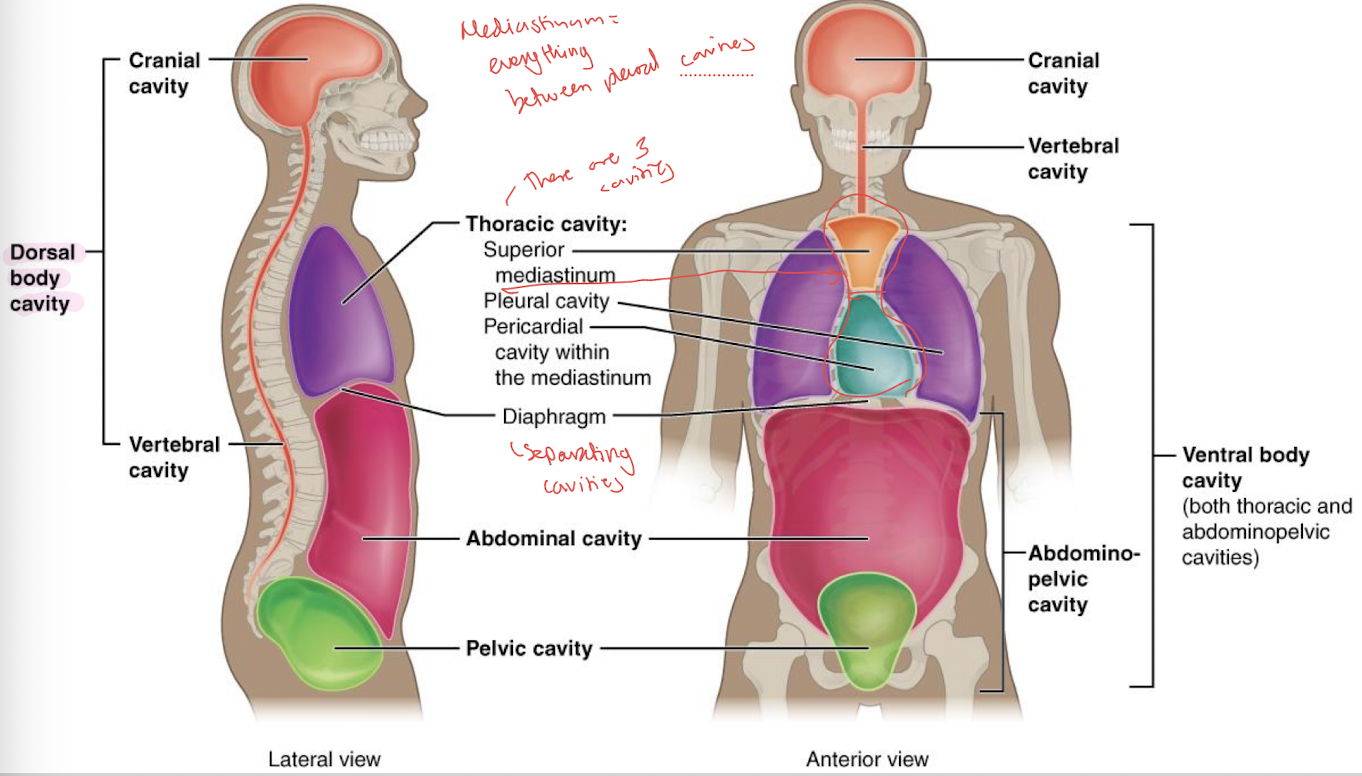

What is number 3?
Vertebral cavity
What does the vertebral/spinal cavity contain?
The spinal cord
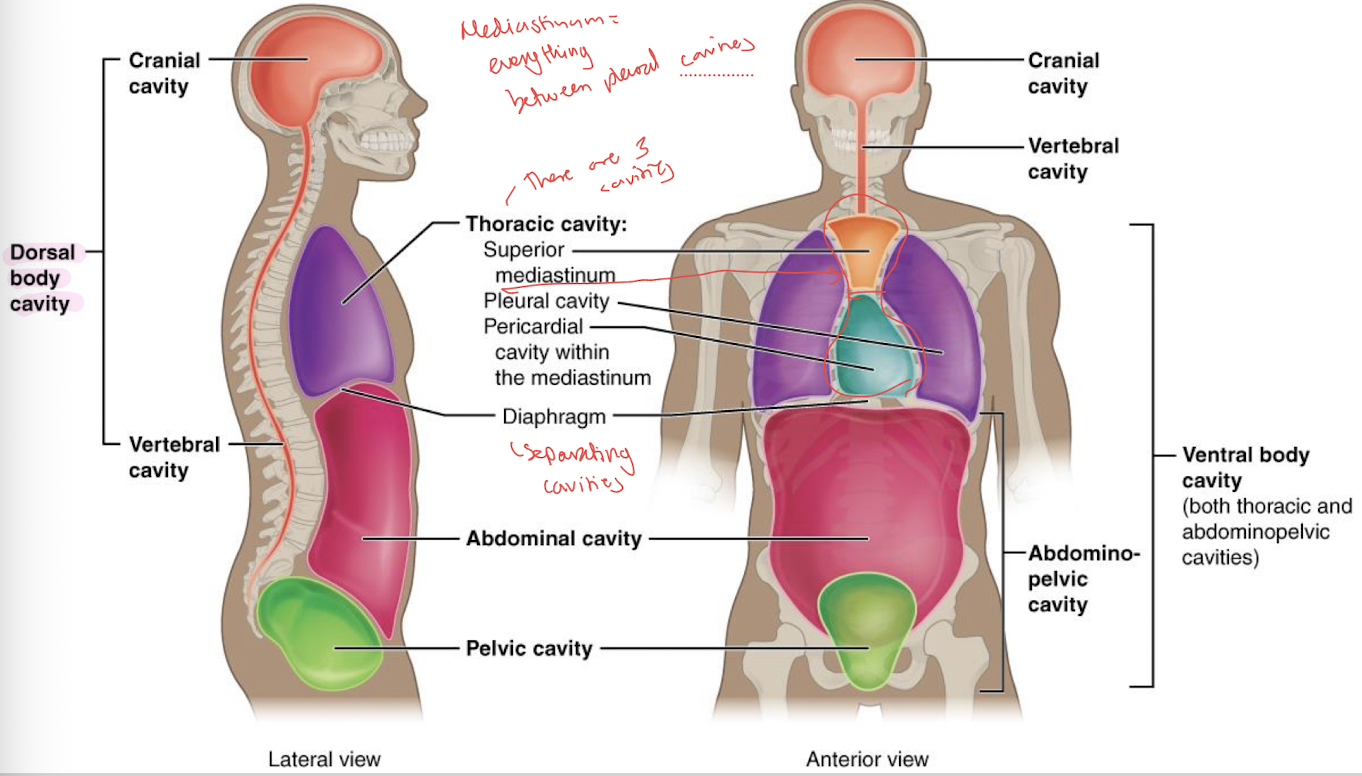
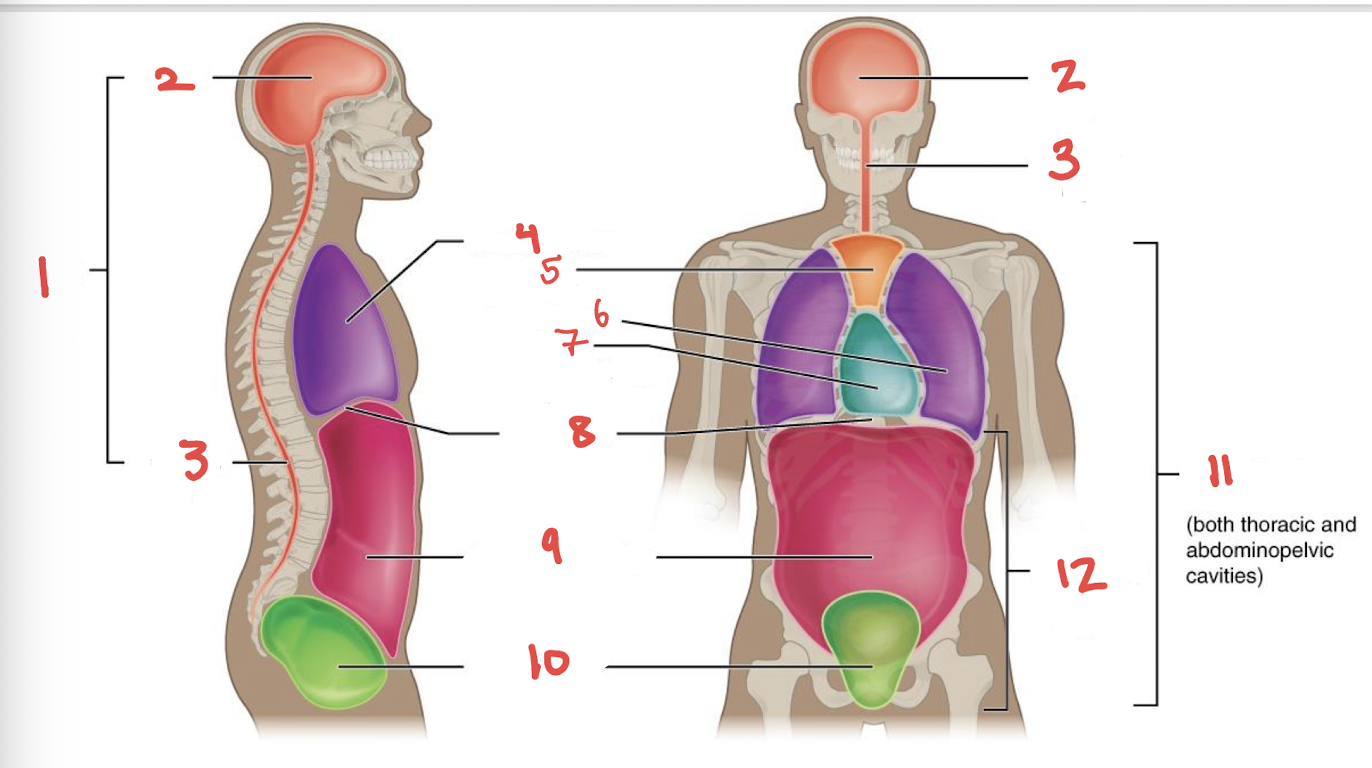
What is number 4?
Thoracic Cavity
What are the major subdivisions of the thoracic cavity?
The pleural cavities and mediastinum.
organs = primarily heart & lungs
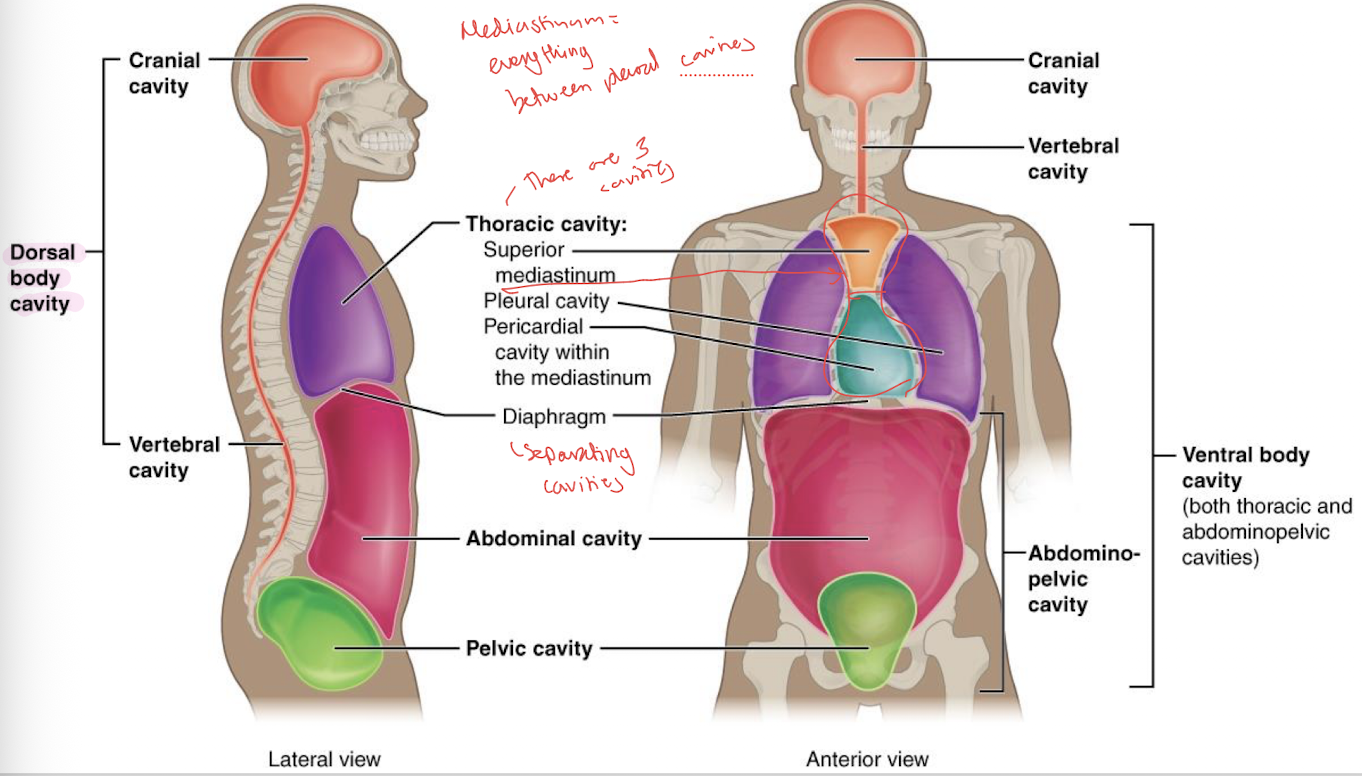
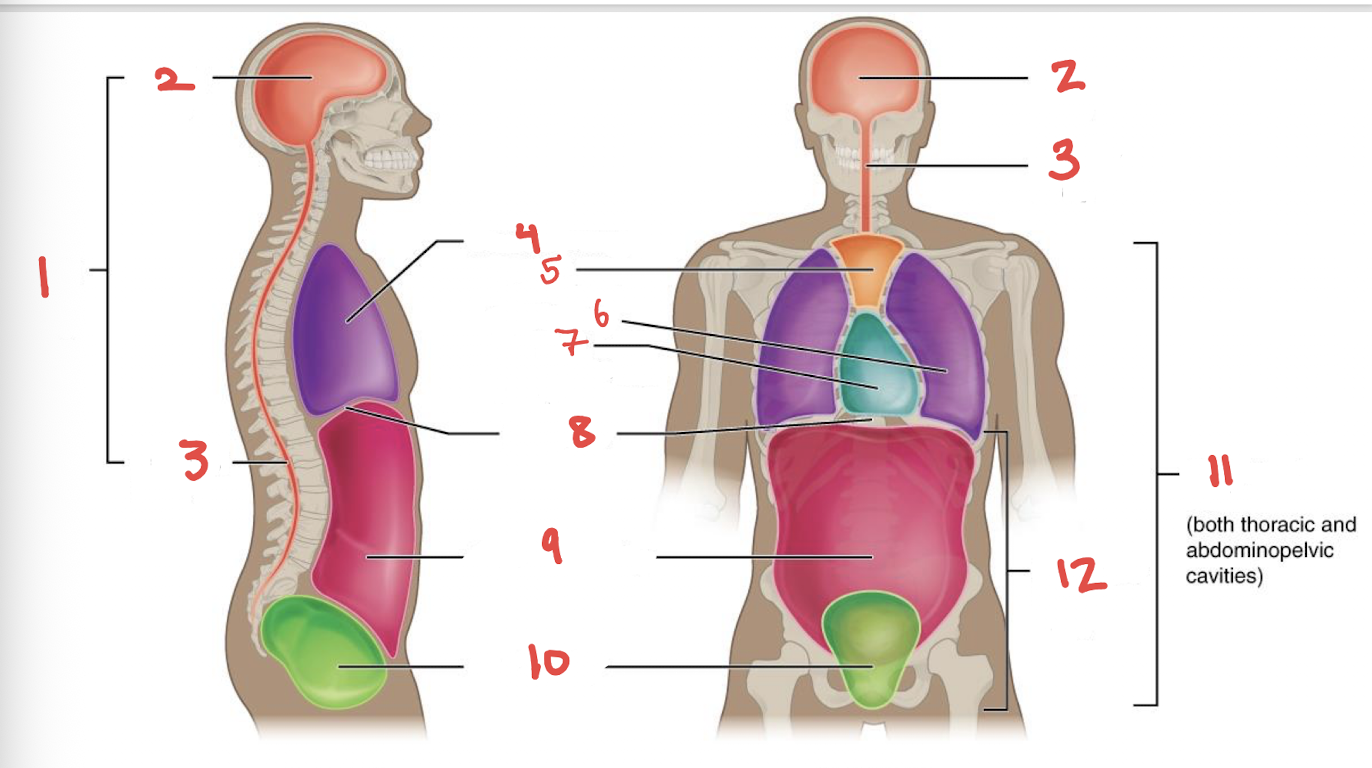
What is number 5?
Superior Mediastinum
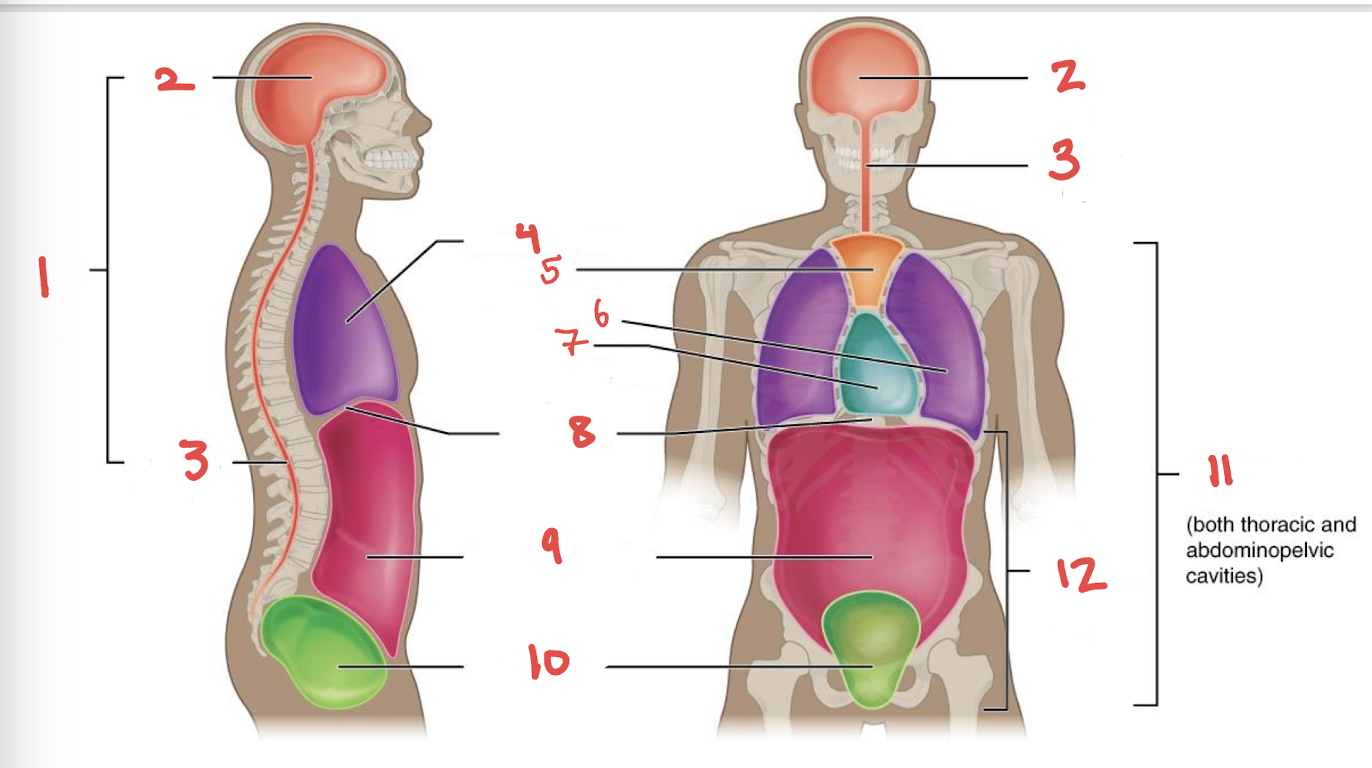
What is number 6?
Pleural Cavity
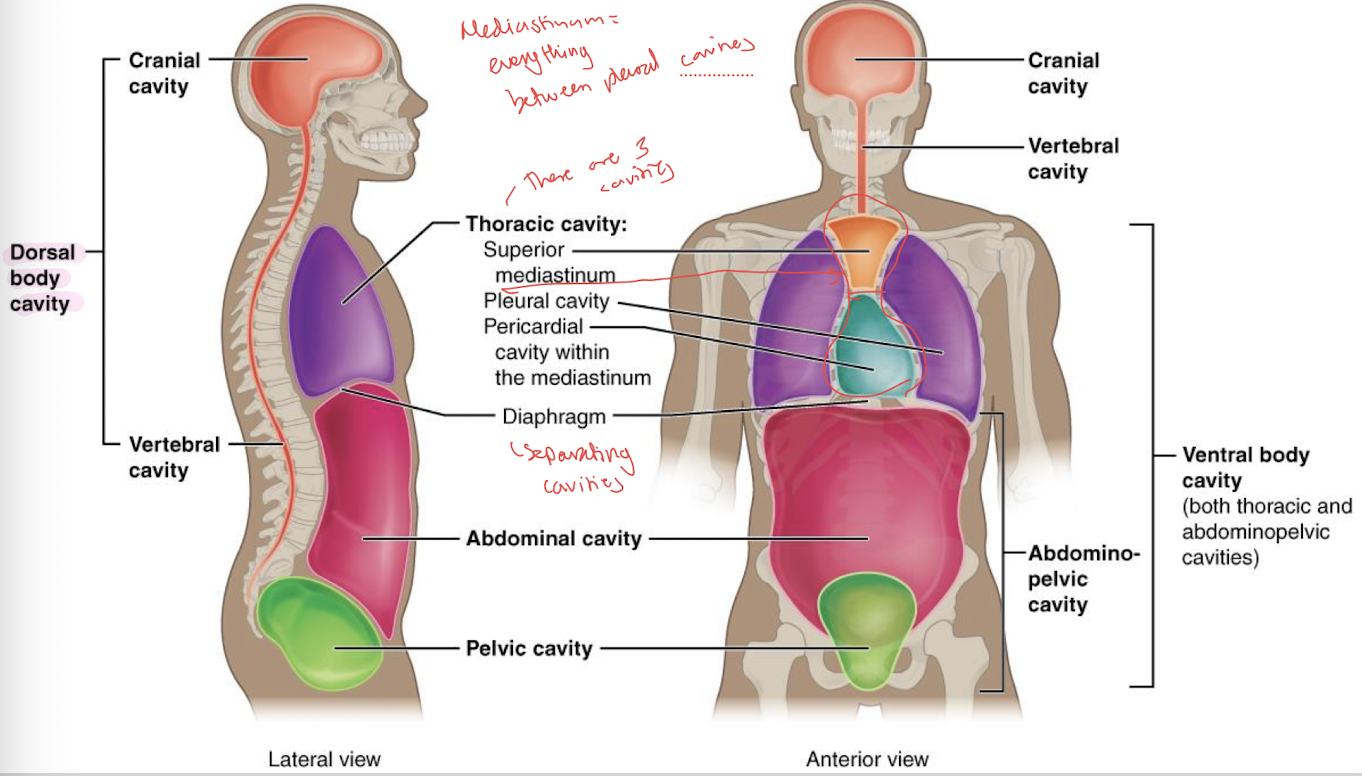
What is number 7?
Pericardial Cavity within mediastinum
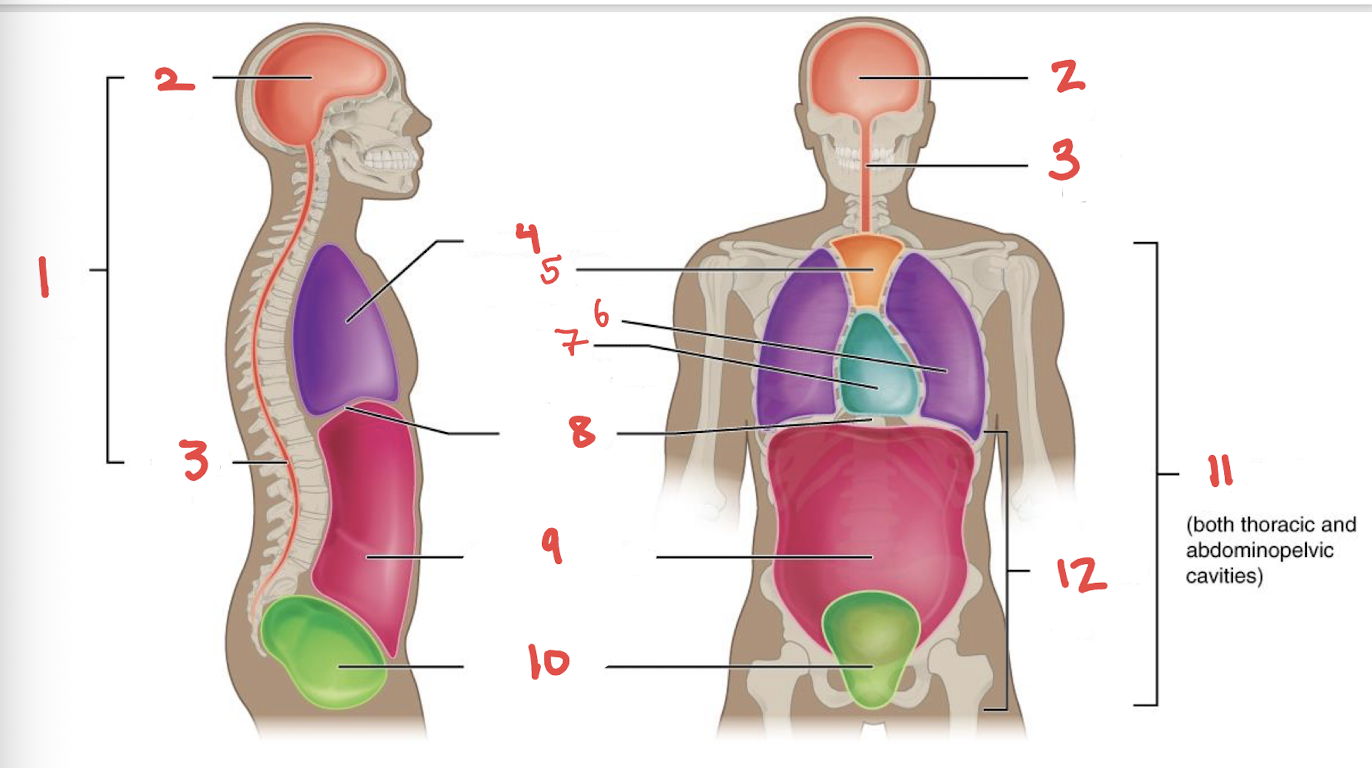
What is number 8?
Diaphragm
muscular structure that separates the thoracic cavity from the abdominal cavity
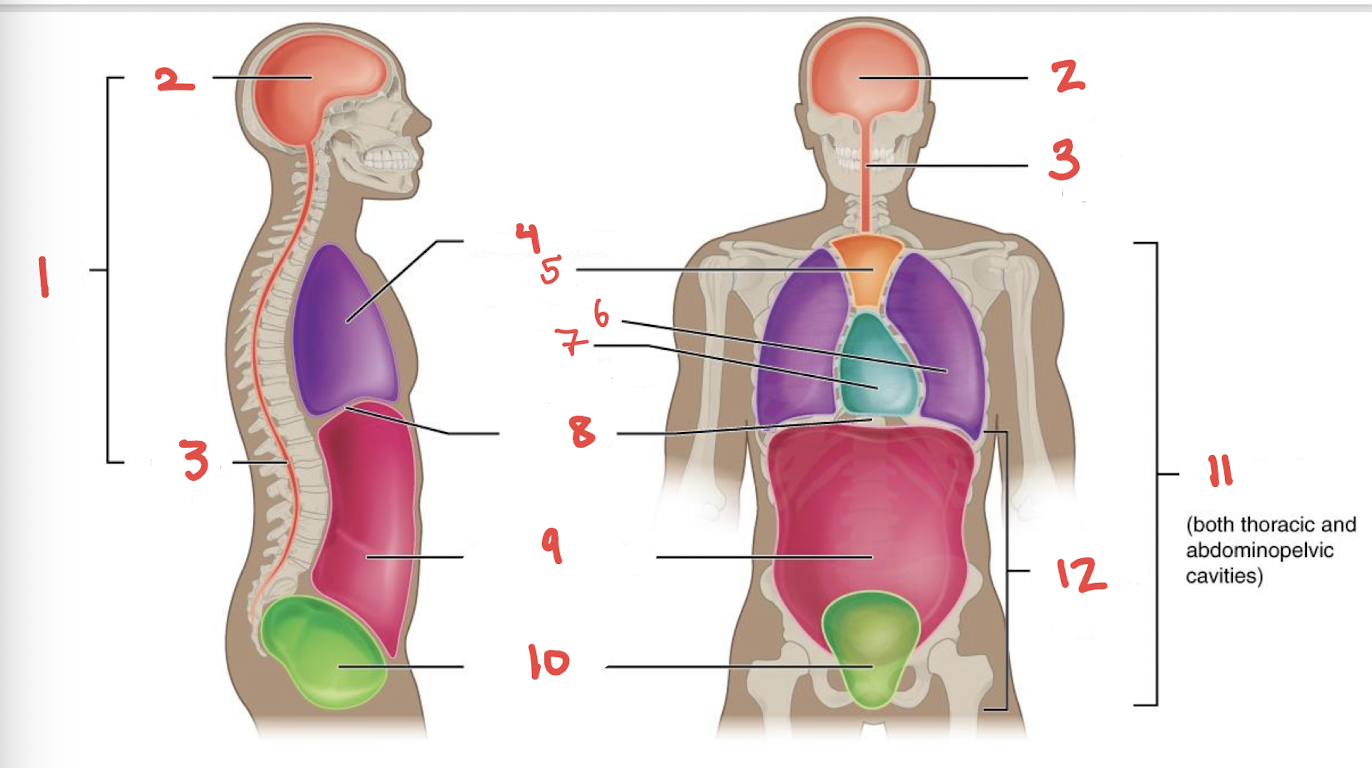
What is number 9?
Abdominal Cavity
What organs are generally found in the abdominal cavity?
Digestive organs such as the stomach and intestines, along with organs such as the liver.
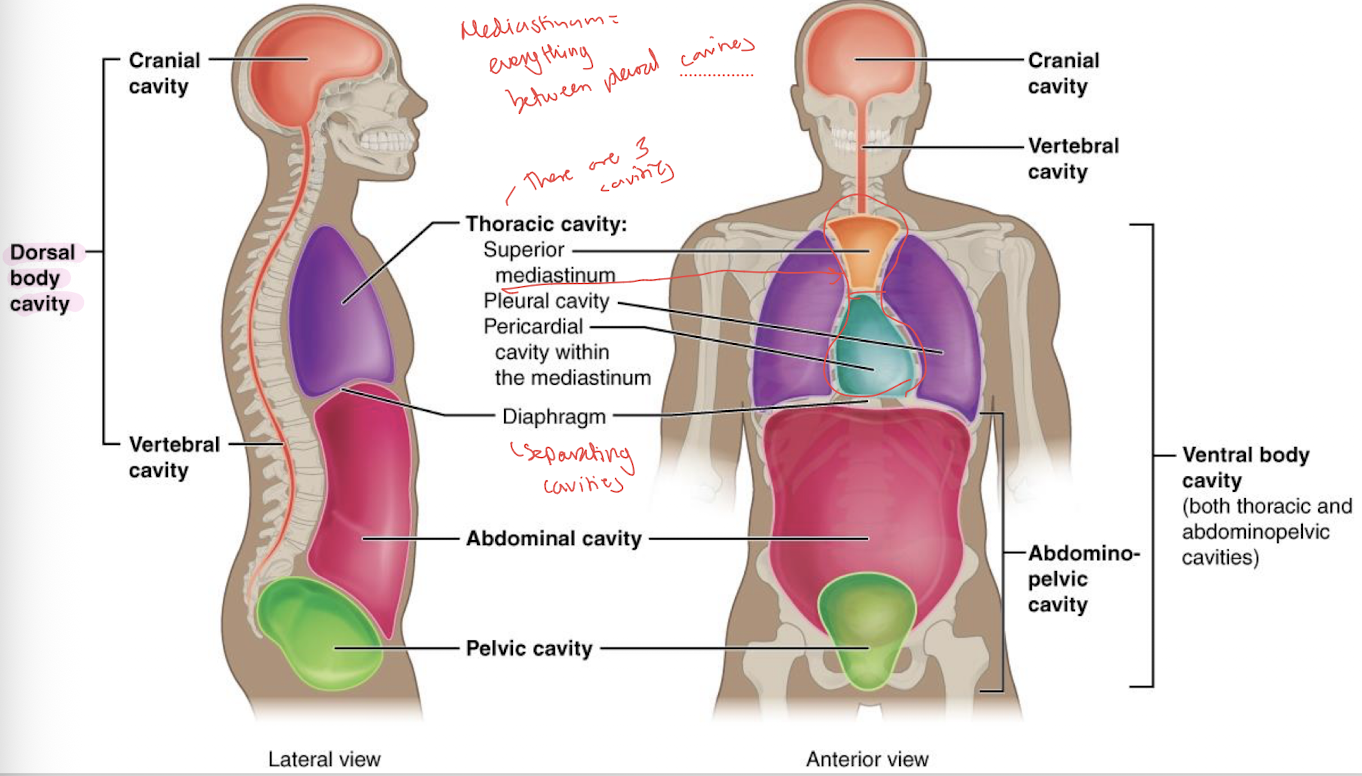
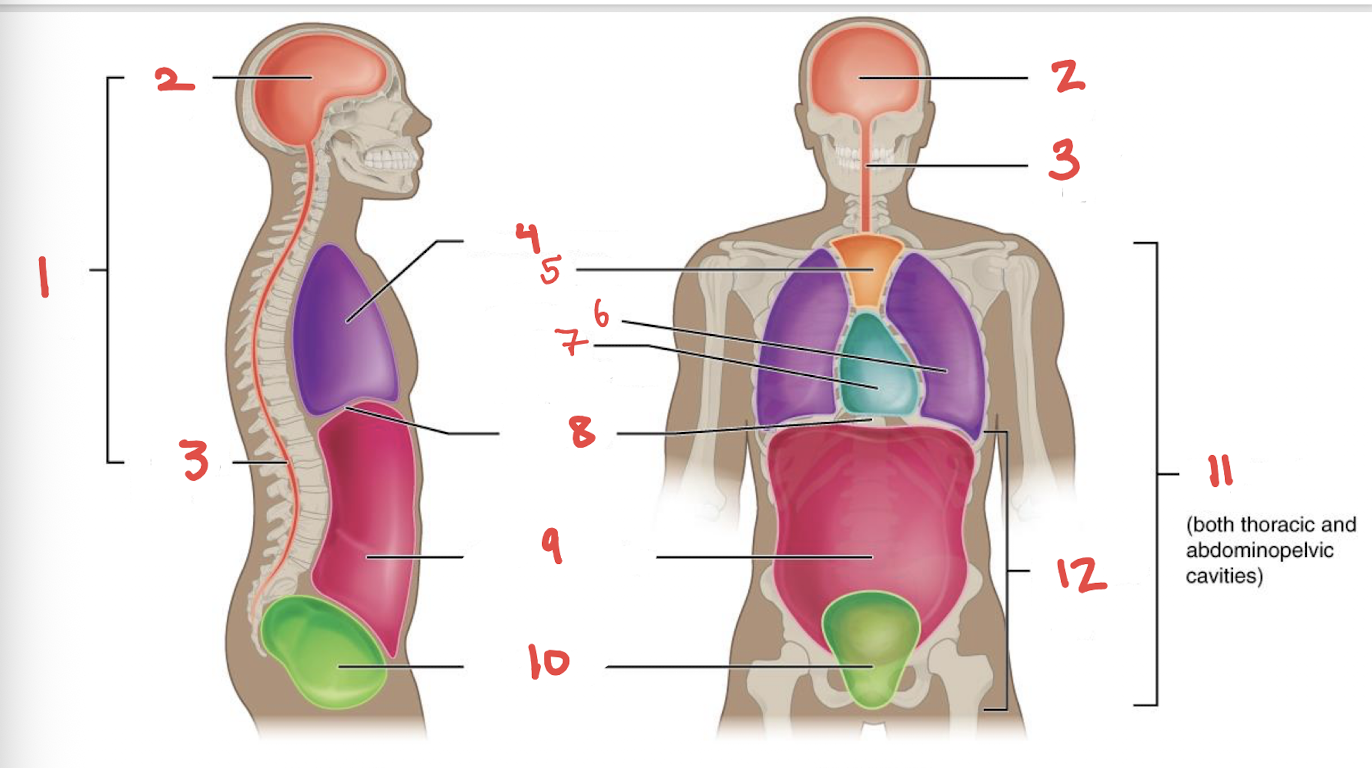
What is number 10?
Pelvic Cavity
What organs are generally found in the pelvic cavity?
Structures including the urinary bladder and reproductive organs.

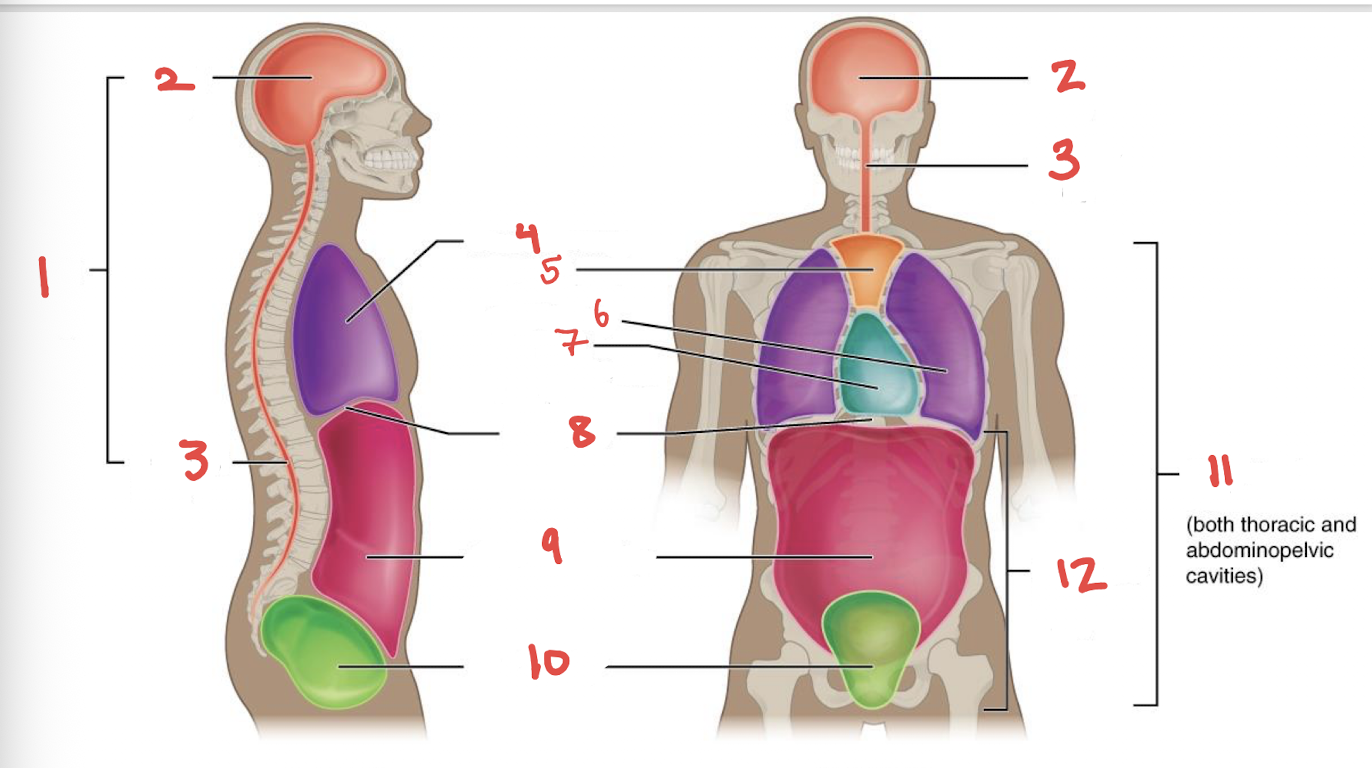
What is number 11?
Ventral Body Cavity
What does the ventral body cavity contain?
The thoracic cavity and abdominopelvic cavity.

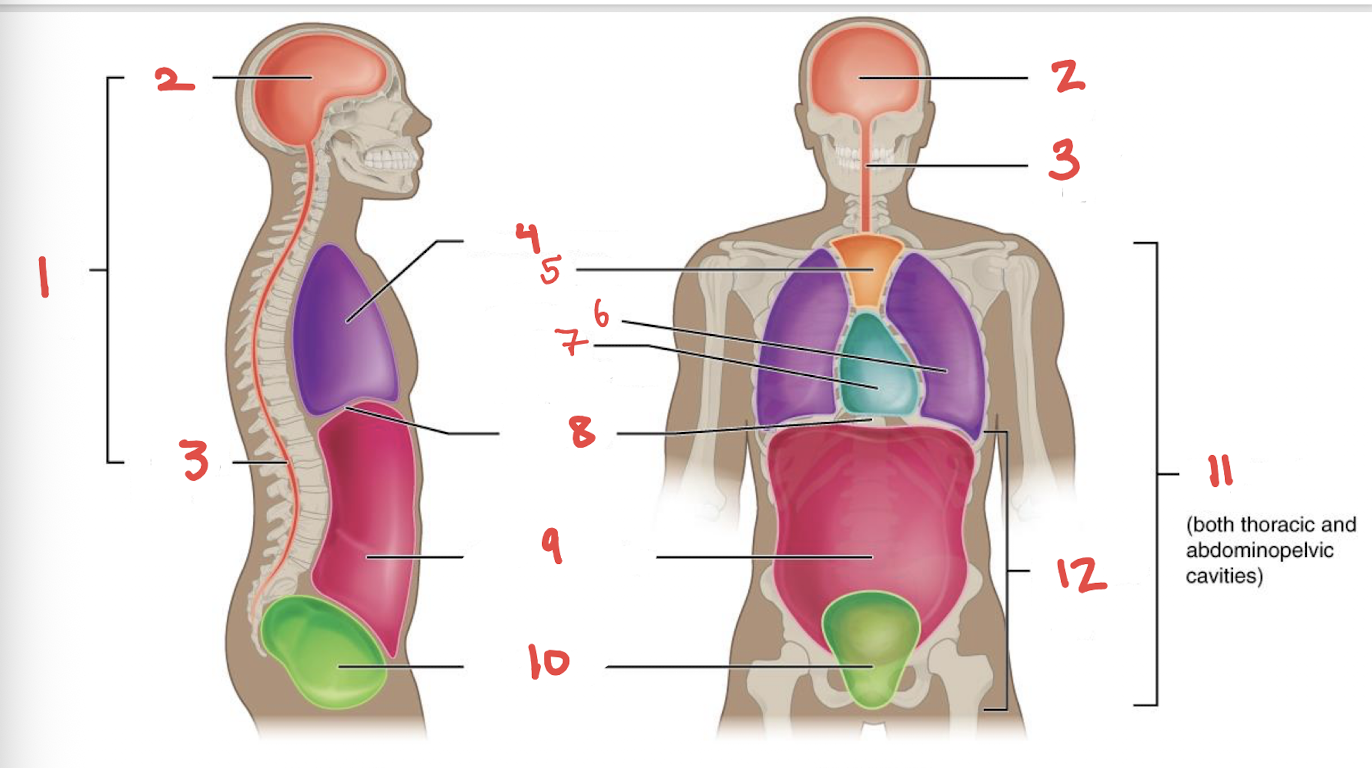
What is number 12?
Abdomino-pelvic Cavity
What are the two subdivisions of the abdominopelvic cavity?
The abdominal cavity and pelvic cavity.
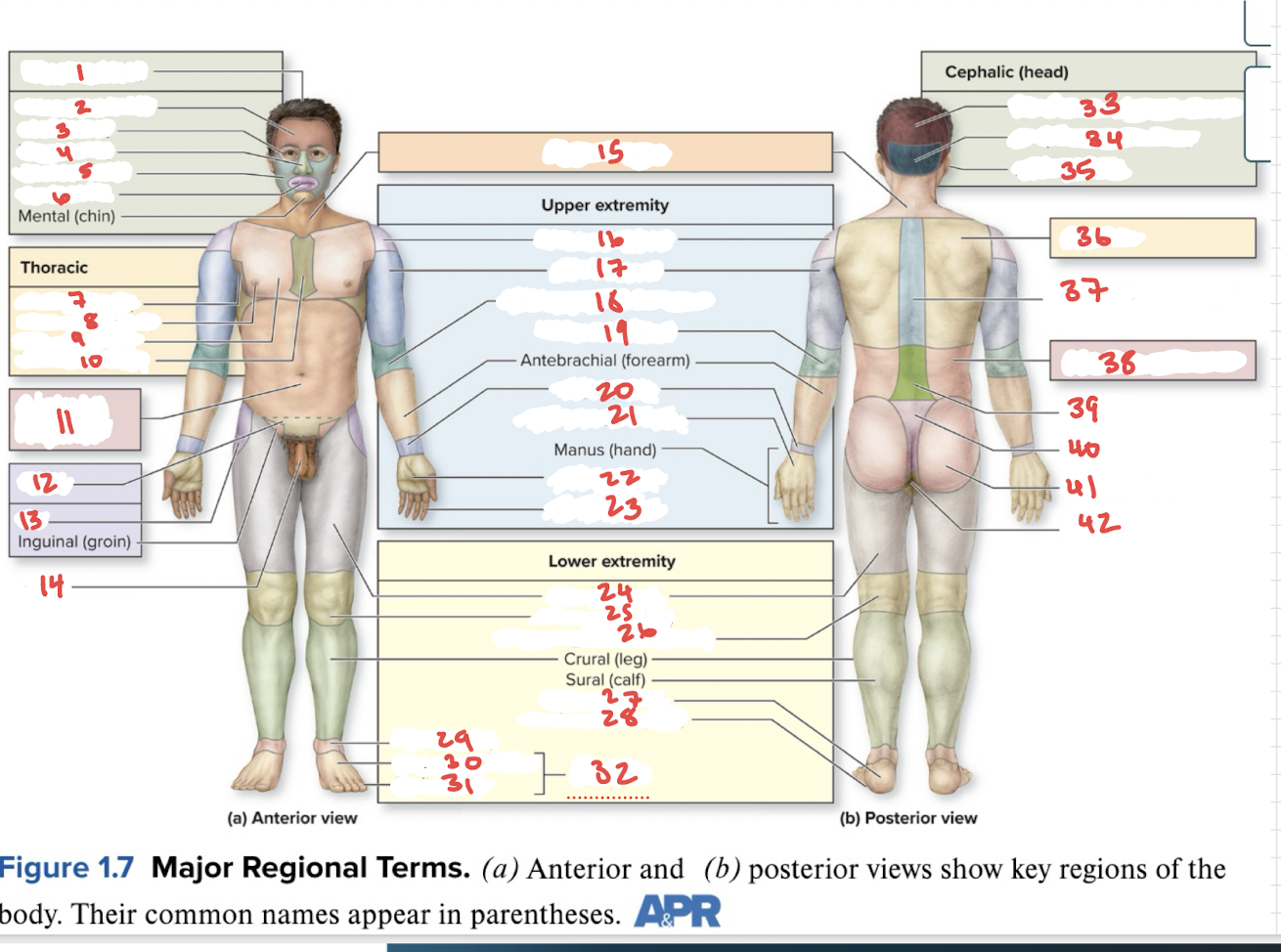
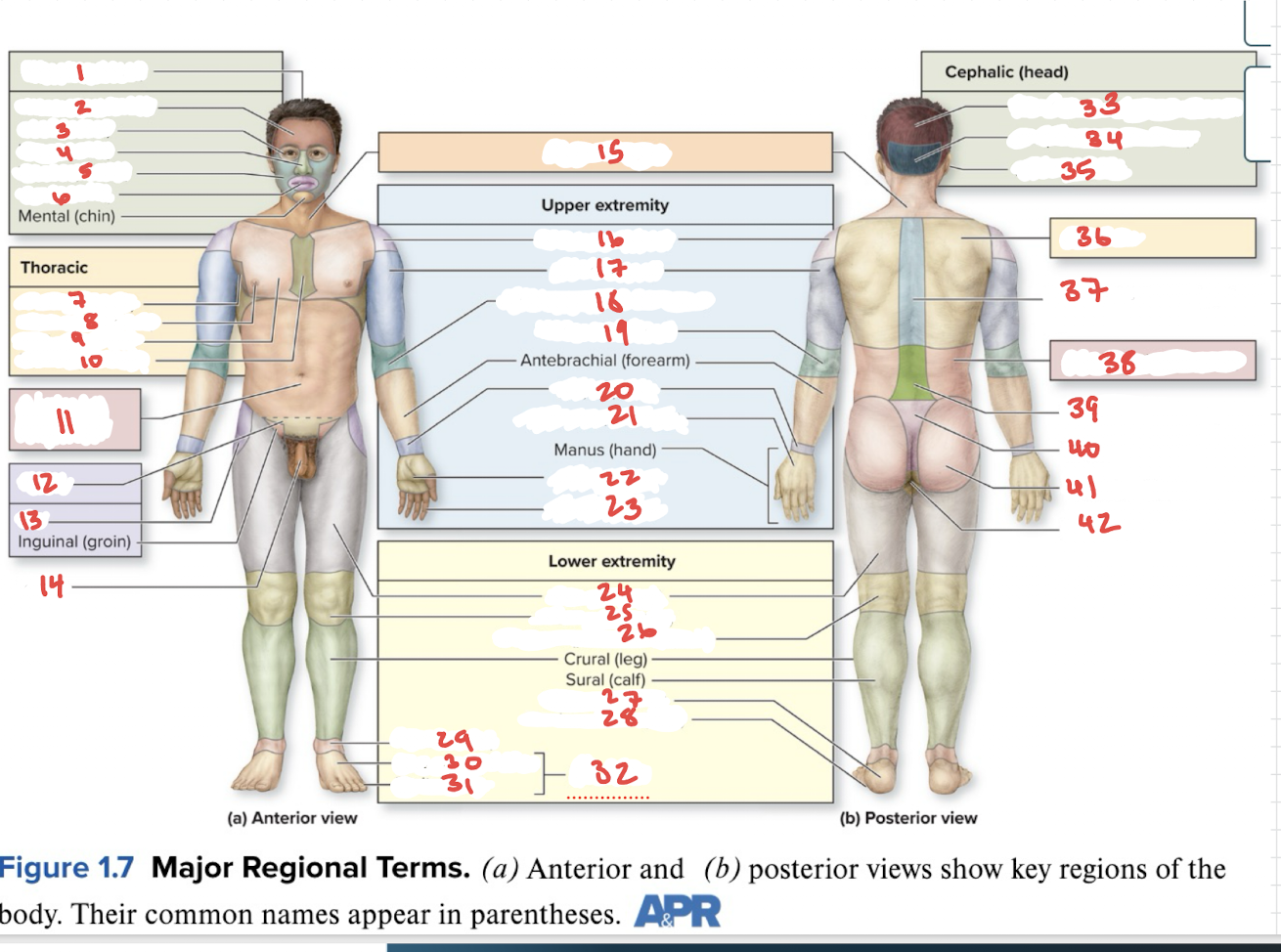
What is number 1?
Cephalic
(head)

What is number 2?
Frontal
(Forehead)

What is number 3?
Orbital
eye
What is number 4?
Nasal
nose
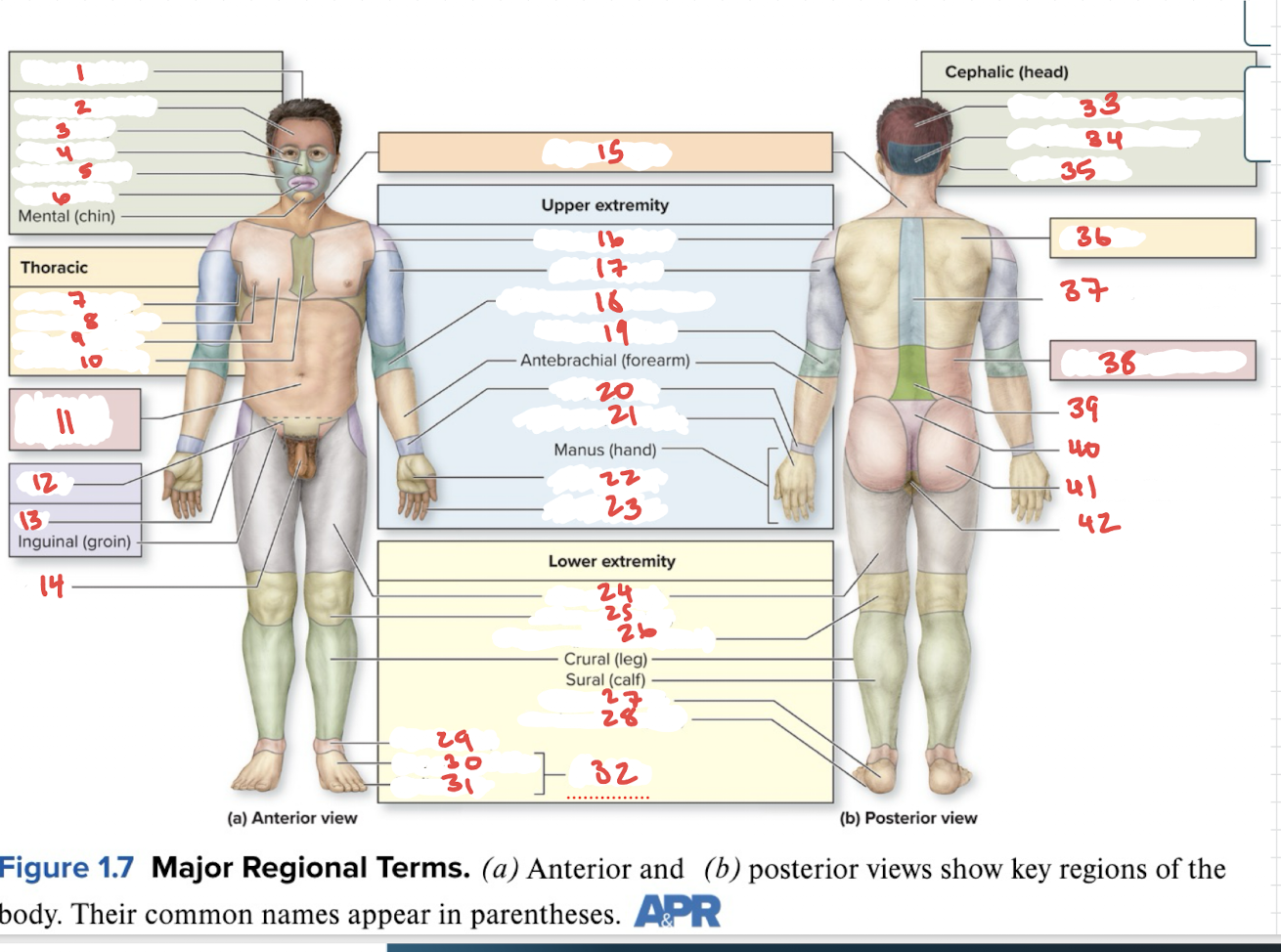
What is number 5?
Buccal
cheek
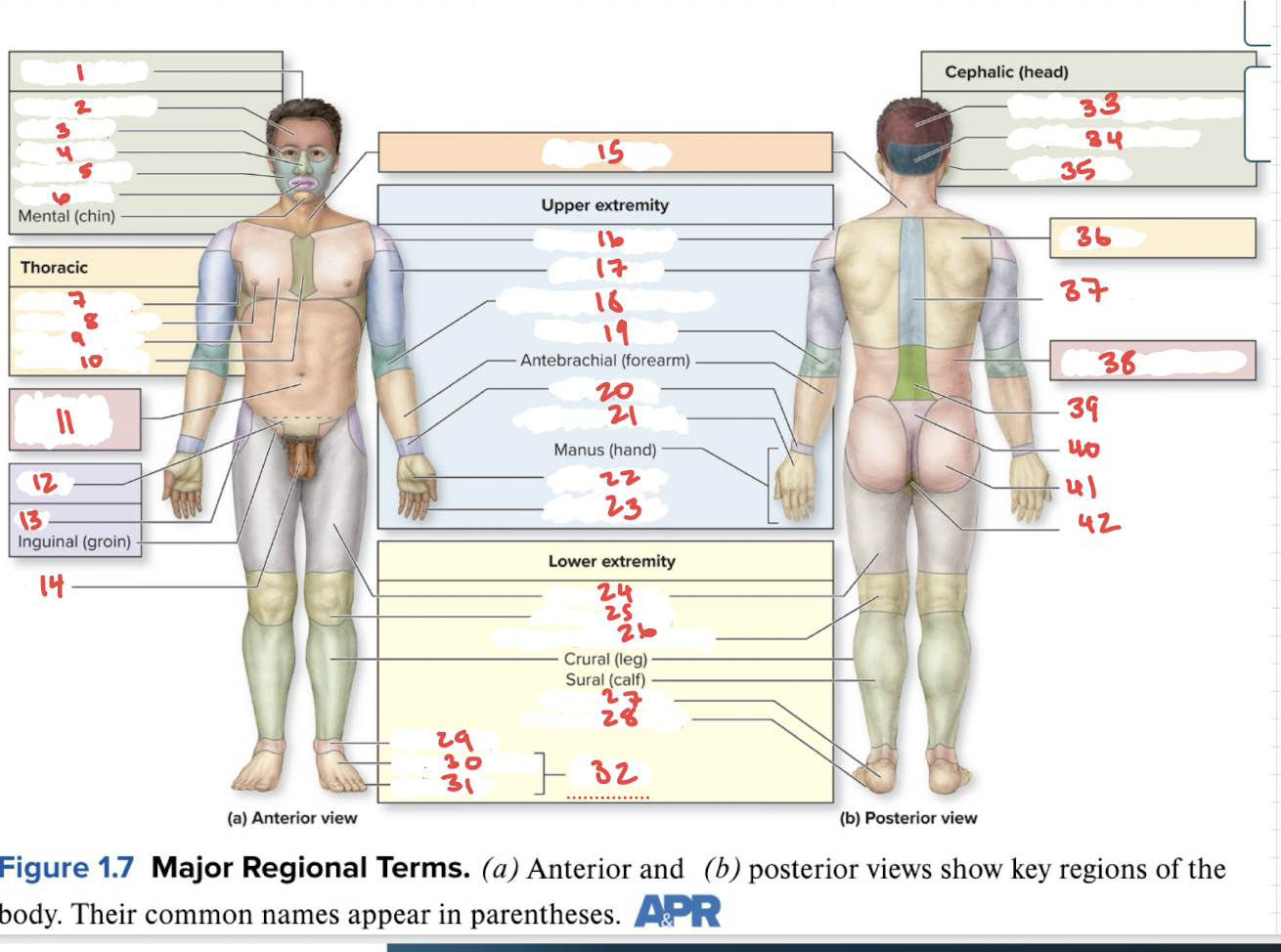
What is number 6?
Oral
Mouth
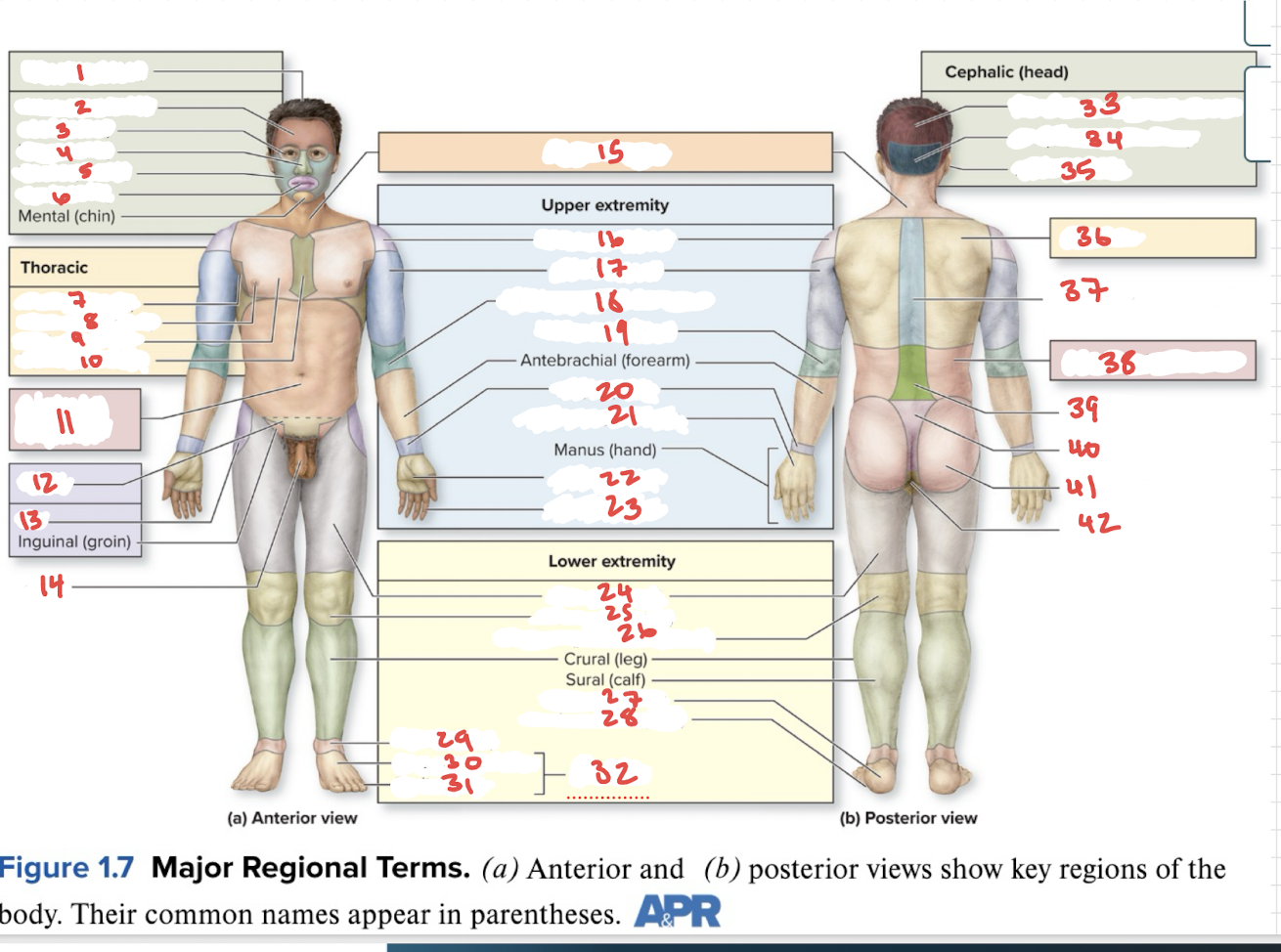
What is number 7?
Axillary
Armpit
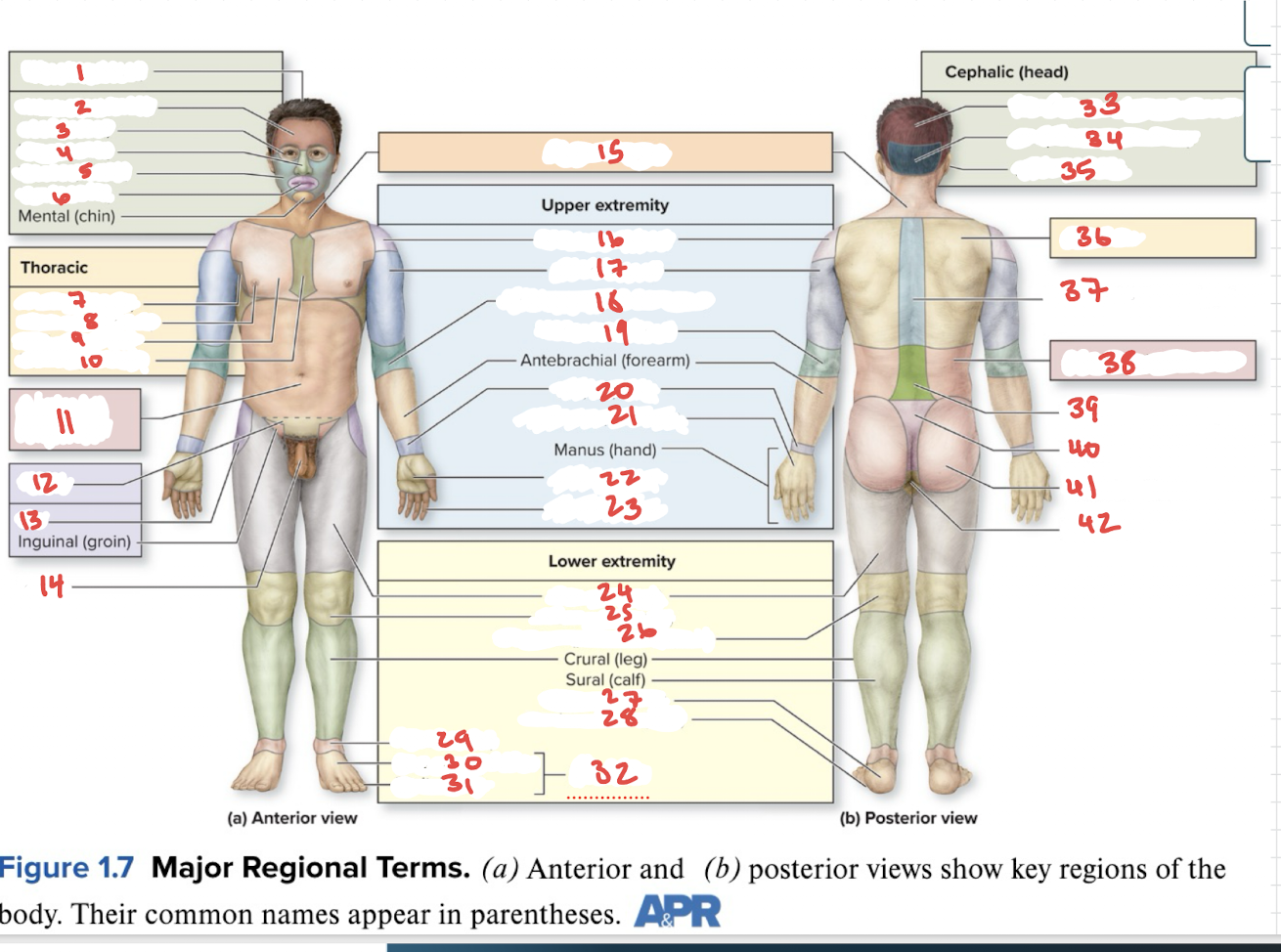
What is number 8?
Mammary
Breast
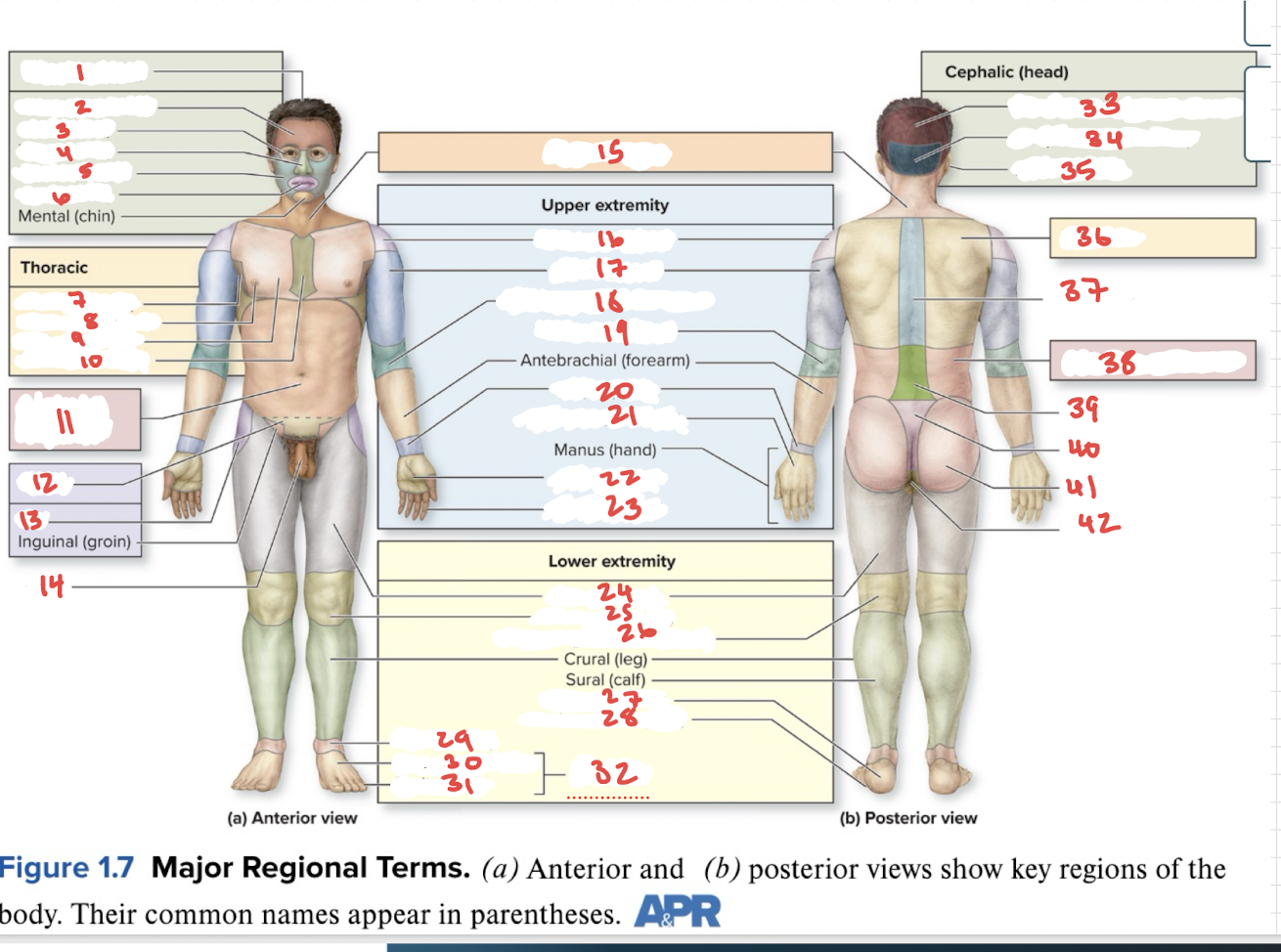
What is number 9?
Pectoral (Chest)
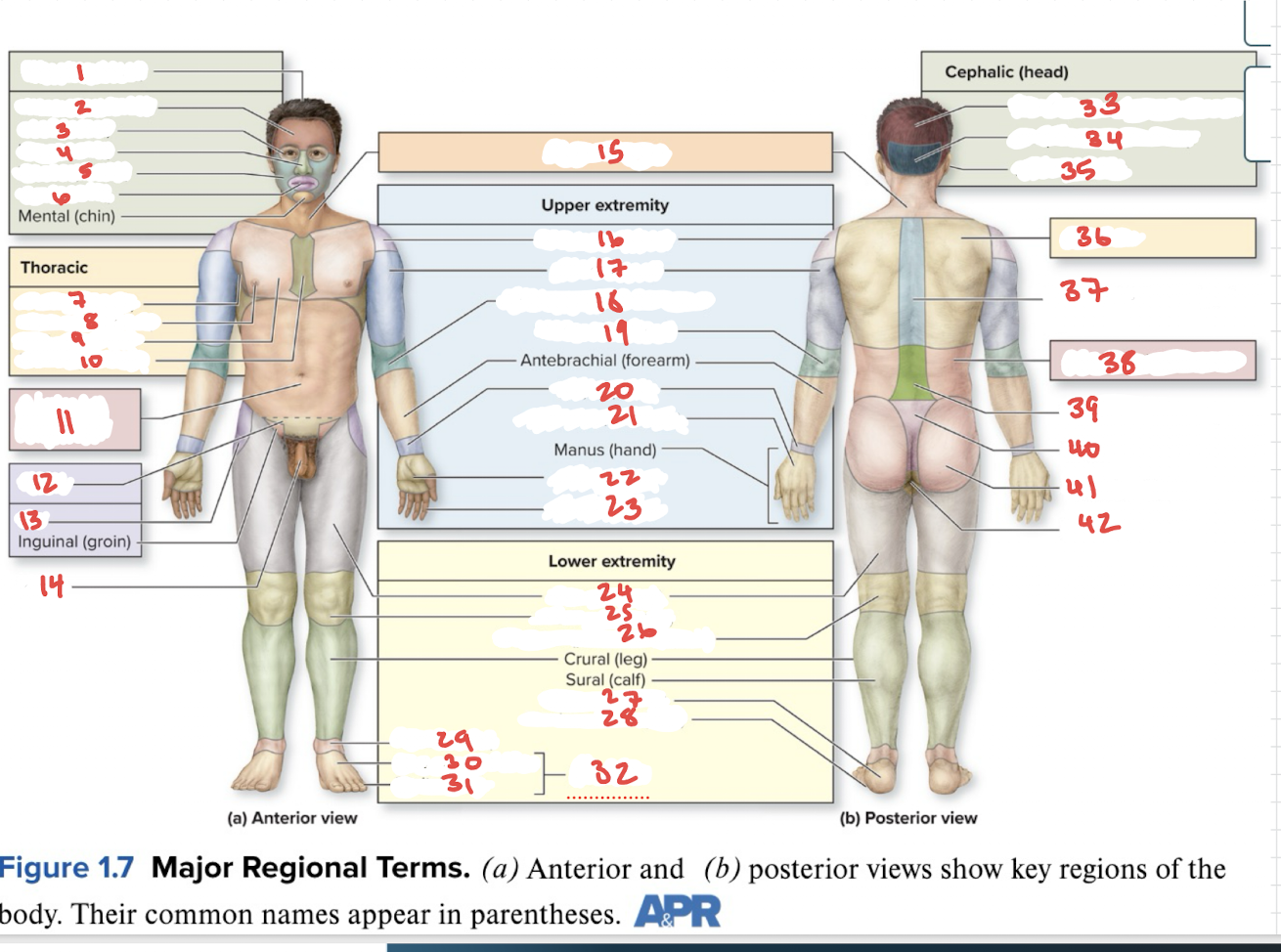
What is number 10?
Sternal
Sternum
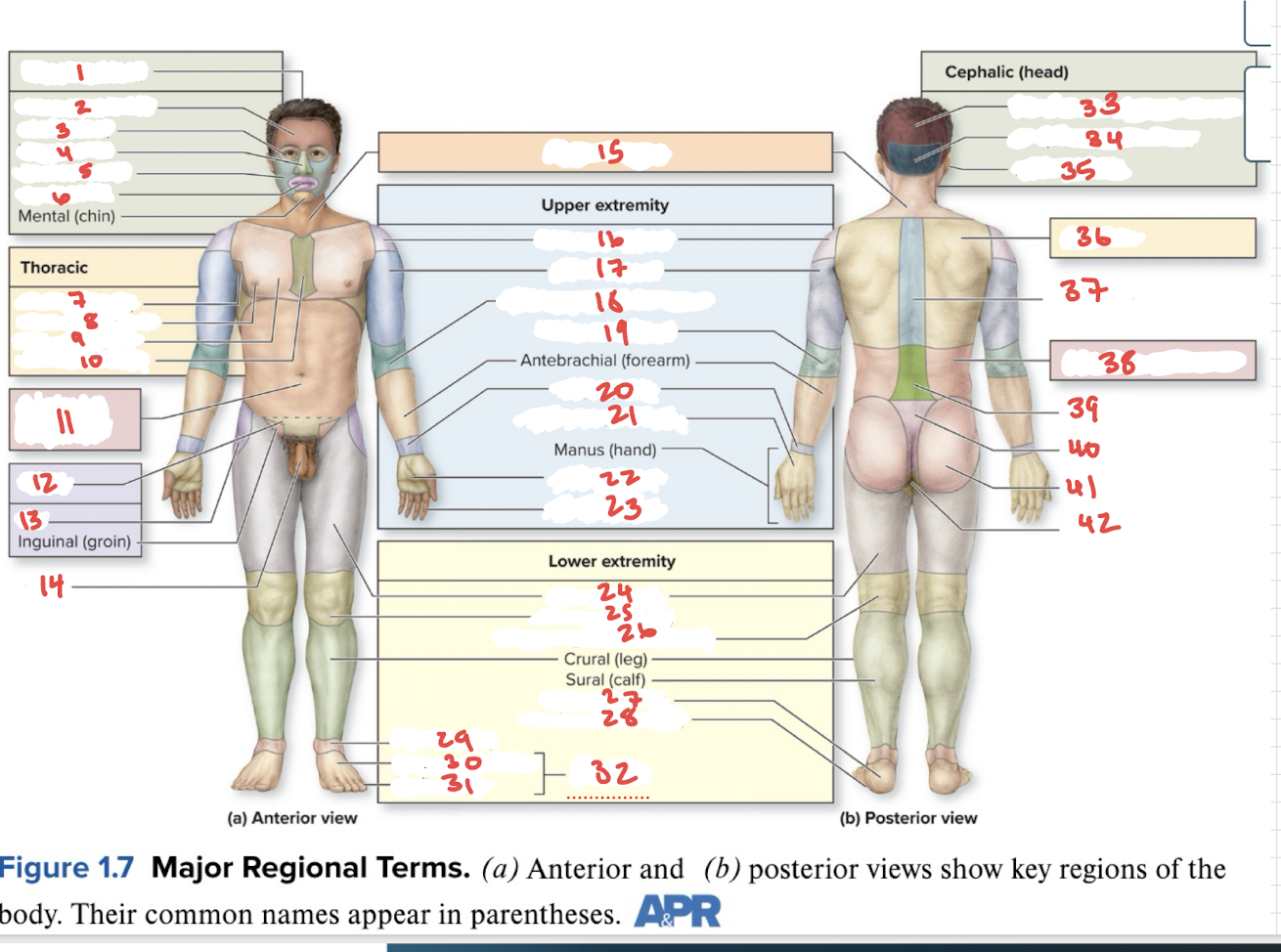
What is number 11?
Abdominal
abdomen
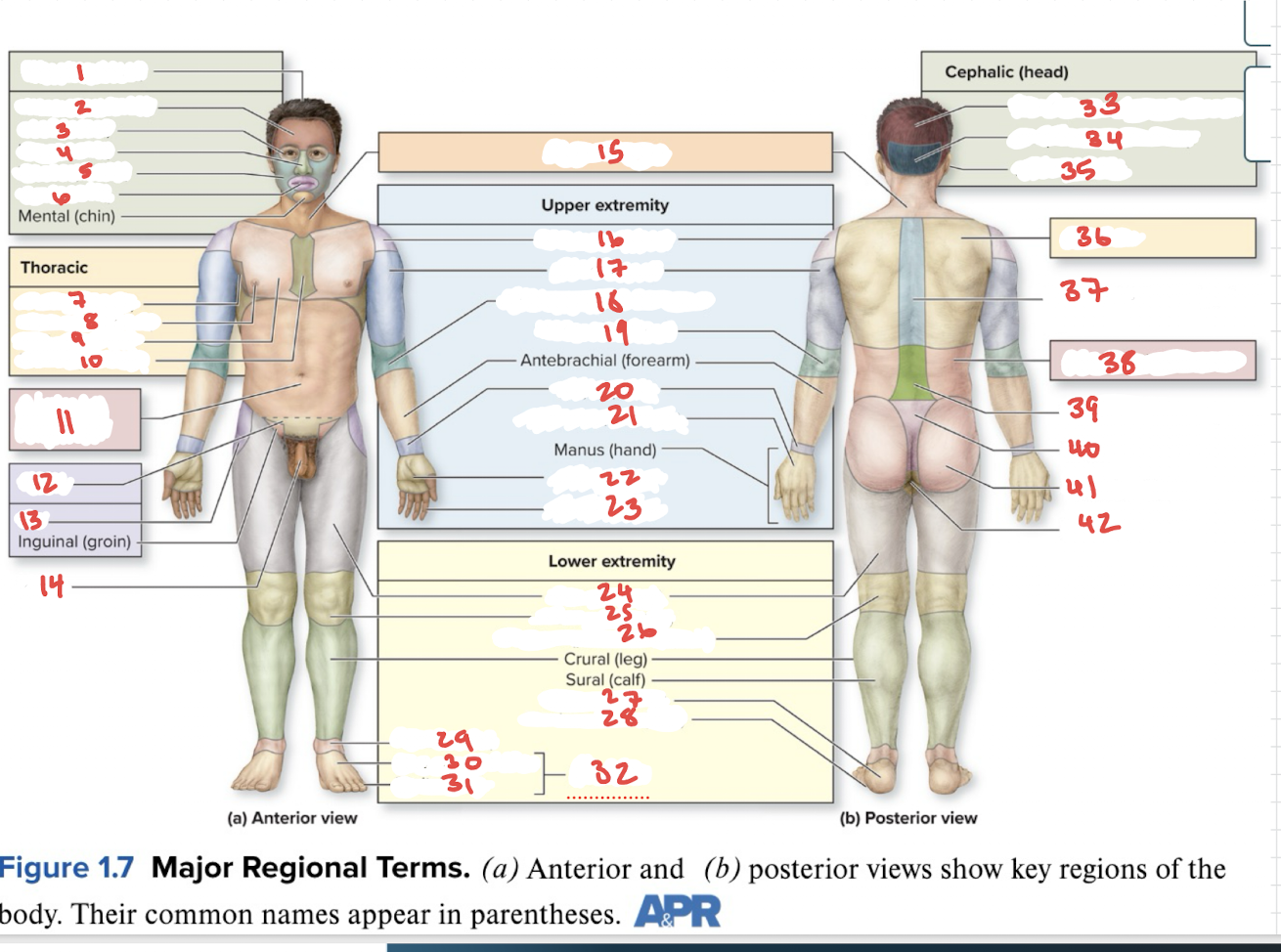
What is number 12?
Pelvic
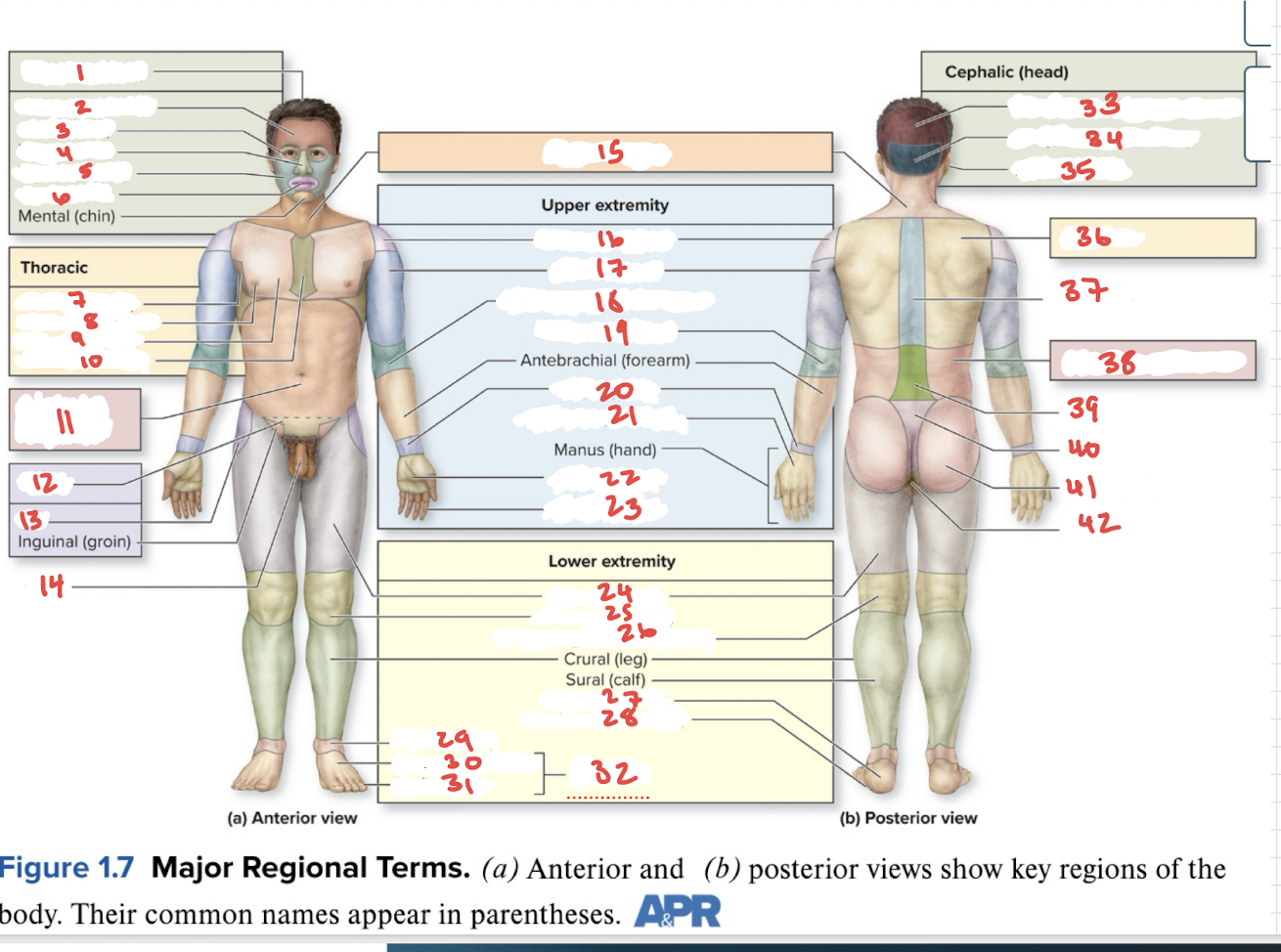
What is number 13?
Hip
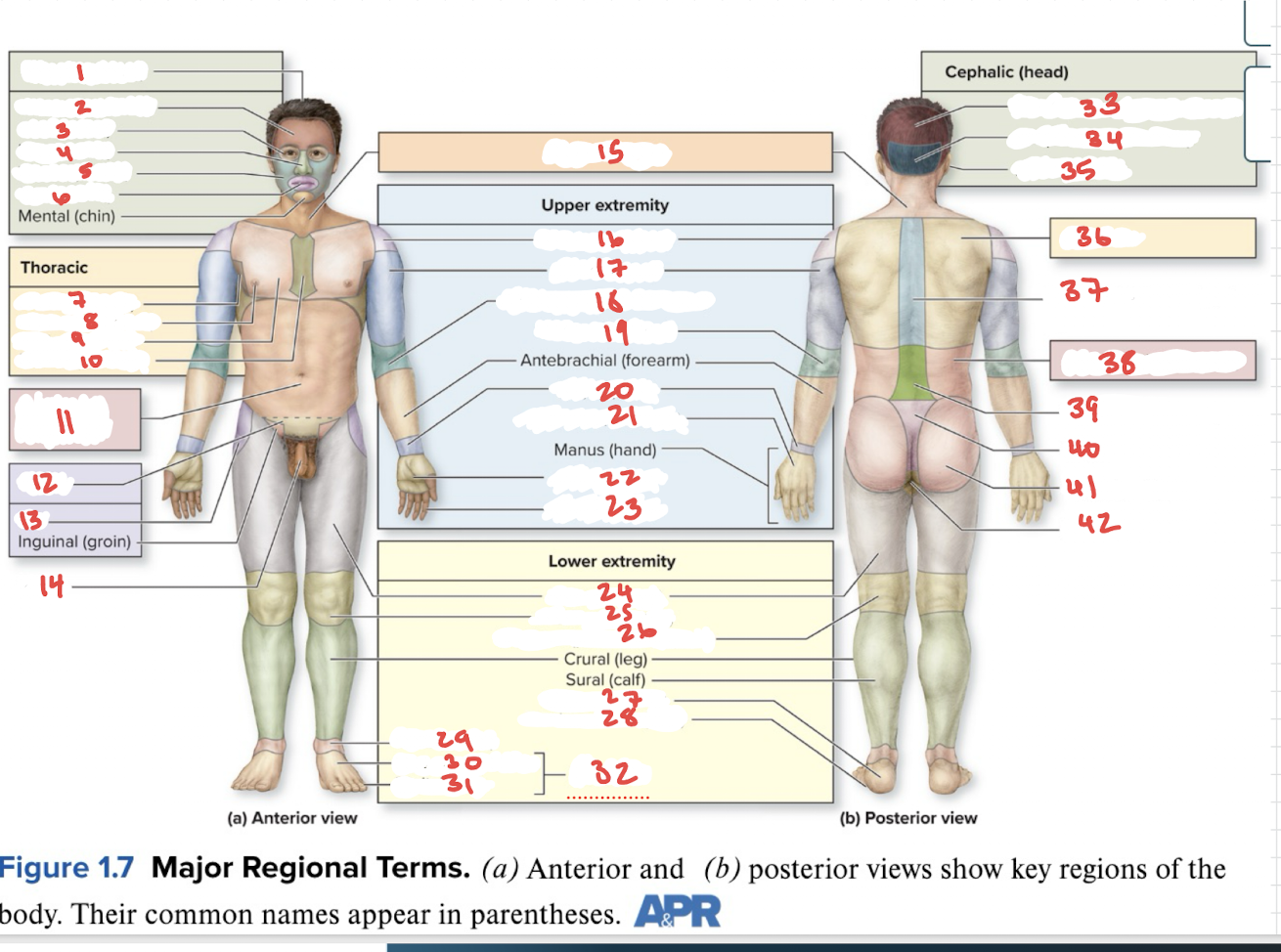
What is number 14?
Pubic
What is number 15?
Cervical
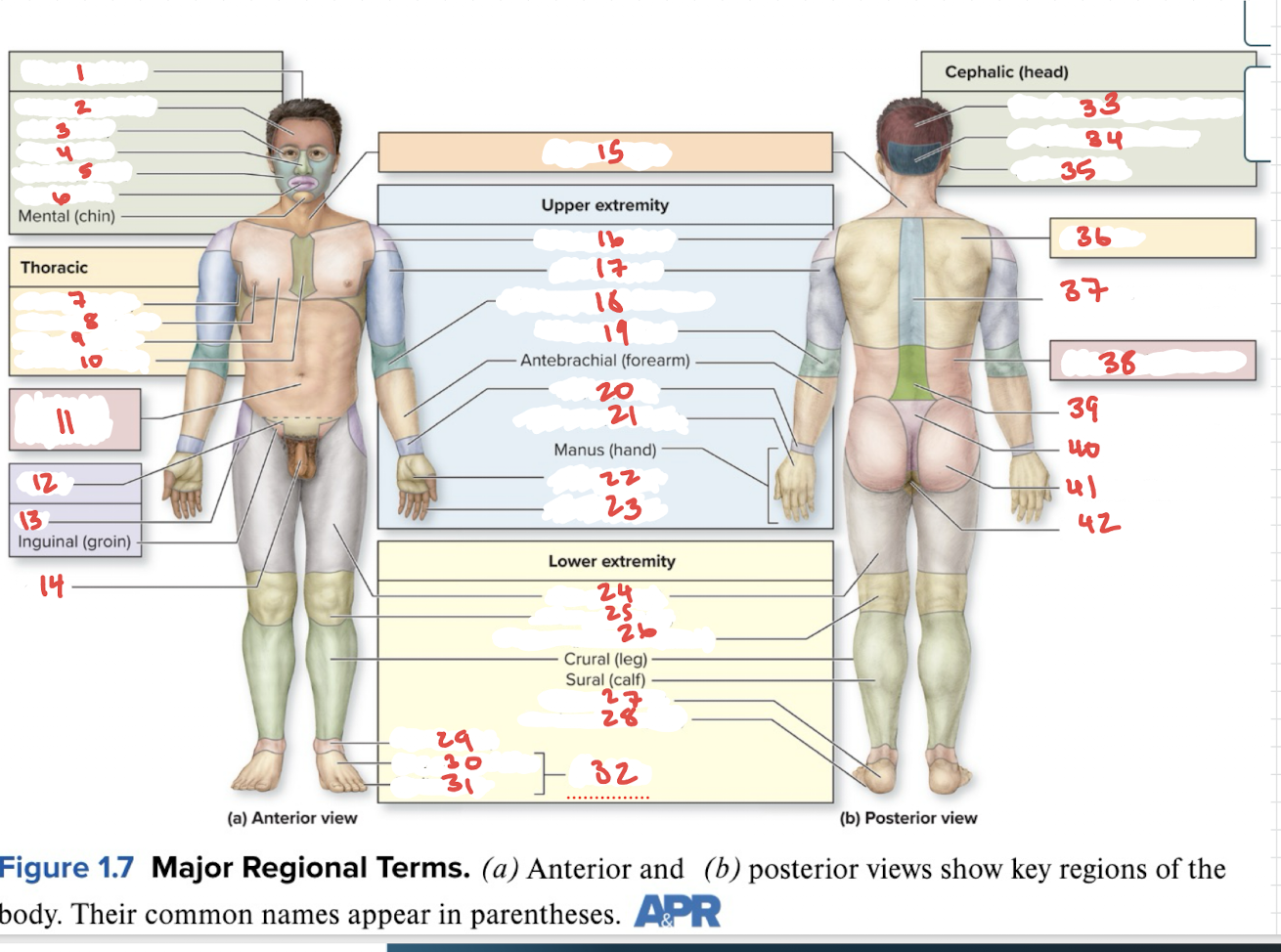
What is number 16?
Deltoid
shoulder
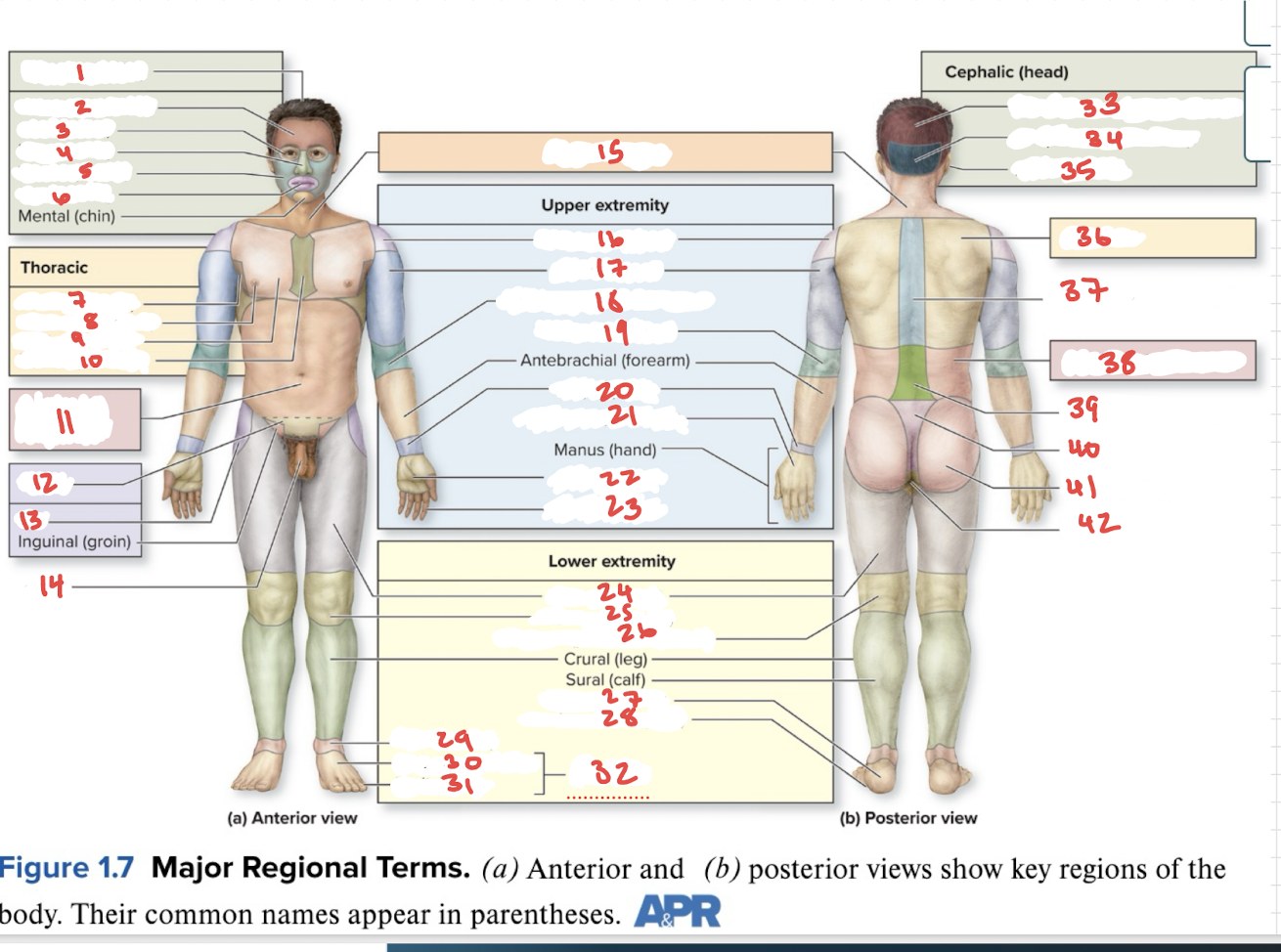
What is number 17?
Brachial
Arm
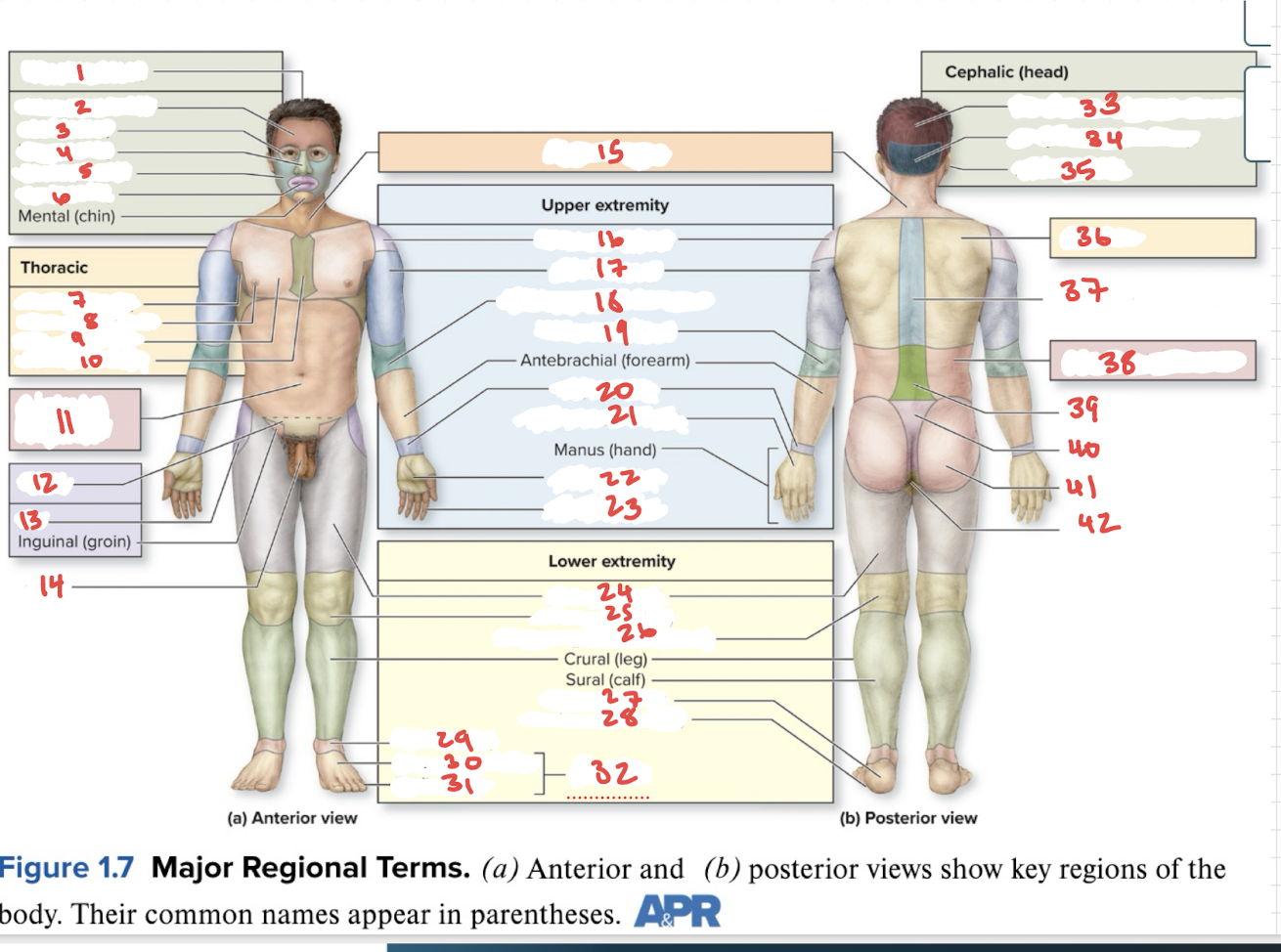
What is number 18?
Antecubital
Front of elbow

What is number 19?
Olecranal
Elbow
What is number 20?
Carpal
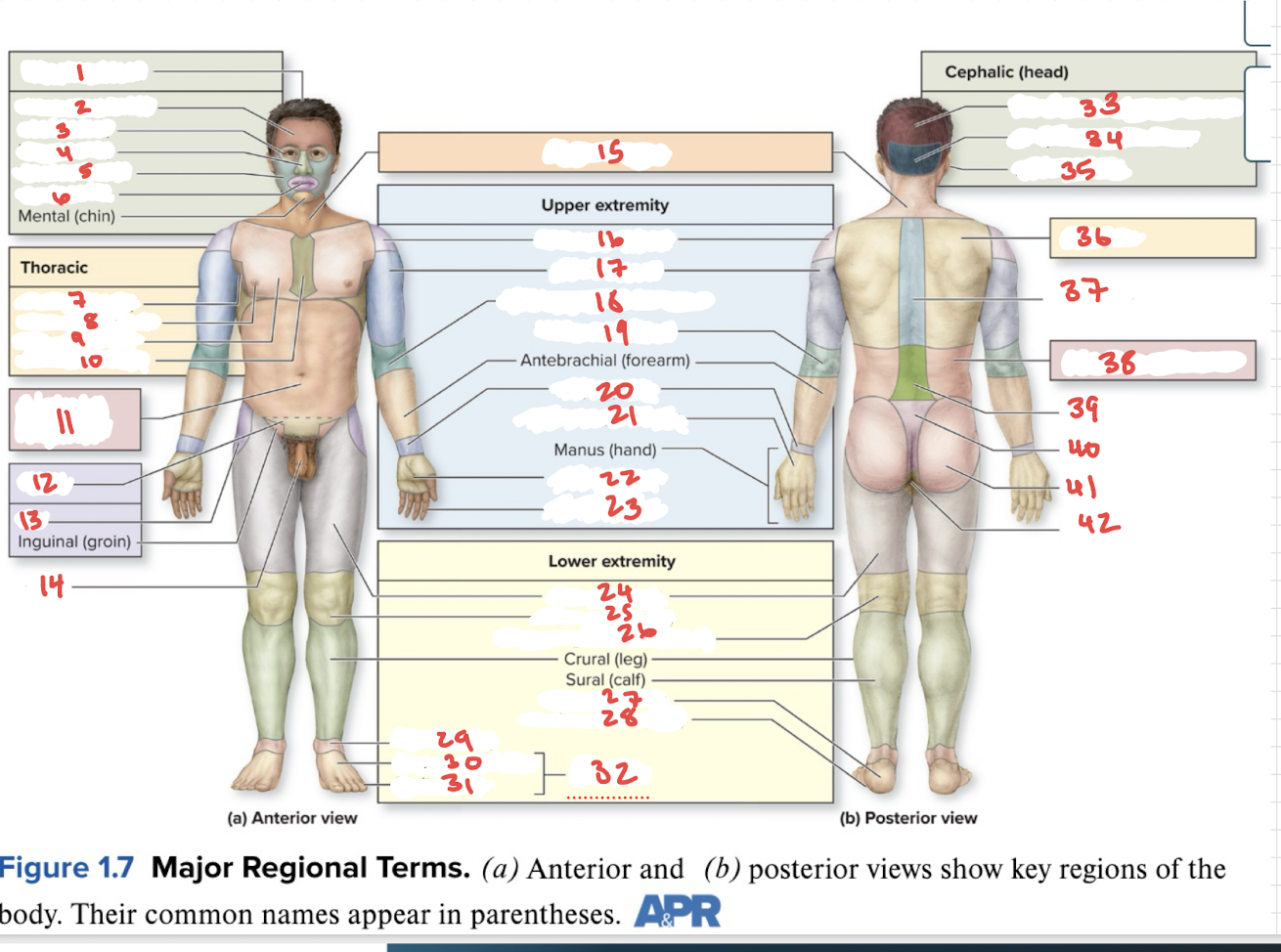
What is 21?
Dorsum of hand
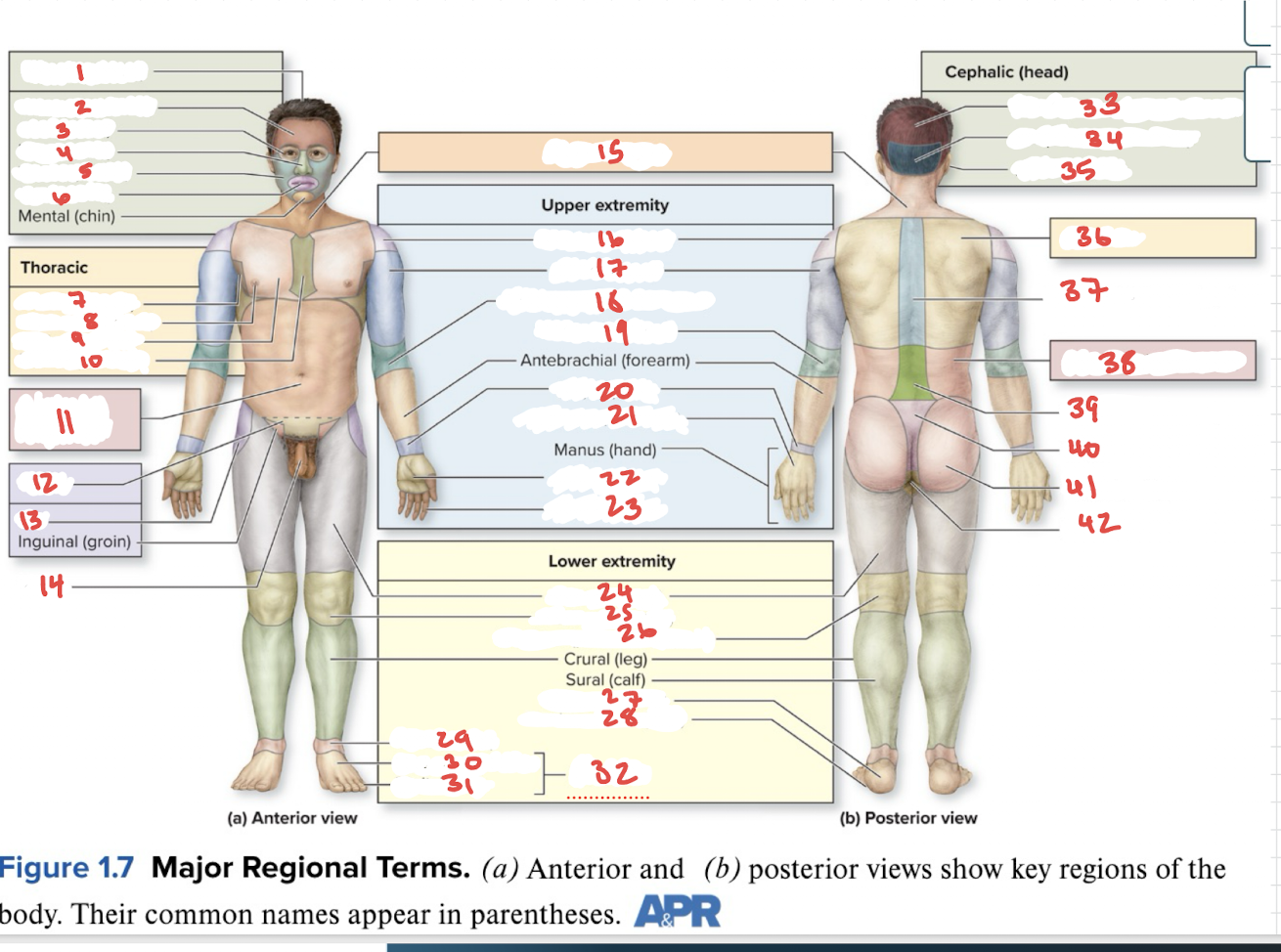
What is 22?
Palmar
palm
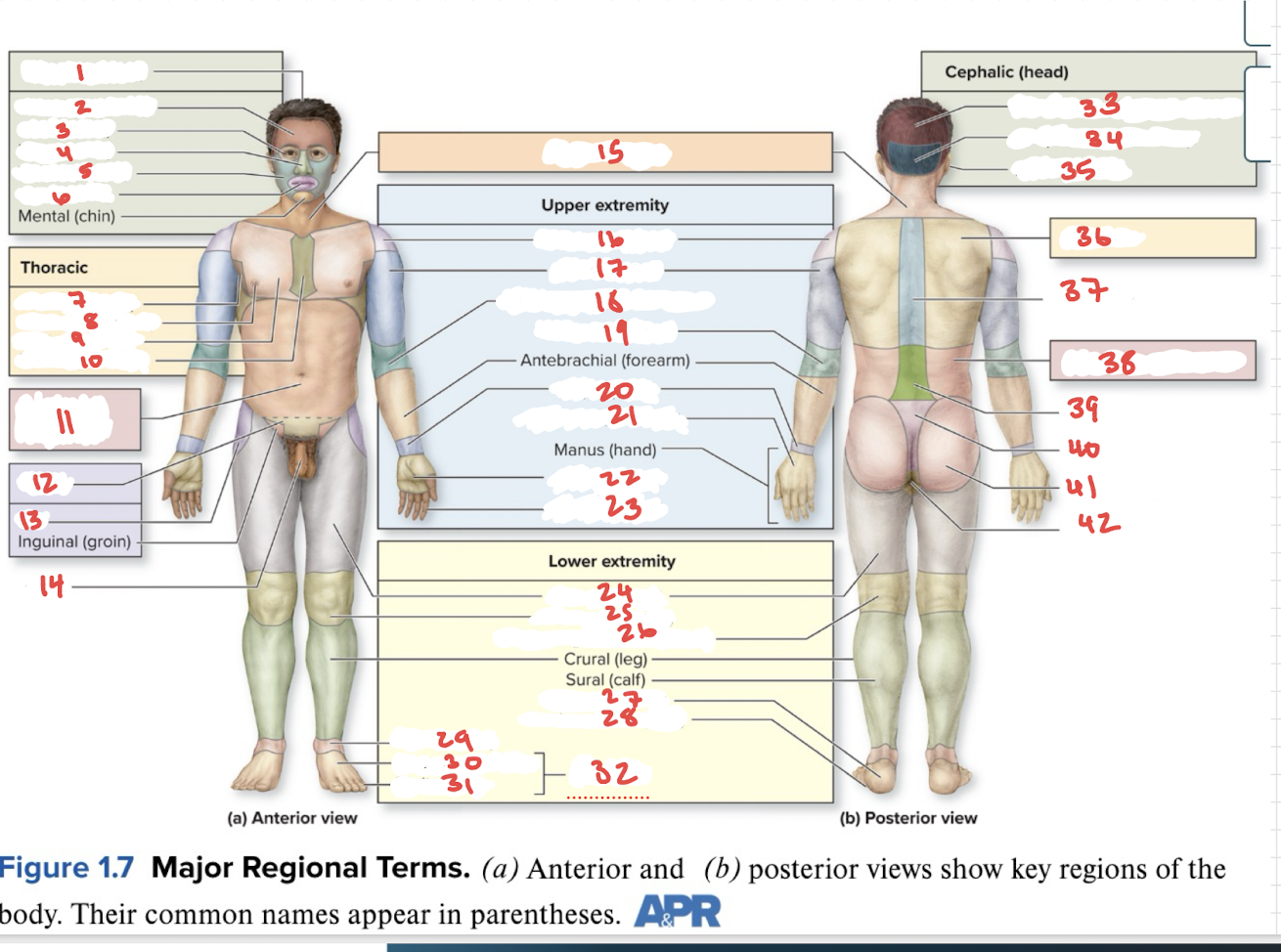
What is 23?
Digital
finger

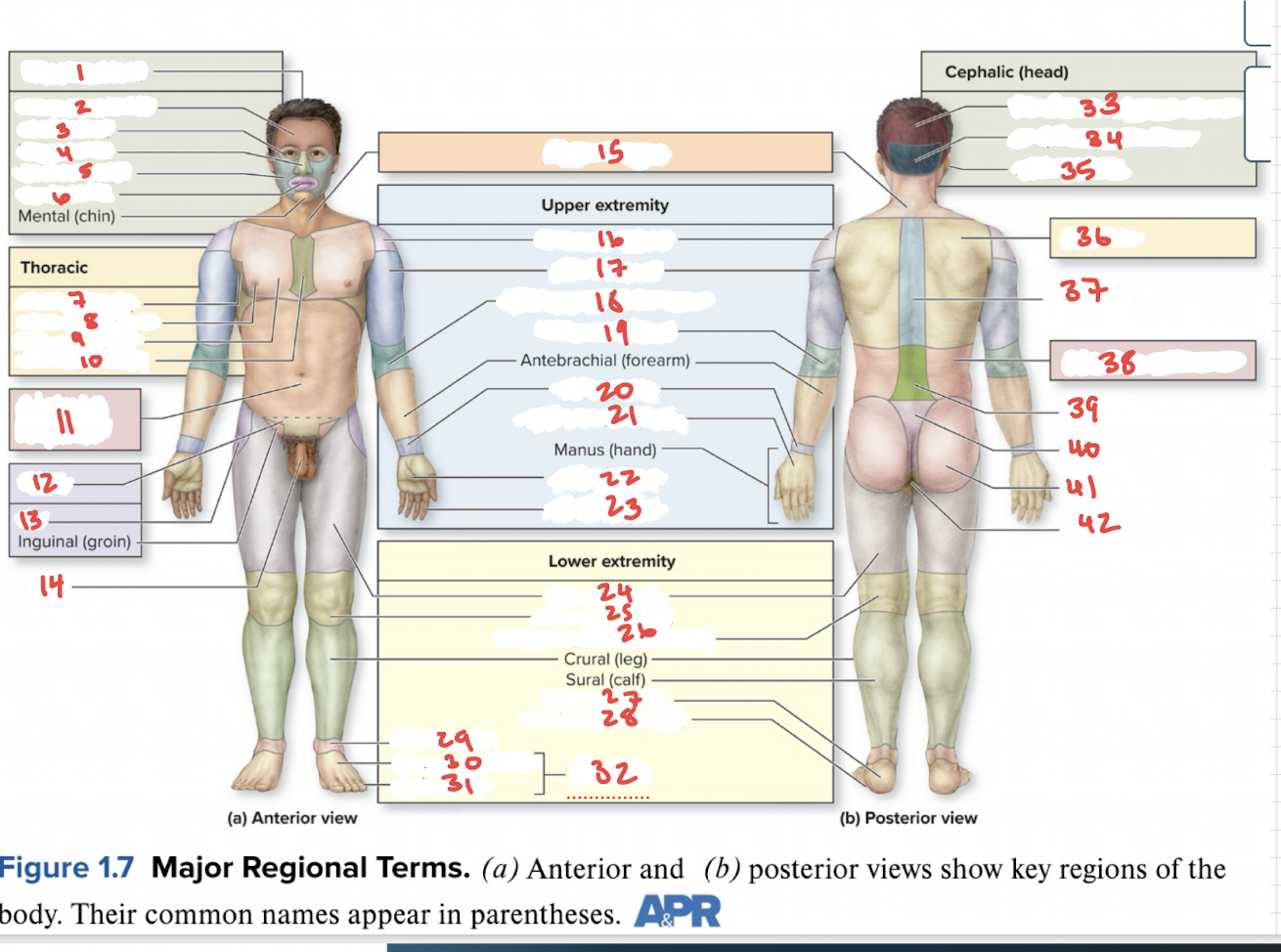
What is 24?
Femoral
thigh
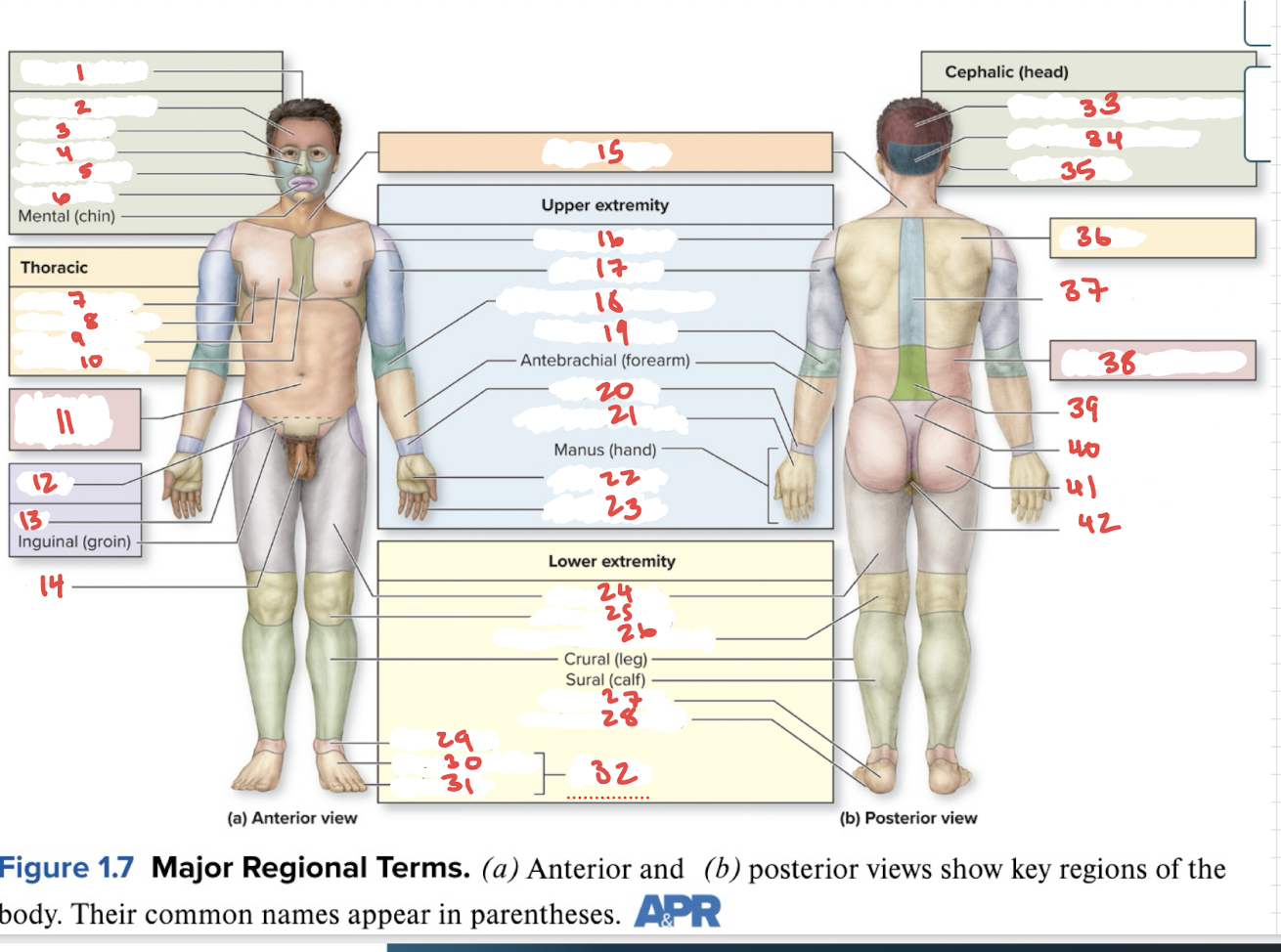
What is 25?
Patellar
kneecap

What is 26?
Popliteal
posterior of knee
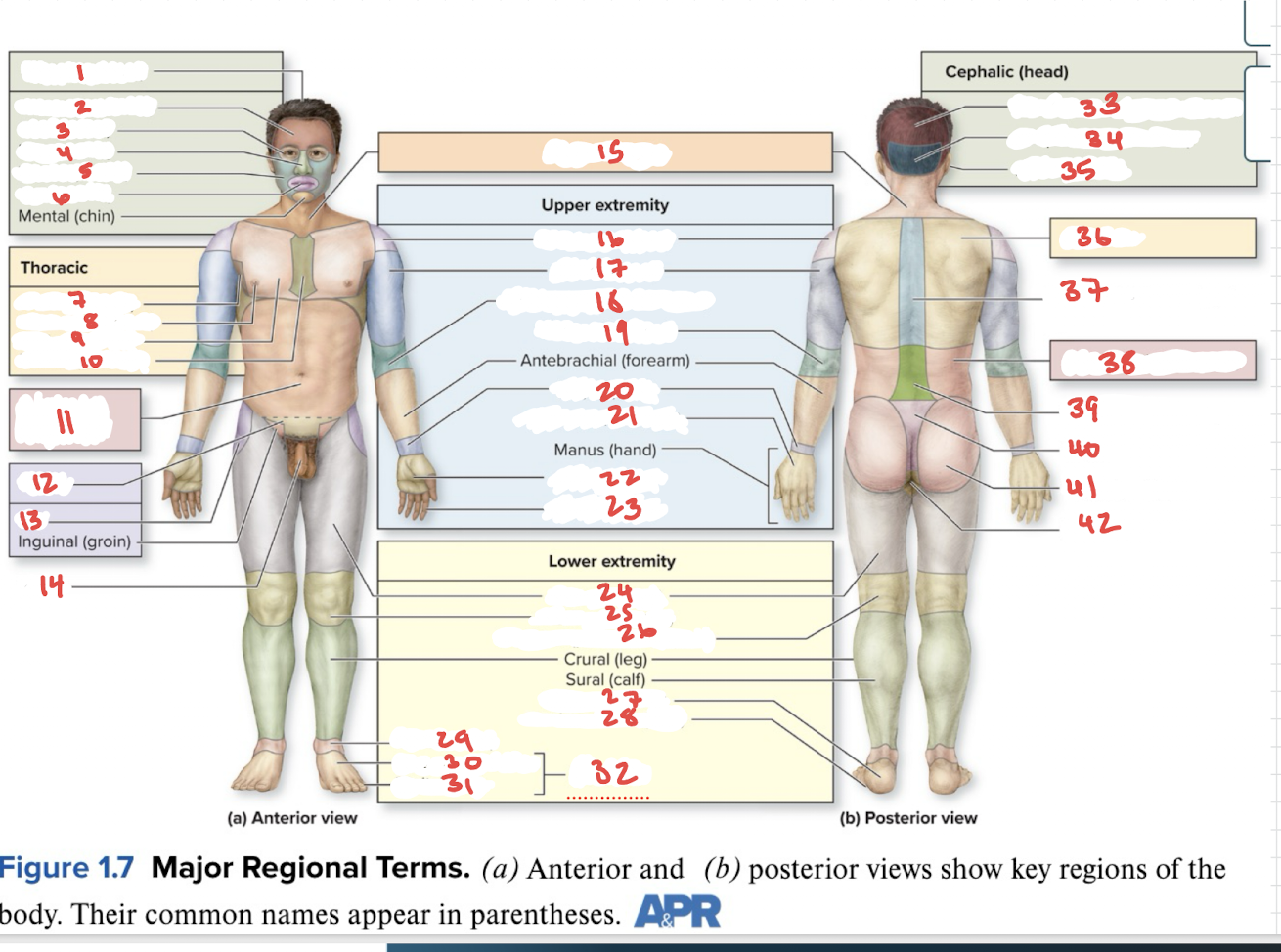
What is 27?
Calcaneal
heel
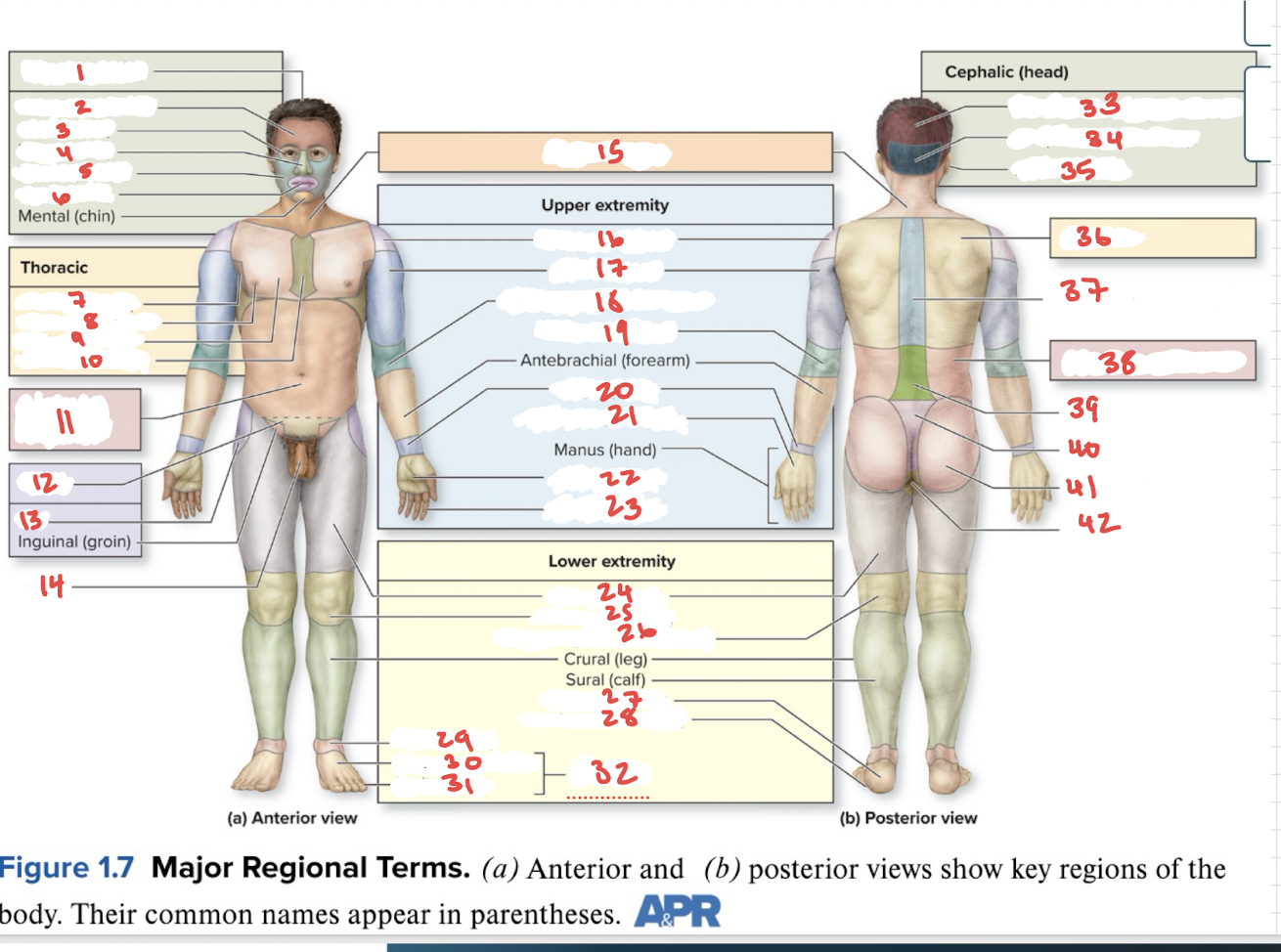
What is 28?
Plantar surface
sole

What is 29?
Tarsal
ankle
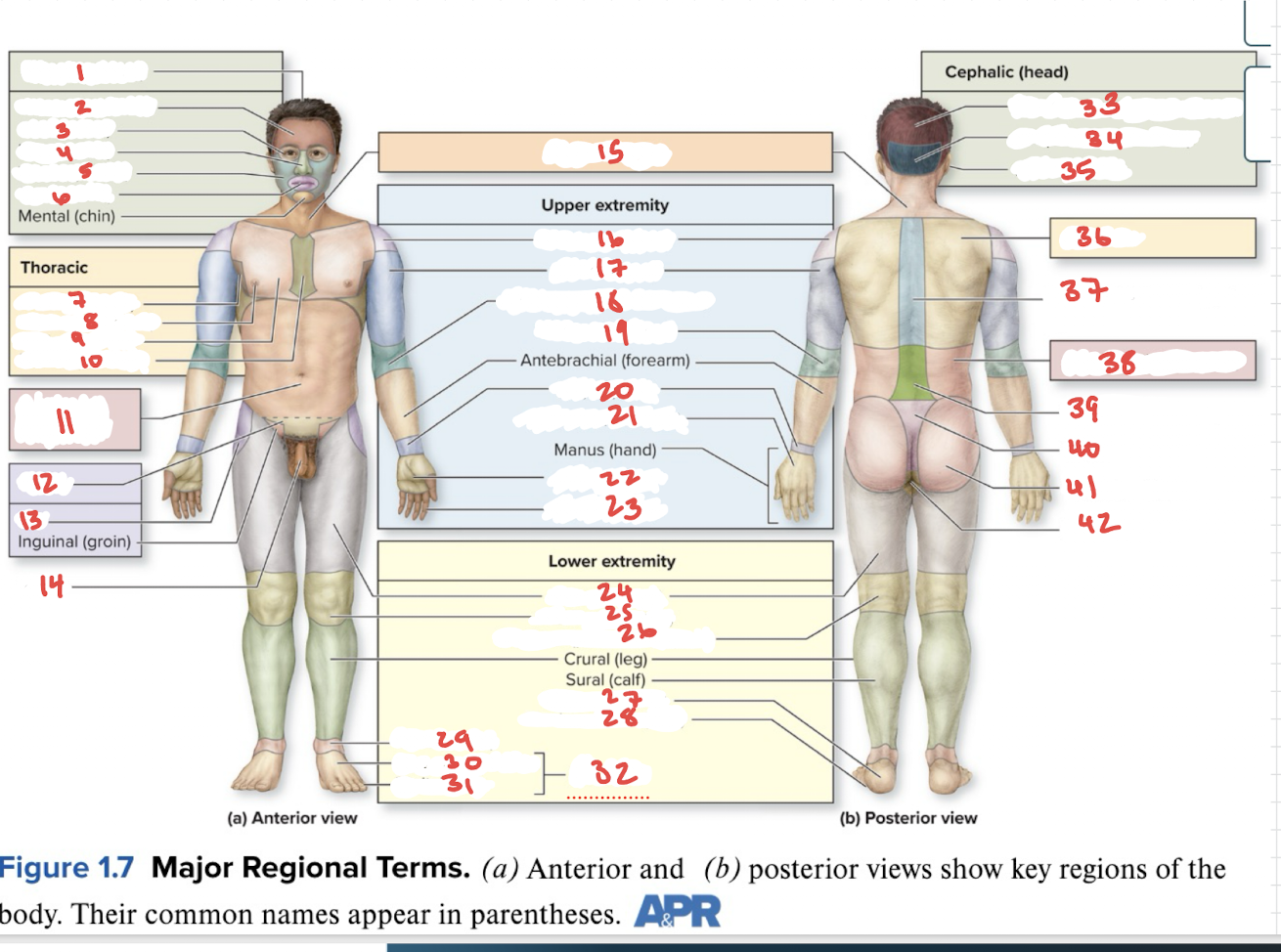
What is 30?
Dorsum of the foot
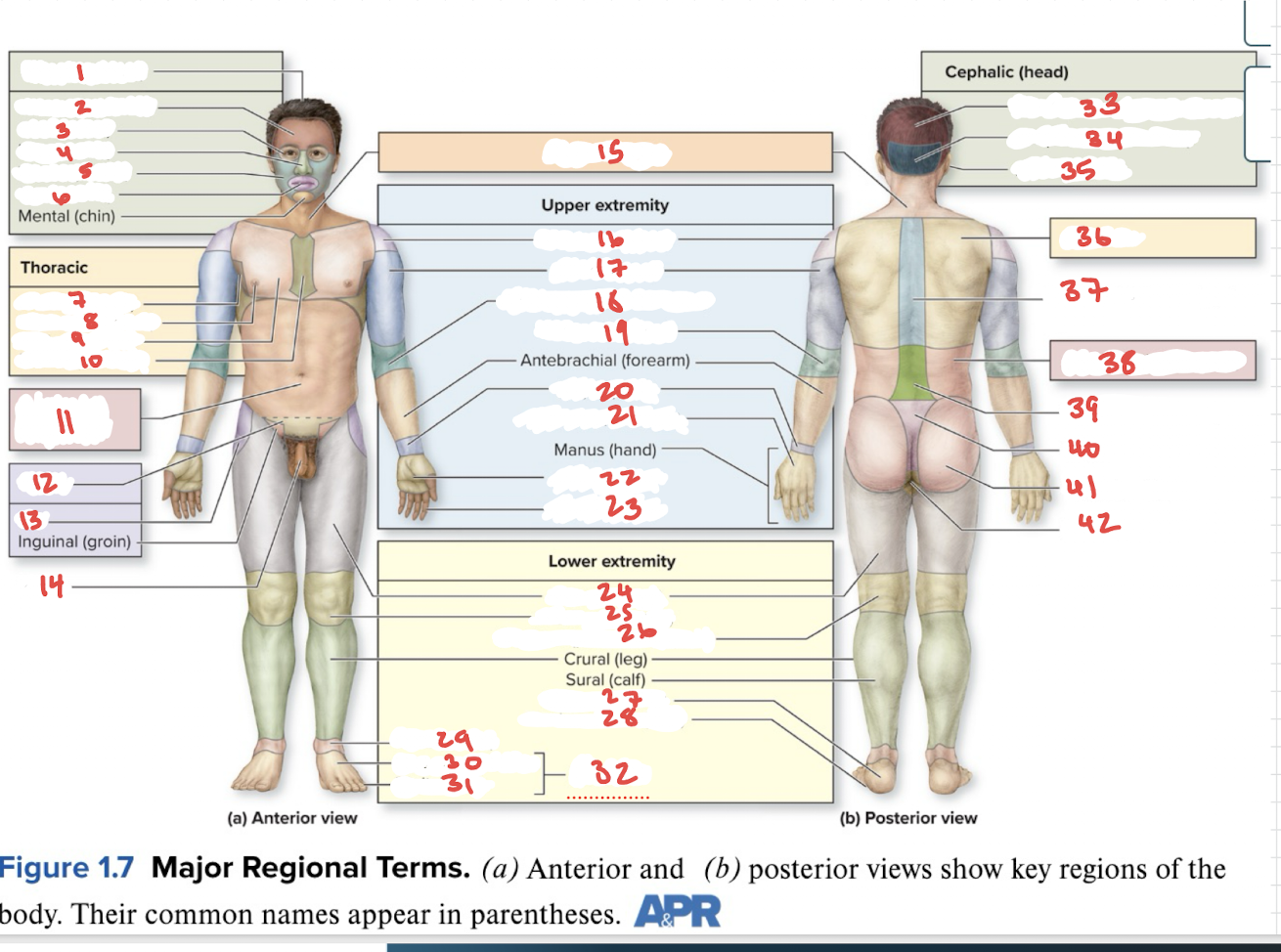
What is 31?
Digital
toe

What is 32?
Pes
foot
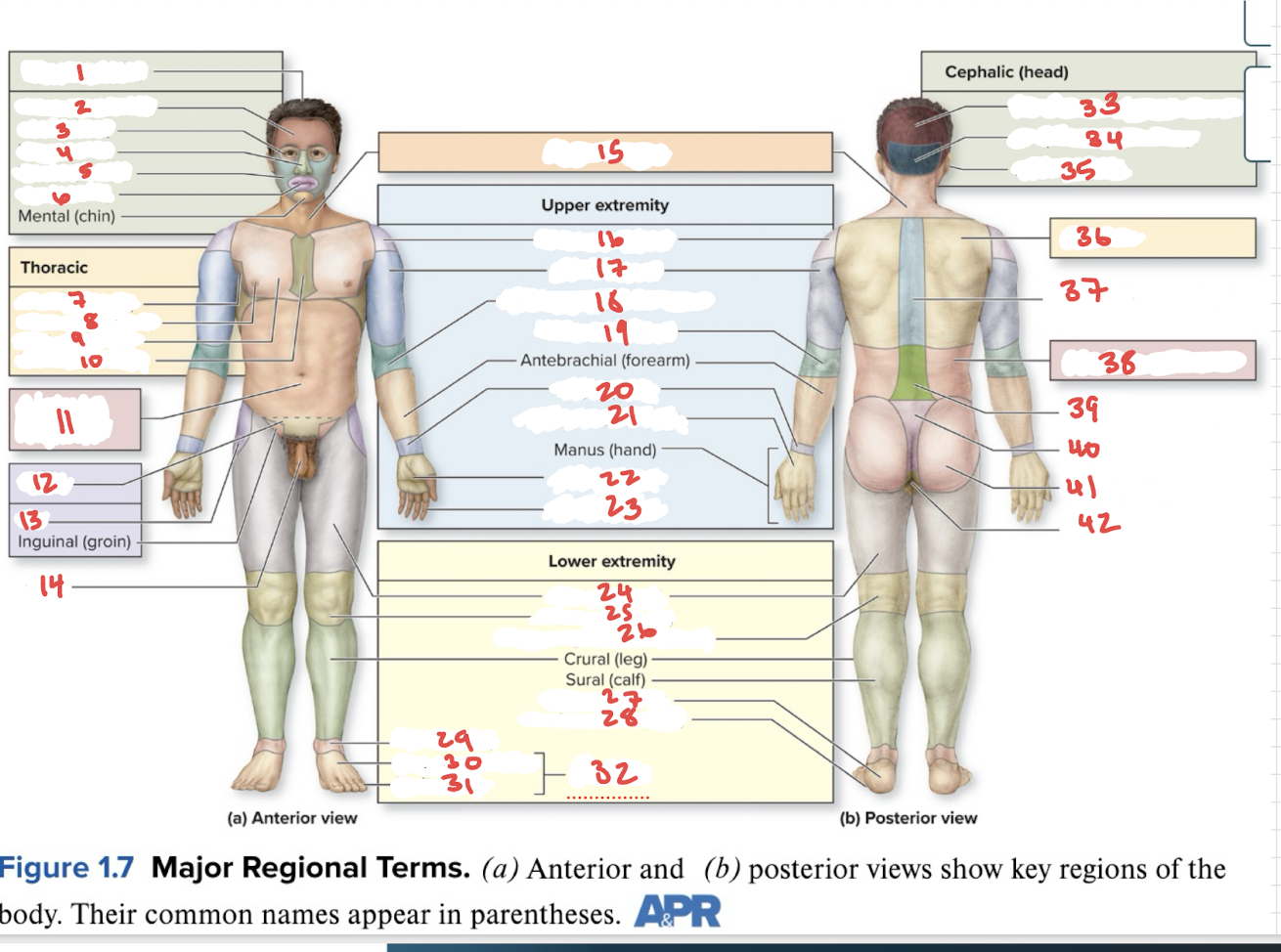
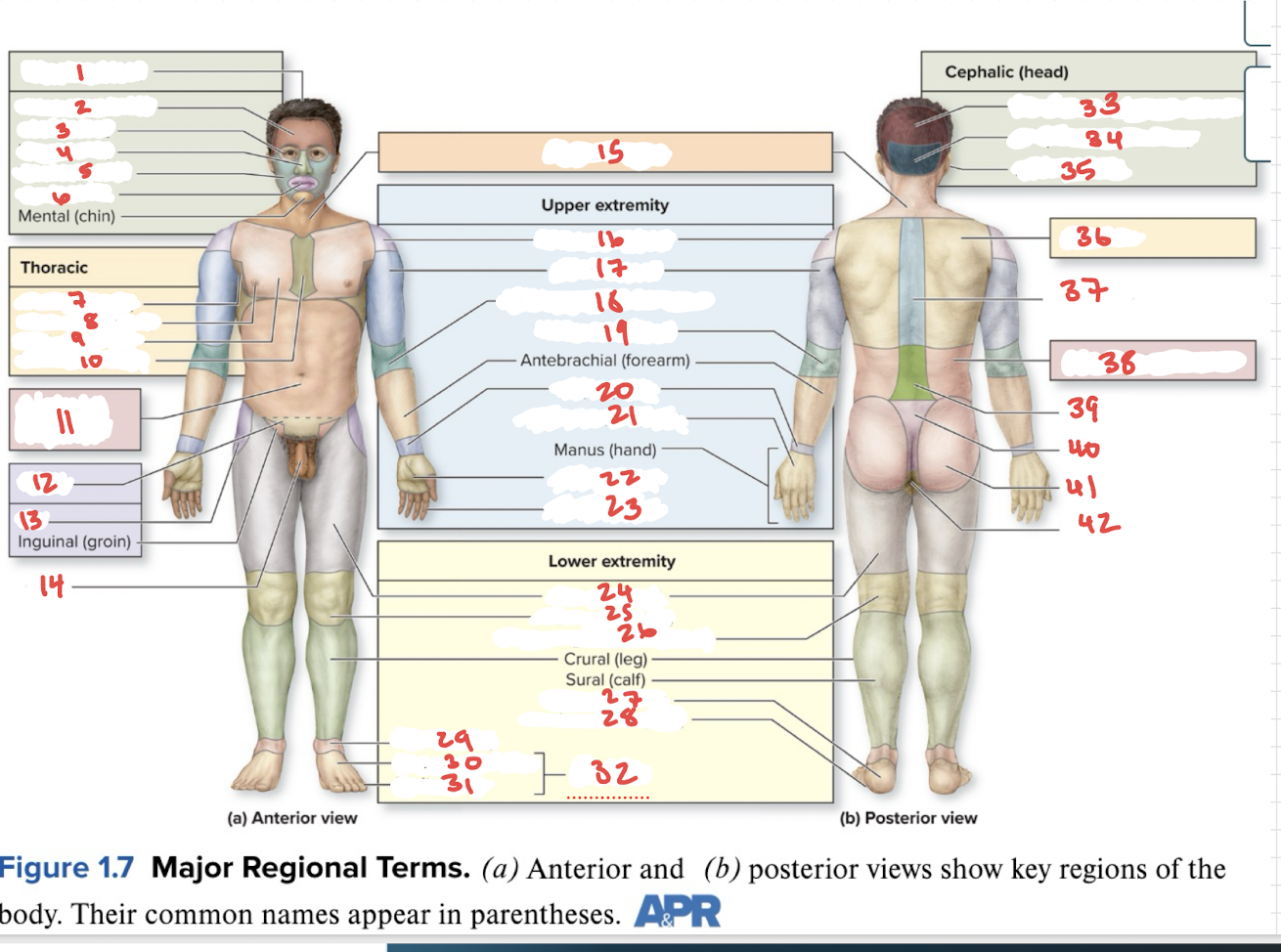
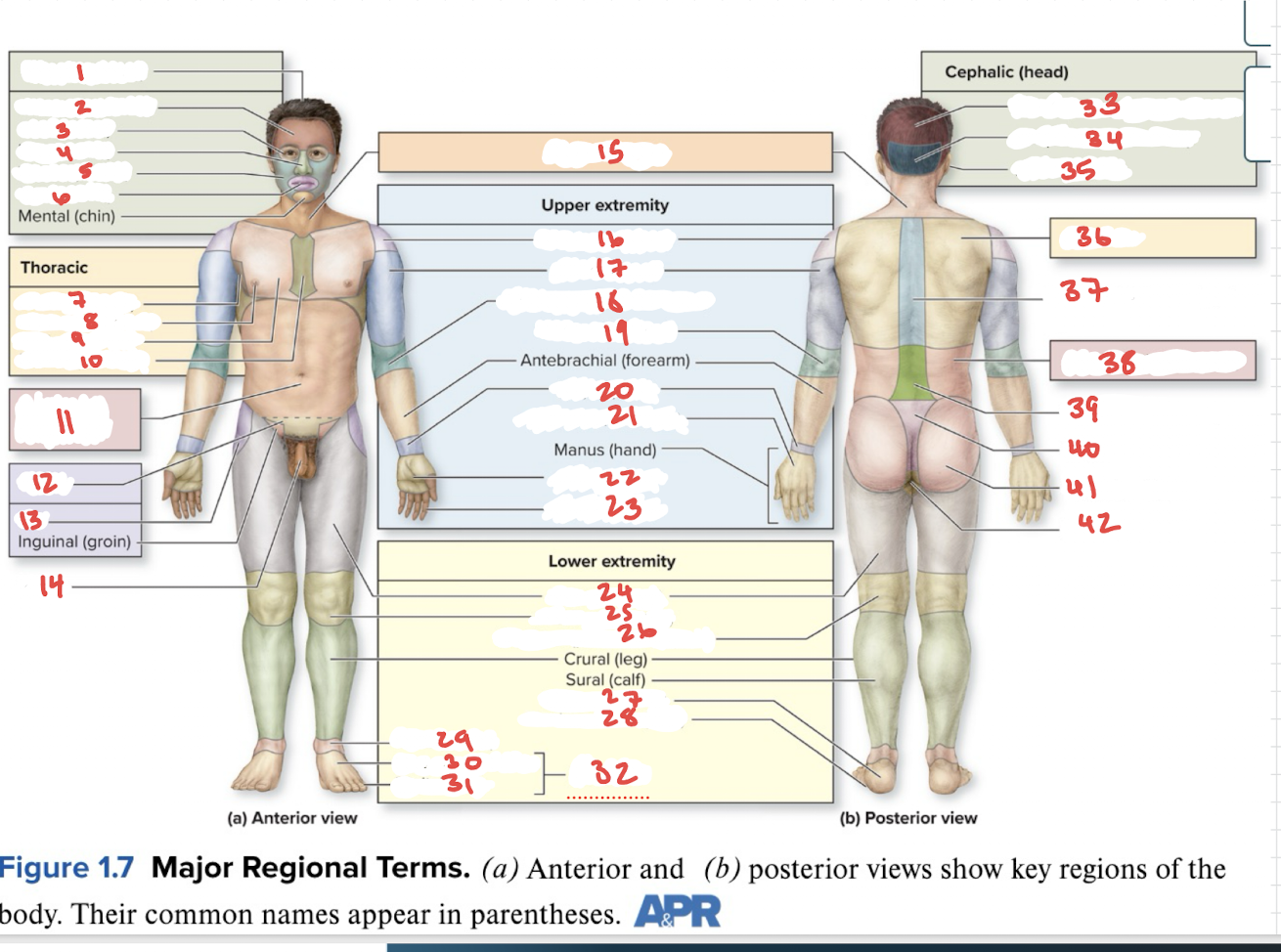
What is 33?
Cranial
surrounding the brain
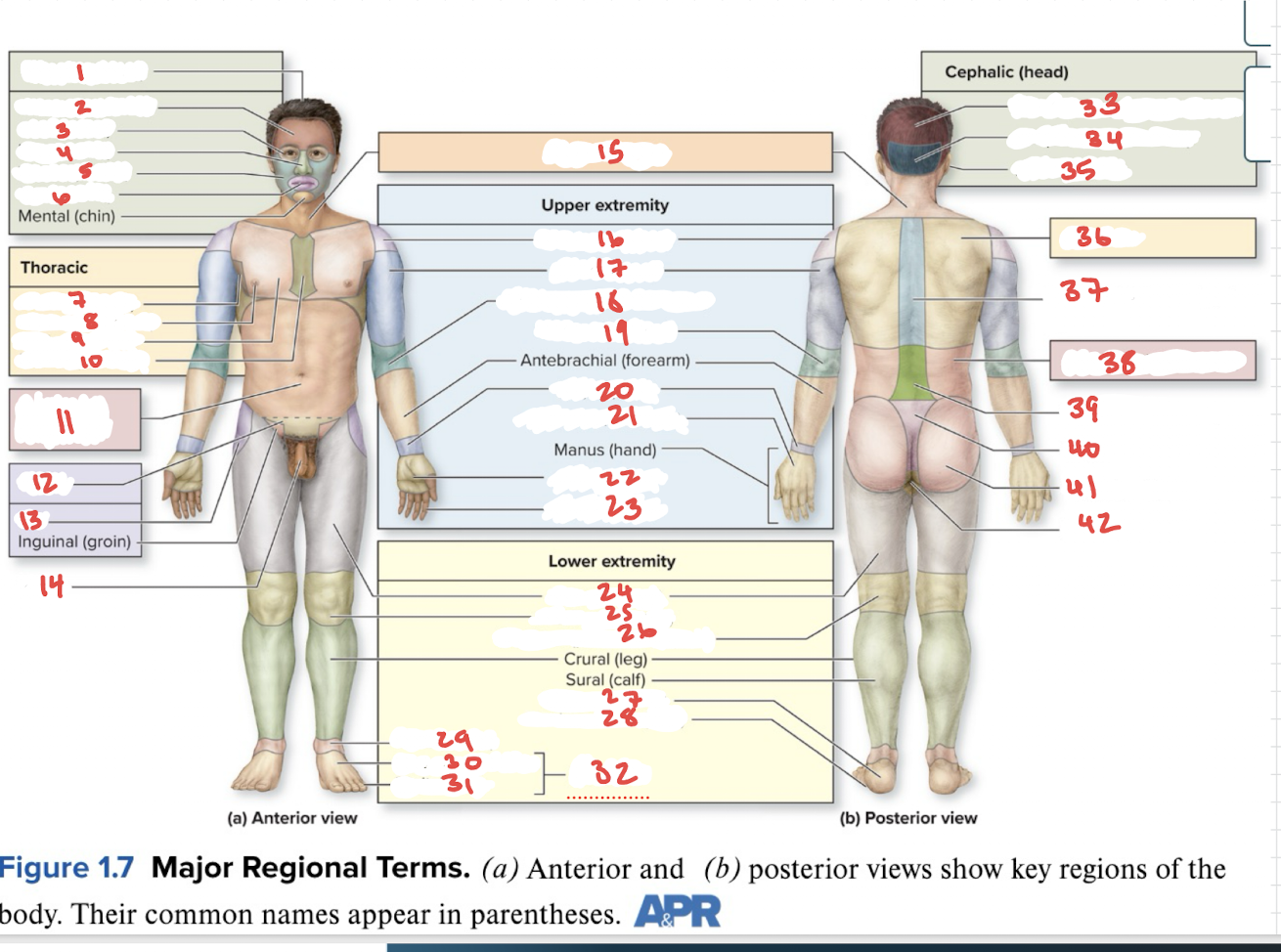
What is 34?
occipital
back of head
What is 35?
auricular
ear

What is 36?
Thoracic

What is 37?
Vertebral
spinal column

What is 38?*
Abdominal
abdomen*

What is 39?
Lumbar
lower back

What is 40?
Sacral
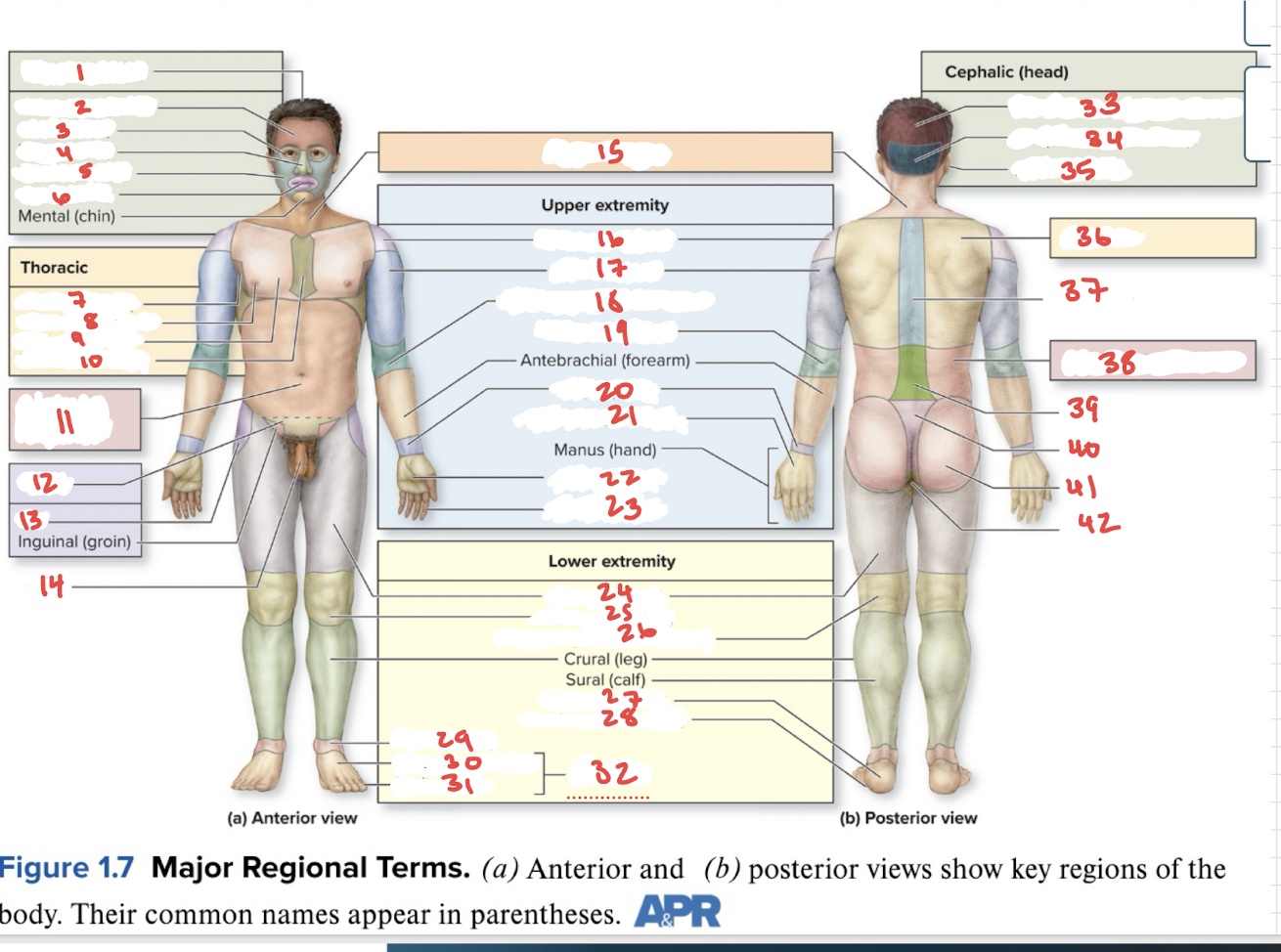
What is 41?
Gluteal
Buttock
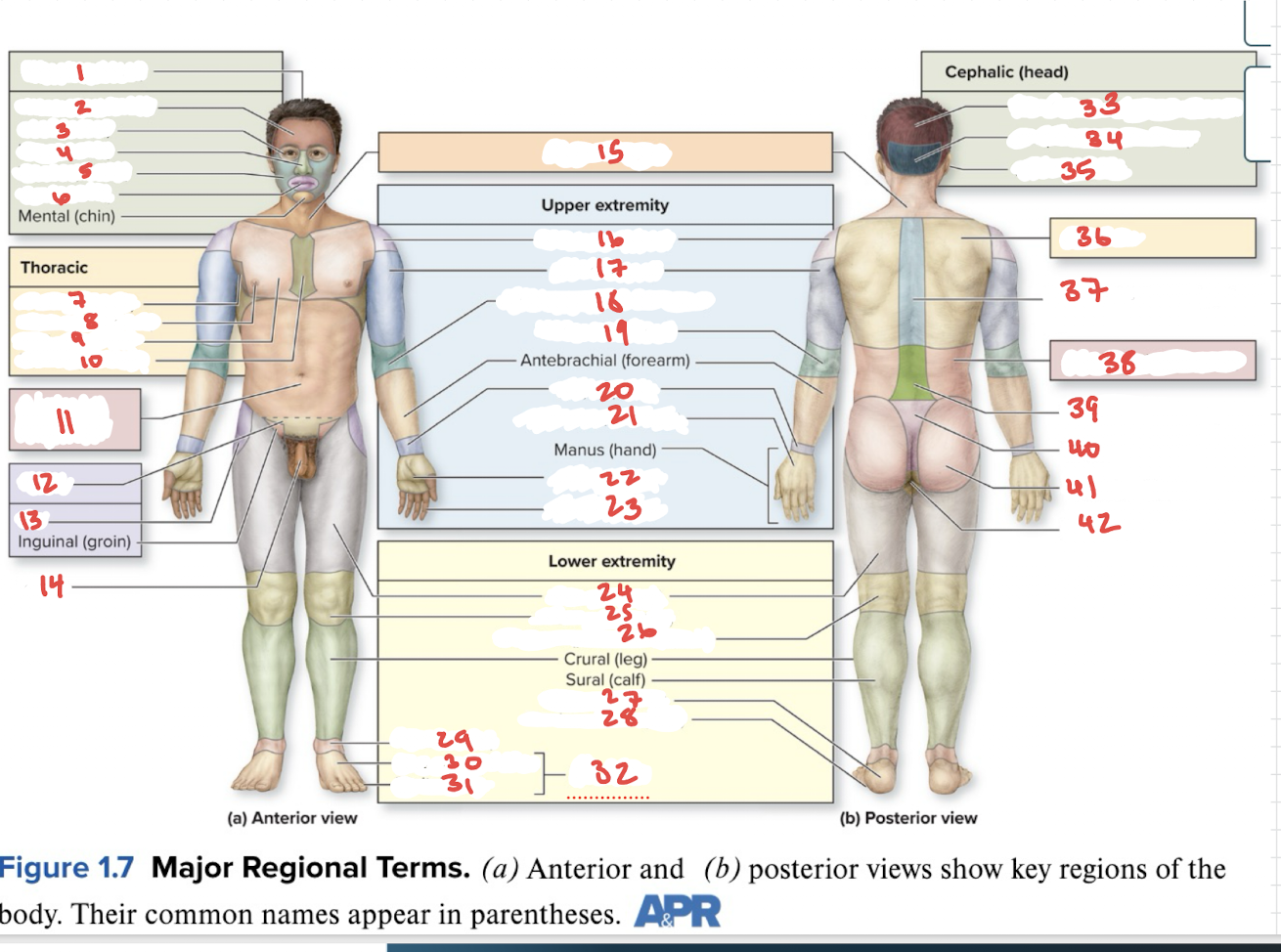
What is 42?
Perineal
In the anatomical position….
palms always face forward/anterior