Cytokine storm & link to pathogenesis of 1918 Flu and SARS-CoV-2
 Call Kai
 Learn
Learn Practice Test
 Spaced Repetition
 Match
Match Flashcards
 Knowt Play
1/30

There's no tags or description
Looks like no tags are added yet.
Name | Mastery | Learn | Test | Matching | Spaced | Call with Kai | Chat |
|---|
No analytics yet
Send a link to your students to track their progress
31 Terms
How does host factors contribute to the pathogenesis/treatment of clinically important infectious diseases?
Host’s immune system plays a crucial role in determining the severity and outcome of infectious diseases.
Gender can play a role in the immune response, influencing the likelihood / severity of infections
Genetic factors where certain individuals have higher predispositions to acquiring bacterial/viral infections
Pre-existing health conditions i.e. co-morbidities e.g. obesity can affect how the body responds, potentially leading to more severe manifestations → cytokine storms.
Co-infections
How does pathogenic factors contribute to the pathogenesis/treatment of clinically important infectious diseases?
Structure of bacteria/virus i.e. specialised virulence factors, gene regulation tools, ability for recombination in viruses, and viral machinery to release viral proteins all contribute to evading the host’s immune response, allowing it to survive.
Tropism i.e. SARS-CoV-2 recognising the ACE2 receptor specifically in human respiratory tract cells enables efficient entry and infection.
Lifecycle of pathogens and their replication processes, which can determine the extent of infection and the overall disease outcome
Ease of transmission i.e. respiratory droplets can facilitate rapid spread between hosts unlike bloodborne transmission (physcial/direct contact)
How do environmental factors contribute to the pathogenesis/treatment of clinically important infectious diseases?
Natural reservoirs of pathogens, e.g. bats, wild birds which can serve as sources of infection for humans.
Climate change affecting vector populations, which in turn influences the transmission dynamics of infectious diseases across different regions.
Level of development determines health infrastructure, where differences in the quality of diagnostic tools, medicines, treatments, greatly influence disease management and treatment outcomes.
What is an easy example to visualise these 3 factors coming together that play a role in the pathogenesis/treatment of clinically important infectious diseases?
Host/pathogen/environment interactions all were involved in the Spanish Flu pandemic 1918-1921:
(Host) There was no prior immunity to the virus among the population leading to high susceptibility
(Pathogen) Unique structure such as the segmented genome allowed for human and avian strains to mix, leading to a new, virulent strain that spread rapidly.
(Environment) The poor public health measures and crowded conditions i.e. in trenches/ bunkers, exacerbated the pandemic's impact.
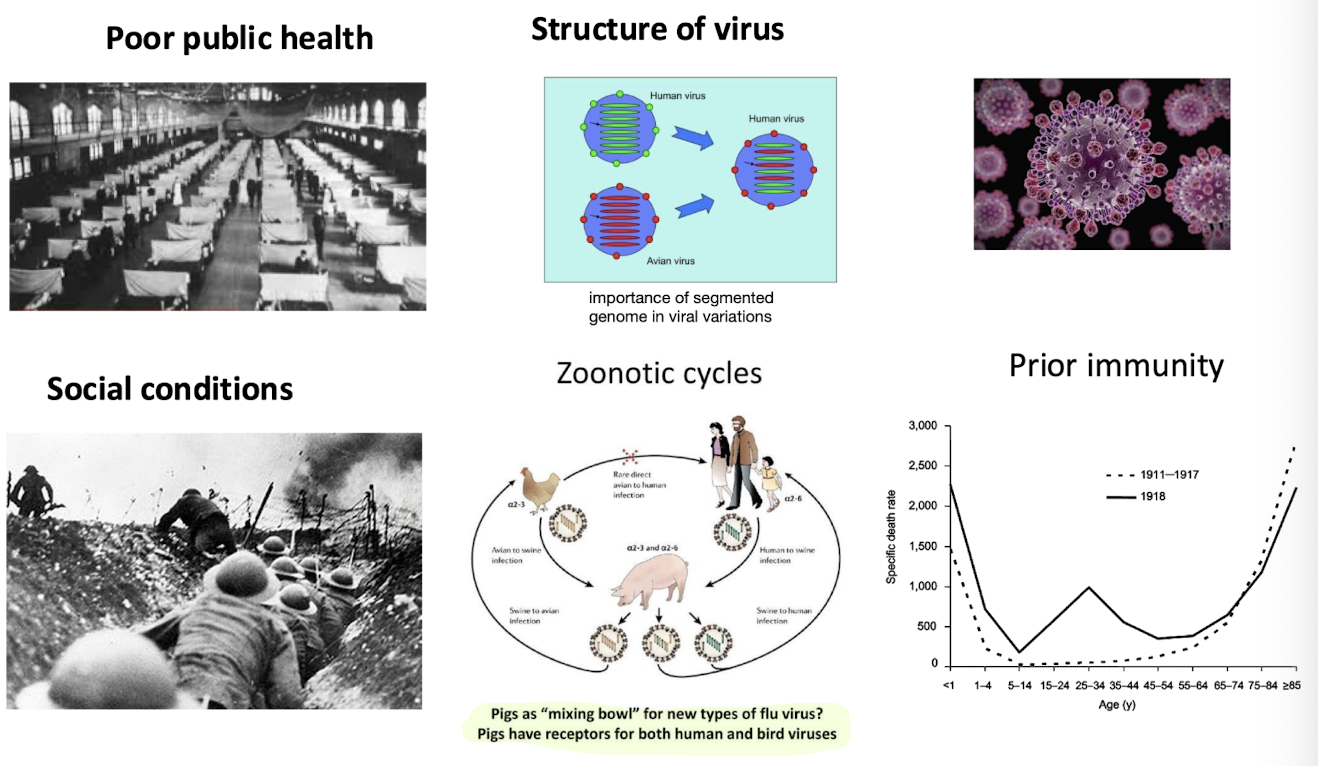
The 1918 virus originated from the reassortment event of a human influenza virus, True or False?
False: It did not originate through a reassortment event involving a human influenza virus: all eight genes of the H1N1 virus are more closely related to avian influenza viruses than to influenza from any other species, indicating that an avian virus must have infected humans and adapted to them in order to spread from person to person.
What are 2 unique qualities that the 1918 virus was found to exhibit?
This virus is able to replicate and form plaques on tissue-culture monolayers in the absence of the protease trypsin.
Normally, a protease such as trypsin is required to activate the hemagglutinin in order to initiate the infection of tissue culture. But the 1918 virus can activate its own hemagglutinin through the action of neuraminidase, either directly or indirectly
The 1918 virus is 100 times as lethal in mice as any other human influenza virus and the virus replicates rapidly so that high titers are found in the lungs of infected mice.
What is meant by “Cytokine Storm”?
= A huge surge in the levels of pro- inflammatory cytokines eg IL-1, IL-6, TNF𝛂 that are not counteracted by anti-inflammatory cytokine response e.g. IL-10
• This release of cytokines in resp to an invading pathogen can result in an influx of T cells/macrophages from peripheral blood into tissues where the storm happens
• Systemic inflammation damaging the vascular barrier leading to tissue edema, capillary leakage, multiple organ failure

What are the 2 main categories of cytokines?
Pro-inflammatory cytokines: Interleukins i.e. IL-1, IL-6, TNF-⍺, IFN-γ recruit immune cells to the infection site & increase expression of factors that increase cell-cell-adherence + mediate direct antiviral effects
Anti-inflammatory cytokines: IL-10 and TGF-β are upregulated during infection to regulate the level of inflammatory response
How do proinflammatory cells allow for recruited immune cells to reach the infected tissue, while passing the endothelial barrier?
Cytokines produced by epithelial and immune cells increase the permeability of the endothelial barrier and promote the expression of adhesion molecules on endothelial cells.
→ Facilitates the migration of immune cells from the bloodstream into infected tissues.
Without control mechanisms that regulate inflammation i.e. release of anti-inflammatory cytokines what happens when the virus continuously replicates in the host?
Continuous viral replication leads to constant influx of immune cells into the infection site & increased cytokine production, thus the positive feedback loop (inflammation drives further inflammation) b/w cytokines and immune cells results in host damage associated with cytokine storm.
Immunopathology
an inappropriate immune response to an infection, can cause harm to the host in different ways, branch of medicine/biology that studies these effects on the host’s organs/ tissues.
e.g. overactive innate immune responses, causing organ damage to healthy tissues/cells or an underactive response, where the body fails to mount an effective defence against pathogens → leading to long-term / chronic infections
An aberrant host immune response is the main cause of pandemic influenza related deaths
How did “Cytokine Storm” link to the pathogenesis of 1918/19 pandemic?
• Population had no pre-existing neutralizing antibodies
• Immunopathology Cytokine storm resulted in severe pneumonia and respiratory failure, contributing to high mortality rates in young, healthy individuals.
Compounds that block the action of specific cytokines can now be evaluated as therapeutics that might help to reduce the mortality associated with pandemic influenza.
What is one explanation for increased pro-inflammatory cyokines associated with pandemic influenza strains and cytokine storm?
high titres of non-protective antibodies and immune complex induced inflammation
Influenza A review: What is the structure of Influenza A virus and what does it genome encode?
It is a segmented negative sense ssRNA enveloped virus
Genome encodes 11 viral proteins:
Haemagglutin (HA)- attachment via sialic acid on cellular glycoproteins
Neuraminidase (NA) - release of progeny viruses by receptor cleavage
RNA polymerase complex: (PB1, PB2, PA)
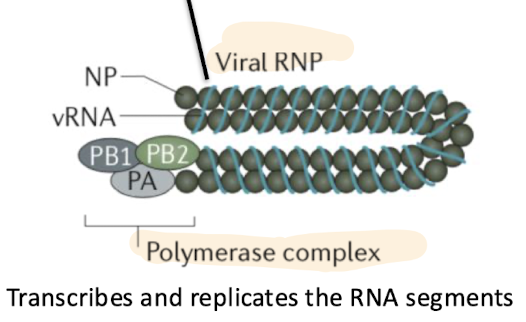
Two matrix proteins: (M1 & M2)
Nucleoprotein (NP)
Non structural (NS) i.e. NS1 and NS2
NS2 also known as NEP - nuclear export protein

What are the main surface glycoproteins on the influenza virus that induce protective host antibody responses?
Haemagglutinin (HA) and Neuraminidase (NA)
*Note that with novel,emerging strains, they can have different HA and NA molecules meaning populations without pre-existing immunity are at increased risk for an influenza pandemic → host effects
How did reassortment events occur b/w 2 influenza A viruses contribute to the pathogenesis of 1957 + 1968 pandemics?
(Pathogen impacts)
In 1957, dual infection of an individual animal — probably a human, but possibly another species, such as a pig — with an avian H2N2 influenza and a human H1N1 influenza resulted in the emergence of a new influenza virus containing the HA the NA, and the gene for one of the polymerase proteins (PB1) from the avian virus, along with the remaining five genetic segments from the human H1N1 influenza virus.
The 1957 reassortant virus was replaced in 1968 by another reassortant virus, the H3N2 Hong Kong virus, where descendants of this virus continue to cause the majority of influenza infections in humans.
Five of the genes of today's H3N2 influenza virus have their origin in the 1918 pandemic.

How was the H3N2 virus that contributed to the 1968 virus created?
By the replacement of the hemagglutinin (H2) and polymerase (PB1) genes of the H2N2 virus with two new avian genes, H3 and a new PB1.

What is one possible solution that has been found in mice to reduce mortality with H5N1 virus?
Antiviral therapy in combination with immunomodulatory treatment.
Are immune modulators such as treatment with corticosteroids effective at decreasing H5N1 associated morbidity/mortality?
Currently evidence has shown it has been unsuccessful at reducing H5N1 mortality/morbidity during outbreaks in Asia, and thus is not a recommended treatment by the WHO.
Overall how did “Cytokine Storm” link to the pathogenesis of SARS-CoV-2?
Cytokine storm caused by SARS-CoV-2 is linked to acute respiratory distress syndrome (ARDS) (host response was overactive)
It was found that ICU patients had increased levels of GM-CSF, IP-10, MCP-1, MIP-1𝛂, TNF𝛂, C-reactive protein (CRP), 1L-6, IL-1𝛃; all of which are prognostic markers for COVID-19 severity (environmental impact of overcrowded ICU wards)
• SARS-Co-2 has a tropism for ACE2 receptor; expressed in vascular endothelial lower RT cells leading to hyperinflammatory conditions and alveolar damage; kidney cells, GI tract, cardiac cells (impacts of pathogen’s tropism on the host)
• Age/comorbidities add to poor prognosis

What are the 2 main prognostic markers that may indicate COVID-19 severity and possibility of cytokine storm?
COVID-19 ICU patients expressing higher levels of cytokines than those not admitted to ICU.
Deceased COVID-19 patients were found to have higher serum levels of C-reactive protein (CRP), IL-6 and ferritin (IL-6 raises both of these), suggesting an underlying hyperinflammatory response.
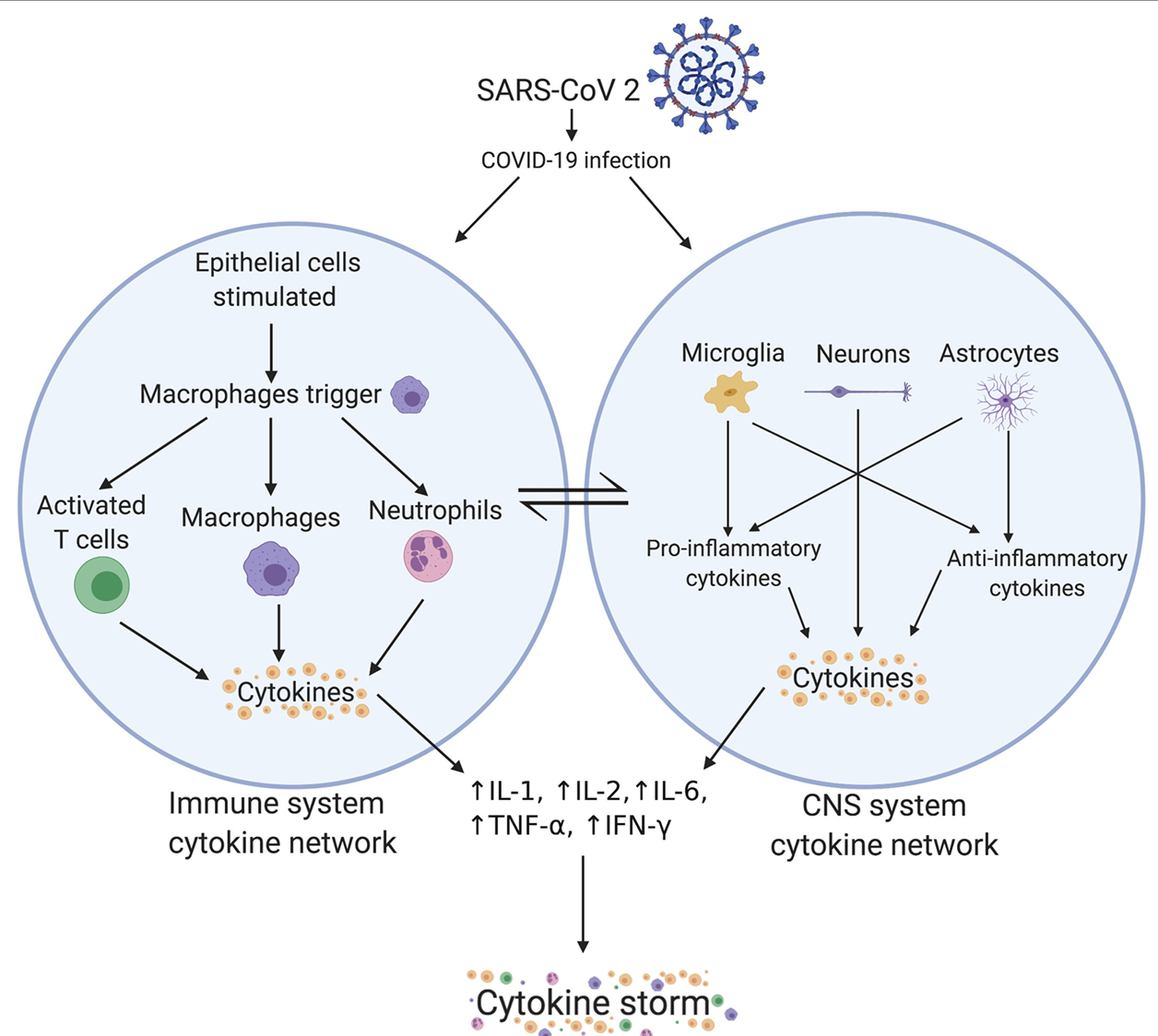
Cytokine storm (hypercytokinemia) in severe covid cases leads to:
Diffuse alveolar damage in the lungs
Hyaline membrane formation
Thrombus formation as shown in an autopsy
Fibrin exudates
Fibrotic healing
→ these changes result in acute lung injury, leading to ARDS
Why do patients with underlying cardiovascular disease have poorer outcomes?
(Host comorbidities)
COVID-19 patients with underlying cardiovascular disease are at increased risk of cytokine storm and myocardial injury → with i crease in cardiac troponin TnT as well as atherosclerosis / thromboembolic events e.g. MI, stroke
Why are elderly patients,especially older males, with comorbidities, more at risk of severe COVID-19 or death?
Aging is associated with a decline in immune function or “immunosenescence”
With age, the immune system demonstrates changes characterised by immunosenescence markers:
Decrease in the generation of CD3+ T cells (important in T cell activation/signalling
An inversion of the CD4 to CD8 (CD4/CD8) T cells ratio due to the loss of CD8+ T cells i.e. by viral infection leading to apoptosis (increased CD4/CD8 ratio) → CD8+ directly destroy virally infected cells
Increase in regulatory T cells (Treg) and a decrease in B lymphocytes
Postulated that COVID-19 induced cytokine storm is contributing to poor outcomes in elderly
How does IL-6 work in driving inflammatory processes?
IL-6 binds to either membrane bound IL-6 receptor (mIL-6R) or soluble IL-6 receptor (sIL-6R), forming a complex that acts on gp130, regulates levels of IL-6, MCP1 and GM-CSF via the Janus kinase-signal transducer and activator of transcription (JAK-STAT) pathway, and thereby perpetuates the inflammatory processes.

What is a potential way of targeting Interleukins like IL-6 to prevent cytokine storm in COVID-19 patients?
Tocilizumab is a monoclonal antibody against IL-6 receptor that binds to membrane-bound and soluble IL-6Rs (mIL-6R and sIL-6R), thus preventing the downstream signal transduction of IL-6 on binding to membrane protein gp130
A study of 21 tocilizumab-treated COVID-19 patients revealed that clinical manifestations improved following administration

What is a disadvantage to the use of immunosuppresive agents like steroids or immunomodulating drugs like monoclonal Ab like tocilzumab in treating COVID-19 associated cytokine storm during a pandemic?
(Environment → pressure on healthcare resources globally)
They are relatively high priced, and unavailable in low resource setting, and may be in short supply during the COVID-19 pandemic even in developed countries.
What are examples of vector-borne diseases and their impact on society?
WHO estimates that 1/6 of the illness and disability suffered worldwide is owing to vector-borne diseases
Vector-borne diseases, include malaria, dengue, schistosomiasis, leishmaniasis, Chagas disease (from triatomine bugs)and African trypanosomiasis
The burden of climate-sensitive diseases is greatest for the poorest populations, with lymphatic filariasis (nematodes) and onchocerciasis, causing significant debilitation and suffering, → larger overall burden of disease
Why are poorer countries so at risk of mortality from vector-borne diseases?
The per capita mortality rate from vector-borne diseases is almost 300x greater in developing nations than in developed regions due to:
Climate i.e. tropical climates making these diseases more common
Low levels of socioeconomic development + access to health services
Poorer environmental/social conditions such as lower-quality housing situated to vector-breeding sites
Lack of access to preventative treatments
How does climate play a role in increasing the level of vectors in a population?
Temperature: affects the biting, survival and reproductive rates of the vectors, and the survival and development rates of the pathogens that they carry.
Precipitation: exerts a very strong influence, in the case of diseases transmitted by vectors that have aquatic developmental stages e.g. mosquitoes.
Humidity: on diseases transmitted by vectors without such stages, e.g. ticks or sandflies.
Drought: indirectly can affect vector ecology + human exposure to infection due to impacts on water storage, land-use, irrigation practices and population movement.
How has climate change influenced the areas that are now climatically suitable for transmission of vector-borne diseases like malaria and dengue?
In Africa, the number of areas that have experienced drought, which are unsuitable for transmission of vector-borne diseases have roughly equalled those areas that have become suitable thanks to increased temps, and precipitation