Cell Membrane
 Call Kai
 Learn
Learn Practice Test
 Spaced Repetition
 Match
Match Flashcards
 Knowt Play
1/40

There's no tags or description
Looks like no tags are added yet.
Name | Mastery | Learn | Test | Matching | Spaced | Call with Kai | Chat |
|---|
No analytics yet
Send a link to your students to track their progress
41 Terms
what makes a phospholipid amphipathic?
it has both hydrophilic and hydrophobic components
cholestreol effect on membrane
acts as fluidity buffer
at lower temperature, increases fluidity
at higher temperature, lowers fluidity
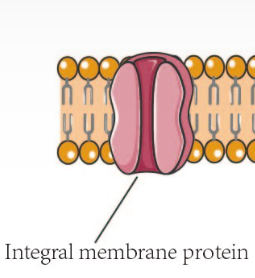
integral proteins (intrinsic)
penetrate hydrophobic interior of the lipid bilayer
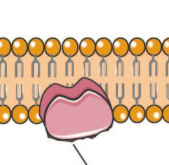
peripheral proteins (extrinsic)
bound to the surface of the membrane

transmembrane proteins
span the entire lipid bilayer

lipid anchored protein
sit on one side of the membrane, firmly attached as they are covalently attached to a lipid molecule
permeability of cell membrane
selectively permeable, it will accept some molecules and reject others
glycolipids
membrane carbohydrates covalently bonded to lipids
glycoproteins
a protein with a carbohydrate chain covalently attached to it
types of molecules that easily pass through cell membrane
nonpolar molecules, hydrocarbons, CO2, O2, hydrophobic molecules
types of molecules that do not easily pass through cell membrane
polar molecules, ions, glucose, hydrophilic molecules
2 types of transport proteins
carrier proteins, channel proteins
channel proteins
proteins that transport hydrophilic molecules across the cell membrane by passive transport
aquaporins
proteins that facilitate the movement of water through the membrane

carrier proteins
proteins that change shape to transport specific solutes across a membrane by passive or active transport
diffusion
the movement of particles from an area of high concentration to an area of low concentration
osmosis
the diffusion of water across a selectively permeable membrane
isotonic
solute concentration in the cell and outside the cell is balanced, no net movement of water across the membrane
hypertonic
higher concentration of solutes outside the cell than inside the cell
hypotonic
a lower concentration of solutes outside the cell than inside the cell

animal cell in isotonic solution
no net movement of water, cell is normal
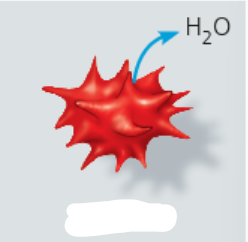
animal cell in hypertonic solution
water moves outside the cell, cell shrinks and dies
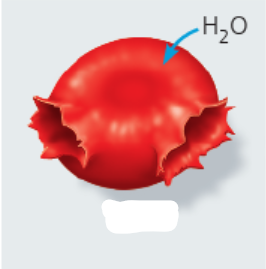
animal cell in hypotonic solution
water moves inside the cell, cell swells and bursts
plant cell in isotonic solution
cell becomes flaccid and wilts

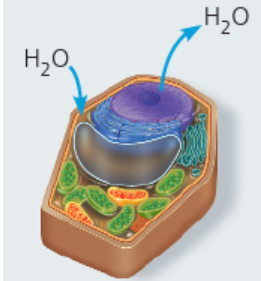
plant cell in hypertonic solution
water leaves the cell, cell wilts and dies, plasmolysis
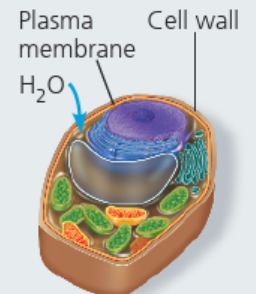
plant cell in hypotonic solution
water enters the cell, cell is turgid
type of solutions favourable for animal cell and plant cell
isotonic favours animal cell, hypotonic favours plant cell
osmoregulation
the control of solute concentrations and water balance
tugor pressure
the internal fluid pressure that pushes a plant’s membrane against its cell wall, keeping the plant turgid
facilitated diffusion
molecules blocked by the membrane diffuse passively via transport proteins
active transport
the movement of molecules across a cell membrane from low concentration to high concentration, requiring energy/ATP
electrochemical gradient
force that moves ions across a cell membrane, combining chemical force (particle concentration gradient) and electrical force (difference in charge)
main function of proton pump in plants, fungi, bacteria
active transport of protons out of the cell
exocytosis
cell secretes molecules by fusing vesicles with cell membrane
endocytosis
cell takes in molecules by forming vesicles from the cell membrane
3 types of endocytosis
phagocytosis, pinocytosis, receptor mediated cytosis

phagocytosis
cell engulfs large particles via pseudopodia, forms a membrane enclosed sac called food vacuole
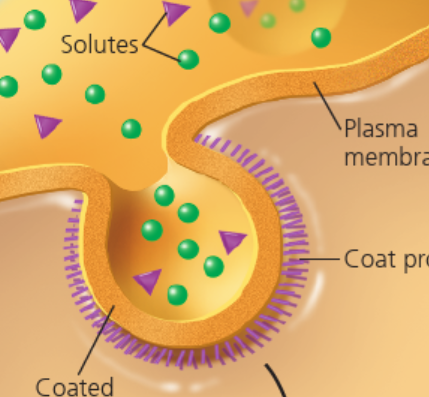
pinocytosis
cell ingests extracellular fluid and small particles, forms a vesicle from the cell membrane

receptor mediated endocytosis
receptors on the surface on the cell membrane attach to ligand, move to an area concentrated with clathrin, and form a vesicle from the cell membrane, clathrin and receptors are reused
Sodium-potassium ATPase pump
3 Na out of the cell, 2 K into the cell
difference in charge between potassium and sodium in cells
more positive outside, less positive inside