Cells
 Call Kai
 Learn
Learn Practice Test
 Spaced Repetition
 Match
Match Flashcards
 Knowt Play
1/31

There's no tags or description
Looks like no tags are added yet.
Name | Mastery | Learn | Test | Matching | Spaced | Call with Kai | Chat |
|---|
No analytics yet
Send a link to your students to track their progress
32 Terms
Homeostasis
the relative stability of the body’s internal conditions
tendency of organisms to maintain relatively stable internal environments despite changes in external conditions, diet, or activity level
Parameters
must remain constant for our molecules and cells to be able to survive and perform their functions
pH is a parameter
Stomach pH changes
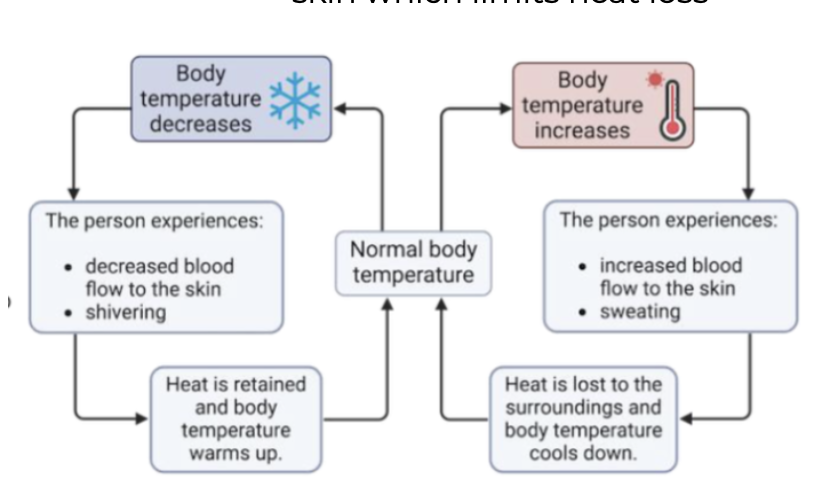
Negative feedback
a biological response in which the effects of a reaction. slow or stop that reaction
deviation from set point (sensed and detected by brain) → then responds to stimulus by turning off the effectors to try and go back to normal
example: if body temperature is too high, the person begins to sweat and blood vessels dilate (widen), increasing blood flow to the skin.
Increases the amount of heat lost to the surroundings (surface area)
example: if body temperature is too low, the person begins to shiver so that their muscle will generate more heat through cellular respiration
blood vessels also constrict, decreasing blood flow to the skin which limits heat loss

Effector
an organ or cell that acts in response to a stimulus
swear glands to produce sweat when its too hot
Sensor
a structure that detects in the internal or external environment of an organism
nerve cells in skin and brain
negative feedback effectors “turn off” the action of the sensor
Homeostatic regulation
involve behaviors to stay near or return to a set point
If a person gets too hot, they may feel like lying down without moving, minimizing heat production
If a person gets too cold, they might feel like moving around
Positive feedback
change in a bodily condition triggers a response that moves the body further away from its normal state until a specific endpoint is reached
cascade/snowball effect
intensifies until there is an intteruption
example: contractions when pushing baby → heat pushes against cervix → nerves send signals to brain → releases oxytocin which relaxes uterus → pushes more

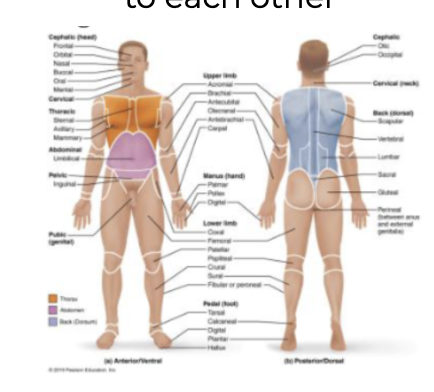
Regional anatomy
the study of the body’s structure by region, such as the head, abdomen, or arm, and how the structures in that region relate to each other
ex: abdomen
(what we focus on for lab)
Systemic anatomy
the study of the human body’s structure by examining the body’s systems, or groups of structures that work together to perform a specific function
ex: cardiovascular system
Organ systems
organs that work together toward one or a set of functions
cell membrane
transport, shape, gateway to cell
cytoplasm
chemical storage, enzyme catalysts
nucleus
DNA and RNA
ribosomes
protein synthesis, reads mRNA
centrosomes
structure that divides cells
Mitochondria
Powerhouse of the cell ;)
endoplasmic reticulum
modifies proteins
glogi appartus
prepares proteins and lipids
lysosomes
break down different components
purpose of cell membrane
gives cell shape, resists outward pressure from other cells, made of lipids (fat)
selectively permeable
proteins allow for active transport, lipid bilayer allows diffusion
cell signaling
allows for hormonal communication, contains receptors on surface
cell recognition
contains structures that allow cells to recognize each other
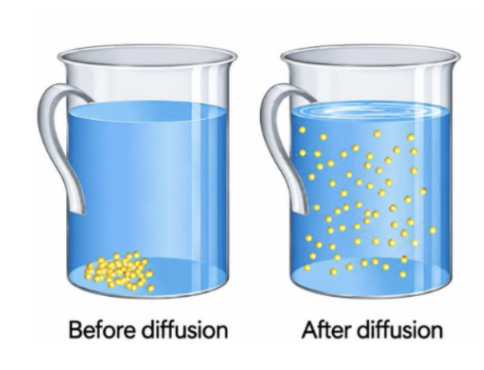
Diffusion
solute moves from area of high concentration to low concentration until an equal distribution is reached
necessary for things like transportation of O2 from lungs to blood
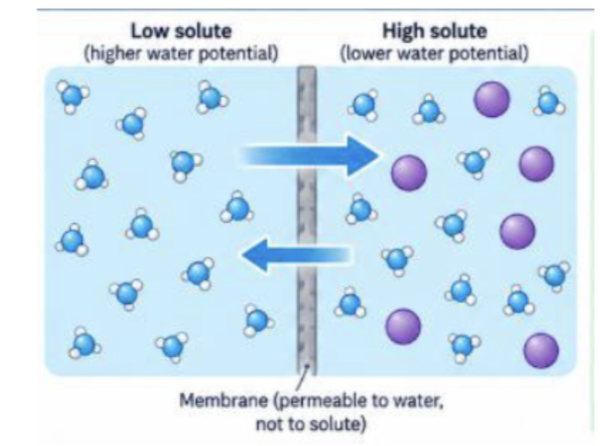
Osmosis
movement of water through a special barrier into an area of high concentration of dissolved stuff

hypertonic
more solute outside cell
water moves toward solute → cell inside shrinks)

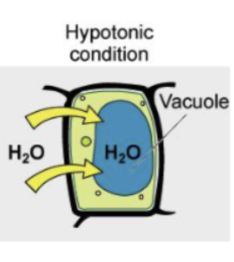
hypotonic
more solute inside
water move inside → swells up
Isotonic
balanced amount of solutes in and out of cell
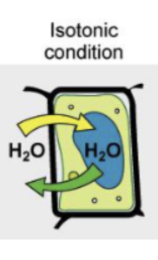
why does the water move?
because of chance → water constantly moves randomly (no energy needed)
when solute interacts with water, it makes water on the solute side less likely to escape back the membrane
WATER MOVES IN BOTH DIRECTIONS
Channel protein
molecules can only move from areas of higher concentration to areas of lower concentration through the channel
Carrier mediated
variation of diffusion where protein channels assist with transport across membrane
highly specific due to binding mechanisms
Carrier protein
an ion or molecule will bind to the carrier protein, triggering a change in the protein’s shape such that he ion or molecule can pass