Airway Respiration Ventilation
 Call Kai
 Learn
Learn Practice Test
 Spaced Repetition
 Match
Match Flashcards
 Knowt Play
1/90

There's no tags or description
Looks like no tags are added yet.
Name | Mastery | Learn | Test | Matching | Spaced | Call with Kai | Chat |
|---|
No analytics yet
Send a link to your students to track their progress
91 Terms
Anatomy of the Respiratory System Upper airway
Nasopharynx: (nasal cavity)
Oropharynx: (mouth)
Pharynx: (throat)
Laryngopharynx (the lowest part of the throat, sitting just behind the larynx (voice box). It is the critical intersection where the respiratory and digestive tracts meet)
Epiglottis: (flap that prevents from entering respiratory tract)
Esophagus: (food and water routed to the stomach)
Larynx: (vocal cords)
Cricoid cartilage: (only completely circular cartilaginous ring of the upper airway
Anatomy of the Respiratory System Upper airway 1
Nasopharynx: (nasal cavity)
Oropharynx: (mouth)
Pharynx: (throat)
Anatomy of the Respiratory System Upper airway 2
Laryngopharynx (the lowest part of the throat, sitting just behind the larynx (voice box). It is the critical intersection where the respiratory and digestive tracts meet)
Epiglottis: (flap that prevents from entering respiratory tract)
Esophagus: (food and water routed to the stomach)
Anatomy of the Respiratory System Upper airway 3
Larynx: (vocal cords)
Cricoid cartilage: (only completely circular cartilaginous ring of the upper airway
Lower airway
(starts at lower edge of larynx and moves down)
Esophagus: (tube for food)
Trachea: (windpipe)
major bronchi
Right and left mainstem bronchi branch into
bronchioles: composed of smooth muscle and lined with mucous membranes
Bronchioles are made up of millions of tiny air sacs called alveoli (site for gas exchange)
Diaphragm
muscle that separates the chest cavity from the abdominal cavity
Intercostal muscles
muscles between ribs that contract to aid inhalation
Ventilation
It travels through the trachea
physical act of moving air into and out of the lungs
Inhalation
Active muscular part of breathing
Diaphragm and intercostal muscles contract
Dead space
the volume of air that is inhaled that does not take part in the gas exchange
150 Ml~
Alveolar Ventilation
Amount of oxygen that gets to the Alveoli
Tidal volume minus dead space
Tidal volume:
The amount of air (ML) that moves in and out of the lungs in one breath
Minute volume
The amount of air that moves into the lungs in 1 minute
=tidal volume*respiratory rate
Vital capacity
The amount of air that can be forcefully expelled from the lungs after breathing deeply
Residual volume
Air that remains in the lungs after forceful exhalation
Helpful during CPR
Exhalation
Passive process; diaphragm and intercostal muscles relax
Does not normally require muscular effort
Oxygenation
Process of loading oxygen molecules onto hemoglobin molecules in the bloodstream
Respiration
Cells take energy from nutrients through metabolism
oxygen is required for internal respiration to take place
Exchange of oxygen and Carbon dioxide in the alveoli and tissues of the body
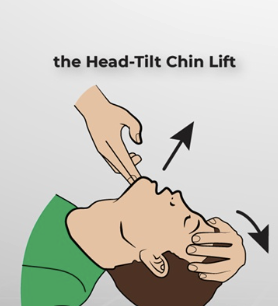
Head Tilt/Chin Lift
heel of one hand on patient’s forehead, firm pressure applied to tilt the patient’s head back; fingertips of alternate hand placed under lower jaw and chin lifted upward
can be used on trauma patient IF jaw thrust fails to open airway
avoid if spinal injury is suspected unless there is no alternative way to open airway
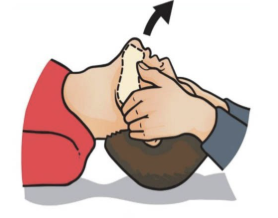
Jaw thrust maneuver
(If cervical/spinal trauma suspected (even if no obvious signs)
fingers behind angle of lower jaw, jaw moved upward with index and middle fingers and the thumbs help position the lower jaw
Inadequate breathing
adventitious breath sounds, bradypnea, tachypnea (shortness of breath),
Irregular rhythm
diminished/noisy breath sounds,
unequal shallow chest expansion,
accessory muscle use,
cyanosis, cool moist skin,
skin pulling in around the ribs (retractions)
Inadequate oxygenation:
tachypnea, dyspnea, confusion, lethargy, dizziness, lightheaded, anxiety, irritability, restlessness, headache
Causes for bad Pulse Ox:
dark/metallic nail polish, dirty fingers
CO poisoning
hypovolemia
severe peripheral vasoconstriction (hypoxia, smoking, hypothermia)
cool proximal extremities reflect poor perfusion and shunting of blood to core
bright ambient light Capillary Refill
good test of circulation in children
color should return to the skin in under 2-3 seconds
It is performed by pressing firmly on the skin or nail bed to force the blood out, and then counting the seconds it takes for the natural pink color to return.
hypovolemia
medical condition characterized by an abnormally low volume of circulating blood or extracellular fluid in the body
Hypoxia symptoms
Early: restless, irritable, apprehensive, tachycardic, anxious, tripod position, retractions
Late: altered mental, weak/thready pulse, cyanosis, hypoxia, bradypnea, bradycardia, altered LOC
Causes for Cyanosis
chronic bronchitis, hypoxia, hypothermia
Anemia
lack of Red blood Cells, appear weak and have pale skin
Stridor
brassy, high-pitched crowing sound heard during inhalation.
It suggests a partially occluded airway; upper airway obstruction
Wheezing
high-pitched whistling sound; exhalation;
bronchi constricted; lower airway constricted
(common in asthma, COPD)
Rhonchi
low-pitched, noisy sounds that are most prominent on exhalation,
suggesting mucus in the lungs,
often accompanied by productive cough (COPD, pneumonia, asthma, bronchitis)
Lower airway
Crackles/Rales, what underlying disease
wet cracking sounds; air passing through fluid in alveoli;
Congestive Heart Failure, pulmonary edema.
Lower airway
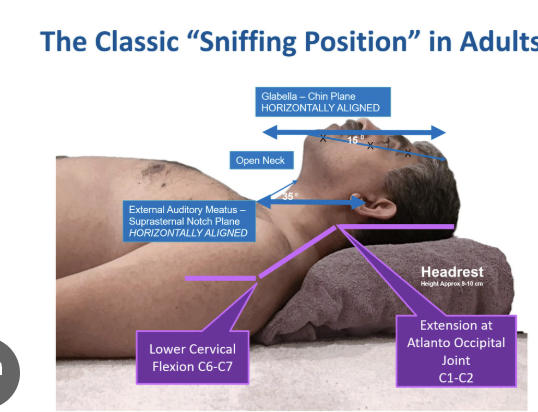
Sniffing position
patient sitting upright with head and chin thrust slightly forward
best for ventilation and intubation
keeps trachea straight and maintains proper spinal alignment
patient on firm surface, small towel under patient’s shoulders and back, stabilize patient forehead to limit rolling during transport
Abdominal Thrust (Heimlich) adult
conscious but has a foreign body obstruction -
to clear airway obstruction (complete, patient unable to speak or cough)
severe obstruction: weak/absent cough, cyanosis, decreasing LOC
stand behind patient, wrap one arm around make fist with one hand, grasp fist with other hand; place thumb side against patient abdomen just above umbilicus and below xiphoid process; press fist into abdomen in quick inward and upward thrust
Abdominal Thrust (Heimlich) other populations
Kids: just above umbilicus and well below tip of sternum
If LOC, start CPR and chest compressions
Infants: back blows + chest thrusts
5 back blows between shoulder blades using heel of hand, 5 chest thrusts on lower part of sternum using 2 fingers
Pregnant/Obese: chest thrusts in instead of abdominal thrust
For mild/partial airway obstructions:
wheezing, stridor, and coughing are common
provide oxygen, place in position of comfort, and rapidly transport
indicated by patient being able to breath and talk
avoid ventilation, manual attempts to remove object, abdominal thrusts
If obstruction is VISIBLE: use gloved index finger to sweep it forward
encourage patient to cough forcefully
Unresponsive: begin chest compressions
oxygen cylinder, how to prepare it
is cracked before attaching regulator to remove dust and other particles -wrench rotates
valve counterclockwise then clockwise
Oxygen cylinders sizes
D: 0.16
E: 0.28
M: 1.56
G: 2.41
H: 3.14
K: 3.14
D-size: 350 L
Jumbo D-size: 500 L
E-size: 625 L
M (MM)-size: 3,000 L
G-size: 5,300 L
H, A (M4), or K-size: 6,900 L
non rebreather mask vs bag valve mask
Non-Rebreather (NRB) mask for patients who are breathing on their own but require high-flow oxygen.
Use a Bag-Valve Mask (BVM) only when a patient's breathing is absent, severely inadequate, or they cannot maintain their own airway
Non Rebreather Mask:
up to 90-95% oxygen when reservoir bag is filled
bag should be fill before mask is placed on patient (place finger over bag outlet)
if oxygen is not flowing, patient exposed to rebreathing exhaled carbon dioxide
for patients with adequate breathing with suspected/confirmed hypoxia
provide ventilations at same rate as patients and slowly adjust to normal
Bag valve mask: rate of breaths
100% oxygen with filled reservoir bag
supplemental oxygen 10-15 lpm
1 breath every 5-6 seconds for adults
1 breath every 3-5 seconds for kids
2 person is best: 1 person maintains mask seal with 2 hands, other ventilates with BVM
for patients with signs of inadequate breathing/respiratory distress
if gurgling is heard, remove mask, inspect oropharynx, suction as needed
1200-1600 mL volume capacity (500 mL for peds and 240 for infant)
500-600 mL over 1 second is appropriate tidal volume
overventilation can cause pneumothorax, gastric distention, vomit aspiration
Bag valve mask 1, oxygen percentage and rate
100% oxygen with filled reservoir bag
supplemental oxygen 10-15 lpm
Bag valve mask breath rate
1 breath every 5-6 seconds for adults
1 breath every 3-5 seconds for kids
Bag valve 2 logistics, when to use it, problems
2 person is best: 1 person maintains mask seal with 2 hands, other ventilates with BVM
for patients with signs of inadequate breathing/respiratory distress
if gurgling is heard, remove mask, inspect oropharynx, suction as needed
Bag valve volume
1200-1600 mL volume capacity (500 mL for peds and 240 for infant)
500-600 mL over 1 second is appropriate tidal volume
Bag valve risks
overventilation can cause:
pneumothorax
gastric distention
vomit aspiration
Hyper-oxygenation: rare complication
Bag valve common complications
common complications:
poor mask seal,
poor head position,
gastric distention,
barotrauma
decreased cardiac output from increased intrathoracic pressure
Hyperventilation
over breathing, reduced arterial CO2
causes: diabetic ketoacidosis, aspirin overdose, severe infection
result: anxiety, dizziness, numbness/tingling, spasms in hands and feet (respiratory alkalosis)
instruct patient to slow breathing, give supplemental oxygen, provide transport
Mouth to mask device:
55% oxygen with supplemental oxygen at 15 lpm
a portable, life-saving barrier tool used to safely deliver rescue breaths during CPR.
Nasal Cannula, what is it, oxygen percentage, lpm, when to use it
a lightweight, flexible medical device used to deliver supplemental oxygen directly into the nostrils of people with respiratory conditions
24-44% oxygen
1-6 lpm
not appropriate is hypoxia is suspected (NRB should be used)
for patients who don’t require high flow oxygen, can’t tolerate a NRB or have a specific illness (COPD, bronchopulmonary dysplasia)
Pocket mask
one way valve prevents backflow of secretions, vomitus, gases
supplemental oxygen can be attached to barrier device
55% oxygen at 15 lpm
a portable device used to safely deliver rescue breaths during CPR or respiratory arrest.
Blow by blow technique
a medical technique where oxygen is gently directed toward a patient's nose and mouth without attaching a device directly to their face. It is typically reserved for infants, young children, or patients with disabilities who panic or become agitated when wearing a standard nasal cannula or face mask
less frightening oxygen for kids
tubing inserted into a small hole into cup or funnel, connected to oxygen source (6 lpm)
cup held 1-2 inches from child’s face
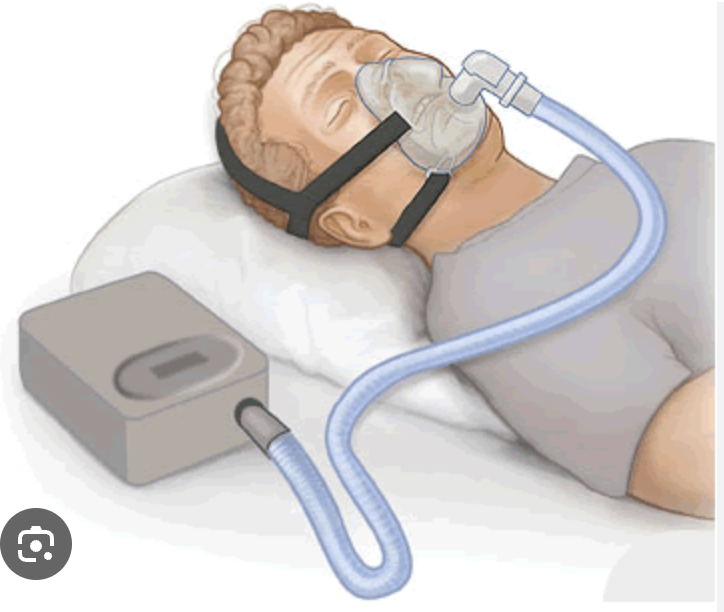
CPAP
By holding the airway open, CPAP prevents throat muscles from collapsing. This eliminates gasping, improves sleep quality, and reduces the risk of long-term health issues like stroke and heart disease
provides pressure to keep alveoli open/reverse atelectasis from pulmonary edema
Pulmonary edema is a serious condition where excess fluid builds up in the lungs' air sacs (alveoli), causing severe shortness of breath
CPAP used for
indicated for
respiratory distress
pulmonary edema
hypoxia
COPD
recent submersion incident
rapid breathing affecting minute volume
pulse ox below 90
CPAP used for 1
respiratory distress
hypoxia
rapid breathing affecting minute volume
pulse ox below 90
CPAP used for 2
pulmonary edema
COPD
recent submersion incident
CPAP contradicted for
respiratory arrest,
Hypoventilation,
can’t speak or protect airway,
hypotension (less than 90 systolic BP),
chest trauma,
pneumothorax,
GI bleed or surgery,
can’t sit upright,
can't tolerate mask/seal,
facial trauma
CPAP contradicted for 1
respiratory arrest,
Hypoventilation,
can’t speak or protect airway,
CPAP contradicted for 2
hypotension (less than 90 systolic BP),
chest trauma,
pneumothorax,
GI bleed or surgery,
CPAP contradicted for 3
can’t sit upright,
can't tolerate mask/seal,
facial trauma
CPAP complications
complications: claustrophobia, gastric distention, hypotension, decreased blood return/preload
atelectasis
the partial or complete collapse of a lung or its air sacs (alveoli)
CPAP complications
claustrophobia, gastric distention, hypotension, decreased blood return/preload
Venturi Mask
24, 28, 35, or 40% oxygen depending on adaptor
Oropharyngeal Airway (OPA)
to keep tongue from blocking upper airway (will not prevent liquids)
contradicted for intact gag reflex, conscious patients, petroleum ingestion, NPA is an option
gently remove by following curvature of the mouth
rough insertion can cause bleeding
after inserted, reassess airway before assisted ventilation or further intervention
Peds: measure using length based resuscitation tape (Broselow tape) or place airway next to child’s face with flange at level of central incisors and bite block segment parallel to hard palate, tip should reach angle of the jaw
nasopharyngeal airway (NPA)
indicated for unconscious or semiconscious with intact gag reflex or won't tolerate OPA
contradicted for severe head injury, blood draining from nose, fractured nasal bone, basilar skull fracture: CSF draining from ears, ecchymosis under eyes (racoon eyes), or behind one ear (Battle sign) are severe head injury
Carbon monoxide (CO) Poisoning
flu like symptoms, dizziness, fatigue, headache, impaired judgment, confusion, hallucination, syncope, seizure
Cyanide poisoning
dyspnea, respiratory arrest, tachypnea, flushed skin, tachycardia, altered mental, seizures, coma, cardiac arrest
Extended transport for Croup:
indication for humidified oxygen
respiratory rate by population
Ages 0 to 12 months: 30 to 60 breaths per minute
Ages 1 to 3 years: 24 to 40 breaths per minute
Ages 4 to 5 years: 22 to 34 breaths per minute
Ages 6 to 12 years: 18 to 30 breaths per minute
Ages 13 to 18 years: 12 to 16 breaths per minute
Ages 18 and up: 12 to 20 breaths per minute
Children
Pediatric Assessment Triangle: Appearance, Work of Breathing, Circulation
children bradycardia risk
critical hypoxia ischemia
Children Ominous sign of respiratory arrest
(below 20 for kids under 6 and below 12 for older)
Children hypertension
hypertension not a clinical problem; hypotension definitely hypotensive shock, “normal” value is compensated shock
evaluating perfusion in children
capillary refill more reliable method of evaluating perfusion in children
children anatomy differences
tongues larger
trachea smaller, easily obstructed
narrowest part of airway is cricoid ring: inferior to thyroid cartilage, lowest part of larynx, first and only complete ring of trachea
diaphragm more relied on for breathing; abdominal breathing is a normal finding (chest cavity can’t optimally contribute to breathing)
signs of increased work:
grunting, wheezing
accessory muscle use
retractions (drawing in intercostal or substernal muscles),
head bobbing
nasal flaring
Tachypnea
tripod position
Rigid Catheter:
should be measured from corner of mouth to tip of earlobe
apply suction only while withdrawing the catheter
prolonged suction (over 10 s) can cause vagal stimulation, further hypoxia or bradycardia
insert to depth measured (not to resistance or base of tongue)
Suctioning: at least 300 mmHg vacuum pressure
turn head to side if no spine injury
rigid catheter steps
1. assemble unit
2. ensure vacuum of more than 300 mmHg
3. turn patients head (if no c spine)
4. open mouth using cross finger or tongue jaw lift
5. insert catheter only as far as can be visualized
6. apply suction in a circular motion during withdrawal