DNA, RNA, Protein Synthesis and Meiosis and Mitosis
 Call Kai
 Learn
Learn Practice Test
 Spaced Repetition
 Match
Match Flashcards
 Knowt Play
1/23

Earn XP
Description and Tags
Mitosis, Meiosis Basics, SOL review, IBMYP
Name | Mastery | Learn | Test | Matching | Spaced | Call with Kai | Chat |
|---|
No analytics yet
Send a link to your students to track their progress
24 Terms
Gene’s Role
Carrying information from one generation of organism to the next
Must be able to use the information they produce to create trait’s of an organism
A mechanism of easily copying the gene, so information replicates every time a cell divides.
DNA
Consist of Nucleotides.
Nucleotides
Monomer of Nucleic Acid: Made up of phosphate groups, nitrogen bases and 5-carbon sugars
Nitrogen Bases→Nucleotides→DNA→Genes→Trait’s of an organism
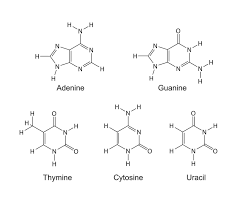
Purines
Double Ring structures (nitrogen bases): Adenine and Guanine
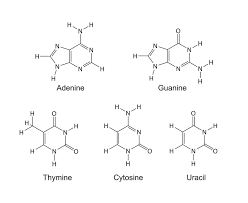
Pyrimidines
Single ring structures (nitrogen bases): Cystonine, Thymine and Uracil
Erwin Chargaff
Created Base Pairing (Chargaff’s Rules)
Rosalind Franklin
Used x-ray diffiraction to recorded the scattering pattern of x-rays on film. Suggested that DNA was a two strand-helix structure, nitrogen bases at the centre of the molecule.
Watson and Crick
Used Rosalind’s module-built a model of the structure of DNA and how it carried information and copied. Describe DNA molecule as double helix and it consisted of two strand wound around each other
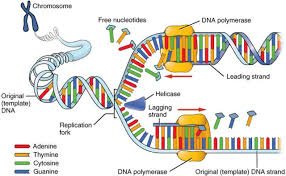
DNA replication
Enzyme, Helicase splits and unzips two complementary strand and enezyme DNA polyemarase adds new nucleotides according to Base Pairing Rules. Nucleotides sealed back together by hydrogen bonds.
Gene expression:
The process by which DNA makes proteins.
The Genetic Code
The order in which the amino acids are joined determines the type of protein made.
Central Dogma of Biology
DNA→ transcripts→ RNA→ translates→ Protein
Prophase
DNA condenses into chromosomes in nucleus
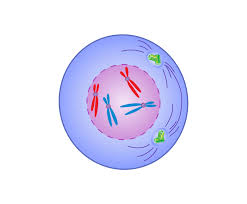
Metaphase
Chromosomes line up in the middle of the cell, connected to spindle fibers at the centromere
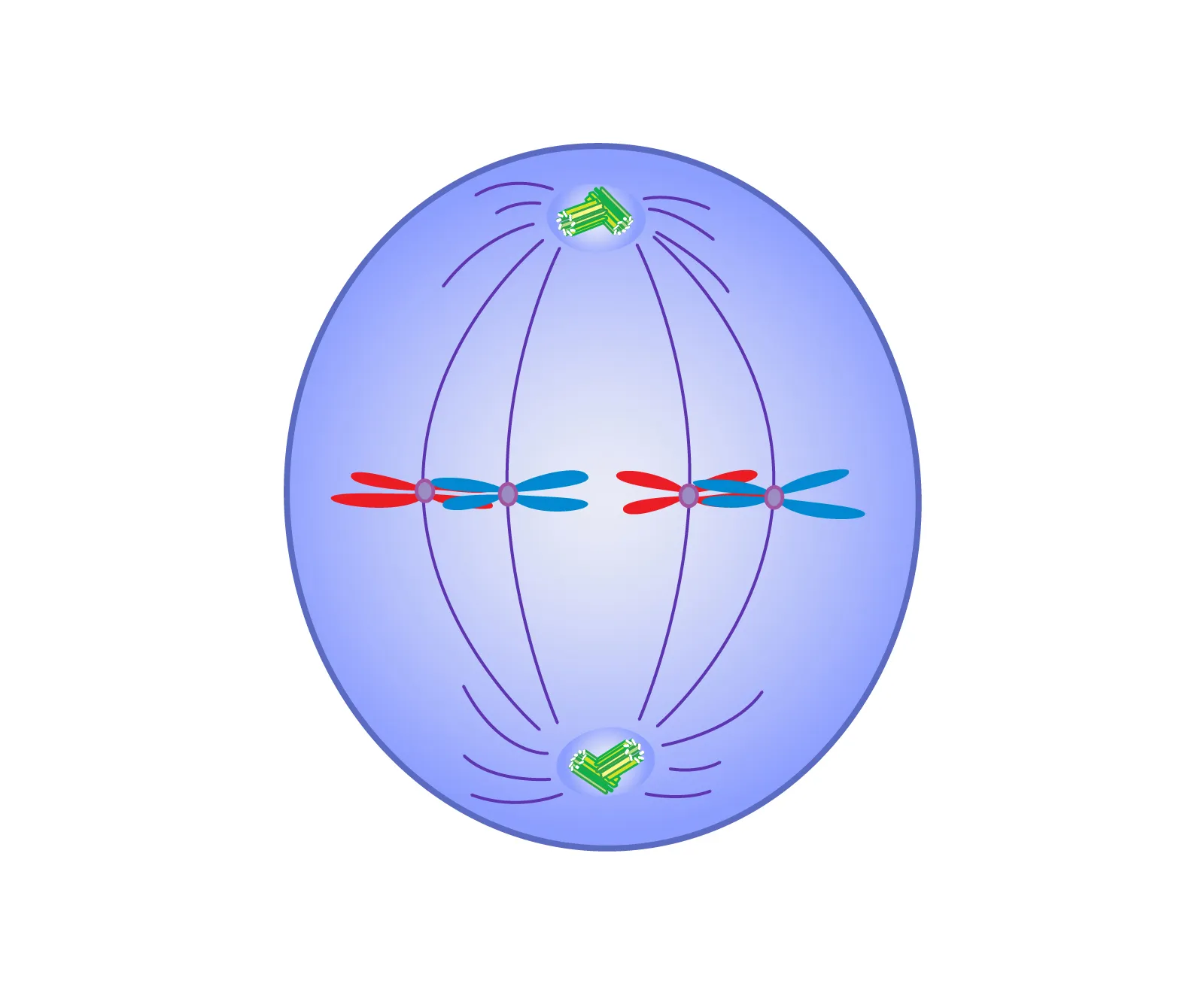
Anaphase
Chromosomes are pulled apart to opposite ends of the cell by the spindle fibers
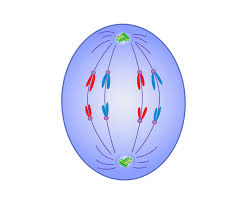
Telophase
The new cell membrane starts to form, nucleus starts to form
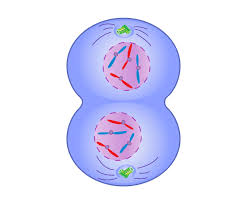
Difference Between Mesosis v Mitosis
Meiosis produces gametes or reproductive cells and during mitosis one introduces genetic variation-the copies of genes swapping in a chromosome during prophase.
The daughter cells at the end of meiosis the cells are genetically different and called haploids (n). (one copy of each chromosme
Difference between Mitosis V Meoisis
Mitosis produces stomatic or body cells through asexual reproduction, only goes through one cycle of PMAT. There is no genetic variation and forms identical cells called diploids (2n). ( two indentical copies of each chromosome
Cyclins
Family of Proteins that regulate the timing of the cell cycle.
Internal regulators
External regulators. (control speed of cell cycle)
Cell cycle stages
G1→S→G2→M
G1- Preps for cellular growth
S Phase- DNA replicates
G2- Preparation for mitosis
M- Mitosis
Interphase
The longest part of the cell cycle the cell acquires nutrients, creates and uses biomolecules, and prepares for cell division
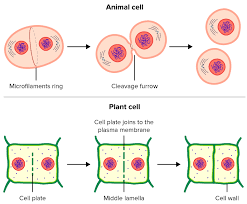
Cytokinesis
The cytoplasm divides between the two new cells