Animal Behavior-Learning Objectives
 Studied by 0 people
 Call Kai
 Learn
Learn Practice Test
 Spaced Repetition
 Match
Match Flashcards
 Knowt Play
1/129

There's no tags or description
Looks like no tags are added yet.
Name | Mastery | Learn | Test | Matching | Spaced |
|---|
No study sessions yet.
130 Terms
Defining “behavior” including its key characteristics and the main discussion points of the debate around its definition.
behavior is very hard to describe. one way could be the responses (both innate and learned) to external and internal stimuli, with non-action counting as a response. Or, the translation of information into action.
Understanding why animal behavior is necessarily an integrative discipline. Appreciate the interdisciplinary nature of animal behavior, including the roles of neurobiology, genetics, ecology, and collaboration.
everything is connected all the time.
Explaining why understanding behavior depends on an “hierarchy of questions”
behavior is influenced across multiple timescales, from immediate neural/hormonal signals to long-term evolutionary history.
Being able of distinguishing proximate vs. ultimate explanations of behavior and to catalog questions about animal behavior within the four overlapping categories originally described by Tinbergen
proximate: more recent, environmental stimuli, “HOW'“
ultimate: more distant, evolutionary processes, “WHY”
causation/mechanism
development/ontogeny
adaptive function
evolutionary history
Describe the three foundational processes that shape behavior — natural selection, individual learning, and cultural transmission — and give examples of each.
natural selection: animals with greater fitness will reproduce more, ensuring their genes are passed down
individual learning: learning that occurs within a generation
cultural transmission: learning that occurs across generations, ie, orcas avoiding bays where their grandparents were kidnapped even tho they werent there themselves
Differentiate between conceptual, theoretical, and empirical approaches used to study animal behavior.
conceptual: how things might be. hypothesis
theoretical: how things should be. modeling
empirical: how things are. experiements
Embrace complexity, variability and change in behavior, recognizing that most behaviors have multiple interacting causes.
everything is complicated and intertwined all the time
Define learning and explain how it differs from memory.
a relatively permanent change in behavior as a result of experience. memory is the retention of a learned experience.
Explain when learning is expected to evolve, using the two key factors — environmental stability and usefulness of past experience — and describe the fixed vs. dynamic world scenario
learning will only evolve when the environment is middlingly stable, ie, changes in a predictable way, and when things that you have learned will be useful in the future.
the fixed vs. dynamic world scenario: there are 2 worlds, each w two habitats. fixed world has habitat where there is 100% fitness, and habitat where there is 0% fitness. dynamic world has 2 habitats, each with 50% fitness.
where will learning occur? Neither. no need in fixed world as can rely on genes, in dynamic world isn’t helpful b/c past experience do not inform future choices
Describe how learning is physically manifested in the nervous system, including neurotransmitter dynamics and synaptic/dendritic spine changes, and explain the concept of neural plasticity.
happens at the micro level with synaptic change and the macro level within organizational changes in different brain regions. learning is neurotransmitter dynamics, ie, the formation of new synapses/connections between neurons. however, not a direct 1-1 ratio, as dendritic spines (make up synapses) grow and are pruned, but learning remains- this is neural plasticity.
Define and recognize habituation, describe its adaptive value, and be able to give examples of it
the reduction and eventual lack of a response to a stimuli. valuable because it allows us to choose what stimuli we focus on. example: snail stopping retracting eyes after being poked lots of times.
Define imprinting and describe its features (sensitive period, long-lasting effects), understand how learning is often matched to sensitive periods
imprinting is a form of rapid learning that occurs in young animals during a short sensitive period and has long lasting effects. Example: Konrad Lorenz and the geese
sensitive phases: specific windows during development when certain behaviors are learned
Define conditioning, recognize the different types, and be able to give examples of it
conditioning is the process of connecting a stimuli and response
classical: connecting a novel stimuli to an inherent responce; pavlov’s dogs
operant: connecting a novel stimuli to a learned behavior; skinner box w rats
Explain the concept of learning curves and individual variation in learning rate
learning curves allow researchers to quantify learning rate and characterize differences in learning speed/ability. speed does not equal value, faster is not always better.
Describe spatial learning and memory, including how hippocampal size can vary among and within species and how spatial memory can be studied experimentally
spacial learning/memory has 2 types: individual placing itself in space, and individual remembering salient object location.
Experimental approach: comparison of brains between related species w similar behaviors. looked at 2 species of bird, one which cashed food more frequently and one which did not. the species that cashed more food must have better spacial memory, which is associated with increased hippocampal size. Also seen in cabbies.
Define social learning, recognize and explain local enhancement and public information
social learning = other individuals are a source of information for learning. NOT teaching
local enhancement = presence of other individuals gives a clue about the location of patchy resources
public information = other animals foraging behavior gives clues about the foraging patch
Explain mate choice copying
a form of social learning where an individual’s attractiveness increases if they have been chosen by other individuals
List the three necessary criteria to define teaching in animal behavior
the experienced animal (teacher) must change it’s behavior only when in the presence of a naive student
the teacher must be negatively impacted by this change in behavior
the student must learn faster than if it was not taught
bonus: teacher will change behavior if student is not learning
Describe the concept of behavioral traditions and be able to give example of it
behaviors which are transmitted between generations through social learning. spread fast but also forgotten easily. example: dolphin mud nets!
Explain how endogenous clocks and environmental cues regulate behavioral rhythms, comparing the endogenous clock hypothesis and environmental stimulus hypothesis.
endogenous clock: organize behavior and physiology to adapt to the environment’s cycles and cues, prepares organism for the coming environment
environmental cues: predictable, repeatable changes
endogenous clock hypothesis: internal clock acts totally independently from environment/external cues
environmental stimulus hypothesis: external stimuli are necessary to calibrate internal clock
Define the different types of rhythms circadian, circannual, tidal, and lunar and give examples of species that rely on each.
circadian: over the course of a day, based on presence/absence of sun
circannual: over the course of a year, ie, hibernation
tidal: tied to the tidal cycle, typically 2 periods of activity/inactivity per 24 hours
lunar: tied to the mood
Explain adaptive significance of the circadian rhythm.
the circadian rhythem allows an animal to predict upcoming changes in their environment, and change their behavior/phisiology accordingly
Remember the master clock position in insects.
Describe the role of the suprachiasmatic nucleus (SCN) as a mammalian master clock, including supporting evidence from lesion and transplant studies.
the SCN is pair of hypothalamic neural clusters which receive input from the retina. SCN contains a master clock critical for maintaining a free-running circadian rhythm.
Explain the molecular basis of circadian timing, focusing on clock genes such as per, and their evolutionary conservation across taxa.
basis of circadian oscillation in animals is in the rhythmic feedback regulation of transcription of clock genes, such as PER. Many many animals have the PER gene, and it functions (nearly) exactly the same in all of them, showing a high level of evolutionary conservation and the impact of a very ancient shared ancestor.
Discuss how environmental cues (Zeitgebers) like light, rainfall, tides, and lunar cycles entrain internal clocks, how they can interact and why predictability of cues matters for adaptive timing.
zeitgebers entrain the internal clock by happening at the same time every day/unit of time. this way, the internal clock doesn’t enter a free-running state. different zeitgebers can entrain different clocks, or interact to entrain the same clock. Example: marine worms have 3 internal clocks: daylight entrains feeding cycle, moonlight entrains reproductive cycle, UV light entrains circannual cycle.
Define hormones and describe how they are measured in animals.
chemical substances released by endocrine glands into bloodstream. measured in bodily fluids (saliva, blood, urine) and other tissues/excrements. Important: other molecules change hormones, number of receptors differs- not a direct causation of hormone -» behavior
Differentiate between hormone types (peptides/proteins, steroids, amino acid–derived) and their different types of receptors and timescales of effect (activational vs. organizational).
peptides: short-chain amino acids, cell surface receptors, activational
steroids: lipid-based molecules, some cell surface receptors (activational) and some nuclear receptors (organizational)
Amino acid-derived: mostly tyrosine or tryptophen: nuclear receptors, organizational
Describe the hypothalamic–pituitary–gonadal (HPG) and hypothalamic–pituitary–adrenal (HPA) axes, explaining their feedback loops and roles in reproduction and stress.
HPG- gonadotropin-releasing hormone (GnRH) is secreted from the hypothalamus, stimulates release of Lutenising Hormone (LH), a follicle stimulating hormone from the anterior pituitary gland, which leads to production of testosterone in testes and estrogen/progesterone in ovaries. elevated levels of T & E in blood create negative feedback loop stopping production of GnRH. Important for reproduction
HPA- corticotropin-releasing-hormone (CRH) secreted from hypothalamus, stimulates release of adrenocorticotropic hormone (ACTH) from the anterior pituitary gland, which stimulates production of glucocorticoids (incl cortisone) Important for stress
Explain the Challenge Hypothesis, including its predictions about testosterone, mating effort, and paternal care, and how results vary across species.
variation in testosterone is mainly a function of interactions with other males. Predictions: high T levels promote mating and competitive behavior but suppress parental care behaviors. T levels high at beginning of mating season, reduce as time goes on and offspring born, except for spikes during interactions with rival males. NOT TRUE
Give examples of how hormones influence behavior, such as testosterone and aggression/dominance and social, glucocorticoids and stress responses, or melatonin and circadian entrainment.
testosterone leads to behaviors which benefit social status
glucocorticoids lead to stress responces- continually elevated glucocortoids can lead to chronic stress
Recognize the bidirectional relationship between hormones and behavior —
not only do hormones influence behavior, but behavior and social context also shape hormonal responses.
Reject the false dichotomy between “genetic” and “environmental” behaviors —
recognize that both act together, continuously shaping behavioral variation across development
Understand the concept of heritability and heredity (inherited) of a trait (morphological or behavioral)
heredity: passing of traits from parents to offspring, inheritance
heritability: proportion of varience in a phenotypic trait that is due to genetic variation at at population level
Understand how heritability can be estimated, and why it is a very important concept of evolutionary biology
H= genetic varience/ (genetic + environmental varience) It’s important because it can help distunguish what is due to genetics and what is due to environment
Explain how heritability predicts response to selection, and describe common methods for estimating heritability,
parent-offspring regression: the more genetically similar two individuals are, the more shared traits can be attributed to genes
cross-fostering: experimental approach to determining heritability, young from two family groups are swapped to see how they develop
twin studies: seeing if twins (genetically identical) have the same traits or not
Distinguish between broad sense and narrow sense heritability
broad sense: all genetic effects are included
narrow sense: only additive effects (average effect of individual alleles on phenotype) are included
Being able to explain how environment interacts with the genotype throughout lifespan, from prenatal times through adulthood
all behavior is based off the interactions btwn environment and genetics
Being able to name and explain epigenetic mechanisms and how they can produce heritable but reversible behavioral changes without altering DNA sequence and give examples of their importance to influence behavior
epigenetics: heritable changes is gene expression that do not involve changes to the DNA sequence itself. Rather, these changes regulate how genes are turned on/off and can be influenced by environmental factors and development.
example: bees! diet influences gene expression, which informs behavior
Understand that gene expression is dynamic and environmentally responsive, and explain how diet, hormones, and social context can regulate transcription and affect behavior
everything is connected all the time. diet, hormones, and social context regulate the transcription of dna, which changes which genes are turned on/off, which change behavior.
Explain how knockout or transgenic studies reveal gene function
if the removal of a gene affects a behavior, there is likely some connection between that gene and that behavior.
Define sexual selection and describe its two sides
sexual selection is the way in which the members of one sex choose what member (s) of the other sex to reproduce with.
intrasexual competition: male-male or female-female competition
intersexual mate choice: male-female interactions
Understand why sexual selection can be puzzling in view of aspects of fitness (Darwin’s initial dilemma)
many animals such as the peacock have traits used in sexual selection that are directly unhelpful for survival/ go against idea of natural selection
Describe and give examples of secondary sexual characteristics and differentiate between weapons and ornaments (and be able to give examples of each)
secondary sexual characteristics are any sexually dimorphic morphologies which are not reproductive organs.
weapon: a secondary sexual characteristic used in intrasexual competition
ornament: a highly decorative feature used in displays
Explain the model of anisogamy evolution, showing how disruptive selection led to the evolution of two sexes with different gamete size and why it is at the foundation of differing reproductive strategies.
anisogamy = babies come from different sized eggs and sperm. eggs (large zygotes) provide embryo with resources such as nutrition, whereas sperm are smaller and faster to make fertilization more likely. evolved because organisms had finite amt of energy to put towards gamete creation, had to choose between many small or few large. few large have high fitness b/c each has greater resources, wheras many small have high fitness b/c of strength in numbers.
Describe Bateman’s hypothesis and parental investment theory, and use them to predict which sex is expected to be choosier and which experiences stronger sexual selection.
bateman’s hypothesis: males reproductive success relies on the number of successful copulations and female reproductive success does not. thus, male reproductive success is more variable than female. also, sexual selection will have a greater effect on the sex with greater reproductive variability.
parental investment theory: the sex with greater parental investment costs will be the choosier one when picking mates, the sex with less parental investment cost will experience stronger sexual selection
Define, explain and give examples of sexual conflict
sexual conflict is also called sexual coercion, involves forcible copulation. has negative effects on female health (duh). often based on aggressive behaviors, physical restraint, or penile spikes.
Appreciate the flexibility of sexual roles — recognizing cases such as sex-role reversal in pipefish and the ecological conditions that drive such patterns
sex-role reversal is when the female has costly ornaments and competes for male favor, male is heavily invested in parental care
Summarize Fisher’s runaway selection and Zahavi’s handicap principle, explaining how each can lead to the evolution of costly or exaggerated traits through female preference.
fisherian runaway selection: females select males based on a particular trait which varies between males, the trait is thus selected for and becomes more exaggerated over time
Zahavi’s Handicap Principle: exaggerated secondary sexual characteristics allow choosier sex to assess mate quality, because the characteristics are costly to develop and maintain, thus showing quality of individual
Differentiate between direct and indirect benefits of mate choice, and recognize examples of each
direct: immediate gains, ie, territory, food gift: in butterflies, males provide a spermatophore (sperm packaged within a protein-rich structure)
indirect: genetic benefits, ie, offspring will have better genes/survivorship. in european tree frogs, louder singing mates leads to larger (better) offspring
Understand how sensory bias can play a role in mate choice and give examples.
sensory bias can mean that certain traits/attributes have an outsized effect on mate choice.example, guppies have innate preference for the color orange- female guppies will always choose oranger male
Understand what preference variation within mate choice means and the importance of mate compatibility.
not all individuals will share the same preference exactly. fitness is often increased when individuals are allowed to choose mates based off individual preferences
Describe the presence of alternative reproductive strategies (i.e. satellites and sneakers)
in frequency dependent selection, the presence of multiple mating strategies makes them all more likely to succeed.
Recognize that mate choice can also occur during and after mating and describe mechanisms of postcopulatory selection
sperm competition between males, fertilization bias (cryptic female choice) by females, allocation bias by both, mate guarding
Define and differentiate the main types of mating systems (mating strategies) — monogamy, polygyny, polyandry, polygynandry, and promiscuity — give examples and explain how social and genetic mating systems may differ.
monogamy: one male, one female
polygyny: one male, multiple females: horses! Lions!
polyandry: multiple males, one female: Clownfish
polygynandry: multiple males and multiple females, within social group
promiscuity: multiple males and multiple females, across/regardless of social group
social mating systems are how it “seems” like the mating system is
genetic mating systems are how it actually is, ie, including EPCs
Define sex determination and explain the main mechanisms of determining sex
sex determination is the process by which an individuals sex is determined
environmental: ie, temperature determined sex
genetic: chromosomally determined sex
Be able to identify how hermaphroditism integrates with different mating strategies
hermaphroditism is common in species with lower parental care, which often corresponds with promiscuity/polygynandry
Define parthenogenesis and its occurrence in vertebrates
parthenogenesis is the process by which a female individual can reproduce without a male, offspring are genetically identical to the mother. Happens in some species of reptiles, such as the New Mexico whiptail lizard, which can be created thru hybridization but then can only reproduce w parthenogenesis.
Describe the Emlen and Oring (1977) model, identifying how sexual conflict and environmental resource distribution shape the evolution of mating systems
the E&O model states that the interplay between resource distribution (clumped/defensible and uniform/indefensible) and sexual conflict (female-biased care and male-biased care) determines the mating strategy
Analyze case studies (e.g., reed warblers) to connect habitat quality, resource distribution, and male parental care to observed mating system diversity
females provide more parental care, male parental involvement varies between species. strong association between habitat quality and mating system/male care: in better habitats, male parental care is not needed b/c of more resource availability, so polygyny will evolve; in worse habitats male care is necessary for offspring survival as there are fewer resources, so monogamy will evolve
Describe monogamy, under what conditions it may evolve, the importance of biparental care, the territorial cooperation hypothesis and the mate guarding hypothesis and, be able to give examples
monogamy = 1 male, 1 female. occurs when biparental care is essential for offspring survival and/or there is low sexual conflict. territorial cooperation hypothesis states that monogamy will evolve when both partners are needed to defend a critical resource. mate guarding hypothesis= selection favors males that mate with a guard one female over 1+ reproductive cycles. examples: poison dart frogs, california mice
Distinguish between resource defense and female defense polygyny, describing behavioral and ecological differences
resource defence= male defends resource, females gain access by mating
female defence= male defends group of fem
Apply the Polygyny Threshold Model, predicting when females should accept polygynous matings based on resource quality and fitness trade-offs.
Explain lek-based (male dominance) polygyny, comparing the hotspot and hotshot hypotheses
leks develop where resources are uniform or unpredictable. dominance structures forom within lek, allowing females to asses male quality.
hotspot: all males benefit from aggregating in a location where they are likely to encounter many females
hotshot: males can increase their encounter rate w females by aggregating near an attractive male
Identify conditions favoring polyandry and sex-role reversal, outlining the three-step hypothesis for how these systems evolve
starts w a species w male biased parental care
females become able to have more offspring than 1 male can take care of
females compete to have groups of offspring with different males
consistent individual behavioral variation, often called personality
Individuals differ in behavior, and these differences are consistent over time or contexts
Be able to describe consistent individual behavioral variation in terms of among- and within-individual variation.
among-individual variation: how different individuals are from each other in their average behavior
within-individual variation: how consistent individuals generally are in repeated expressions of behavior (plasticity)
Describe behavioral syndrome and explain why they are important to understand the behavior of single animals.
individuals averages of behavior can correlate, leading to among-individual correlations. useful b/c can use same statistical tools regardless of what the behavior actually is.
Name key behavioral axes and explain advantages and limitations of using them.
boldness, exploration, activity, aggression, sociability. useful b/c they provide a framework to categorize a wide variety of behaviors. Deeply flawed though, b/c they are not well defined categories, and are often very subjective to the researchers.
Explain the main methodologies used in this field of studies and the underpinning statistical framework that allows standardization of the field.
standardized behavioral assays: open field, novel object, preference, common garden
statistical framework: mixed effects regression models
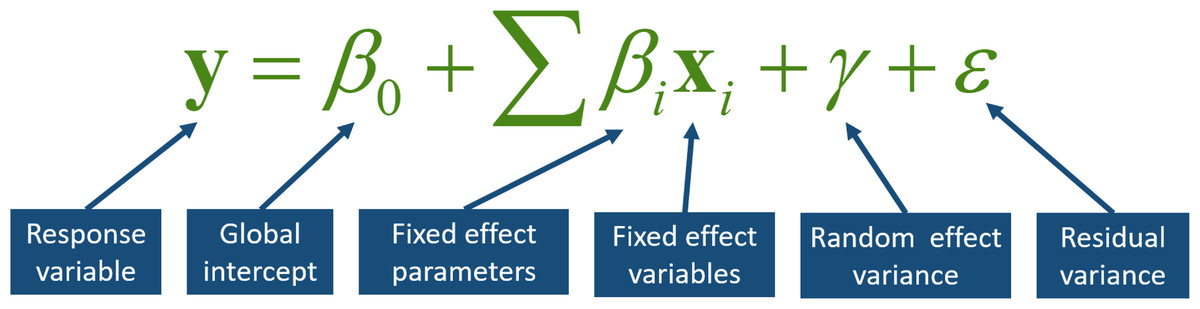
Be able to hypothesize proximate and ultimate causes of consistent individual behavioral variation
proximate: genetic/environmental/epigentic variation, gene expression, neurologic/hormonal/metabolic processes
ultimate: ecological and environmental (Life-history trade-offs, POLS, etc)
Describe and elaborate on the two main current frameworks to explain the coexistence of multiple behavioral strategies,
Life-History Trade-offs / Pace-of-Life Syndrome: multiple strategies can coexist with similar fitness at a given time. POLS hypothesis = behavior mediates mortality (more risks = shorter life and vice versa), greater current reproduction leads to lower future reproduction.
Fluctuating or Heterogeneous Selection: there is a single optimum strategy, but this strategy changes over time. selection pressures vary over time and space, if optimum changes faster than pop can adapt, variation will be maintained.
Describe plasticity, phenotypic flexibility, and developmental plasticity, and be able to give plenty of examples.
plasticity: the capacity to modify behavior/morphology in response to environmental stimuli
phenotypic flexibility: reversible variation
developmental plasticity: irreversible variation in traits that result from environmentally determined factors. example: tiger salamanders, developing cannabalism or not
Understand the difference between active vs. passive and graded vs discrete plasticity
active: anticipatory phenotypic changes in response to some environmental cue/signal, reflect modifications of developmental pathways and regulatory genes
passive: stems from direct environmental influences on chemical, physiological, and developmental processes. a mere consequence of the environment, such as stunted growth b/c low resource levels
graded: on a scale
discrete: “yes/no”
Explain how plasticity can result in genetic assimilation and how it can be studied from the practical point of view (using the dung beetle example as a reference).
discrete plasic trait in horn development, correlated with behavior (fight vs hide/sneak). created by density of beetle population. 2 populations of same species, but w VERY different densities: clear morphological differences, can see which are plastic and which aren’t.
Define sociality and delineate variables that can be used to characterize animal social groups.
2 axes: social tendency (complexity of social interaction from alone to eusociality) and open/restricted entry
Recognize the importance of individual recognition in social relationships
individual recognition is important for group stability (and a prerequisite for closed social groups).
List costs and benefits of group living and be able to explain and give examples for each mechanism
costs: increased agression and competition, disease transmission
benefits: encounter dialation, confusion effect, detecting predators, dividing tasks, group defense, predator swamping, group hunting
Explain the importance of dominance hierarchies, its costs and benefits, and the selective pressures that lead to its evolution
dominance hierarchies help stop fights from occurring. created through 2 steps, establishing dominance and maintaining dominance. benefits: lower aggression and fights. Costs: maintaining high dominance is a big energy drain.
Describe what badges of status are and how they work.
a badge of status is a sign showing an individual’s fighting ability, eg, white tailed deer antlers
Explain the concept of multilevel societies and give examples of them
2 or more nested, hierarchical tiers within the social organization of a species. ie, individuals are members of a base social group, and that group is in turn part of a larger social group. examples: golden snub-nosed monkey, humans.
Explain the concept of eusociality and give examples of them, focusing on the elements of cooperation and task specializations
the “peak” of sociality, one fertile female and castes of non-reproducing members. individuals have defferent tasks and cannot survive outside of the group.
Define cooperation, its evolutionary dilemma and give examples of it, understand its wide applicability.
cooperation: a behavior that provides a benefit to another individual, at cost to the giver. applicable to human ethics and morality.
Know and apply Hamilton’s rule and be able to explain direct and indirect benefits within the concept of inclusive fitness
Hamilton’s rule: rb-c>0, where c=fitness cost to actor, b= fitness benefit to recipient, r=actor and recipients genetic relatedness
inclusive fitness = direct and indirect benefits (ie, sibling’s kids also share your genes)
Detail the evolutionary pathways through which groups with high coefficients of relatedness occur.
if individuals are more related, they will be more likely to cooperate with each other.
Define direct benefits and how they can be classified, and for group augmentation, reciprocity and enforcement be able to explain the mechanisms in detail and give examples.
direct benefits are when cooperation provides a benefit to the actor as well as the receiver. “enforcement” is when cooperation is rewarded and cheaters are punished. “reciprocity” is when individuals preferentially help those who have helped them in the past. “group augmentation” is
Being able to put cooperation and direct and indirect benefits into an evolutionary perspective.
cooperation will evolve b/c of kin selection and shared interests. cooperation is necessary for the evolution of complexity.
Understand how the multiple layers of life are only possible in view of cooperative strategies and explain major evolutionary transitions.
over time with cooperation, solitary individuals become a group, then the group can become one bigger and more complex individual. ie, prokaryotes+ mitochondria = eukaryotes, many eukaryotes = multicellular life!
Define animal communication, its elements and their roles
the process by which a specialized signal produced by one individual (signaler) affects the behavior of another (receiver).
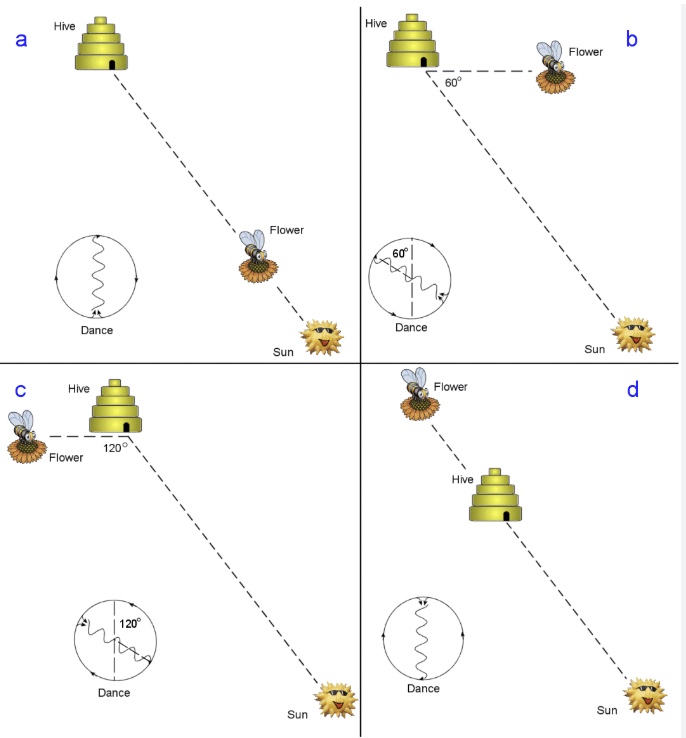
Describe the honeybee waggle dance as an example of (multimodal) communication
relates own position within hive to the sun and food source w/ figure 8 dance. strength of tail waggle shows distance. Scent of pollen on dancing bee helps id flower.
Distinguish signals and cues
signal: an evolved trait that is selected for it’s effect on the behavior of the receiver
cue: an aspect of the phenotype to which receivers respond; did Not evolve to influence receivers respond
Identify and compare the major sensory modalities used in animal communication.
chemical: pheromones, scents
visual: morphological traits
visual: behaviors
tactile: grooming
electrical: electric fish
substrate-borne vibrations: echolocation
Understand how research tests animal “linguistic” properties, including the concepts of semantics, referentiality, and syntax.
semantics: studies meaning of a signal
referentiality: signal is reliably associated with a specific object or event
syntax: order of the units of a signal- can be sequential (studies importance of the order w/out semantic interpretation) or sentential (studies how the order relates to the meaning)
Describe how signals evolve, including how selection acts on both senders and receivers, and how conflicting vs. aligned fitness interests shape signal form and meaning.
signal evolution depends on signaler/receiver dynamics. If mutual benefits, then honest signaling will evolve. if differing fitness interests, “coevolutionary arms race” with mimicry and deception
Explain honest signaling and the different evolutive pathways that can lead to it
happens when fitness interests of signaler and receiver are aligned (both benefit from honest signal). some signals cannot be faked, therefore must be honest (Index signals). some signals are costly to produce/maintain, so are honest.
Distinguish among different forms of inaccurate or deceptive signaling and explain why deception is often frequency-dependent.
Batesian mimicry: non-harmful animal looks like a harmful one (to avoid predation)
aggressive mimicry: harmful animal looks like a non-harmful one (to gain access to prey)
false alarm calls: sentinel produces alarm signal when no threat is present
Describe how bystanders and audience effects can alter signaling behavior
bystander: con- or heterospecifics which are present but do not take part in signaling
Explain the influence of the environment on signal design
signals are adapted for their specific environments, favoring signals that travel best. ie, electrical signals in murky water, low pitches in dense vegetation
Explain the acoustic adaptation hypothesis and the current formulation and evidence in its support.
acoustic adaptation 1.0: The vegetation shapes the spectro-temporal parameters of the acoustic signals; ie, longer duration & lower pitch
AA 2.0: only look at distance communication, make better descriptions of specific environment.
Understand habitat selection as an adaptive decision in which habitat choice is influenced by competition and habitat quality.