Physio Lecture: Exam 1
 Call Kai
 Learn
Learn Practice Test
 Spaced Repetition
 Match
Match Flashcards
 Knowt Play
1/23

There's no tags or description
Looks like no tags are added yet.
Name | Mastery | Learn | Test | Matching | Spaced | Call with Kai | Chat |
|---|
No analytics yet
Send a link to your students to track their progress
24 Terms
cells
basic structural and functional units of life
all living organisims are cellular in nature
amoebas and bacteria are unicellular
humans, animals, and big plants are multicellular
50-100 trillion in the human body
what are the 3 regions of a cell?
plasma membrane, cytoplasm, and the nucleus
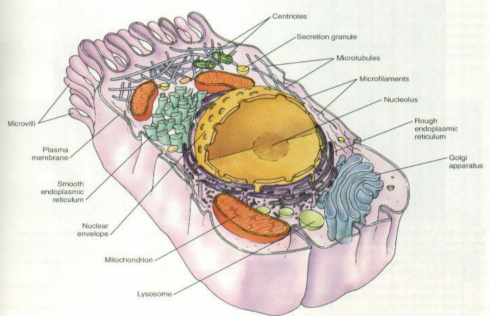
plasma membrane (plasmalemma)
outer thin and flexible membrane of a cell that separates the intracellular compartment/fluid from the extracellular compartment/fluid like interstitial fluid and plasma
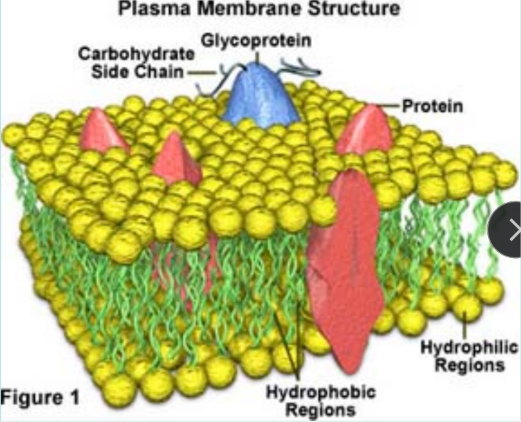
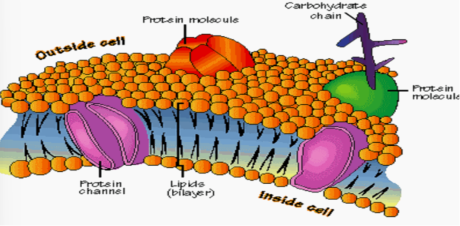
plasma membrane structure
made of a double layer of lipids (phospholipids/phospholipid bilayer) that have has cholesterol and glycolipids
integral and peripheral proteins are embedded throughout
the plasma membrane has ___ to transport ions such as ___ and ___
structurally, ___ and ___ pass through the cell membrane easily
___ hormones (i.e ___ and ___) pass through easily
structurally from cholesterol
___ hormones have a diff. structure (___ size) → doesn’t pass through easily
channels…sodium… potassium chloride
cholesterol…lipids
sex…testosterone…estrogen
protein … larger
integral proteins
receptor of protein hormones (i.e insulin and neural transmitters)
most abundant proteins in the membrane
most extend entirely throughout the membrane/transmembrane
some protrude from one side of the membrane
act as RECEPTORS
clinical point regarding integral proteins
any mutation or alteration to receptor → hormonal disorder: type 2 diabetes/hyperglycemia
ultimately a receptor problem where insulin can’t bind to protein receptor
type 1 diabetes is a cause of ___ where there is an insulin ___
autoimmune disorders … insulin deficiency
peripheral proteins
function to isolate and seperate the cell membrane from the cytoplasm
mostly on the cytoplasmic side
support the cytoplasmic side of membrane via network of filaments
phospholipids
most abundant lipids in the plasma membrane
hydrophillic heads
hydrophobic tails
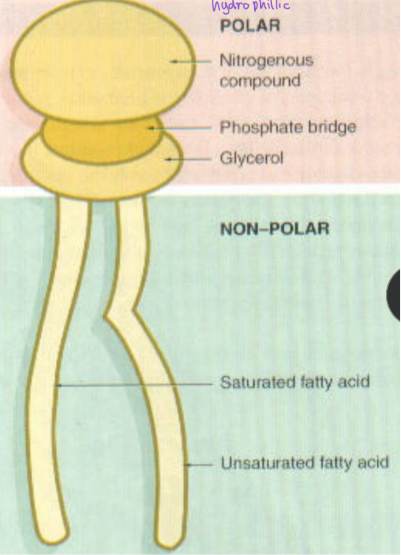
hydrophillic heads of phospholipids
attach to water (main constituent of intra- and extracellular fluids)
lie among the inner and outer faces of the membrane
polar, nitrogenous compound, phosphate bridge, glycerol

hydrophobic tails of phospholipids
avoid water and line up in the center of the membrane
nonpolar
saturated and unsaturated fatty acids
glycocalyx
sugar covering or cell coat that covers cell membranes externally
glycocalyx are short ___ of ___(sugars) projected out from the ___ surface of glyco___ or glyco___
work to bring ___ binding and ___
chains … carbohydrates… external … proteins/lipids
cell-to-cell binding … recognition
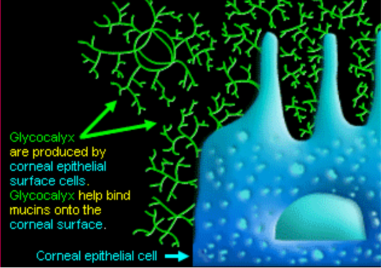
glycocalyx are produced by ___ and also help bind ___ onto the ___ surface
corneal epithelial surface cells … mucins … corneal
the plasma membrane serves as an ___ cell ___ against substances and forces ___ of the cell → protecting the cell from ___
external … barrier … outside → external trauma
the plasma membrane’s ___ facing ___ act as receptors (for hormones, neurotransmitters, etc.) and help in cell-to-cell recognition
externally … proteins
the plasma membrane helps with the ___ of substances into/out of the cell
transports ___(sodium, potassium, calcium), ___, and ___ via channels
___proteins as receptors
transport
ions … substances … fluids
integral
the plasma membrane is a ___ permeable barrier → ___ substances pass between ___/___cellular fluids and others are prevented
selective → some … intra/extra
passive process
process where substances pass freely through lipid bilayer down the concentration gradient or from a more concentrated region to a less concentrated region until equilibrium is reached
diffusion
no ATP needed
diffusion
natural movement of small, uncharged molecules (i.e oxygen, CO2, and fat soluble molecules) across the membrane from higher to lower concentrations
active process
process where substances move against a concentration gradient from a lower to higher concentration
ATP is needed
active transport
when larger water-soluble/charged molecules (i.e glucose, amino acids, and ions) are transported via a pump/carrier and involve integral proteins and needs ATP or cellular energy
vesicular or bulk transport
mechnism via many large particles and macromolecules pass through
exocytosis and endocytosis