29. Blood lipids
 Studied by 0 people
 Call Kai
 Learn
Learn Practice Test
 Spaced Repetition
 Match
Match Flashcards
 Knowt Play
1/54

Earn XP
Description and Tags
4/12/2025
Name | Mastery | Learn | Test | Matching | Spaced |
|---|
No study sessions yet.
55 Terms
Name the major groups of lipids
Fatty acids
Triglycerides
Phospholipids
Cholesterol
Lipoproteins
Why do we do lipid analysis?
To measure future cardiovascular risk
Elevated LDL levels are associated with atherosclerosis
To measure patient response to lipid lowering drugs
To determine if drugs such as statins are working and reducing the patients cholesterol levels
Assist in the diagnosis of pancreatitis
High triglycerides in blood stream can cause pancreatitis
What are lipoproteins?
A particle made of lipids and aporoteins that transports the hydrophobic lipids through the blood stream
What are the two pathways of lipid transport?
Exogenous
Endogenous
Summarise the exogenous pathway of lipid transport
Epithelial cells of small intestine absorb free fatty acids, monoacylglycerols and cholesterol
Microsomal triglyceride transfer proteins (MTP) packages these lipids as chylomicrons
When the lipids reach the tissue, lipases remove triglycerides from the chylomicrons retaining their cholesterol resulting in chylomicron remnants
The liver breaks down the chylomicron remnants
Cholesterol from chylomicron remnant is secreted into the small intestine or packaged into VLDL
VLDL
Very low density lipoprotein
LDL
Low density lipoprotein
IDL
Intermediate density lipoprotein
Summarise the endogenous pathway of lipid transport
Microsomal triacylglycerol transfer protein packages triglycerides and cholesterol into VLDL
VLDL transports triglycerides to tissues
VLDL becomes IDL in respiring tissue
IDL becomes LDL by the removal of remaining triglycerides and cholesterol
LDL deposits cholesterol into cells
LDL becomes HDL
HDL will carry cholesterol from cells to the liver to be eliminated
LDL
Bad cholesterol
HDL
Good cholesterol
Order the lipoproteins from largest to smallest
Chylomicrons
VLDL
LDL
HDL
Major Apoprotein of chylomicrons
B48
Major apoprotein of VLDL
B100
Major apoprotein of LDL
B100
Major apoproteins of HDL
A1, A2
Function of chylomicrons
Main carrier of dietary triglycerides
Function of VLDL?
Main carrier of endogenously produced triglycerides
Function of LDL
Main carrier of cholesterol
Main function of HDL
Cardio protective, carries cholesterol back to liver
Lipid that makes up most of chylomicron
Triglyceride
Lipid that makes up most of VLDL
Triglyceride
Lipid that makes up most of LDL
Cholesterol
Lipid that makes up most of HDL
Phospholipid (25%) and protein (55%)
What is the collection tube to test for lipids in blood?
SST- yellow top tube
Serum separator tube
What is total cholesterol?
Both HDL and LDL
When testing a patient for triacylglycerols what should we ensure?
The patient has fasted
Because concentration of triacylglycerol concentration is greatly affected by meals
If patient hasn’t fasted we cannot accurately calculate LDL using the friedewald equation
What does tiracylglycerol test measure?
Amount of glycerol released by lipids
When cholesterol transported by HDL to liver what is it converted to?
Bile acids and then excreted
What does low levels of HDL in the serum indicate?
Increased risk of cardiovascular disease
How is LDL measured?
Using the friedewald equation:
[Total cholesterol ] - [HDL] - ([Triacylglycerol] / 2.2)
When should the friedewald equation not be used?
when tiglyceride concentration is greater than 4.52mmol/L
What are the assumptions of the friedewald equation?
Most circulating triglycerides are in VLDL
That the triglyceride: VLDL ratio is 5:1
What causes familial hypercholesterolaemia?
A defect with the LDL receptor
Symptom of familial hypercholesterolaemia
Tendon xanthomas/ xanthomas
What are xanthomas?
Cholesterol deposits
Cause of familial combined hyperlipidaemia
Over production of VLDL with increased triglycerides
What are atheromas?
Lipid rich lumps in the inner lining of arteries
How does atherosclerosis develop?
Injury to the blood vessel
Movement of cholesterol into the subendothelium and media of the artery
Monocyte infiltration and the conversion to foam cells
Rupture of the atherosclerotic plaque
What are the specimen requirements for lipid lab test?
Phlebotomy need to check that the patient and sample details match
Correct sample collection tubes (for biochemistry: SST- yellow), K-EDTA (Haematology: purple)
Ensure patient has fasted because this affects triglyceride concentration which is used to report LDL levels
Minimum acceptance criteria for lab tests
Full name
patient DOB
NHS number (or another unique identifier)
Technique used to measure: Total cholesterol, Triglycerides and HDL?
Enzymatic assay which is automatic and performed on an analyser
The colour intensity of the product is directly proportional to lipid being measured
What are the additional tests that can be done to test blood lipids?
Visually inspect the serum
Immunoassay for Lipoprotein A
Use of molecular techniques to identify APoE and the presence of LDL receptor
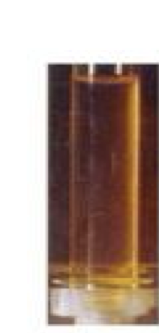
What does the image show?
Normal serum
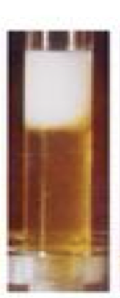
What does the image show?
Raised chylomicrons
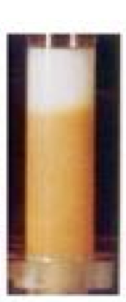
What does the image show?
Raised chylomicrons and VLDL

What does the image show?
Raised VLDL
Treatment for hypercholesteraemia
Statins
Ezetimide
Probucol
Ricotinic acid
Fish oil
LDL aphress
Why can statins be used to treat hypercholesterolaemia?
Inhibits the enzyme involved in the synthesis of cholesterol
Decreases intracellular cholesterol causing an increased intake from the plasma
Why can ezitimide be used to treat hypercholesterolaemia?
Inhibits absorption of cholesterol
Most effective when combined with a statin
Why can probucol be used to treat hypercholesterolaemia?
Has an antioxidant effect on LDL
Which may reduce LDL uptake by macrophages
Decreasing atherosclerosis, the formation of and atheroma and progression of atherosclerosis
Why can Ricotinic acid be used to treat hypercholesterolaemia?
Inhibits fatty acid release from adipocytes
Inhibits VLDL synthesis and secretion
Why can fish oil be used to treat hypercholesterolaemia?
Inhibits the synthesis and secretion of VLDL
When is LDL aphresis be used to treat hypercholesterolaemia?
LDL is removed from the blood
Used for patients
who have high LDL even after using medication and changing their lifestyle
What are the treatments for hypertriglyceridaemia?
Limit fat intake
Fibrates (upregulate genes involved in lipid metabolism to reduce triglycerides and raise HDL)
Surgery (intestinal bypass, gastric banding )
Regular exercise