SLP 320 - Speech Sounds Disorders
 Studied by 1 person
 Call with Kai
 Learn
Learn Practice Test
 Spaced Repetition
 Match
Match Flashcards
 Knowt Play
1/63

There's no tags or description
Looks like no tags are added yet.
Name | Mastery | Learn | Test | Matching | Spaced | Call with Kai |
|---|
No study sessions yet.
64 Terms
phonetics
study of speech sounds
phonology
study of how sounds are organized and patterned in language
morpheme
smallest unit of meaning
phoneme
smallest unit of sound / /
phone
physical output of speech [ ]
morphology
units combined to form words
allophone
variation of phoneme
anatomical process of speech production
respiratory (airflow)
phonatory (vocal fold vibration)
resonatory (shaping the sound)
oro-nasal (mouth or nasal airflow)
articulatory (movement of articulators)
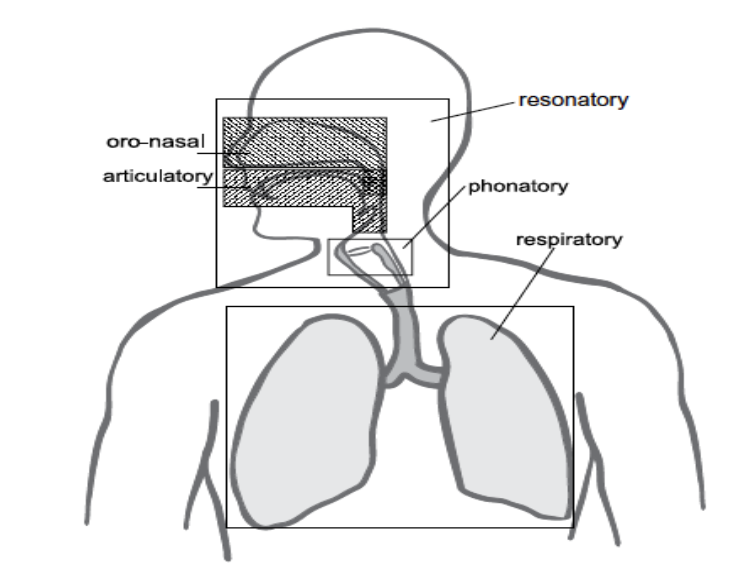
respiratory system
provides airflow for speech (lungs → trachea → larynx)
phonatory system
sound source for speech (vocal folds in larynx)
resonatory + oro-nasal system
modifying + shaping sound (pharyngeal, nasal, & oral cavities)
articulatory system
lips
upper teeth
tongue
alveolar ridge
hard palate
velum
uvala
pharynx
epiglottis
phonological development
the process by which children learn to hear and produce speech sounds within a language
speech perception
listening and recognizing sounds
speech production
making sounds and words
phonological processes
young children simplifying words
consonant sounds
speech sounds made by partial or total block of air flow through vocal tract
vowel sounds
speech sounds made through an open vocal tract
voicing
presence or absence of vocal fold vibration
voiced vs unvoiced
voiced: vocal fold vibration (adduct)
voiceless: vocal folds are apart (abduct)
cognates
voiceless/voiced pairs of consonants
classifying consonants
place of articulation (where)
manner of articulation (how)
voicing (present/absent vibration)
PLACE OF ARTICULATION
bilabial
upper and lower lips involved
/p/, /b/, /m/
/w/ is labiovelar
labiodental
upper teeth resting on lower lip
/f/, /v/
dental
tongue (tip or blade) touching/against upper teeth
/θ/, /ð/
alveolar
tongue (tip or blade) on or near the upper alveolar ridge
/t/, /d/, /n/, /s/, /z/, /l/
post-alveolar
tongue blade behind the alveolar ridge, near the front of the hard palate
/ʃ/ (sh) and /ʒ/ (zh)
alveopalatal
beginning with the tongue (tip or blade) at the alveolar ridge, ending with the tongue front near the hard palate
/t͡ʃ/ (ch) and /d͡ʒ/ (j)
palatal
front of the tongue near the hard palate
/j/ (y) and /ɹ/ (r)
velar
back of the tongue near the soft palate (velum)
/k/, /g/, /ŋ/
glottal
constriction of the vocal folds
/h/, /ʔ/
MANNER OF ARTICULATION
sonorants
open vocal tract
unobstructed airflow
all vowels; some consonants
nasals, glides, liquids
obstruents
obstructed airflow through vocal tract
completely or partially impeded airflow
some consonants; no vowels
stops, fricatives, affricates
stops or plosives
produced by two articulators temporarily stopping airflow while velum is raised, resulting in a sudden release of air that travels through the mouth
voiceless: aspiration
voiced: no aspiration
/p/, /b/, /t/, /d/, /k/, /g/
nasals
produced by two articulators temporarily stopping airflow while velum is lowered, resulting in a sudden release of air that travels through the nose
/m/, /n/, /ŋ/
glides
produced with minimal friction by the smooth movement of the articulators
/w/, /j/ (y)
fricatives
produced by the partial obstruction of airflow by two articulators closely approximating one another to create turbulence
/f/, /v/, /θ/, /ð/, /s/, /z/, /ʃ/, /ʒ/, /h/
affricates
produced as a combination of a stop + fricative
/t͡ʃ/ (ch) and /d͡ʒ/ (j)
liquids
produced with minimal friction and allows airflow over the sides of the tongue
/l/, /ɹ/ (r)
systemic transcription
phonemes (mental representation)
impressionistic transcription
actual speech (articulation)
suprasegmental
pitch, stress, loudness, rate of speech
monophthongs
steady-state, single articulatory movement
diphthongs
dynamic, multiple movements during production
rhotics
vowels with r-coloring (rhotic diphthongs or tripthongs)
tongue height
how near the tongue body is to the roof of the mouth
high, mid, low
vertical axis
tongue advancement
tongue forward to back in oral cavity
front, central, back
horizontal x-axis
rounding
rounded vs unrounded
tenseness
tense vs lax
front vowels
/i/ as in beet
/ɪ/ as in ship
/eɪ/ as in rain
/ɛ/ as in bed
/æ/ as in cat
central vowels
/ə/ as in alive (unstressed)
/ʌ/ as in up (stressed)
/ɚ/ as in mother (unstressed)
/ɝ/ as in bird (stressed)
back vowels
/u/ as in boot
/ʊ/ as in book
/o/ as in boat
/ɔ/ as in bought
/a/ as in hot
diphthongs
/aɪ/ as in ice
/aʊ/ as in count
/ɔɪ/ as in toy
/eɪ/ as in wait
/oʊ/ as in soap
rhotics
/ɪɚ/ as in fear
/ɛɚ/ as in fair
/ʊɚ/ as in cure
/ɔɚ/ as in four
/ɑɚ/ as in far
/aɪɚ/ as in fire
/aʊɚ/as in hour
double long diacritic (ː)
open syllable (see)
half-long diacritic (ˑ)
closed syllable w/voiced consonant (seed)
short diacritic (◌̄)
closed syllable w/voiceless consonant (seat)
voiceless vowels
in between two voiceless stops/consonants
vowel reduction to a schwa
ex. first o in potato is voiceless
International Phonetic Alphabet (IPA)
phonetic symbols that represent speech sounds across all languages
virgules vs brackets
virgules (/) = written
brackets ([ ]) = spoken
coarticulation
speech sounds influencing each other
stress
amount of emphasis placed on a sound, syllable, word
duration, pitch, loudness