Mechanism of breathing and exchange of gases in the lungs
 Call Kai
 Learn
Learn Practice Test
 Spaced Repetition
 Match
Match Flashcards
 Knowt Play
1/3

There's no tags or description
Looks like no tags are added yet.
Name | Mastery | Learn | Test | Matching | Spaced | Call with Kai | Chat |
|---|
No analytics yet
Send a link to your students to track their progress
4 Terms
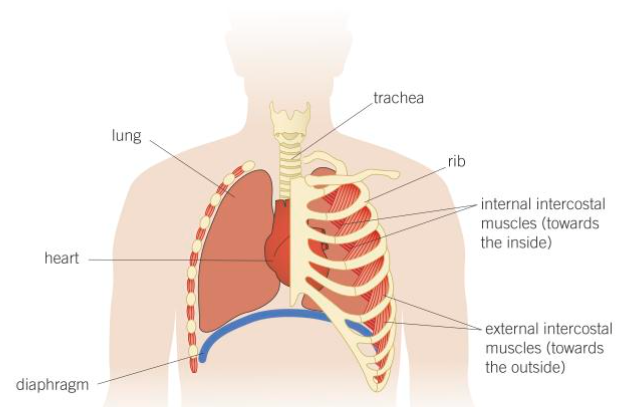
What are the two sets of intercostal muscles?
internal intercostal muscles - contraction leads to expiration
external intercostal muscles - contraction leads to insipration
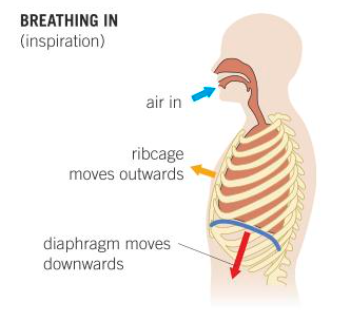
Inspiration process
external intercostal muscles contract/internal intercostal muscles relax
ribs pulled upwards and outwards, increasing volume of the thorax
diaphragm muscles contract - flattens - increases vol. of thorax
increased vol. of thorax = reduction of pressure in lungs
atmospheric pressure is now greater than pulmonary pressure and so air is forced into the lungs
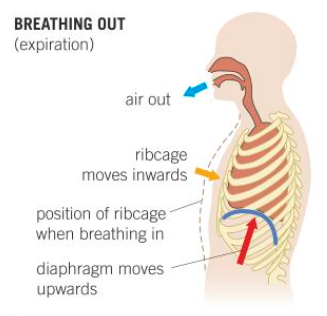
Expiration process
IIM contract/EIM relax
ribs move downwards and inwards - decreasing vol. of thorax
diaphragm muscles relax and so it is pushed up against the contents of the abdomen
vol. of thorax decreases
decreased vol. of thorax increases pressure in lungs
air is forced out of lungs by increased pulmonary pressure
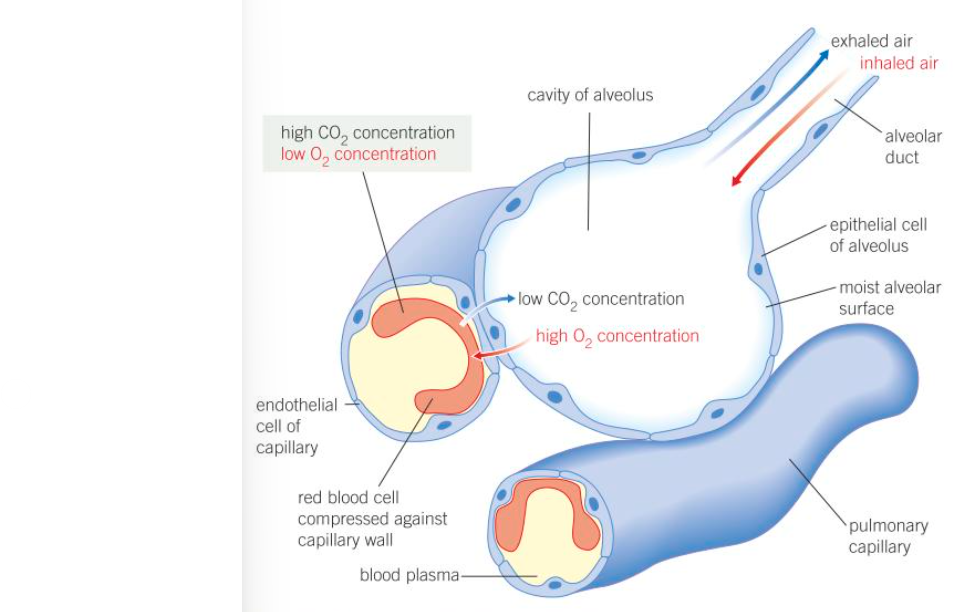
Why is the diffusion of gases between blood and alveoli rapid?
red blood cells slow as they pass through pulmonary capillaries allowing more time for diffusion
distance between alveolar air and rbc is reduced as rbcs are flattened against capillary walls
walls of alveoli and capillaries are very thin and so diffusion distance is short
alveoli and pulmonary capillaries have very large total surface area
steep conc.grad. due to ventilation and blood circulation
blood flow through pulmonary capillaries maintains conc.grad