final shit fr
 Call Kai
 Learn
Learn Practice Test
 Spaced Repetition
 Match
Match Flashcards
 Knowt Play
1/59

There's no tags or description
Looks like no tags are added yet.
Name | Mastery | Learn | Test | Matching | Spaced | Call with Kai | Chat |
|---|
No analytics yet
Send a link to your students to track their progress
60 Terms
At sea level, standard air temperature is 15ºC (59ºF), and standard air pressure is
29.92” Hg, or inches of mercury (1013 millibars)
At standard conditions
density altitude and your pressure altitude will be equal to each other
Density altitude
the altitude at which your aircraft "feels" like it’s flying
if the density altitude is ______, it means ______.
higher / thinner air.
If the density altitude is _____, it means _____.
low / thicker air
As your density altitude increases, the performance of
your aircraft decreases
density altitude increases at ___
increases at higher elevations, lower atmospheric pressures, higher temperatures, and higher humidity.
flying around large buildings or large natural obstructions can
break up the flow of the wind and create wind gusts that change rapidly in direction and speed
Wind shear
change in wind speed and/or direction over a short distance
Alert to the possibility of wind shear when flying in
thunderstorms, areas of low-level temperature inversion, frontal zones, and clear air turbulence.
temperature inversion
the air is stable and smooth, but because the temperature is increasing, so is the humidity, so, you’ll have poor visibility due to fog, haze, or low clouds.
Evaporation
is the changing of a liquid to gas
Sublimation
is the changing of a solid to a gas without first becoming a liquid
dew point
the temperature at which the air can hold no more moisture, so it’s at 100% humidity.
Frost is considered hazardous to sUAS operations because
it spoils the smooth flow of air over the propellers or wings and makes it harder for the aircraft to generate lift
cumulonimbus clouds are produced by
1) high humidity — sufficient water vapor or moisture ;
2) unstable conditions — an unstable lapse rate (the lapse rate describes the rate of change of the temperature as the air increases in altitude); and
3) lifting force — an initial upward boost to start the process (heat).
A thunderstorm begins with the _____, in which _____ begins.
cumulus stage, lifting action of the air.
mature stage
the most violent time period of the thunderstorm’s life cycle
entrance of the discipating stage
vertical motion near the top of the cloud slows down, the top of the cloud spreads out and takes on an anvil-like shape
squall line
a nonfrontal, narrow band of thunderstorms usually ahead of a cold front
If you see ______, expect turbulence. Wind can be blowing quite strong through ________.
lenticular
To pilots, the most dangerous type of cloud is a _______, or thunderstorm, cloud. Since rising air currents cause ________ clouds, they are extremely turbulent and pose a significant hazard to flight safety.
cumulonimbus
ceiling
the lowest layer of clouds reported as being broken or overcast, or the vertical visibility into an obscuration like fog or haze.
Unstable air tends to display the following characteristics:
cumuliform clouds, turbulent air, good visibility, and showery precipitation.
Stable air tends to display the following characteristics:
stratiform clouds, smooth air, fair-to-poor visibility in haze and smoke, and continuous precipitation.
Anywhere there is uneven heating of the Earth’s surface, you’ll find ______.
convective currents
updrafts are likely to occur over areas like ______.
downdrafts often occur over ________.
pavement or sand
over water or expansive areas of vegetation like a group of trees
As moist, unstable air rises, clouds often form at the ____.
altitude where temperature and dew point reach the same value
altitude where temperature and dew point reach the same value
air is completely saturated, and moisture begins to condense out of the air in the form of fog, dew, frost, clouds, rain, hail, or snow
Typically, when the temperature and the dew point converge, you will have
fog
The FAA recommends flying at least _____ from skeletal structures like radio and television towers to be clear of guy wires.
2,000 ft horizontally
error chain.
a series of judgmental errors leads to a human factors-related accident
Aeronautical Decision-Making (ADM)
Systematic mental approach to consistently determine the best course of action in a given situation.
To prevent the final "link" in the accident chain, a remote pilot must consider ______.
Risk Management.
Crew Resource Management (CRM)
effective use of all available resources—human, hardware, software and information—prior to and during flight to ensure the successful outcome of the operation.
PAVE model
Pilot, Aircraft, enVironment, and External pressures
If advice is needed concerning possible flight with an illness, contact
an Aviation Medical Examiner
DECIDE model
Aeronautical Decision-Making (ADM) process used by pilots to navigate hazards, assess risks, and manage in-flight emergencies
The key to monitoring manned aircraft communications near an airport without an operating control tower is selecting the right radio frequency
CTAF
UNICOM
nongovernment air/ground radio communication station which may provide airport information at public use airports where there’s no tower or FSS
When there is no tower, FSS, or UNICOM station on the airport, a manned aircraft pilot will
MULTICOM frequency 122.9
Automatic Terminal Information Service (ATIS)
continuous broadcast of recorded aeronautical information in busier airports
Load Factor
Total Load Supported by the Aircraft’s Wings divided by the Actual Weight of the Aircraft and its Contents
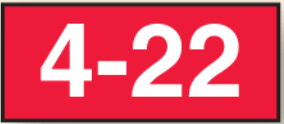
taxiway/runway Hold position - hold short of runway on taxiway
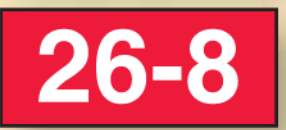
runway hold position - hold short of intersecting runway

runway approach hold position - hold short of ILS approach critical area

ILD Critical area hold position - hold short of ILS approach critical area

No Entry - identifies taxiway on which aircraft is located

Taxiway location - identifies taxiway on which aircraft is located
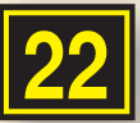
runway location - identifies runway on which aircraft is located

runway distance remaining - provides remaining runway length in 1000 ft increments

runway safety area/ obstacle free zone boundary - exit boundary of runway protexted areas

ILS critical area boundary - exit boundary of ILS critical area
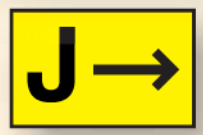
Taxiway direction - defines direction and designation of intersecting taxiways
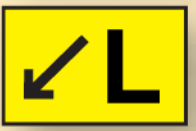
runway exit - defines direction & designation of exit taxiway from runway
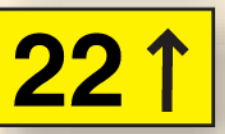
outbound destination - defines directions of takeoff runways
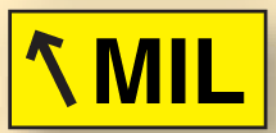
inbound destination - defines directions of arriving aircraft
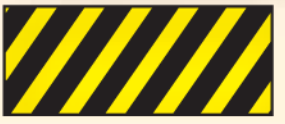
taxiway ending marker - indicates taxiway does not continue
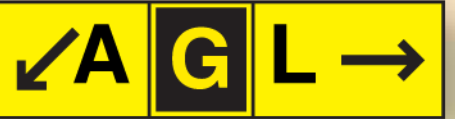
direction sign array - identifies location in conjunction with multiple intersecting taxiways