Blood Part 1
 Call Kai
 Learn
Learn Practice Test
 Spaced Repetition
 Match
Match Flashcards
 Knowt Play
1/66

There's no tags or description
Looks like no tags are added yet.
Name | Mastery | Learn | Test | Matching | Spaced | Call with Kai | Chat |
|---|
No analytics yet
Send a link to your students to track their progress
67 Terms
Blood makes up ____to____% of total body weight
7-8%
General functions for blood (4)
medium for transport (O2, CO2, nutrients, waste products, ions, hormones, and heat)
regulates ions and pH balance
contains defence mechanisms for immune protection
ensures hemostasis (prevention of blood less by clotting)
how is blood separated
either by sedimentation in a test tube using gravity OR
centrifudging so the density of each component settles at a different layer
blood is composed of 3 parts
RBCs
WBCs
Plasma

___=the percentage of your total blood volume that is made up of RBCs
hematocrit
hematocrit is calculated using the formula (x/y)x100% where x and y are
x=the volume of RBCs
y=the total volume of blood in the tube (including plasma and WBCs)
what is the hematocrit for males and females
females have an average of 42% RBCs
males have an average of 47% RBCs
what percentage of blood does WBCs and plasma take up
WBCs take up 1% or less
Plasma takes up 55%
what does polycythemia mean and when does it happen
when hematocrit/RBC count is high.
for example a transition from a sea level environment to a high altitude environment means theres less oxygen. the body tries to compensate by increasing RBC count.
drugs can also enhance RBC count to improve stamina.
what does a low hematocrit mean and why would this happen
where the blood has too few RBCs.
this could happen in anemia where there is blood loss, dilution of the blood, decreased production (nutritional deficiency) or increased destruction of RBCs due to being sickle shaped.
what are the major fluid compartments of the body
ICF=intracellular fluid (fluid inside the cell)
ECF=extracellular fluid (fluid outside the cell) includes plasma and interstitial fluid
Interstitial fluid=extracellular fluid outside the blood vessels
Plasma=extracellular fluid thats in the blood vessels but not in the red blood cells themselves

what is plasma comprised of (9)
water (90%)
10%:
electrolytes
nutrients
organic molecules
trace elements
gases (CO2)
waste products
hormones
proteins (albumin, globulin, fibrinogen, transferrin)
where are plasma proteins made (albumins globulins, fibrinogen, transferrin)
in the liver
what is the function of albumin
colloid osmotic pressure aka pulling force that draws water into the blood vessels
what are the functions of globulins (3)
clotting factors
enzymes
antibodies
what are the functions of fibrinogens
forms fibrin threads for blood clotting
what are the functions of transferrin
iron transport
what is serum
plasma without the clotting factors (fibrinogena and globulins) aka the liquid thats left after blood has clotted
whats the normal count in microliters of RBCs (females vs males)
females: 4.2-5.4×10⁶
males: 4.7-6.1×10⁶
whats the normal count of WBCs
4.5-10×103
whats the normal count of platelets/thrombocytes
1.5-4×10⁵
whats the main purpose of RBCs
carrying O2
whats the function of neutrophils
phagocytosis
whats the function of eosinophils
defence against parasites
whats the function of basophils
triggers inflammation
whats are the functions of monocytes (2)
phagocytosis
immune defence
what are the functions of b cell lymphocytes (2)
antibody production
humoral immunity

what is the function of t cell lymphocytes
cellular immunity
what is the function of platelets
hemostasis (clotting)
what are granulocytes (3 types)
cells that contain granules that release chemicals during an immune response.
includes neutrophils, eosinophils, and basophils
what are the 2 types of lymphocytes
T-cells and B-cells
___=the process of formation of blood cells. can be prenatal and postnatal.
hematopoiesis
prenatal hematopoiesis occurs in the __,__,__. postnatal hematopoiesis occurs in the ___
yolk sac, liver, spleen
bone marrow

hematopoiesis of stem cells can split into __ stem cells and _ stem cells.
lymphoid stem cells
myeloid stem cells
lymphoid stem cells turn into
lymphocytes
myeloid stem cells turn into
every other type of blood cell (RBCs, neutrophils, monocytes, eosinophils, basophils, platelets).
describe the process of hematopoiesis of a RBC and its future
made from stem cells in the bone marrow
move into the blood vessels

describe the process of hematopoiesis of a monocyte and its future
bone marrow stem cell
monocyte
blood vessels
differentiates in the tissue
macrophage

describe the process of hematopoiesis of a T-cell and its future
bone marrow stem cell (immature T-cell)
thymus gland (becomes mature T cell)
mature T-cell enters the bloodstream

describe the process of hematopoiesis of granulocytes and their future (neutrophils, eosinophils,basophils)
bone marrow stem cell
bloodstream
granulocytes DO NOT change when they entre their intended tissue

what factors regulate hematopoiesis of stem cells
cytokines (aka hematopoietins) are proteins that bind to cell surface receptors on hematopoietic stem cells to control their growth
___is a cytokine that is produced by the kidneys and stimulates the production of RBCs
erythropoietin (EPO)
how does erythropoietin stimulate production of RBCs?
low oxygen levels are sensed by the kidneys
kidneys product more EPO
blood carries EPO to bone marrow stem cells
EPO dictates bone marrow stem cells to create more RBC
___is a cytokine that controls the production of platelets/thrombocytes
thrombopoietin (TPO)
what is the shape of RBCs and what benefit does that have
it has a bioconcave shape that makes the cell have a high surface area to low volume ratio. this allows for easy diffusion of gases
RBCs also lose their nucleus and organelles during development. this is in order to carry mroe hemoglobin molecules. unforutunately this means they survive for 120 days.

what is hemoglobin (Hb) and how is its structure related to its function?
an iron-rich protein in red blood cells that carries oxygen.
it is made of 2 alpha globin chains and 2 beta globin chains. it contains 4 heme groups which have 4 iron atoms in their centers.
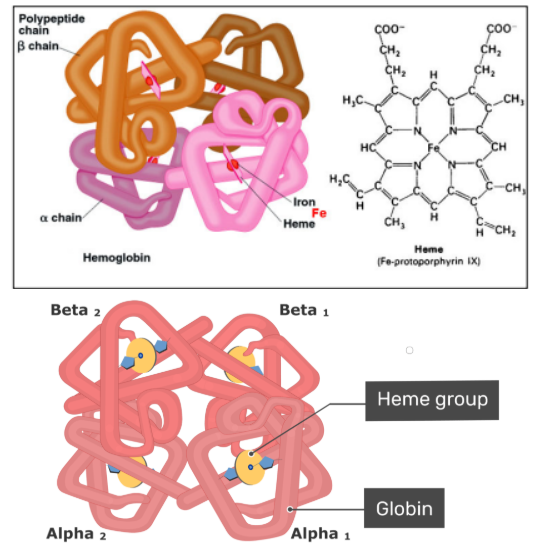
how does hemoglobin (Hb) capture oxygen
each ferrous Fe++ iron ion combines with one molecule of O2 by OXYGENATION. the maximum number of oxygen molecules that one hemoglobin can bind to is 4.
when hemoglobin (Hb) is full of oxygen from the lungs it is called___ and is relaxed for oxygen to bind
oxyhaemoglobin
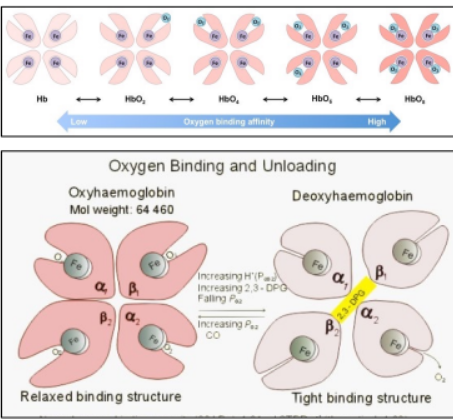
when hemoglobin (Hb) has no more oxygen after delivering to tissue it is called__ and is tight (oxygen binding sites are closed)
deoxyhaemoglobin

why is carbon monoxide (CO) inhalation fata?
Hemoglobin (Hb) can bind to other gases other than O2 like CO, NO, and CO2. Hb has 200x more affinity for CO than for O2. plus, carbon monoxide is colourless and odourless.
List 3 factors essential for RBC production
cytokine erythropoietin (EPO)
dietary factors (iron, folic acid, vitamin B12)
protein factor: intrinsic factor (IF)
why do males have a higher RBC count than female
testosterone stimulates EPO release
what is the function of folic acid in RBC production
folic acid provides the methyl groups necessary to create thymine, one of the four nucleotide bases of DNA. this codes to make new RBCs.
what is the function of vitamin B12 in RBC production
works with folic acid to create thymine, ensuring proper DNA replication with creates working RBCs
what is the function of intrinsic factor (IF) protein in RBC production
produced by the stomach cell lining and binds to vitamin B12 to allow the small intestine to absorb the vitamin into the body
describe the % distributions of iron in the body
50% is used in hemoglobin
25% is used for other iron containing proteins
25% is bound with ferritin in RBCs


if there is too much iron, it is lost through sweat, urine, and menstrual flow
where do RBCs breakdown and what helps them breakdown
in the spleen, liver, and bone marrow.
macrophages break down RBCs
Describe the steps for RBC breakdown involving hemoglobin specifically
Phagocytosis and initial splitting: macrophages swallow RBC and hemoglobin molecules from the ruptured cell and split into heme and globin
globin (proteins) break down into amino acids which fuel metabolism or are reusde to make new proteins
heme (iron and pigments) releases its into into the blood where the liver and spleen store the recycled iron and bone marrow uses iron to build new hemoglobin. the remaining heme converts into green biliverdin which transforms into yellow-brown bilirubin
elimination and excretion: bilirubin—>liver (turns into bile)—>small intestine—>excreted or to the blood to by urinated
describe the absorption of vitamin B12
vitamin B12 is eaten from food
B12 enters the stomach where it binds to intrinsic factor (IF) proteins that protect it from stomach acid.
the B12/IF complex moves to the small intestine where it is absorbed into the bloodstream
anemia can be caused by (4)
decreased production of RBC in the bone marrow
increased destruction of RBCs in the body (hemolytic anemia)
increased blood loss leading to loss of RBCs (hemorrhagic anemia)
abnormal hemoglobin production
what causes pernicious anemia
lack of intrinsic factor (IF) or vitamine B12
what causes aplastic anemia
damage of bone marrow due to radiation/drugs
what causes hemolytic anemia
RBCs are destroyed faster than the bone marrow can make new ones due to abnormal shape of RBC or due to immune reactions during transfusion
what causes hemorrhagic anemia
increased blood loss due to injury, bleeding ulcers, or chronic menstruation
What is abnormal about the hemoglobin structure that leads to sickle cell disease aka a type of hemolytic anemia
Sickle shaped RBCs are formed by a single amino acid mutation in the b chain.
Resulting RBCs have hard cell membranes and are non-flexible. thus, passage through capillaries cause damage to sickle RBCs

chronic kidney disease also leads to anemia (reduced levels of erythropoietin (EPO)