Exam 1 Supply Chains
 Call Kai
 Learn
Learn Practice Test
 Spaced Repetition
 Match
Match Flashcards
 Knowt Play
1/71

There's no tags or description
Looks like no tags are added yet.
Name | Mastery | Learn | Test | Matching | Spaced | Call with Kai | Chat |
|---|
No analytics yet
Send a link to your students to track their progress
72 Terms
operations management
the planning, scheduling, and control of the activities that transform inputs into finished goods and services
supply chain
the network of suppliers that deliver products from raw materials to the end customers through either an engineered transaction flow of info goods and money
supply chain management
the design, planning, execution, control, and monitoring of supply chain activities with the objective of creating net value and building a competitive infrastructure
all within one company except external needs
upstream
closer to raw materials
downstream
heading towards customer
SCOR model
source: buying materials
make: making
deliver: getting to customer
return: bringing products back from customer
components of supply chain management

strategy
identifies how company will function in its enviro
OR
the creation of a unique valuable position involving a different set of activities
core competencies
bundle of skills/knowledge sets that enable a firm to provide the greatest level of value to its customers i a way that is difficult for competitors to emulate and that provides future growth
customer value
the worth of an item good or service
order qualifier
competitive characteristics that a firm must exhibit to be a viable competitor in the marketplace
order winner
those competitive characteristics that cause a firms customers to choose that firms goods and services over those of its competitors
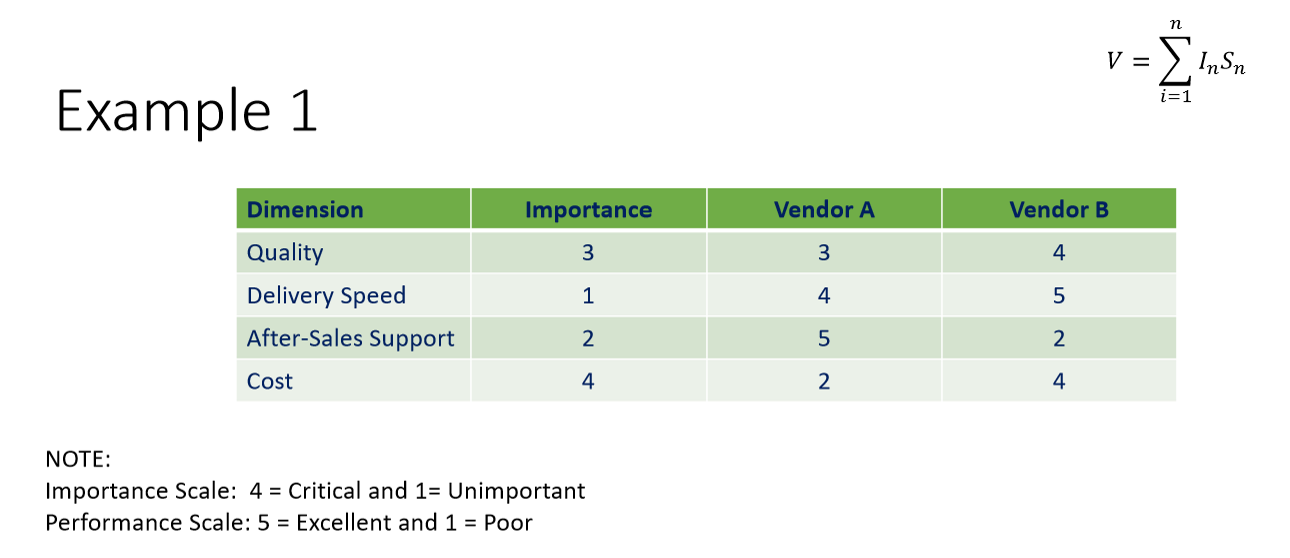
value index
uses the performance and importance scores for various dimensions of performance for an item or service to calculate a score that indicates the overall value of the item or service to a customer
higher score=product you should choose
performance dimensions
quality, time, flexibility (mix of products), cost

mission statement
the company statement of purpose
“reason for being”
product design
the thoughtful process of creating goods and services that meet user needs, operate efficiently, and stand out in the marketplace
product
any good/service produced for sale, barter, or internal use
products are developed to fulfill consumer needs
good
a tangible product, merchandise, or ware
can be stored for later use
consistent product definition (laptop description through brands)
production usually separate from consumption
*can be inventoried
low customer interaction (not interaction with company that made a basketball
service
intangible product (ex: haircut)
produced and consumed at the same time (ex: sitting in chair while they cut it)
often unique (everyones hair is different)
high customer interaction (I want blonder)
inconsistent product definition
often knowledge based (lawyer, cosmotology school)
frequently dispersed
why develop new products
gain competitive advantage
improve profitability
meet changing customer needs
use existing resources more efficiently
block out competitors from a market
phases of product/service development
idea generation
preliminary design
detailed design
testing and refinement
launch
can have sequential development process (slow, all separate) or concurrent engineering (fast, phases overlap)
DMDAV
define (product goals/customer requirements)
measure (customer needs/prod capabilities)
design (process to meet customer needs)
analyze (data to identify critical factors)
verify (design meets customer requirements)
QFD
quality function deployment
“voice of customer”
ask for their needs/wants/rankings
helps engineers figure out what is most important for their customer
**make sure you are looking at the correct customers for attributes, you want the AVERAGE customer
DFM
(design for manufacturability)
part standardization
reducing number of parts
designing for efficient assembly
(changing features that customers might not even know about)
value engineering/value analysis
a method for improving a products value by either enhancing its function/reducing its cost without sacrificing quality
questions:
are there features the customer doesnt actually need?
can 2 parts be combined into 1?
are we using unnecessarily expensive materials?
project
temporary endeavor undertaken to create a unique project, service, or result
it has a clear start, clear end, and specific goal/outcome
temporary but can learn lessons to help in future
project management
the application of knowledge, skills, tools, and techniques to project activities in order to meet project requirements
5 main project phases
initiation, planning, execution, monitoring and control, closure or completion
initiation (project management)
step 1
project charter
brainstorming (gonna build a house)
planning (project management)
step 2
project plan
gantt chart
scope and budget (idea of what were gonna do, resources needed)
communication
ex: 4 bed, 2 bath…
execution (project management)
step 3
project plan
gantt chart
task dependencies
collaboration
actually building the house, figure out how each activity works with each other
monitoring and control (project management)
step 4
project stand ups
status reports
KPIs
Milestones*
closure/completion (project management)
step 5
post mortem
lessons learned
milestone
part of monitoring and controlling phase
a significant checkpoint or event in a project that marks the completion of a major phase or important deliverable
milestones help teams to
measure progress w/o tracking every small step
confirm key pieces of project are completed on time
communicate status clearly to stakeholders
WBS
work breakdown structure
a hierarchial decomposition of the total scope of work to be carried out by the project team to accomplish the project objectives and create the required deliverables
breaking a project into smaller, manageable activities that are easier to plan
WBS elements
activity, duration, predecessor
activity
part of WBS
the specific work that must be completed
duration
part of WBS
an estimate of how long the activity will take to compare
predecessor
part of WBS
the activity/s that must be completed before this activity can begin
Gantt chart
a bar chart of schedule info where activities are listed on the vertical axis, dates on horizontal axis, activity durations shown as horizontal bars
network diagrams
A visual representation of a project that shows:
-all project activities
-the precedence relationship between those activities
-the logical flow of work from start to finish
slack
the amt of time an activity can be delayed without delaying entire project
critical path
the longest path through the network diagram, determines shortest possble project duration
all activities have zero slack on critical path
delays in critical path delay entire project
the project cannot finish earlier than length of critical path
crashing a project
shortening the project duration by allocating additional resources to certain activities on the critical path
business procfess
set of logically related tasks or activities performed to achieve a defined business outcome
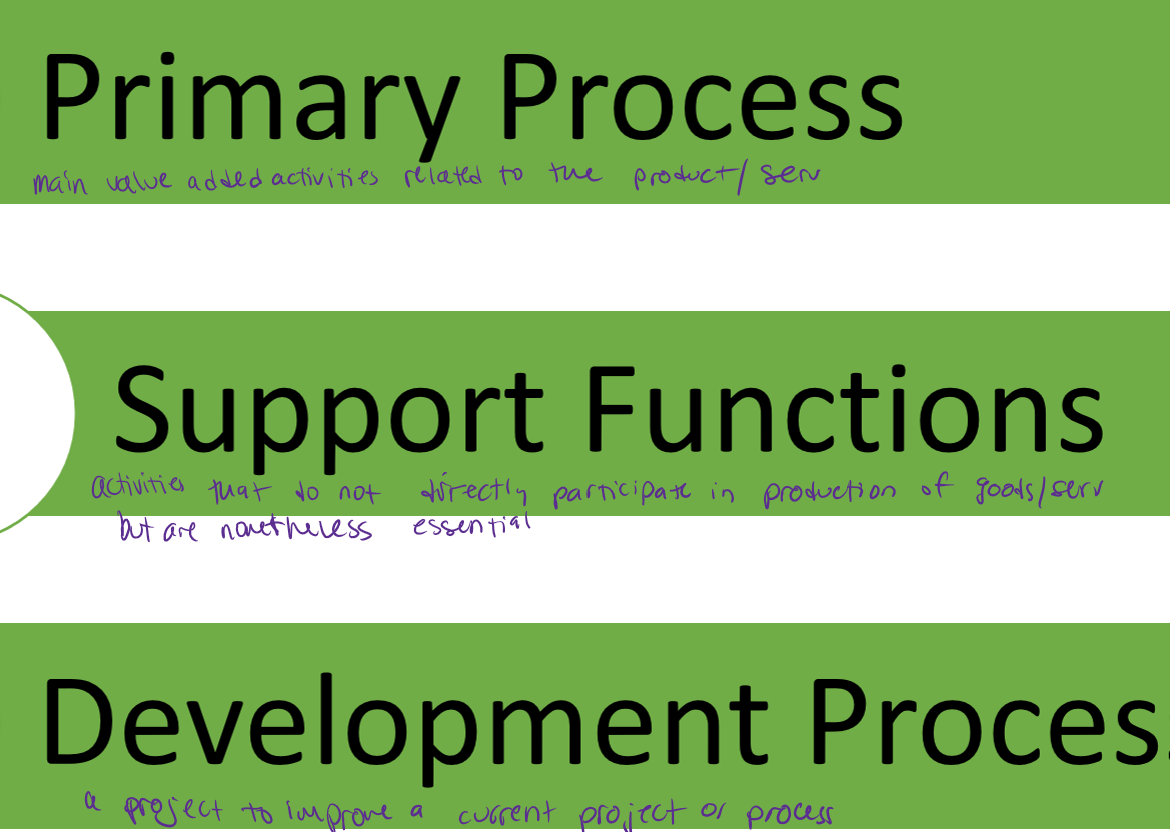
process map
a diagram of the flow of production process/service process through the production system
standardized symbols are used to designate processing flow directions, branching directions, input/output, and other aspects of process

process map chipotle ex:
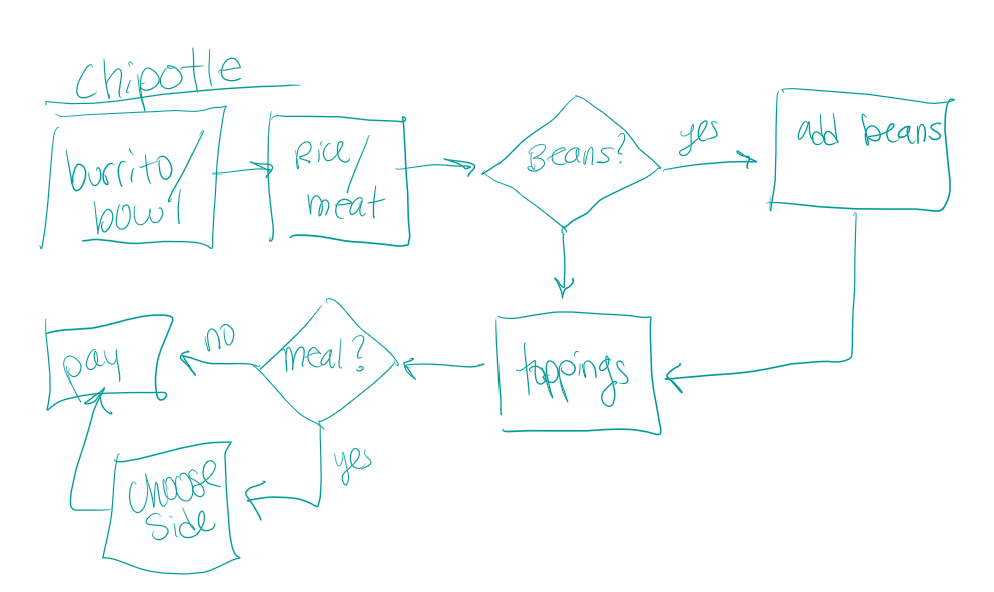
current state
representation of what is actually happening, not what we think should happen and where we want it to be
swim lane process map
adds another layer to the process map by adding group/person responsible for activities

benchmarking
comparing products, processes, and services to those of another organization thought have a superior performance
process benchmarking
focus on the target firms business process
competitive benchmarking
comparing against a competitors product or service
theory of constraints
a systems constraint is anything that limits a system from achieving higher performance versus its goal
constraint/bottleneck
anything that limits a system from achieving higher performance vs its goal
anything holding you back
assumption of constraint
each station works independently at their own pace
theory of constraints 5 points

capacity
capability of a worker, machine, work center, plant, or organization to produce output per time period
theoretical capacity
the maximum that can be produced by a worker/machine over a given time period assuming everything works all the time
rated capacity
the EXPECTED output capability of a resource or system
downtime
time when a resource is scheduled for operation, but is not producing for reasons such as maintenance, repair, or setup
capacity in services varies for three main reasons
time (restaurant, peak times)
locatuon
volatility of demand
factors affecting capacity
number of employees
number of machines
number of production lines
number of shifts
number of temporary workers
variety of products (downtime between)
lead capacity strategy
adding capacity to a resource in anticipation of increased future demand. this is done to ensure the ability to satisfy market demand when an increase occurs
risky!
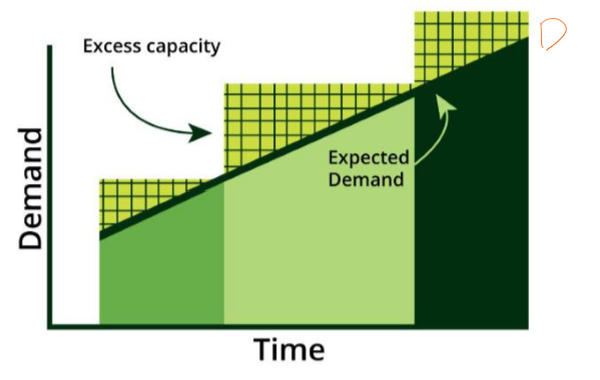
lag capacity strategy
not adding capacity until firm is operating at or beyond full capacity. this keeps unit costs maximized by working at full capacity, but does not satisfy total demand

match capacity strategy
a capacity strategy that strikes a balance between the lead and lag capacity strategies by adding capacity at approximately the rate of actual demand increase

total cost (TC)
all cost impacts, rather than just one cost impact, and are the sum of fixed and variable costs
Fixed costs (F)
an expenditure that doesnt vary with the production volume, such as rent, property tax, and salaries of personell
variable cost (VC)
an operating cost that varies directly with a change of unit in production volume
total revenue
the amt of money we make before subtracting expenses
break even point
the point where the company neither makes a profit nor loses money