Chapter 11: Sharing the Road
 Call Kai
 Learn
Learn Practice Test
 Spaced Repetition
 Match
Match Flashcards
 Knowt Play
1/9

There's no tags or description
Looks like no tags are added yet.
Name | Mastery | Learn | Test | Matching | Spaced | Call with Kai | Chat |
|---|
No analytics yet
Send a link to your students to track their progress
10 Terms
Sharing the Road
Sharing the road safely
Drivers must safely share the road with many different users.
Always be aware of others and understand their safety needs.
Other road users include:
Large vehicles (trucks, buses)
Motorcycles
Mopeds
Pedestrians
Bicyclists
In-line skaters and roller skaters
Skateboarders
Horseback riders
Slow-moving vehicles
Non-motorized scooters
Driver responsibility
Learn how to safely handle situations involving different road users.
Understand the special rules that apply to each group.
Be patient and alert around vulnerable road users.
Key takeaway
Safe driving means sharing the road responsibly, staying alert, and respecting all types of road users.
Pedestrians
Pedestrian safety
Pedestrians are high-risk road users.
Drivers must use extra caution to avoid collisions.
Always expect pedestrians, even when they are not following rules.
Where to watch for pedestrians
Be alert near:
Schools
Bus stops
Playgrounds
Parks
Ice cream trucks
Watch carefully in:
Neighborhoods
Intersections
Crosswalks
Backing up safely
Look through your rear window when backing up.
Do not rely only on mirrors, especially near children.
Before backing into/out of a driveway:
Get out and check behind your vehicle.
Pedestrian right-of-way
Pedestrians have the right-of-way:
At marked crosswalks.
At unmarked crosswalks (such as intersections).
Drivers must:
Slow down.
Stop if necessary.
Give extra time to:
Elderly pedestrians.
People with disabilities.
Blind pedestrians using:
A guide dog.
A white or metal cane.
Always have the right-of-way.
Turning and pedestrians
Before turning:
Check all directions for pedestrians.
Look again before moving.
Right turns: Watch for pedestrians on your right.
Left turns: Watch for pedestrians crossing on the opposite side.
Left turns are especially dangerous for pedestrians.
Driver responsibilities
Scan the road and sides of the road frequently.
Do not:
Drive distracted.
Text or use handheld devices.
Drive while tired or impaired.
Do not assume pedestrians will always follow the rules.
Expect pedestrians may enter the road unexpectedly.
Important rules
Never pass a vehicle stopped at a crosswalk.
Someone may be crossing where you cannot see.
Do not block or park in crosswalks.
Stop well before a crosswalk so other drivers can see pedestrians.
Always stop for school buses with flashing red lights.
Follow speed limits, especially near:
Schools
Children
Neighborhoods
Intersections
Visibility & special conditions
Be careful at night and in bad weather.
Keep:
Windshield clean.
Headlights on when needed.
Know your vehicle’s blind spots.
Watch for pedestrians with:
Guide dogs.
White canes.
Mobility devices.
Hearing or vision challenges.
Key takeaway
Pedestrians always come first. Slow down, yield at crosswalks, check carefully before turning or backing up, and always expect the unexpected.
Bicyclists
Sharing the road with bicyclists
Bicyclists have the same right to use the road as motor vehicles.
They usually travel in the same direction as cars.
Bicyclists are:
Harder to see.
More vulnerable because they have little protection in crashes.
Always check blind spots:
Before turning.
Before parallel parking.
Before opening doors.
Before leaving a curb.
Do not rely only on mirrors — turn your head and look.
Passing bicyclists safely
Give bicyclists plenty of space.
Slow down when passing.
Fast-moving vehicles create air pressure that can:
Push bicyclists off balance.
Bicyclists may react suddenly to:
Road hazards.
Changes in speed.
Changes in direction.
Bicyclist rules
Bicyclists must:
Use a bike lane if available.
If no bike lane exists:
Stay near the right side of the road.
Move left when:
Preparing for a left turn.
Avoiding hazards.
Stop completely before entering a road from:
Driveways.
Alleys.
Curbs.
Ride no more than two side-by-side in one lane.
Follow local laws about sidewalk riding.
Wear helmets:
Ages 1–13 must wear an approved helmet.
Adults follow local helmet laws.
Bicycle signals
Bicyclists use hand signals:
Left turn: Left arm straight out.
Stop/slow down: Left arm bent downward.
Right turn:
Right arm straight out, OR
Left arm bent upward.
Bicycle passenger rules
No passengers unless the bicycle has a proper passenger seat.
Do not carry infants under 1 year old.
Children ages 1–4 must use an attached bicycle safety seat.
Keep at least one hand on handlebars.
Do not carry anything that prevents safe control.
Bicycle equipment requirements
A bicycle on public roads must have:
Working brakes.
A horn or bell audible from 100 feet.
At night:
White headlight visible from 500 feet ahead.
Red taillight visible from 300 feet behind.
Side visibility from 200 feet.
Reflectors/reflective materials as required.
Driver responsibilities around bicyclists
Treat bicyclists like other vehicles.
Yield the right-of-way to bicyclists.
Do not underestimate their speed.
Check for bicyclists:
At intersections.
When backing up.
In parking lots.
Before opening doors.
Learn bicycle hand signals.
When turning right on red:
Stop completely.
Look left-right-left and behind for bicyclists.
Bike lanes and special areas
Drivers must understand:
🚲 Bicycle lane: Marked lane only for bicycles.
🚲 Two-way cycle track: Bike lane allowing travel in both directions.
🚲 Bike box: Marked area at intersections providing space for bicyclists.
🟩 Green bike lanes: Increase bicycle visibility in busy areas.
Drivers are not allowed to drive in dedicated bicycle spaces.
Key takeaway
Bicyclists have the same rights as drivers. Check blind spots, give plenty of space, yield when required, and always watch carefully before turning, parking, or opening doors.
In-line Skaters, Skateboarders and Non-motorized Scooters
Driver responsibility
These road users are vulnerable and have less protection than vehicles.
Drivers must:
Be aware.
Stay alert.
Drive defensively.
Exercise due care to protect all road users.
Where to watch for them
Pay extra attention when they are:
Along the roadside.
In designated bike lanes.
Near intersections.
At crosswalks.
Safe driving around them
Treat them like pedestrians and bicyclists.
Watch carefully and expect unexpected movements.
Give them enough space.
Avoid careless or aggressive driving.
Key takeaway
Drivers are responsible for protecting vulnerable road users. Stay alert, slow down when needed, and give in-line skaters, skateboarders, and scooter users plenty of space.
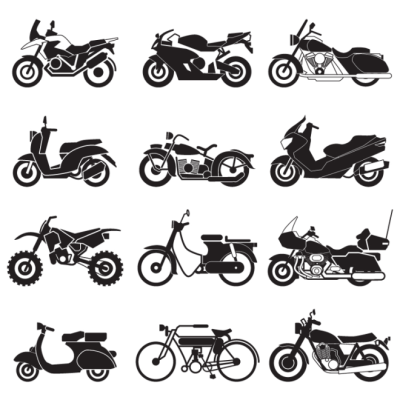
Motorcyclists
Why motorcycles are harder to see
Motorcycles are:
Smaller than cars and trucks.
Harder to judge for:
Distance.
Speed.
More likely to be overlooked in traffic.
Other visibility issues:
Motorcycle headlights may blend in with daytime running lights.
Brake lights are:
Smaller.
Lower than car brake lights.
Turn signals can be harder to notice.
Signals may accidentally remain on after turning.
Motorcycle lane position
Motorcycles may not use the entire lane because they are narrower.
Riders may move within a lane to:
Avoid hazards.
Improve visibility.
Two motorcycles may ride side-by-side in one lane.
A motorcycle cannot share a lane with a car/truck.
Intersections and motorcycles
Intersections are especially dangerous.
Drivers often notice larger vehicles first and may miss motorcycles.
Always look for:
Cars
Trucks
Motorcycles
Bicycles
Pedestrians
Other road users
Important:
Many motorcycle crashes happen when a vehicle turns left in front of a motorcycle traveling straight.
Be careful around motorcycles
Do not tailgate motorcycles.
They can stop quickly.
Their braking may be harder to notice.
Give motorcycles extra space:
In rain.
At night.
During poor conditions.
When passing:
Slow down.
Leave plenty of room.
Air pressure from your vehicle can affect motorcycle balance.
Motorcyclists may react to hazards
Motorcyclists may suddenly change:
Speed.
Lane position.
Direction.
They may avoid:
Gravel.
Debris.
Pavement cracks/grooves.
Sewer covers.
Small animals.
Special situations:
Railroad crossings:
May slow down.
May stand slightly on the foot pegs.
May cross tracks at a right angle.
Steel deck bridges:
May move toward the center of the lane.
Key takeaway
Motorcycles are smaller, harder to see, and less protected than cars. Always check carefully, give extra space, avoid tailgating, and watch for motorcycles at intersections and lane changes.
Moped Operators
Moped Operators (Limited-Use Motorcycles)
Mopeds are low-speed, 2- or 3-wheeled vehicles used on public roads.
There are 3 classes (A, B, and C) based on their top speed.
Class A: 31–40 mph
Class B: 21–30 mph
Class C: 20 mph or less
Where You Can Ride
Class A: Can use any traffic lane and the shoulder.
Class B & C: Must stay in the right lane or as far right as possible.
Exception: Class B & C may leave the right lane only to make a left turn.
Mopeds are not allowed on expressways or controlled-access highways unless signs say they are permitted.
License & Registration
Class A: Requires an M (motorcycle) license.
Class B & C: Can be driven with any class driver's license.All clases must be registered.
Safety Requirements
💡 Headlight must be on while riding for all classes.
🪖 Class A & B: Helmet and approved eye protection are required.
🪖 Class C: Helmet and eye protection are recommended.
🚗 Safety responsibility laws apply to all classes (you may have to pay for damages or injuries you cause in a crash).
Insurance & Inspection
Class A & B: Insurance is required.
Class C: Insurance is recommended (required only if used as a rental).
Class A: Annual inspection is required.
Class B & C: Annual inspection is recommended.
Helmet & Eye Protection
Helmets must meet USDOT safety standards.
DMV recommends helmets have reflective material on both sides to improve visibility.
👓 Approved eye protection is required for motorcyclists even if the motorcycle has a windshield.
⭐ Key Takeaway
Know the classes:
A = Any lane + Motorcycle license.
B & C = Right lane only (except left turns).
No mopeds on expressways unless signs allow them.
Headlights on at all times, and Class A & B require helmets and eye protection.
Large Vehicles
Large Vehicles (Trucks & Buses) Why Large Vehicles Are Different
In many fatal crashes involving cars and trucks, the car driver is often responsible.
Large vehicles are not like cars. They have:
Bigger blind spots
Longer stopping distances
Need more room to turn
Take longer to pass
Blind Spots ("No Zones")
Stay out of a truck's blind spots (No Zones).
Blind spots are:
In front (up to 20 feet for some trucks)
On both sides
Directly behind the truck
If you can't see the driver's mirrors, the driver probably can't see you.
⭐ Key Takeaway:
Avoid driving beside, behind, or too close in front of a truck.
Stopping Distance
Trucks need much more distance to stop than cars.
Air brakes take longer to work, especially on tractor-trailers.
Leave extra following distance behind trucks.
Signal early before turning or changing lanes in front of a truck.
Never make sudden stops or lane changes in front of a truck.
⭐ Key Takeaway:
Give trucks plenty of space because they can't stop as quickly as cars.
Turning & Maneuvering
Trucks need extra room to turn.
They often swing left before making a right turn.
Always watch the truck's turn signals.
Don't stay beside a turning truck—you may be in its blind spot.
⭐ Key Takeaway:
Never squeeze beside a truck making a wide turn.
Passing a Truck
Passing a truck takes more time and distance than passing a car.
Make sure you have plenty of room before passing.
Return to your lane only when you can see the entire front of the truck in your rearview mirror.
Be careful on hills, where truck speeds may change.
⭐ Key Takeaway:
Pass quickly and safely, then don't merge back too soon.
When a Truck is Backing Up
Never drive behind or around a truck that is backing up.
Trucks may block the road while loading or unloading.
Be patient and wait until the truck finishes backing.
⭐ Key Takeaway:
Never pass behind a backing truck—it may not see you.
When a Truck is Coming Toward You
🚛 Trucks often look slower and farther away than they really are.
They may reach you sooner than expected.
On a two-way road, move as far right as safely possible.
⭐ Key Takeaway:
Don't underestimate an approaching truck's speed or size.
Stopping Behind a Truck
🚦 Leave extra space when stopped behind a truck or bus.
This is especially important on hills, where the truck may roll backward slightly.
Extra space lets you move around the truck if needed.
⭐Key Takeaway:
Always leave a gap behind stopped trucks and buses.
⭐ Overall Key Takeaway (DMV Test)
Remember these 4 rules when driving near large trucks:
Stay out of blind spots ("No Zones").
Leave extra stopping distance.
Slow Moving Vehicles
Slow-moving vehicles display a reflective orange triangle on the back.
You may see this symbol on:
Farm vehicles
Animal-drawn vehicles
Construction equipment
Rural mail delivery vehicles
When You See One
Slow down and use caution.
Expect the vehicle to travel much slower than normal traffic.
Only pass when it is safe and legal to do so.
Key Takeaway
Orange triangle = Slow-moving vehicle. Slow down, stay alert, and pass only when it is safe.
All-Terrain Vehicles and Snowmobiles
ATVs and ❄ snowmobiles are allowed to cross some state highways and local roads.
Before crossing a road, they must:
Come to a complete stop
Yield the right-of-way to traffic
They must cross the road at a 90-degree angle (straight across).
⭐ Key Takeaway
ATVs & snowmobiles must stop, yield, and cross straight across the road at a 90° angle.
Horse Riders
Horse riders must follow and are protected by the rules of the road.
Riders must:
Ride single file.
Stay near the right curb or edge of the road.
Use the right shoulder, lane, or path when available.
When Driving Near Horses
Slow down and be careful when approaching or passing a horse.
Maintain:
A safe speed.
A safe distance from the horse.
Do not honk your horn when approaching or passing a horse because it may scare the animal.
⭐ Key Takeaway
Treat horse riders like other road users: slow down, give space, and never honk near horses.