Unit 5
 View linked note
 Call Kai
 Learn
Learn Practice Test
 Spaced Repetition
 Match
Match Flashcards
 Knowt Play
1/29

Earn XP
Description and Tags
Name | Mastery | Learn | Test | Matching | Spaced | Call with Kai | Chat |
|---|
No analytics yet
Send a link to your students to track their progress
30 Terms
U: When does Evolution occur?
when heritable characteristics of species change
U: Outline what Fossil Records Show
evidence for evolution
no modern organisms have fossils
organisms must change gradually
fossil records appear in chronological order
older fossils have simpler organisms
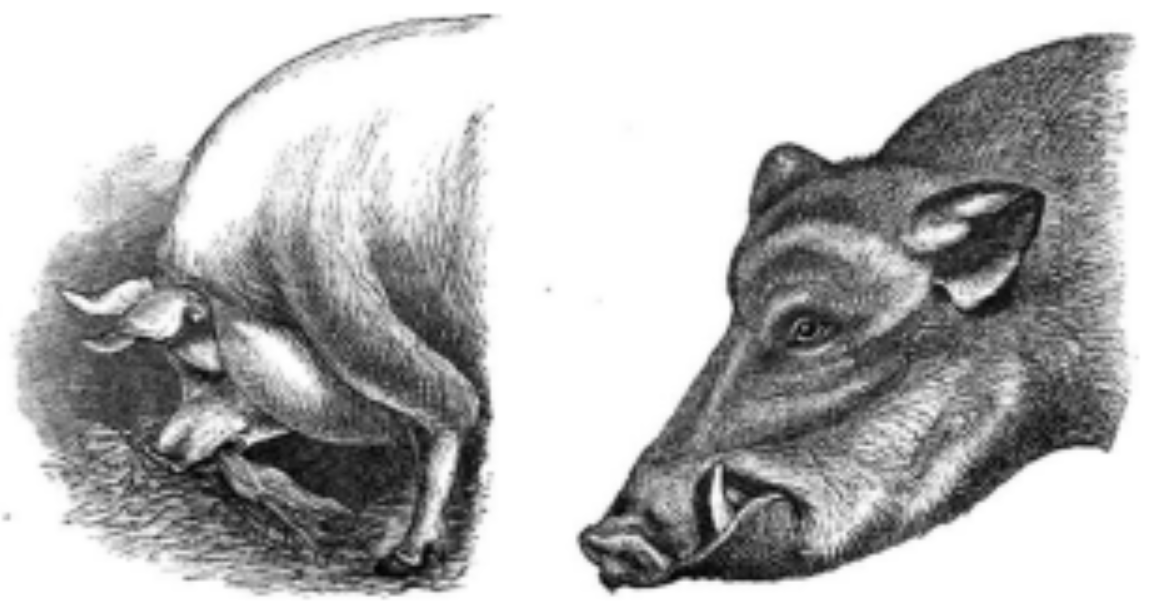
U: Outline what does selective breeding shows
shows that artificial selection can cause evolution
humans bred animals with favorable traits a.k.a. selective breeding
wild boars with more fat so we can eat yummy bacon
change in traits was rapid
evolution was hyper-charged
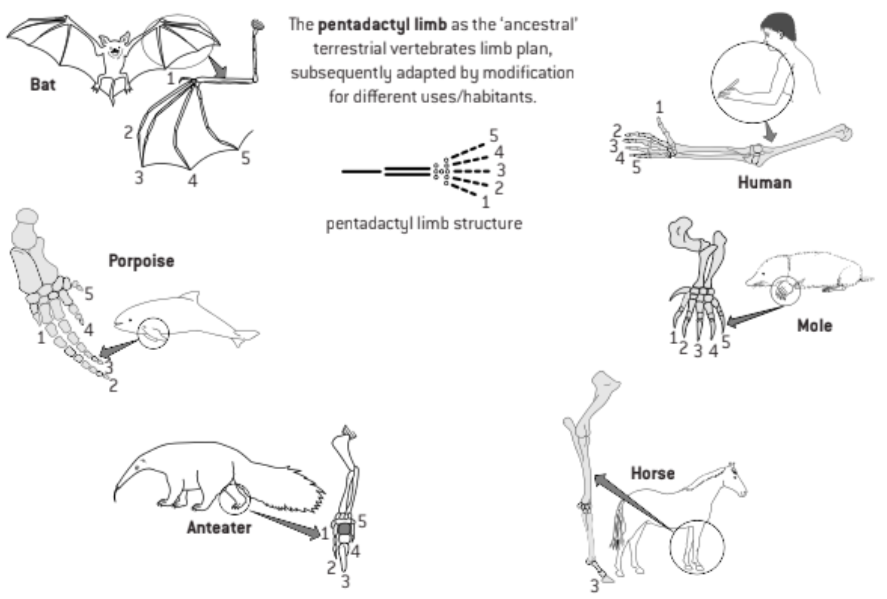
U: Outline what homologous structures by adaptive radiation shows
similarities in origin, yet different structures and functions is best explained by evolution
the common ancestor gave the structure, the organisms changed the function
U: What happens to populations in a species?
can gradually diverge into separate species by evolution
U: What is an example of gradual divergence?
continuous variation across the geographical range of related populations
populations in other places evolve separately and so over time, they become different species
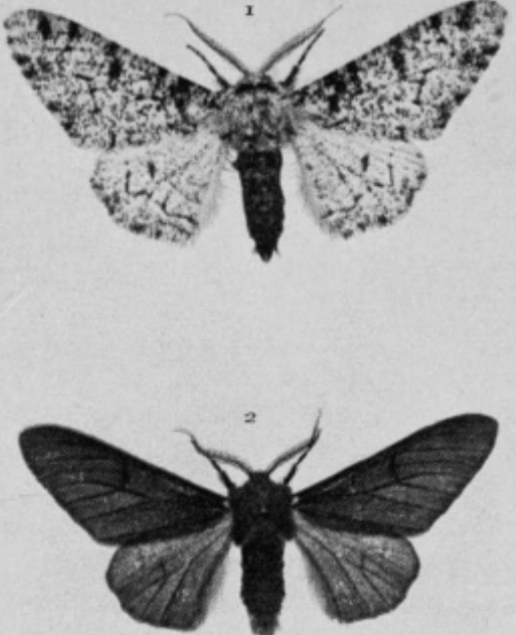
A: Explain the development of melanistic insects in polluted areas
melanistic - dark variation of a common-lifght form of an organism
Peppered Moth (Bisto betulania) is usually light
darker variation appeared in 1800s England due to the industrial revolution
Peppered Moths are nocturnal
unpollutued trees have light lichens to blend in
polluted trees have soot and sulfur dioxide (SO2) poisoning the lichens
melanistic moths were better camouflaged
birds and other predators hunted the peppered moths
melanistic moths continued breeding
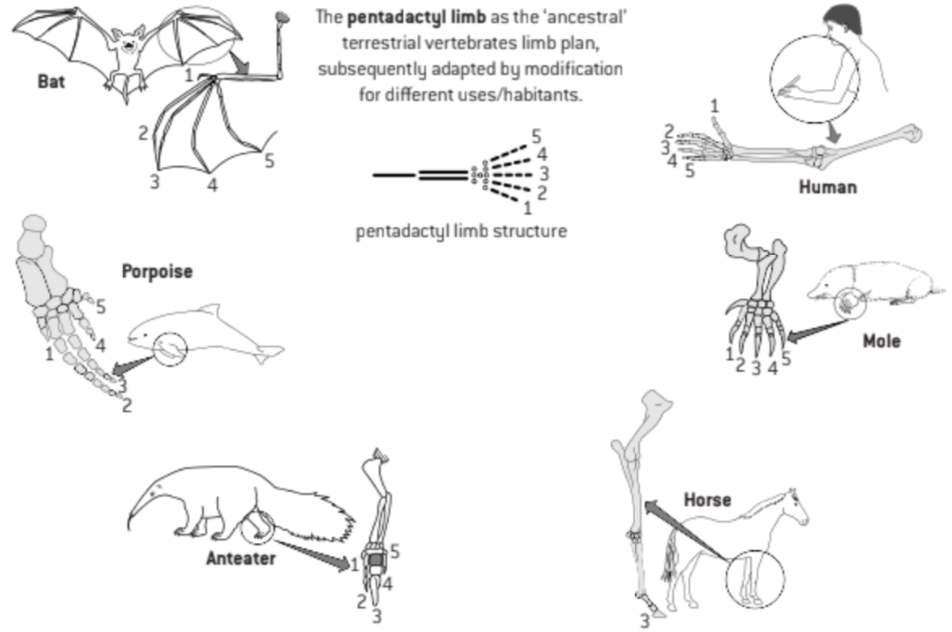
A: Compare the pentadactyl limb of mammals, birds, amphibians, and reptiles with different methods of locomotion
Bat: the pentadactyl limb becomes its wing (used for flying)
Porpoise: the pentadactyl limb becomes its fin (used for swimming)
Human: the pentadactyl limb becomes its hand (used for holding)
Mole: the pentadactyl limb becomes its claw (used for digging)
Anteater: the pentadactyl limb becomes its paw (used for crawling)
Horse: the pentadactyl limb becomes its leg (used for moving)
U: What must occur for Natural Selection to initiate?
variation among members of the same species
What are Sources of Variation?
Mutation
Meiosis
Sexual Reproduction
U: Explain how Mutations are a Source of Variation
original source of variation
gene mutates
new alleles formed
enlarges gene pool
more variation
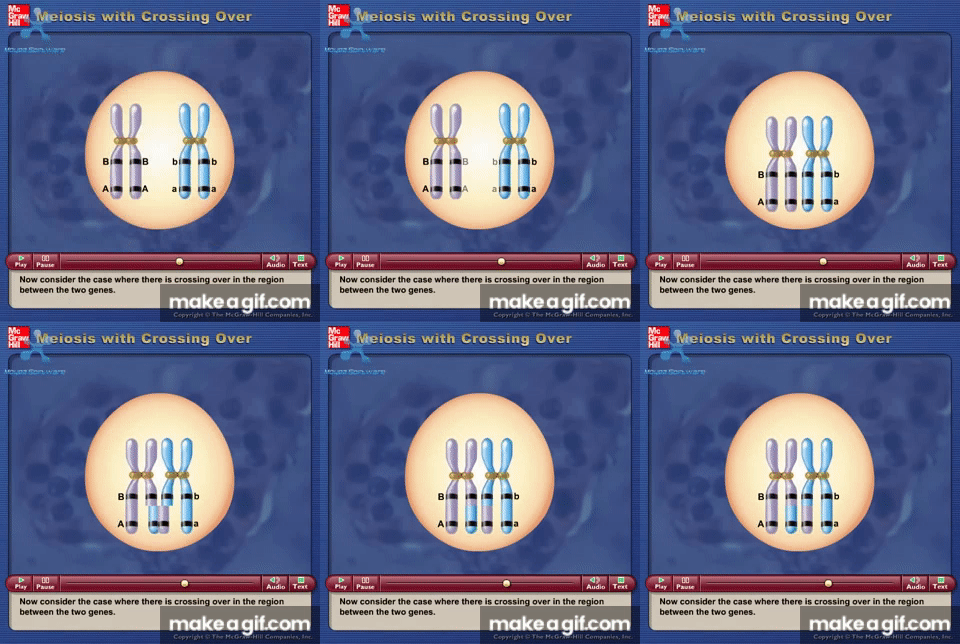
U: Explain how Meiosis is a Source of Variation
diploid cells has certain combinations of alleles
meiosis occurs
crossing-over and change of bivalent orientation occurs
creates new alleles
U: Explain how Sexual Reproduction is a Source of Variation
gametes (sex cells) come from 2 different people
gametes fuse
alleles changed around
U: What are Adaptations?
characteristics that make an individual suited to its environment and way of life
U: What must be Stated about Populations and their Offspring?
the offspring are overproduced in relation to its environment’s resources
U: Explain Natural Selection
species produce more offspring than environment can support
there is a struggle for resources; some organisms die and others survive
In natural populations, there is variation between organisms
Some individuals are better adapted (A) than others
(A) individuals survive and reproduce worse adapted (B) die off
(A) individuals pass on their genes
frequency of (A) characteristics increases, while (B) decreases
species becomes better adapted
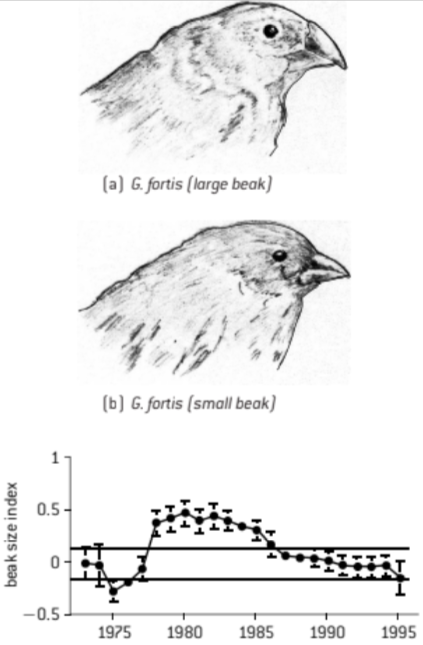
A: Explain Changes in Beaks of Finches on Daphne Major
Daphne Major is in the Galapagos Archipelago
the Medium Ground Finch (Geospiza fortis) feed on seeds of all sizes
larger seed = harder shell = bigger beak
Beak Size is heritable
to study their beaks, in 1973 they were barred from leaving
Galapagos Archipelago has varying climate
El Niño brings heavy rains
La Niña brings droughts
heavy rains = small seeds but droughts = big seeds
1974-77 had a severe drought
bigger beaks better adapted = # of bigger beaks increased = mean beak size increased
when temps normalized, there were still more bigger beaks as they kept breeding
in 1983, El Niño raised temps = more small seeds = small more small beaks
A: Explain Evolution of Antibiotic Resistance in Bacteria
microorganisms that create antibiotics also contain genes that resist that antibiotic (or else they would be killed by the substance, duh)
pathogens can get a hold of the genes (plasmid transfer, etc.)
some pathogens have the gene, others don’t
antibiotics will only kill bacteria without the gene
resistant pathogens survive and reproduce
pathogens spread through cross-infection
excessive use of antibiotic = resistant bacteria
more the antibiotic used = non-resistant bacteria die = # of resistant bacteria increases = gene spreads
U: Outline the Binomial System of Nomenclature
universal among biologists
developed and agreed upon in a series of congresses
used to give species scientific names
What are Taxonomists?
scientists who organize and name different living things
U: How do Taxonomists classify Species?
using a hierarchy of taxa
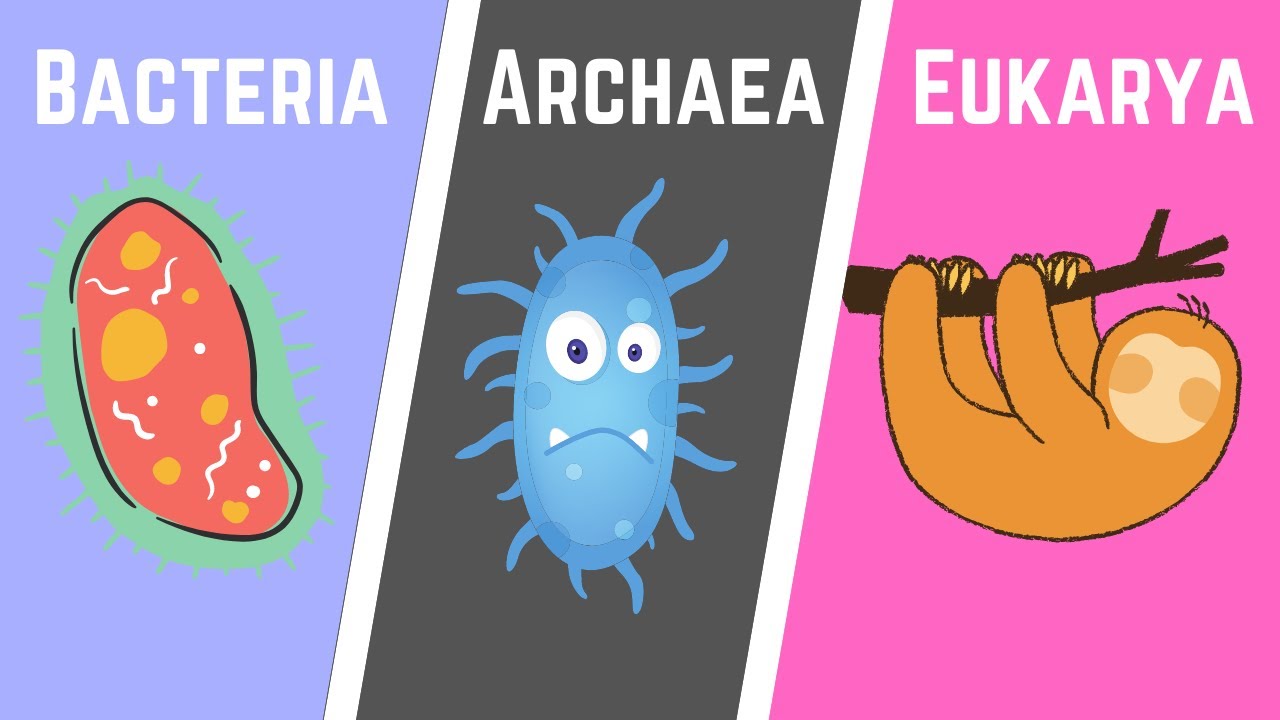
U: All organisms are classified into three ______. What are they? (just to be safe)
domains
Archaea
Eubacteria
Eukaryota
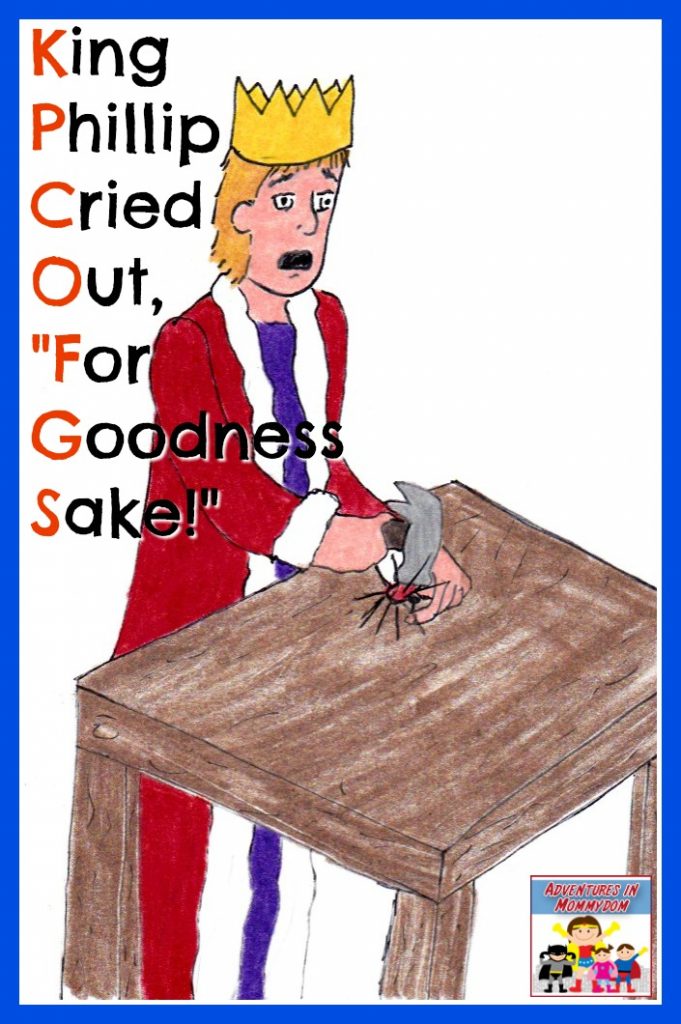
U: List the levels of principal taxa for classifying eukaryotes
Kingdom
Phylum
Class
Order
Family
Genus
Species
U: In a natural classification, the genus and accompanying higher taxa consist of…
all the species that have evolved from one common ancestral species
U: When do taxonomists have to change classifications?
when new evidence shows that a previous taxon contains species that have evolved from different ancestral species
U: What does Natural Classification help with?
identification of species and allows the prediction of characteristics shared by species within a group
What is the difference between Natural Classification and Artificial Classification?
Artificial - categorizes based on specific criteria chosen by humans
Natural - groups based on evolutionary relationships and shared characteristics
A: Classification of one plant and one animal species from domain to species level
Taxa | Blue Whale | Giant Redwood |
|---|---|---|
Domain | Eukaryota | Eukaryota |
Kingdom | Animalia | Plantae |
Phylum | Chordata | Coniferophyta |
Class | Mammalia | Pinopsida |
Order | Cetecea | Pinales |
Family | Mammalia | |
Genus | ||
Species |