Gen Bio 2 Classification/ Virology
 Call Kai
 Learn
Learn Practice Test
 Spaced Repetition
 Match
Match Flashcards
 Knowt Play
1/21

There's no tags or description
Looks like no tags are added yet.
Name | Mastery | Learn | Test | Matching | Spaced | Call with Kai | Chat |
|---|
No analytics yet
Send a link to your students to track their progress
22 Terms
Taxonomy
Science of naming & classifying organisms. Binomial Nomenclature
Phylogeny
Evolutionary History of a species or group of Related species. An evolutionary Hypothesis.
Species is basic level of classification
Domain to species
Monophyletic
Common Ancestor with all its descendants.
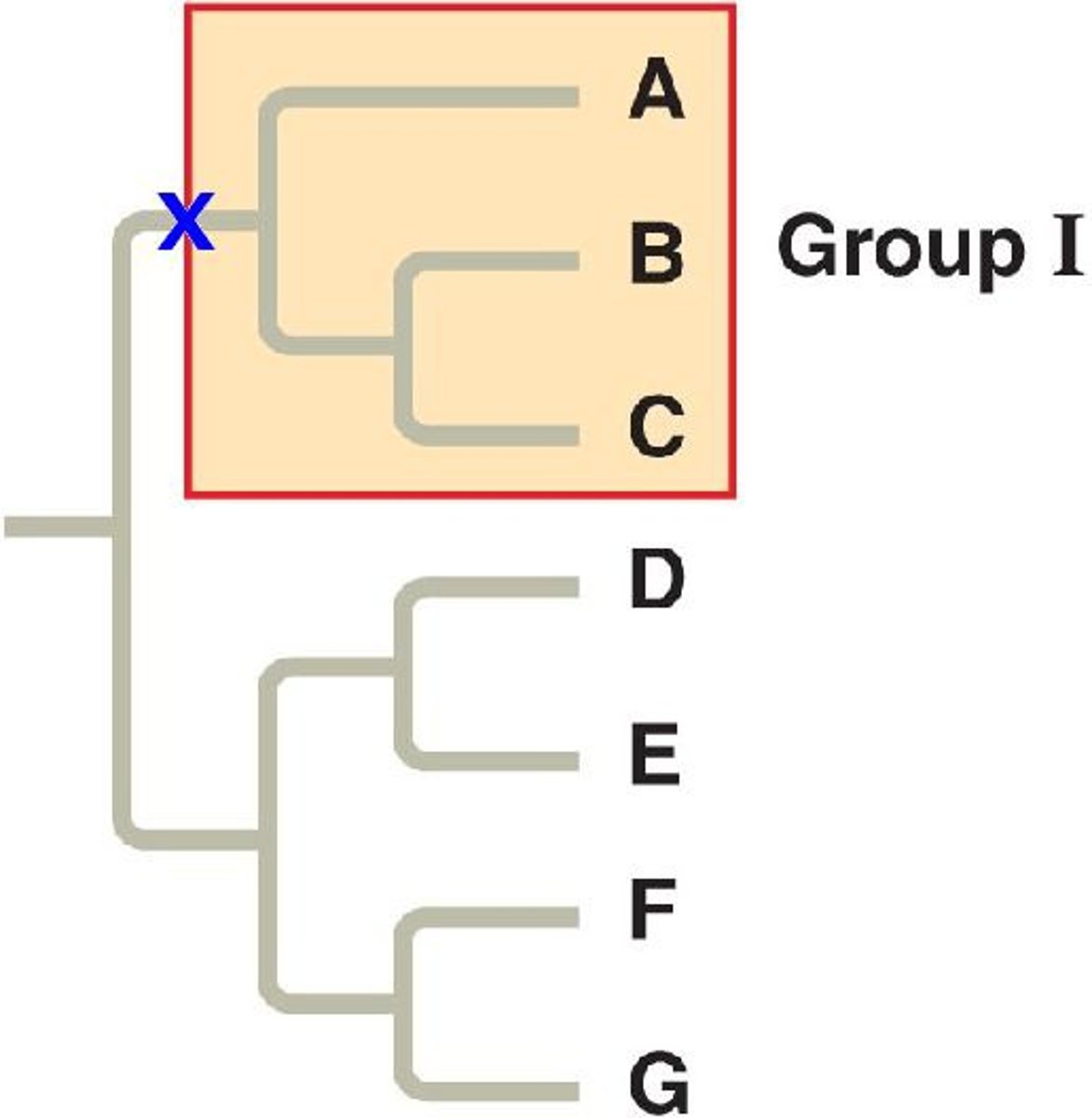
Paraphyletic
Common ancestor with some descendants.
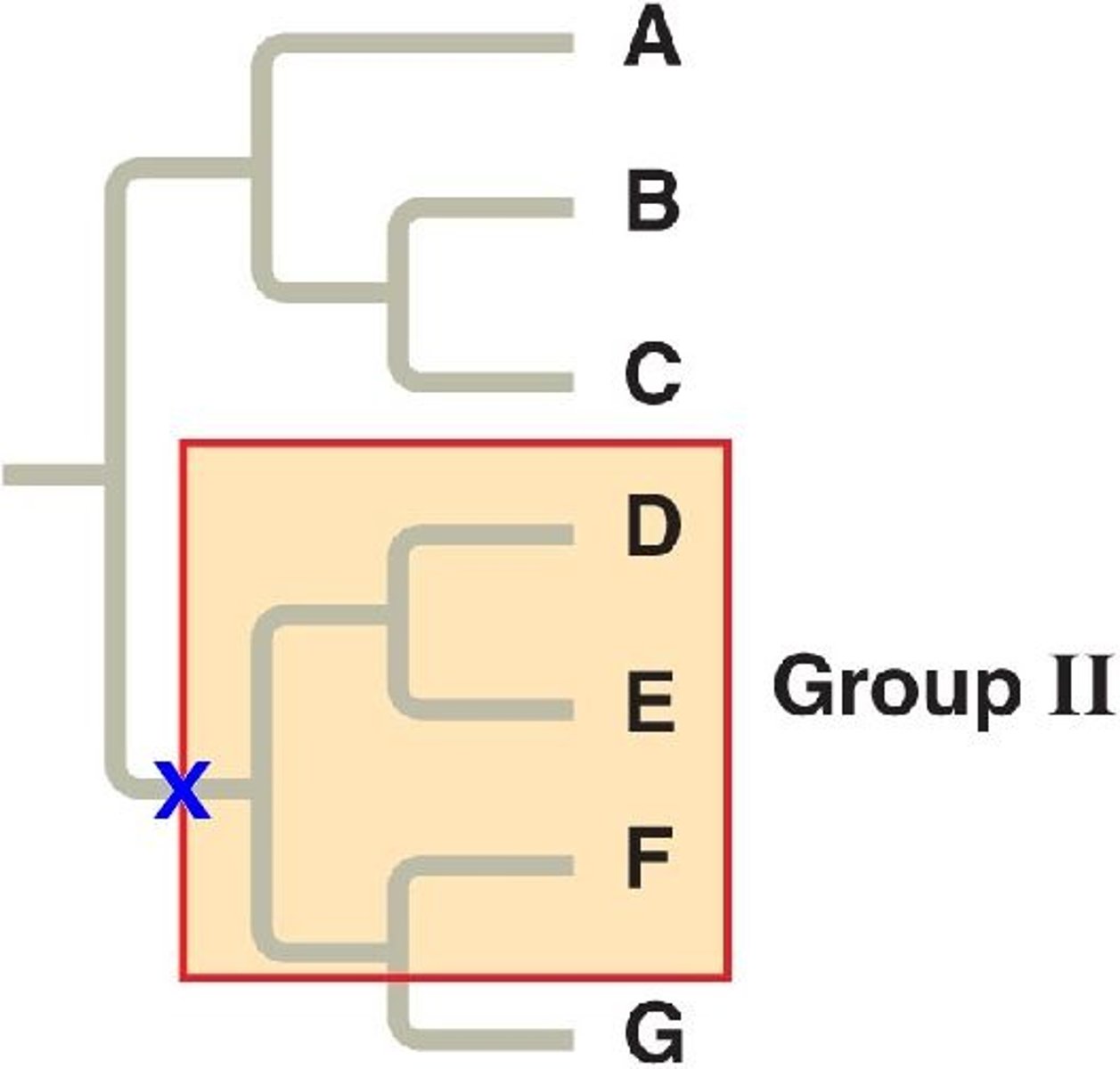
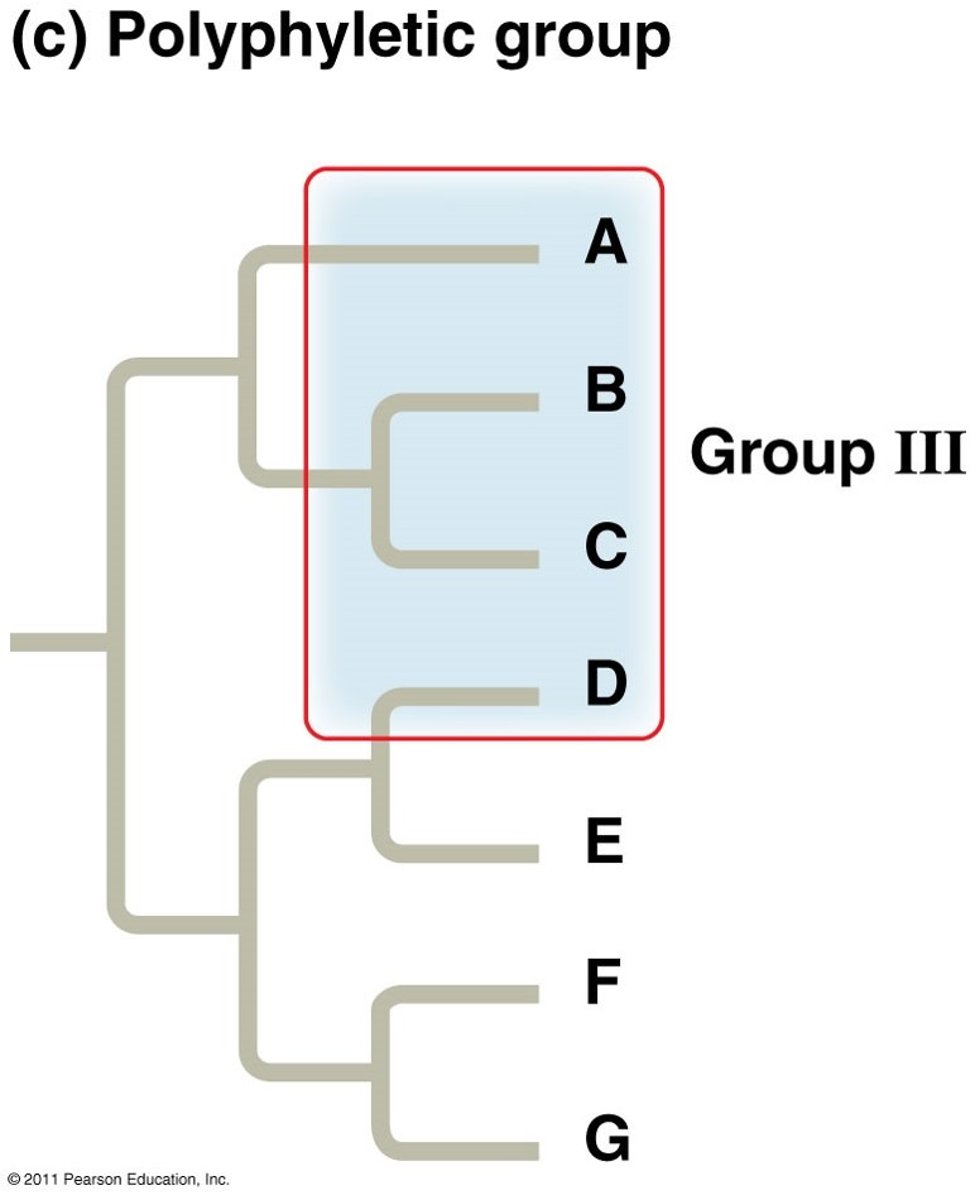
Polyphyletic
Missing the Common Ancestor
Obligate intercellular Parassite
Needs to bind to a host cell in order to replicate
Capsid
Protein coat that surrounds the phage
Capsomeres
DNA/ RNA.What the capsid is made out of
Host
Species that is infected when virus attaches
SEQ: General Viral Reproduction Cycle
1.) Virus binds to host Cell
2.) Genome enters Cell
3.) Host Copies Viral genome & produces proteins
4.) New virus Assembles (Assembly)
5.) Virus is Released
The Cycle is applied to all viruses
2 Types of Phage Viruses
Virulent Phage & Temperate Phage
Virulent Phage
Kills the host cell at the end of the cycle. Only applies to lytic cycle
Temperate Phage
Can either use the lytic or lysogenic cycle
Temperate virus hiding using lysogenic may activate. Then it will shut the lytic cycle
2 Reproduction Cycles
Lytic & Lysogenic
Lytic
Kills the host cell at the end of the cycle
Lysogenic
DNA hides in host for many cycles as Prophage. No assembly or release of the virus in the lysogenic cycle
Lytic Cycle
1.) Attachment to Host Cell
2.) Genome enters host cell and host cell DNA degrades
3.) Host Cell produce viral protein and replicates Viral DNA
4.) Assembly of New Virus
5.) Virus is released and cell Lyses
Lysogenic definition and what phage is available
Host survives, Viral DNA hidden inside. Only available in Temperate phage
Lysogenic Cycle
1.) Phage attaches to host cell
2.) Genome enters the cell
3.)Viral DNA is incorporated as Prophage. Produces multiple copies.
How lysogenic cycle makes new phage?
Environment changes in the cell trigger the switch to lytic. So viral DNA can get released to make new phages.