RENAL SYSTEM
 Call Kai
 Learn
Learn Practice Test
 Spaced Repetition
 Match
Match Flashcards
 Knowt Play
1/22

There's no tags or description
Looks like no tags are added yet.
Name | Mastery | Learn | Test | Matching | Spaced | Call with Kai | Chat |
|---|
No analytics yet
Send a link to your students to track their progress
23 Terms
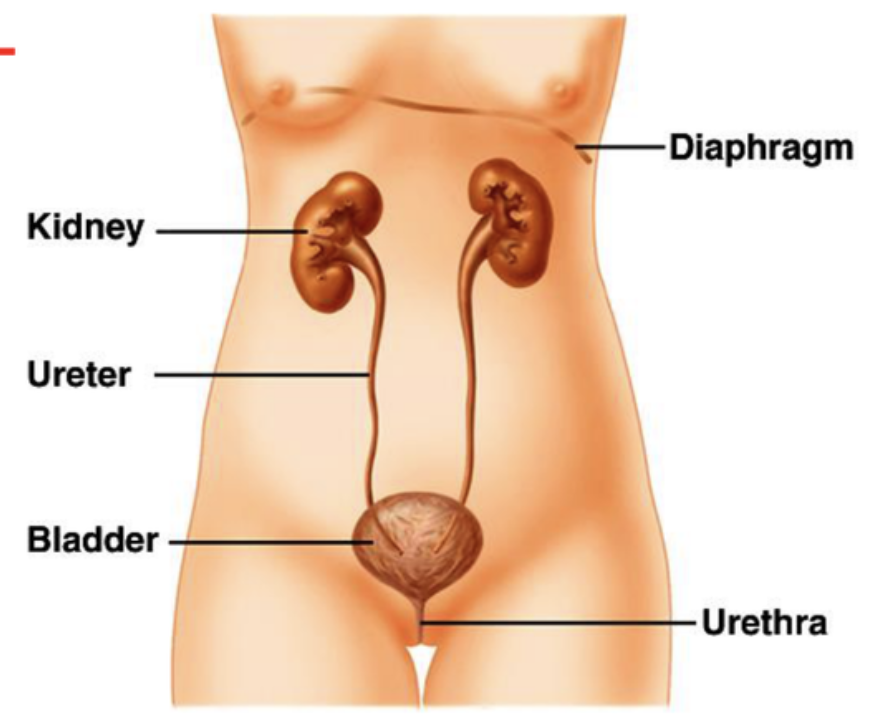
URINARY SYSTEM
Two kidneys on the posterior wall of abdomen
Two ureters (25cm), muscular, move urine by peristalsis
Bladder, stores urine up to 700-800mL
Urethra, emptying bladder through voluntary contraction (learned)
The kidneys form a filtrate of the blood that is modified by reabsorption and secretion. Urine destined for excretion moves along ureters to bladder.
KIDNEY FUNCTION
regulation of water and electrolyte volume and osmolarity
regulation of acid-base balance (pH)
excretion of metabolic waste products
removal of foreign chemical from blood
secretion of hormones
renin
erythropoietin
vitamin D3
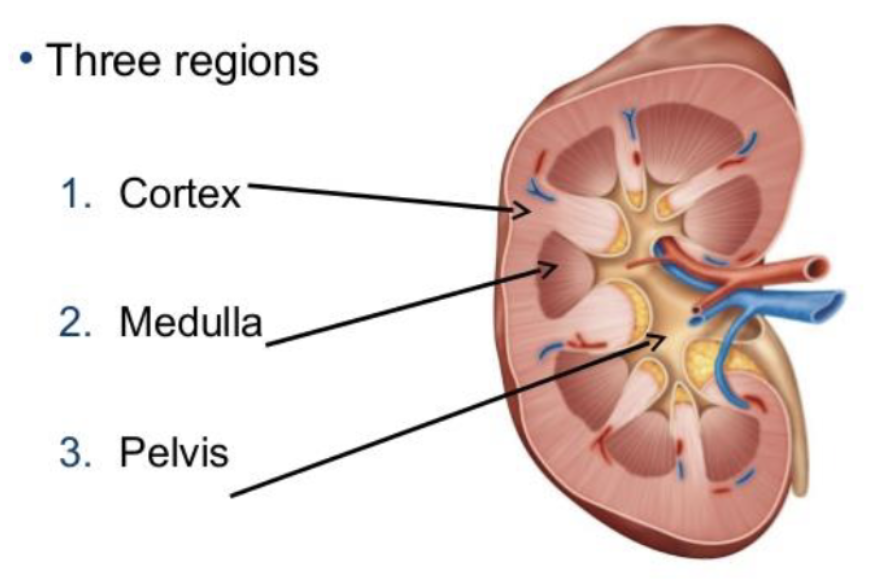
KIDNEY STRUCTURE
Renal cortex
Renal medulla
Renal pelvis
Nephrons
RENAL CORTEX
outer layer
site of glomerular filtration and the convoluted tubules
RENAL MEDULLA
inner, pyramid shaped
location of long loops of Henle
Collecting ducts drain here into the pelvis
RENAL PELVIS
innermost, broadest top of ureter
kidney/tubules drain into it
collects urine and funnels into ureter/bladder
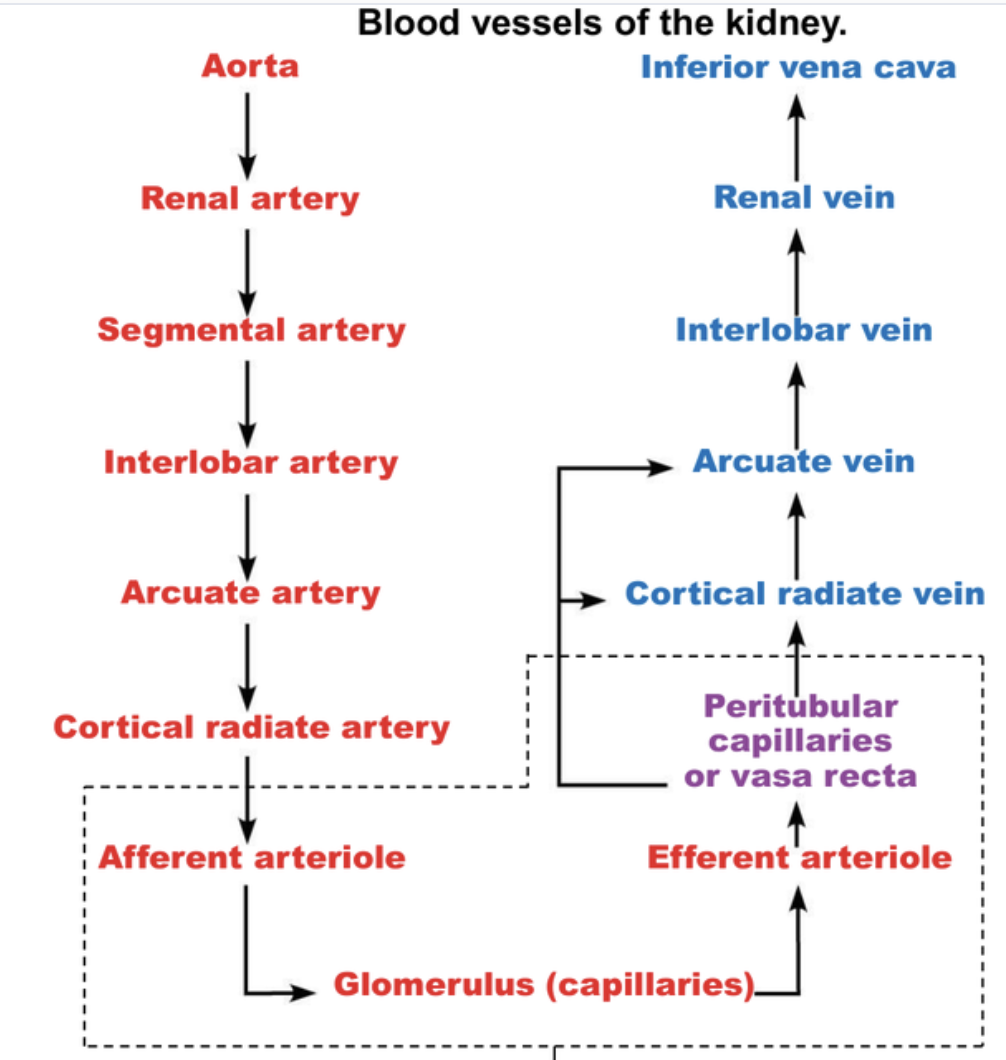
KIDNEY ARTERIAL PATHWAY
Blood into the kidneys
Aorta → renal artery → segmental artery → interlobar artery → arcuate artery → cortical radiate artery → afferent arteriole → glomerulus

KIDNEY VENOUS PATHWAY
Blood out of the kidney
Glomerulus → efferent arteriole → peritubular capillaries → cortical radiate vein → arcuate vein → interlobar vein → renal vein → inferior vena cava
NEPHRONS
filtration of nephrons occurs in renal cortex
800,000 to 1.5 million per kidney
Filtration component = glomerulus + bowman’s capsule
Renal tubules - divided into structural and functional regions
NEPHRON BLOOD VESSELS
Afferent arterioles
supply blood to glomerulus
Glomerulus
ball of capillaries where filtration takes place
Efferent arterioles
carry blood away from glomerulus
Peritubular capillaries
exchange with tubular fluid in lumen
runs close to tubule, enabling ‘cross talk’

NEPHRON TUBULAR SYSTEM
Proximal tubules
convoluted and straight
drains Bowman’s capsule
Loops of Henle
thin ascending and descending limbs
thick ascending limb
produces urine of varying concentrations
Distal tubule
contains macula densa
Collecting duct
cortical and medullary portions
NEPHRON TUBULAR SEGMENTS
Bowman’s capsule
surrounds glomerulus
collects filtrate
Proximal tubule
where majority of unregulated reabsorption takes place
Loop of Henle
produces urine of varying concentrations
Distal tubule/collecting duct
controlled reabsorption and secretion
Renal pelvis
collect urine and funnel to ureter/bladder
JUXTAGLOMERULAR APPARATUS
formed by distal convoluted tubules and glomerular afferent arterioles meeting
regulates blood pressure and filtration rate of glomerulus
FILTRATION, REABSORPTION, SECRETION
Excretion = filtration - (reabsorption + secretion)
GLOMERULAR FILTRATION
movement of fluid/solutes from glomerular capillaries to Bowman’s space
Blood → tubule
TUBULAR REABSORPTION
movement of materials in filtrate in tubules to peritubular capillaries
Tubules → blood
TUBULAR SECRETION
movement of solutes from peritubular capillaries into tubules
Blood → tubules
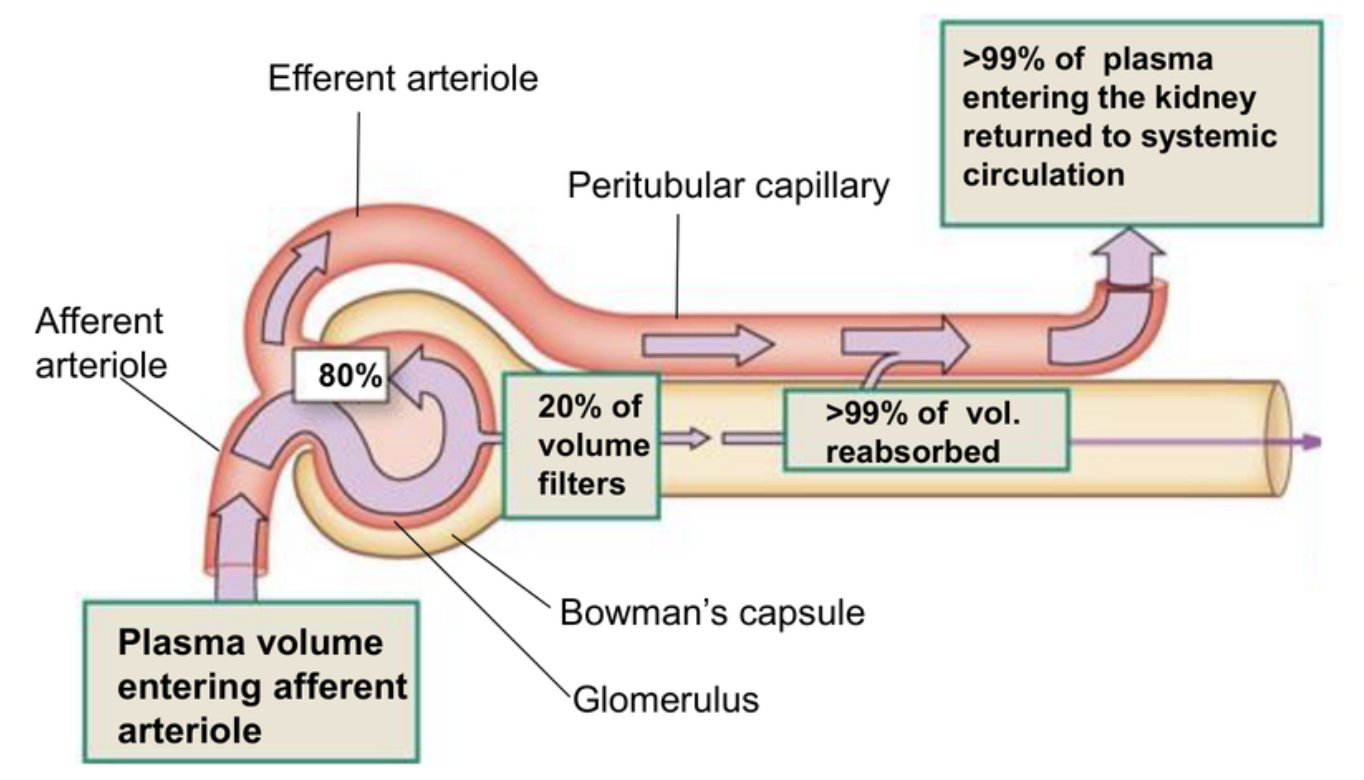
REABSORPTION %
20% - plasma volume entering afferent arteriole is filtered to Bowman’s capsule
80% - plasma volume exits efferent arteriole (not filtered)
>99% - filtered volume reabsorbed into peritubular capillaries
<1% - filtered volume is excreted
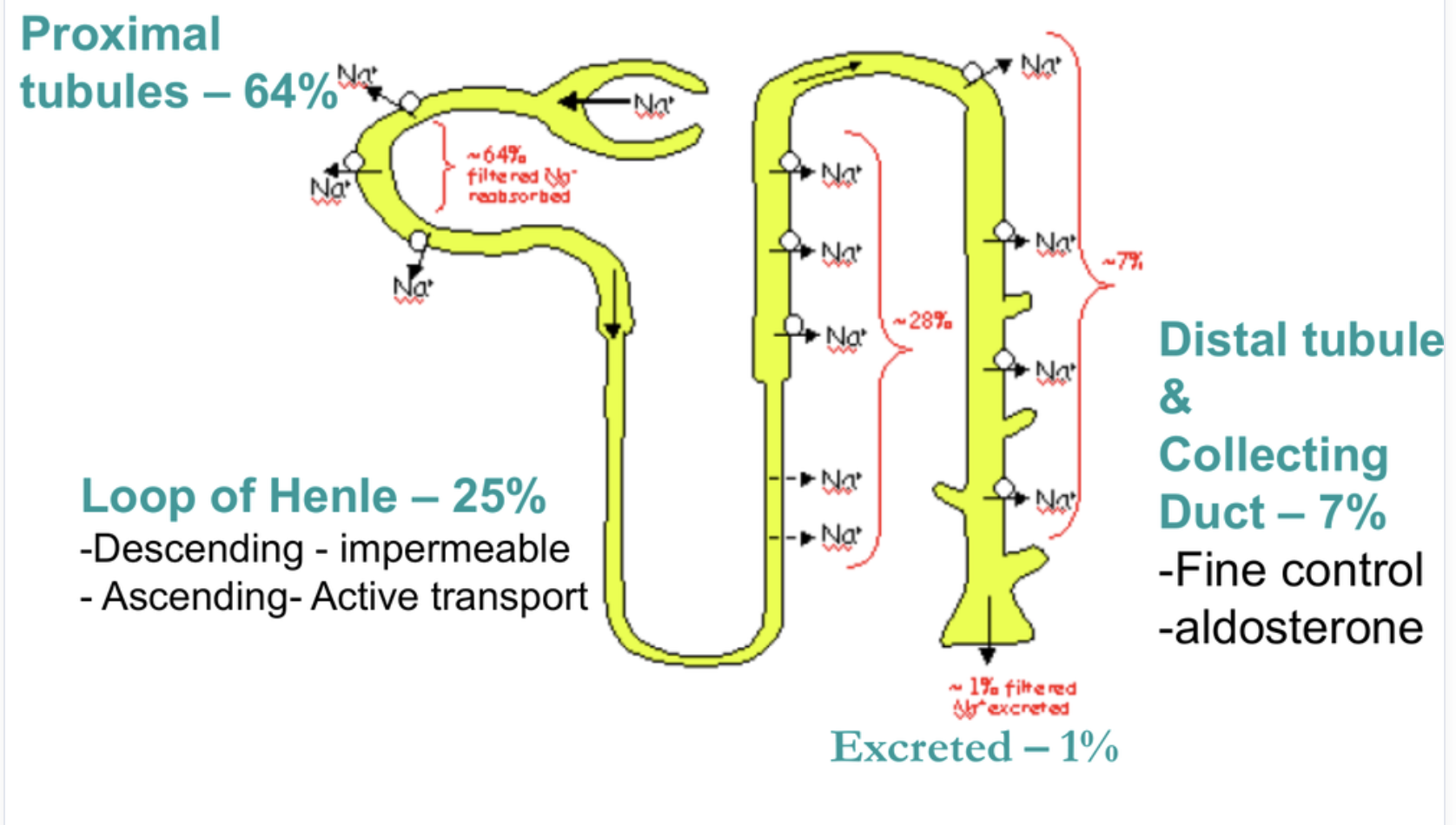
SODIUM REABSORPTION
64% - proximal tubule
25% - loop of Henle (ascending limb)
7% - distal tubule and collecting duct
1% - excreted
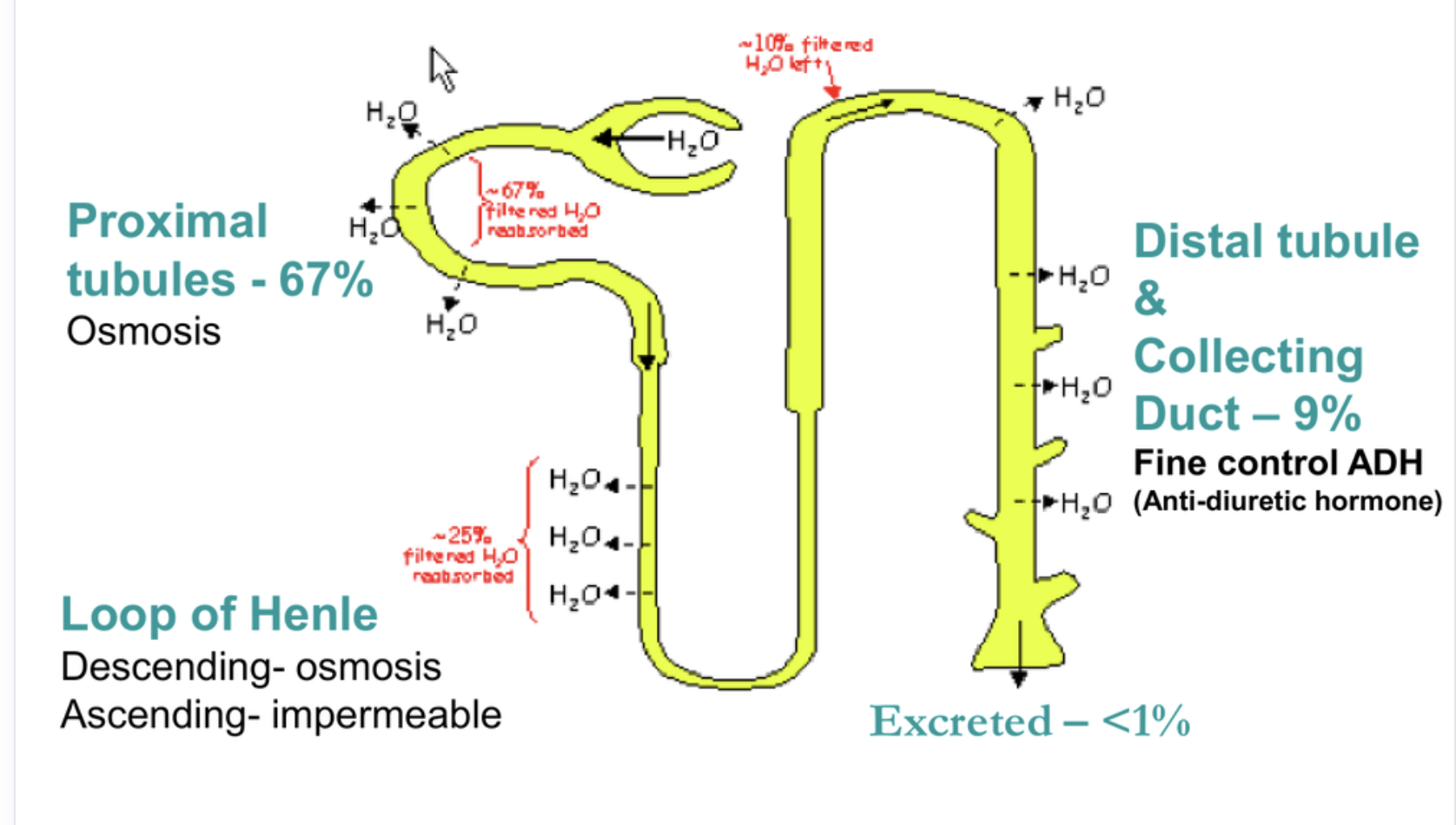
WATER REABSORPTION
67% - proximal tubule
25% - loop of Henle (descending limb)
9% - distal tubule and collecting duct
<1% - excreted
VASOPRESSIN (ADH)
Increases tubular permeability to water in the collecting duct - influencing urine concentration and osmolarity.
Hydrated = less ADH needed = less water reabsorption = more water excreted = restore homeostasis.
Dehydrated = more ADH need = more water reabsorbed in collecting duct + distal tubule = fluid loss minimised.
VASOPRESSIN STEPS
ADH synthesised in hypothalamus
Travels down posterior pituitary and stored until released
Released into circulation in response to dehydration
Delivered via blood and stimulates V2 receptors on membrane of collecting duct
Activates adenylyl cyclase, triggering cascade that inserts pre-formed aquaporins into membrane of collecting duct
Increased water absorption
ALDOSTERONE
selected in response to increase plasma K+ and angiotensin II
acts on renal distal tubule to increase Na+ reabsorption
Aldersterone increases sodium reabsorption (water follows sodium osmotically) therefore it also increases plasma volume.
TRANSPORT MAXIMUM
For most substances actively reabsorbed/secreted, there is a maximum rate the solute can be transported at.
due to saturation of available carrier proteins
any excess above transport maximum is excreted
WHY TUBULAR SECRETION MATTERS
disposes substances bound to plasma proteins and too large to be filtered at glomerulus
disposes substances that were passively reabsorbed
disposes excess K+
controls blood pH
VARIATIONS OF FILTRATION, REABSORPTION AND SECRETION
