ART HISTORY PIECES
 Call Kai
 Learn
Learn Practice Test
 Spaced Repetition
 Match
Match Flashcards
 Knowt Play
1/53

There's no tags or description
Looks like no tags are added yet.
Name | Mastery | Learn | Test | Matching | Spaced | Call with Kai | Chat |
|---|
No analytics yet
Send a link to your students to track their progress
54 Terms

“ The Hunting Scene”
-Paleolithic
-Indonesia
-A famous prehistoric artwork found in Indonesia
-Theriantropes: the hunters arent fully human or fully animal possibly tied to spiritual beliefs where a being can move between animal and human realms
-Showed these hybrid hunters actively hunting a wild animal, illustrating early human interaction with nature.
-possibly to pray for a good hunt
-Ochre on Stone
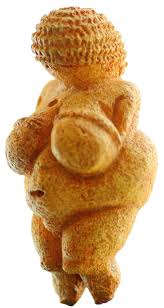
“The Nude Woman”
“Venus of Wildendorf”
Art Mobilier
Austria
Paleolithic
Possibly used as a charm and carried around
Her exaggerated breasts/hips/stomach symbolize fertility and childbirth
no facial detail to show it is not about the identity but the reproductive power

“La Pasiega”
Spain
Paleolithic
Ladder-like and dot marks believed to be made by neanderthals
Symbolizing some of the earliest evidence of abstract thought before fully humans could make modern art

“Hall of Bulls”
-France
-Paleolithic
-Cave painting
-Show twisted perspective so we can see both horns facing forward like youre looking straight at the animal’s face
-Animals painted overlapping and out of scale to create a sense of movement and depth, reflecting early human fascination with animal life
-Most likely a ritualistic purpose related to hunting or fertility.
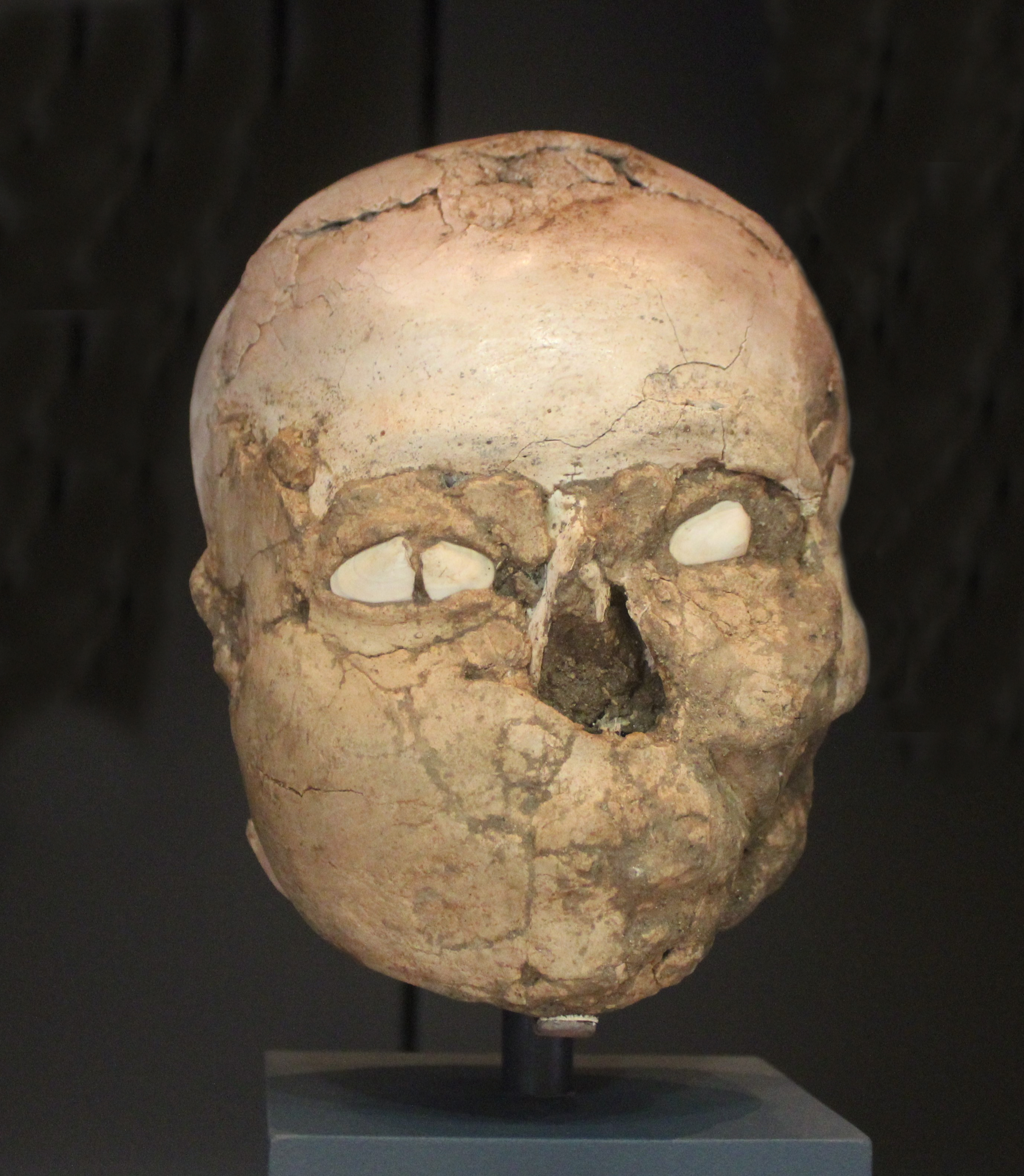
“Jericho Skull”
-Neolithic
-Jericho
-Skull with plaster and shell
-After a person died and their body decomposed their skull was removed from burial site
-Plaster rebuilds the face over a real skull, and shell inlay/ cowrie shells to mark the eyes
-” Ancestor veneration” used to keep the dead present and honored within the community rather than buried and forgotten

“Stonehenge”
-Neolithic
-Stone
-Also served as a burial site for very important people
-Used as a calendar as well
- Stone lintels- horizontal stones that span the space/ opening of the vertical stones (posts)
-England
-Aligned with the solstices to symbolize control over seasonal/agricultural cycles
-Meant to connect the community to the cosmic/seasonal time

White temple (ziggurat)
Mesopotamia
Mud brick
Sumerian
Built on a raised platform to physically and symbolically lift the temple closer to the gods (axis mundi)
Dedicated to the sky god Anu
Only priests could ascend it, showing the hierarchy between the divine and the common people

“Warka Vase”
Registers (horizontal bands) move from the natural world (plants, animals) at the bottom to the goddess Inanna at the top
Whole society organized to serve and offer tribute to the divine
Alabaster
Sumerian
Mesopotamia
Symbolises cosmic order, fertility, and the right to rule
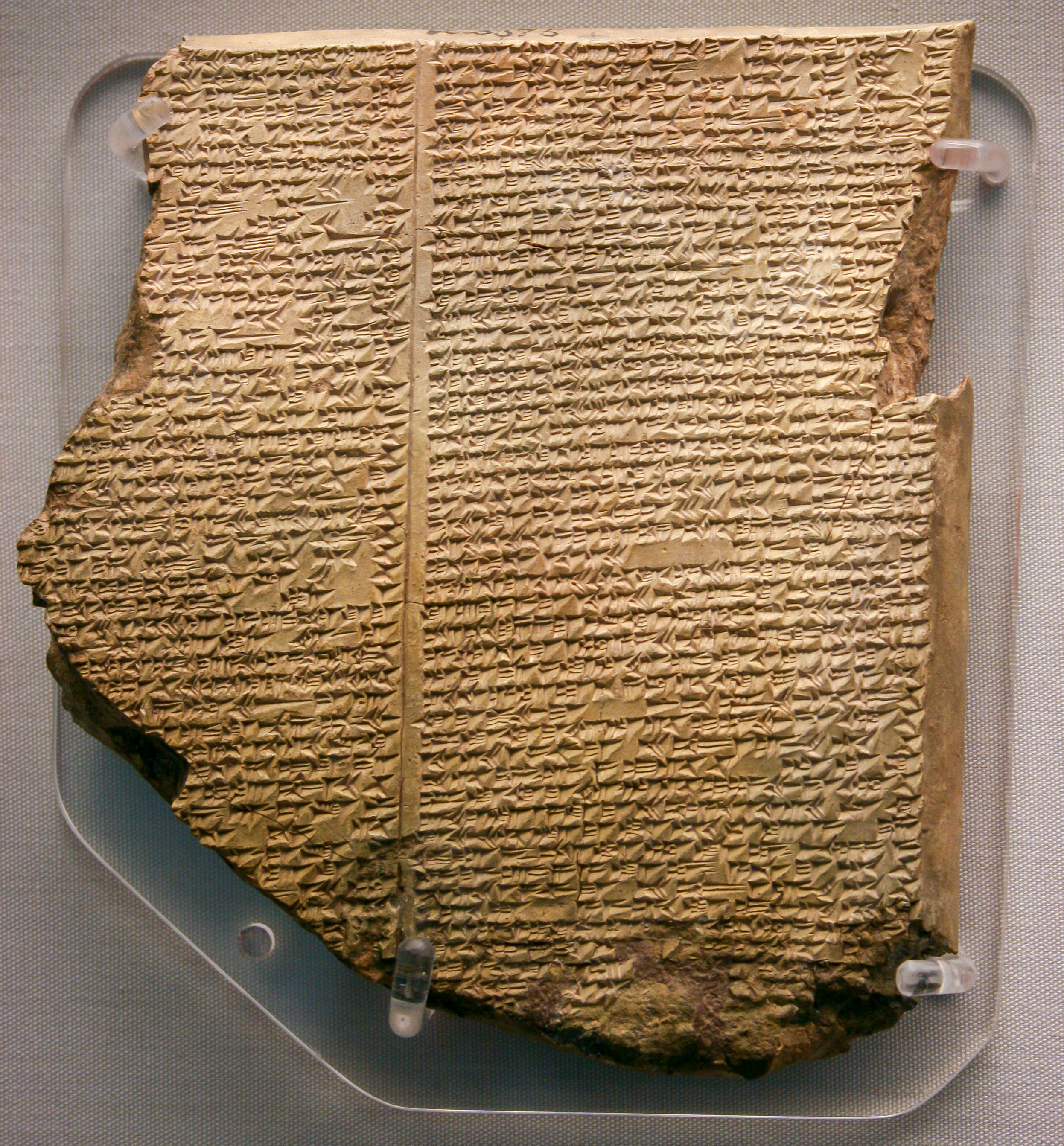
“ Flood tablet, part of the epic of gilgamesh”
Neo-Assyrian
clay
Written in cuneiform and records a flood myth and is simiar to the story of Noah in the bible
Written record of a myth describing a great flood, featuring the hero Gilgamesh.

“ Ziggurat of Ur”
-Mesopotamia
-Sumerian period
-Mud brick
-Built as a temple complex dedicated to the moon god Nanna
Features a stepped pyramid structure, serving as a central site for worship and administrative activities. It exemplifies ancient Sumerian architectural prowess.

“Victory Stela”
-Sandstone
-Mesapotamian
-akkadian period
Shows divine right to rule
-The king is shown receiving honors from the goddess Ishtar, symbolizing legitimacy and divine support for the ruler. This stela serves as a commemorative monument that celebrates military victories and royal power.

“Stela with Law Code “
Mesapotamia
Babylonian period
basalt
foreshortening with the throne carved at an angle
Hammurabi stands before the god Shamash receiving the law codes at the top of the stela
shows divine right to rule
shows cunieform text talking about Hammurabi’s rules
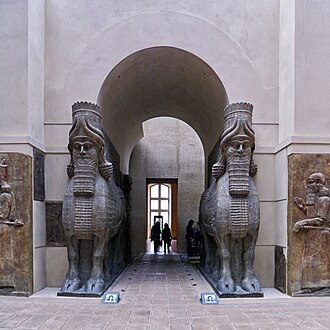
“Lamassu”
Assyrian Period
Mesopotamia
limestone
Combines a human head (intelligence), a bull body (strength), and wings (divine reach/protection)
At palace gates to symbolically ward off evil and project the ruler’s power to anyone entering

“Lion Hunt”
-Assyrian Period
-Mesopotamia
-Limestone
- Relief in the palace
-Ashurbanipal is depicted in a dramatic hunting scene where he showcases his bravery and prowess as a hunter, reflecting the power and dominance of the Assyrian king. This art piece celebrates royal authority and military might.

“Ishtar Gate”
Mesopotamia
Babylonian Period
Limestone
Dedicated to the goddess Ishtar of fertility, love, and war
The animals are each associated with a specific god, so it is shown to say that divine protection guards the city’s entrance
Used blue to show the grandeur and the divine wealth of the city under King Nebuchadnezzar

“ Palette of Narmer”
Ancient Egyptian
Predynastic period
slate
used for ritual
This ceremonial palette depicts the unification of Upper and Lower Egypt
Narmer’s larger size shows his supreme power and he wears the crowns of both upper and Lower Egypt showing the unification of the two lands
The palette also features iconography symbolizing victory and the emergence of pharaonic rule.
The falcon holding the symbol of Upper Egypt (the papyrus plant) and the bull tail signify strength and power and handing it to Narmer as a sign of victory
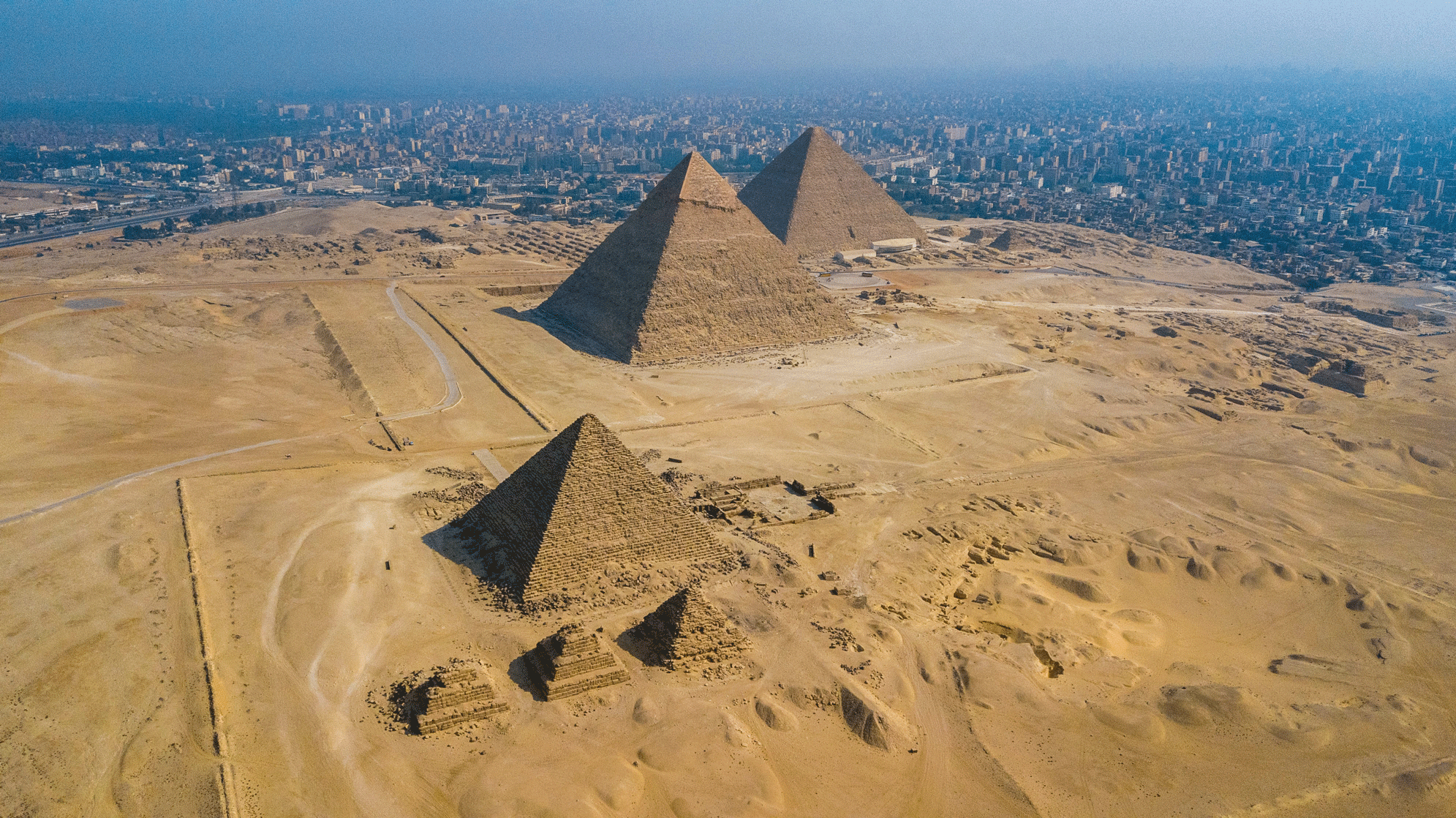
“Great Pyramids”
Ancient Egyptian
Giza
Old Kingdom Period
Granite and limestone
Monumental royal tombs and religious symbols
The pyramid shape may symbolize the rays of the sun descending/ a stairway for the pharaoh’s soul to ascend to the afterlife

“ The Great Sphinx”
Sandstone
Ancient Egyptian
Old Kingdom
Symbolizes royal power, wisdom, and protection
It is a statue with a lion's body and a human head, believed to represent Pharaoh Khafre, often seen as a guardian of the Giza Plateau.
boundary between the underworld and the living world, serving as a protector of the tombs in the area.

“Khafre”
Ancient Egyptian
Old Kingdom Period
Diorite
Horus’ wings wrapped protectively around his head symbolizes divine protection
He is depicted as a seated figure, representing the pharaoh's power and connection to the divine. This statue emphasizes Khafre's role as a ruler and a protector of the people.
no neg space so it would permanently stay there

“Menkaure and his Wife”
Depicts the harmonious relationship between rulers, showcasing love and unity in the context of marriage.
Her arm around him symbolizes protection and partnership
Ancient Egyptian
Old Kingdom
Slate
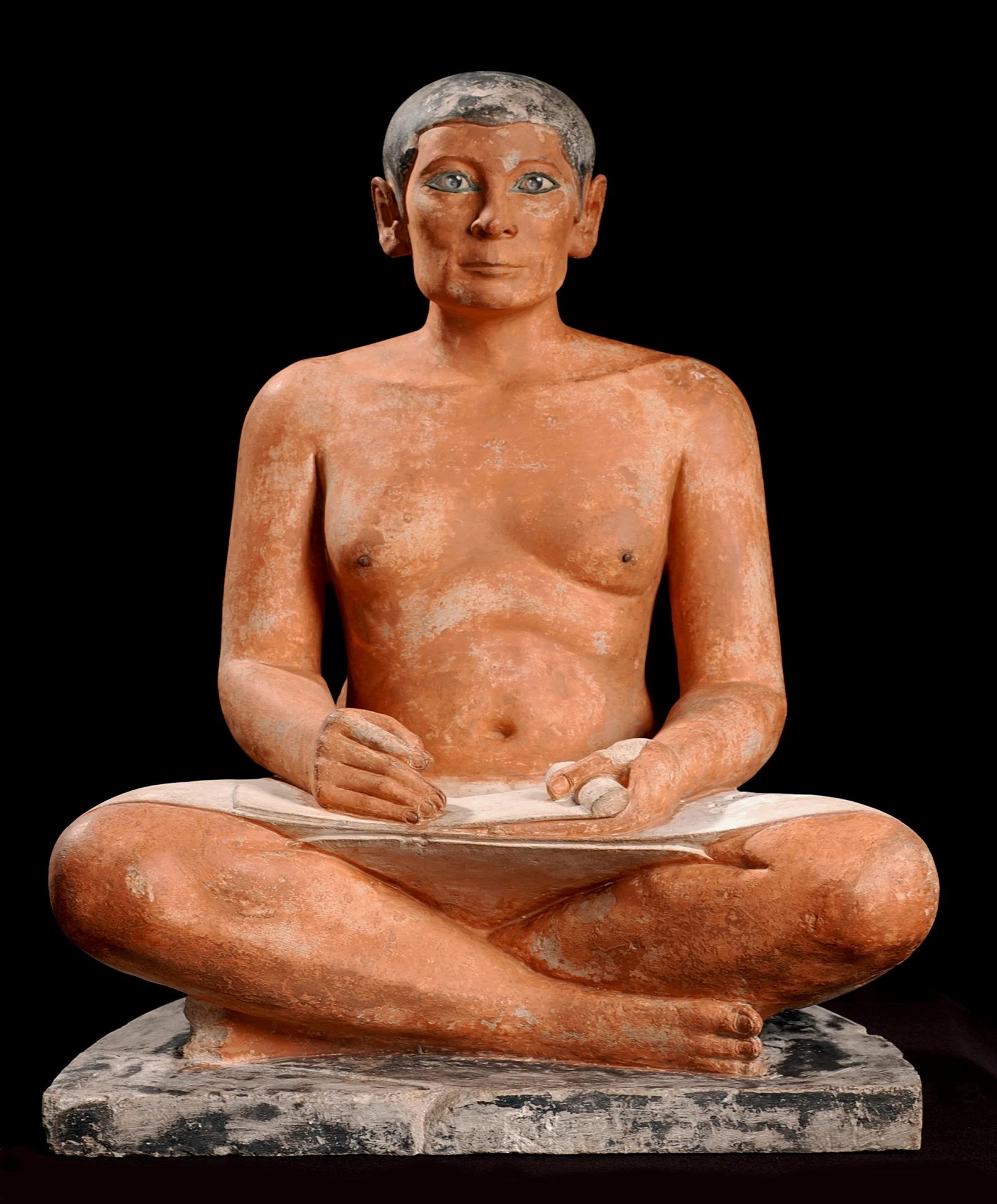
“Seated Scribe”
Ancient Egyptian
Old Kingdom Period
painted limestone
negative space present showing he is of lower class because they dont care about permanence
alert forward gaze signifies watchfulness and intelligence
scribes had high status because writing was seen as powerful
Was meant to house the man’s “ka” (which was believed to be his spirit or essence after death). The statue reflects the importance of literacy and record-keeping in Ancient Egyptian society.
Meant to be lifelike to hold his spirit.

“Hatshepsut”
Ancient Egyptian
New Kingdom
Limestone
Depicted with a fake beard and male body conventions despite being a woman
First female pharaoh of Egypt, known for trade expeditions and monumental architecture.
Symbolizing that legitimate pharaonic power was conceptually male

“Akhenaten and his Family”
Ancient Egpytian
New Kingdom Period
Depicts the royal family, showcasing intimate moments between Akhenaten, Nefertiti, and their children.
King wanted to shift to solely worshipping one god aten the sun disc and so he even changed his name
Reflects the shift in artistic style towards more naturalistic forms and domestic scenes.

“ Figurine of a Woman”
Ancient Aegean period
Cycladic Greece
Marble
arms folded across the chest
no ind. face
symbolized “femaleness” rather than fertility-focused naturalism
moved towards abstraction and simplification rather than exaggerated figures

“ Bull leaping palace at Knossos”
fresco is mural painting technique where water-based pigments are applied to wet lime plaster
shows men with darker skin tone
shows women woth a lighter skin tone
aegan period:early bronze age greece
depicts the athletic practice of bull-leaping, an important ritual in Minoan culture, and showcases dynamic movement and vibrant colors typical of Aegean art.
part of a religious rite of passage

“Lion Gate”
Limestone
holds a relief of 2 lions showing the dynasty’s power and protection over the city
was meant to show intimidation and to show the ruler’s power and intimidation

“ Dipylon Krater”
Greece
Ancient Greek ceramic vase used for mixing wine and water, characteristic of the Geometric period.
Placed directly above a grave as a marker
terracota
Features elaborate geometric patterns and funerary scenes, marking a transition in Greek art towards more narrative forms.
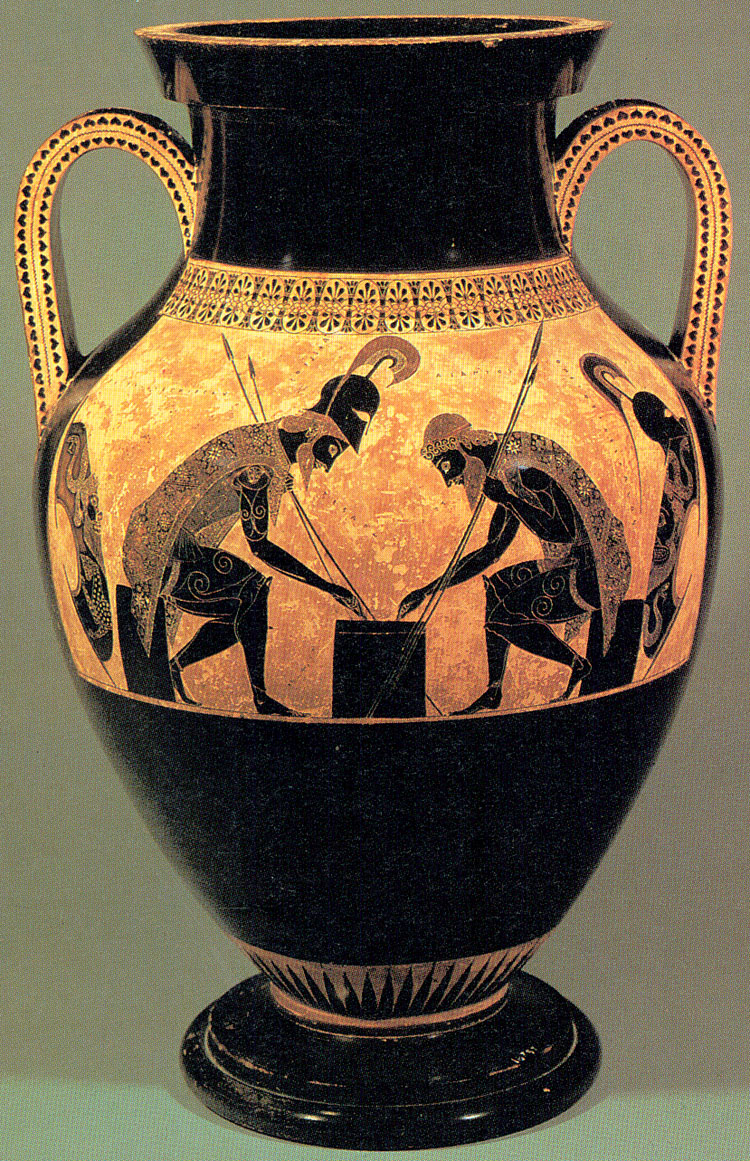
“Ajax and Achilles playing a dice game”
Greece
Painted Ceramic
showing 2 legendary warriors engagedin a game of strategy, highlighting the importance of companionship and rivalry in Greek culture
Adding emotional depth to these heroes
This piece exemplifies the black-figure technique, with detailed depictions of the heroes.
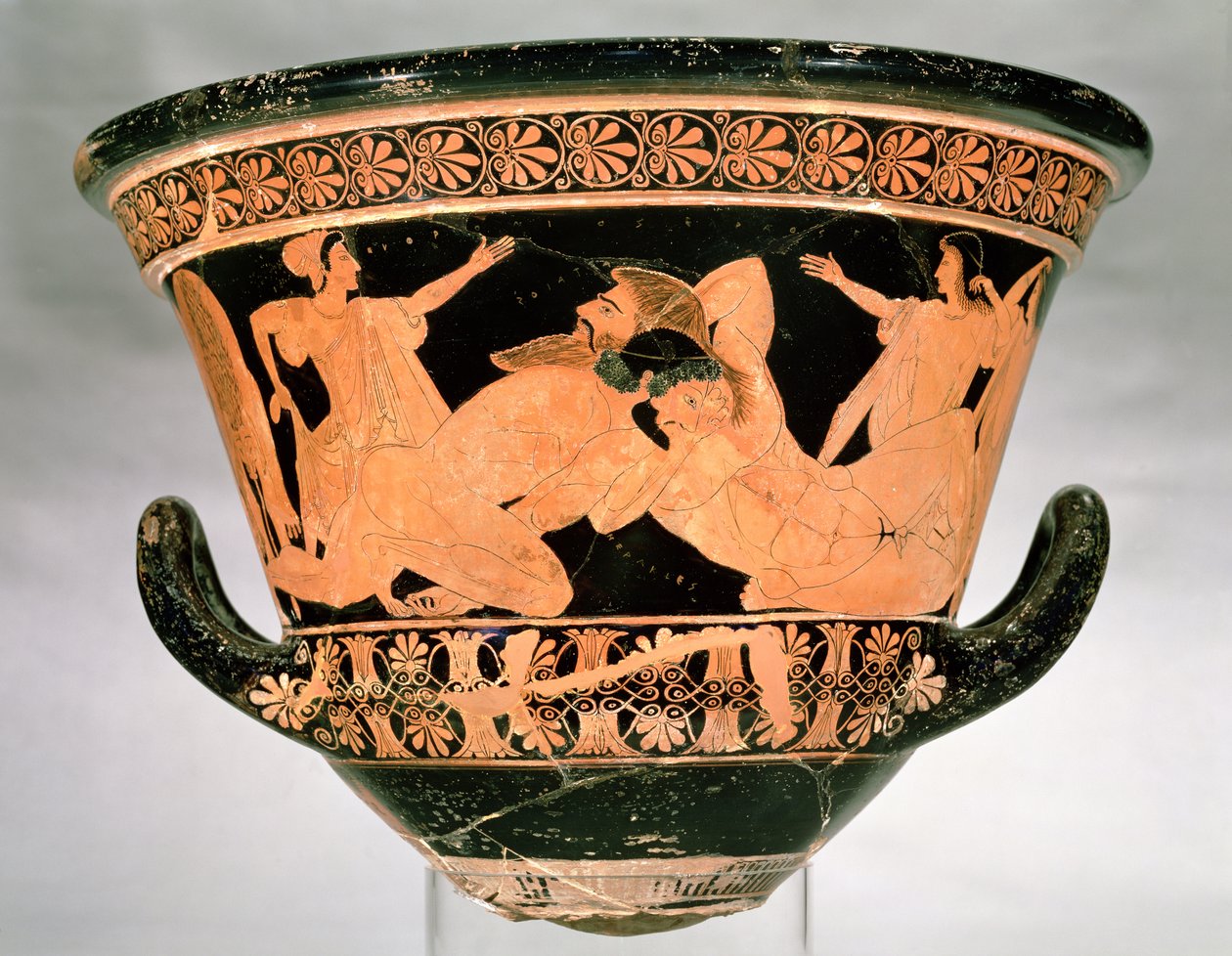
“ Herakles wrestling antaios”
Ancient Greece
Painted ceramic
Depicts the mythical hero Herakles in a dramatic struggle with the giant Antaios, symbolizing strength and heroism.
Herakles was able to defeat Antaios by touching the earth as his mom is goddess of earth and gave him the power
This artwork showcases the use of the black-figure technique, emphasizing the dynamic poses and physicality of the figures.
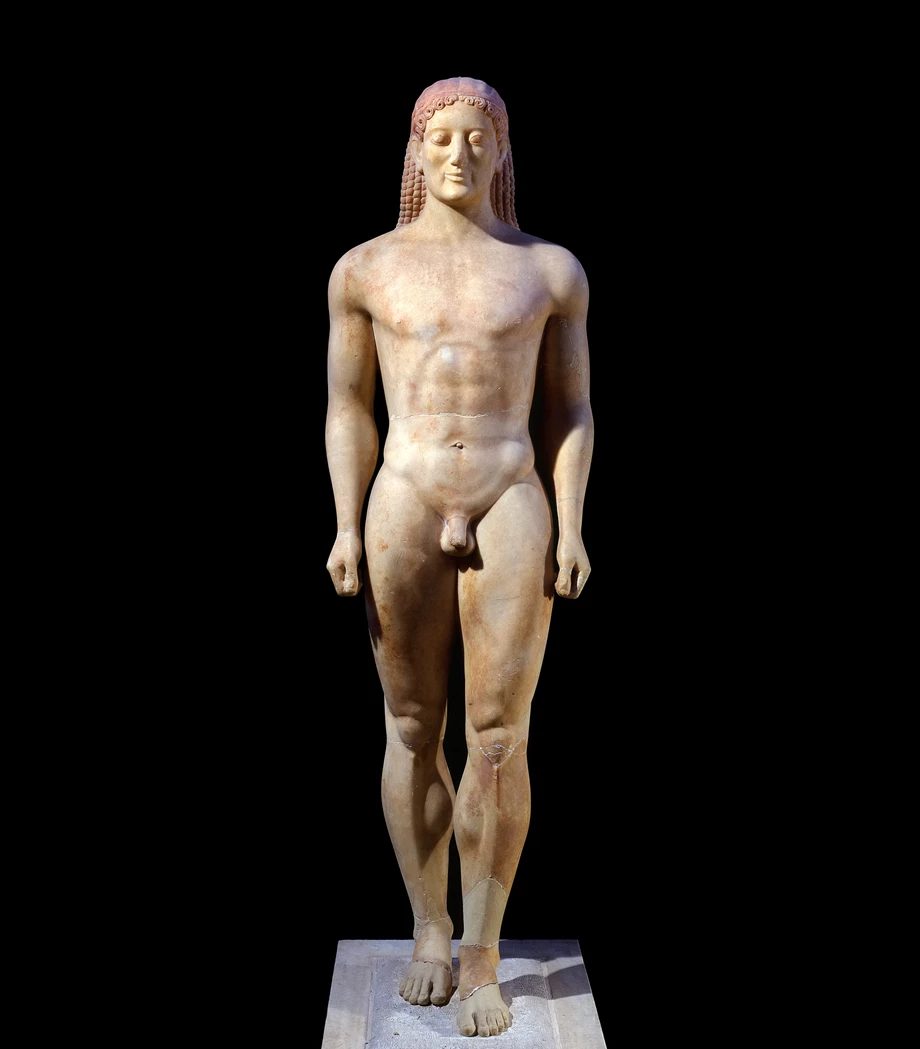
“Kroisos”
Marble
Ancient Greece
“archaic smile” symbolized idealized youth and eternal vitality
A grave marker representing a young man, showcasing advanced sculptural techniques of the Archaic period in Greek art.

“Doryphorus”
Spear Bearer
Ancient Greece
The balance pose with weight shifted on one leg symbolizes harmony between tension and relaxation
marble copy
of a classical statue attributed to Polykleitos, exemplifying the ideal proportions and beauty of the male figure.
Canon: the idea that mathematical proportion can equal moral/physical perfection
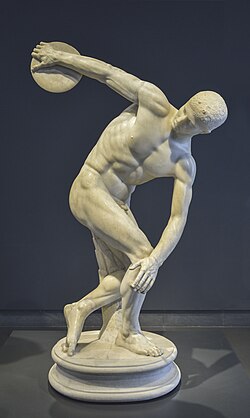
“Diskobolos”
Ancient Greece
captures the split second peak of coiled tension before the throw
symboliizes the greek ideal of the atheltic body as displayed as civic virtue and self discipline
athletic competition was tied to religious festivals honoring the gods like the olympics for Zeus

“Erectheion”
Ancient Greece
Marble
Athens, Greece
ionic order: scroll like tops for coulomns
Used female figures as columns to support the structure, showcasing a unique blend of architectural and sculptural elements.
it marked several religious sites including where Athena and Poseidon had competed for patronage of Athens
act of devotion

“ Parthenon”
Ancient Greece
marble
Dedicated to athena
doric order: no base essentially basic as hell
supposed to show the city’s claim to embody civic virtue and rational order
front showed birth of athena

“ Battle of a Lapith and a Centaur”
Centaur losing to civilized greeks
ancient greece
marble
centaurs losing to civilized greeks symbolizing the triumph of civilization/ reason over chaos
on the parthenon
allegory to defeat of the persians
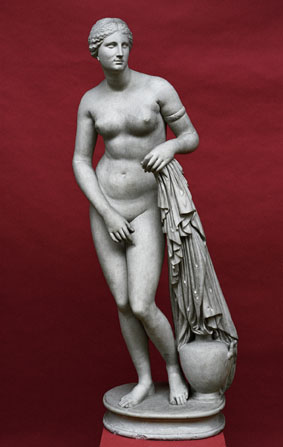
Aphrodite of Knidos
Ancient Greece
Marble
first major nude greek female statue in greek art
symbolized idealized female beauty
statue of goddess of love
her hand covering herself showed heigtened eroticism/divinity all at once

“ Altar of Zeus Pergamon”
Gods battling giants
Ancient Greece
marble
A monumental sculptural relief that depicts the battle between the gods and giants, symbolizing the struggle between order and chaos. It was part of a grand altar dedicated to Zeus at Pergamon, showcasing intricate artistry and dramatic emotional expression.

“ Winged Victory (Nike) of Samothrace”
Ancient Greece
Hellenistic period
Symbolizes triumph (naval victory)
Wind-whipped drapery meant to signify motion and divine power

“ Seated Boxer”
bronze
“Ancient Greece”
Scarred, battered face and body signify the honor of hard-won physical struggle
showing real human suffering/emotion

“Aule Metule”
Etruscan
bronze
raised arm and confident stance signify civic power of oratory/ public speech
persuasion as a form of authority
not idealized and favored aging and hyper-realism (verism)

“Patrician Man with portrait bust of his ancestors”
Ancient ROme
Verist style
holding busts of dead relatives
symbolizes family lineage and respect for ancestors.
importance of earning honor through age rather than physical beauty

“Augustus of Primaporta
Roman Period
marble
greek idealism blended with roman propagand (syncretism)
cupid riding a dolpnin signifies divine lineage and connection to Venus.
his bare feet like a god’s statue hint at near divine immortal status (apotheosis elevating a person to the status of a god)

The Colosseum
-Marble
Anceint rome
amphitheater with all 3 arch orders per level
use gladiator games to enforce power to the masses
concrete and marble

Arch of titus
concrete with marble veneer
ancient rome
relief showing soldiers carrying spoils from the sack of jerusalem
symbolizes rome’s dominance and military triumph
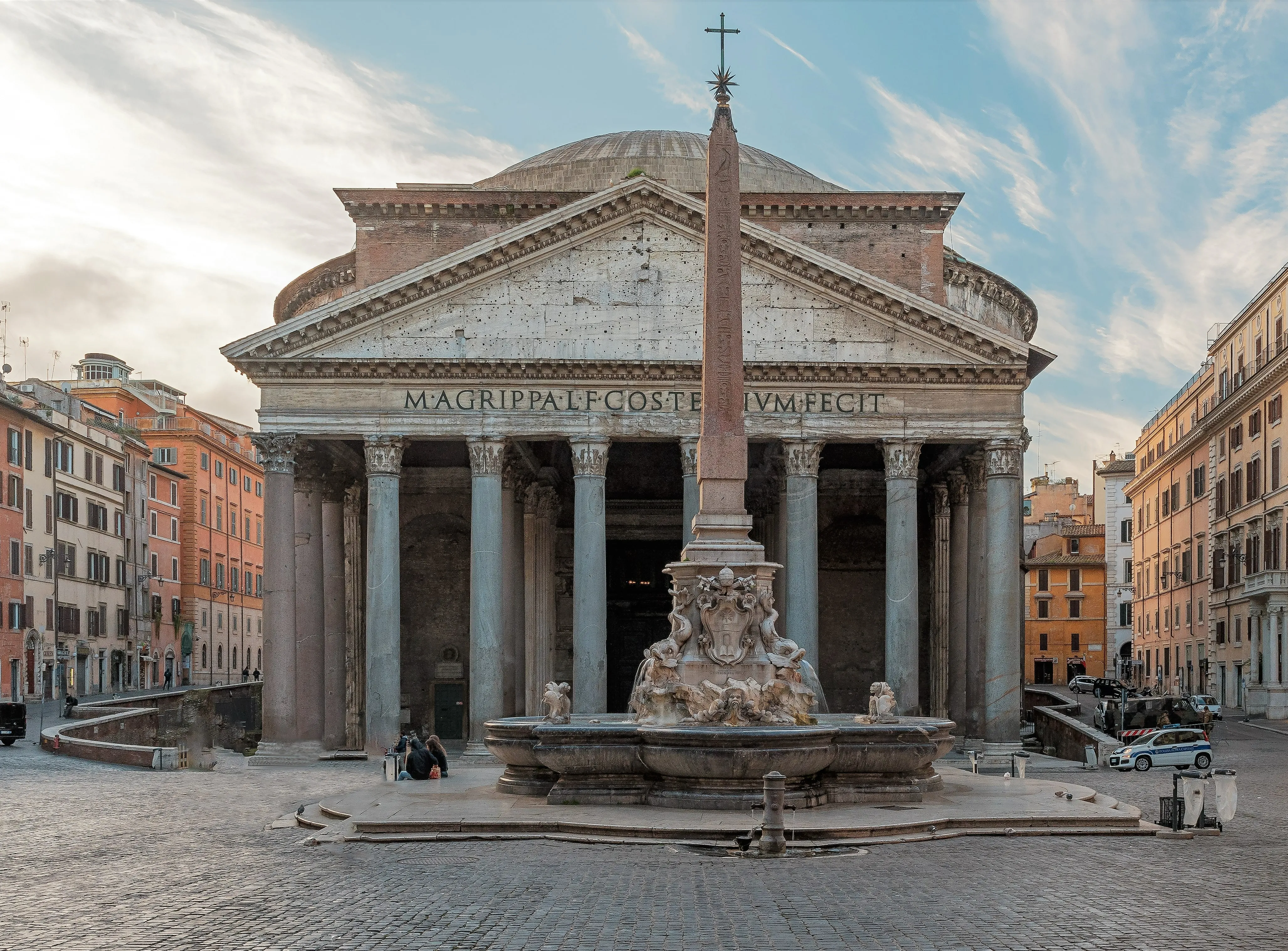
“ Pantheon”
oculus building’s only light source
beam of light moving across the side signifies passage of time
connects temples to the gods

“ The tetrarchs”
Ancient rome
are four co-emperors of the Roman Empire established by Diocletian, depicted in a famous statue that symbolizes the unity and harmony of their rule. These figures were made of porphyry and were placed in the city of Constantinople as a representation of imperial power.
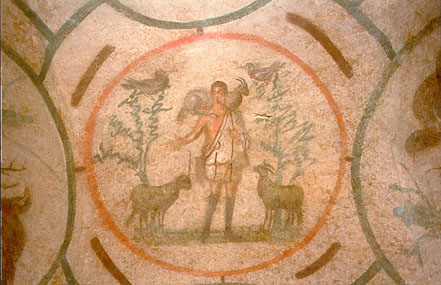
“ The good shepherd, orants, and the story of noah
shows christ as a beardless shepherd using syncretism and using imagine from pagan pastoral image
during a time of prosecution to show Jesus’ care for “his flock”. This early Christian art piece reflects the transition from pagan to Christian symbolism in the Roman Empire.

“ Old St Peter’s Basilica”
Ancient Rome
built over tomb of St. peter
symbolizing church’s claim to direct and physical continuity with the apostles
constructed between 324 and 360 AD, it was a monumental church that became a central site for Christian pilgrimage, representing the early authority of the papacy.

“ Hagia Sophia”
Dome ringed with windows appears to be floating
Byzantine era
and symbolizes the connection between heaven and earth. Originally constructed as a cathedral in Constantinople

“ Emperor Justinian and his Attendants”
Byzantine
mosaic
halo around signifiying their divine right to rule
shift towards eternal spiritual authority
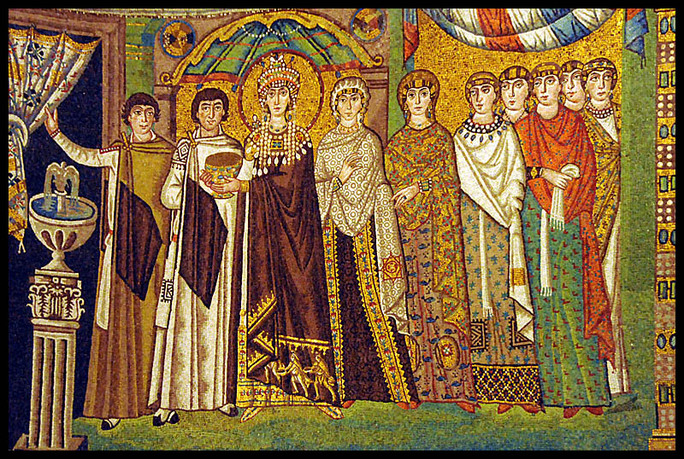
“ Empress Theodora and her attendants”y. This mosaic, part of the same series as "Emperor Justinian and his Attendants," depicts empress Theodora in a colorful robe entering a church, reinforcing her power and the role of women in the Byzantine court.
Byzantine
mosaic
halo around signifiying their divine right to rule
shift towards eternal spiritual authorit