Canine Oncology Practice Flashcards
 Call Kai
 Learn
Learn Practice Test
 Spaced Repetition
 Match
Match Flashcards
 Knowt Play
1/17

Earn XP
Description and Tags
A set of vocabulary flashcards covering the clinical presentation, diagnosis, treatment, and prognosis of common canine cancers: osteosarcoma, mammary gland tumors, mast cell tumors, and lymphoma.
Name | Mastery | Learn | Test | Matching | Spaced | Call with Kai | Chat |
|---|
No analytics yet
Send a link to your students to track their progress
18 Terms
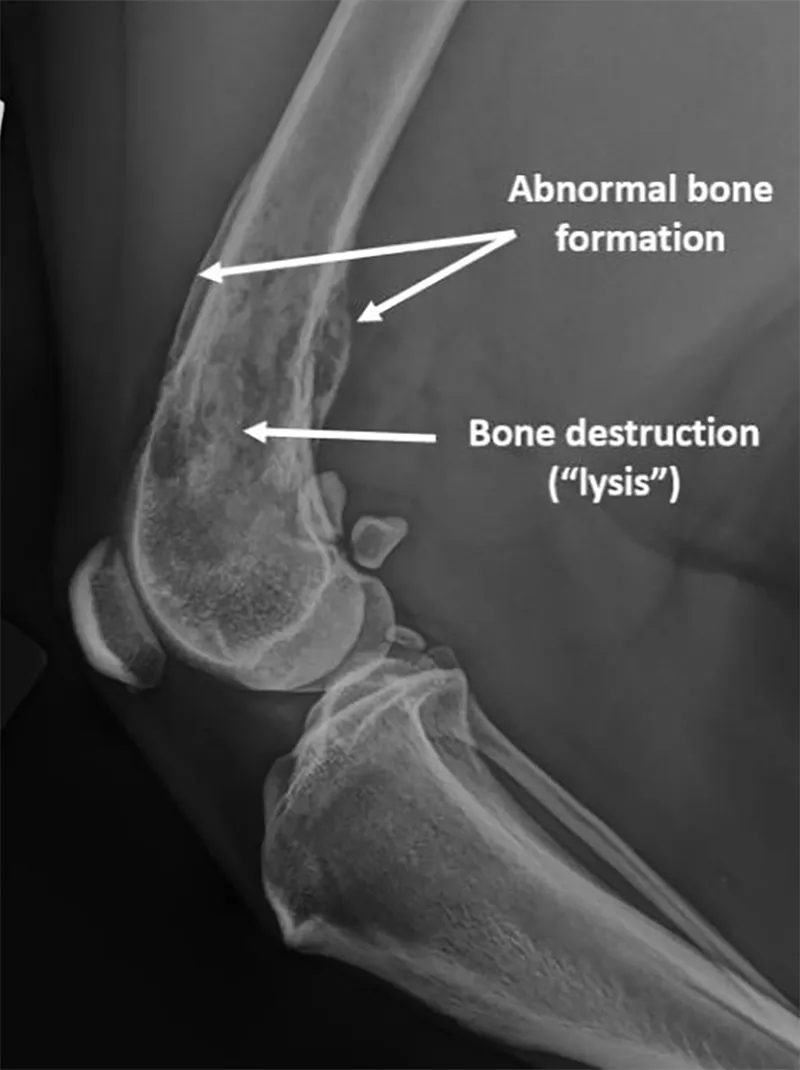
Osteosarcoma (Bimodal Age Incidence)
A bone cancer common in large or giant breed dogs with two peak incidence ages: 1.5−2y and 7−9y.

Osteosarcoma (Radiographic Appearance)
Characterized by bony lysis (often described as "moth-eaten") and periosteal bone formation.

Osteosarcoma (Common Locations)
Usually appendicular (75%), specifically the proximal humerus, distal radius, distal femur, and proximal tibia; summarized as "away from elbow, toward knee."
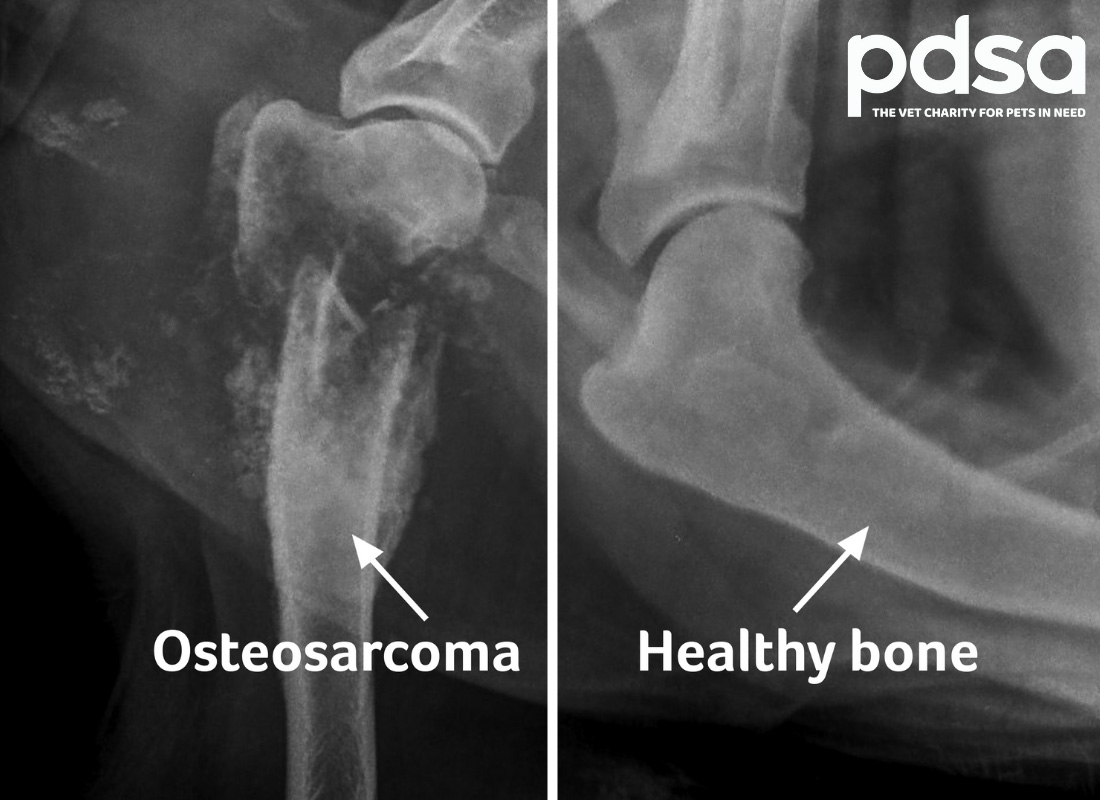
Osteosarcoma (ALP significance)
Elevated ALP is a laboratory finding associated with a poorer prognosis for this bone cancer.

Mammary Gland Tumors (Malignancy Rule)
Approximately 50% of these tumors are benign and 50% are malignant.

Mammary Gland Tumors (Surgical Margins)
Surgical excision is ideally performed with a minimum of 2-cm margins in all planes.

Mammary Gland Tumors (Prognostic Indicators)
A poorer prognosis is associated with tumor size >3 cm, lymph node involvement, or distant metastasis.
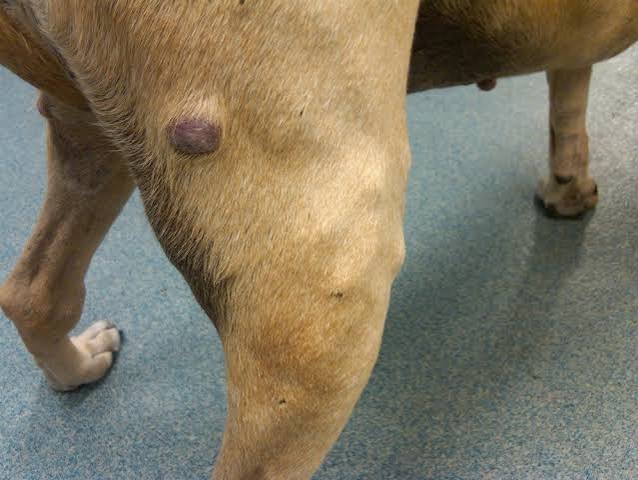
Mast Cell Tumors (Visual Characteristics)
Cutaneous or subcutaneous masses that may shrink and swell intermittently
breed dispositions include Boxers, Boston terriers, and Golden retrievers.

Mast Cell Tumors (Degranulation Symptoms)
Release of granules can lead to systemic signs such as vomiting, diarrhea, and melena.
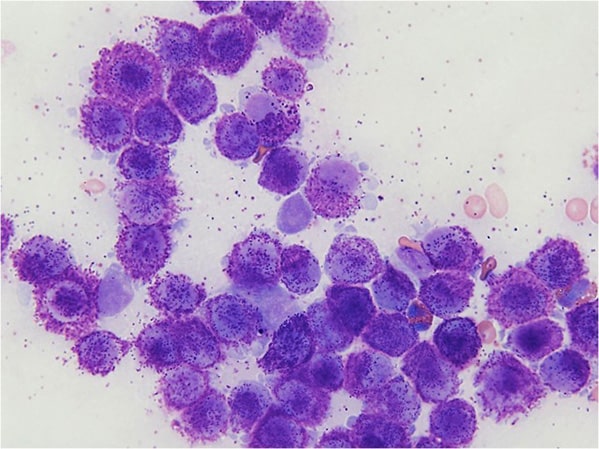
Mast Cell Tumors (FNA Cytology)
Diagnosis via fine needle aspirate reveals blue- or purple-staining intracytoplasmic granules.
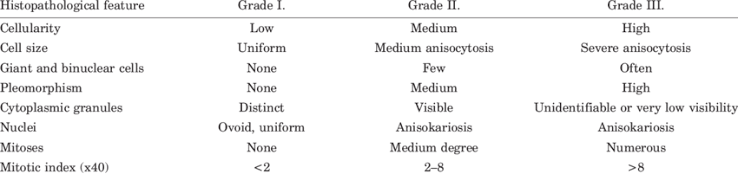
Patnaik Grading System
The histopathology grading system used to determine the prognosis for mast cell tumors.
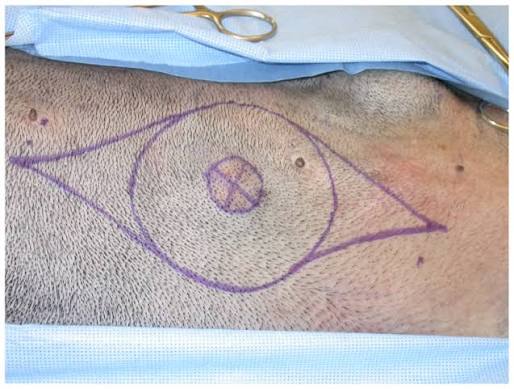
Mast Cell Tumors (Surgical Margins)
Requires surgical excision with 2 cm or greater lateral margins and 1 fascial plane deep.
Mast Cell Tumors (Supportive Medications)
Histamine blockers such as diphenhydramine, famotidine, and ranitidine are used to manage effects.
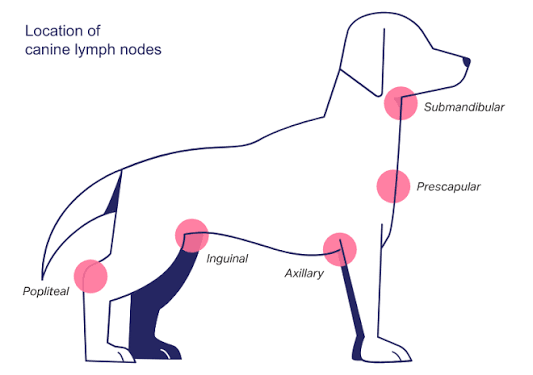
Lymphoma (Clinical Presentation)
Commonly presents as generalized
lymphadenopathy
anorexia
vomiting
weight loss
dyspnea.

Lymphoma (Laboratory Findings)
May involve
anemia
thrombocytopenia
neutropenia (with bone marrow involvement)
hypercalcemia.

Lymphoma (Phenotyping)
Determined via flow cytometry or immunohistochemistry to distinguish between B cell and T cell types.
Lymphoma (Prognostic Comparison)
T cell lymphoma carries a poorer prognosis, while "B is better."
Lymphoma (Prednisone Effect)
Administering this drug before chemotherapy will decrease the patient's response to the subsequent chemotherapy treatment.