💊 How Are We Feeding Animals?

0.0(0)
Studied by 0 people
call kaiCall Kai
Locked
learnLearn
examPractice Test
spaced repetitionSpaced Repetition
heart puzzleMatch
flashcardsFlashcards
GameKnowt Play
Card Sorting

1/24

encourage image

There's no tags or description

Looks like no tags are added yet.

Last updated 11:07 PM on 9/18/26
Name
Mastery
Learn
Test
Matching
Spaced
Call with Kai
Chat

No analytics yet

Send a link to your students to track their progress

25 Terms

1
New cards

How Should We Feed Animals?

The Main Question

  • What to feed?

  • How much of each nutrient to provide?

Traditional Approach

  • Tradition / know-how → based on experience and established practices

  • What we always fed → continue using familiar feeds

Animal-Driven Approach

  • Let the animal choose → allow the animal to select what it eats

Availability-Based Approach

  • Feed what we have → use whatever feed is available

Scientific Approach

  • Systematically + scientifically → determine what + how much to feed based on scientific evidence

  • Nutrition / nutritional sciences → science that drives feeding decisions


<p class="PDq2pG_selectionAnchorContainer"><strong>The Main Question</strong></p><ul><li><p><strong>What to feed?</strong></p></li><li><p><strong>How much</strong> of each <strong>nutrient</strong> to provide?</p></li></ul><p><strong>Traditional Approach</strong></p><ul><li><p><strong>Tradition / know-how</strong> → based on <strong>experience</strong> and established practices</p></li><li><p><strong>What we always fed</strong> → continue using familiar feeds</p></li></ul><p><strong>Animal-Driven Approach</strong></p><ul><li><p><strong>Let the animal choose</strong> → allow the animal to select what it eats</p></li></ul><p><strong>Availability-Based Approach</strong></p><ul><li><p><strong>Feed what we have</strong> → use whatever feed is <strong>available</strong></p></li></ul><p><strong>Scientific Approach</strong></p><ul><li><p><strong>Systematically + scientifically</strong> → determine <strong>what + how much</strong> to feed based on scientific evidence</p></li><li><p><strong>Nutrition / nutritional sciences</strong> → science that <strong>drives feeding decisions</strong></p></li></ul><p></p>
2
New cards

Nutrition: Definitions

American Medical Association (AMA)

  • Human-focused definition

  • Nutrition → science of food, nutrients + substances, including their actions, interactions + balance

  • Relates to health + disease

  • Includes processes by which the organism:

    • Digests food substances

    • Absorbs food substances

    • Transports food substances

    • Utilizes food substances

    • Excretes food substances

Kellems and Church (2002)

  • Animal production-focused definition

  • Nutrition → series of processes by which an animal takes in + assimilates feed components

  • Supports:

    • Growth

    • Milk production

    • Fiber production

    • Replacement of worn or injured tissues

Key Difference

  • AMA → focuses on nutrition + health/disease

  • Kellems & Church → focuses on nutrition + animal production


<p><strong>American Medical Association (AMA)</strong></p><ul><li><p><strong>Human-focused definition</strong></p></li><li><p><strong>Nutrition</strong> → science of <strong>food, nutrients + substances</strong>, including their <strong>actions, interactions + balance</strong></p></li><li><p>Relates to <strong>health + disease</strong></p></li><li><p>Includes processes by which the organism:</p><ul><li><p><strong>Digests</strong> food substances</p></li><li><p><strong>Absorbs</strong> food substances</p></li><li><p><strong>Transports</strong> food substances</p></li><li><p><strong>Utilizes</strong> food substances</p></li><li><p><strong>Excretes</strong> food substances</p></li></ul></li></ul><p><strong>Kellems and Church (2002)</strong></p><ul><li><p><strong>Animal production-focused definition</strong></p></li><li><p><strong>Nutrition</strong> → series of processes by which an <strong>animal takes in + assimilates feed components</strong></p></li><li><p>Supports:</p><ul><li><p><strong>Growth</strong></p></li><li><p><strong>Milk production</strong></p></li><li><p><strong>Fiber production</strong></p></li><li><p><strong>Replacement of worn or injured tissues</strong></p></li></ul></li></ul><p><strong>Key Difference</strong></p><ul><li><p><strong>AMA</strong> → focuses on <strong>nutrition + health/disease</strong></p></li><li><p><strong>Kellems &amp; Church</strong> → focuses on <strong>nutrition + animal production</strong></p></li></ul><p></p>
3
New cards

Human Nutrition vs. Animal Nutrition?

Important Context

  • My old boss’ view (1990s) → presented for discussion

  • The lecturer does not agree with this view

Human Nutrition

  • Called “Social Dietetics?”

  • Focuses on social + medical aspects

  • Goal → minimize risks to health

Animal Nutrition

  • Called “True science, serious + systematic?”

  • Focuses on maximizing growth + efficiency of livestock

  • Goal → minimize cost

Main Comparison

  • Human nutrition → health + social/medical concerns

  • Animal nutrition → growth + efficiency + cost


<p><strong>Important Context</strong></p><ul><li><p><strong>My old boss’ view (1990s)</strong> → presented <strong>for discussion</strong></p></li><li><p>The lecturer <strong>does not agree</strong> with this view</p></li></ul><p><strong>Human Nutrition</strong></p><ul><li><p>Called <strong>“Social Dietetics?”</strong></p></li><li><p>Focuses on <strong>social + medical aspects</strong></p></li><li><p>Goal → <strong>minimize risks to health</strong></p></li></ul><p><strong>Animal Nutrition</strong></p><ul><li><p>Called <strong>“True science, serious + systematic?”</strong></p></li><li><p>Focuses on <strong>maximizing growth + efficiency</strong> of livestock</p></li><li><p>Goal → <strong>minimize cost</strong></p></li></ul><p><strong>Main Comparison</strong></p><ul><li><p><strong>Human nutrition</strong> → health + social/medical concerns</p></li><li><p><strong>Animal nutrition</strong> → growth + efficiency + cost</p></li></ul><p></p>
4
New cards

The Boundary Between Animal and Human Nutrition

Changing Boundary

  • The boundary between animal nutrition and human nutrition is no longer clearly defined

  • The two fields increasingly overlap

Why This Matters

  • Animal nutrition is not only about growth, efficiency + cost

  • Human nutrition is not only about health + social/medical aspects

  • Both can involve health, nutrition, food quality + well-being


<p><strong>Changing Boundary</strong></p><ul><li><p>The boundary between <strong>animal nutrition</strong> and <strong>human nutrition</strong> is <strong>no longer clearly defined</strong></p></li><li><p>The two fields increasingly <strong>overlap</strong></p></li></ul><p><strong>Why This Matters</strong></p><ul><li><p>Animal nutrition is not only about <strong>growth, efficiency + cost</strong></p></li><li><p>Human nutrition is not only about <strong>health + social/medical aspects</strong></p></li><li><p>Both can involve <strong>health, nutrition, food quality + well-being</strong></p></li></ul><p></p>
5
New cards

Similarities Between Human and Animal Nutrition Research

Human Nutrition Group’s Mission

  • Advance knowledge about the role of nutrition in human health

What They Study

  • Whole foods

  • Individual nutrients

  • Non-nutritive food components

  • Their roles at the:

    • Whole body level

    • Cellular level

    • Molecular level

Research Groups

  • Studied in different population groups

  • Also studied using model systems

Food Choices

  • Environmental determinants → factors affecting food choices

  • Social determinants → social factors affecting food choices

  • Individual determinants → individual factors affecting food choices

  • Examines food choices + eating patterns

Animal Nutrition Research

  • This description could also be applied to much of the animal nutrition research carried out around the world


<p><strong>Human Nutrition Group’s Mission</strong></p><ul><li><p>Advance knowledge about the role of <strong>nutrition in human health</strong></p></li></ul><p><strong>What They Study</strong></p><ul><li><p><strong>Whole foods</strong></p></li><li><p><strong>Individual nutrients</strong></p></li><li><p><strong>Non-nutritive food components</strong></p></li><li><p>Their roles at the:</p><ul><li><p><strong>Whole body</strong> level</p></li><li><p><strong>Cellular</strong> level</p></li><li><p><strong>Molecular</strong> level</p></li></ul></li></ul><p><strong>Research Groups</strong></p><ul><li><p>Studied in different <strong>population groups</strong></p></li><li><p>Also studied using <strong>model systems</strong></p></li></ul><p><strong>Food Choices</strong></p><ul><li><p><strong>Environmental determinants</strong> → factors affecting food choices</p></li><li><p><strong>Social determinants</strong> → social factors affecting food choices</p></li><li><p><strong>Individual determinants</strong> → individual factors affecting food choices</p></li><li><p>Examines <strong>food choices + eating patterns</strong></p></li></ul><p><strong>Animal Nutrition Research</strong></p><ul><li><p>This description could also be applied to much of the <strong>animal nutrition research</strong> carried out around the world</p></li></ul><p></p>
6
New cards

Nutrition and Feeding of Animals

Long History

  • Nutrition + feeding of animals → systematically approached for millennia

Ancient Egyptians

  • Developed a system to determine how much feed resources different types of cattle would need

18th + 19th Century

  • Animal nutrition became a focus of scientific efforts

  • Important work in:

    • Italy

    • France

    • United Kingdom

    • Germany

20th Century

  • Animal nutrition research became especially important in the USA


<p><strong>Long History</strong></p><ul><li><p><strong>Nutrition + feeding of animals</strong> → systematically approached for <strong>millennia</strong></p></li></ul><p><strong>Ancient Egyptians</strong></p><ul><li><p>Developed a <strong>system</strong> to determine how much <strong>feed resources</strong> different types of <strong>cattle</strong> would need</p></li></ul><p><strong>18th + 19th Century</strong></p><ul><li><p>Animal nutrition became a focus of <strong>scientific efforts</strong></p></li><li><p>Important work in:</p><ul><li><p><strong>Italy</strong></p></li><li><p><strong>France</strong></p></li><li><p><strong>United Kingdom</strong></p></li><li><p><strong>Germany</strong></p></li></ul></li></ul><p><strong>20th Century</strong></p><ul><li><p>Animal nutrition research became especially important in the <strong>USA</strong></p></li></ul><p></p>
7
New cards

The Ahmes Papyrus – 1650 B.C.E.

Historical Record

  • Ahmes Papyrus → dates to 1650 B.C.E.

  • Shows the long history of systematic knowledge in ancient Egypt

Time Period

  • 1650 B.C.E.Ancient Egypt


<p><strong>Historical Record</strong></p><ul><li><p><strong>Ahmes Papyrus</strong> → dates to <strong>1650 B.C.E.</strong></p></li><li><p>Shows the long history of <strong>systematic knowledge</strong> in ancient Egypt</p></li></ul><p><strong>Time Period</strong></p><ul><li><p><strong>1650 B.C.E.</strong> → <strong>Ancient Egypt</strong></p></li></ul><p></p>
8
New cards

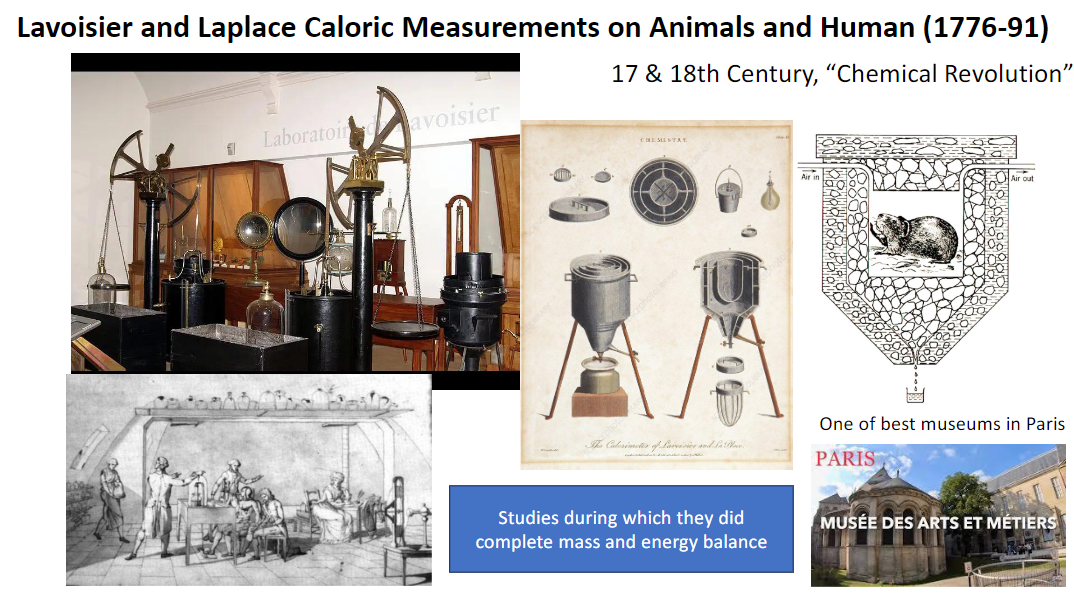
Lavoisier and Laplace: Caloric Measurements on Animals and Humans

Time Period

  • 1776–1791

  • 17th + 18th Century

  • Part of the “Chemical Revolution”

Studies

  • Conducted caloric measurements on animals + humans

  • Performed complete mass + energy balance

Historical Significance

  • Important early work in understanding energy balance in animals and humans

  • Their work is associated with one of the best museums in Paris

<p><strong>Time Period</strong></p><ul><li><p><strong>1776–1791</strong></p></li><li><p><strong>17th + 18th Century</strong></p></li><li><p>Part of the <strong>“Chemical Revolution”</strong></p></li></ul><p><strong>Studies</strong></p><ul><li><p>Conducted <strong>caloric measurements</strong> on <strong>animals + humans</strong></p></li><li><p>Performed <strong>complete mass + energy balance</strong></p></li></ul><p><strong>Historical Significance</strong></p><ul><li><p>Important early work in understanding <strong>energy balance</strong> in animals and humans</p></li><li><p>Their work is associated with one of the <strong>best museums in Paris</strong></p></li></ul><p></p>
9
New cards

Protein as a Nutrient

17th + 18th Century

  • Part of the “Chemical Revolution”

Protein

  • Protein → called “animal substance”

  • Considered the sole nutrient


<p><strong>17th + 18th Century</strong></p><ul><li><p>Part of the <strong>“Chemical Revolution”</strong></p></li></ul><p><strong>Protein</strong></p><ul><li><p><strong>Protein</strong> → called <strong>“animal substance”</strong></p></li><li><p>Considered the <strong>sole nutrient</strong></p></li></ul><p></p>
10
New cards

Early Nutrient Requirements

Wolff, 1874

  • Requirements given in kg per day per 1,000 kg live-weight

  • Oxen at rest

    • Protein → 0.7 kg

    • Carbohydrate → 8.0 kg

    • Fat → 0.15 kg

  • Milch cow

    • Protein → 2.5 kg

    • Carbohydrate → 12.5 kg

    • Fat → 0.40 kg

Haecker, 1903

  • Maintenance requirements given in kg per day per 1,000 kg live-weight

    • Protein → 0.7 kg

    • Carbohydrate → 7.0 kg

    • Fat → 0.10 kg

Milk Production

  • Requirements also given in kg per day per kg milk

  • 2.5% milk fat → Protein 0.0362 kg, Carbohydrate 0.164 kg, Fat 0.0124 kg

  • 2.6% milk fat → Protein 0.0369 kg, Carbohydrate 0.167 kg, Fat 0.0126 kg

  • 2.7% milk fat → Protein 0.0376 kg, Carbohydrate 0.171 kg, Fat 0.0128 kg

  • 7.0% milk fat → Protein 0.0677 kg, Carbohydrate 0.313 kg, Fat 0.0229 kg

Memory Trick

Wolff = 1874 → oxen + milch cow
Haecker = 1903 → maintenance + milk production
More milk fat → higher nutrient requirements

<p><strong>Wolff, 1874</strong></p><ul><li><p>Requirements given in <strong>kg per day per 1,000 kg live-weight</strong></p></li><li><p><strong>Oxen at rest</strong></p><ul><li><p><strong>Protein</strong> → 0.7 kg</p></li><li><p><strong>Carbohydrate</strong> → 8.0 kg</p></li><li><p><strong>Fat</strong> → 0.15 kg</p></li></ul></li><li><p><strong>Milch cow</strong></p><ul><li><p><strong>Protein</strong> → 2.5 kg</p></li><li><p><strong>Carbohydrate</strong> → 12.5 kg</p></li><li><p><strong>Fat</strong> → 0.40 kg</p></li></ul></li></ul><p><strong>Haecker, 1903</strong></p><ul><li><p><strong>Maintenance</strong> requirements given in <strong>kg per day per 1,000 kg live-weight</strong></p><ul><li><p><strong>Protein</strong> → 0.7 kg</p></li><li><p><strong>Carbohydrate</strong> → 7.0 kg</p></li><li><p><strong>Fat</strong> → 0.10 kg</p></li></ul></li></ul><p><strong>Milk Production</strong></p><ul><li><p>Requirements also given in <strong>kg per day per kg milk</strong></p></li><li><p><strong>2.5% milk fat</strong> → Protein <strong>0.0362 kg</strong>, Carbohydrate <strong>0.164 kg</strong>, Fat <strong>0.0124 kg</strong></p></li><li><p><strong>2.6% milk fat</strong> → Protein <strong>0.0369 kg</strong>, Carbohydrate <strong>0.167 kg</strong>, Fat <strong>0.0126 kg</strong></p></li><li><p><strong>2.7% milk fat</strong> → Protein <strong>0.0376 kg</strong>, Carbohydrate <strong>0.171 kg</strong>, Fat <strong>0.0128 kg</strong></p></li><li><p><strong>7.0% milk fat</strong> → Protein <strong>0.0677 kg</strong>, Carbohydrate <strong>0.313 kg</strong>, Fat <strong>0.0229 kg</strong></p></li></ul><p> Memory Trick </p><p><strong>Wolff = 1874 → oxen + milch cow</strong><br><strong>Haecker = 1903 → maintenance + milk production</strong><br><strong>More milk fat → higher nutrient requirements</strong></p>
11
New cards

Requirements of Animals – Information Sources

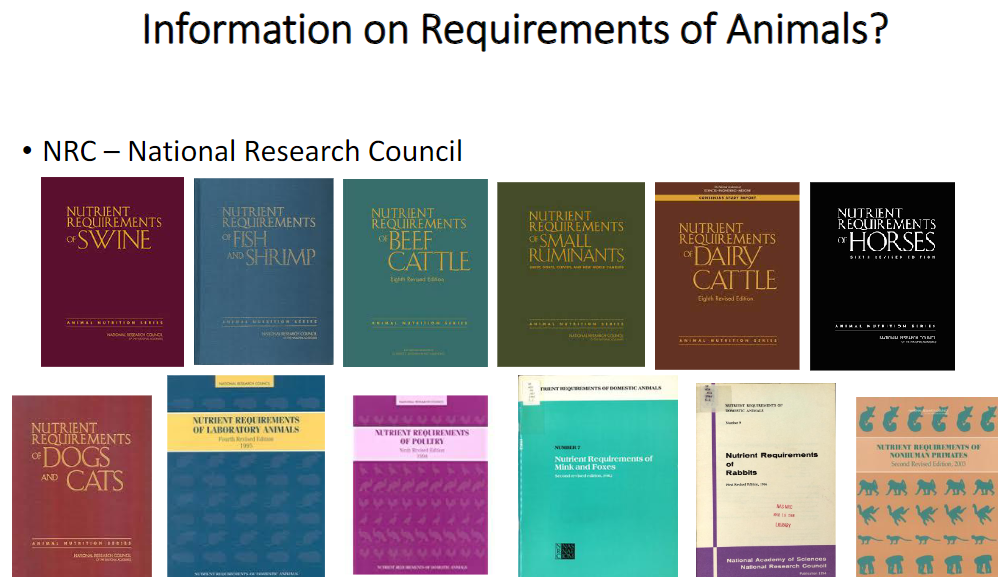
NRC – National Research Council

  • NRCNational Research Council

  • Provides information on the nutrient requirements of animals

  • Used as a reference for determining what nutrients animals need

<p><strong>NRC – National Research Council</strong></p><ul><li><p><strong>NRC</strong> → <strong>National Research Council</strong></p></li><li><p>Provides information on the <strong>nutrient requirements of animals</strong></p></li><li><p>Used as a <strong>reference</strong> for determining what nutrients animals need</p></li></ul><p></p>
12
New cards

Requirements of Animals – Authoritative Sources

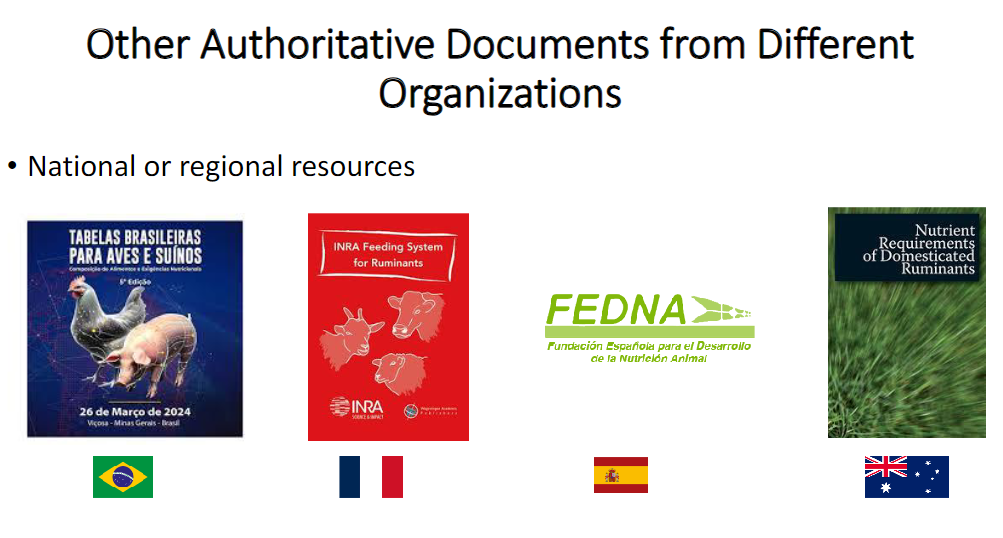
Other Authoritative Documents

  • Published by different organizations

  • Provide information on requirements of animals

National or Regional Resources

  • Resources developed at a national or regional level

<p><strong>Other Authoritative Documents</strong></p><ul><li><p>Published by <strong>different organizations</strong></p></li><li><p>Provide information on <strong>requirements of animals</strong></p></li></ul><p><strong>National or Regional Resources</strong></p><ul><li><p>Resources developed at a <strong>national</strong> or <strong>regional</strong> level</p></li></ul><p></p>
13
New cards

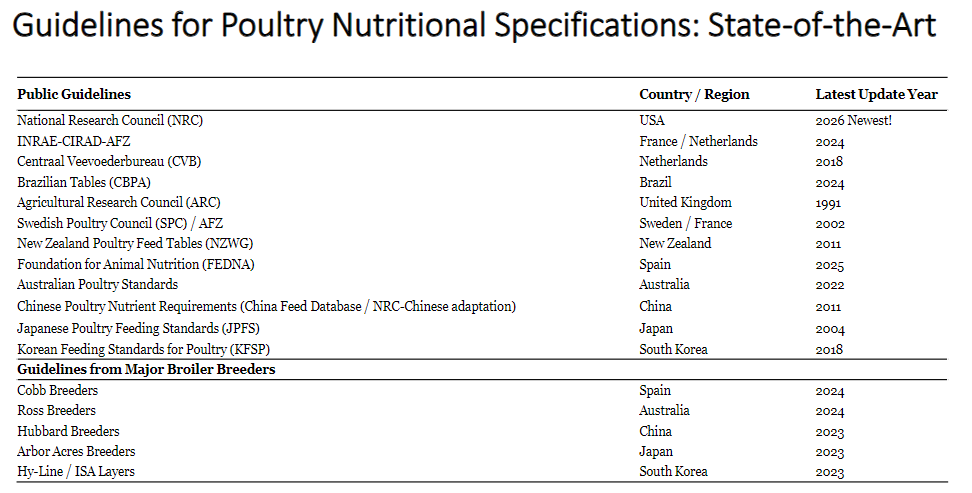
Poultry Nutritional Specifications – Public Guidelines

Major Public Guidelines

  • National Research Council (NRC)

  • INRAE-CIRAD-AFZ

  • Centraal Veevoederbureau (CVB)

  • Brazilian Tables (CBPA)

  • Agricultural Research Council (ARC)

  • Swedish Poultry Council (SPC) / AFZ

  • New Zealand Poultry Feed Tables (NZWG)

  • Foundation for Animal Nutrition (FEDNA)

  • Australian Poultry Standards

  • Chinese Poultry Nutrient Requirements → China Feed Database / NRC-Chinese adaptation

  • Japanese Poultry Feeding Standards (JPFS)

  • Korean Feeding Standards for Poultry (KFSP)

Guidelines from Major Broiler Breeders

  • Cobb Breeders

  • Ross Breeders

  • Hubbard Breeders

  • Arbor Acres Breeders

  • Hy-Line / ISA Layers


<p><strong>Major Public Guidelines</strong></p><ul><li><p><strong>National Research Council (NRC)</strong></p></li><li><p><strong>INRAE-CIRAD-AFZ</strong></p></li><li><p><strong>Centraal Veevoederbureau (CVB)</strong></p></li><li><p><strong>Brazilian Tables (CBPA)</strong></p></li><li><p><strong>Agricultural Research Council (ARC)</strong></p></li><li><p><strong>Swedish Poultry Council (SPC) / AFZ</strong></p></li><li><p><strong>New Zealand Poultry Feed Tables (NZWG)</strong></p></li><li><p><strong>Foundation for Animal Nutrition (FEDNA)</strong></p></li><li><p><strong>Australian Poultry Standards</strong></p></li><li><p><strong>Chinese Poultry Nutrient Requirements</strong> → China Feed Database / <strong>NRC-Chinese adaptation</strong></p></li><li><p><strong>Japanese Poultry Feeding Standards (JPFS)</strong></p></li><li><p><strong>Korean Feeding Standards for Poultry (KFSP)</strong></p></li></ul><p><strong>Guidelines from Major Broiler Breeders</strong></p><ul><li><p><strong>Cobb Breeders</strong></p></li><li><p><strong>Ross Breeders</strong></p></li><li><p><strong>Hubbard Breeders</strong></p></li><li><p><strong>Arbor Acres Breeders</strong></p></li><li><p><strong>Hy-Line / ISA Layers</strong></p></li></ul><p></p>
14
New cards

Genetic Potential & Feeding Management

Different Breeds

  • Different breeds have different genetic milk yield potential

  • This means their genetics determine how much milk they are capable of producing

Individual Animals

  • All animals have different genetic potential for:

    • Milk

    • Fat

    • Protein

    • Etc

Feeding Challenge

  • Different animals have different production potentials

  • Different production potentials mean different nutritional needs

Key Question

  • How do you manage the feeding of different animals with different production potentials and therefore different nutritional needs?


<p><strong>Different Breeds</strong></p><ul><li><p>Different <strong>breeds</strong> have different <strong>genetic milk yield potential</strong></p></li><li><p>This means their genetics determine how much <strong>milk</strong> they are capable of producing</p></li></ul><p><strong>Individual Animals</strong></p><ul><li><p>All animals have different <strong>genetic potential</strong> for:</p><ul><li><p><strong>Milk</strong></p></li><li><p><strong>Fat</strong></p></li><li><p><strong>Protein</strong></p></li><li><p><strong>Etc</strong></p></li></ul></li></ul><p><strong>Feeding Challenge</strong></p><ul><li><p>Different animals have different <strong>production potentials</strong></p></li><li><p>Different production potentials mean different <strong>nutritional needs</strong></p></li></ul><p><strong>Key Question</strong></p><ul><li><p>How do you manage the <strong>feeding</strong> of different animals with different <strong>production potentials</strong> and therefore different <strong>nutritional needs</strong>?</p></li></ul><p></p>
15
New cards

Animal Performance & Feeding

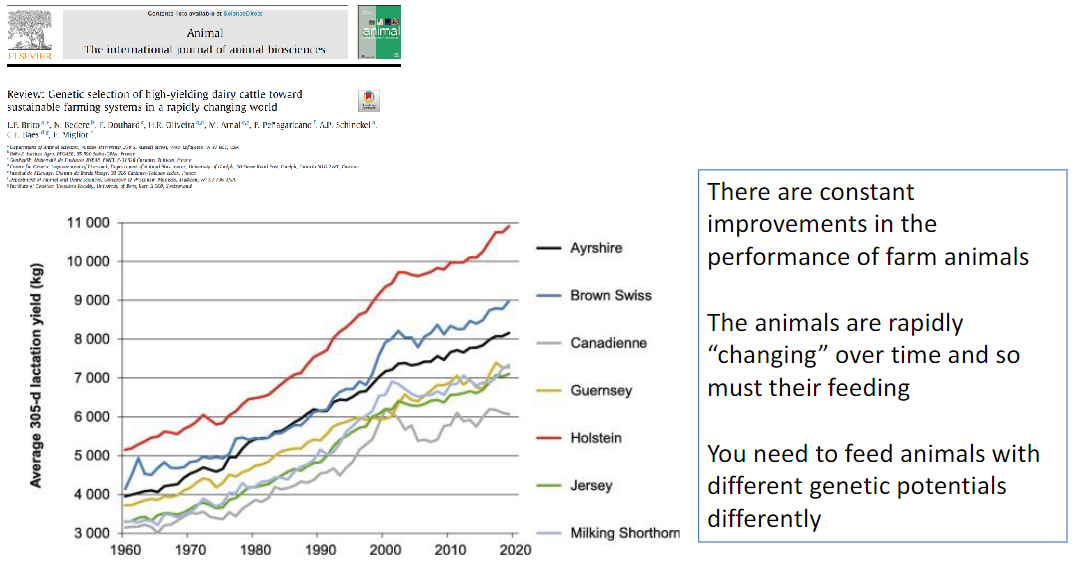
Constant Genetic Improvement

  • There are constant improvements in the performance of farm animals

  • Animals are rapidly “changing” over time

Feeding Must Change

  • As animals change over time, their feeding must also change

  • Feeding needs to keep up with improvements in animal performance

Different Genetic Potentials

  • Animals have different genetic potentials

  • Animals with different genetic potentials must be fed differently

<p><strong>Constant Genetic Improvement</strong></p><ul><li><p>There are constant <strong>improvements in the performance of farm animals</strong></p></li><li><p>Animals are rapidly <strong>“changing” over time</strong></p></li></ul><p><strong>Feeding Must Change</strong></p><ul><li><p>As animals <strong>change over time</strong>, their <strong>feeding</strong> must also change</p></li><li><p>Feeding needs to keep up with improvements in <strong>animal performance</strong></p></li></ul><p><strong>Different Genetic Potentials</strong></p><ul><li><p>Animals have different <strong>genetic potentials</strong></p></li><li><p>Animals with different <strong>genetic potentials</strong> must be <strong>fed differently</strong></p></li></ul><p></p>
16
New cards

Factorial Model – NRC, 1978

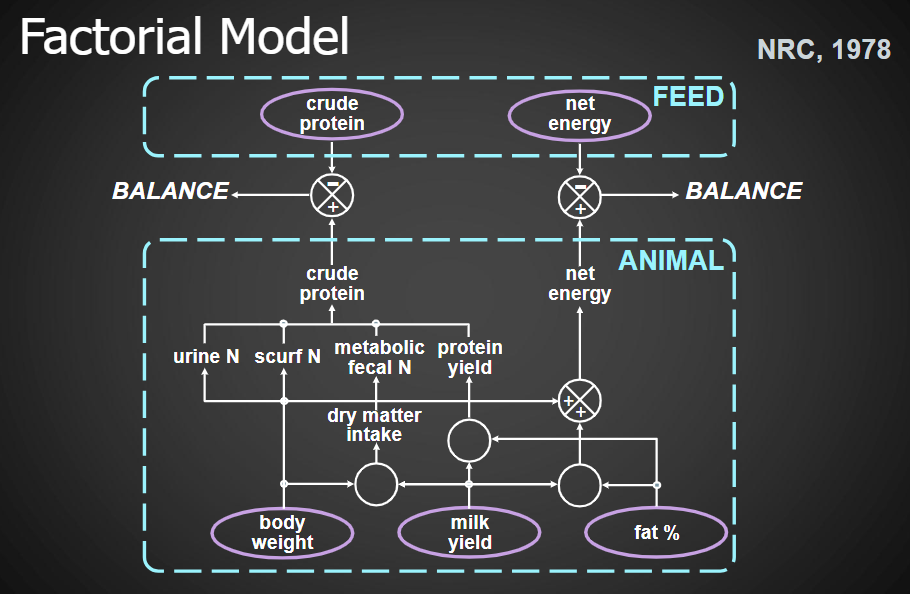
Basic Idea

  • Factorial Model → used to determine the animal’s nutrient requirements

  • Developed by NRC, 1978

  • Looks at the nutrients supplied by feed and the nutrients required by the animal

  • The goal is to achieve a BALANCE

Crude Protein Balance

FEED

  • Crude protein

ANIMAL

  • Urine N

  • Scurf N → nitrogen lost from the skin

  • Metabolic fecal N → nitrogen lost in feces from the animal’s own metabolism

  • Protein yield

Net Energy Balance

FEED

  • Net energy

ANIMAL

  • Dry matter intake

  • Body weight

  • Milk yield

  • Fat %

Key Idea

  • Feed nutrients → Animal needs → BALANCE

  • Crude protein → balanced against nitrogen losses + protein yield

  • Net energy → related to dry matter intake, body weight, milk yield + fat %

<p><strong>Basic Idea</strong></p><ul><li><p><strong>Factorial Model</strong> → used to determine the animal’s <strong>nutrient requirements</strong></p></li><li><p>Developed by <strong>NRC, 1978</strong></p></li><li><p>Looks at the <strong>nutrients supplied by feed</strong> and the <strong>nutrients required by the animal</strong></p></li><li><p>The goal is to achieve a <strong>BALANCE</strong></p></li></ul><p><strong>Crude Protein Balance</strong></p><p><strong>FEED</strong></p><ul><li><p><strong>Crude protein</strong></p></li></ul><p>↓</p><p><strong>ANIMAL</strong></p><ul><li><p><strong>Urine N</strong></p></li><li><p><strong>Scurf N</strong> → nitrogen lost from the skin</p></li><li><p><strong>Metabolic fecal N</strong> → nitrogen lost in feces from the animal’s own metabolism</p></li><li><p><strong>Protein yield</strong></p></li></ul><p><strong>Net Energy Balance</strong></p><p><strong>FEED</strong></p><ul><li><p><strong>Net energy</strong></p></li></ul><p>↓</p><p><strong>ANIMAL</strong></p><ul><li><p><strong>Dry matter intake</strong></p></li><li><p><strong>Body weight</strong></p></li><li><p><strong>Milk yield</strong></p></li><li><p><strong>Fat %</strong></p></li></ul><p><strong>Key Idea</strong></p><ul><li><p><strong>Feed nutrients → Animal needs → BALANCE</strong></p></li><li><p><strong>Crude protein</strong> → balanced against <strong>nitrogen losses + protein yield</strong></p></li><li><p><strong>Net energy</strong> → related to <strong>dry matter intake, body weight, milk yield + fat %</strong></p></li></ul><p></p>
17
New cards

Absorbed Protein Model – NRC, 1988

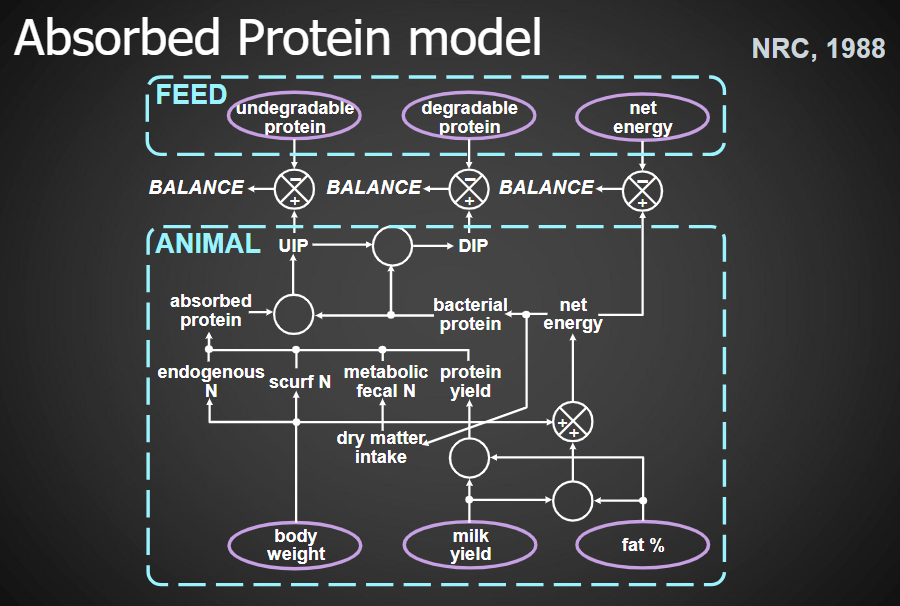
Basic Idea

  • Absorbed Protein Model → determines whether the animal receives enough absorbed protein and net energy

  • Developed by NRC, 1988

  • Uses BALANCE+ and BALANCE− to compare what is supplied by the FEED with what the ANIMAL requires

FEED

Protein

  • Undegradable protein → protein that is not degraded in the rumen

  • Degradable protein → protein that is degraded in the rumen

Energy

  • Net energy

ANIMAL

Protein Balance

  • UIP → undegradable intake protein

  • DIP → degradable intake protein

  • Absorbed protein

  • Endogenous N → nitrogen coming from the animal itself

  • Scurf N → nitrogen lost from the skin

  • Metabolic fecal N → nitrogen lost in feces from the animal’s own metabolism

  • Bacterial protein

  • Protein yield

Net Energy Balance

  • Net energy

  • Dry matter intake

  • Body weight

  • Milk yield

  • Fat %

Key Idea → Feed protein + energy → absorbed protein + net energy → animal production
<p><strong>Basic Idea</strong></p><ul><li><p><strong>Absorbed Protein Model</strong> → determines whether the animal receives enough <strong>absorbed protein</strong> and <strong>net energy</strong></p></li><li><p>Developed by <strong>NRC, 1988</strong></p></li><li><p>Uses <strong>BALANCE+</strong> and <strong>BALANCE−</strong> to compare what is supplied by the <strong>FEED</strong> with what the <strong>ANIMAL</strong> requires</p></li></ul><p><strong>FEED</strong></p><p><strong>Protein</strong></p><ul><li><p><strong>Undegradable protein</strong> → protein that is not degraded in the rumen</p></li><li><p><strong>Degradable protein</strong> → protein that is degraded in the rumen</p></li></ul><p><strong>Energy</strong></p><ul><li><p><strong>Net energy</strong></p></li></ul><p>↓</p><p><strong>ANIMAL</strong></p><p><strong>Protein Balance</strong></p><ul><li><p><strong>UIP</strong> → undegradable intake protein</p></li><li><p><strong>DIP</strong> → degradable intake protein</p></li><li><p><strong>Absorbed protein</strong></p></li><li><p><strong>Endogenous N</strong> → nitrogen coming from the animal itself</p></li><li><p><strong>Scurf N</strong> → nitrogen lost from the skin</p></li><li><p><strong>Metabolic fecal N</strong> → nitrogen lost in feces from the animal’s own metabolism</p></li><li><p><strong>Bacterial protein</strong></p></li><li><p><strong>Protein yield</strong></p></li></ul><p><strong>Net Energy Balance</strong></p><ul><li><p><strong>Net energy</strong></p></li><li><p><strong>Dry matter intake</strong></p></li><li><p><strong>Body weight</strong></p></li><li><p><strong>Milk yield</strong></p></li><li><p><strong>Fat %</strong></p></li></ul><p><strong>Key Idea →</strong> <strong>Feed protein + energy → absorbed protein + net energy → animal production</strong></p>
18
New cards

Mechanistic Digestion Model – CNCPS, 1992 + NRC, 2001

Basic Idea

  • Mechanistic Digestion Model → describes how different feed components are digested and used by the animal

  • CNCPS, 1992

  • NRC, 2001

  • The model follows nutrients through digestion to determine metabolizable protein and metabolizable energy

  • The nutrients are then compared with what the ANIMAL needs to maintain BALANCE

FEED

Protein Components

  • NPN → non-protein nitrogen

  • B1 protein

  • B2 protein

  • B3 protein

Other Feed Components

  • Sugar

  • Starch

  • Fat

  • Avail fibre → available fibre

DIGESTION

  • Ammon → ammonia

  • NSC bacteria → bacteria using non-structural carbohydrates

  • SC bacteria → bacteria using structural carbohydrates

ANIMAL

Protein Balance

  • Metabolizable protein

  • Metabolic fecal N

  • Endogenous scurf N

  • Protein yield

Energy Balance

  • Metabolizable energy

  • Body weight

  • Milk yield

  • Protein %

  • Fat %

Key Idea → Feed components → Digestion → Metabolizable protein + metabolizable energy → Animal balance

<p><strong>Basic Idea</strong></p><ul><li><p><strong>Mechanistic Digestion Model</strong> → describes how different <strong>feed components</strong> are digested and used by the <strong>animal</strong></p></li><li><p><strong>CNCPS, 1992</strong></p></li><li><p><strong>NRC, 2001</strong></p></li><li><p>The model follows nutrients through <strong>digestion</strong> to determine <strong>metabolizable protein</strong> and <strong>metabolizable energy</strong></p></li><li><p>The nutrients are then compared with what the <strong>ANIMAL</strong> needs to maintain <strong>BALANCE</strong></p></li></ul><p><strong>FEED</strong></p><p><strong>Protein Components</strong></p><ul><li><p><strong>NPN</strong> → non-protein nitrogen</p></li><li><p><strong>B1 protein</strong></p></li><li><p><strong>B2 protein</strong></p></li><li><p><strong>B3 protein</strong></p></li></ul><p><strong>Other Feed Components</strong></p><ul><li><p><strong>Sugar</strong></p></li><li><p><strong>Starch</strong></p></li><li><p><strong>Fat</strong></p></li><li><p><strong>Avail fibre</strong> → available fibre</p></li></ul><p>↓</p><p><strong>DIGESTION</strong></p><ul><li><p><strong>Ammon</strong> → ammonia</p></li><li><p><strong>NSC bacteria</strong> → bacteria using non-structural carbohydrates</p></li><li><p><strong>SC bacteria</strong> → bacteria using structural carbohydrates</p></li></ul><p>↓</p><p><strong>ANIMAL</strong></p><p><strong>Protein Balance</strong></p><ul><li><p><strong>Metabolizable protein</strong></p></li><li><p><strong>Metabolic fecal N</strong></p></li><li><p><strong>Endogenous scurf N</strong></p></li><li><p><strong>Protein yield</strong></p></li></ul><p><strong>Energy Balance</strong></p><ul><li><p><strong>Metabolizable energy</strong></p></li><li><p><strong>Body weight</strong></p></li><li><p><strong>Milk yield</strong></p></li><li><p><strong>Protein %</strong></p></li><li><p><strong>Fat %</strong></p></li></ul><p><strong>Key Idea →</strong> <strong>Feed components → Digestion → Metabolizable protein + metabolizable energy → Animal balance</strong></p>
19
New cards

Nutrient Requirement Models – Basics & Differences *FROM CHAT

1⃣ Factorial Model – NRC, 1978

Basic Idea

  • Looks at the nutrients going into the animal from the feed

  • Compares them with the nutrients used or lost by the animal

  • Goal → achieve a BALANCE

Main Nutrients

  • Crude protein

  • Net energy

What it considers

  • Urine N

  • Scurf N

  • Metabolic fecal N

  • Protein yield

  • Dry matter intake

  • Body weight

  • Milk yield

  • Fat %

Main Concept → Feed nutrients → animal needs/losses → balance


2⃣ Absorbed Protein Model – NRC, 1988

Basic Idea

  • Focuses more specifically on protein absorbed by the animal

  • Separates feed protein into different types based on how they behave during digestion

  • Also considers net energy

Main Nutrients

  • Undegradable protein

  • Degradable protein

  • Net energy

What it considers

  • UIP

  • DIP

  • Absorbed protein

  • Endogenous N

  • Scurf N

  • Metabolic fecal N

  • Bacterial protein

  • Protein yield

  • Dry matter intake

  • Body weight

  • Milk yield

  • Fat %

Main Concept → Feed protein → digestion + absorption → absorbed protein → animal production


3⃣ Mechanistic Digestion Model – CNCPS, 1992 + NRC, 2001

Basic Idea

  • Gives a more detailed description of what happens during digestion

  • Breaks feed into multiple components and follows how they are digested and used

  • Determines metabolizable protein and metabolizable energy

Main Feed Components

  • NPN

  • B1, B2, B3 protein

  • Sugar

  • Starch

  • Fat

  • Available fibre

What it considers

  • Ammonia

  • NSC bacteria

  • SC bacteria

  • Metabolizable protein

  • Metabolic fecal N

  • Endogenous scurf N

  • Protein yield

  • Metabolizable energy

  • Body weight

  • Protein %

  • Milk yield

  • Fat %


20
New cards

Applying Systematic Approaches to Animal Nutrition

Back to Basics: Intake ↑, MP:ME Dialled In, Results Followed

  • Systematic approaches → based on scientific principles and current knowledge

  • Presented by Maria Antonieta Puerto, MSc Animal Science, McGill University

  • Main approach → focus on intake, MP:ME, and then follow the results

Results

  • Herd improved from:

    • 36 kg milk/cow/day43 kg milk/cow/day

    • 1.5 kg fat/cow/day1.9 kg fat/cow/day

What Changed?

Make DMI the North Star

  • DMIdry matter intake

  • Stopped guessing intakes and started measuring them

  • Feed access was improved with:

    • 24/7 push-ups

    • Consistent TMR

    • Correct chop length

    • Correct particle size

  • Cows moved from 22 kg to 25 kg DM/day

  • The new ration's fuel → the increased DMI

Forage Quality

  • Forage quality was considered non-negotiable

  • Selecting forages with higher fiber digestibility → more nutrients available per bite

Starch Digestibility

  • Starch digestibility is not static → it can change depending on several factors

  • Factors affecting total-tract starch digestibility:

    • Hybrid

    • Maturity

    • Moisture

    • Kernel processing score

    • Particle size

    • Storage time

  • Meta-analyses show that improving kernel processing and particle size increases total-tract starch digestibility

  • Increased starch digestibility can drive higher milk production

  • Key point → “Corn is corn” is false

  • Test it → adjust it → model it

Protein Sources Are Not All the Same

  • “Canola is just canola” → isn't

  • Protein sources are not created equal

  • Factors affecting MP supply and efficiency:

    • RDP/RUP balance

    • Amino acid profile

    • Fiber content

    • Processing method

Canola Meal

  • Canola meal is a good example of differences between protein sources

  • Different extraction methods can alter nutrient availability

  • Studies and meta-analyses show variation in:

    • Milk yield

    • N-use efficiency

    • Depending on the source

Other Protein Sources

  • The same principle applies to soybean meal and other commodities

Big Picture

  • Measure DMI → improve feed access → select quality forages → evaluate starch digestibility → evaluate protein sources → adjust the ration → follow the results


<p><strong>Back to Basics: Intake ↑, MP:ME Dialled In, Results Followed</strong></p><ul><li><p><strong>Systematic approaches</strong> → based on <strong>scientific principles</strong> and <strong>current knowledge</strong></p></li><li><p>Presented by <strong>Maria Antonieta Puerto</strong>, <strong>MSc Animal Science, McGill University</strong></p></li><li><p>Main approach → focus on <strong>intake</strong>, <strong>MP:ME</strong>, and then <strong>follow the results</strong></p></li></ul><p><strong>Results</strong></p><ul><li><p>Herd improved from:</p><ul><li><p><strong>36 kg milk/cow/day</strong> → <strong>43 kg milk/cow/day</strong></p></li><li><p><strong>1.5 kg fat/cow/day</strong> → <strong>1.9 kg fat/cow/day</strong></p></li></ul></li></ul><p><strong>What Changed?</strong></p><p><strong>Make DMI the North Star</strong></p><ul><li><p><strong>DMI</strong> → <strong>dry matter intake</strong></p></li><li><p>Stopped <strong>guessing intakes</strong> and started <strong>measuring them</strong></p></li><li><p>Feed access was improved with:</p><ul><li><p><strong>24/7 push-ups</strong></p></li><li><p><strong>Consistent TMR</strong></p></li><li><p>Correct <strong>chop length</strong></p></li><li><p>Correct <strong>particle size</strong></p></li></ul></li><li><p>Cows moved from <strong>22 kg to 25 kg DM/day</strong></p></li><li><p>The new <strong>ration's fuel</strong> → the increased DMI</p></li></ul><p><strong>Forage Quality</strong></p><ul><li><p><strong>Forage quality</strong> was considered <strong>non-negotiable</strong></p></li><li><p>Selecting forages with higher <strong>fiber digestibility</strong> → more nutrients available <strong>per bite</strong></p></li></ul><p><strong>Starch Digestibility</strong></p><ul><li><p><strong>Starch digestibility</strong> is <strong>not static</strong> → it can change depending on several factors</p></li><li><p>Factors affecting total-tract starch digestibility:</p><ul><li><p><strong>Hybrid</strong></p></li><li><p><strong>Maturity</strong></p></li><li><p><strong>Moisture</strong></p></li><li><p><strong>Kernel processing score</strong></p></li><li><p><strong>Particle size</strong></p></li><li><p><strong>Storage time</strong></p></li></ul></li><li><p><strong>Meta-analyses</strong> show that improving <strong>kernel processing</strong> and <strong>particle size</strong> increases <strong>total-tract starch digestibility</strong></p></li><li><p>Increased starch digestibility can drive <strong>higher milk production</strong></p></li><li><p><strong>Key point →</strong> <strong>“Corn is corn” is false</strong></p></li><li><p><strong>Test it → adjust it → model it</strong></p></li></ul><p><strong>Protein Sources Are Not All the Same</strong></p><ul><li><p><strong>“Canola is just canola” → isn't</strong></p></li><li><p>Protein sources are <strong>not created equal</strong></p></li><li><p>Factors affecting <strong>MP supply and efficiency</strong>:</p><ul><li><p><strong>RDP/RUP balance</strong></p></li><li><p><strong>Amino acid profile</strong></p></li><li><p><strong>Fiber content</strong></p></li><li><p><strong>Processing method</strong></p></li></ul></li></ul><p><strong>Canola Meal</strong></p><ul><li><p><strong>Canola meal</strong> is a good example of differences between protein sources</p></li><li><p>Different <strong>extraction methods</strong> can alter <strong>nutrient availability</strong></p></li><li><p>Studies and <strong>meta-analyses</strong> show variation in:</p><ul><li><p><strong>Milk yield</strong></p></li><li><p><strong>N-use efficiency</strong></p></li><li><p>Depending on the <strong>source</strong></p></li></ul></li></ul><p><strong>Other Protein Sources</strong></p><ul><li><p>The same principle applies to <strong>soybean meal</strong> and other <strong>commodities</strong></p></li></ul><p><strong>Big Picture</strong></p><ul><li><p><strong>Measure DMI → improve feed access → select quality forages → evaluate starch digestibility → evaluate protein sources → adjust the ration → follow the results</strong></p></li></ul><p></p>
21
New cards

Applying Systematic Approaches – Why the Jump Happened

Source + Quality Matter

  • The proof is simple → source and quality matter

  • Test your commodities instead of relying on generic values

  • Use lab values, not generic tags

  • Goal → protect the MP:ME ratio

Why the Jump Happened

More to Eat → Higher DMI

  • DMI → dry matter intake

  • More DMI → more fermentable energy available

MP Matched to ME

  • MP → metabolizable protein

  • ME → metabolizable energy

  • MP matched to ME using tested ingredient values

  • This allows microbes to run efficiently

  • Amino acid (AA) supply meets demand

Higher Digestibility

  • Higher full-tract digestibility of:

    • Fiber

    • Starch

  • More of what is fed becomes nutrients, rather than manure

Outcome

  • +7 kg milk/cow/day

  • +0.4 kg fat/cow/day

  • Achieved by:

    • Measuring intakes

    • Testing feeds

    • Dialling MP:ME using real numbers

Big Picture

  • Back to basics → but with precision

  • Measure → test → balance MP:ME → follow results


<p><strong>Source + Quality Matter</strong></p><ul><li><p>The proof is simple → <strong>source and quality matter</strong></p></li><li><p><strong>Test your commodities</strong> instead of relying on generic values</p></li><li><p>Use <strong>lab values</strong>, not <strong>generic tags</strong></p></li><li><p>Goal → protect the <strong>MP:ME ratio</strong></p></li></ul><p><strong>Why the Jump Happened</strong></p><p><strong>More to Eat → Higher DMI</strong></p><ul><li><p><strong>DMI</strong> → dry matter intake</p></li><li><p>More <strong>DMI</strong> → more <strong>fermentable energy</strong> available</p></li></ul><p><strong>MP Matched to ME</strong></p><ul><li><p><strong>MP</strong> → metabolizable protein</p></li><li><p><strong>ME</strong> → metabolizable energy</p></li><li><p><strong>MP matched to ME</strong> using <strong>tested ingredient values</strong></p></li><li><p>This allows <strong>microbes to run efficiently</strong></p></li><li><p><strong>Amino acid (AA) supply</strong> meets demand</p></li></ul><p><strong>Higher Digestibility</strong></p><ul><li><p>Higher <strong>full-tract digestibility</strong> of:</p><ul><li><p><strong>Fiber</strong></p></li><li><p><strong>Starch</strong></p></li></ul></li><li><p>More of what is fed becomes <strong>nutrients</strong>, rather than <strong>manure</strong></p></li></ul><p><strong>Outcome</strong></p><ul><li><p><strong>+7 kg milk/cow/day</strong></p></li><li><p><strong>+0.4 kg fat/cow/day</strong></p></li><li><p>Achieved by:</p><ul><li><p><strong>Measuring intakes</strong></p></li><li><p><strong>Testing feeds</strong></p></li><li><p><strong>Dialling MP:ME</strong> using <strong>real numbers</strong></p></li></ul></li></ul><p><strong>Big Picture</strong></p><ul><li><p><strong>Back to basics → but with precision</strong></p></li><li><p><strong>Measure → test → balance MP:ME → follow results</strong></p></li></ul><p></p>
22
New cards

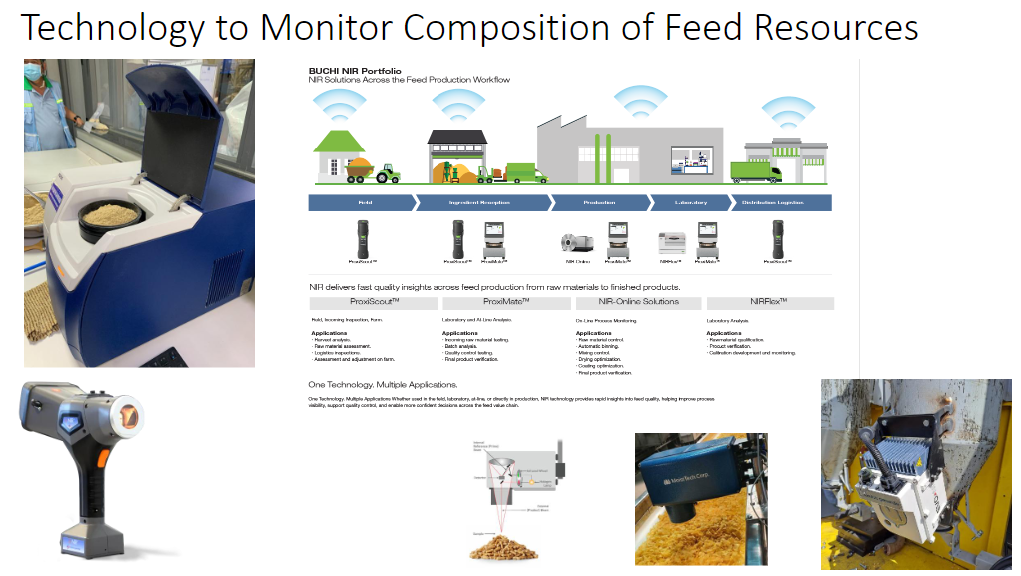
Technology to Monitor Feed Composition

Feed Composition Monitoring

  • Technology can be used to monitor the composition of feed resources

  • These tools help assess the nutritional composition of feeds

Technologies / Systems

  • ProxiScout

  • ProxilMate

  • NIR-Online Solutions

  • NIRFlex


<p><strong>Feed Composition Monitoring</strong></p><ul><li><p>Technology can be used to <strong>monitor the composition of feed resources</strong></p></li><li><p>These tools help assess the <strong>nutritional composition</strong> of feeds</p></li></ul><p><strong>Technologies / Systems</strong></p><ul><li><p><strong>ProxiScout</strong></p></li><li><p><strong>ProxilMate</strong></p></li><li><p><strong>NIR-Online Solutions</strong></p></li><li><p><strong>NIRFlex</strong><span data-name="tm" data-type="emoji">™</span></p></li></ul><p></p>
23
New cards

Technology in Animal Feeding

Emerging Role of Technology

  • Technology is playing an emerging role in the feeding of animals

  • Notably, automation is becoming important in animal feeding

Large Emphasis on “Equipment”

  • Large emphasis is placed on the “equipment” used for feeding

  • Automation + equipment are important parts of modern animal feeding systems
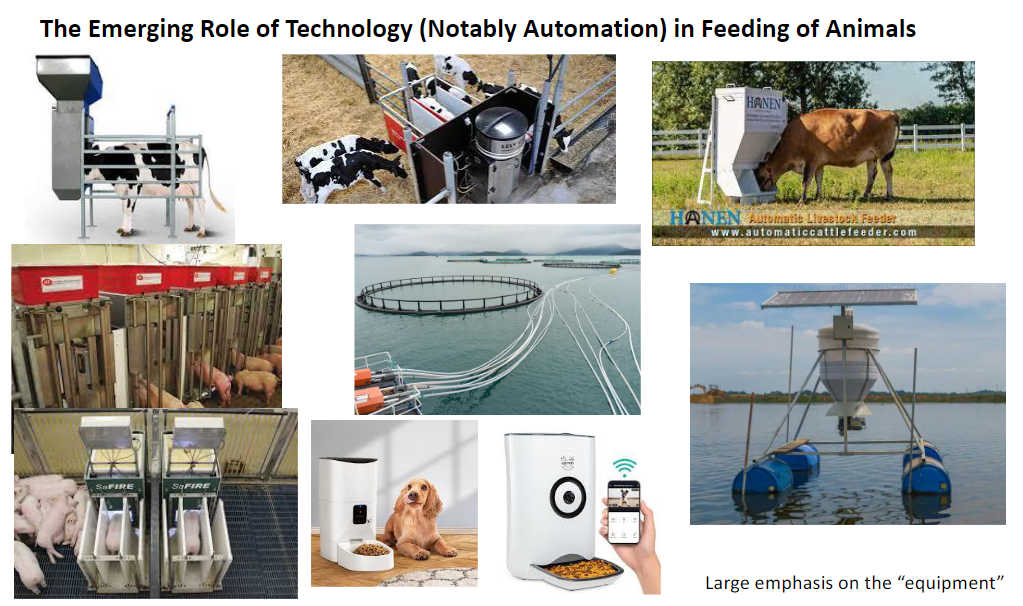

<p><strong>Emerging Role of Technology</strong></p><ul><li><p><strong>Technology</strong> is playing an emerging role in the <strong>feeding of animals</strong></p></li><li><p>Notably, <strong>automation</strong> is becoming important in animal feeding</p></li></ul><p><strong>Large Emphasis on “Equipment”</strong></p><ul><li><p>Large emphasis is placed on the <strong>“equipment”</strong> used for feeding</p></li><li><p><strong>Automation + equipment</strong> are important parts of modern animal feeding systems</p></li></ul><p></p>
24
New cards

Automation in Animal Feeding

Autonomous Self-Driving Vehicles

  • Autonomous self-driving vehicles are based on:

    • Sensors

    • Robotics

    • A powerful “brain” → needed to process information and make decisions

Automatic Feeding Systems

  • The same is true for most automatic feeding systems

  • They require:

    • Sensors

    • Robotics

    • A powerful “brain”

Key Question

  • Who will develop those systems?


<p><strong>Autonomous Self-Driving Vehicles</strong></p><ul><li><p><strong>Autonomous self-driving vehicles</strong> are based on:</p><ul><li><p><strong>Sensors</strong></p></li><li><p><strong>Robotics</strong></p></li><li><p>A powerful <strong>“brain”</strong> → needed to process information and make decisions</p></li></ul></li></ul><p><strong>Automatic Feeding Systems</strong></p><ul><li><p>The same is true for most <strong>automatic feeding systems</strong></p></li><li><p>They require:</p><ul><li><p><strong>Sensors</strong></p></li><li><p><strong>Robotics</strong></p></li><li><p>A powerful <strong>“brain”</strong></p></li></ul></li></ul><p><strong>Key Question</strong></p><ul><li><p><strong>Who will develop those systems?</strong></p></li></ul><p></p>
25
New cards

Module 1 – Things We Have Discussed

1. Why Do We Feed Animals?

  • Why do we feed animals?

2. Important Considerations

  • What is important to consider when feeding animals?

3. Feed Resources

  • What do we feed animals?

  • Various feed resources

4. Feeding Requirements

  • What determines what and how much we feed a certain type of animal?

5. Food vs Feed

  • What is the difference between “food” and “feed”?

6. Science + Technology

  • The role of science and technology in animal nutrition


<p><strong>1. Why Do We Feed Animals?</strong></p><ul><li><p><strong>Why do we feed animals?</strong></p></li></ul><p><strong>2. Important Considerations</strong></p><ul><li><p><strong>What is important to consider when feeding animals?</strong></p></li></ul><p><strong>3. Feed Resources</strong></p><ul><li><p><strong>What do we feed animals?</strong></p></li><li><p><strong>Various feed resources</strong></p></li></ul><p><strong>4. Feeding Requirements</strong></p><ul><li><p><strong>What determines what and how much we feed a certain type of animal?</strong></p></li></ul><p><strong>5. Food vs Feed</strong></p><ul><li><p><strong>What is the difference between “food” and “feed”?</strong></p></li></ul><p><strong>6. Science + Technology</strong></p><ul><li><p>The role of <strong>science and technology</strong> in <strong>animal nutrition</strong></p></li></ul><p></p>