Life and Death Decision Making
 Studied by 0 people
 Call with Kai
 Learn
Learn Practice Test
 Spaced Repetition
 Match
Match Flashcards
 Knowt Play
1/20

Earn XP
Description and Tags
Rob Honey - the work of Dr Sabrina Cohen-Hatton, Phil butler, and byron wilkinson
Name | Mastery | Learn | Test | Matching | Spaced | Call with Kai |
|---|
No study sessions yet.
21 Terms
What was the overall process of this research?
research began in late 2013 and is ongoing - initiated by Sabrina wanting to understand the processes of decision making
motivated by ots of costs that should be minimised - 700,000 calls per year, 8bn in economic costs, environmental costs of CO2 and most importantly, the cost of human life
both firefighters and victims are getting injured or losing their lives
started with individual decision-making in incident commanders (those who make critical decisions at the scene) in the UK Fire Service
developed into multi-agency group decision-making at major incidents
approach is rooted in naturalistic decision making: real world, high stakes, dynamic and complex with uncertain outcomes - there is no one way to approach these situations
Background on the researcher?
research primarily conducted by
Sabrina Cohen-Hatton (Phd student and chief fire officer)
Dr Phil Butler (Phd student and fire officer, and trains people to respond to major incidents - events requiring the coordination of many organisations)
byron wilkinson (
Rob Honey - trained as an experimental psychologist, Lynchpin for the study, with little background in the research area, but helps others do what needs to be done
and others were generally funded, but lots of the efforts were people wanting to take part in the cause
What were the motivations of the first set of studies?
incident where one of her colleagues got badly injured, Sabrina started to investigate decision-making that took place at the incident
improving the safety for firefighters (2500 injured in 2014)
Prior research methods of asking the commanders why they made their decisions were flawed, and needed a way to get a more accurate idea of why decisions are made
Grenfell Tower - Operational discretion
firefighters do not always have to strictly follow guidance when it isn’t appropriate
researched using operational procedures and found that in the situations where it would be appropriate to act differently from procedures, was when individuals did not, as they were in a state of stress, and reverted to doing things in a habitual way
What were the motivations for the second set of studies?
strategic coordinating groups
major incidents where there are many services, organisations, etc., all having to respond to the incident and deal with the effects that may last for days, weeks or months
There is a joint decision model that is used to respond to these major incidents - steps to take to resolve
gather information, assess risks, consider powers, identify options, take action, review
retrospective analysis of these incidents shows that agencies often fail to cooperate effectively
Why is it an interesting problem?
Looking at the nature of decisions in high-stakes moments has lots of real-world applications
very interesting to study as the situations are so complex
if strategic coordinating groups are failing to coordinate as well as they could then there is room for improvement is preventing loss of life etc
What are the roles of incident commanders?
Attend the incident and assess the situation as they first perceive it (situation assessment)
Come up with a plan of action as to how to tackle the situation while minimising any risks anyone involved will face (plan formulation)
Then putting that plan into action and actually acting on the situation (plan execution)
the assumption is that the incident commanders will go though this step by step
What were the hypothesis?
How was the research question translated into an experiment?
A naturalistic approach had to be taken, as it is not ‘black and white’ in what is the correct decision in these high-risk situations
But how can you study the decision-making of incident commanders?
led them to the idea of placing cameras on the helmets of commanders and recording what they are doing and saying
other services include this in their practice as part of routine anyway
What was the experimental design of the first set of experiments?
Got permission to attach cameras to the helmets of incident commanders as a way of collecting data to analyse after the events
Sabrina and Phil attended 33 incidents, sleeping in fire stations and then also attending the incidents whilst attaching cameras to the helmets
Once the results showed that there was a lack of emphasis on flan formulation, they wanted to find a way to move people into a way of thinking that supports PF.
set up a list of ‘decision controls’ to use in the incidents
Why am I doing this? What are my goals? What am I expecting to achieve? Are the benefits worth the risks?
then in 3 experiments, commanders were either given computer-based decision control training or standard training during a video presentation of an incident
they were then sent to very realistic simulated incidents - VR, on the training ground or at a ‘live burn’
What was the experimental design for the second part of the research?
recorded:
1. Eighteen separate Wales Gold training weekends in 2015/16
going back and seeing if they were adopting the processes they should have been
Series of six meetings at a large-scale simulation in London 2016, Exercise Unified Response Exercise
Large-scale simulation (exercise unified response), a highly realistic replica of a collapse of a London Underground tube line where people were stuck in the trains
buried the trains in an unused power station that they closed off in London, and used containers to replicate tunnels
real actors who played trapped people, injured people and casualties
had researchers both at the simulation and in the control rooms observing as well as setting up cameras for recording
How was the data analysed?
The first set of studies
took the first-person recordings and coded the behaviour of incident commanders into situation assessment, plan formulation, and plan execution
can therefore work out where faults lie
coding information to see how much of the conversation was based on each part of the model they are expected to follow, as well as how the simulation was carried out
What were the results of the first set of experiments?
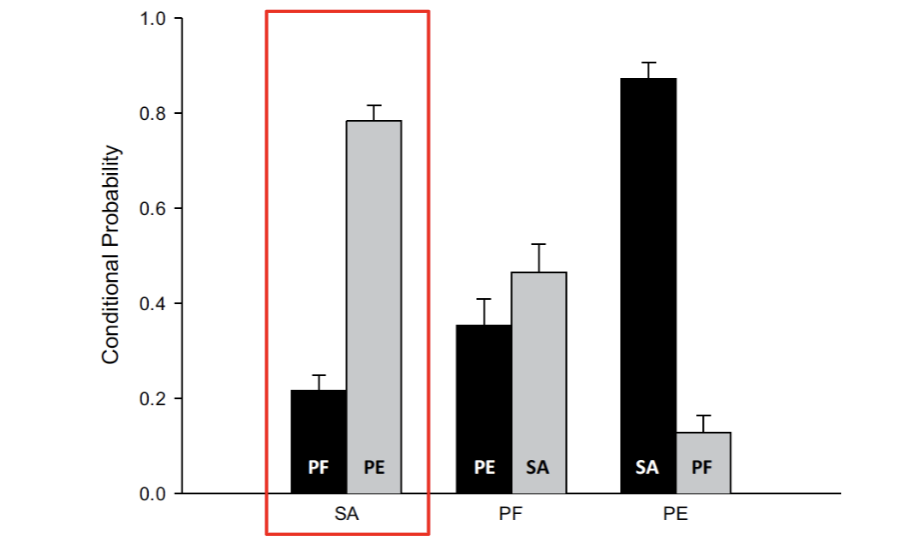
Results showed that the commanders commonly went straight from situation assessment to execution and did not appear to articulate plan formulation
This pattern was consistent over the 33 incidents
After receiving the decision control training or normal training, those who received the normal training showed the same pattern of results as the previous study
Those who received the more future-based, decision control training had a more balanced approach between intuitive and analytical decision making
What were the results of the second set of experiments?
some confusion in the simulation of who was incharge
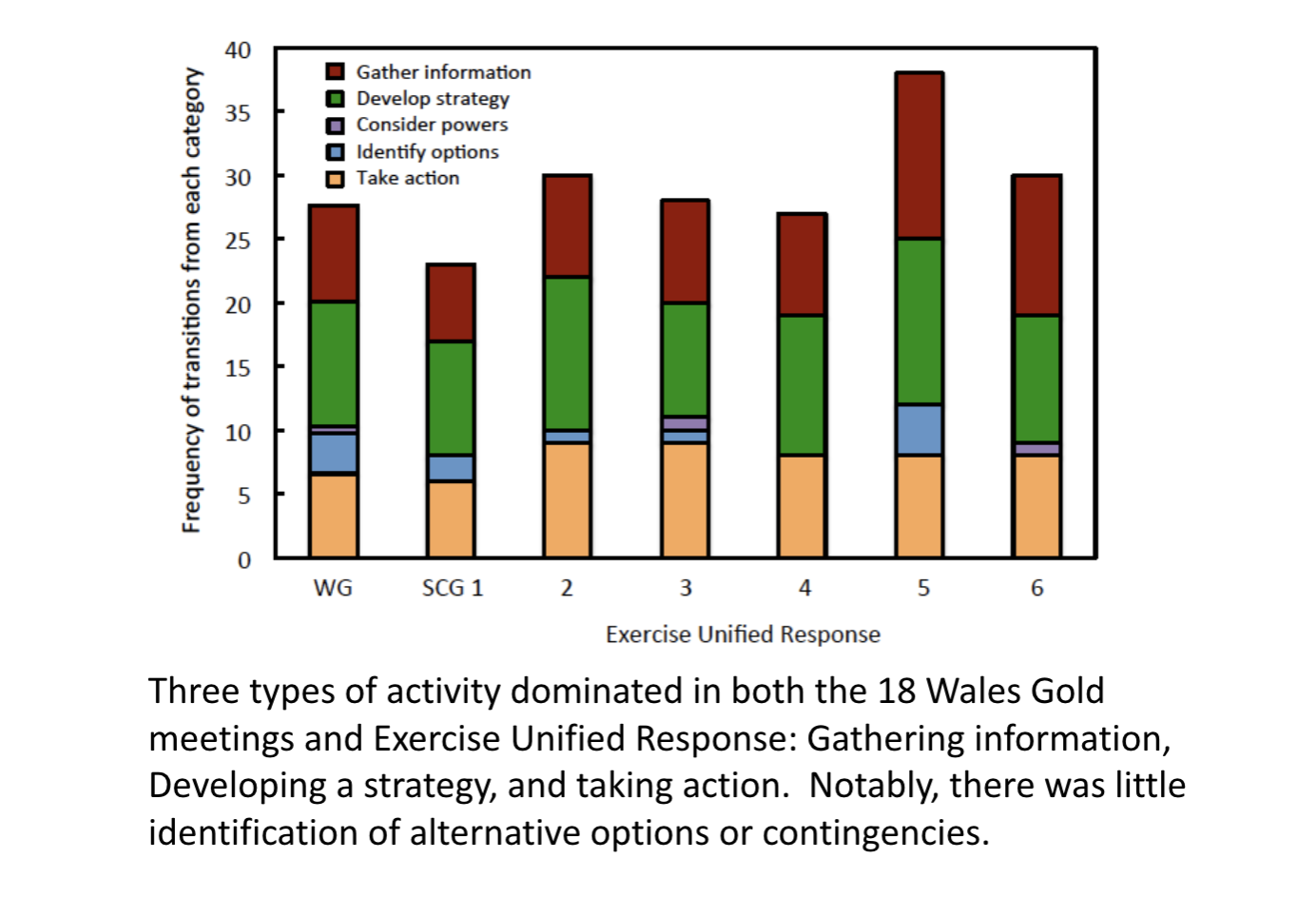
We would expect that each of the categories in the model should be used equally
In the results can clearly see that most of the time gathering information, developing strategies and taking action
There is very little use of identifying options and considering powers
There was no consideration of the optional at all in the simulation, despite it being a realistic replica of an incident
Did the results support the hypothesis?
They did support the hypothesis and found that many of the incidents that occur are dealt with, with an imbalance of analytics and intuition
What can be concluded from the first set of results?
plan formulation was likely skipped over, as commanders could act in the same way they did for previous incidents - force of habit - which can sometimes be helpful
however in situations such as Grenfell Tower, the officers went with the same approach, telling people to stay in their flats, but due to the uniqueness of the situation, this led to more loss of life
These results were sufficiently concerning that services wanted to see how they could shift people from this method of approaching situations to one that could reduce losses
What can be concluded from the second set of results?
The fact that identifying their options and considering their powers were the least used methods from the model is concerning, as these are the main attributes of a strategic coordinating group
What are the limitations and strengths of the study?
limitations lie in the subjectivity of treating these incidents - hard to set specific criteria on how the commanders should act in every situation
strengths in the methods used, being a more accurate way of assessing decision making than previously used before
Do these findings have any consequences for the understanding of science or any real-world applications?
The findings from the first set of studies informed the guidance and training given to fire and rescue services, part of how they now train incident commanders, and a sheet with the decision control on it is in their pocket when they attend incidents
also influences NHS guidance in the way that they react to certain emergencies
How was the finding received?
lots of real-world applications that can be used to prevent risks to life and loss
however the London Fire Service was very slow to implement the training processes that came from the research, leading to Sabrina giving 4 hours of testimony at the Grenfell Tower Enquiry
Paper by Rob Honey used in court
What could be done to follow up on the research?
using the filming method to investigate more aspects of emergency response in other services, to see how we can increase preventative measures of risk to life
How did the study compare to previous ones?
previous studies used the method of asking the commanders after the incidents how they made their decisions (even years after)
The issue with this approach is that it is not an accurate measure, as is completely subjective and subject to bias, wanting to present themselves in a certain light
memory can also just be inaccurate
this was an approach that aimed to tackle these issues