L17 - Urea Cycle
 Call Kai
 Learn
Learn Practice Test
 Spaced Repetition
 Match
Match Flashcards
 Knowt Play
1/8

There's no tags or description
Looks like no tags are added yet.
Name | Mastery | Learn | Test | Matching | Spaced | Call with Kai | Chat |
|---|
No analytics yet
Send a link to your students to track their progress
9 Terms
Two parts to AA processing
Urea processing and Carbon Skeleton processing
Activation of Urea Cycle Pathway
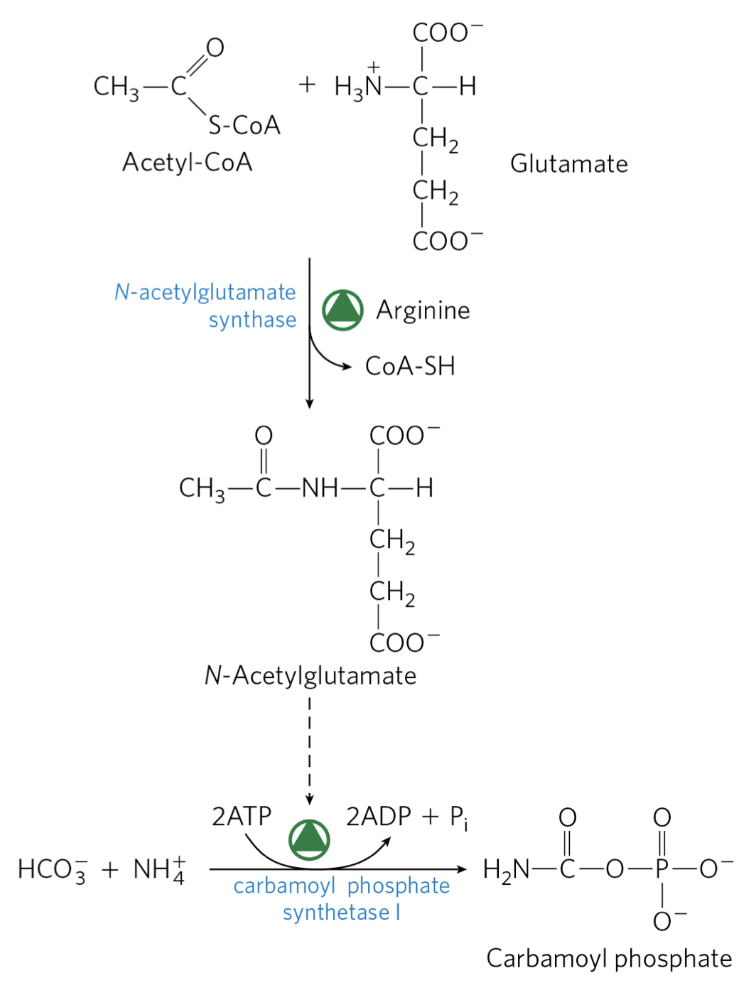
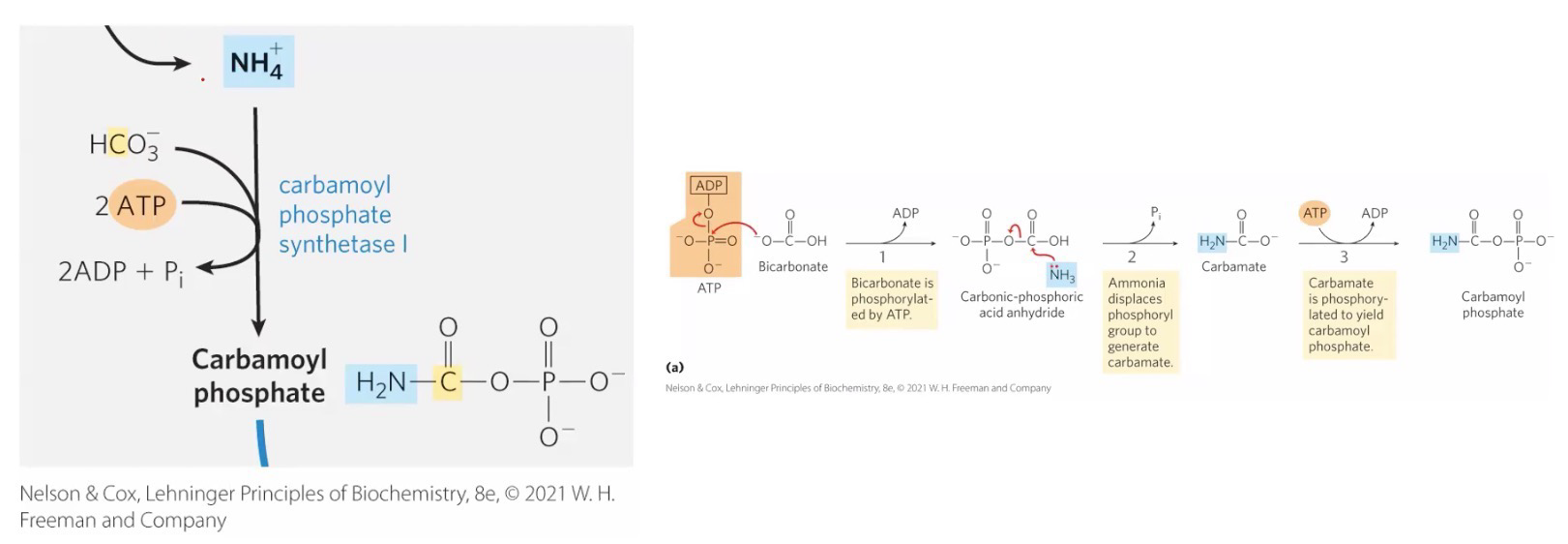
Activation via CPS-I
NH4+ + 2ATP + HCO3- → Carbamoyl phosphate + 2ADP + Pi via Carbamoyl Phosphate Synthetase (CPS-I)
Ammonia assimilating: Incorporation of ammonia into another compound to reduce ammonia concentration
Occurs in the mitochondria
First Part of Urea Cycle Pathway
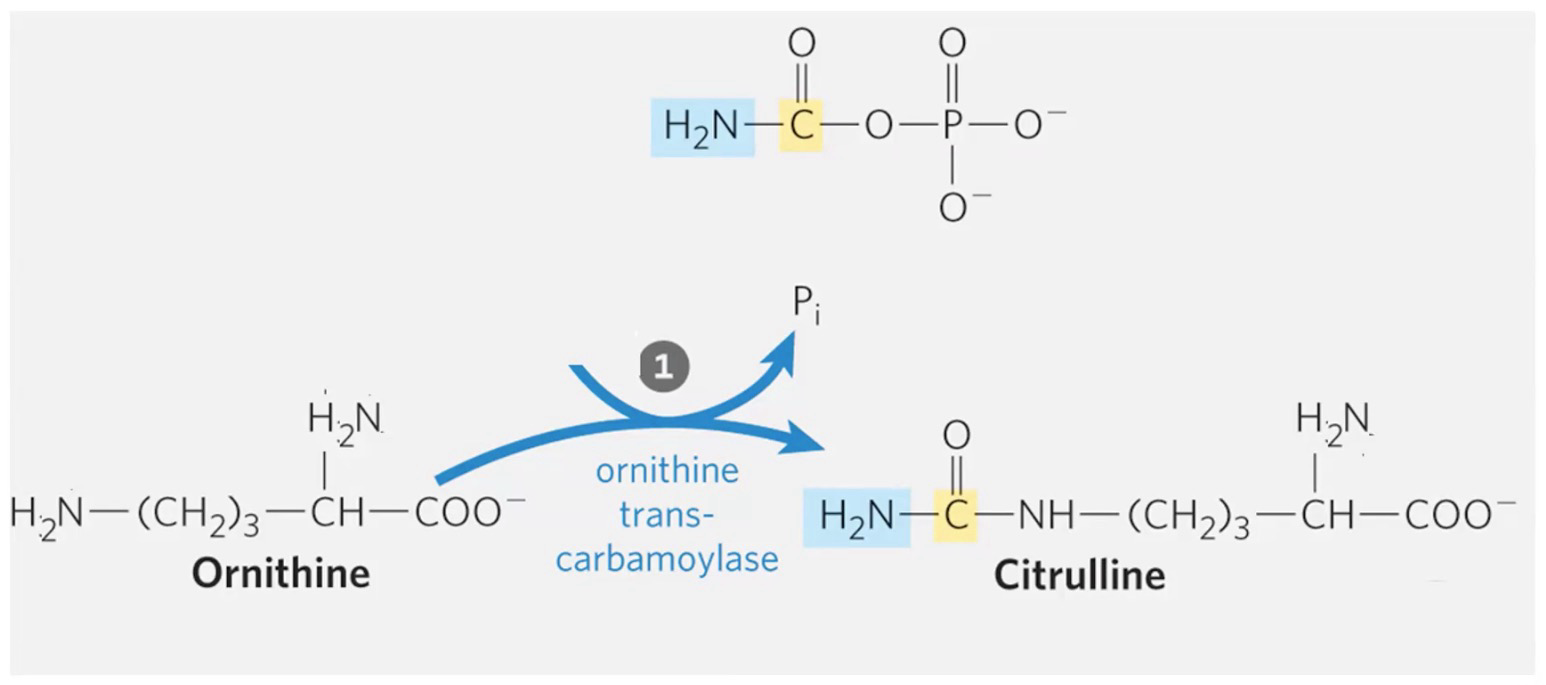
Formation of Citrulline
Ornithine + Carbamoyl phosphate → Citrulline + Pi via Ornithine transcarbamoylase (OTC)
Occurs mostly in liver mitochondria, 5-10% may occur in kidney
Citrulline diffuses passively
Second Part of Urea Cycle Pathway
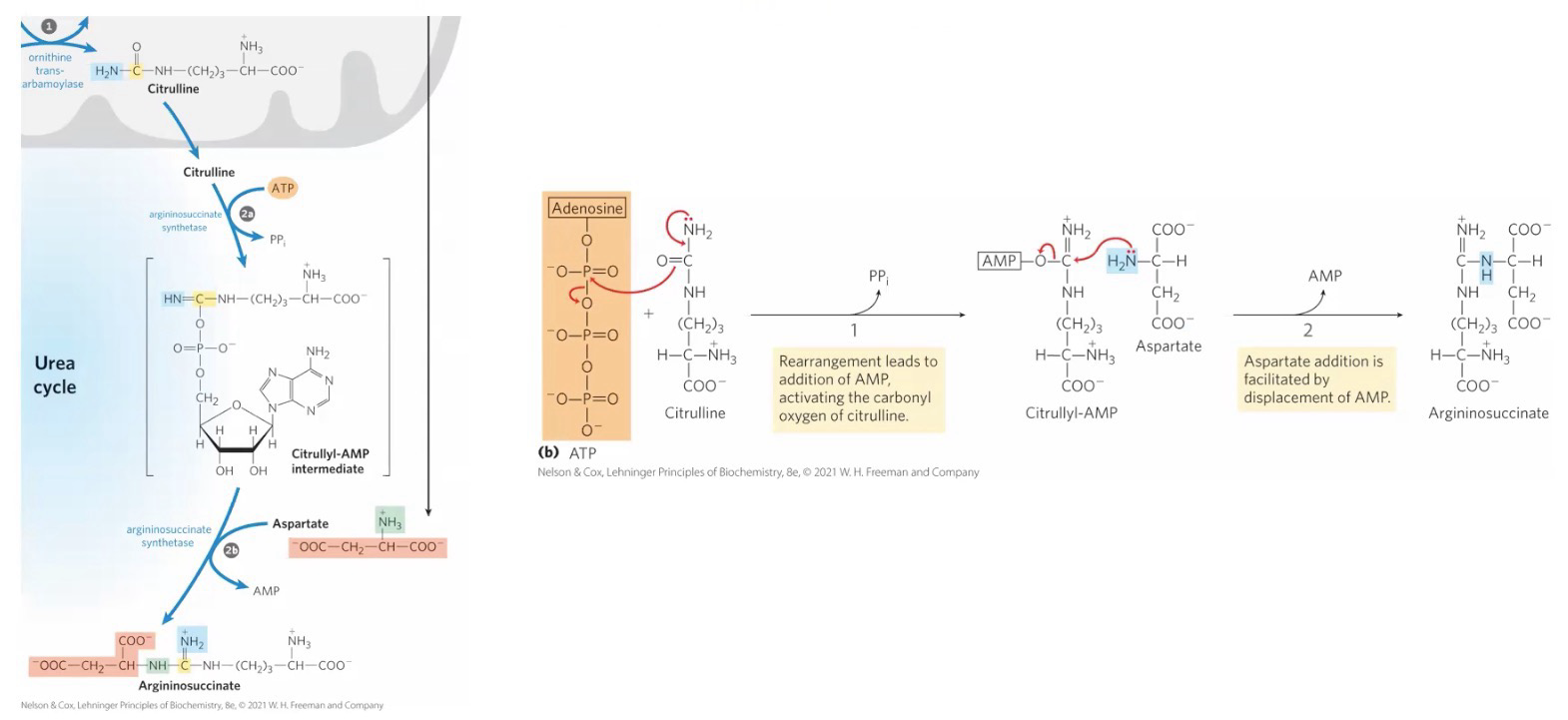
Formation of Argininosuccinate
2 steps:
Citrulline + ATP → Citrullyl-AMP + PPi via Argininosuccinate synthetase
Citrullyl-AMP + Aspartate → Argininosuccinate + AMP via Argininosuccinate synthetase
Second N of Urea is donated by aspartate (D)
Occurs in cytosol
Third Part of Urea Cycle Pathway
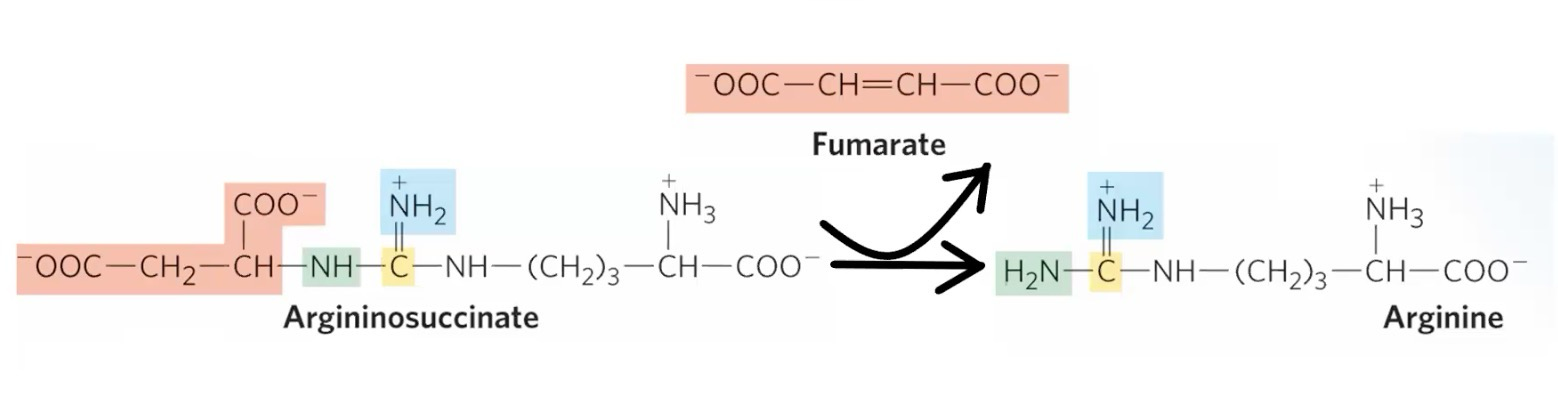
Formation of Arginine
Argininosuccinate → Arginine + Fumarate via Argininosuccinase
Occurs in cytosol
Fourth Part of Urea Cycle Pathway
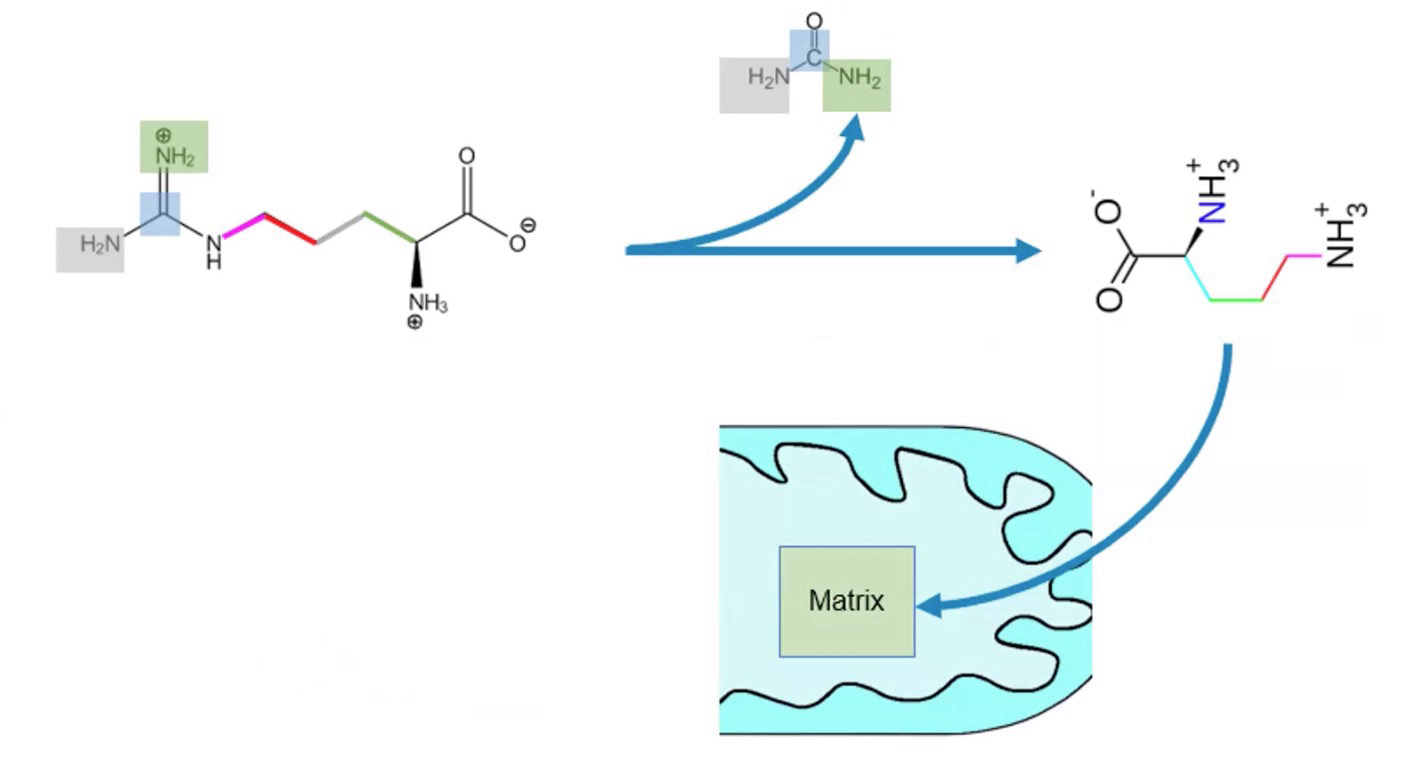
Formation of Urea
Arginine → Urea + Ornithine via Arginase
Ornithine is taken back to the mitochondria to repeat the cycle
Occurs in cytosol
Ornithine diffuses passively
Krebs-Bicycle
Urea and TCA cycle are interlinked
Linking pathways are referred to as aspartate-argininosuccinate shunt
This shunt links the carbon skeleton of AA, allowing degradation of both AA parts through the Urea and TCA cycle
Many enzymes like Malate dehydrogenase and Fumarase allows certain intermediates to be transferred between cytosol and mitochondria for other uses
Malate-aspartate shuttle regenerates OAA and forms D for the U cycle
Also decreases energetic load of urea cycle by providing reducing equivalents (Used by mitochondria to produce ATP)
Aspartate (TCA) + Citrulline (U) → Agininosuccinate (U) → Arginine (U) + Fumarate (TCA)
OAA ←→ D via AST

Regulation of Urea Cycle
High protein diet induces U cycle enzyme synthesis:
Glucagon stimulates biosynthesis of all urea cycle enzymes after a protein-rich meal
A, G, M, & C all stimulate glucagon release
AA catabolism reduces ammonia load and increases OAA and α-KG for gluconeogenesis
High levels of E (substrate) and R (activator) triggers N-actylglumatmate (NAG) synthesis
CPS-I is allosterically activated by NAG
When AA catabolism increases, E and NAG increase
N-Acetylglutamate Synthesis Pathway
Acetyl-CoA + E → NAG via N-Acetylglutamate synthase (NAGS); Allosterically Activated by R
NAG allosterically activates CPS-I