(SME 2.3) Electrical Power and Mains Electricity
 Call Kai
 Learn
Learn Practice Test
 Spaced Repetition
 Match
Match Flashcards
 Knowt Play
1/23

Earn XP
Description and Tags
24 Terms
Electric Power
Rate of energy transfer or amount of energy transferred per second
depends on:
voltage (potential difference)
current
Watt = Joule per second [1W=1J/s]
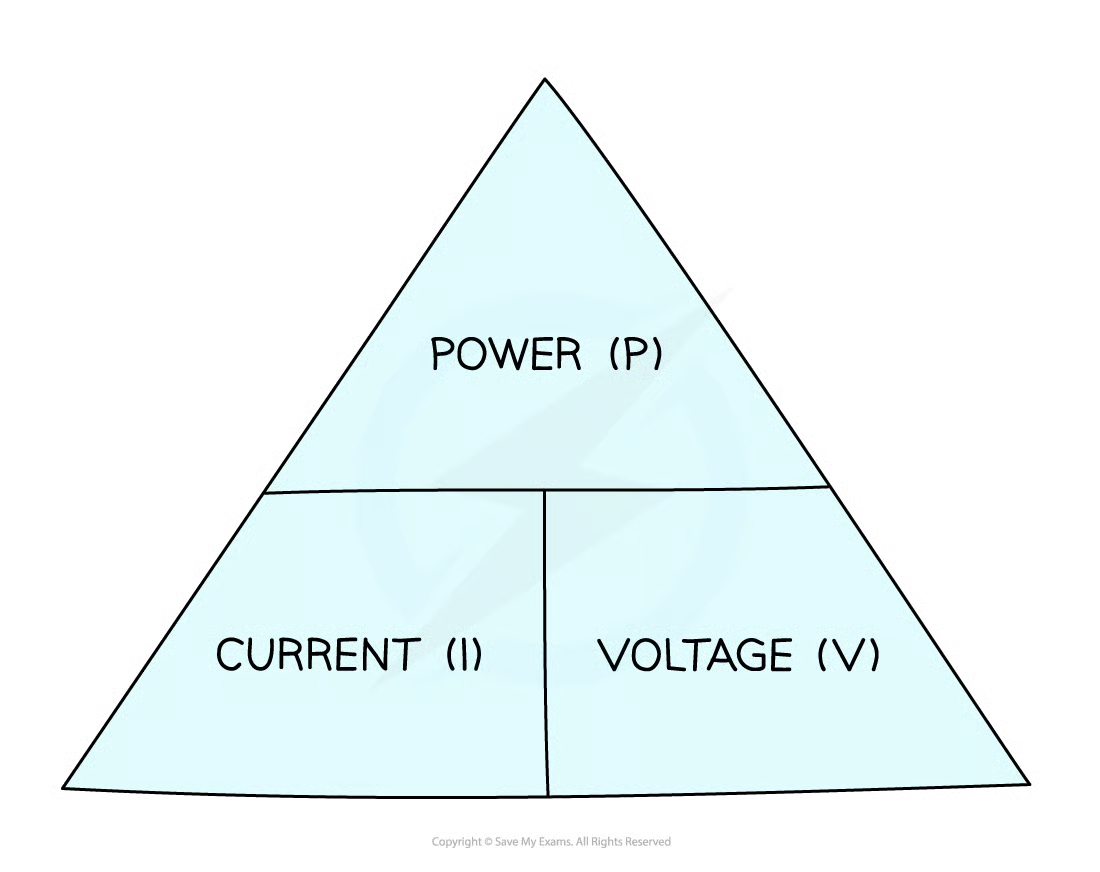
Power Equation
P = IV
P: power in watts (W)
I: current in amps (A)
V: potential difference in volts (V)
Fuse
Safety device designed to cut off electricity flow to an appliance if the current becomes too large (because of fault or surge)
glass cylinder containing a thin metal wire

Fuse Working:
current becomes too large
wire heats up and melts
wire breaks, breaks circuit, stops current
ensure current doesn’t continue flowing through the circuit
prevents damage to equipment and fire
Fuse Sizes
3A, 5A and 13A
find current of appliance with I = P/V
fuse should have current rating of the next size up
too low: circuit will break even with an acceptable current
too high: circuit will not break in enough time before damage occurs
Work
Done when charge flows through a circuit
Equal to energy transferred
(Electricity) Energy Transferred
depends upon:
current
potential difference
when charge flows through a resistor, energy transferred makes the resistor hot
Energy Equation
E = P x t
E: energy in joules (J)
P: power in watts (W)
t: time in seconds (s)
OR
E = I x V x t
I: current in amps (A)
V: potential difference in volts (V)
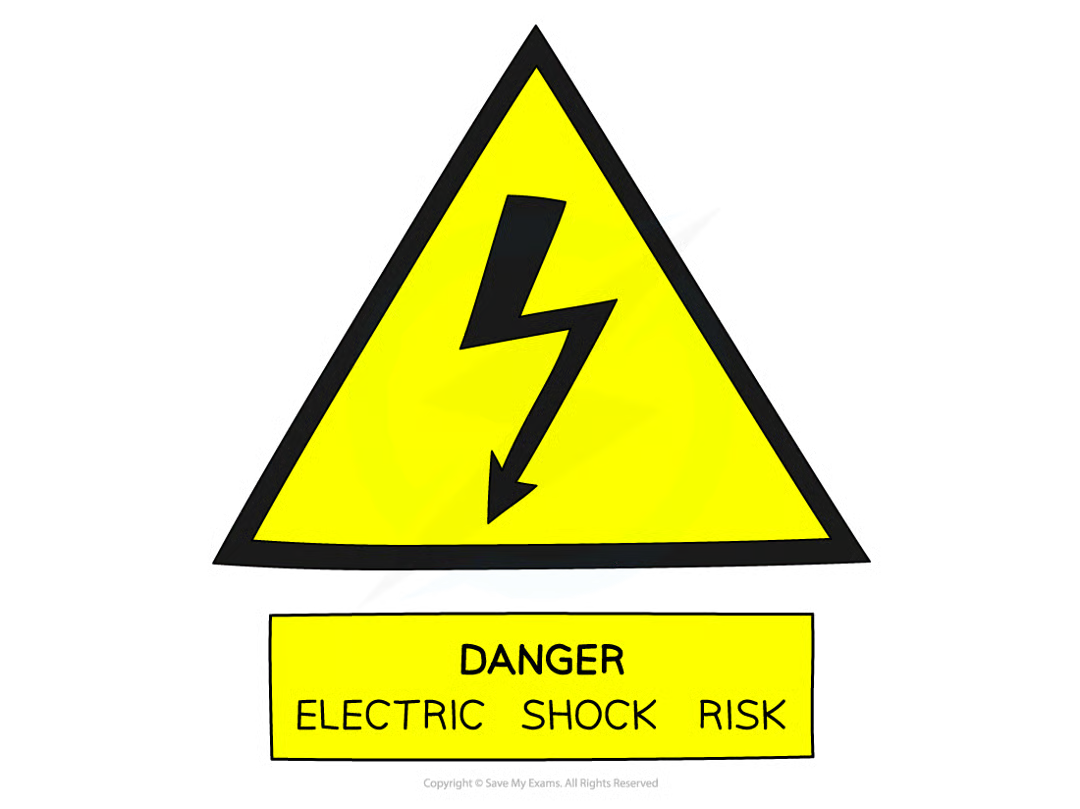
Electrical Safety Symbol
Common electrical safety hazards
damaged insulation: exposed piece of wire → lethal shock
overheating of cables: too much current through too small wire → wire overheating and causing fire or melting insulation
damp conditions: moisture comes into contact → short circuit (fire) or electrocution risk
Domestic appliances safety features
double insulation
earthing
fuses
circuit breakers
Insulation
wire conducting part is usually made of copper or some other material
person comes into contact → electrocution risk
electrical safety wires are covered with an insulating material like rubber
Double Insulation
appliances without metal casing to prevent risk of getting electrified
these are called double insulated:
insulation around wires themselves
non metallic casing: second layer of insulation
don’t need earth wire or designed so earth wire can’t touch metal casing
Earthing
many appliances have metal cases
potential electrical safety hazard:
live wire comes into contact with case → case becomes electrified, electrocutes person touching it
earth wire reduces this risk
Earth Wire Working
live wire comes into contact with case
earth wire provides low resistance path to the earth
causes surge of current in earth wire and also in live wire
high current through fuse causes it to melt and break
electricity supply to appliance gets cut off
appliance is safe
Circuit Breaker
automatic electromagnet switch that breaks the circuit if current exceeds a certain value
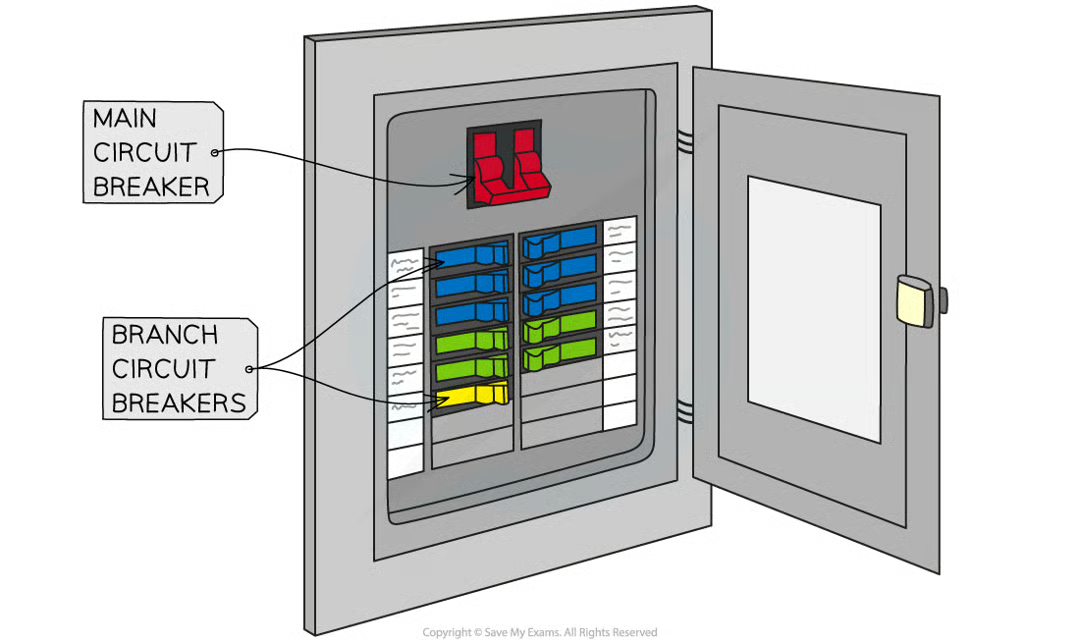
Circuit Breaker vs Fuse
Advantage:
doesn’t melt or break
can be reset and used again
works much faster
used in mains electricity in homes as the most important electrical safety device
Electric Heating
temperature of a resistor increases due to collisions of the free electrons within the wire
energy is dissipated into surroundings by heating
Electric Heating: domestic contexts
electric heaters
electric ovens
electric hob
toasters
kettles
Direct Current
d.c : a steady current constantly flowing in the same direction in a circuit from positive to negative
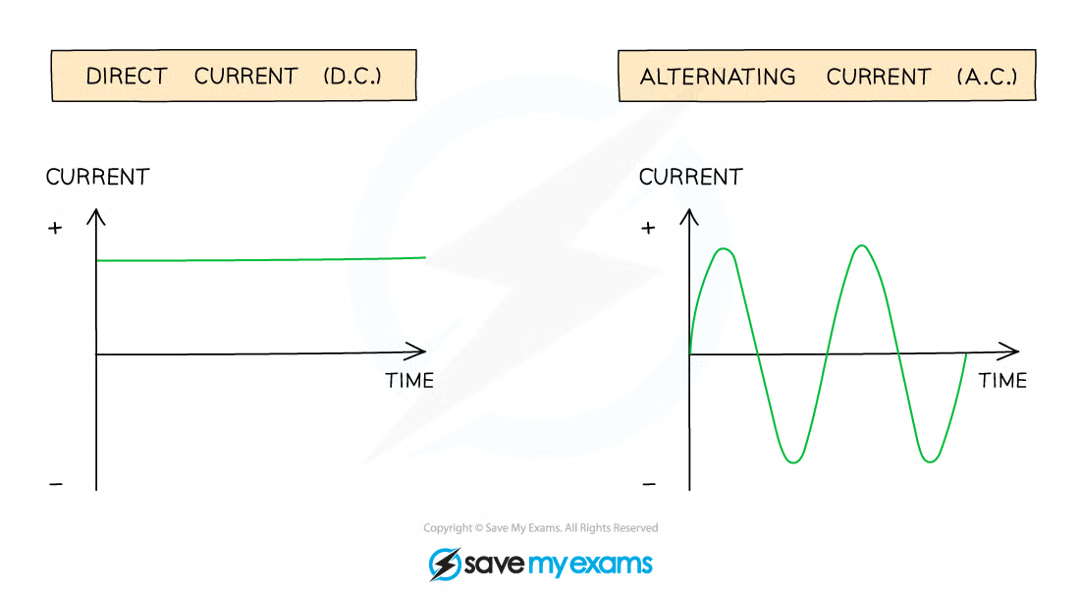
Alternating Current
ac: a current that continuously changes its direction, going back and forth around a circuit
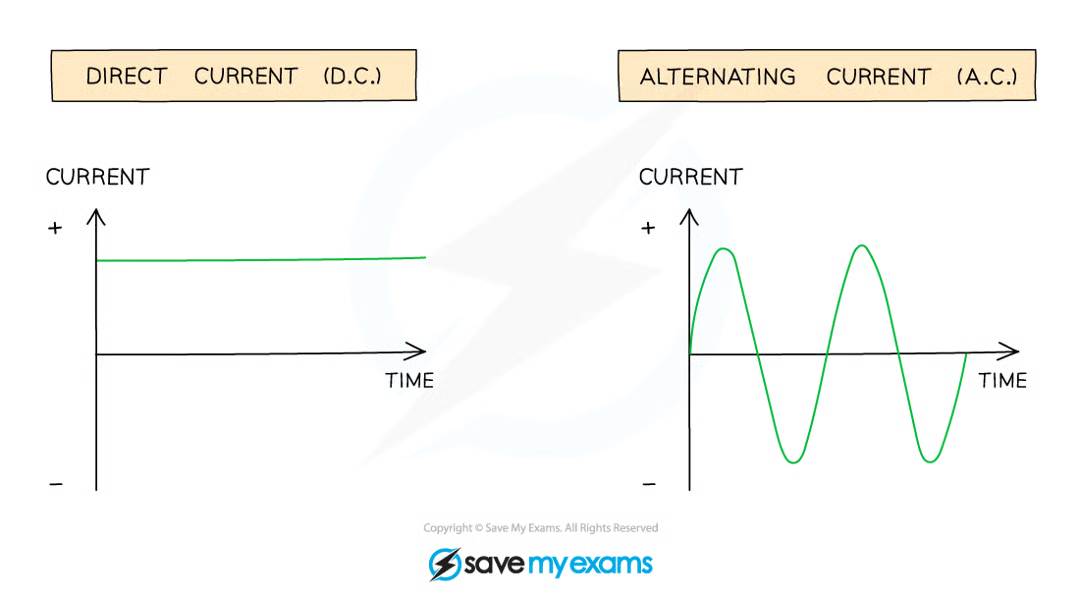
Direct Current Working
voltage in a dc circuit travels in 1 direction only
from positive to negative
dc power supply has a fixed positive terminal and a fixed negative terminal
example of d.c. current: electric cells and batteries
Alternating Current Working
ac power supplies have 2 identical terminals that change from positive to negative and back again
ac always travels from positive to negative
current changes direction as terminals’ polarity changes
Alternating Current Frequency
number of times the current changes direction back and forth each second
ex: UK mains frequency is 50 Hz and potential difference ≈230 V