Hon Bio Unit 4: Biofuels - Biomolecules
 Call Kai
 Learn
Learn Practice Test
 Spaced Repetition
 Match
Match Flashcards
1/17

There's no tags or description
Looks like no tags are added yet.
Name | Mastery | Learn | Test | Matching | Spaced | Call with Kai | Chat |
|---|
No analytics yet
Send a link to your students to track their progress
18 Terms
Energy
the ability to do work, including building complex molecules
product
A substance produced in a chemical reaction
pH
System for measuring the strength of different acids and bases
Lipid
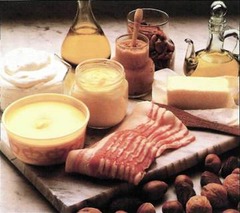
macromolecule made mostly from carbon and hydrogen atoms; includes fats, oils, and waxes
Protein
An molecule that is made of one or more chains of amino acids
Carbohydrates
An organic molecule made up of one or more sugars. one-sugar is called a monosaccharide; multiple linked sugars is called a polysaccharide.

nucleic acids
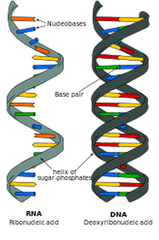
Organic molecules made up of linked nucleotide subunits; examples DNA and RNA
Macromolecules
A very large organic molecule composed of many smaller molecules
Polymer
A long molecule consisting of many similar or identical monomers linked together.
Monomer
A simple compound whose molecules can join together to form polymers
Monosaccharides
Single sugar molecules (monomer of carbohydrate)
fatty acids
chains of carbon atoms bonded to hydrogen atoms that make up lipids
amino acids
monomers of proteins
covalent bond
A chemical bond that involves sharing a pair of electrons between atoms in a molecule
dehydration synthesis
Condensation reaction where molecules are connected by loss of a water molecule.
Hydolysis
Breaking down complex molecules by the chemical addition of water
Glycerol
Combines with fatty acids to make lipids.
organic molecules
contain backbone structures of carbon with hydrogen and oxygen