Galapagos Exam 3 Topic 9
 Studied by 0 people
 Call Kai
 Learn
Learn Practice Test
 Spaced Repetition
 Match
Match Flashcards
 Knowt Play
1/27

There's no tags or description
Looks like no tags are added yet.
Name | Mastery | Learn | Test | Matching | Spaced |
|---|
No study sessions yet.
28 Terms
Reptiles are well-suited to __________ to islands, as they typically need less food and water than mammals.
long-distance dispersal
Their water needs are largely met by the _________ they eat, and they are capable of fasting for
long periods of time. They are also more ________ that mammals, as most have salt excreting
glands.
vegetation; salt tolerant
Within the Galápagos, there are ___ reptile species ( ___ endemic).
22; 20
Chelonoidis spp.
Giant tortoises
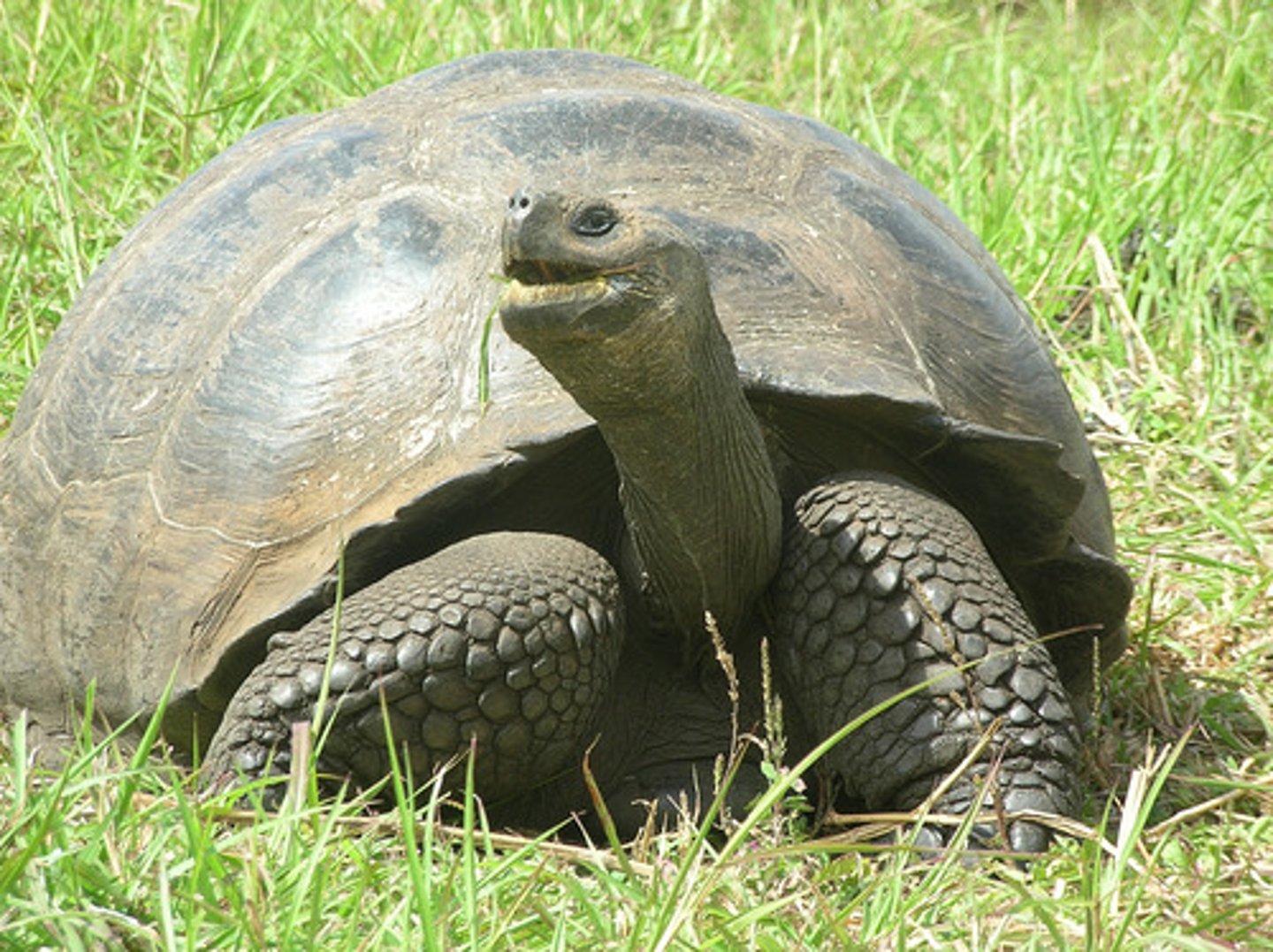
Galápagos giant tortoises may measure ______ over the curve of the shell.
150 cm
Extinct Species of Giant Tortoises (or possibly extinct)
C. nigra - Floreana
C. wallacei - Rabida
C. phantasticus - Fernandina
Undescribed - Santa Fé - only skeletal remains are known for the species.
C. abindonii - Pinta
Extant Species of Giant Tortoises
C. darwini - Santiago
C. porteri - Santa Cruz
C. chathamensis- San Cristobal
C. hoodensis-Espanola
C. duncanensis- Pinzon
C. becki- Isabela (Wolf)
C. vicina- Isabela (Darwin, Alcedo, Sierra Negra, Cerro Azul)
The primary way in which tortoises vary from island to island is in the _______.
shape of their carapaces.
Giant tortoises are _________.
vegetarian
Some favorite plants of the giant tortoise are:
Hippomane mancinella (poison apple)
Psidium galapageium (Galapagos guava)
Azolla microphylla (mosquito fern)
Tillandsia insularis (tillandsia)
Opuntia (prickly-pear cactus)
Why do giant tortoises wallow in pools of water or mud baths?
To keep cool and avoid mosquitoes, ticks, and mites.
When do giant tortoises become sexually active?
20-25 years of age
How do territorial fights between two male giant tortoises go?
They stretch their necks as high as possible.
The male giant tortoise has a ______, which allows it to easily mount females.
concave-shaped plastron
What island do most giant tortoises mate?
Isabela, at El Cielo volcano.
How are giant tortoise eggs taken care of?
Usually, 2-16 tennis ball-sized eggs are laid. The nest is then capped with a layer of mud and urine.
When are eggs typically laid?
June-December. Sandy, dry soil is required for successful mating. Young emerge 120-140 days later between December-April. Hawks appear to be the only native predator to the hatchlings.
Galapagos is an old term for "tortoise" supposedly. However, it really means _________ in reference to the giant tortoise shell shape.
"Saddle"
Chelonia mydas agaggisi
Marine turtles
Specifically
(Pacific green turtle) -
This is the only resident marine turtle in Galápagos. The peak mating season is from November to January. Typically, the
female is larger, and does the swimming during copulation. The male uses his flippers to hang on.
Green sea turtles may weight up to 150 kg, though they are typically 50-100 kg. Their shells
vary in color from black to green, rarely orange or yellow.
Marine turtles lay their eggs on sandy beaches. In one season, each female may come ashore as
many as eight times, laying a total of 70-80 eggs each time! The female digs a small nest with her rear flippers.
Main nesting period is from December to June in Galapagos, peaking in February. Nesting takes place at night.
Introduced pigs and rats can devastate a nest of eggs.
Emergence normally occurs at night.
However, if the turtles head for the water during the day, they may be eaten by ghost crabs, hawks, mockingbirds, and frigatebirds.
Once in ocean, sharks, fish, pelicans, and boobies may feed on them.
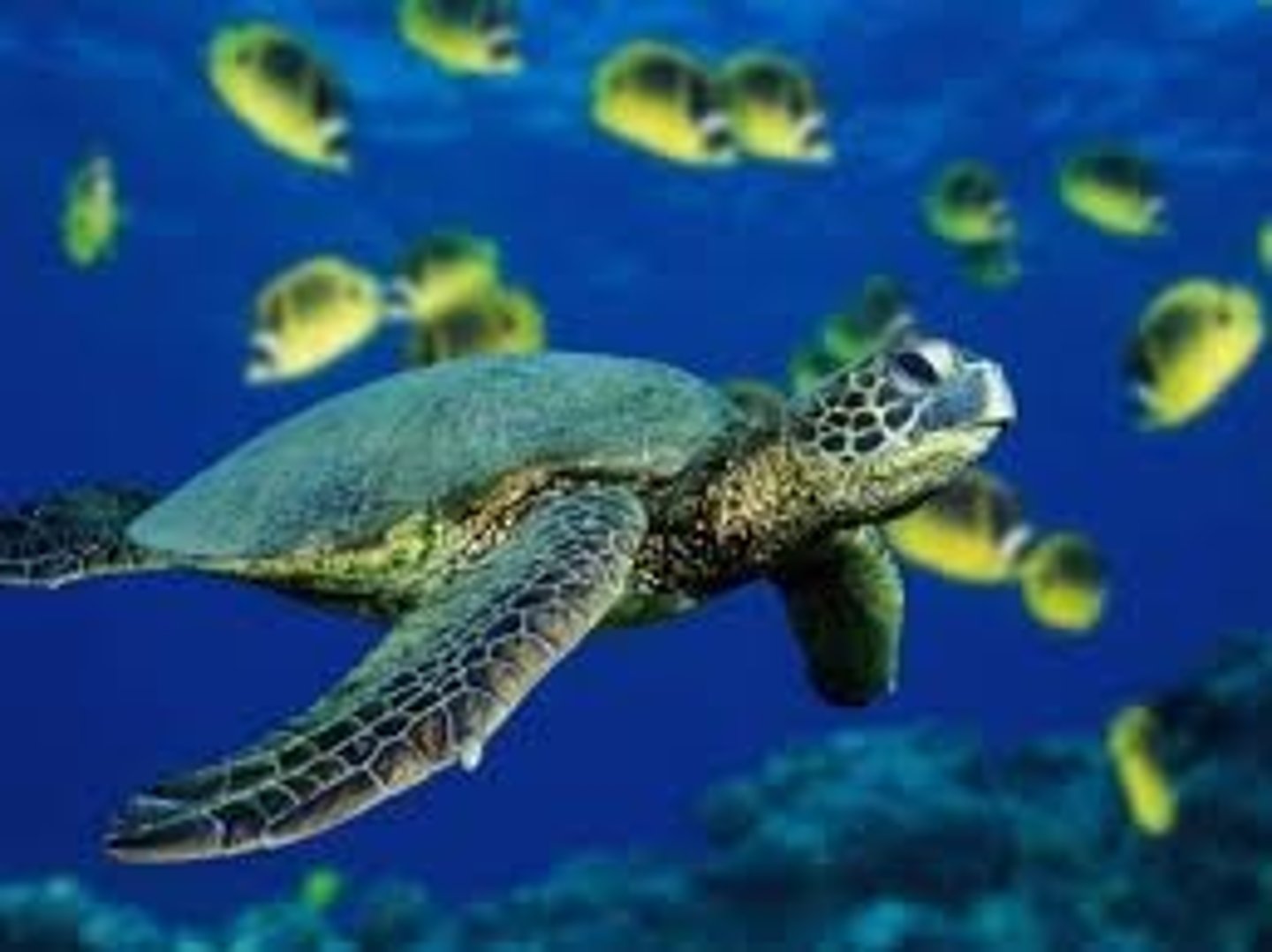
What do marine turtles like to eat?
Sargassum: brown alga/seaweed
Ulva: sea lettuce/seaweed/green alga
Philodryas and Alsophis
Snakes
The two genera endemic to Galápagos.
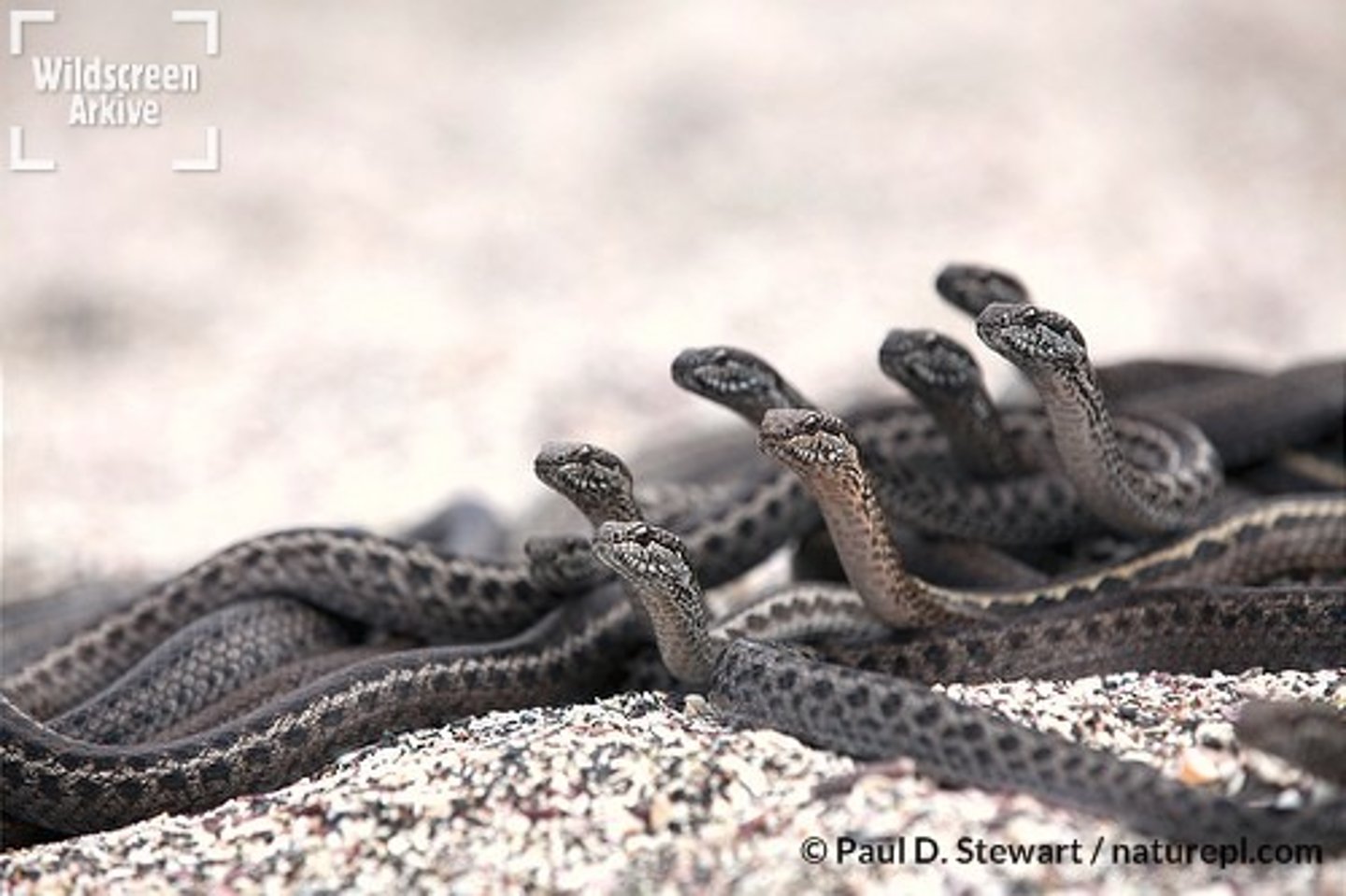
Alsophis comprises two species, and each of the three species has 2-3 subspecies.
All of these snakes are constrictors, and most reach a maximum of 1 m in length.
They are mainly brown in color, with yellowish stripes or spots on their back.
Their primary prey includes lava lizards, geckos, young marine iguanas, rats, and grasshoppers.
Galapagos hawks prey on these snakes, as well as feral cats.
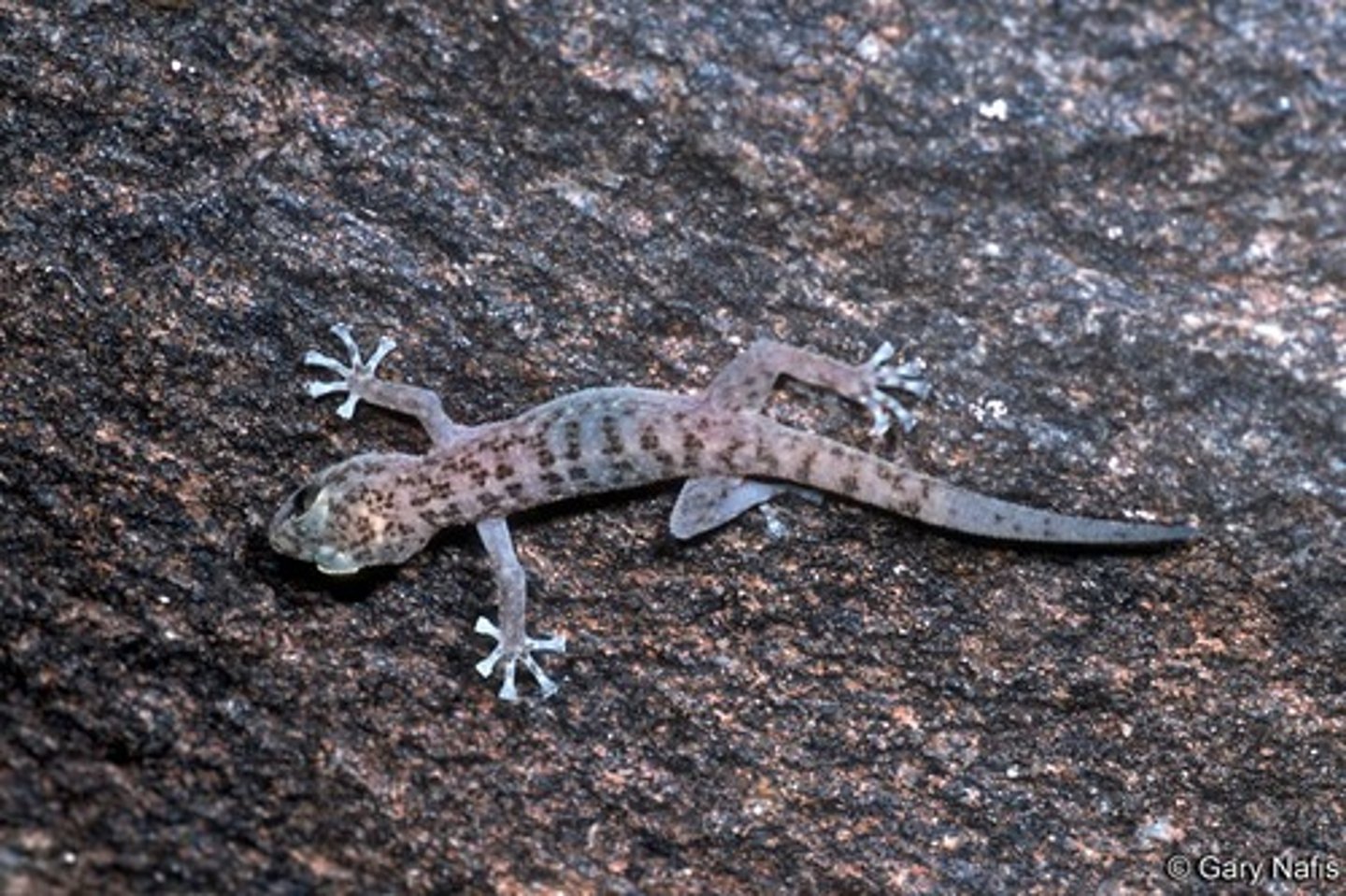
Phyllodactylus
Gecko
Comprised of six species in the archipelago, five of which are endemic.
Members of this genus are the most common gecko in Galapagos.
Microlophus
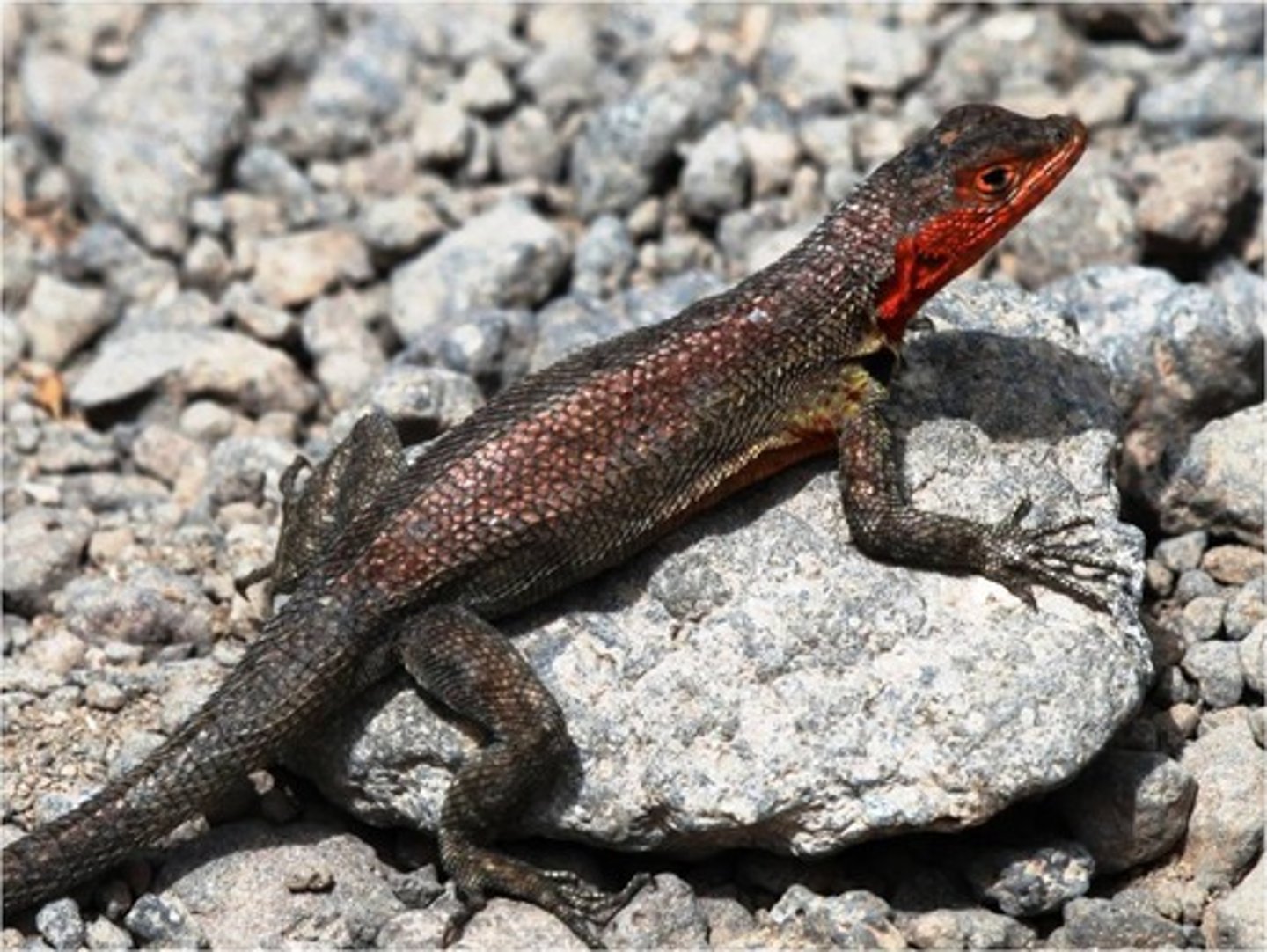
Lava lizards
Genus known from all the major islands, except for Genovesa,
Darwin, and Wolf.
San Cristobal, Floreana, Marchena, Espanola, Pinta, and Pinzon each have their own species.
While the central and western islands all share the same species, M. albemarlensis.
.
Males are typically 2-3 times larger than females, and the body is normally more brightly colored
or distinctly patterned.
Lava lizard color may vary depending on the surrounding substrate.
Females exhibit bright red/orange throat during mating season.
One of the more noticeable behaviors is their push-ups, which are usually a territorial display.
Lava lizards are sensitive to movement as well. Especially that of small insects, though they also run after thrown pebbles and candle flame.
Lava lizards feed primarily on moths, flies, beetles, grasshoppers, grubs, ants, spiders, and
scorpions.
Lava lizards are eaten by hawks, snakes, mockingbirds, herons, and centipedes.
Sometimes,
when attacked, they lose only part of their tail.
Conolophus
Land iguanas
The Galápagos land iguanas are found in the drier parts of several islands.
Prickly pear cactus fruits and pads are the major food of land iguanas. Also feed on centipedes and finch nestlings. They favor Portulaca flowers when in season.
Male land iguanas are larger and more brightly colored than the females.
Aggressive displays
include lowering the head, head-nodding, arching the back, and bloating the throat and trunk.
Land iguanas may live more than 60 years. A male mates with a female by grabbing hold of her
neck in his mouth, hooking his leg over her, and bringing his tail around underneath her. This
rough behavior often results in the female running away after mating is completed.
Females lay between 2-25 eggs. The breeding season varies from September to January to June,
depending on the island.
Once the hatchlings leave the nest, they are fair game to herons, egrets, hawks, and owls.
Like other reptiles, have sunbathe to warm up. To cool off, they hide in their burrows, or seek the shade of vegetation.
As with the tortoises, finches and mockingbirds are known to clean land iguanas of insect pests
in the folds of their skin. They will stand up on their tip-toes to be cleaned.
They no longer occur on James (Santiago) Island, due to the combined influence of humans and
their introduced animals (goats, rats, pigs, dogs).
Since 1976, iguans from Baltra, Isabela, and Santa Cruz have been bred at the Darwin Research Station. As mentioned earlier, some have been reintroduced to Baltra.
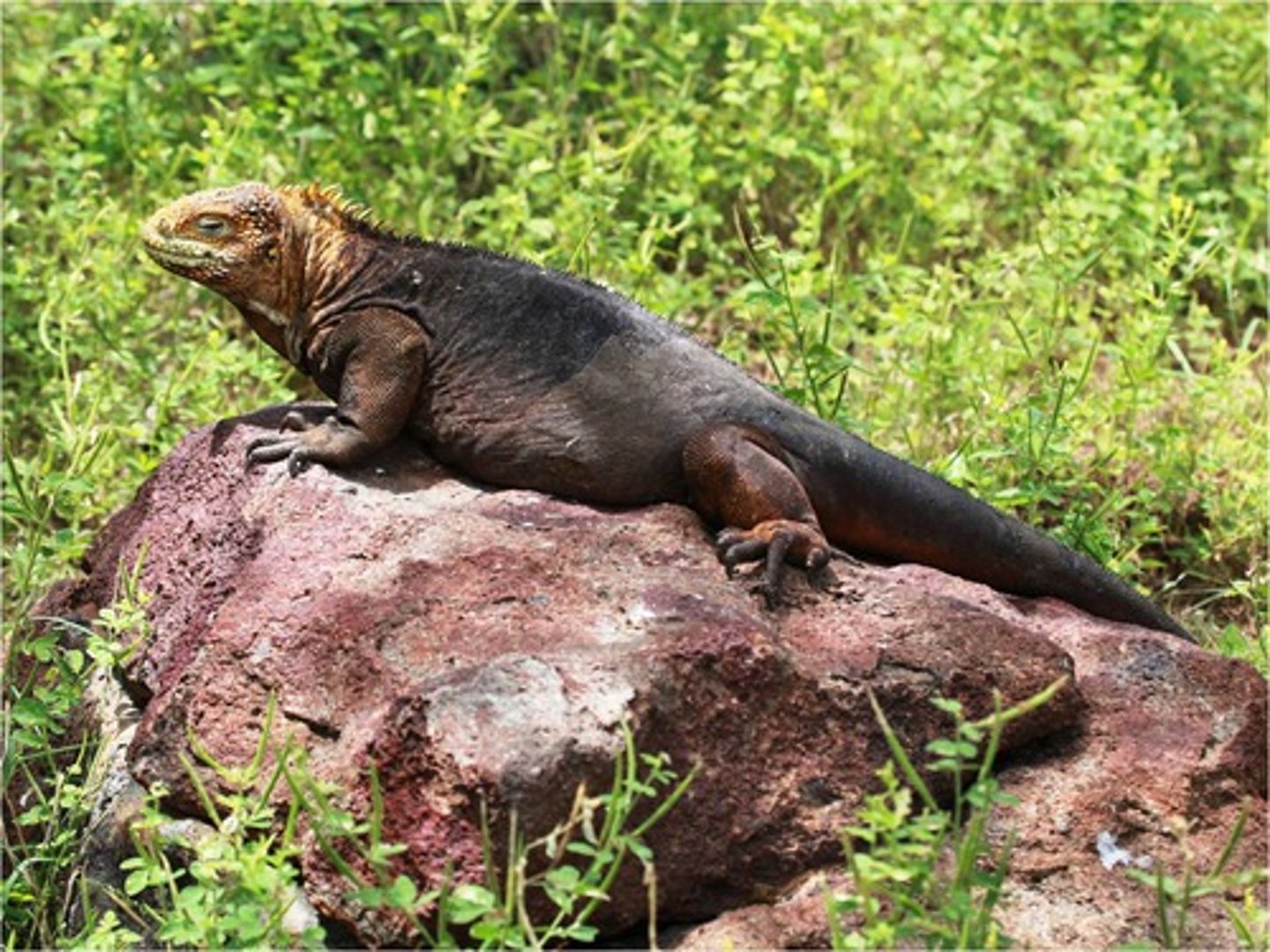
Conolophus subcristatus
Found on Fernandina, Isabela, Santa Cruz, Plaza Sur, and Seymour Norte. It was
introduced to the latter island, and reintroduced to Baltra. Has more pronounced spines on its back.
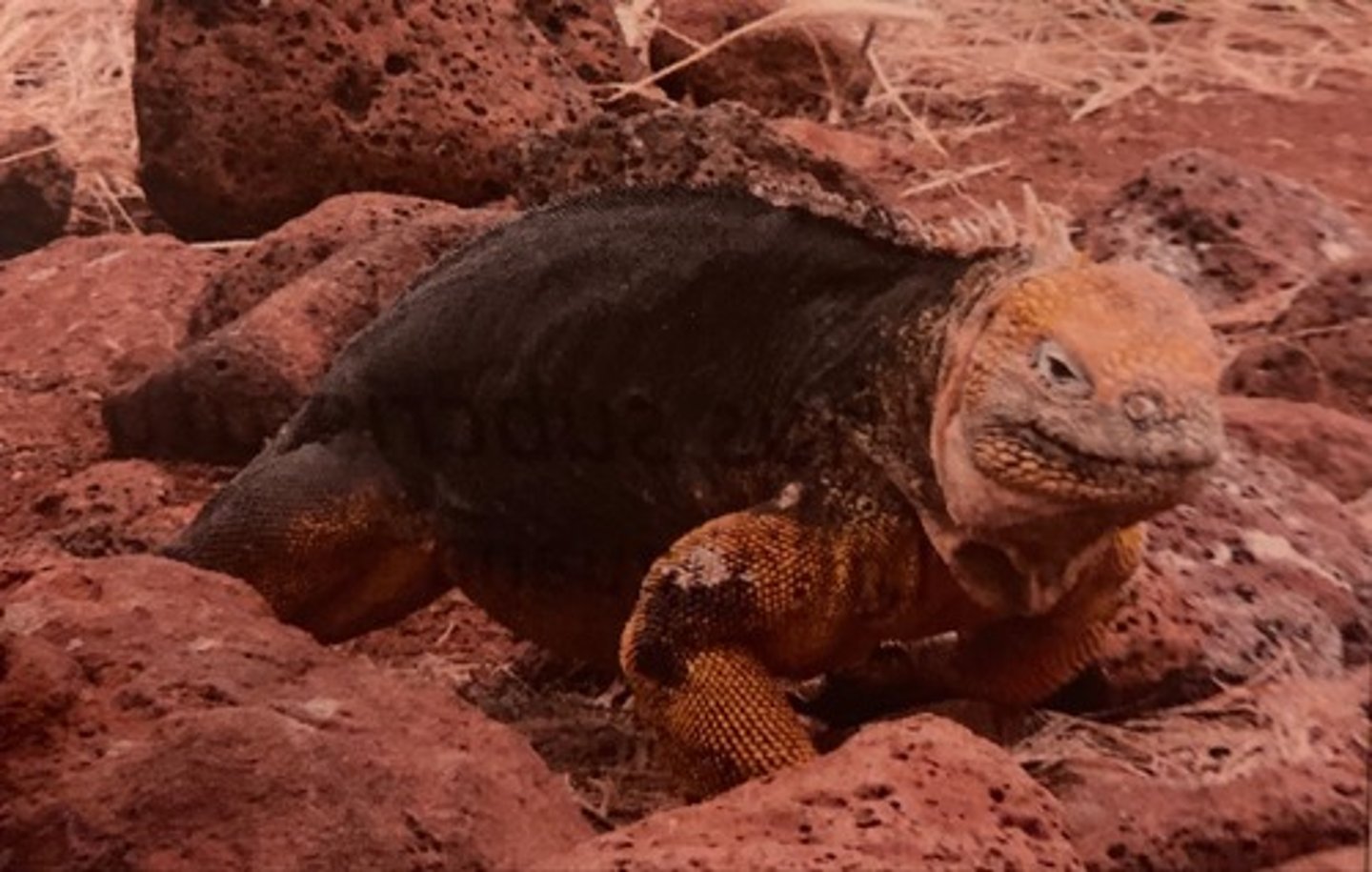
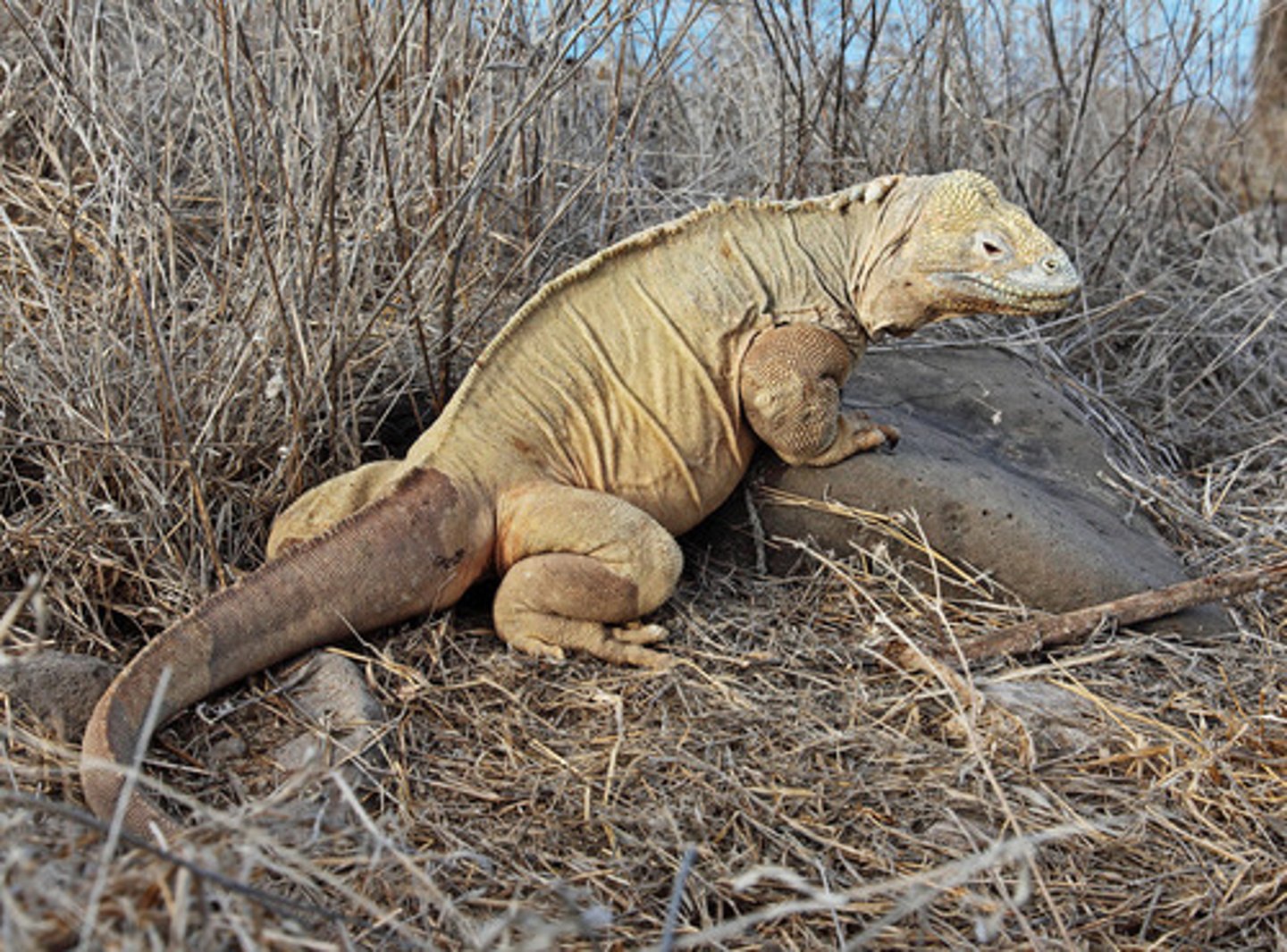
Conolophus pallidus
Found on Santa Fe. More of a pale yellow color.
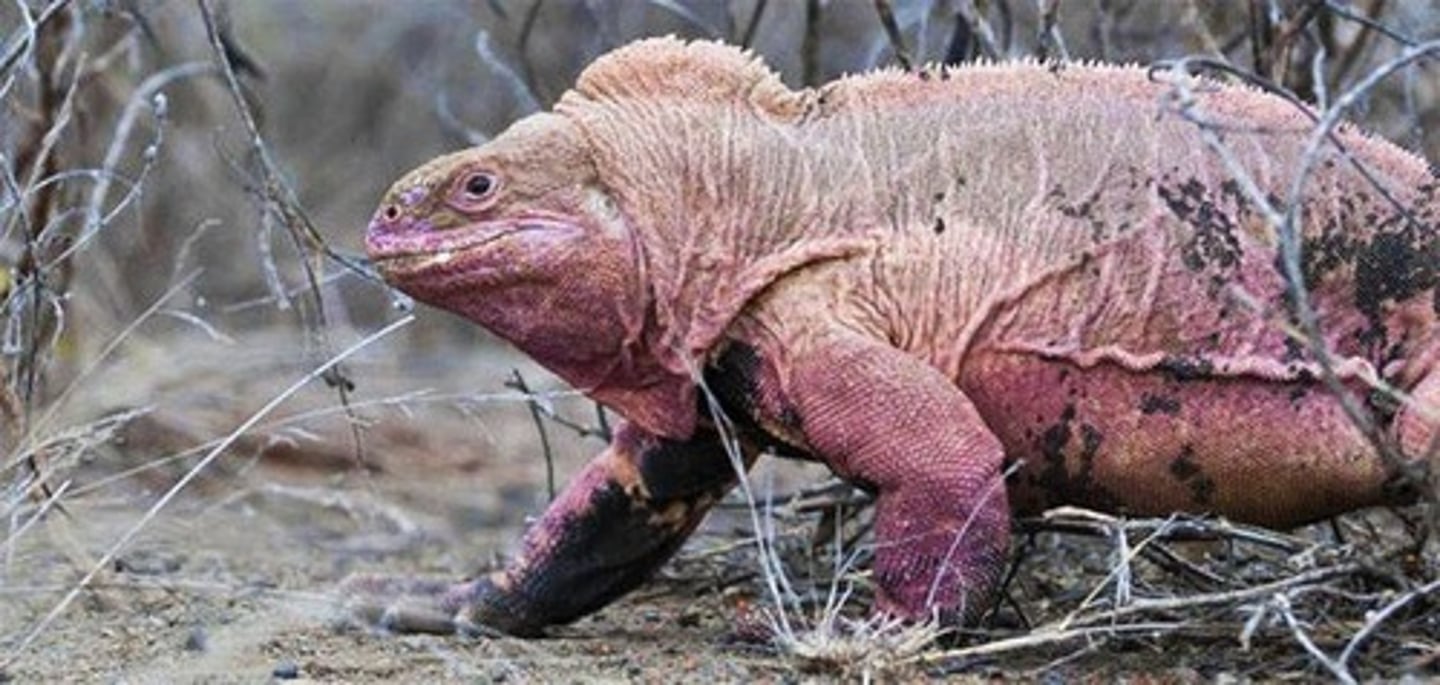
Conolophus marthae
Found on Isabela Island on Volcan Wold. Pink body with dark stripes. Called the Galapagos Rosy Iguana. Discovered in 1986 and identified as a new species in 2009.
Amblyrhynchus cristatus
Marine iguanas
The Galápagos marine iguana is the only sea-going iguana in the world.
It is found throughout
the entire archipelago.
Only the larger, stronger males feed offshore by diving.
Marine iguanas feed almost entirely on
algae.
Diving behavior can be quite impressive, usually lasting from 5-10 minutes, but sometimes lasting as long as 60 minutes.
Marine iguanas take in lots of salt as they feed, so they must also excrete lots of salt.
They accomplish this by having the most effective salt glands of any reptile.
The largest males wait until midday to feed. The rest of the iguanas wait until low tide to feed in the intertidal zone.
Being ectothermic, marine iguanas regulate their body temperature by behavioral means.
After sunrise, it assumes a flat basking posture that exposes as much of the body as possible to the
sun’s rays. When its body reaches 35.5 degrees C, it will change its position to prevent overheating.
The most commonly assumed posture is “elevated basking”, in which the marine iguana faces
the sun and raises the front half of its body.
This reduces the body area exposed to the sun, and raising the body allows any breeze to circulate under the body.
During swimming, a marine iguana may lose as much as 10 degrees C.
After swimming they will flatten their body, and orient themselves so as to receive as much sunlight as possible (sideways
to the sun).
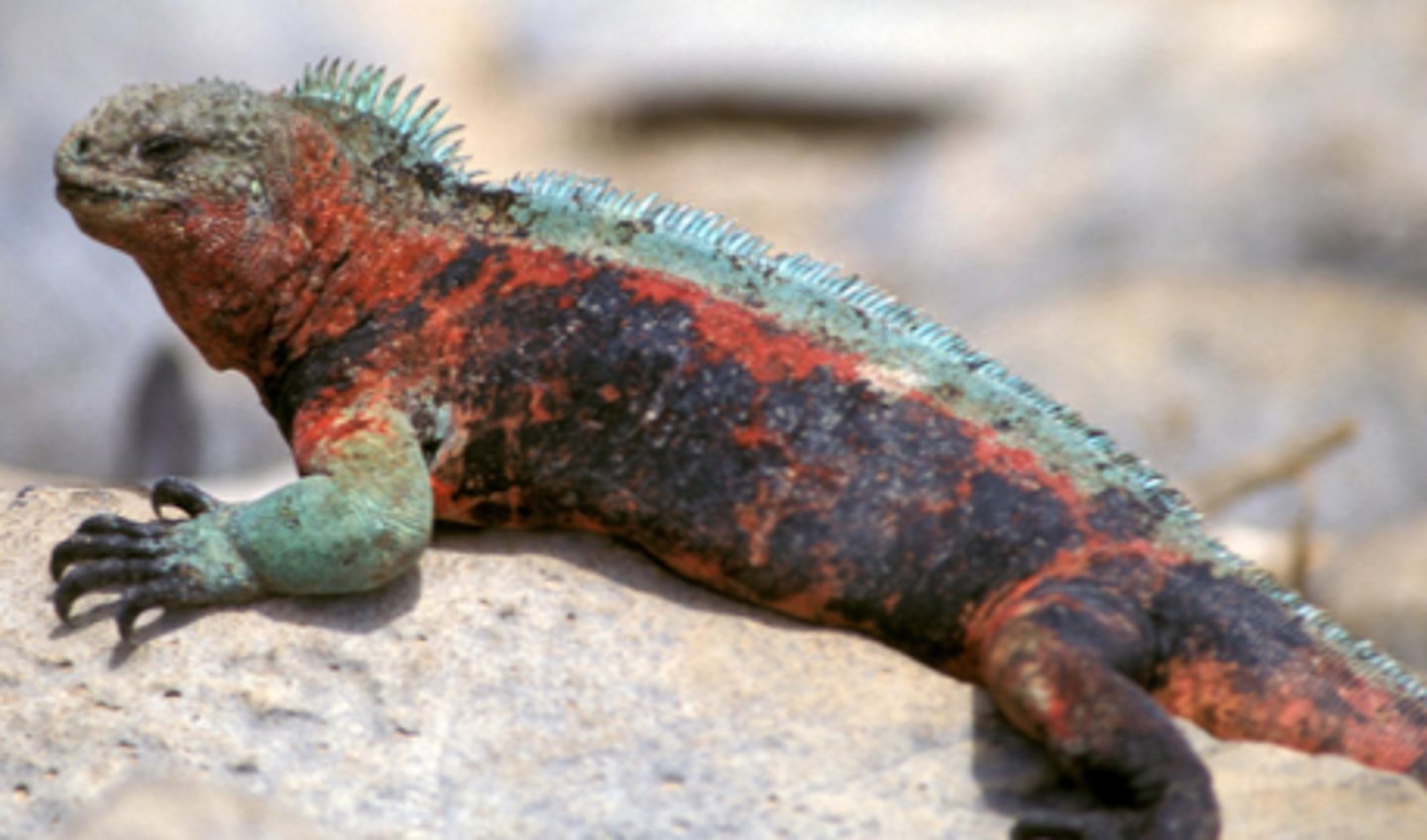
Marine iguanas are normally black with a few gray, green, or reddish spots. During the breeding
season, their skin becomes mottled red, orange, green, and black. Most extreme changes like this are on Espanola Island.
Territorial displays by males usually include head-bobbing, head-butting, and pushing.
When nesting begins, it’s the females that become aggressive.
They nest in sandy areas, and guard their nest from other females. After three to four months, the hatchlings emerge.
These young iguanas are preyed upon by hawks, snakes, lava gulls, herons, cats, and dogs