Cardiovascular (heart) Unit
 Call Kai
 Learn
Learn Practice Test
 Spaced Repetition
 Match
Match Flashcards
 Knowt Play
1/24

There's no tags or description
Looks like no tags are added yet.
Name | Mastery | Learn | Test | Matching | Spaced | Call with Kai | Chat |
|---|
No analytics yet
Send a link to your students to track their progress
25 Terms
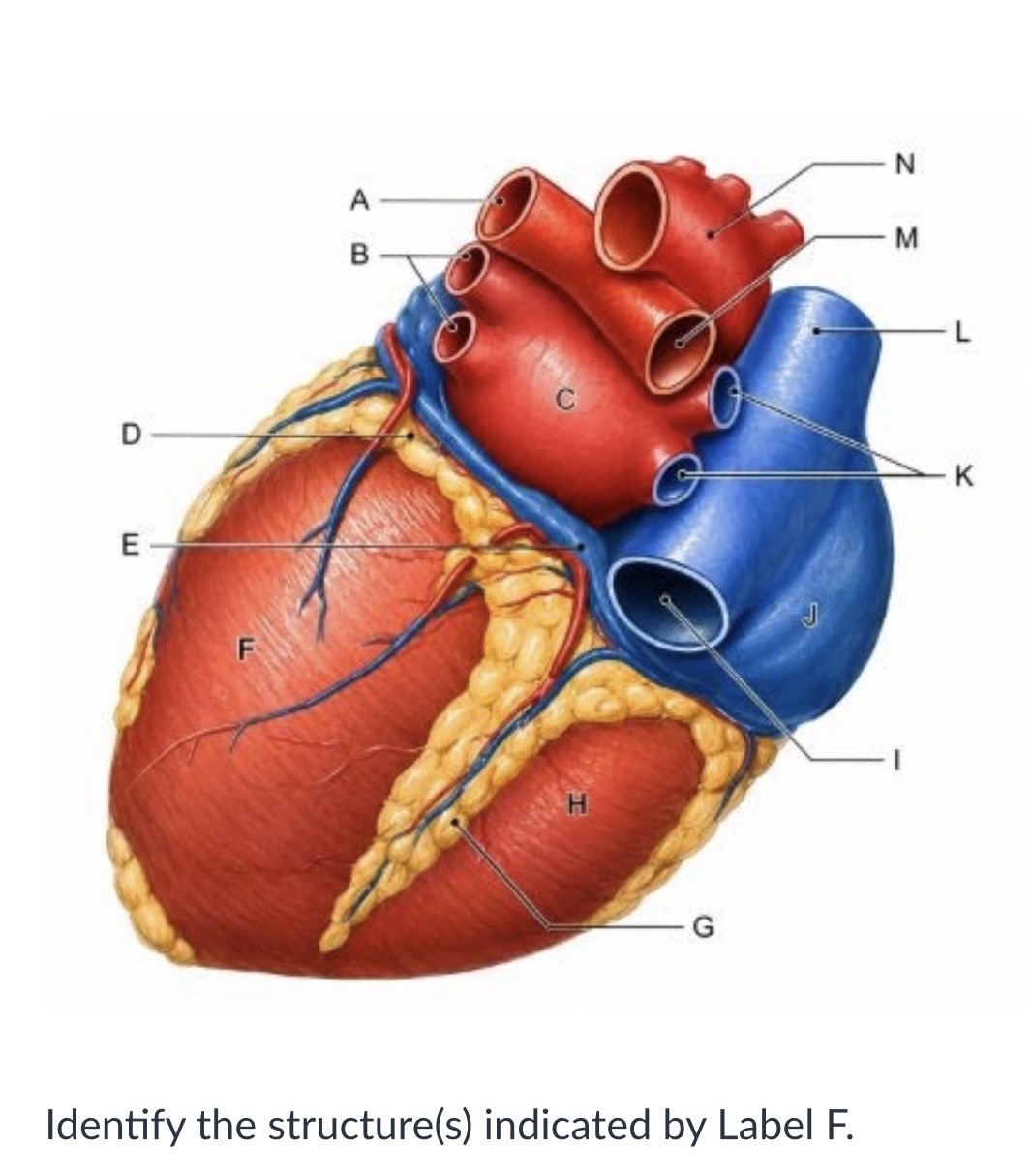
Ventricle
Atrium
Coronary sinus
Auricle
Ventricle
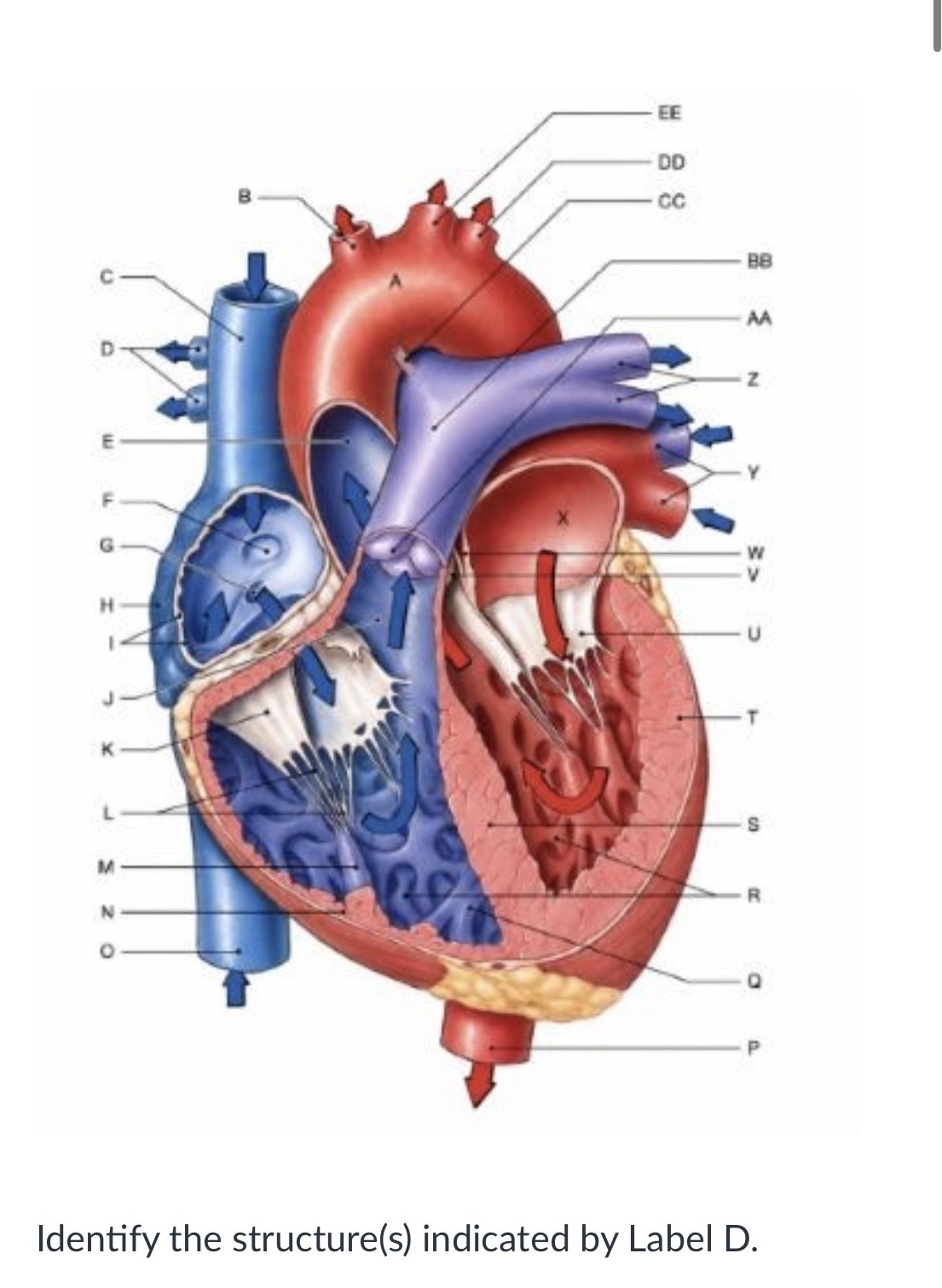
Carotid arteries
Subclavian arteries
Pulmonary veins
Pulmonary arteries
Subclavian arteries
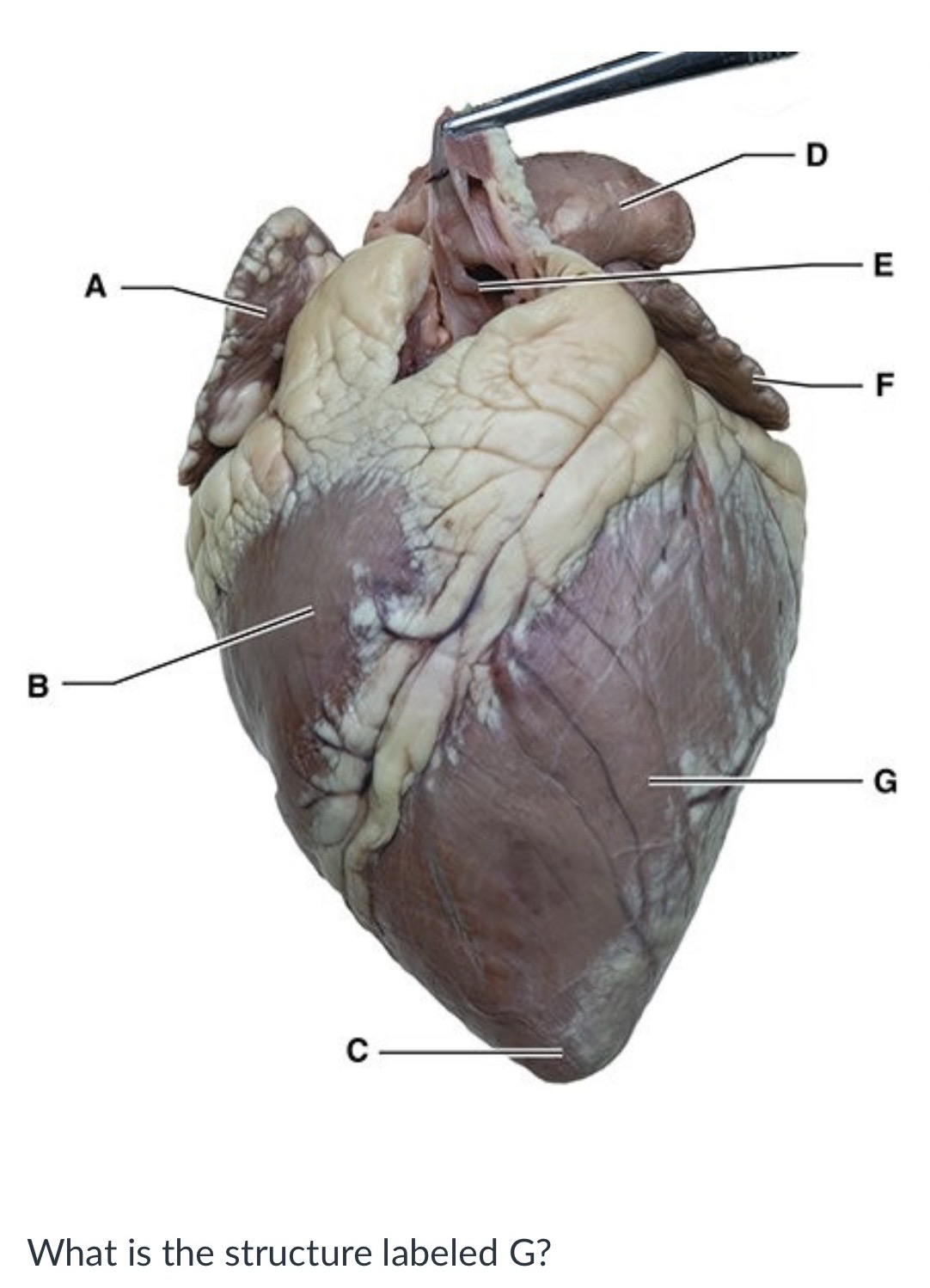
Left ventricle
Auricle of the right atrium
Right ventricle
Auricle of the left atrium
Left ventricle
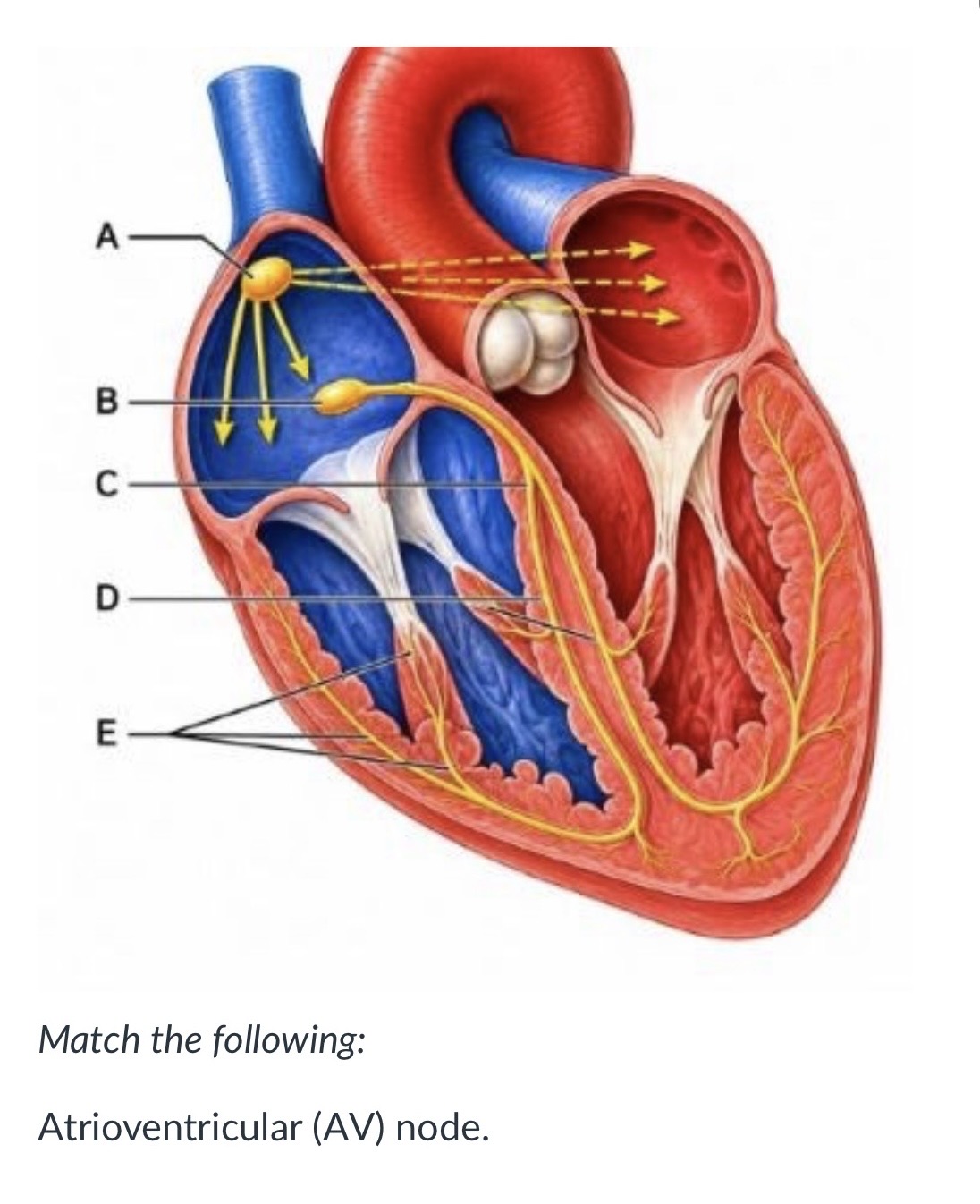
B
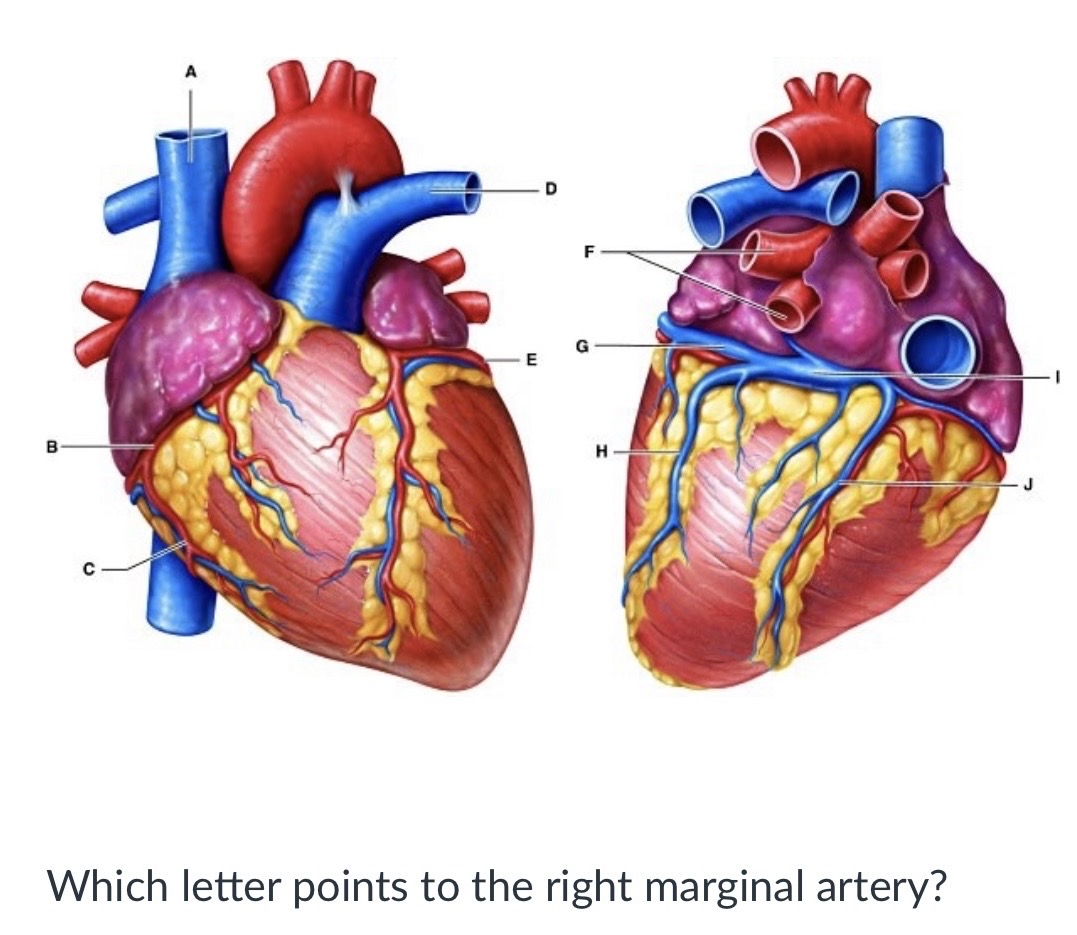
C
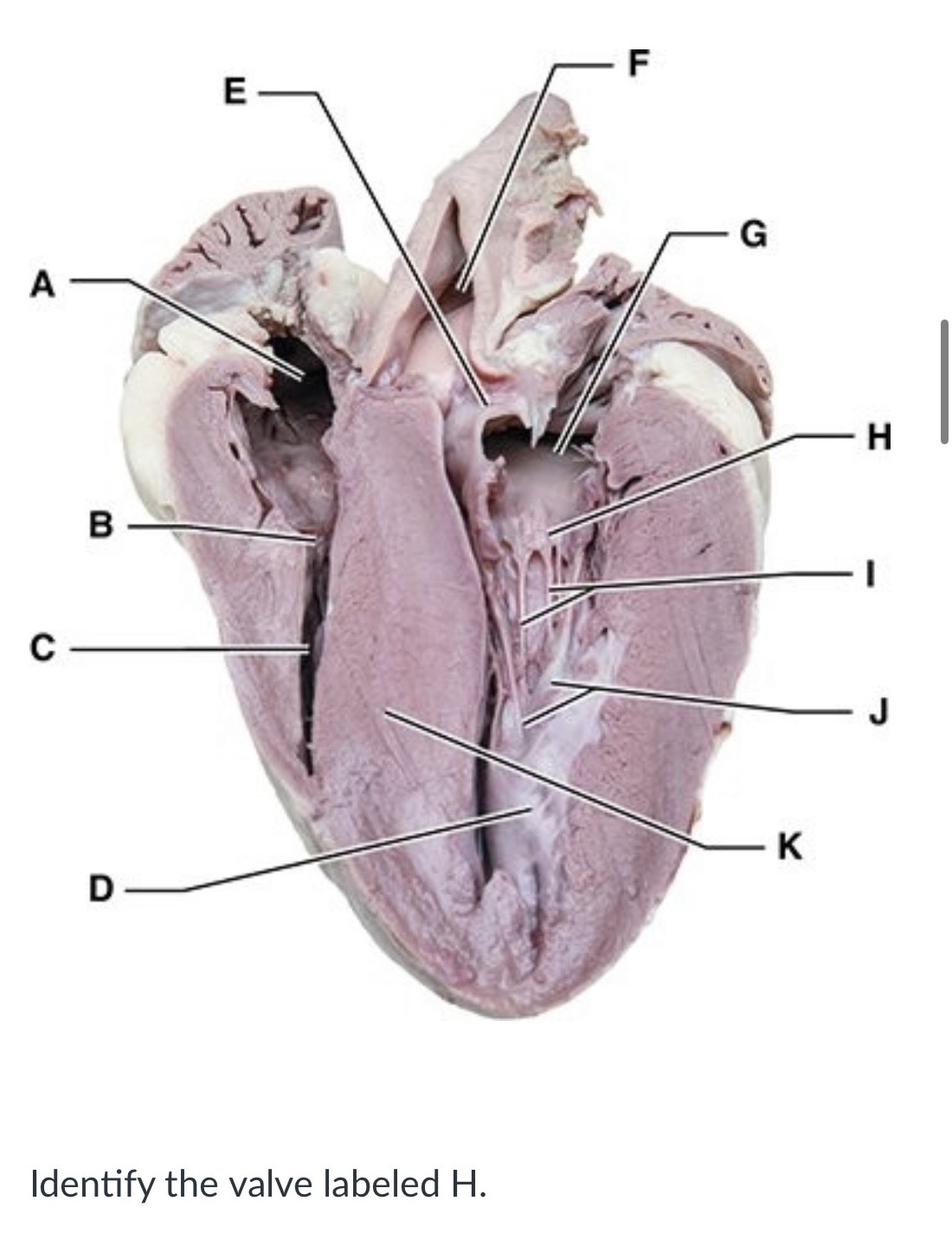
Pulmonary semilunar (SL) valve
Bicuspid (mitral) valve
Tricuspid valve
Aortic semilunar (SL) valve
Bicuspid (mitral) valve
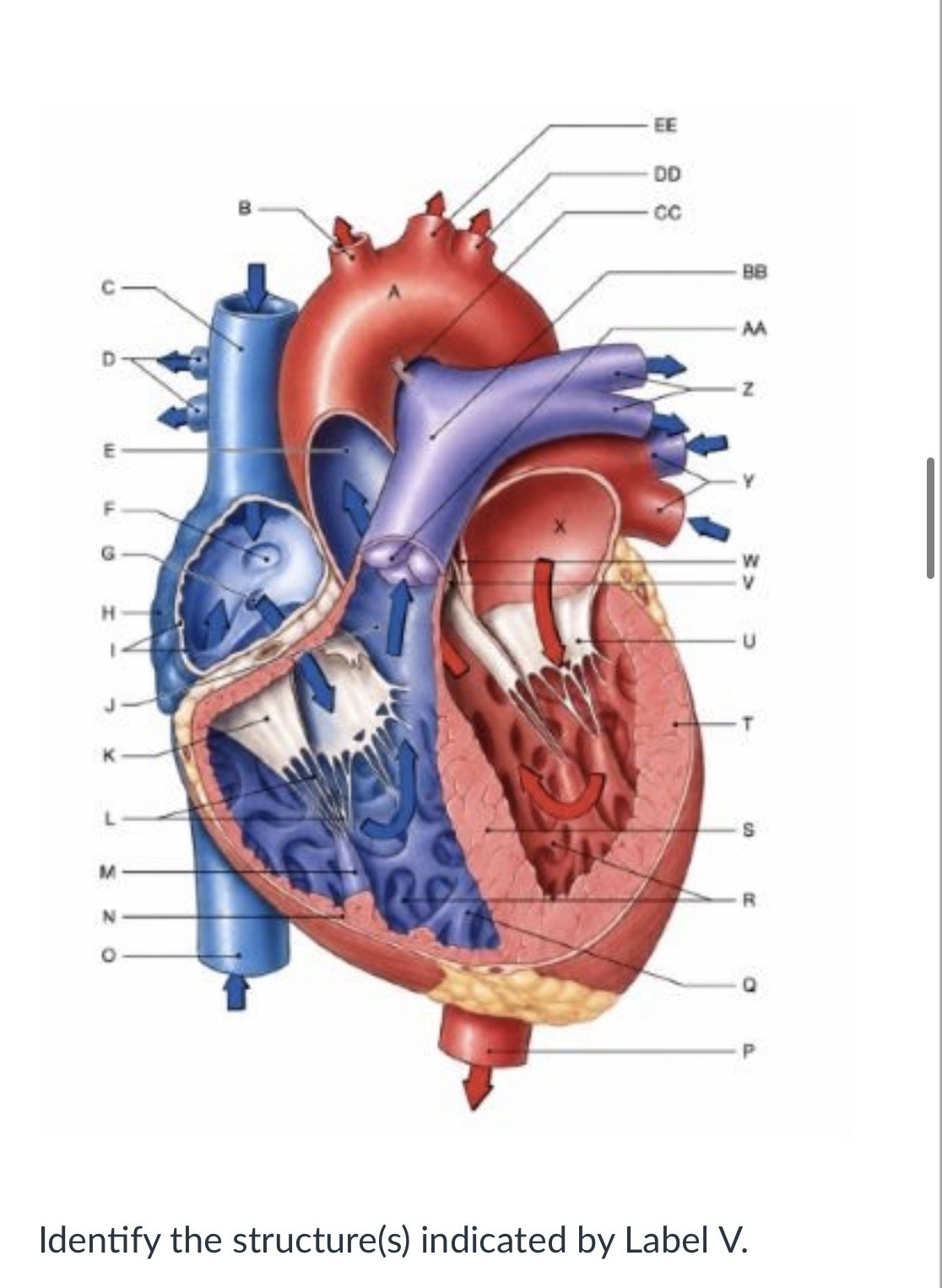
Aortic valve
Tricuspid valve
Mitral valve
Pulmonary valve
Aortic valve
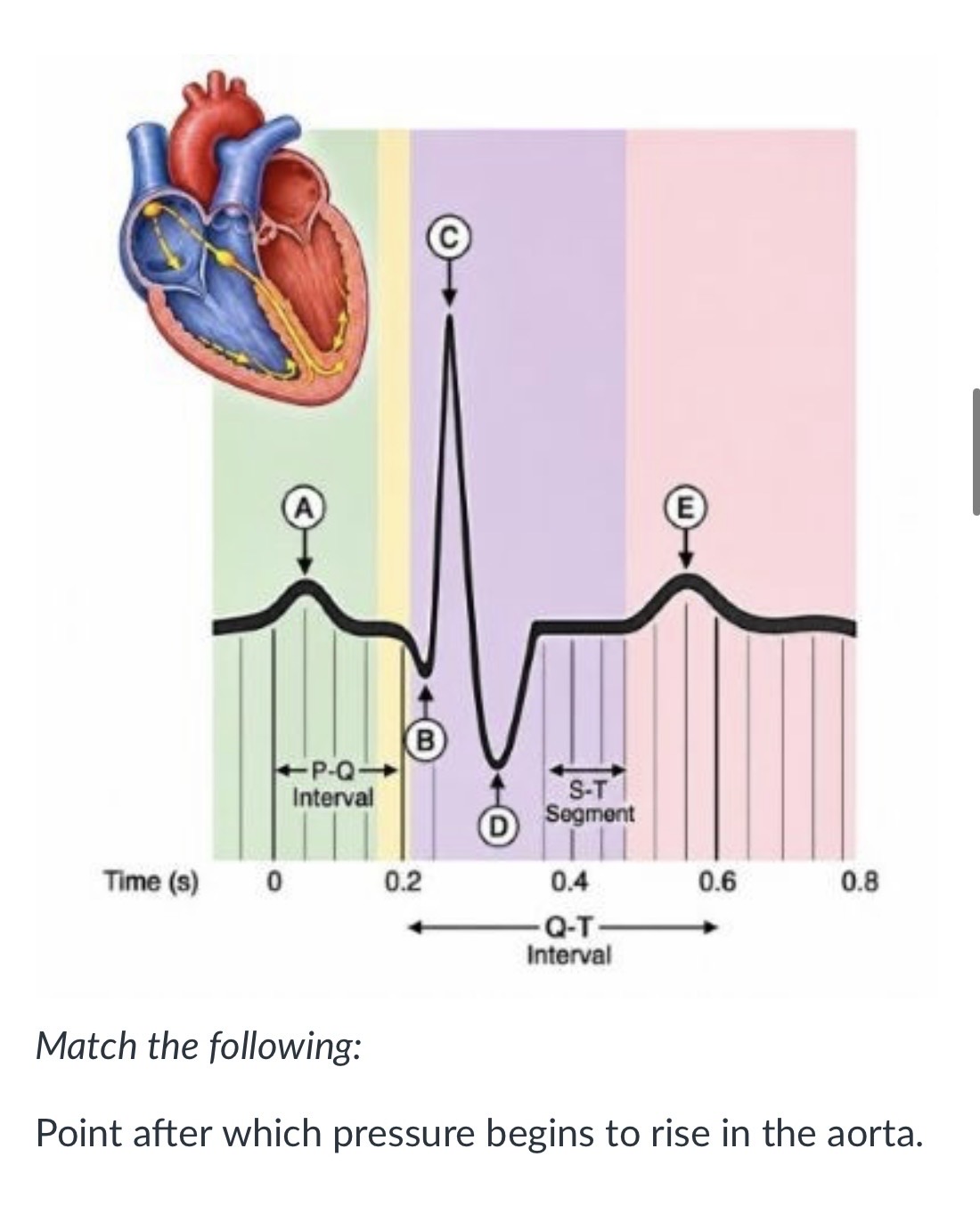
C
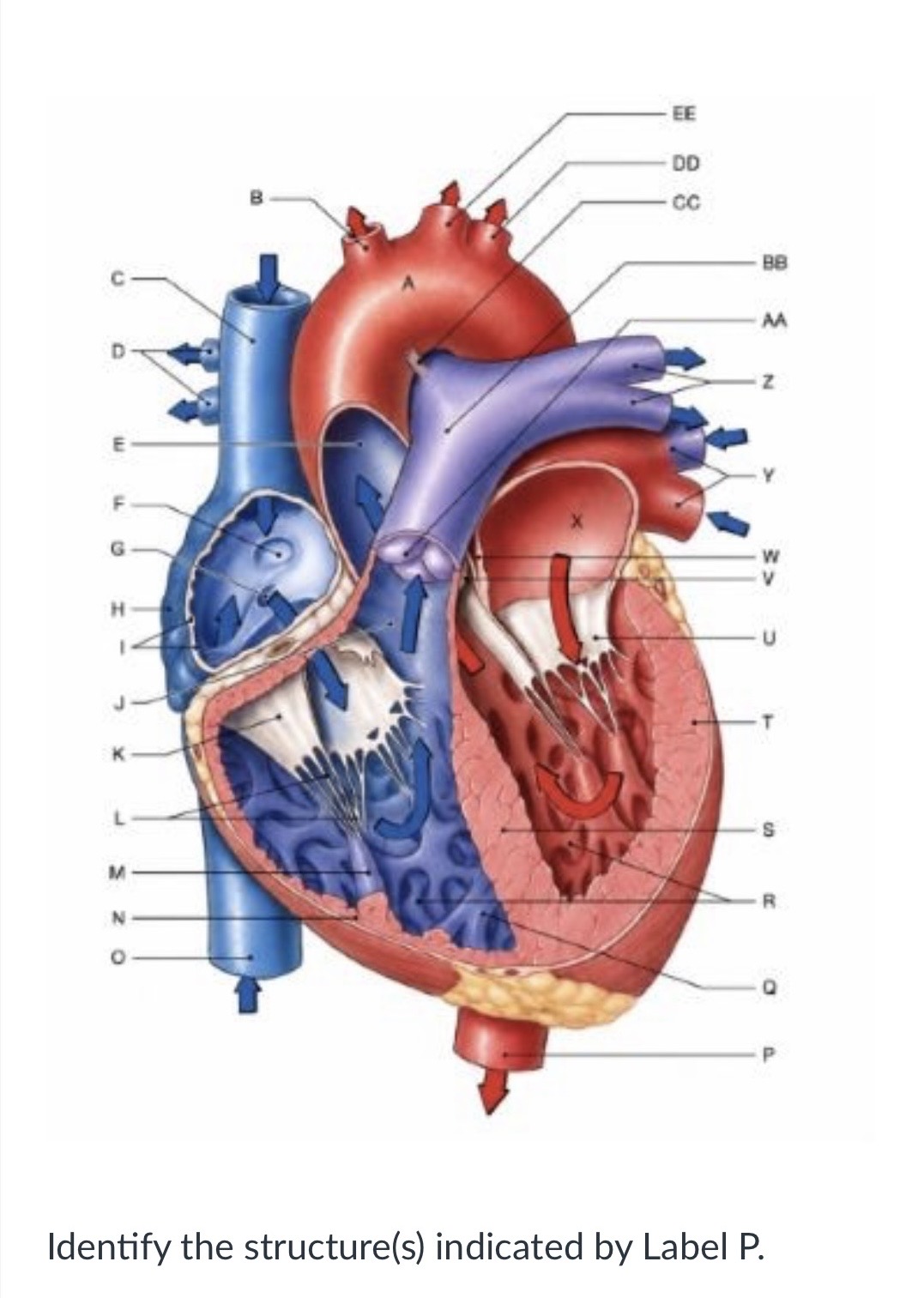
Aortic arch
Descending aorta
Ascending aorta
Inferior vena cava
Descending aorta
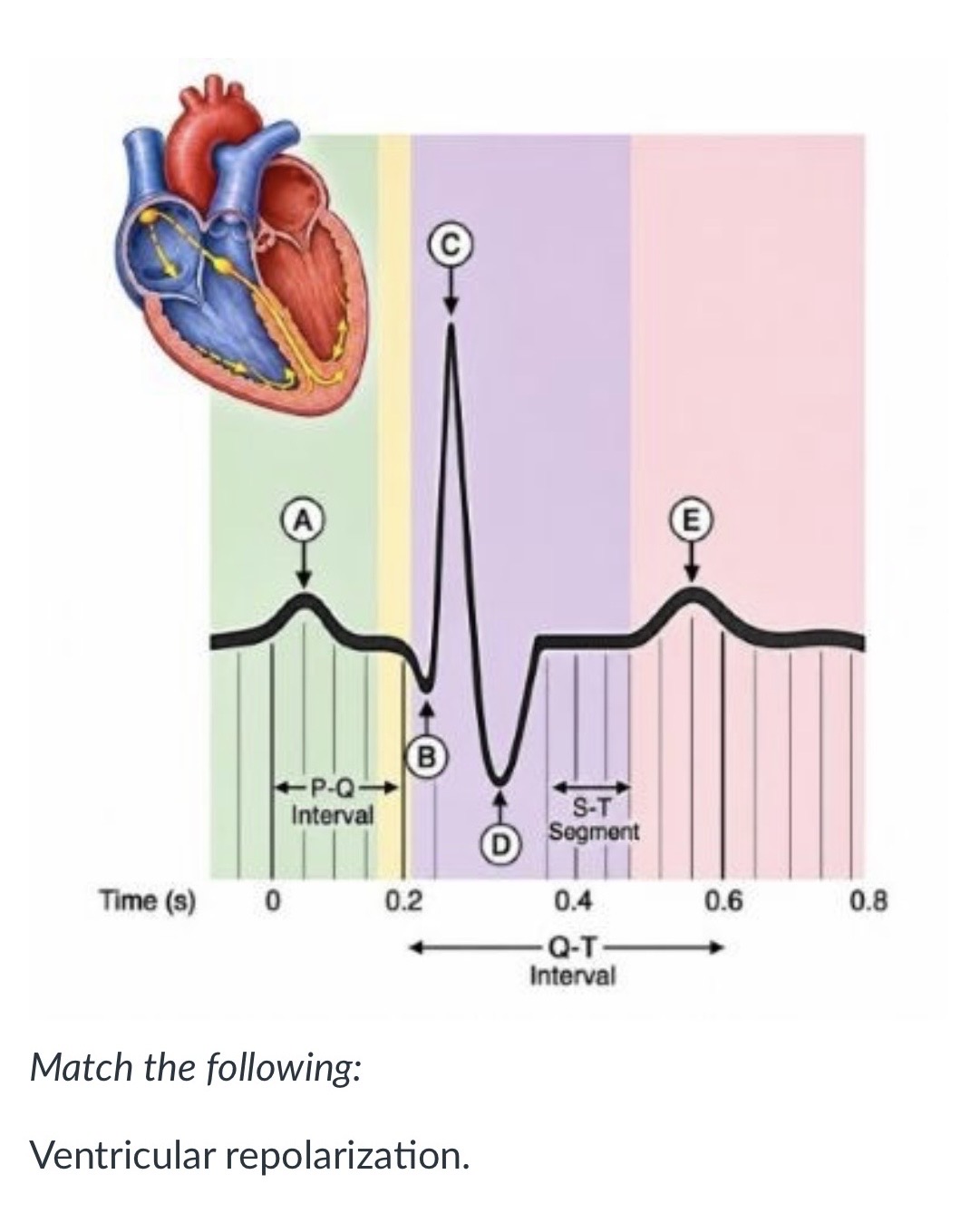
E
Which layer is made of dense irregular connective tissue?
Fibrous pericardium
Endocardium
Epicardium
Myocardium
Fibrous pericardium
Which is NOT a vessel that brings blood directly into the right atrium?
pulmonary vein
superior vena cava
coronary sinus
inferior vena cava
pulmonary vein
The left ventricular wall of the heart is thicker than the right wall in order to
expand the thoracic cage during diastole
accommodate a greater volume of blood
pump blood with greater pressure
pump blood through a smaller valve
pump blood with greater pressure
What is the sequence of events in the transmission of an impulse through the heart muscle?
AV node
AV bundle
SA node
Through the atria
Through the ventricles
Bundle branches
Purkinje fibers
O f, g, d, c, b, a, e
d, b, a, c, f, g, e
c, d, a, b, f, g, e
c, d, a, f, b, g, e
c, d, a, b, f, g, e
During a cardiac cycle, how many of the four chambers contract at any one time?
1
2
None of the choices is correct.
4
2
Which vessel(s) of the heart receive(s) blood from the right ventricle?
aorta
pulmonary trunk
pulmonary veins
venae cavae
pulmonary trunk
The fossa ovalis appears just above the opening of the coronary sinus within the
right ventricle.
left atrium.
left ventricle.
right atrium.
right atrium.
The serous fluid within the pericardial cavity works to
equalize the pressure in the great vessels.
slow the heart rate.
lubricate membranes of the pericardium.
eliminate blood pressure spikes.
lubricate membranes of the pericardium.
Which carries oxygenated blood from the lungs to the heart?
Pulmonary trunk
Pulmonary veins
Pulmonary arteries
Superior vena cava
Pulmonary veins
The foramen ovale of the fetal heart is an opening in the
fossa ovalis.
interatrial septum.
interventricular septum.
aorticopulmonary septum.
interatrial septum.
Which correctly describes the heart's apex?
Projects slightly anteroinferiorly toward the right side of the body
Projects slightly anteroinferiorly toward the left side of the body
Projects slightly posteroinferiorly toward the midline of the body
Projects slightly posteroinferiorly toward the right side of the body
Projects slightly anteroinferiorly toward the left side of the body
The function of the coronary sinus is to
guide the inferior vena cava into the right atrium.
guide the aorta out of the heart.
take blood from the coronary circulation to the right atrium.
connect the top and bottom halves of the heart.
take blood from the coronary circulation to the right atrium.
Which heart chambers contain deoxygenated blood?
Left ventricle and right ventricle
Left atrium and left ventricle
Right atrium and right ventricle
Right atrium and left ventricle
Right atrium and right ventricle
The heart valves
stabilize and hold the arteries leaving the heart.
permit the passage of blood in one direction.
are only used in the fetal heart.
separate the right and left sides of the heart.
permit the passage of blood in one direction.
If cardiac muscle is deprived of its normal blood supply, damage would primarily result from
an inadequate supply of lactic acid
a decrease in the number of available mitochondria for energy
production
decreased delivery of oxygen
a lack of nutrients to feed into metabolic pathways
decreased delivery of oxygen