NPTE: Cardiopulmonary bootcamp
 Call Kai
 Learn
Learn Practice Test
 Spaced Repetition
 Match
Match Flashcards
 Knowt Play
1/69

There's no tags or description
Looks like no tags are added yet.
Name | Mastery | Learn | Test | Matching | Spaced | Call with Kai | Chat |
|---|
No analytics yet
Send a link to your students to track their progress
70 Terms
Rate pressure product
HR x SBP
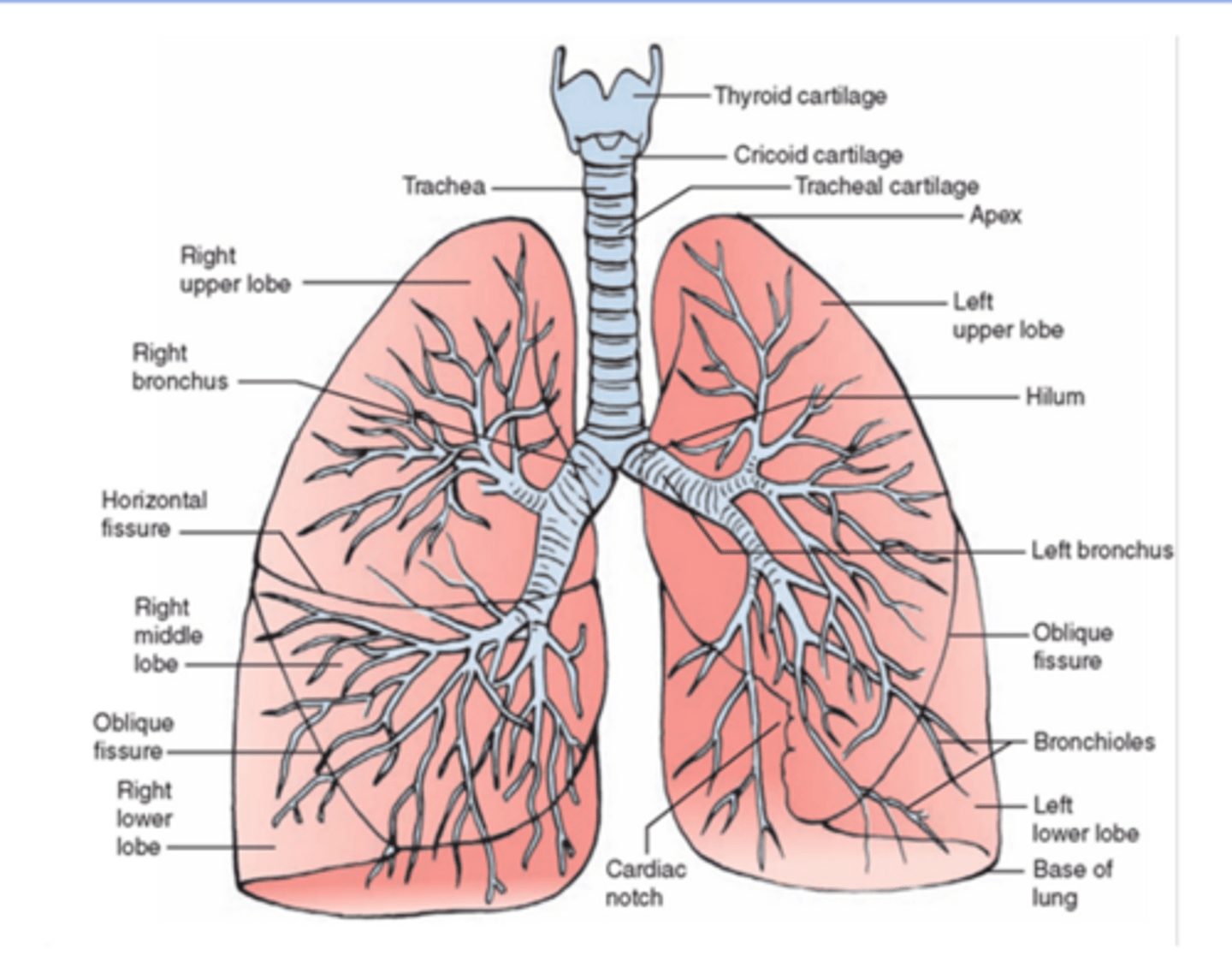
Right vs left lobes of lungs
Most likely treatment for respiratory acidosis
use supplemental oxygen to decrease respiratory acidosis
Most likely recommended intervention for respiratory acidosis
pursed lip breathing
Postural drainage
Bronchus of the involved lung segment is perpendicular to the ground; using gravity, these positions assist the mucociliary transport system in removing excessive secretions from the tree.
Indications for postural drainage
• Pulmonary complications
• Weak/elderly patients
• Atelectasis, pneumonia, COPD
- Secretions cleared by coughing or suctioning
During postural drainage maintain each position for
maintain each position for 5-to-10 minutes
The physical therapist decided to use postural drainage for airway clearance. The physical therapist positions the patient in a seated position leaning forward over a folded pillow. Based on this position, which lobe is MOST LIKELY being drained?
posterior apical segments of upper lobe
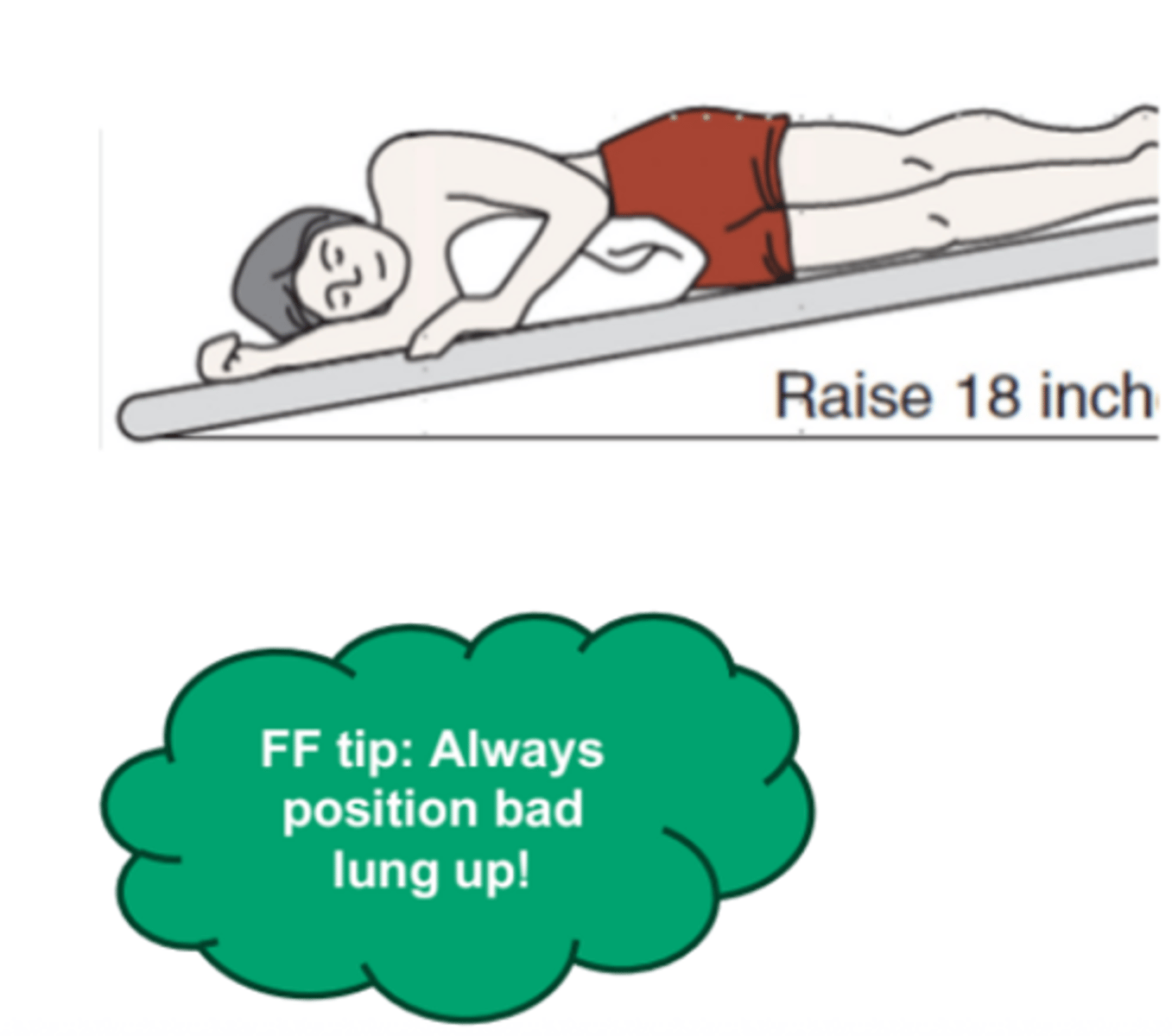
A clinician is educating the patient's parents on postural drainage. The clinician places the patient in a position, as shown in the image below. Which of the following segments of the lungs is MOST LIKELY being drained?
left lateral basal segment
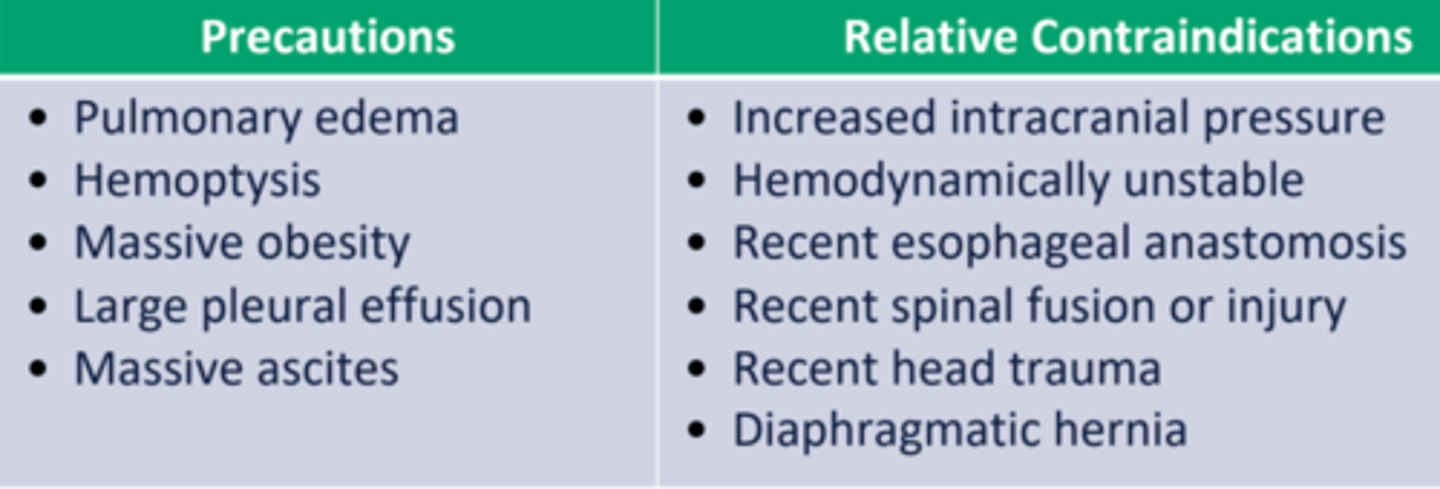
Precautions and relative contraindications to postural drainage
A patient with chronic congestive heart failure was recently admitted to the hospital. Which of the following plans for prophylactic respiratory care is most likely to be CONTRAINDICATED?
Vigorous chest vibrations, with the foot of the bed elevated, 4 times per day
Age predicted HR max
220-age
Karvonen's formula
Heart rate reserve multiplied by the percentage of intensity plus resting heart rate
An older adult presents with limited endurance but has no history of cardiopulmonary disease. An exercise tolerance test is negative for coronary artery disease. Which of the following is the MOST APPROPRIATE initial aerobic exercise intensity for this individual?
60-70% HR max
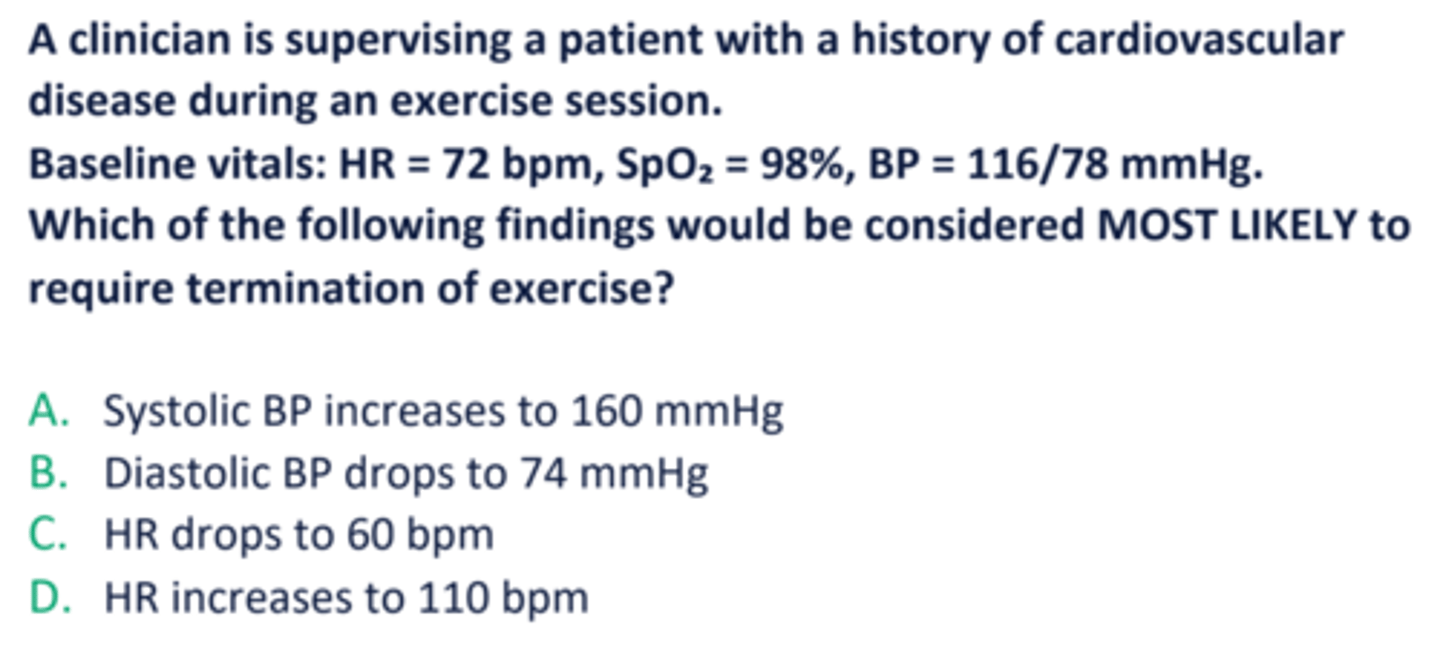
A clinician is supervising a patient with a history of cardiovascular
disease during an exercise session. Baseline vitals: HR = 72 bpm, SpO2 = 98%, BP = 116/78 mmHg. Which of the following findings would be considered MOST LIKELY to require termination of exercise?
HR drops to 60 bpm
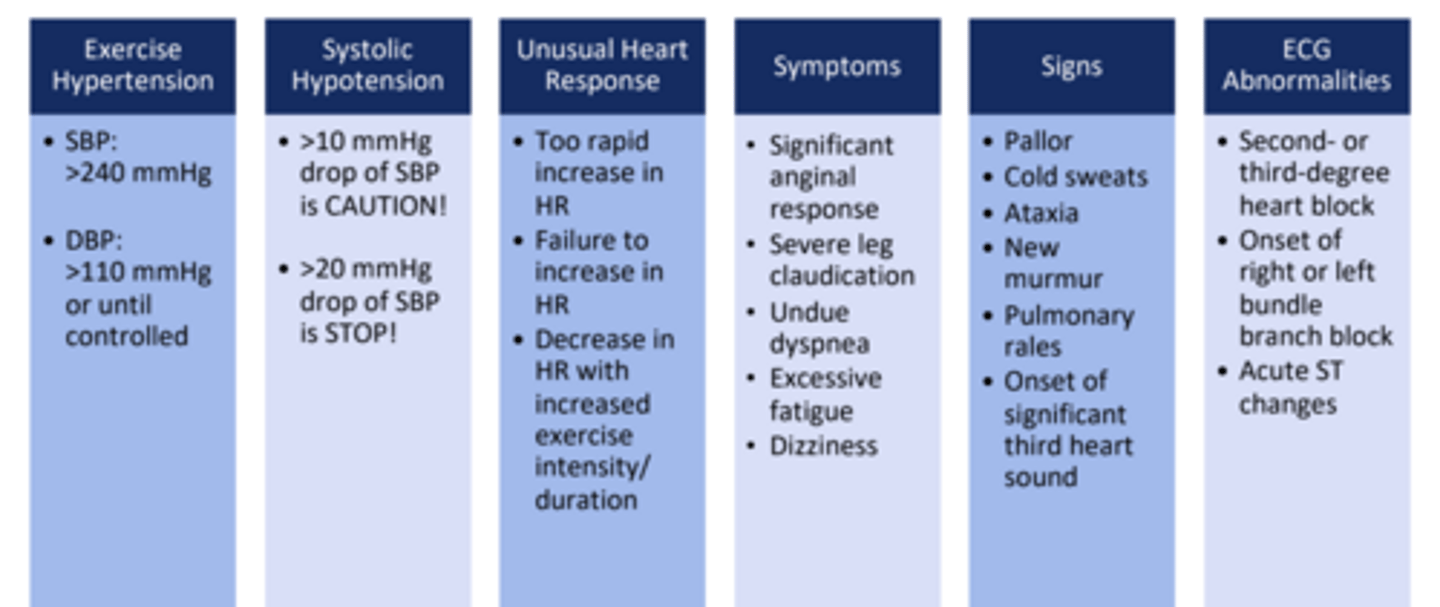
Abnormal responses to exercises: exercise termination criteria
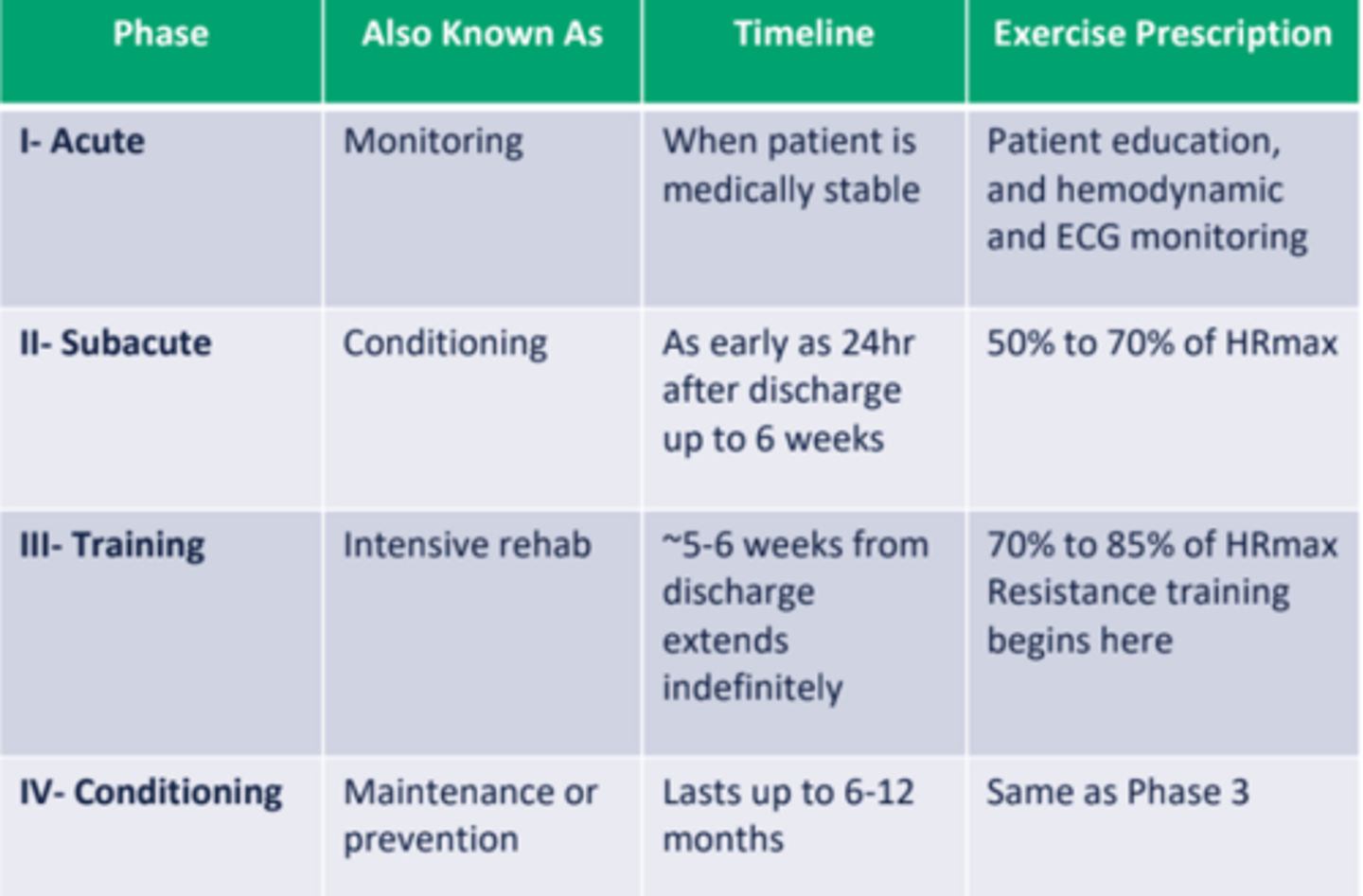
Cardiac Rehabilitation phases
• Acute phase or monitoring phase - Phase I
• Subacute phase or conditioning phase - Phase II
• Training phase - Phase III
• Maintenance period - Phase IV
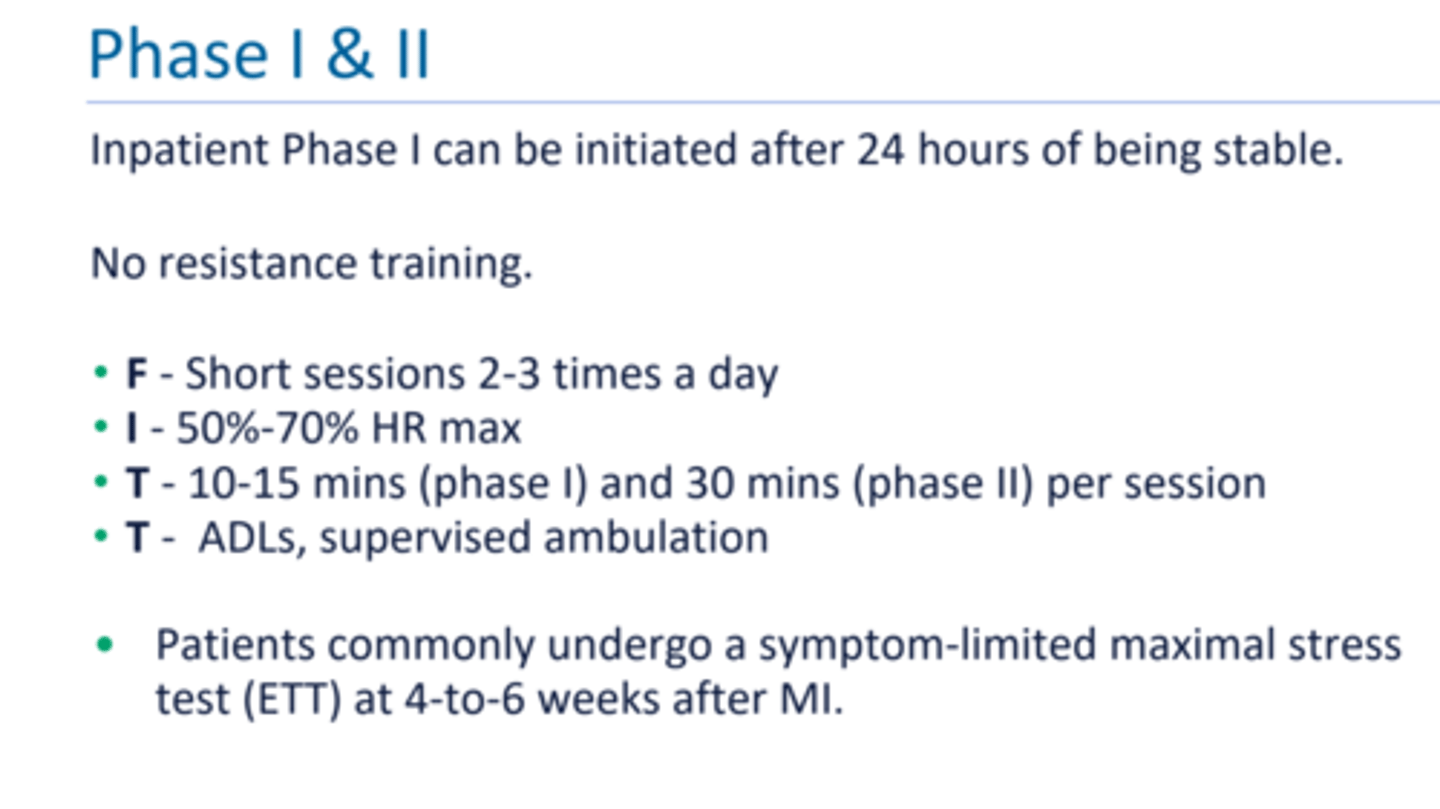
Phase I and II cardiac rehab FITT principle
A patient is undergoing cardiac rehabilitation post-complicated myocardial infarction in the hospital. On day two, the clinician wants to progress the patient to sitting. Which of the following is an APPROPRIATE INITIAL task for this patient?
Make the patient sit on reclining chair and check vitals
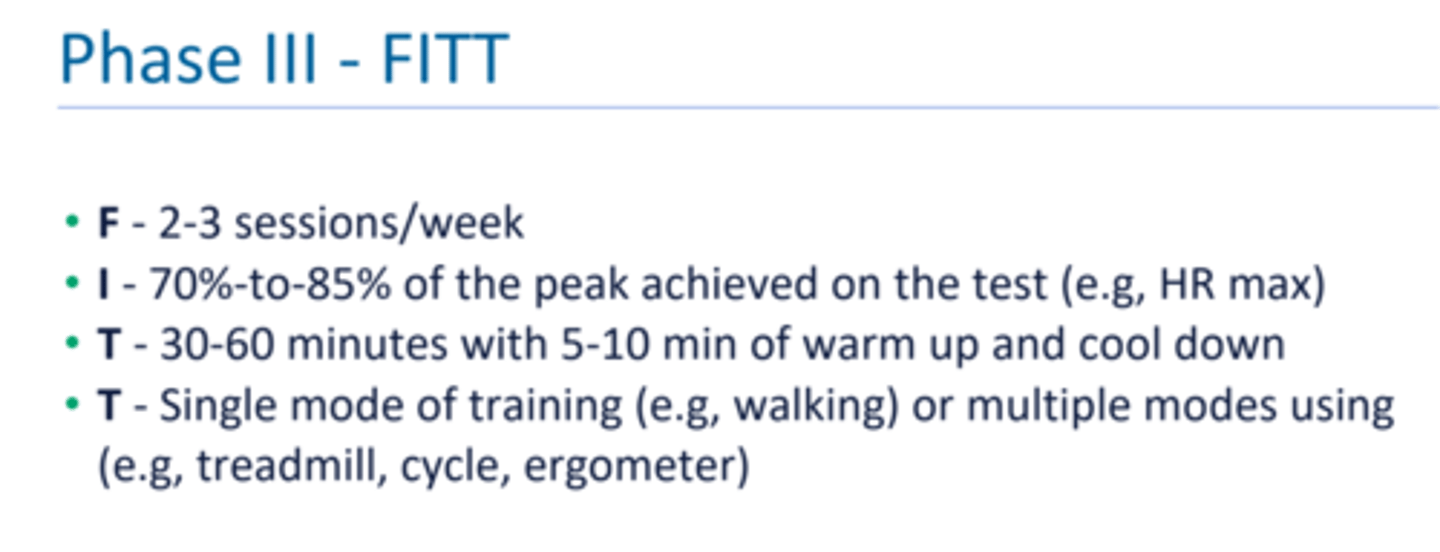
Cardiac rehab phase III FITT
• Begin with the use of elastic bands and light hand weights
(e.g, 1-3 pounds) or 30-50% of max weight used to complete 1RM
• Begin with 8-10 reps, progress to 12-15 reps
• Avoid upper extremity resistance as soft tissue is still healing
- do large muscle groups
- CABG resistance training usually after 8 weeks
- MI resistance training usually after 5 weeks
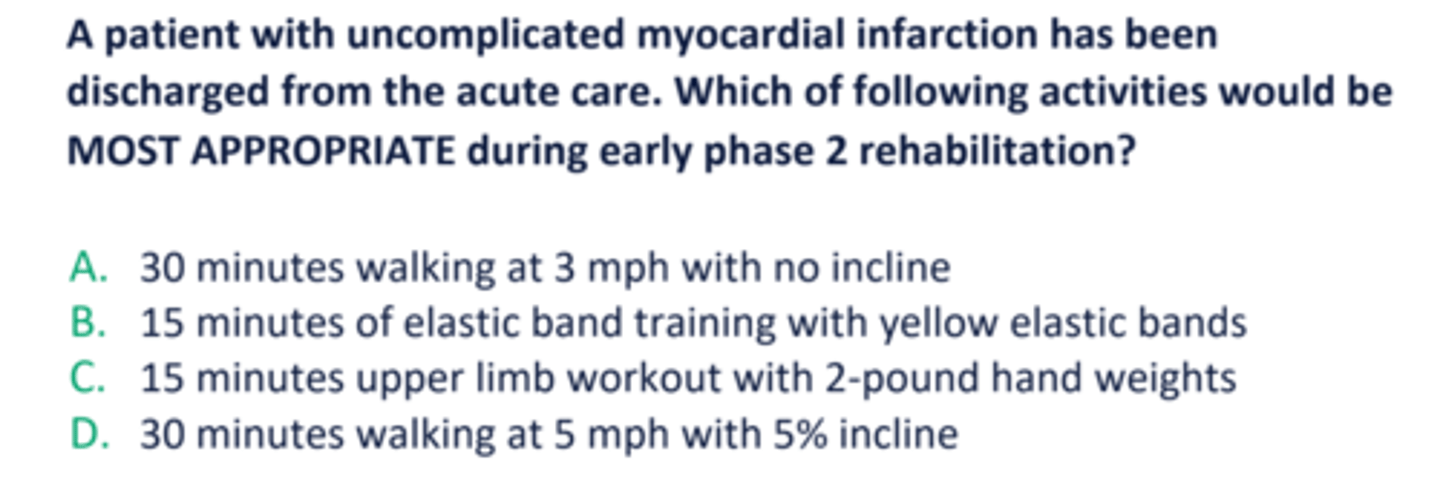
A patient with uncomplicated myocardial infarction has been discharged from the acute care. Which of following activities would be MOST APPROPRIATE during early phase 2 rehabilitation?
30 minutes walking at 3 mph with no incline
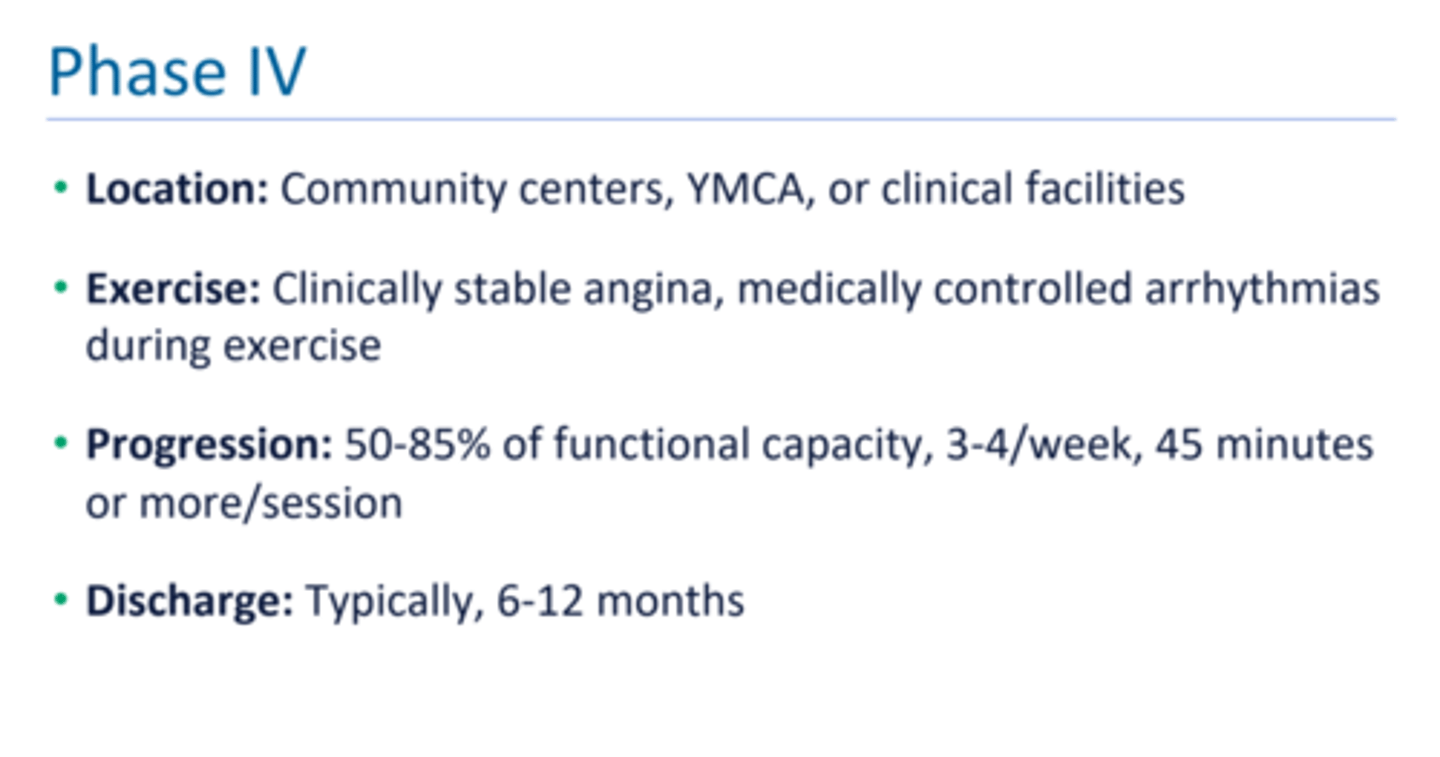
Phase IV cardiac rehab
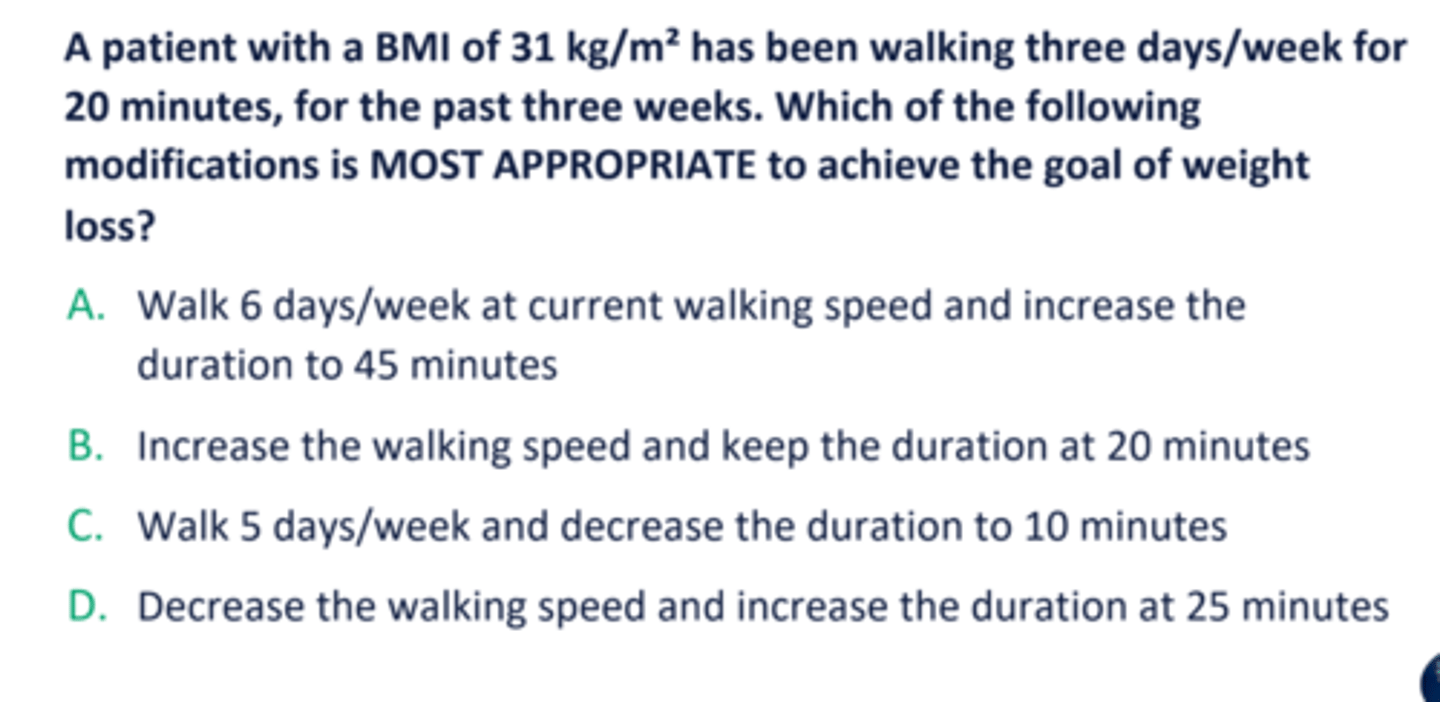
A patient with a BMI of 31 kg/m2 has been walking three days/week for 20 minutes, for the past three weeks. Which of the following modifications is MOST APPROPRIATE to achieve the goal of weight loss?
Walk 6 days/week at current walking speed and increase the duration to 45 minutes
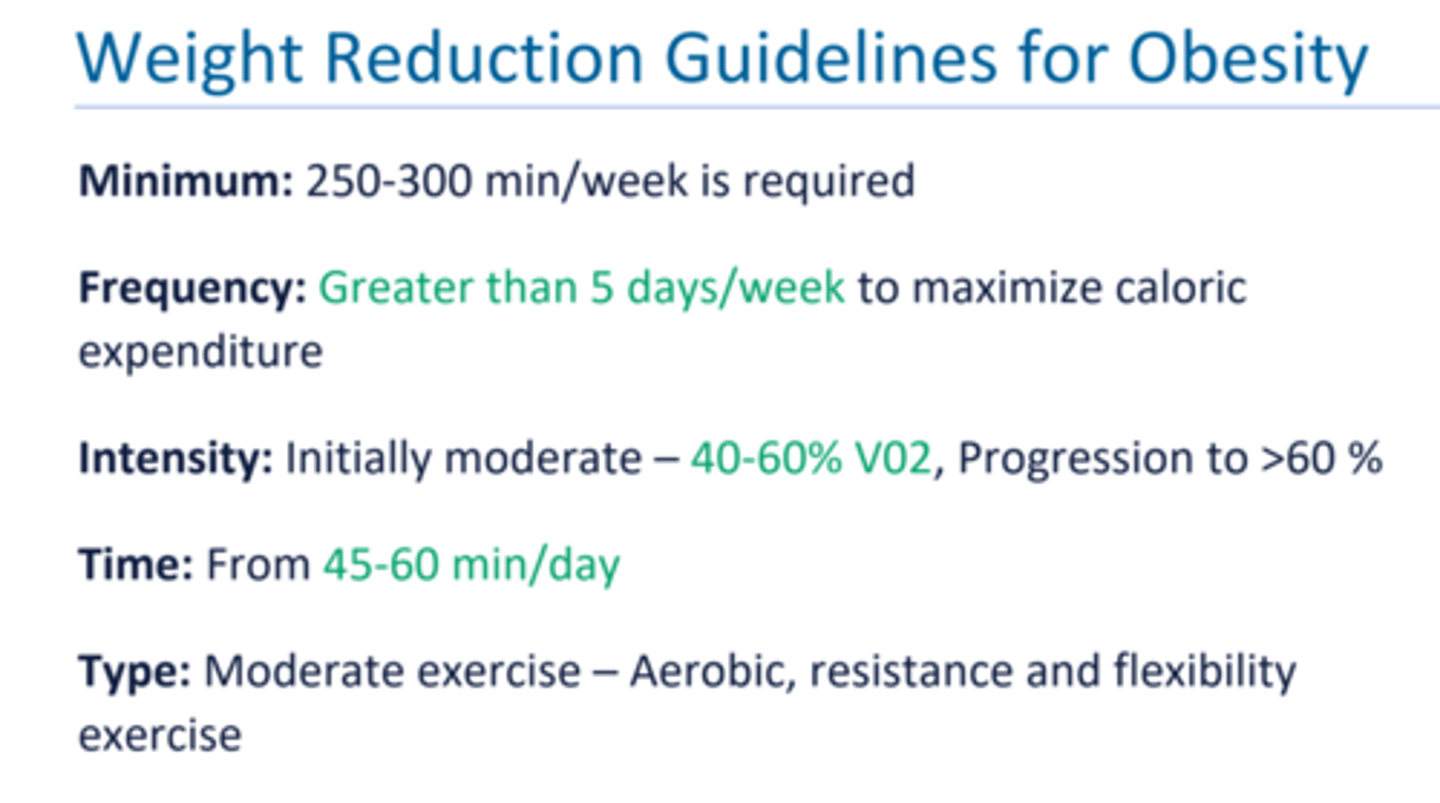
FITT for obesity
Conduction system of the heart
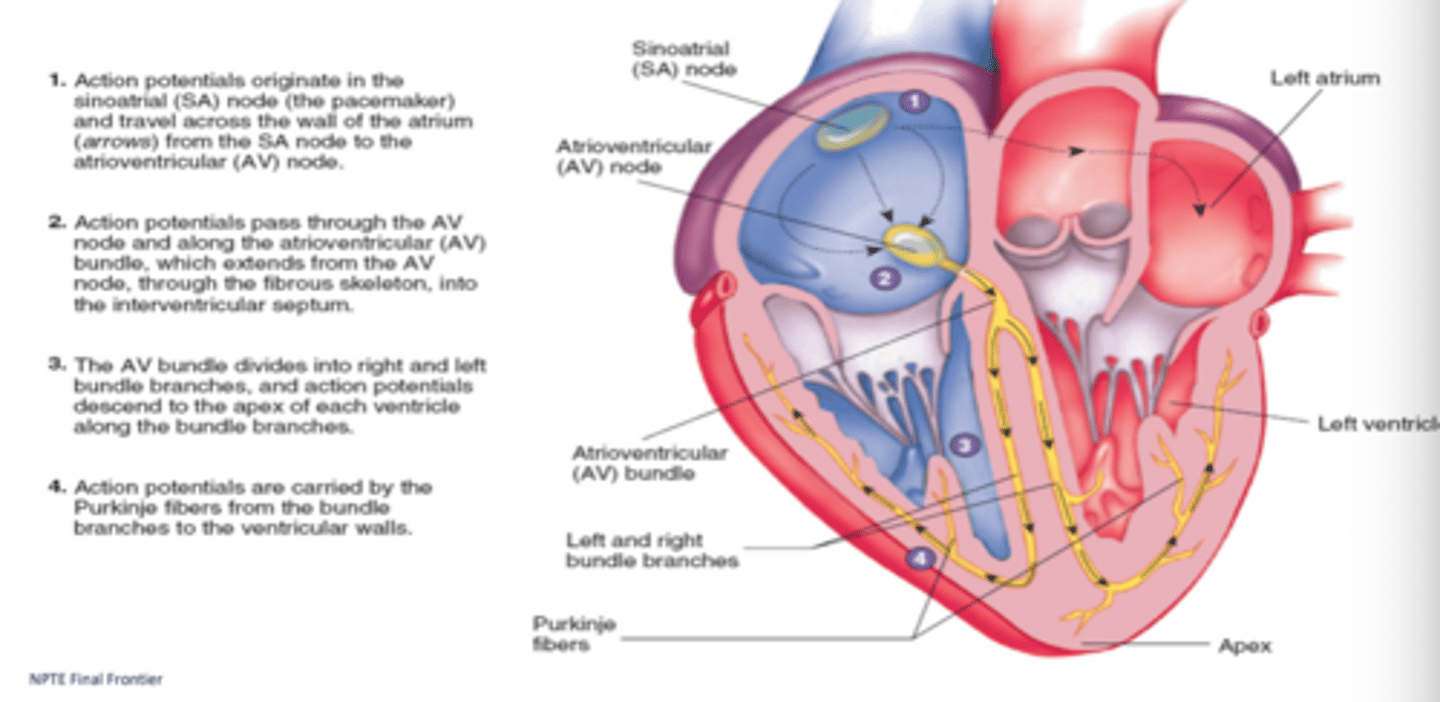
SA node
pacemaker, initiates depolarization; 60-100 bpm
AV node
passes depolarization to ventricles; brief delay to allow for ventricular filling; 40-60 bpm
Bundle branches
to left and right ventricle
Purkinje fibers
throughout ventricles
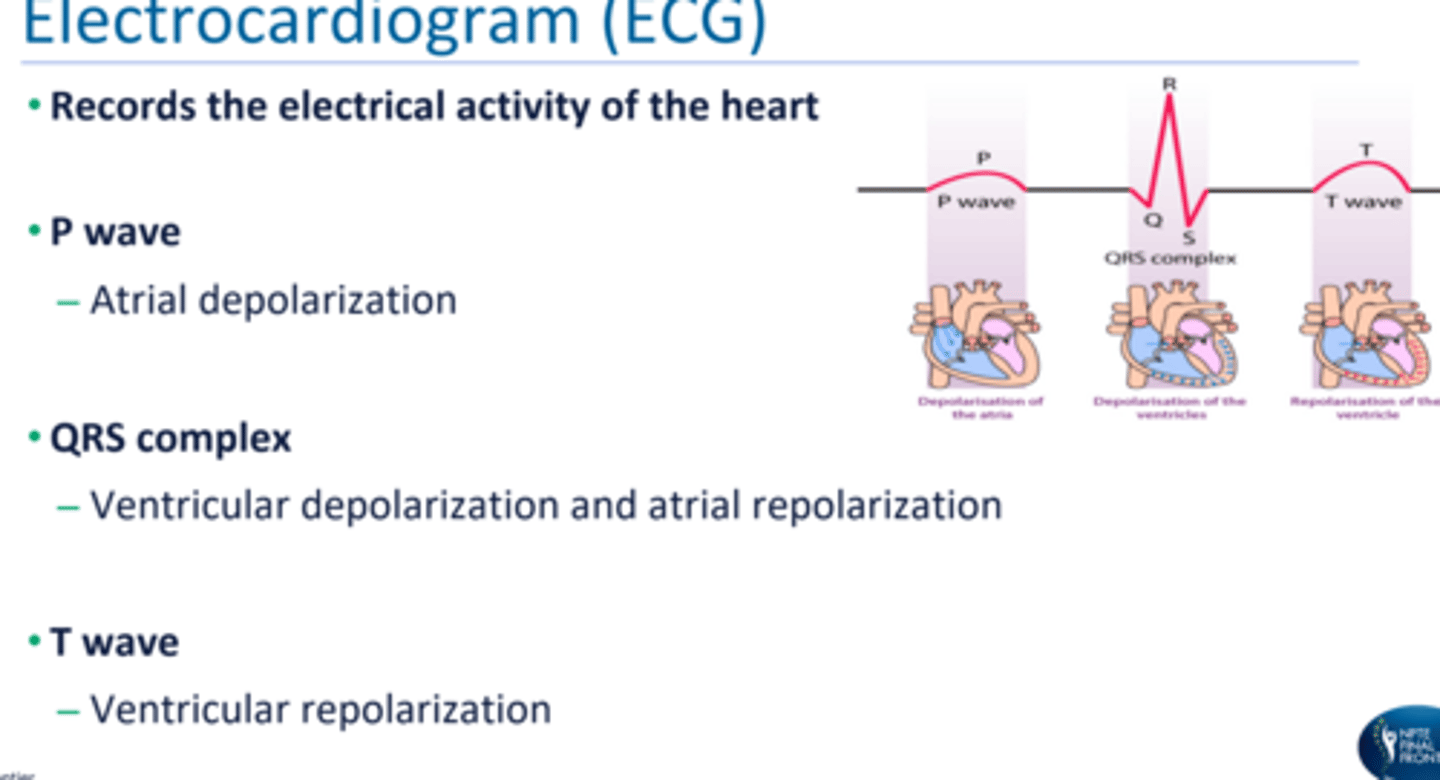
ECG waves
records the electrical activity of the heart
P wave: atrial depolarization
QRS complex: ventricular depolarization and atrial repolarization
T wave: ventricular repolarization
Calculate heart rate on ECG
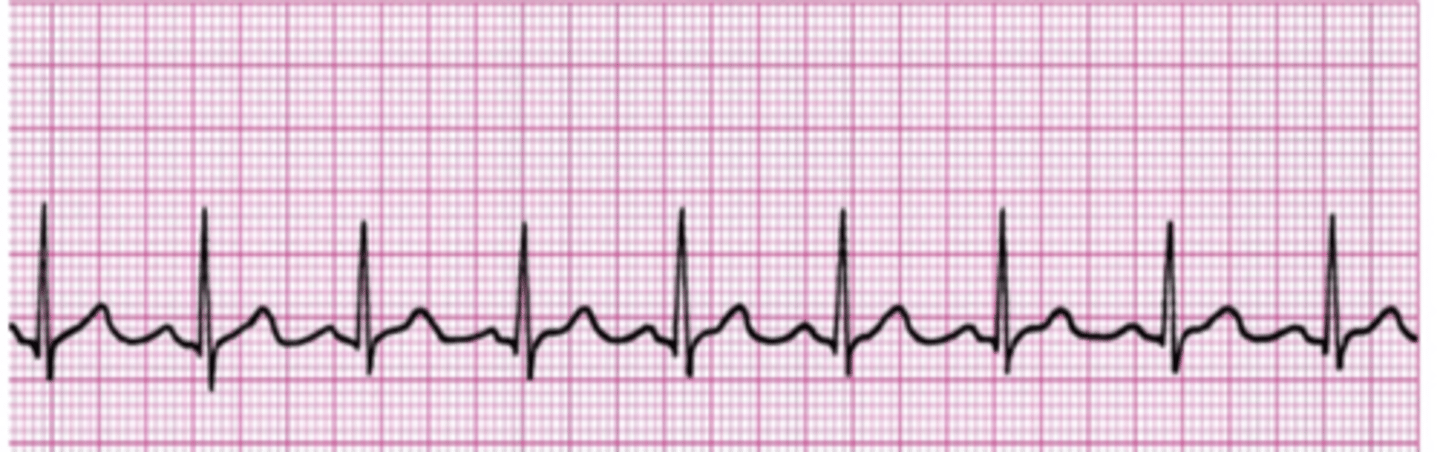
A physical therapist examines the output from a single lead ECG of a patient in an inpatient clinic. The six-second ECG strip is shown in picture below. What should the physical therapist determine the heart rate of the patient as?
90
Calculating ECG heart rate
Count off 30 large boxes = 6 seconds (remember 1 large box = 0.2 seconds, so 30 large boxes = 6 seconds). Then, count the number of R waves in six seconds and multiply by 10.
Classification of AV heart blocks
• 1st degree heart block: Delay in conduction
• 2nd degree heart block: Partially blocked conduction
• 3rd degree heart block: Fully blocked conduction
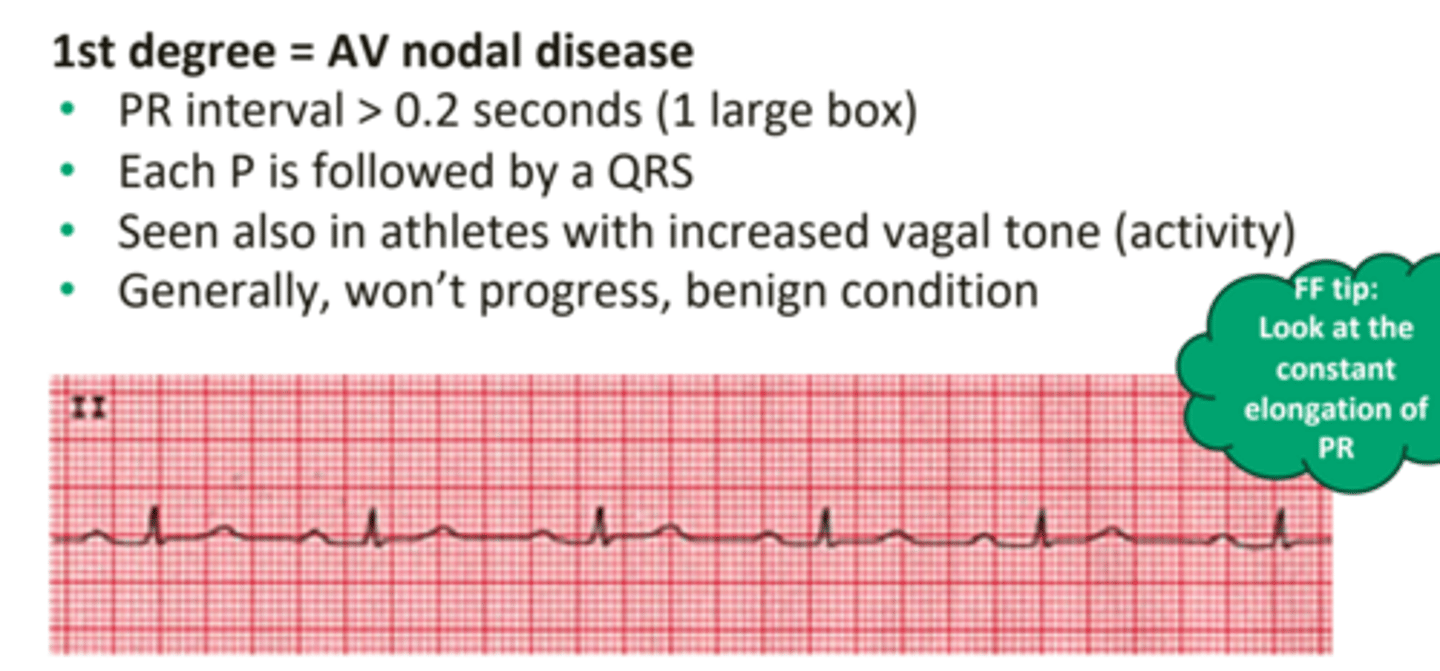
1st degree AV block
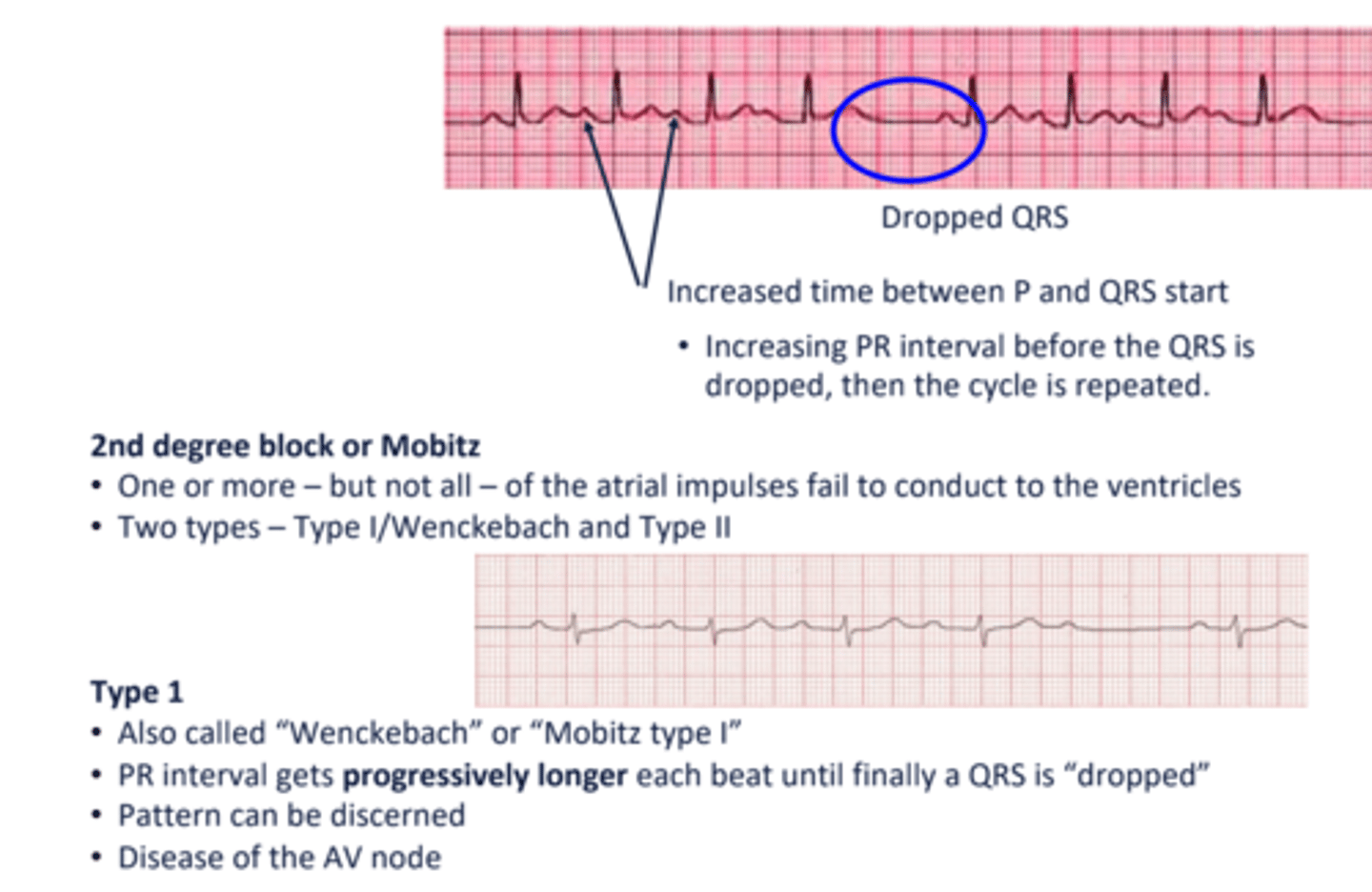
2nd degree block or mobitz type 1
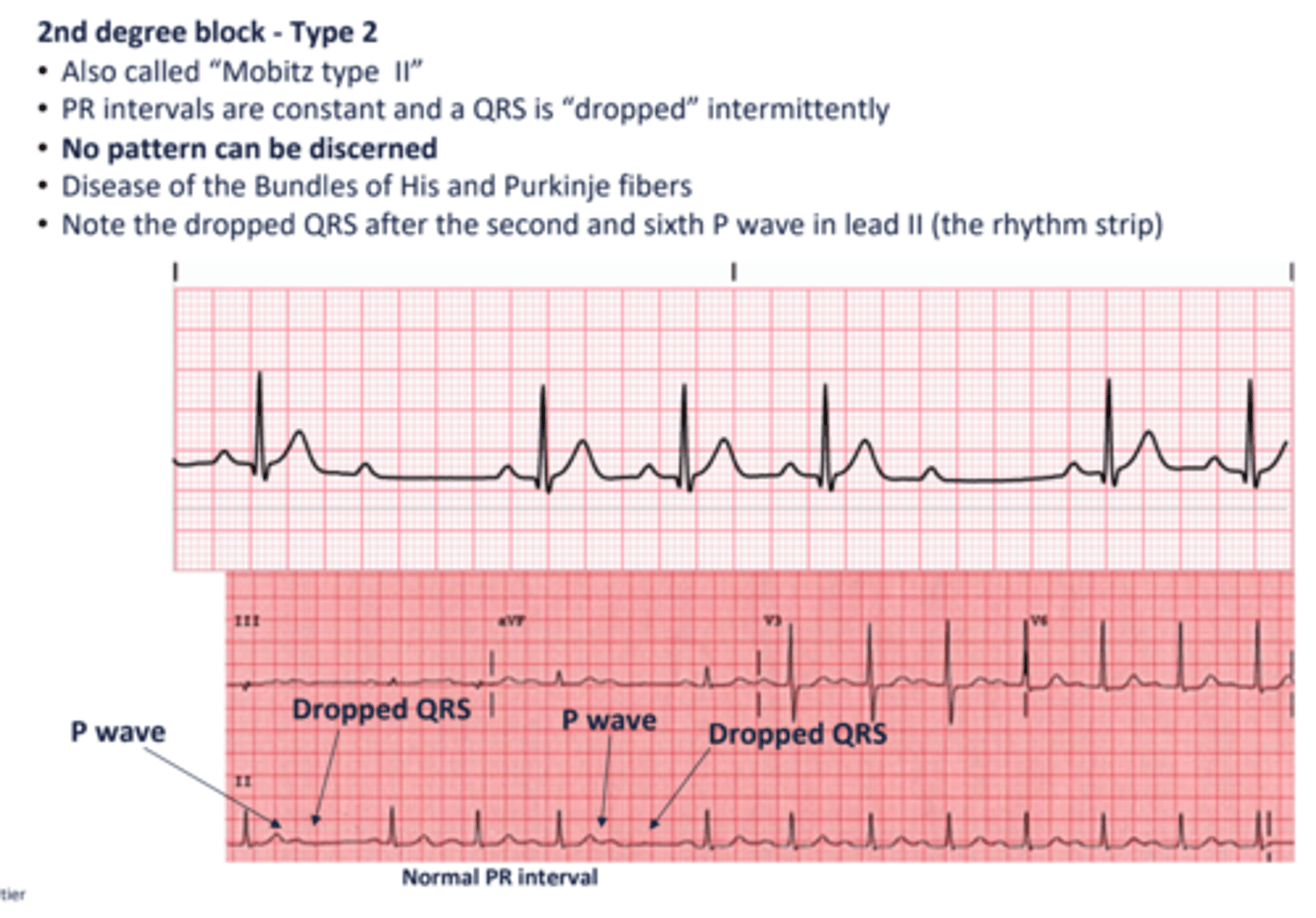
2nd degree block or mobitz type 2
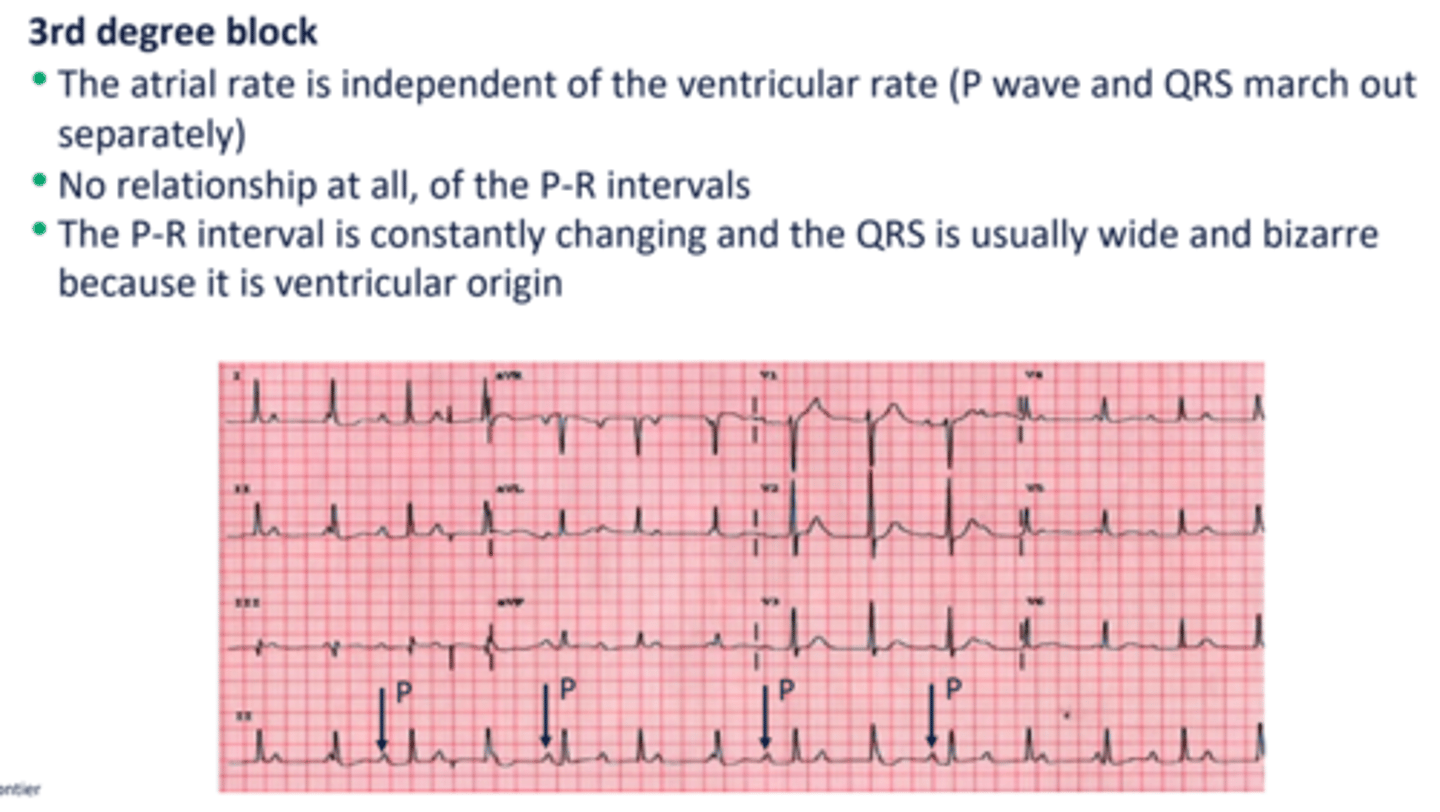
3rd degree AV block
AV blocks summary
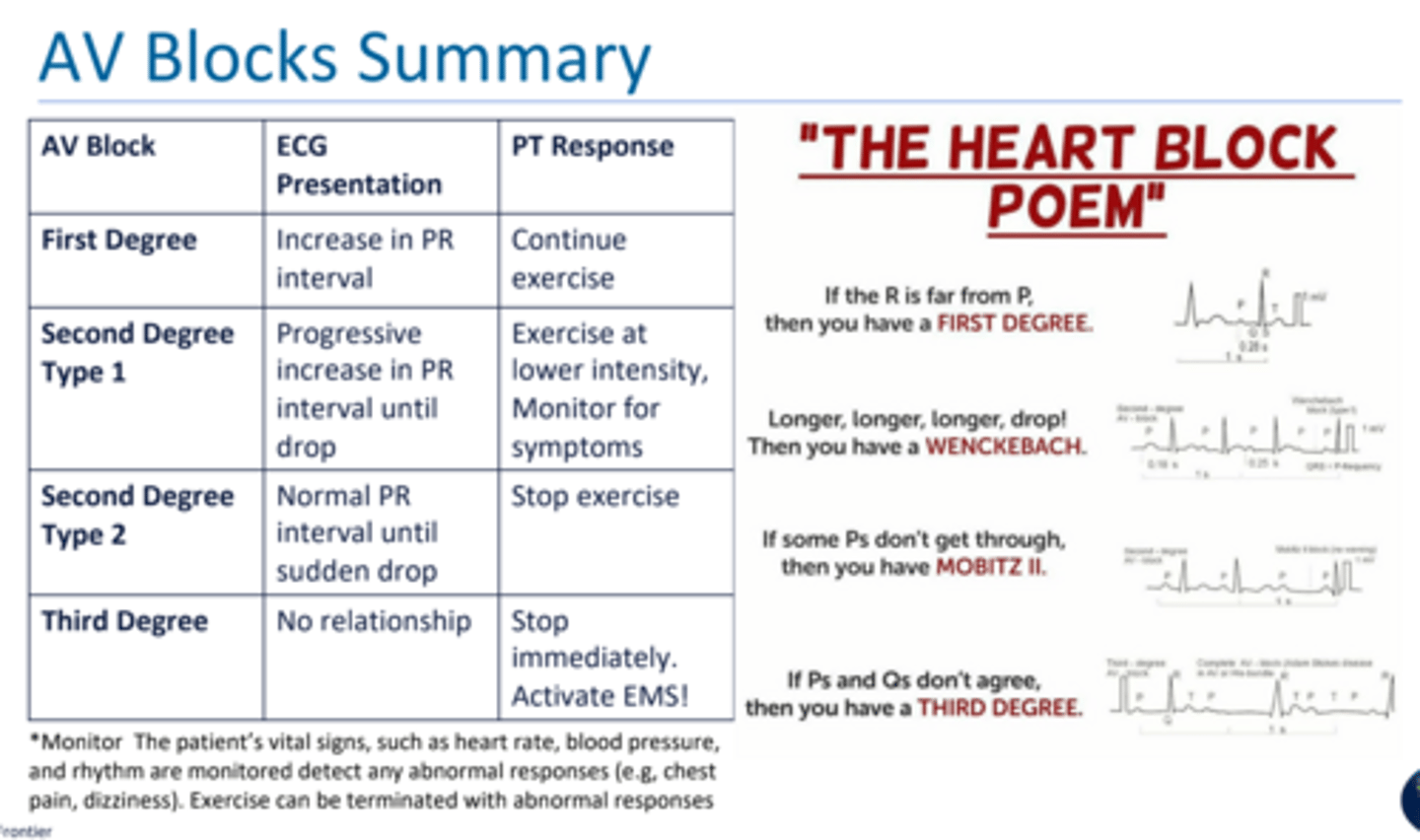
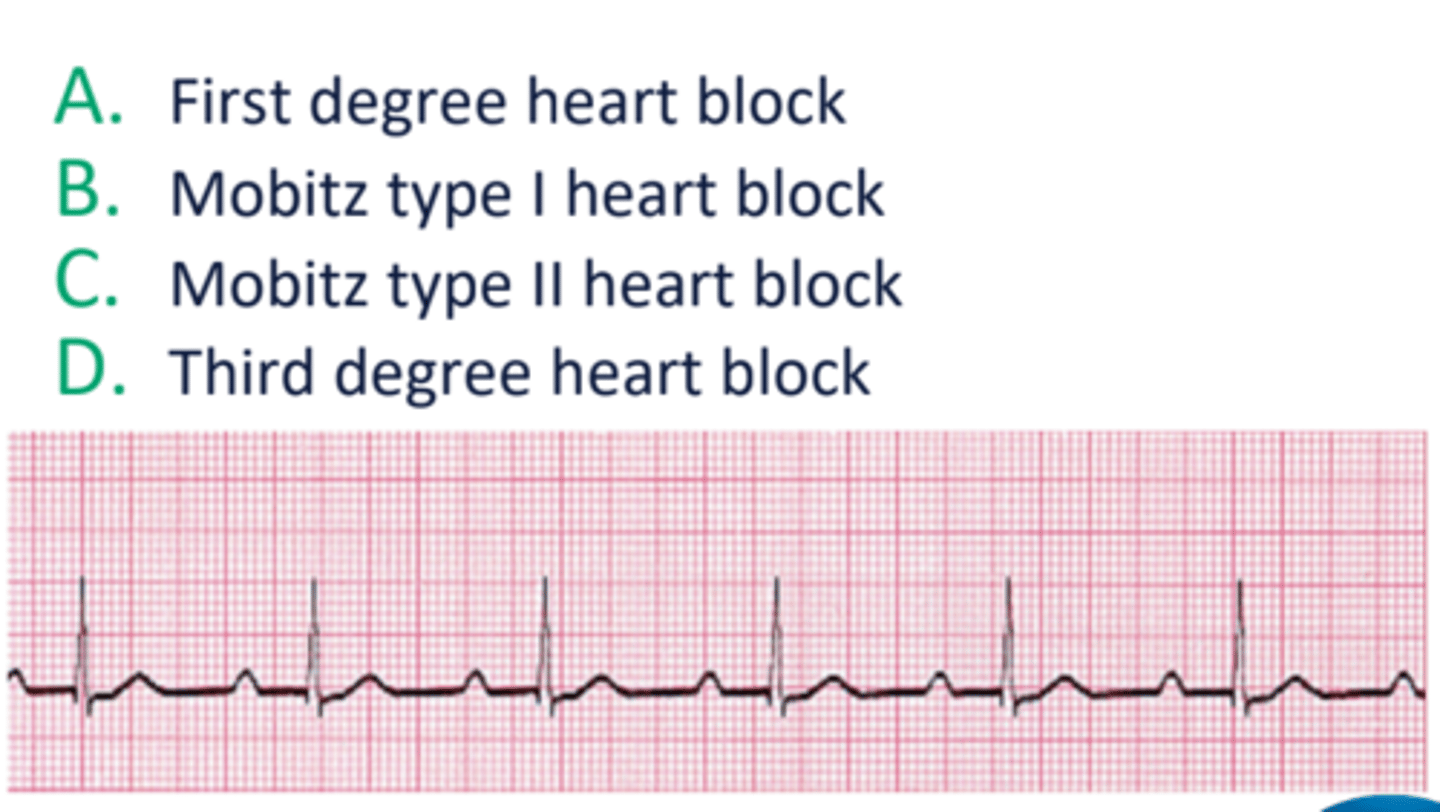
While walking on a treadmill, the physical therapist sees the ECG pattern, as shown. What is the MOST APPROPRIATE diagnosis? and most appropriate response by the PT
first degree heart block; Continue exercising at the current intensity without any modifications
The patient did not come for physical therapy for 3 consecutive visits. On following up with the patient's caretaker, they mentioned that the patient was taken to the emergency room as they were experiencing increased shortness of breath at rest and cough with no evident peripheral edema. Which of the following is MOST LIKELY causing the patient's symptom?
Left-sided heart failure (there was an option for cor pulmonale which is right ventricular dysfunction; biventricular heart failure would have symptoms of both right and left heart failure)
S-T Segment Depression on the Electrocardiogram
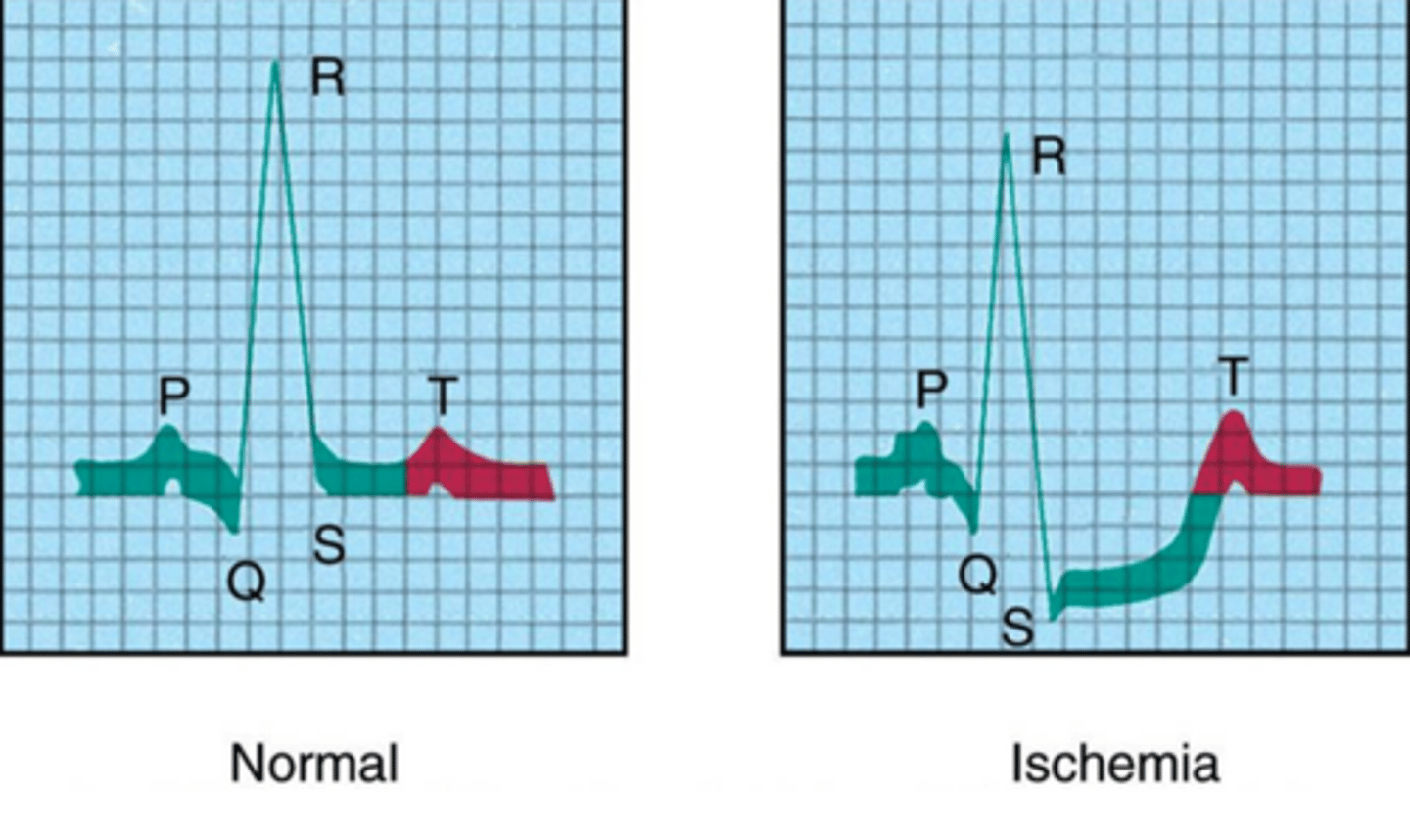
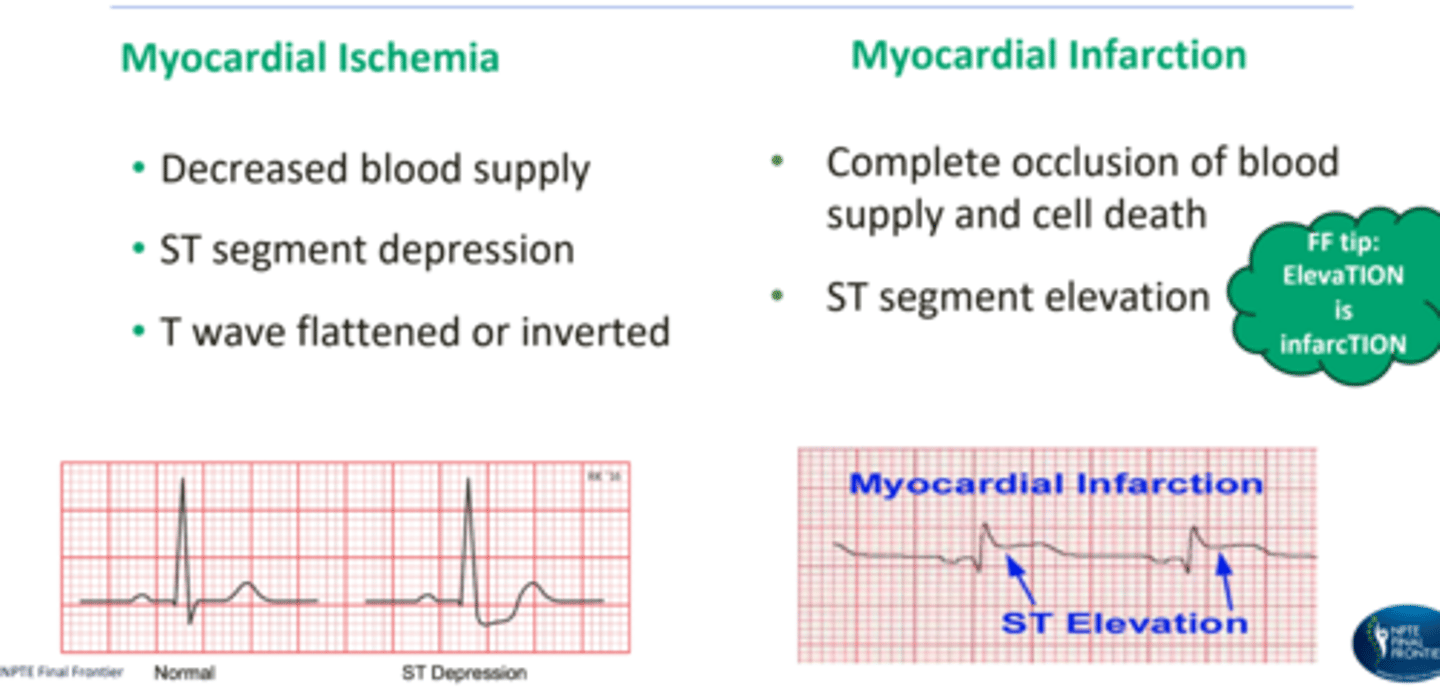
Myocardial ischemia vs infarction
elevaTION is infarcTION
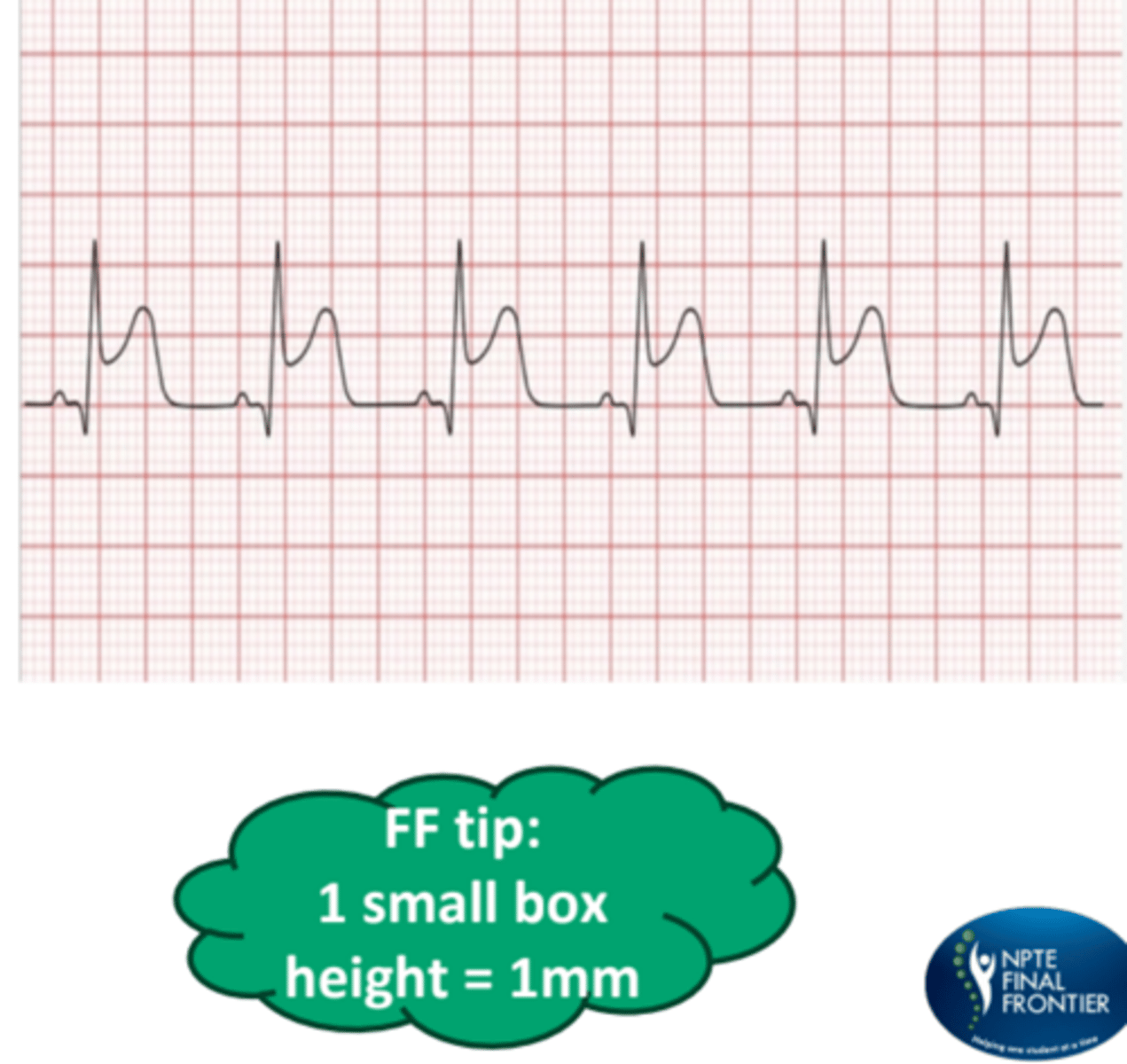
A patient is walking on a treadmill with ECG leads attached. The physical therapist observes the ECG as shown in the image below. What is the MOST LIKELY diagnosis and intervention?
Myocardial infarction that has an elevation of the ST segment greater than 1 mm and the PT should stop the protocol and call 911
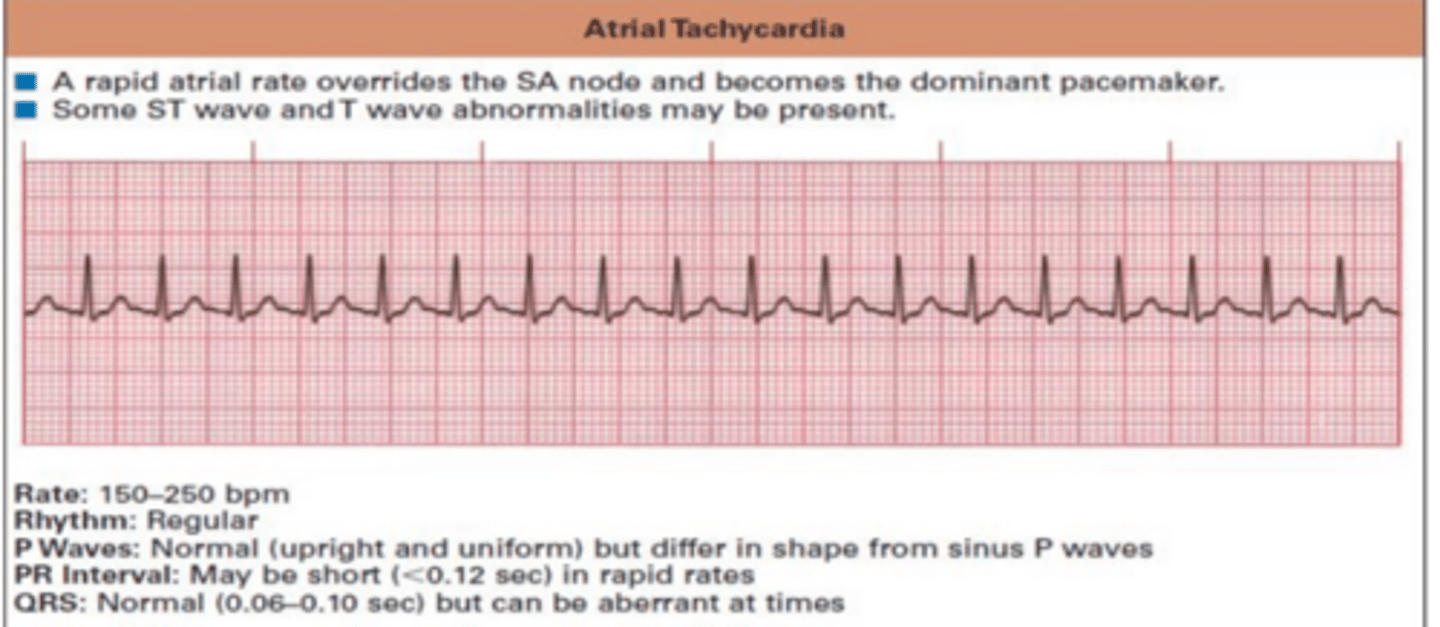
Supraventricular arrhythmias: atrial tachycardia
100-250 bpm
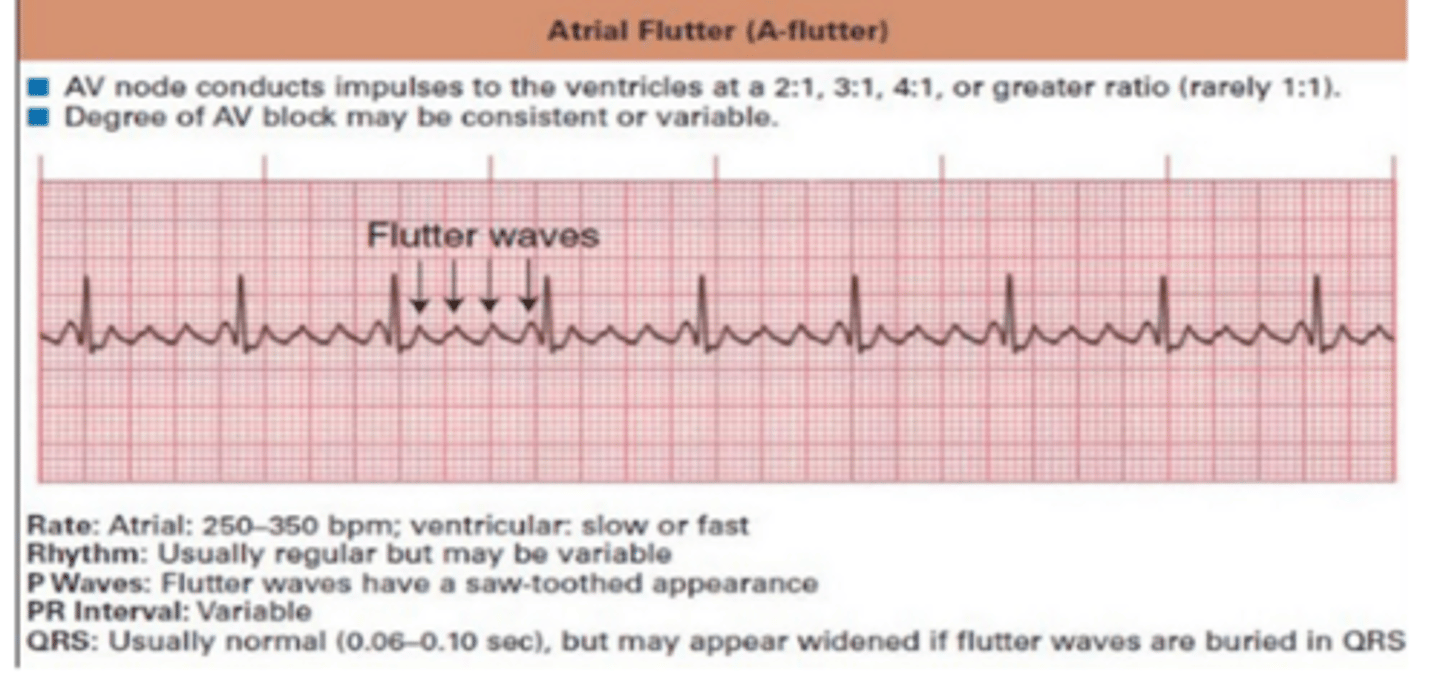
Supraventricular arrhythmias: Atrial flutter
250-350 bpm
- stop exercise if with symptoms
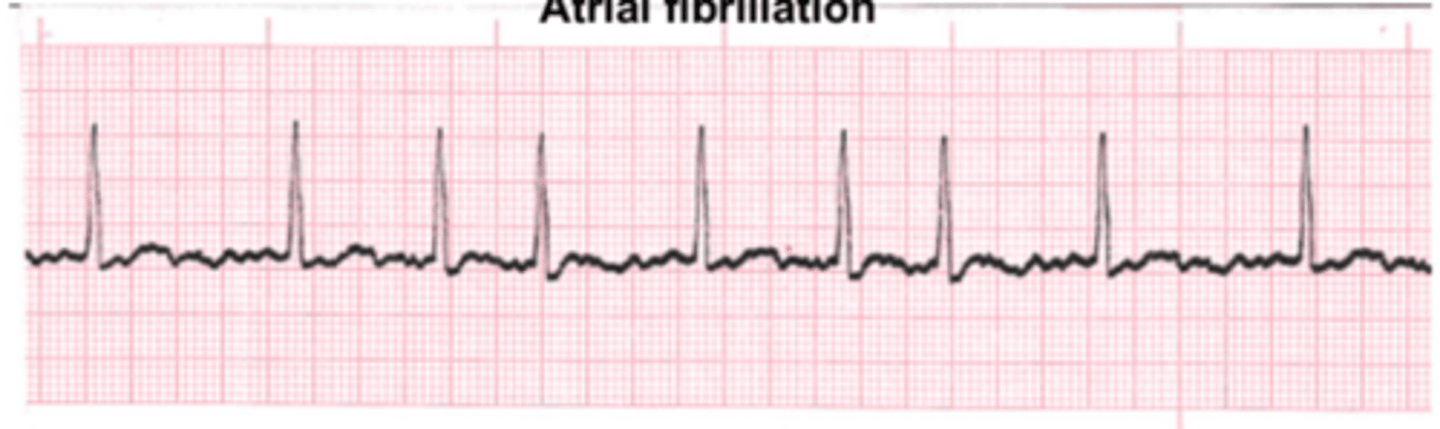
Supraventricular arrhythmias: Atrial fibrillation
400-600 bpm
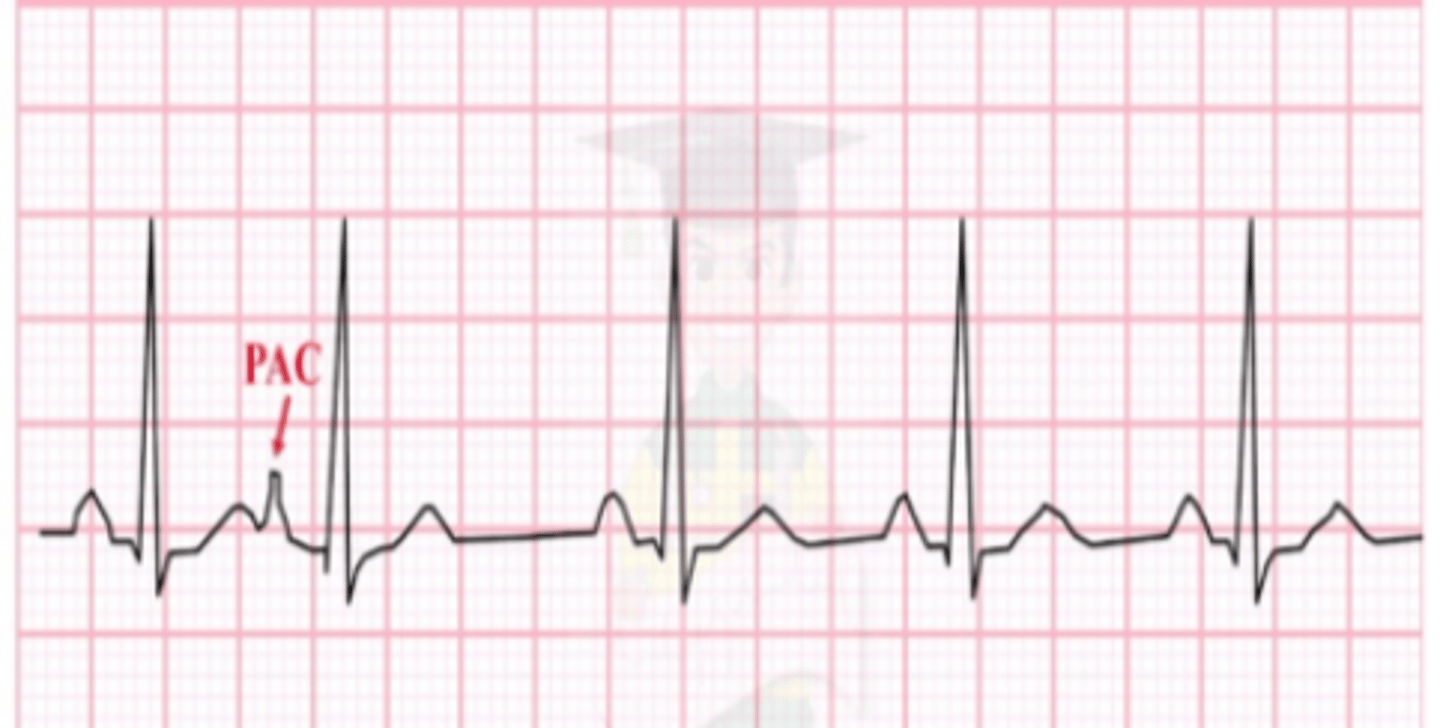
Supraventricular arrhythmias: premature atrial contractions
A flutter with symptoms and a fib
stop exercise (not an emergency)
PAC / a tachy / a flutter and asymptomatic
monitor and continue at a lower intensity
Atrial conditions don't get 911 call
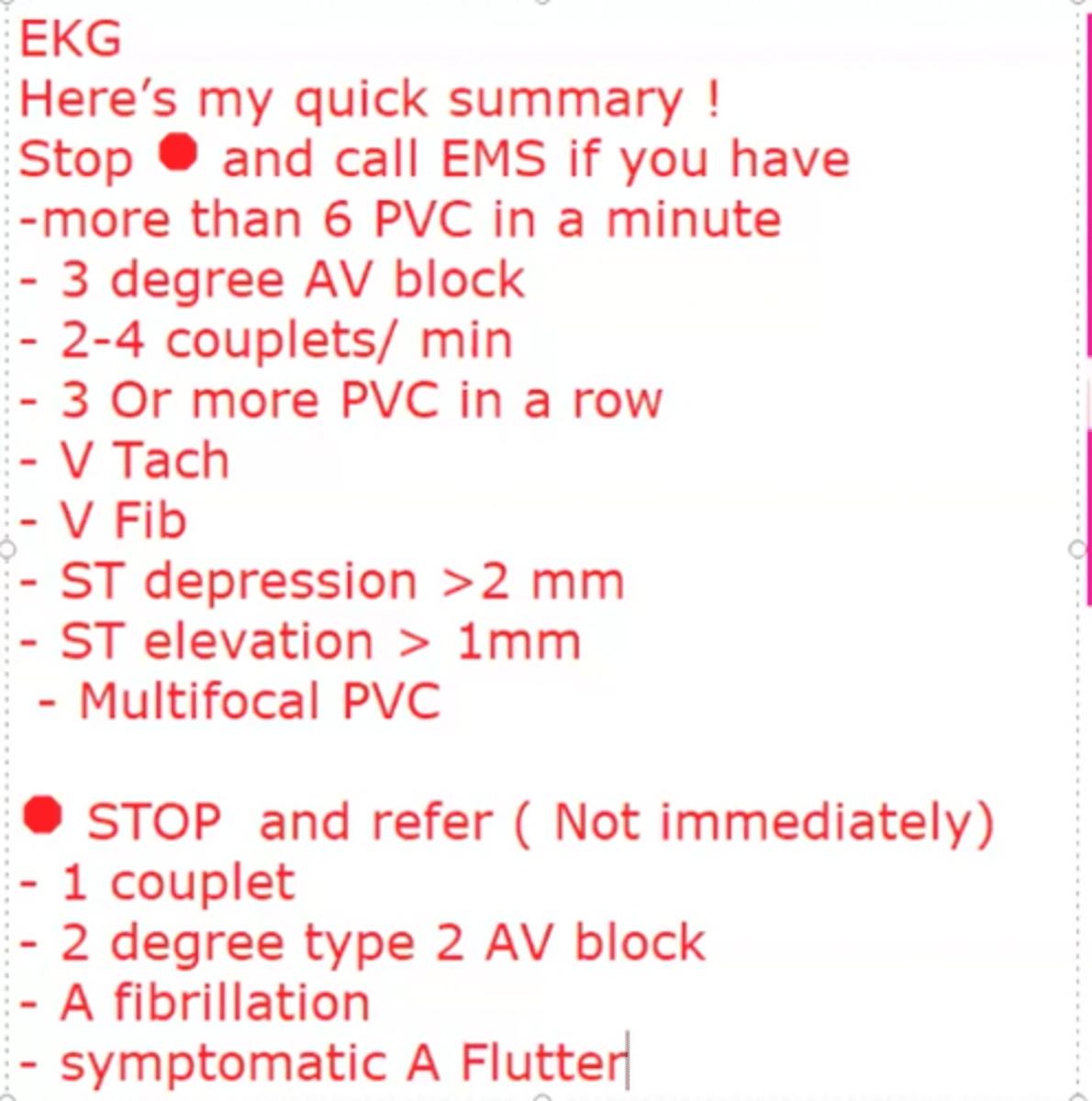
1 PVC what do u do?
Keep exercising at a lower intensity; consultation with physician is not required (single PVCs do not compromise CO if less than 7 per minute)
A physical therapist is ambulating a patient, and they report palpitations, shortness of breath and fatigue. What should be the interpretation and immediate action according on the ECG strip shown below?
Atrial Fibrillation; Stop exercise and report to the physician
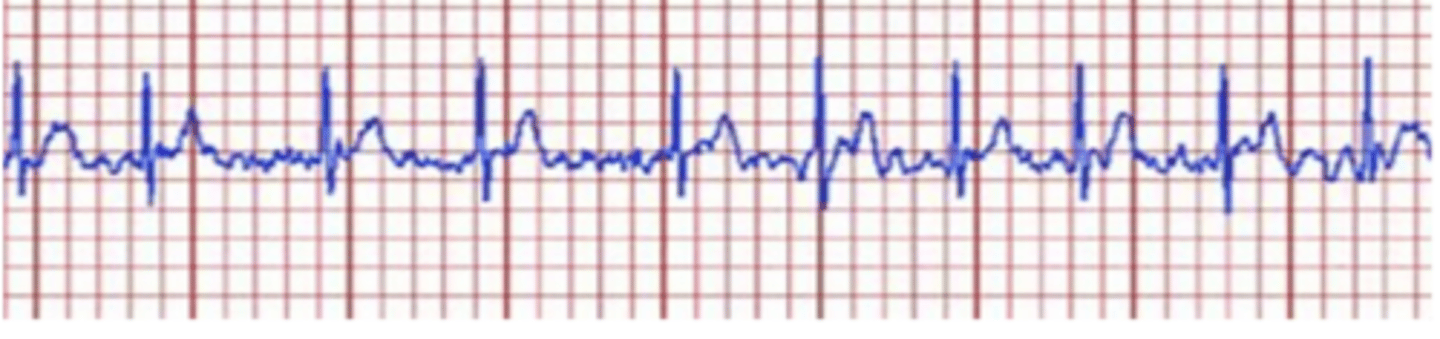
While exercising a patient on the treadmill, the physical therapist notices the electrocardiogram as shown in the image. What should their INITIAL response be?
Activate the emergency system or call 911

A flutter
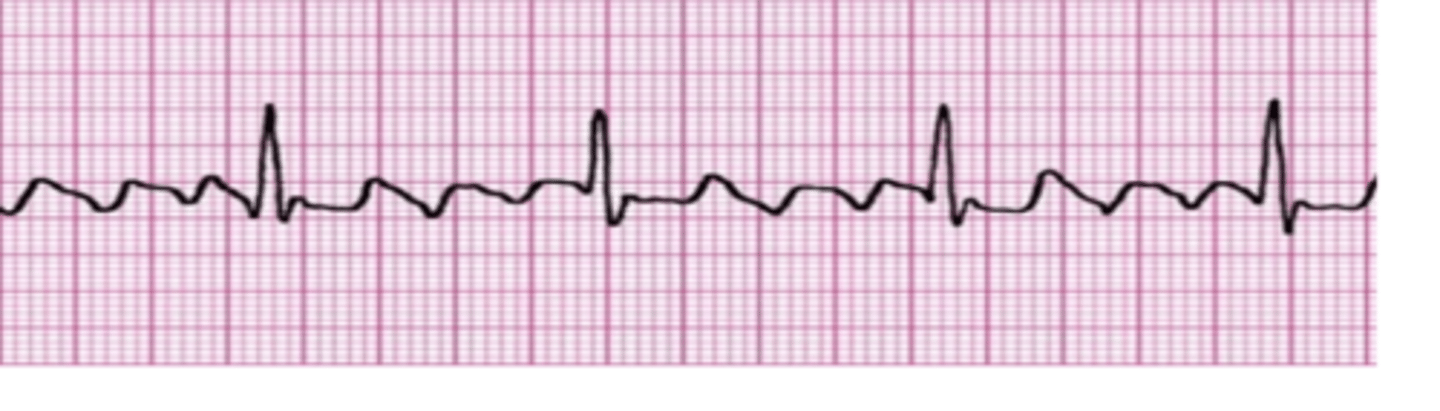
V fib
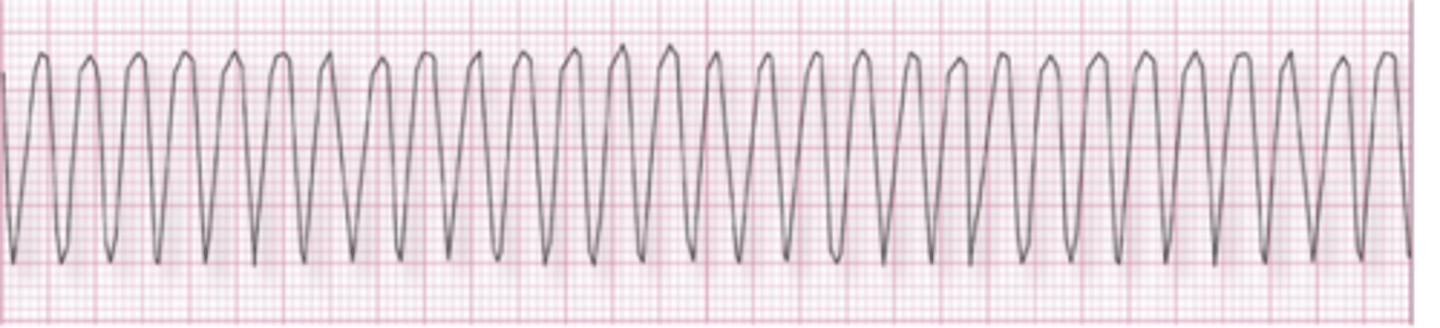
PVCs
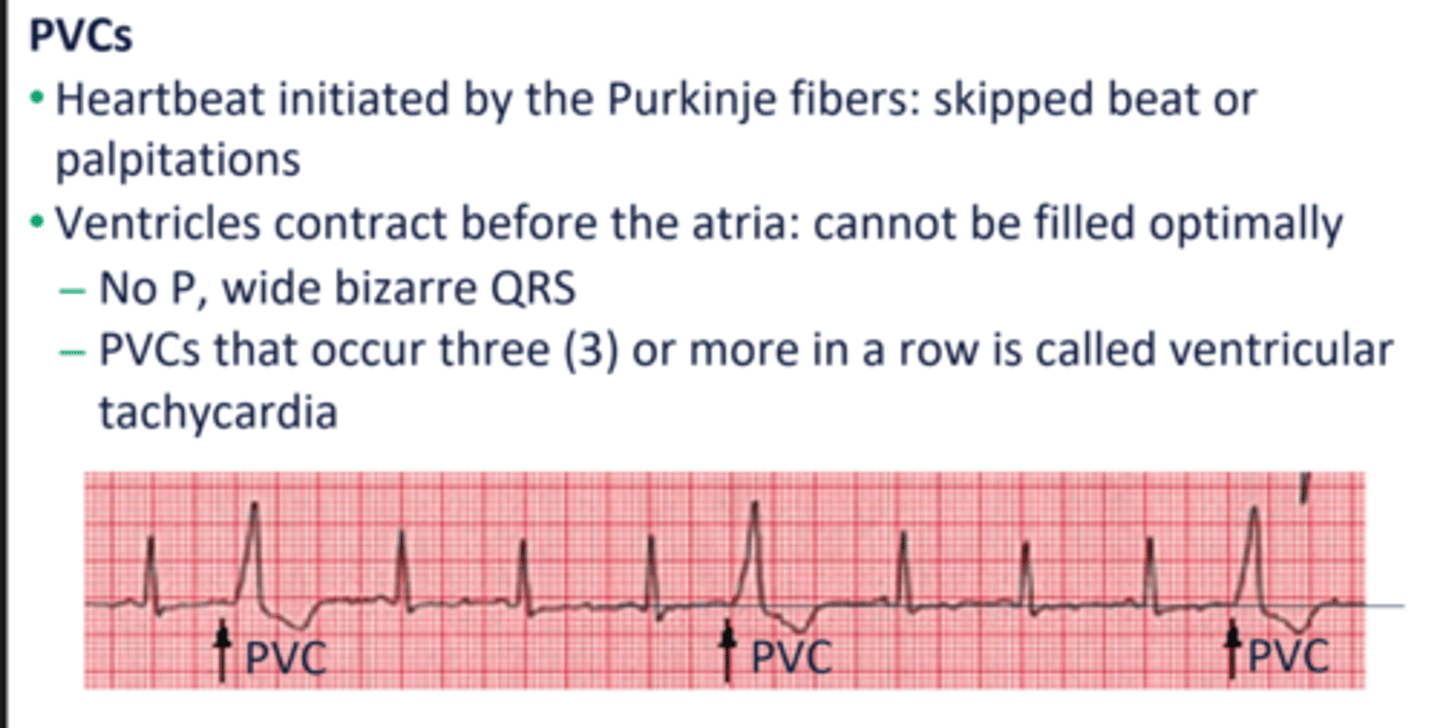
PVC types
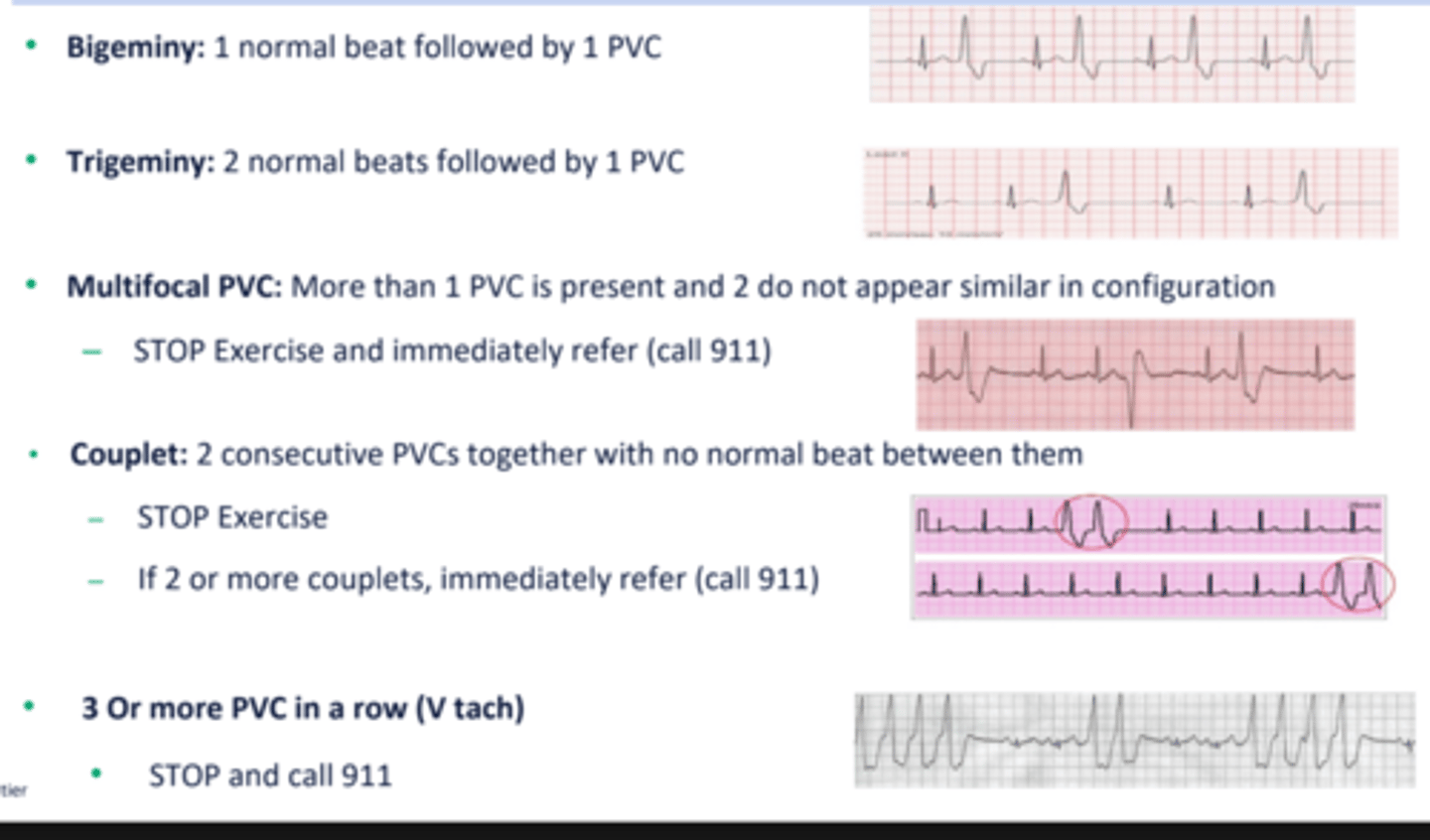
The physical therapist is working with a patient, who is 4 months post myocardial infarction, in a cardiac rehab facility. Upon increasing the workload, the physical therapist observes a unifocal PVC on the patient's ECG. Which of the following is the MOST APPROPRIATE action by the physical therapist?
Keep exercising at a lower intensity; consultation with physician is not required here
A clinician is auscultating a patient's lungs. During auscultation, the clinician hears low pitched gurgling and snoring sounds. Which of the following sounds is the clinician MOST LIKELY hearing?
Rhonchi
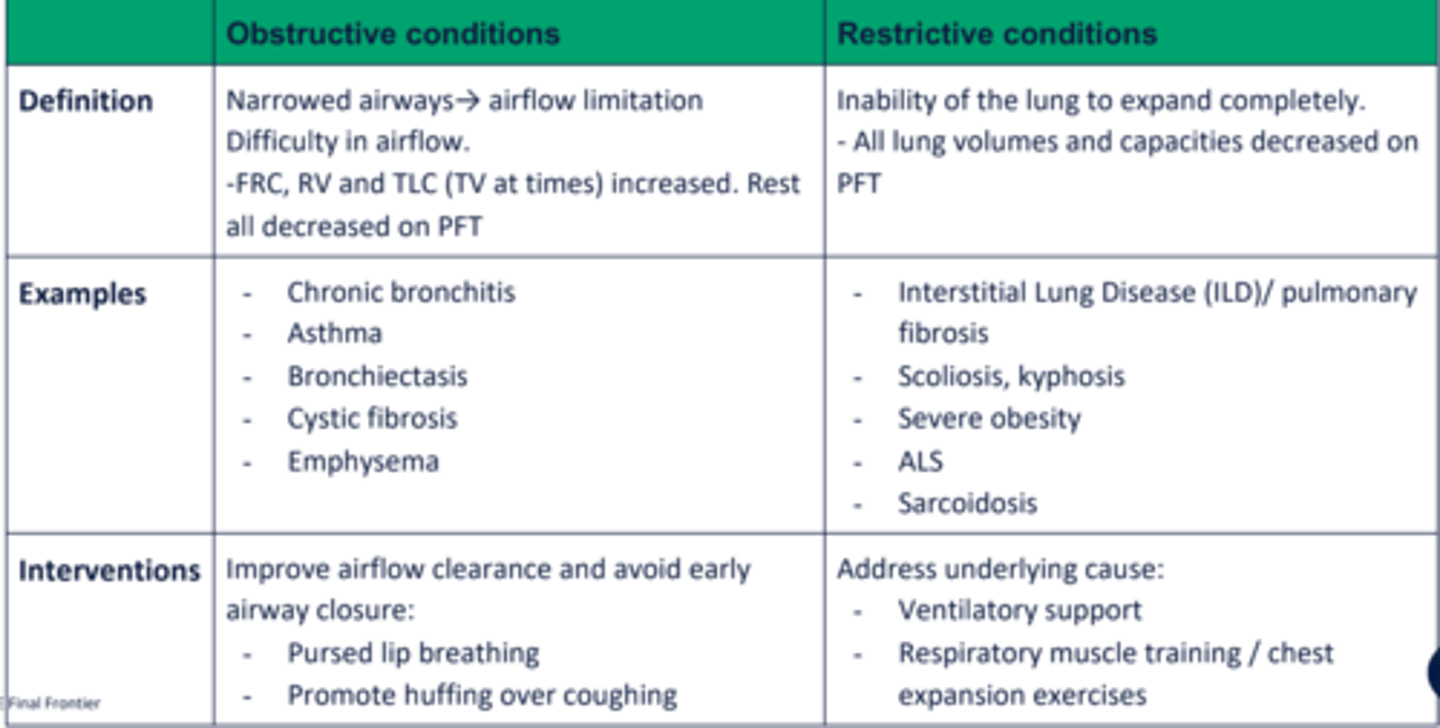
A patient with dyspnea on exertion and has an FEV1 /FVC ratio of 65%. They report chest tightness and frequent coughing. Which lung volume would be decreased compared to a patient with a healthy pulmonary system?
Expiratory reserve volume
When a physical therapist auscultates the patient's heart, they hear an S4 heart sound. When can this heart sound be heard and what condition does it MOST LIKELY indicate?
Abnormal sound heard in late diastole; hypertension
A patient demonstrates an increased residual volume on pulmonary function testing. Which of the following conditions is MOST LIKELY responsible for this finding?
emphysema
A physical therapist initiates aquatic therapy at chest-depth water level for a patient with general deconditioning. Which cardiovascular response is MOST LIKELY to occur during immersion?
Increased venous return
Summary of obstructive vs restrictive conditions
key positions: superior segments of the lower lobes
Prone lying on a bed with two pillows under the pelvis
key positions: posterior apical segments of the upper lobes
Sitting on a chair, leaning forward over a folded pillow
key positions: anterior segments of the upper lobes
Supine lying on a bed with pillows under the knees
key positions: anterior apical segments of the upper lobes
Sitting in a recliner, leaning slightly backward