1.4 Proteins
 Call Kai
 Learn
Learn Practice Test
 Spaced Repetition
 Match
Match Flashcards
 Knowt Play
1/31

There's no tags or description
Looks like no tags are added yet.
Name | Mastery | Learn | Test | Matching | Spaced | Call with Kai | Chat |
|---|
No analytics yet
Send a link to your students to track their progress
32 Terms
general structure of an amino acid and what each represents
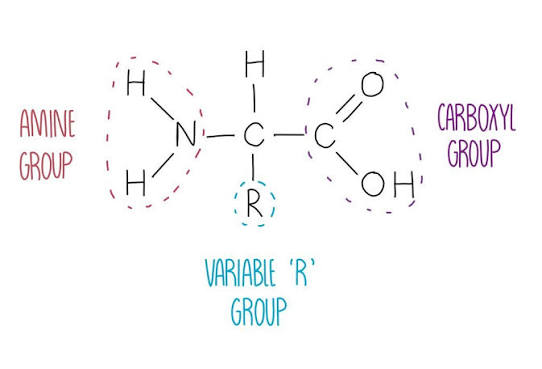
describe how to test for proteins in a sample
Biuret test. biuret reagenet colour change from blue to purple indicates presence of peptide bonds
which monomers make proteins
amino acids
how many amino acids are there and how do they differ from one another?
20
differ only by side R group
how do dipeptides and polypeptides form?
condensation reaction forming peptide bond between the carboxyl group of one amino acid and amine group of another. water molecule is eliminated.
dipeptide- 2 amino acids
polypeptide- many/3 or more amino acids
what does it mean by a functional protein may contain one or more polypeptide
some working proteins consist of a single chain of amino acids, others require multiple, separate polypeptide chains to assemble together to form a fully working 3D structure
how many levels of protein structure are there
4
define primary structure of a protein
sequence of amino acids in a polypeptide forming peptide bond.
determined by the sequence of codons on mRNA.
define secondary structure of a protein
hydrogen bond form between slightly negative oxygen of C=O and slightly positive H of amine group
describe 2 types of secondary protein structure
alpha helix and beta pleated sheets
define the tertiary structure of a protein and name the bond presents
3D structure formed by further folding of the polypeptide
held by disulfide bridges ionic and hydrogen bonds
describe each type of bond in the tertiary structure of proteins. name them from strongest to weakest
Disulfide bridges: strong covalent S-S bonds between molecules of amino acid- cysteine
ionic bonds: between charged R groups
Hydrogen bonds: numerous and easily broken
name the amino acid which has disulphide bridges
cysteine
Define quaternary structure of a protein
functional protein consist of more than one polypeptide chain
describe the structure and function of globular proteins give 3 examples.
enzymes, hormones and antibodies
spherical and compact
hydrophilic R groups face outwards and hydrophobic R groups face inwards= easily water soluble
involved in metabolic processes
describe the structure and function of fibrous proteins
keratin and collagen
form long chains or fibers
insoluble in water
useful for structure and support
outline how chromatography could be used to identify the amino acids in a mixture
use capillary tube to spot the mixture onto pencil origin line and place the paper in solvent
allow solvent to run until it almost touches other end of paper. Amino acids move different distances based solubility in solvent
use UV light to see spots
calculate RF values and match to database
what are enzymes
Biological catalysts that speed up rate of reaction by lowering activation energy of the reaction.
specific tertiary structure determines shape of active site which is complementary to a specific substrate
forms ES complexes.
explain the induced fir model of enzyme action
shape of active site is not directly complementary to substrate as its flexible
conformational change enables ES complex to form
puts strain on substrate bonds which lowers activation energy.
explain the lock and key model
rigid shape of active site complementary to one substrate
what does the current induced fit model suggest
explains why binding at allosteric sites can change shape of active site
how could a student identify the activation energy of a metabolic reaction from an energy level diagram
difference between free energy of substrate and peak of curve
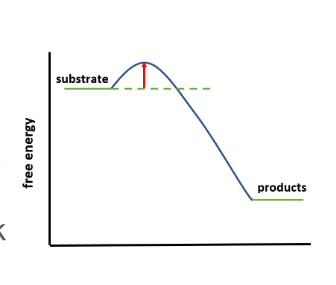
name 5 factors that affect the rate of an enzyme controlled reaction
enzyme concentration
substrate concentration
concentration of inhibitors
pH
temperature
How does substrate concentration affect rate of reaction imagine/draw diagram
given that enzyme concentration is fixed the rate increases proportional to substrate concentration.
Rate levels off when maximum number of ES complexes form at any given time
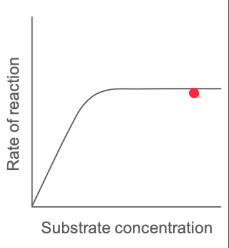
How does enzyme concentration affect rate of reaction imagine/draw diagram
given that substrate is in excess rate increases proportionally to enzyme concentration rate levels off when maximum number of ES complexes form at any given time.
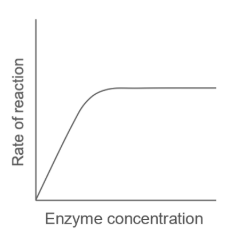
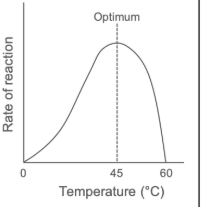
how does temperature affect rate of reaction imagine/draw diagram
rate increases as kinetic energy increases ad peaks at optimum temperature
above optimum the ionic and hydrogen bonds in tertiary structure break= active site no longer complementary to substrate- denaturation.
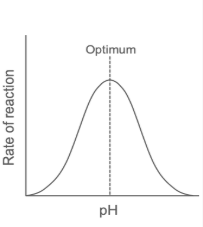
How does pH affect rate of reaction imagine/draw diagram
enzymes have narrow optimum pH range
outside range H/OH ions interact with H-bonds and ionic bonds holding the tertiary structure= denaturation
contrast competitive and non competitive inhibitors
competitive:
similar shape to substrate= bind to active site
do not stop reaction, ES complex forms when inhibitor is released
increasing substrate concentration deceases their effect
Non competitive:
bind at allosteric site
stop reaction as active site change shape
increase substrate concentration has no impact.
outline how to calculate rate of reaction from a graph
calculate gradient by drawing tangent
initial rate: draw tangent at t=0
outline how to calculate rate of reaction from raw data
change in concentration of product or reactant/time
why is it advantageous to calculate initial rate
represents maximum rate of reaction before concentration of reactants decreases
state formula for pH
pH= -log10[H+]