BIO FLASHCARDS #2: Carbon, Protein, & Carbohydrates
 Call Kai
 Learn
Learn Practice Test
 Spaced Repetition
 Match
Match Flashcards
 Knowt Play
1/43

Earn XP
Description and Tags
Geet Patel
Name | Mastery | Learn | Test | Matching | Spaced | Call with Kai | Chat |
|---|
No analytics yet
Send a link to your students to track their progress
44 Terms
How many covalent bonds do carbons have?
4
Isomers?
•Have the same number of atoms of the same elements but different structures
•Different structures means different properties!
Ex]
a) structural isomers
b) cis isomer- the two x are on the same side
c) trans isomers- the two x are on opposite sides
d) enantiomers- mirror images
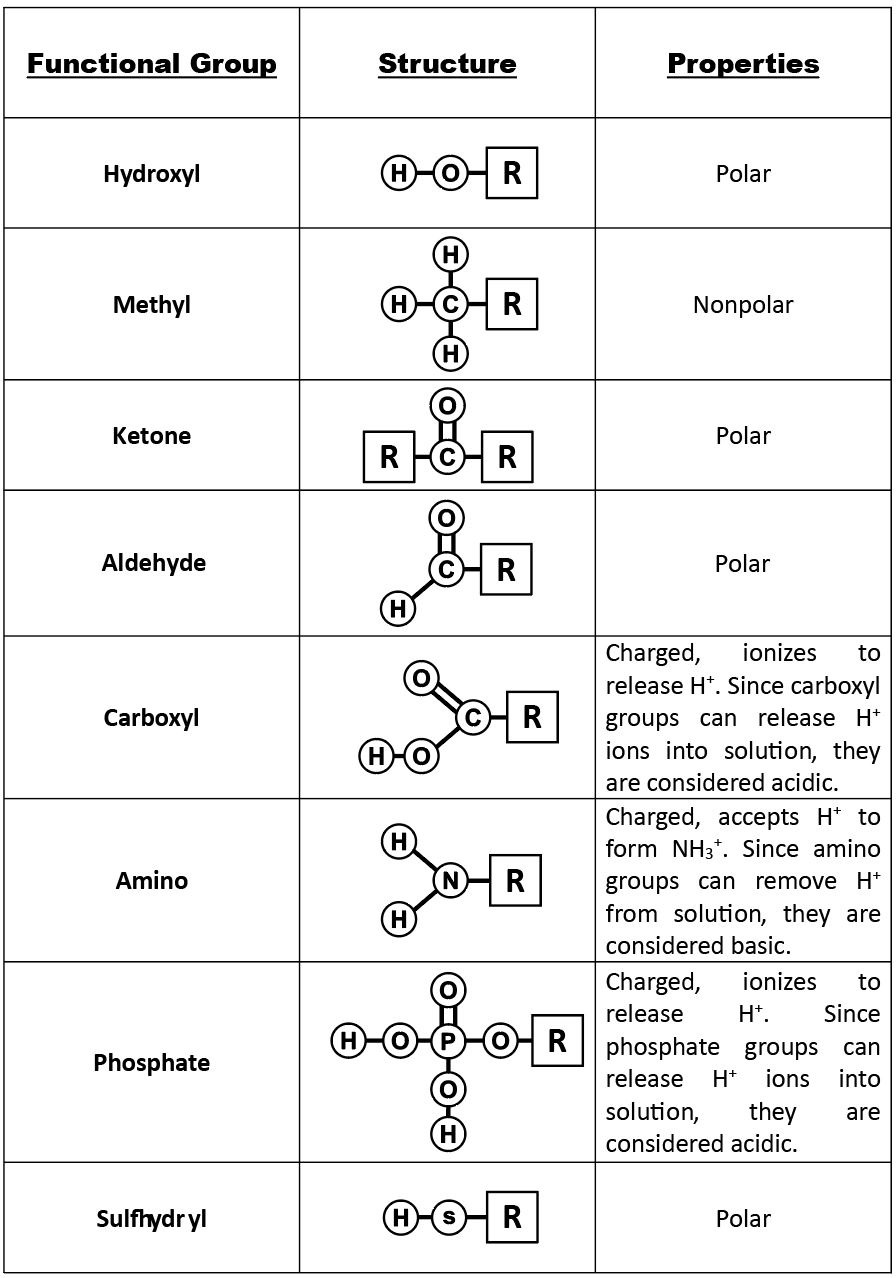
8 Functional groups?
*Be able to draw!
Hydroxyl -OH
Carbonyl C=O
Carboxyl COOH
Amino -NH2
Sulfhydryl -SH
Phosphate -PO42-
Methyl -CH3
What are the 4 major biological molecules?
´Carbohydrates
´Lipids
´Proteins
´Nucleic Acids
polymer
a larger molecule made by joining many smaller units
ex] In carbohydrates: glucose + glucose + glucose= polysaccharide
![<ul><li><p>a larger molecule made by joining many smaller units </p></li><li><p>ex] In carbohydrates: glucose + glucose + glucose= polysaccharide </p></li></ul><p></p>](https://assets.knowt.com/user-attachments/27883540-0107-49e4-ac21-fd295e53e039.png)
monomer
a small molecular unit that can be joined to other monomers to make a larger molecule (building block)
for carbohydrates, individual sugar molecules can act as building blocks.
Ex] glue → one sugar unit
![<ul><li><p>a small molecular unit that can be joined to other monomers to make a larger molecule (building block)</p></li><li><p>for carbohydrates, individual sugar molecules can act as building blocks. </p></li><li><p>Ex] glue → one sugar unit </p></li></ul><p></p>](https://assets.knowt.com/user-attachments/21f59df8-f641-4aec-96f4-8556b69975c0.jpg)
dehydration synthesis
Dehydration synthesis is a reaction that joins molecules toghther while removing water
the molecules are being built toghther
small molecules called monomers, join toghther to form larger molecules called polymers, by releasing a molecule of water.
connect simple sugar molecules
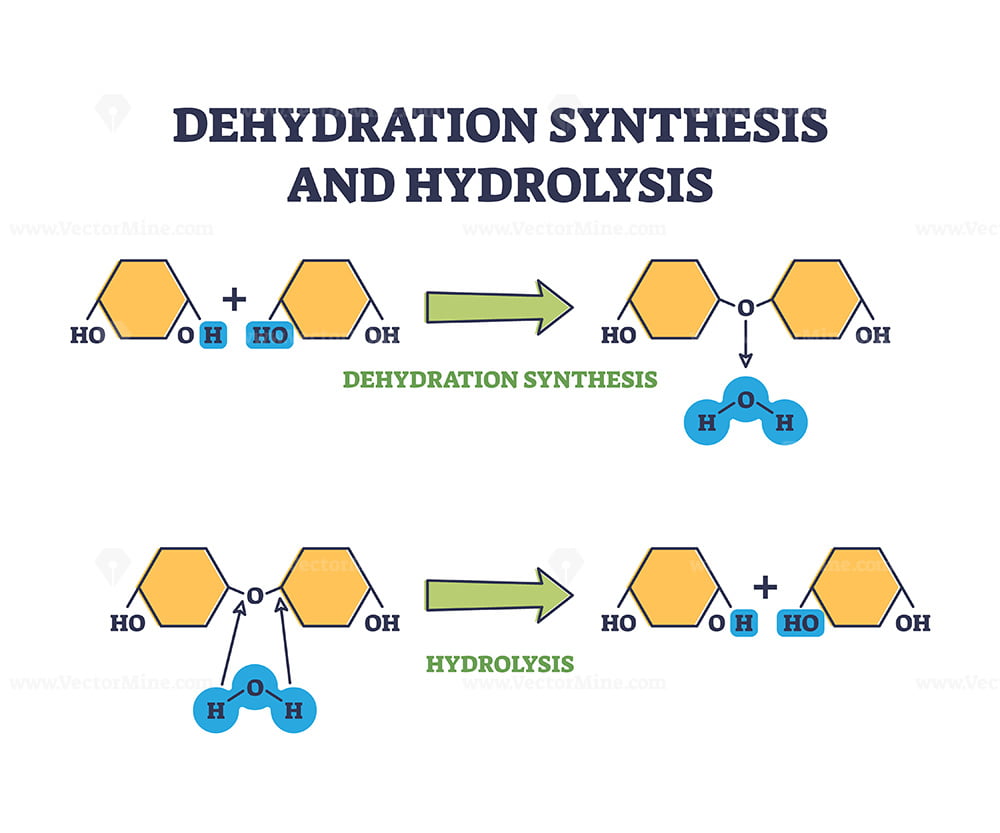
hydrolysis?
breaks a larger molecule apart by adding water
during the process, water splits into a hydrogen ion and a hydroxyl group while attach a new seperated parts of the original molecule
(water enters molecule breaks)
breaks glucose bonds holding complex CH together
Monosaccharide?
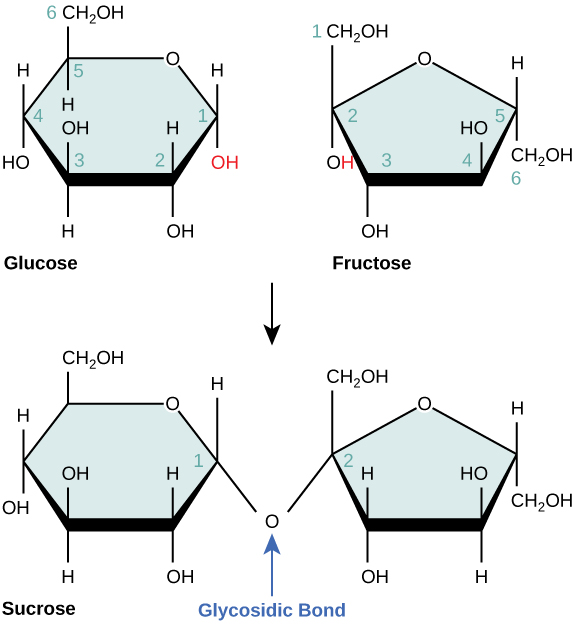
a carbohydrate made of 1 sugar unit
major nutrients of cells used for energy and building blocks for other molecules
Glucose breaks down during cellular respiration to make ATP
Ex] glucose and fructose
![<ul><li><p>a carbohydrate made of 1 sugar unit</p></li><li><p>major nutrients of cells used for energy and building blocks for other molecules</p></li><li><p>Glucose breaks down during cellular respiration to make ATP </p></li><li><p>Ex] glucose and fructose </p></li></ul><p></p>](https://assets.knowt.com/user-attachments/674bfcab-6d80-4128-bc77-87460537ce56.jpg)
Disaccharides?
2 sugars joined together
Sucrose: plants transport carbohydrates from leaves to roots
Lactose: (milk sugar)
Sucrose: One glucose unit plus one fructose unit (table sugar).
Lactose: One glucose unit plus one galactose unit (milk sugar).
Energy Source: The body breaks them down into single sugars to power cells.
Nutrient Supply: Milk sugar gives vital food and energy to baby mammals.
Plant Transport: Plants move food energy through their stems using double sugars
Oligosaccharides?
a few sugars
Cell surface glycan
Human milk oligosaccharides:
Cell-surface glycans
a molecular identification label
Cell-surface glycans are sugar groups attached to molecules on the surface of the cells
CSG ARE IMPORTANT FOR: cell to cell recongniton and communication
Sugar groups attached to molecules on the cell surface
HMOs?
found in human breast milk
evolved to feed beneficial bacteria
humans don’t make an enzyme to recognize them
supports beneficial microbes
What is a Polysaccharides?
Polysaccharides are complex carbohydrates made of long chains of simple sugar molecules linked together.
4 examples and functions of polysaccharides.
Starch: energy storage in plants
´Polymer of glucose
´How plants store sugar reserves
´Stored in plastids of plant cells
2, Glycogen: energy storage in animals
•Polymer of glucose
•How animals store sugar reserves
•In vertebrates, found mainly in liver cells and muscle cell
Cellulose: structural support in cell wall plants´Polymer of glucose
´Major structural component of the plant cell wall
´Part of “insoluble fiber” in human diet
´Cow solution?
´Termite solution?
Chitin: strutural support in fungi and arthropods
´Used to build exoskeletons of arthropods
´Fungi use to build their cell wall
Give two examples of symbiotic relationships involving carbohydrates, animals, and microbes
Humans + beneficial bacteria
microbes use HMO as food source
Cows + microbes
plants have lots of cellulose
cellulose i hard for animals to digest
microbes in the cows digestive system help break down plant material
cows obtain nutrients
Termites + Microbes
consume wood, which has cellulose
animal gets help by obtained nutrients
ALL MUTUALISM
Molecular structure of a carbohydrate
To recognize a carbohydrate by its molecular structure, look for a carbon chain bound to hydrogen and oxygen in a 1:2:1 ratio,(Cn(H2O)n), containing multiple hydroxyl groups (-OH) and an internal carbonyl group (C=O) that forms either an open chain or a ring.
Name all 8 important proteins!
Enzyme
Storage proteins
hormonal proteins
contractile and motor proteins
defensive proteins
transport proteins
receptor protein
structural protein
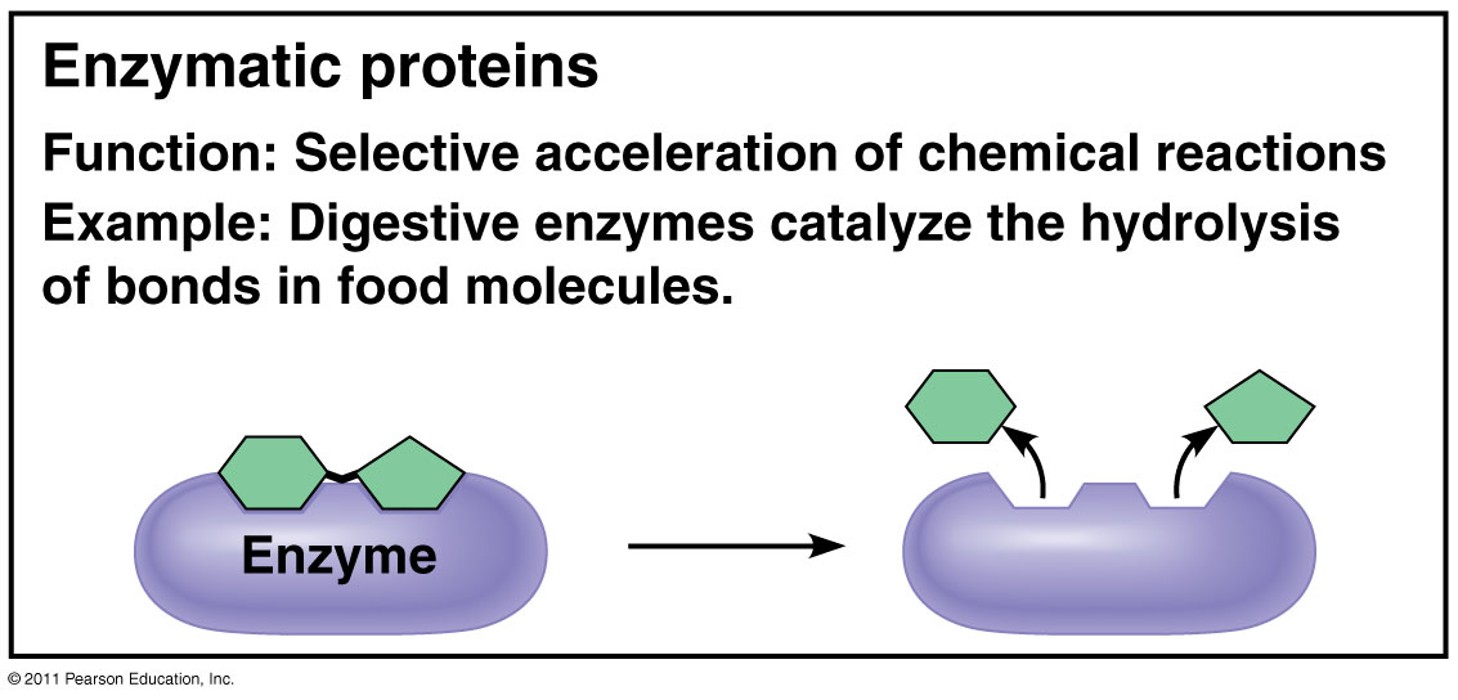
Enzymatic protein?
function: selective acceleration of chemical reactions
example: digestive enzyme catalyze the hydrolysis of bonds in food molecules.
Storage proteins?
Function: Storage of amino acids
Examples: Casein, the protein oof milk, is a major source of amino acids for baby mammals. Plants have a storage protein in their seeds.
Ovalbumin is the protein of egg while, used as an amino acid source for the developing embryo
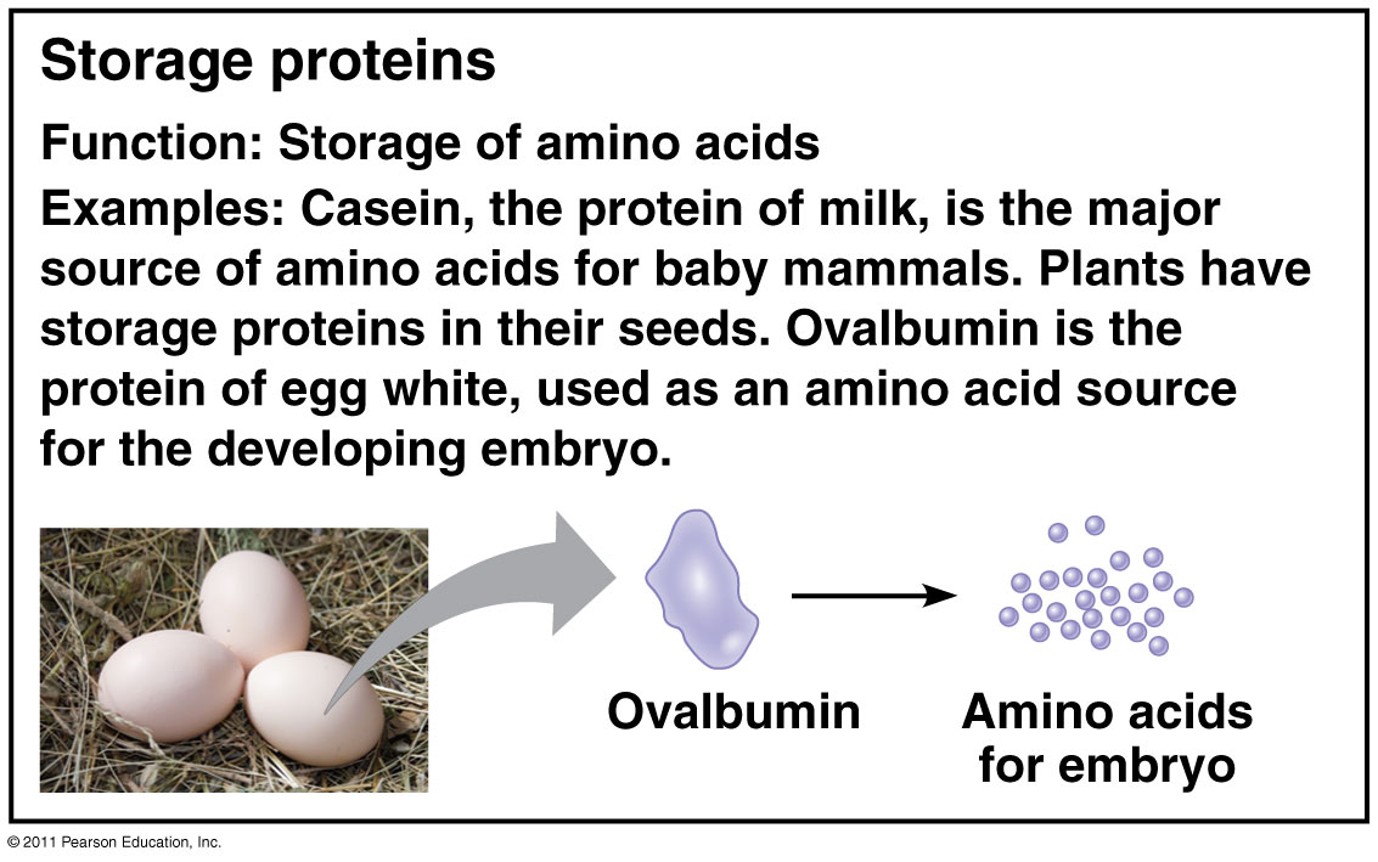
Why are things for baby plants and animals so rich in storage proteins?
Baby plants (seeds) and animals (eggs and milk) need a dense and easy-to-use source of food and building blocks to grow before they can find or make their own food. Storage proteins hold large amounts of nitrogen, carbon, and amino acids in a small space.
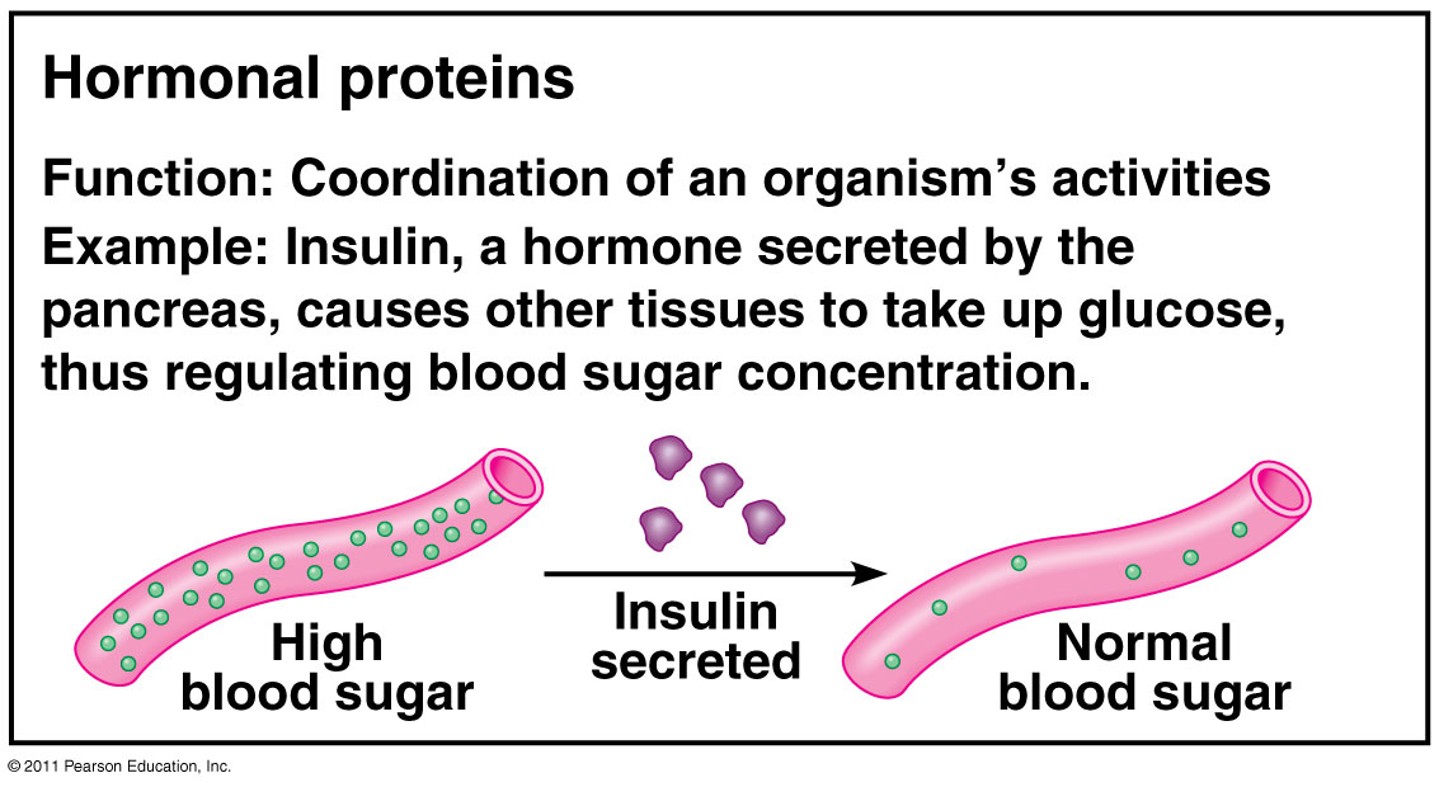
Hormonal Proteins?
Function: Coordination of an organism’s activities
Example: Insulin, a hormone secreted by the pancreas, causesother tissues to take up glucose thus regulating blood sugar concentration.
contractile and motor proteins
Function: Movement
Examples: Motor proteins are responsible for the undulations of cilia and flagella. Actin and myosin proteins are responsible for the contraction of muscles
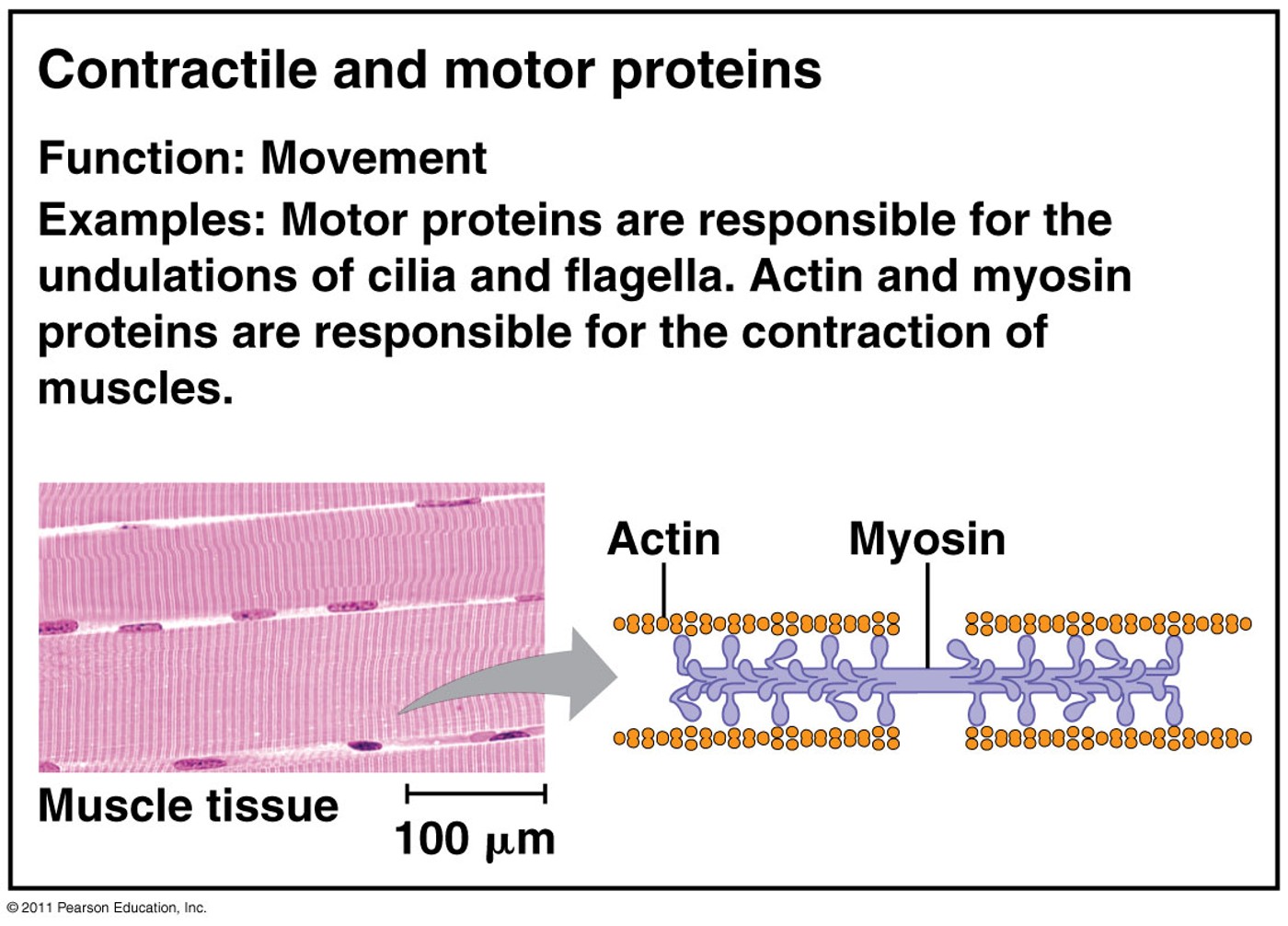
What do the actin and myosin do?
Actin and myosin are the two main protein filaments that work together to make muscles contract and move.
Thick myosin filaments pull on thin actin filaments, sliding past each other to shorten the muscle cell in a process powered by energy from ATP
Tears in muscles causes soreness after new exercise.
Defensive proteins?
Function: Protection against disease
Example: Antibodies inactivate and help destroy viruses and bacteria
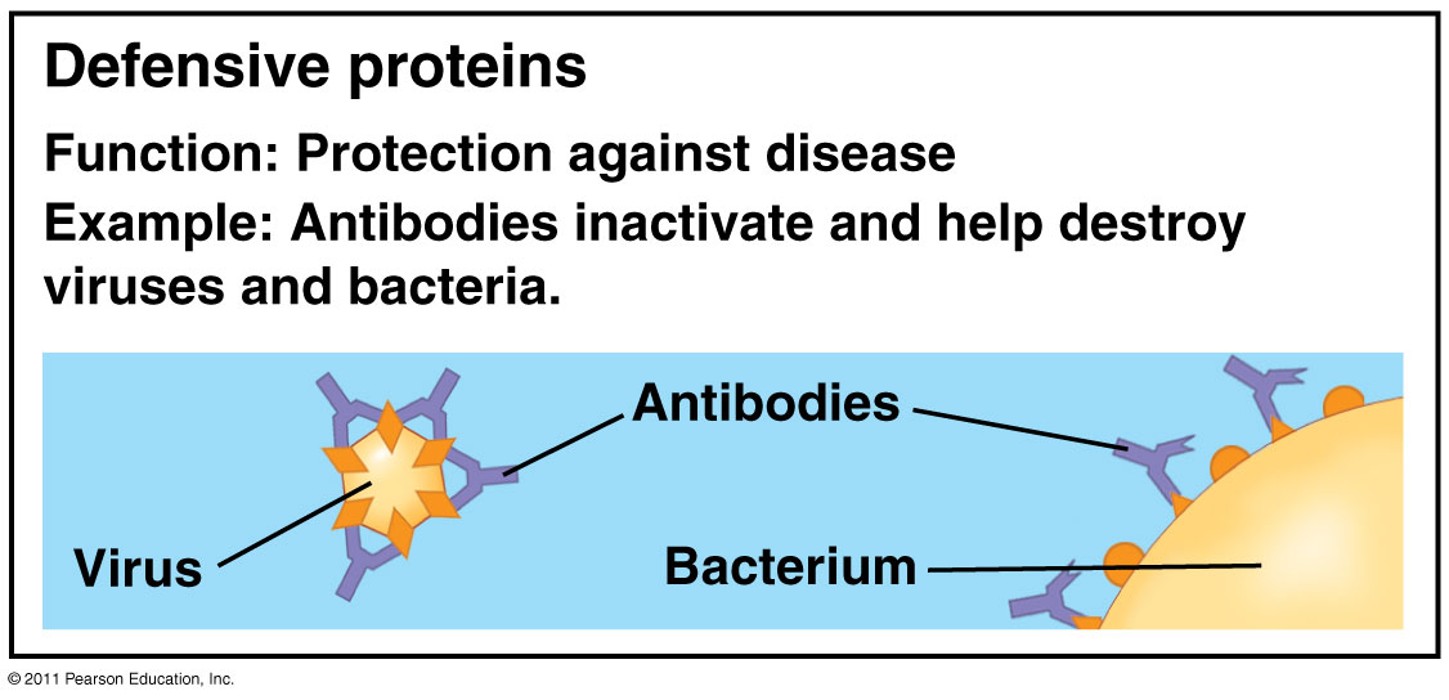
what is an antigen?
An antigen is any substance, such as a protein or sugar, that makes your body start an immune response
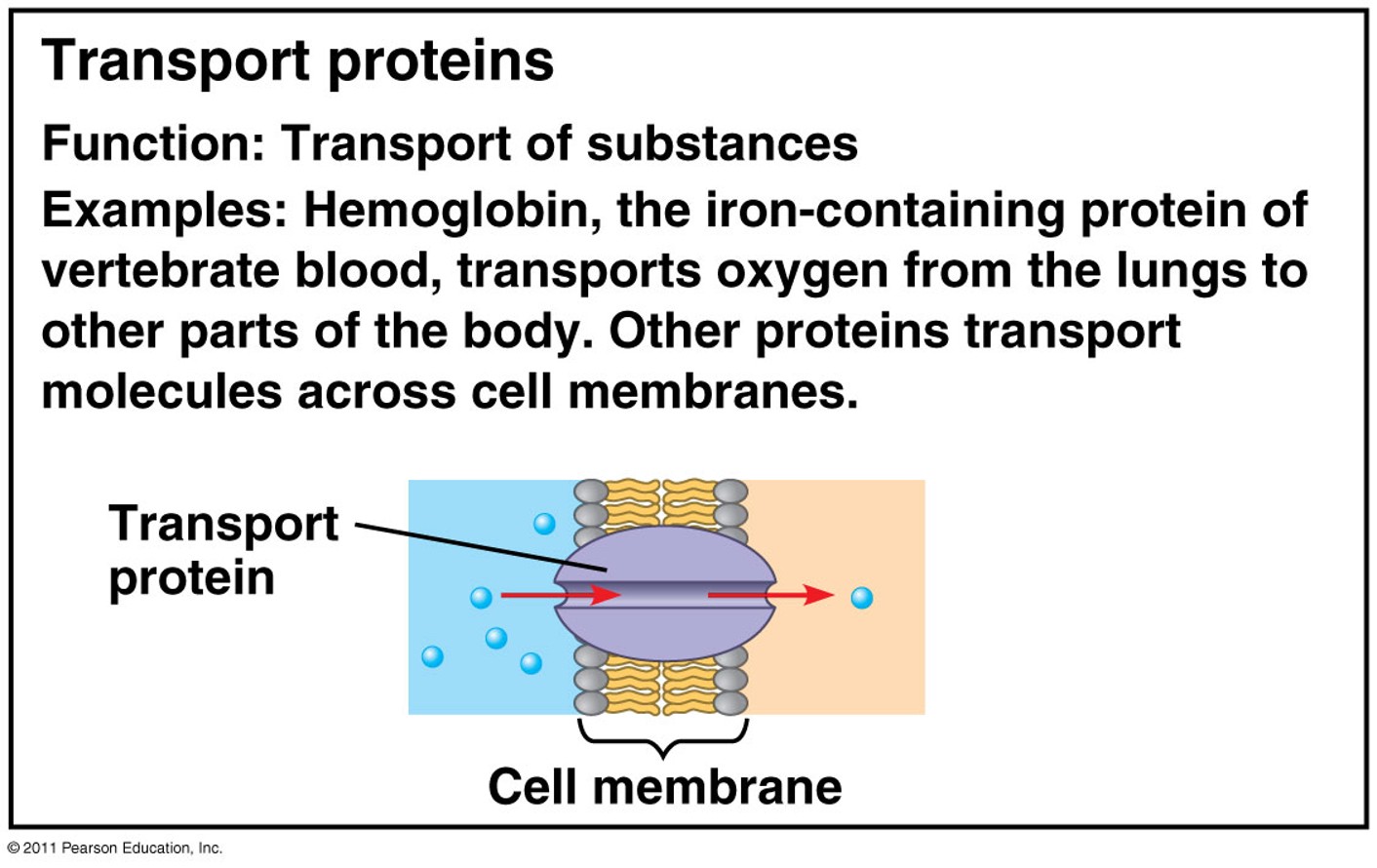
transport proteins
Function: Transport of substances
Examples: Hemoglobin, the iron-containing protein of vertebrate blood, transports oxygen from the lungs to other parts of the body. Other proteins transport molecules across cell membranes
Receptor Proteins?
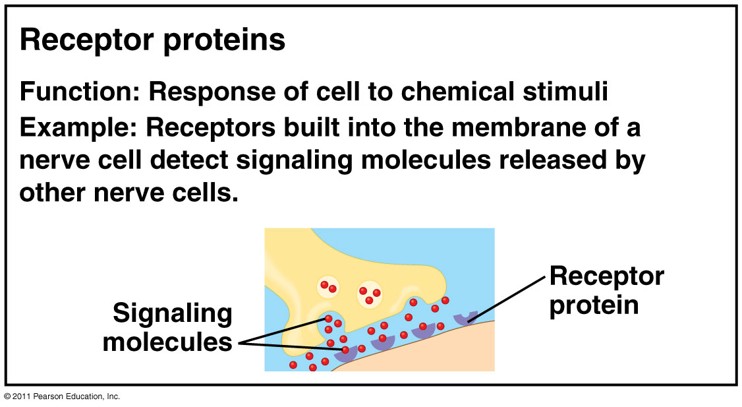
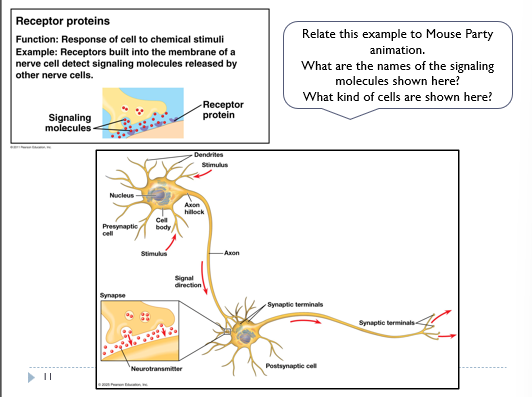
Type of Cells
Neurons: The cells shown in the diagrams are nerve cells (neurons).
Presynaptic Cell: The neuron transmitting the signal.
Postsynaptic Cell: The neuron receiving the signal.
Name of Signaling Molecules
Neurotransmitters: The chemical signaling molecules released into the synaptic cleft.
Relation to "Mouse Party"
Both the diagrams and the "Mouse Party" animation depict how neurons communicate at a synapse.
The signaling molecules cross the gap and bind to specific receptor proteins on the postsynaptic membrane.
The "Mouse Party" animation specifically shows how different drugs (like THC, ecstasy, or cocaine) alter this exact mechanism by blocking, mimicking, or overstimulating these receptor proteins and neurotransmitters (such as dopamine and serotonin).
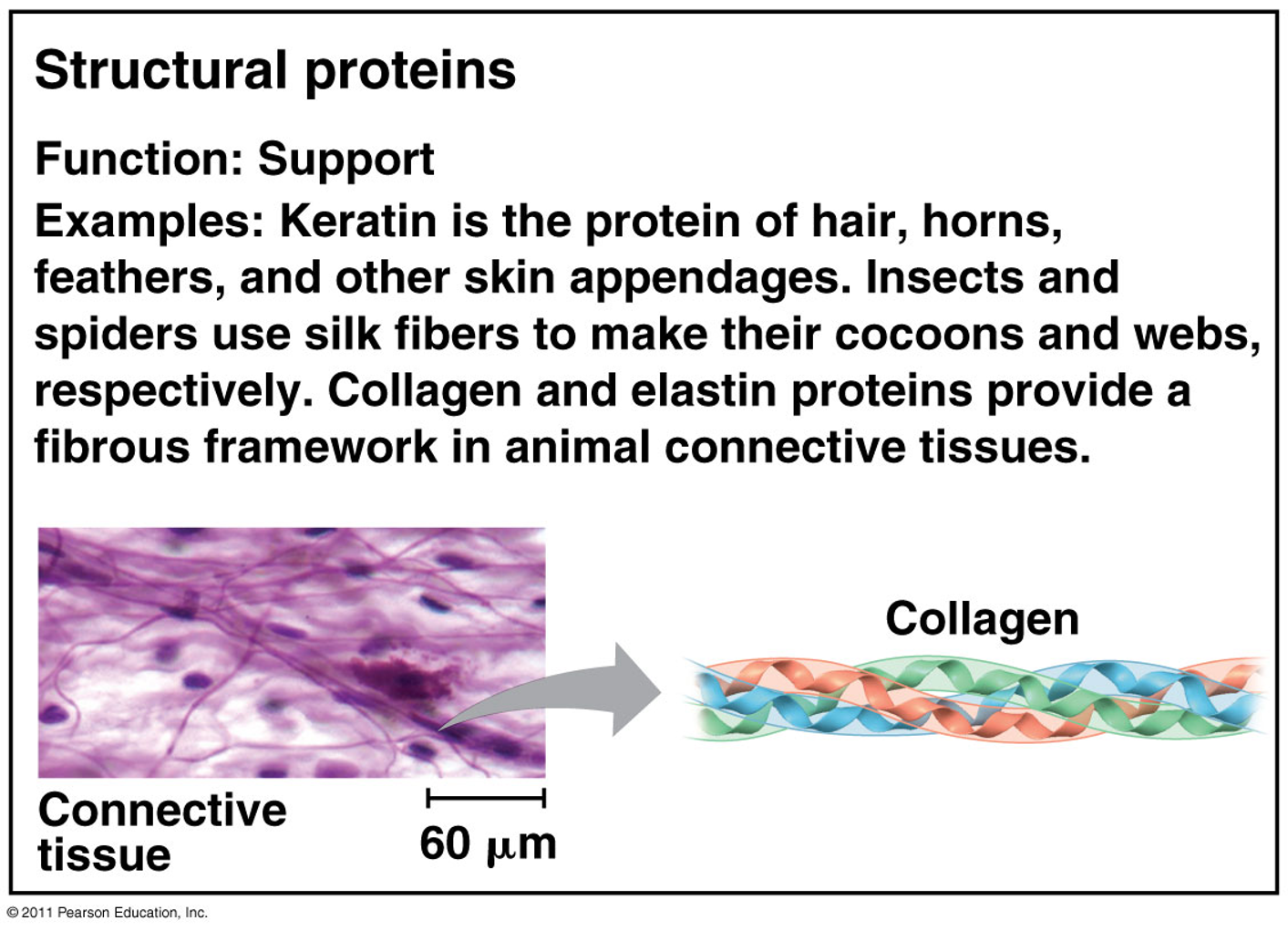
Structural proteins?
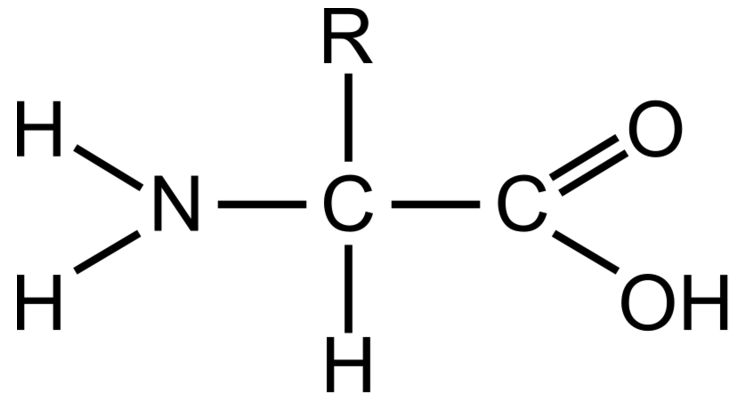
Amino Acids?
Monomers that build proteins
20 different amino acids make up all living things
BE ABLE TO DRAW
The properties of R groups….
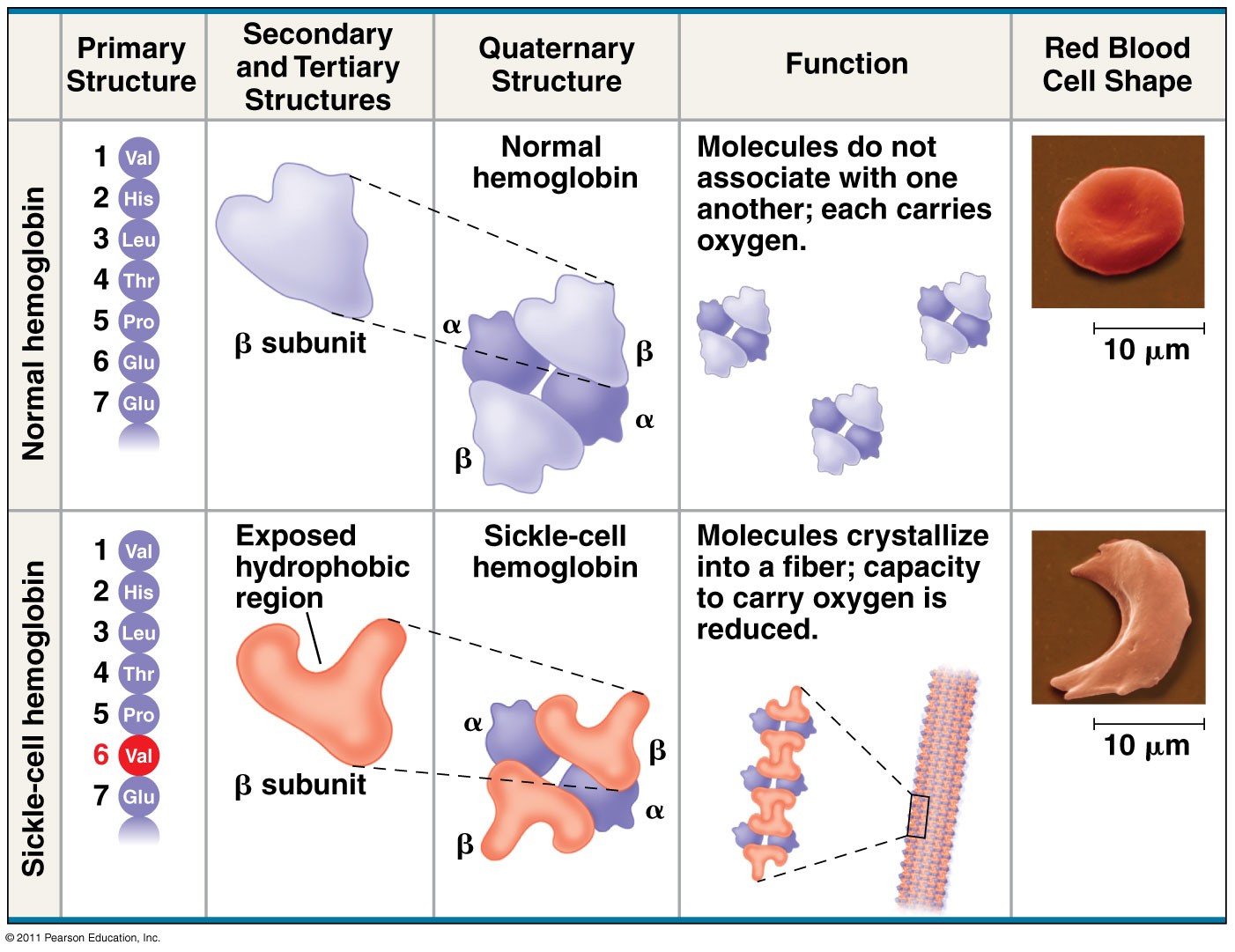
Properties of R groups give amino acids and their proteins different properties.
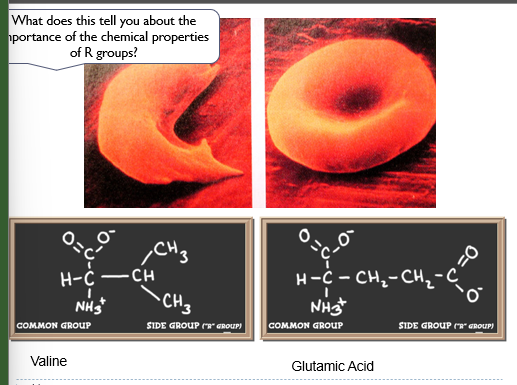
answer?
The images demonstrate that changing a single amino acid's R-group can drastically alter a protein's structure and function, leading to physiological diseases like sickle cell anemia.
Glutamic Acid: Possesses a hydrophilic (polar/charged) R-group. It interacts favorably with water on the exterior of normal hemoglobin molecules. This keeps red blood cells flexible and disc-shaped.
Valine: Possesses a hydrophobic (nonpolar) R-group. When it replaces glutamic acid, it avoids water and seeks out other hydrophobic regions.
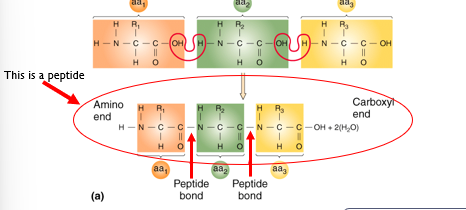
Be able to identify a peptide bond!
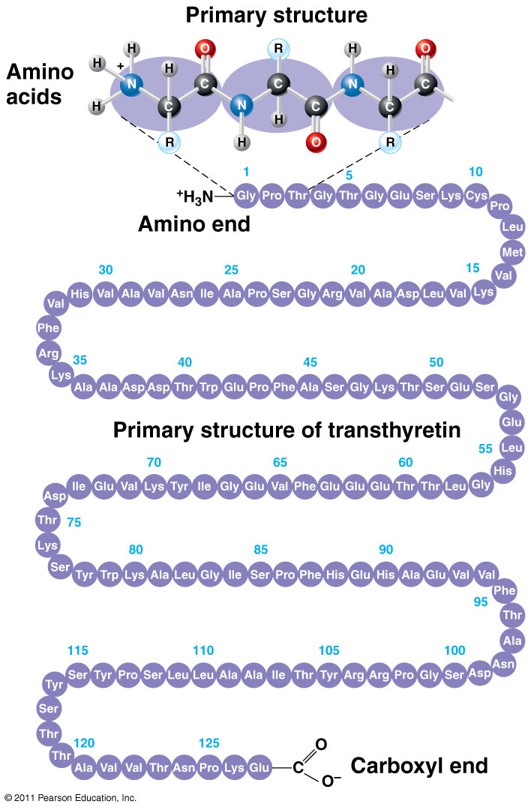
Primary Structure of a Polypeptide?
The amino acid sequence
DNA (genes) tell the cell what order to put the amino acids in
The primary structure helps to dictate the secondary and tertiary structure
Chemical nature of backbone and R-groups
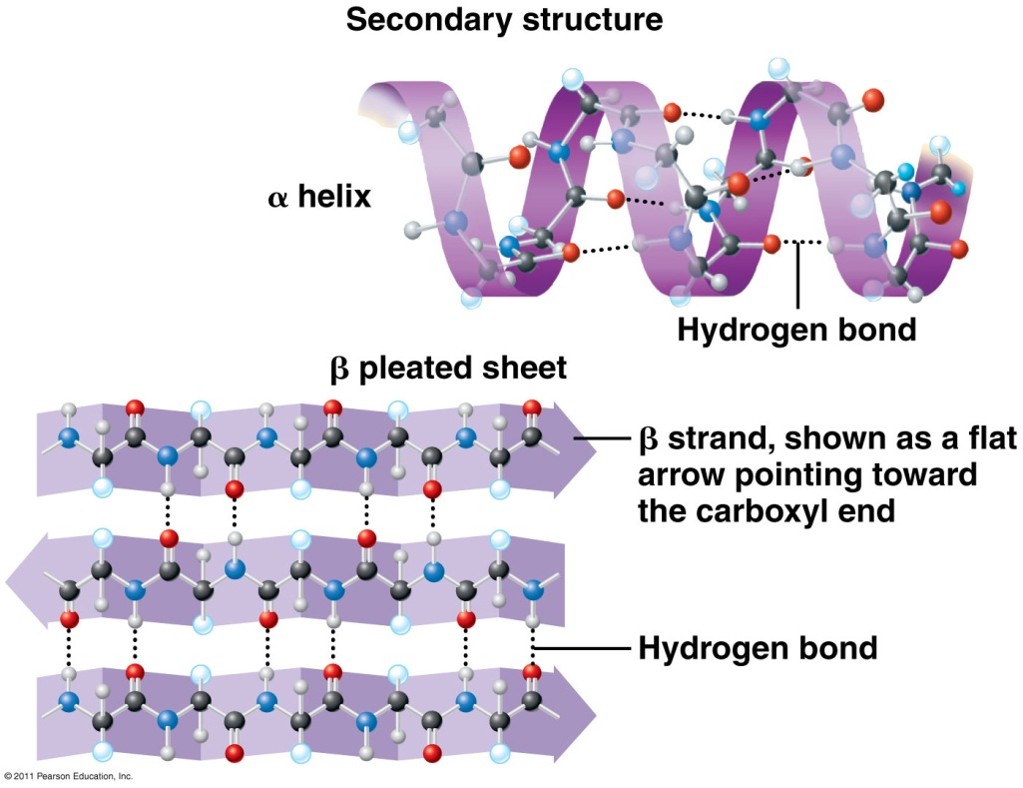
Secondary Structure of a Polypeptide?
Coils and folds
Result of hydrogen bonding within the backbone of the chain
}C=O and H-N
Alpha helix
Beta pleated sheet
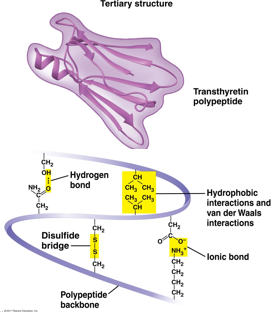
Tertiary Structure of a Polypeptide?
Overall shape that results from interactions between R groups
}Hydrogen bonds
}Disulfide bridges
}Ionic bonds
}Hydrophobic interactions
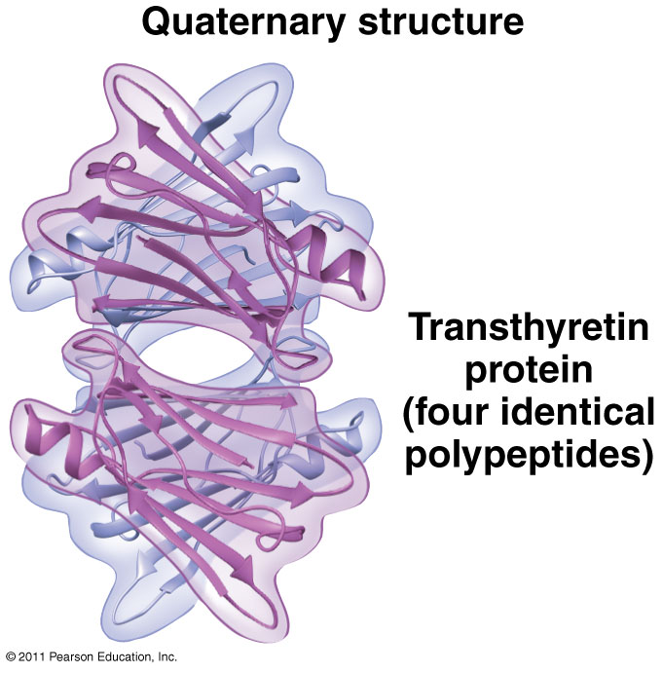
Quaternary Structure of a Polypeptide?
The interaction of two or more polypeptide chains
Not all proteins have a 4th level of structure
Why doe shape matter in a protein?
Functions of proteins depend on recognition and binding to other molecules
Antibodies bind to antigens on viruses/bacteria and mark them for destruction
Morphine, heroin, and other opiates mimic shape of naturally occurring endorphins
Endorphins are neuropeptides.
Fit into protein receptors and trigger a cellular, then physiological response
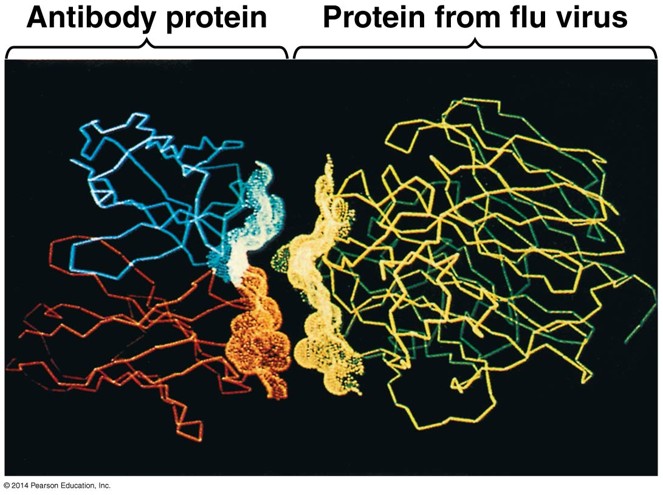
Why correct protein folding is important?
Correct protein folding is vital because a protein's specific three-dimensional shape determines its biological function. Without the proper shape, a protein cannot bind to its target molecules, catalyze chemical reactions, or support cellular life. Misfolded proteins lose their normal activity and can form harmful clumps linked to serious illnesses.
Central dogma?
The central dogma of molecular biology, proposed by Francis Crick in 1958, is the foundational concept explaining the unidirectional flow of genetic information within a biological system: from DNA to RNA to protein. It dictates that genetic instructions are stored, copied, and translated to build the functional molecules of life
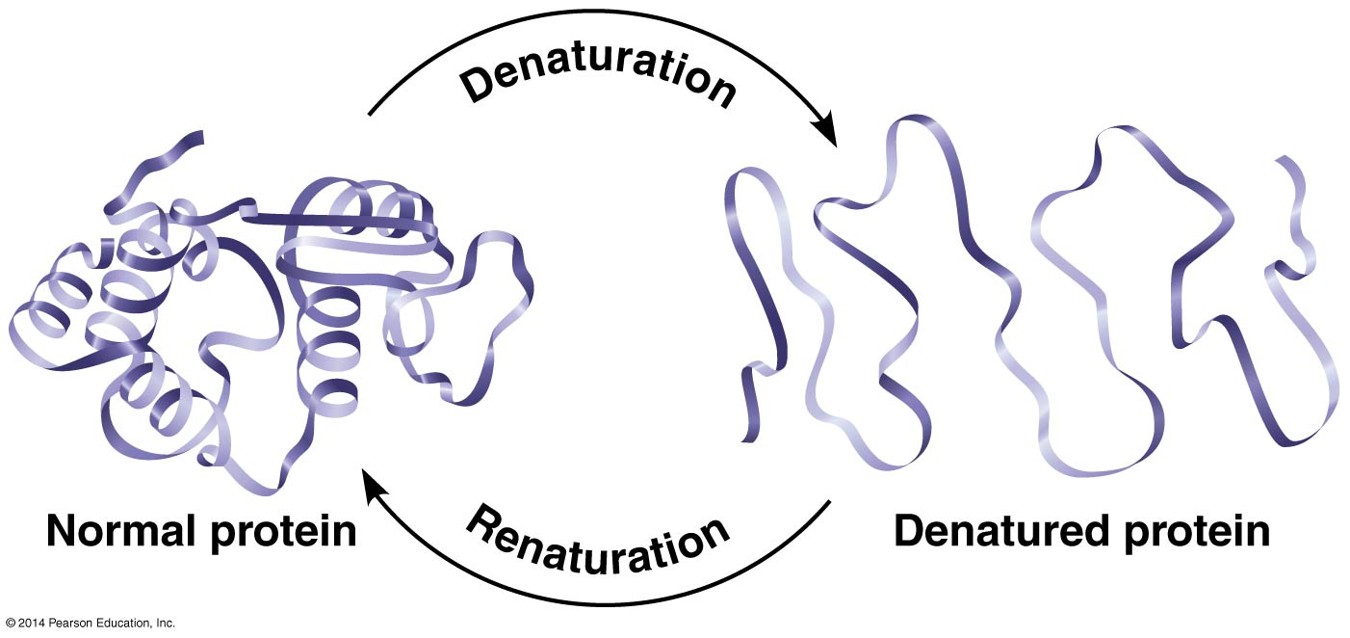
Denaturation?
The loss of the native shape of a protein
Structure à function
} loss of shape means loss of function
Caused by any environmental factor that disrupts the interactions
}Change in pH (why buffers are important)
}Change in salt concentration
}Increase in temperature (egg white)
Be able to example WHY these things cause denaturation using what you know about the bonds responsible for each level or protein interaction.
}Change in pH (why buffers are important)
}Change in salt concentration
}Increase in temperature (egg white)
🧪 Change in pH
Bonds disrupted: Ionic bonds (salt bridges) and hydrogen bonds.
Why it happens: Altering H+ ion concentration changes the charges on amino acid side chains (R-groups).
The result: Repulsions occur or attractive ionic pairs are destroyed, breaking the tertiary structure.
🧂 Change in Salt Concentration
Bonds disrupted: Ionic bonds and hydrogen bonds.
Why it happens: Excess salt ions shield and compete with the charged R-groups of the protein.
The result: Normal attractive interactions between amino acids are blocked by the salt ions, causing the protein to unfold.
🔥 Increase in Temperature
Bonds disrupted: Hydrogen bonds and hydrophobic interactions.
Why it happens: Added heat increases the kinetic energy and molecular vibrations of the protein atoms.
The result: The rapid movement overcomes and breaks weak heat-sensitive bonds, though covalent peptide bonds remain intact.
Why do you think there is such a big demand for peptides?
What evidence should manufacturers of these drugs have to provide for the drugs to be approved?
Why Demand is High
Targeted action: They fit exact cell receptor keys.
Fewer side effects: They mimic natural body signals.
New uses: They treat weight loss and chronic diseases well.
Better tech: Labs make them faster and cheaper now.
Rules for Drug Approval
Lab data: Show how the peptide works in cells and test animals.
Safety tests: Prove the drug does not cause toxic harm in early human trials.
Phase trials: Test large groups of people to prove the drug heals or helps.
Quality control: Show clean, exact methods used to make the drug batch by batch.