Topic 10 - Electricity and Circuits
 Call Kai
 Learn
Learn Practice Test
 Spaced Repetition
 Match
Match Flashcards
 Knowt Play
1/14

There's no tags or description
Looks like no tags are added yet.
Name | Mastery | Learn | Test | Matching | Spaced | Call with Kai |
|---|
No analytics yet
Send a link to your students to track their progress
15 Terms
What is current and how is it measured?
Current is the flow of charged particles
Measured in amperes (amps/A)
Measured using an ammeter in series
More particles flowing = higher current
Seen in equations as I
What is potential difference and how is it measured?
Potential difference is the energy transferred to each coulomb of charge
Measured in volts (V)
Measured using a voltmeter in parallel
Stronger push = higher voltage
Seen in equations as V
What is resistance and how is it measured?
Resistance in how much a component opposes current
Measured in ohms (Ω)
More resistance = harder for charge to flow = current decreases
Seen in equations as R
What is a series circuit and what are the rules for one?
Components are in a continuous loop
Current is always the same
Voltage is shared
Total resistance increases
What is a parallel circuit and what are the rules for one?
Components are on separate branches
Voltage is the same across each branch
Current splits between branches
Total resistance decreases
More branches = easier for current to flow
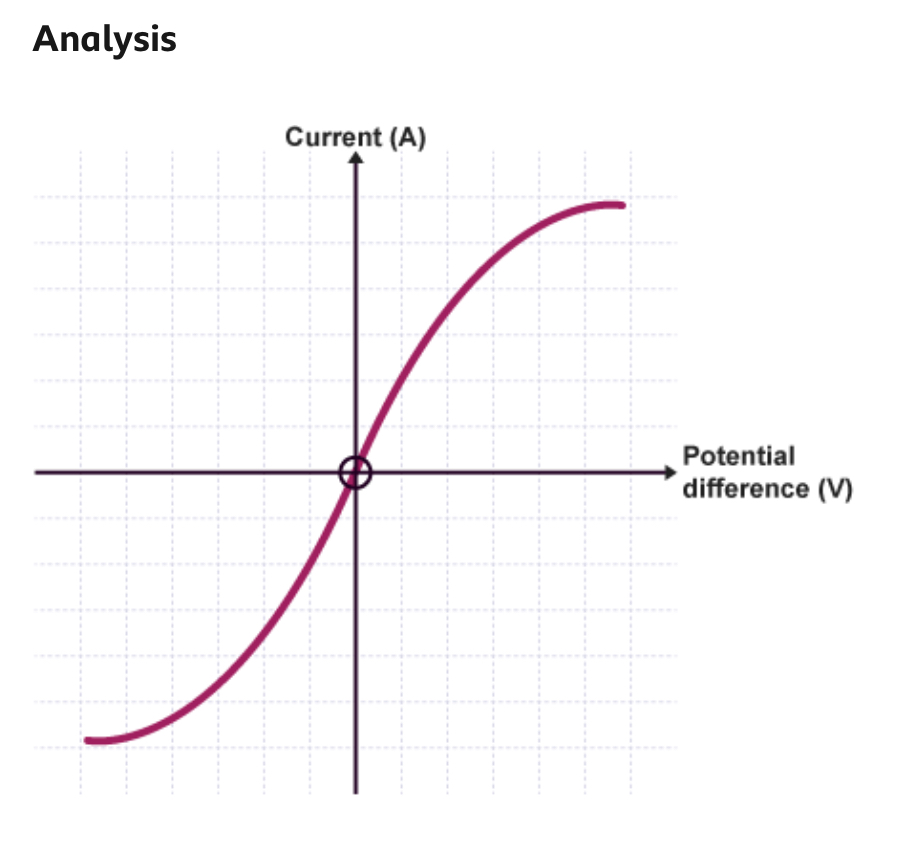
How does a filament lamp behave and what does the graph look like?
As temperatures increase:
Resistance increases
Current increases more slowly
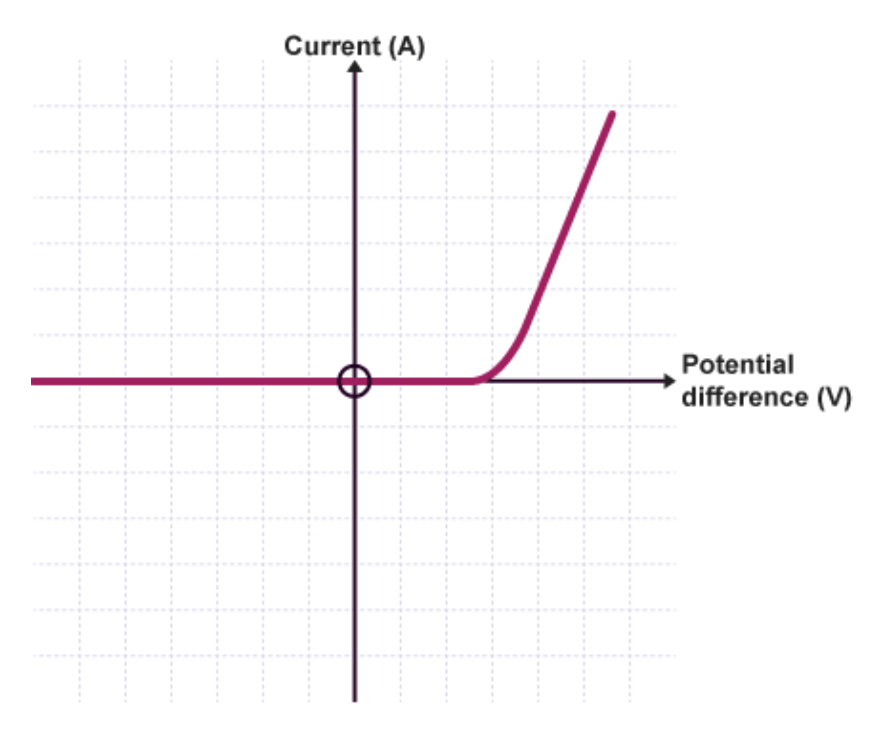
What does a diode do and what does its graph look like?
Allows current to flow in only one direction
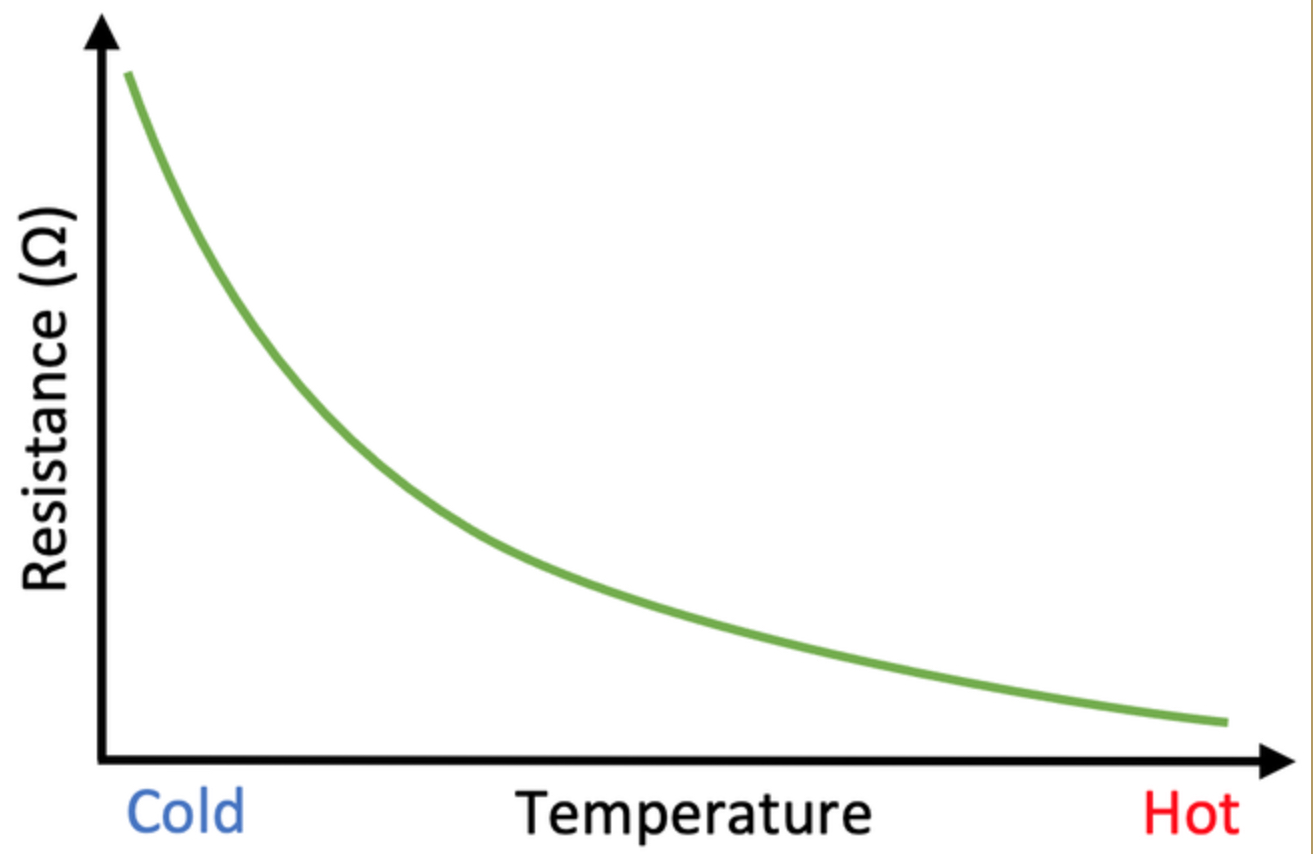
What does a thermistor do, what are some examples of it and what does its graph look like?
As temperature increases, resistance decreases
Examples:
Thermometers
Fire alarms
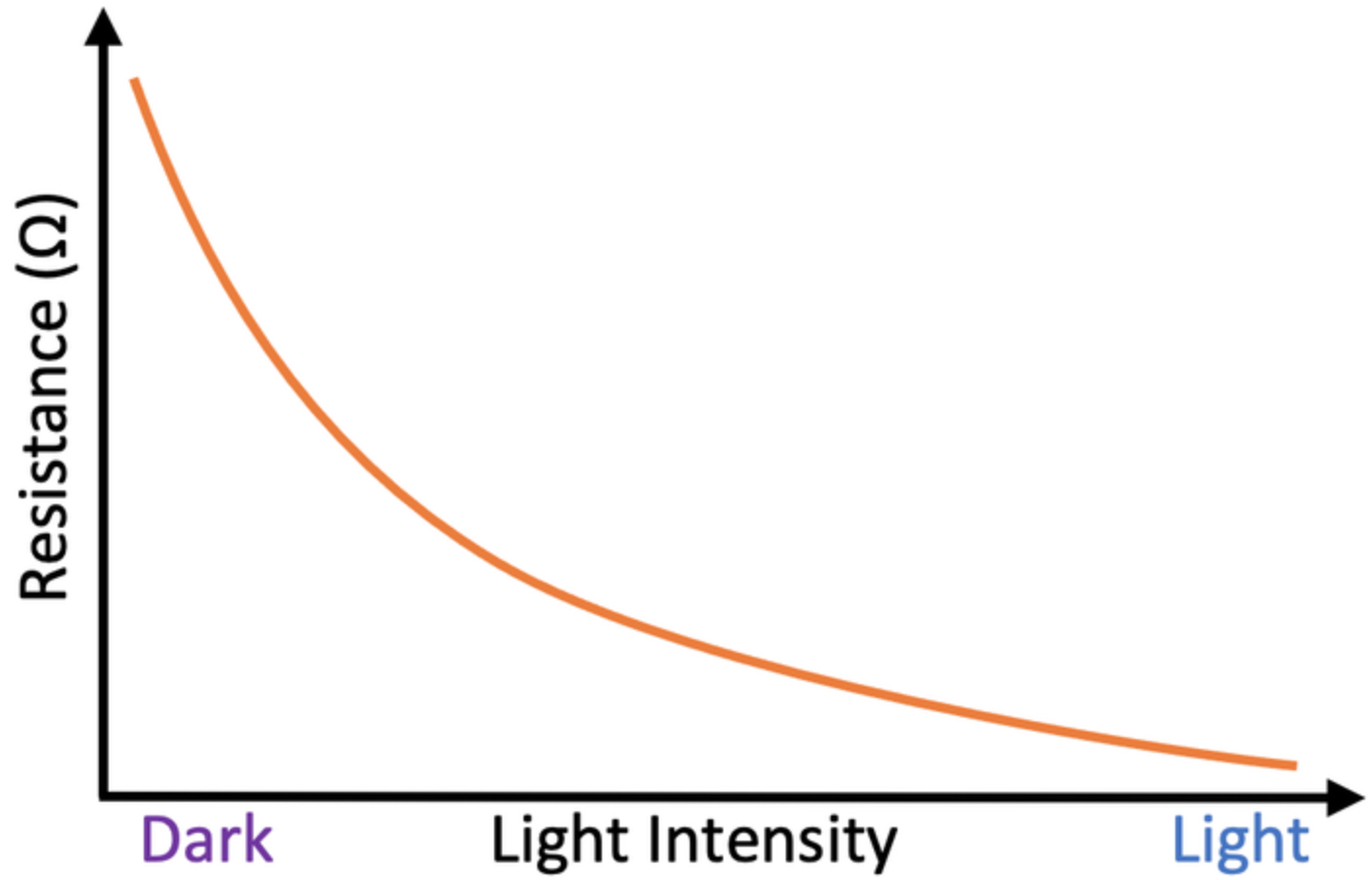
What is an LDR, give some examples and what does its graph look like?
Light dependent resistor
Higher the light intensity, lower the resistance
Examples:
Street lights
Automatic lighting
What is power and what is it measured in?
Power is the rate of energy transfer
Measured in Watts (W)
What is energy measured in?
Joules (J)
What is UK’s mains?
230V
50Hz
Alternating Current (AC)
Ac changes direction 50 timers per second
Batteries produce direct current (DC)
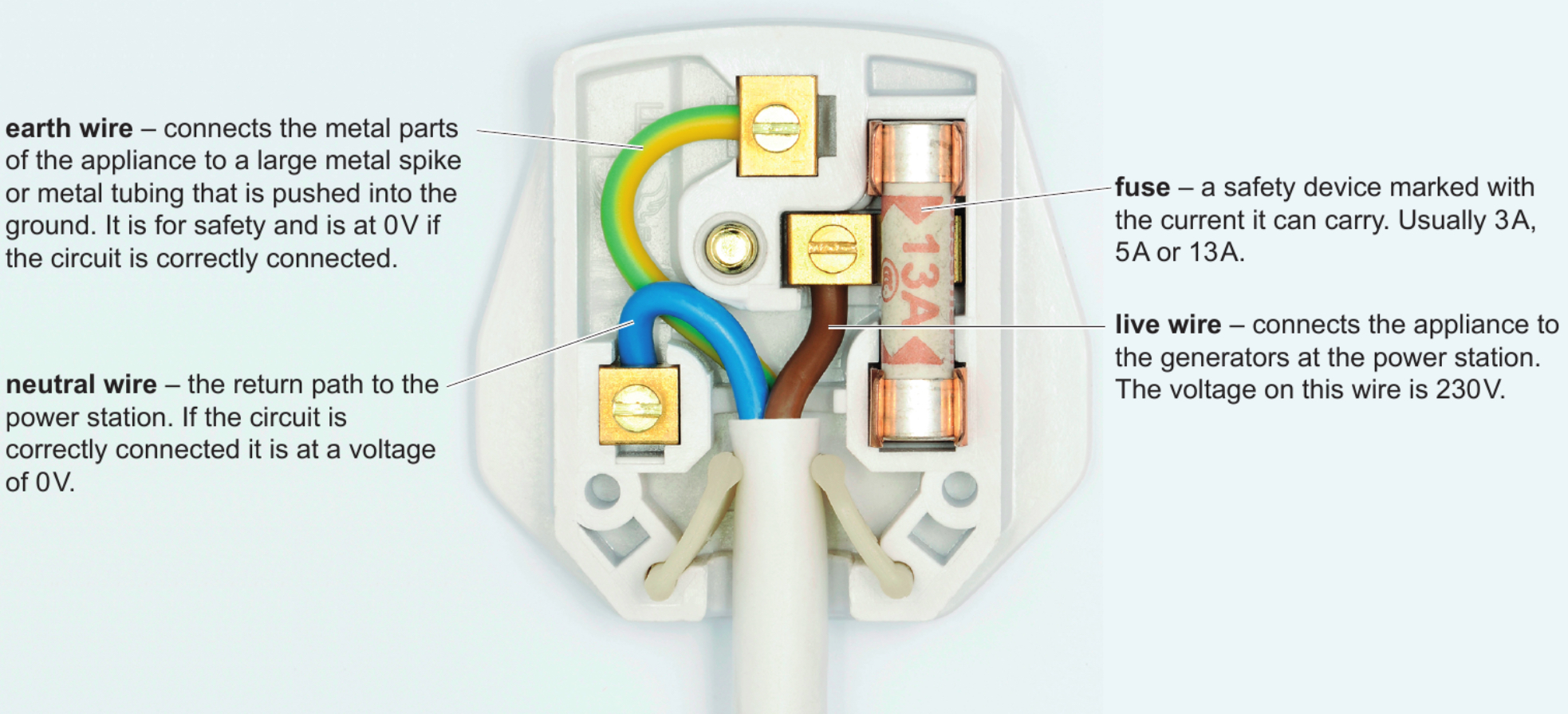
What is the inner workings of a UK plug?
Three wires
Brown = live
Blue = neutral
Green/Yellow = earth
Fuse
Plastic insulation
Cable grip
What is a circuit breaker and what do they do?
An alternative for fuses
Detect change in current and switch off supply
Unlike fuses, they do not break when doing this
What safety features do plugs have?
Earth wire: stops metal cases becoming live
Fuse: metals if current is too high
Circuit breaker: switches off automatically
Double insulation: plastic casing means to earth wire needed