Pharmacokinetics
 Call Kai
 Learn
Learn Practice Test
 Spaced Repetition
 Match
Match Flashcards
 Knowt Play
1/69

There's no tags or description
Looks like no tags are added yet.
Name | Mastery | Learn | Test | Matching | Spaced | Call with Kai | Chat |
|---|
No analytics yet
Send a link to your students to track their progress
70 Terms
pharmacokinetics
The process by which drugs are absorbed, distributed within the body, metabolized, and excreted.
what the body does to the drug

ADME
- absorption
- distribution
- metabolism
- excretion
oral route
Advantages:
- most convenient
- produces slow, uniform absorption
- mostly safe
- economical
Disadvantages:
- destruction of drug by enzymes or low pH
- poor absorption of large and charged particles
- drugs bind with GI content
- can NOT be used for drugs that irritate the intestines

rectal route
Advantages:
- limited first pass metabolism
- useful when oral route precluded
Disadvantages:
- absorption often irregular and incomplete
- can cause irritation to rectal mucosa
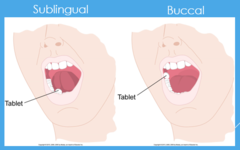
sublingual/buccal route
Advantages:
- rapid absorption
- avoids first pass metabolism
Disadvantages:
- absorption of only small amounts
parenteral route
anything outside of the oral tract (injectables)
intravenous route
Advantages:
- 100% bioavailability
- most direct route
- bypasses barrier to absorption (immediate effect)
- suitable for large volumes
- dosage easily adjusted
Disadvantages:
- increased risk of adverse effects from high concentration immediately after injection
- not suitable for oily substances or suspensions

intramuscular route
Advantages:
- quick and easy administration
- possible rapid absorption
- can be used as depot
- suitable for oily substances and suspensions
- can be used as a reservoir for slow releases
Disadvantages:
- painful
- bleeding
- may lead to nerve injury

subcutaneous route
Advantages:
- quick and easy administration
- fairly rapid absorption
- suitable for suspensions and pellets
Disadvantages:
- painful
- can't give large amounts

inhalation route
Advantages:
- uses for volatile compounds and drugs that can be administered by aerosol (albuterol)
- rapid absorption due to large surface area of alveolar membranes and high blood flow through lungs
- aerosol delivers drug directly to site of action and may minimize systemic side effects
Disadvantages:
- variable systemic distribution
Topical route
Advantages:
- application to specific surfaces (skin, eye, nose, vagina) allows for local effects
Disadvantages:
- May irritate surface

transdermal route
Advantages:
- allows controlled permeation through skin (nicotine, estrogen, testosterone, fentanyl, scopolamine, clonidine)
Disadvantages:
- may irritate surface

absorption
the process by which a drug enters into the body. it is the movement of a drug from its site of administration into the central compartment (systemic circulation)
drugs are mostly absorped in the small intestine
factors that affect absorption
- solubility
- concentration
- blood flow
- absorbing surface
- contact time
- pH
drugs have to be ____ to be absorbed
non-polar / not charged / lipophilic
higher drug concentration =
more of the drug being absorbed
pKa
pH at which the drug is 50% ionize and 50% unionized therefore only the 50% unionized part is absorbed
higher the absorbing surface area =
more of the drug being absorbed
more contact time =
more absorption of the drug
a weak acid drug (aspirin) placed in a strong acid (stomach acid) keeps it
non-ionized and allows it to be absorbed
bioavailability
the amount of an administered drug that reaches the systemic circulation
factors that influence bioavailability
- first pass metabolism
- drug formulation
- bioequivalence
- route of administration
- distribution
distribution
delivery of a drug from systemic circulation to tissues
there is variation of how drugs distribute into certain body compartments
volume of distribution (Vd)
space in body into which drugs appear to disseminate.
a measure of the APPARENT space in the body available to contain the drug based on how much is given versus what is found in the systemic circulation
Vd formula
Vd = dose (Amt of drug given by IV injection) / Co (initial concentration achieved)
drug distribution in certain body compartment: plasma water volume 0.045 L/KG
in a 70KG human its 3L
drug distribution in certain body compartment: extracellular body water volume 0.20 L/KG
in a 70KG human its 14L
drug distribution in certain body compartment: total body water volume 0.60 L/KG
in a 70KG human its 42L
drug distribution in certain body compartment: tissue volume >0.70 L/KG
in a 70KG human its >49L
large Vd =
drug concentrated in tissue
small Vd =
drug remains in ECF or plasma
Vd is inversely related to
plasma drug concentration
factors affection distribution
- plasma protein
- tissue binding
- gender
- age
amount of body fat
- relative blood flow
- size - tissue, molecules
- lipid solubility
drugs bound to protein are inactive therefore it
increases the drugs availability and can last longer and used later (increasing duration)
drugs not bound are active and used
higher blood flow can ____ drug concentration
increase
plasma protein binding
- drugs with high plasma protein binding remain in the plasma
- low Vd and a prolonged half life
ie. warfarin, diazepam
binding acts as a drug reservoir, slowing onset and prolonging duration of action
many drugs bind reversibly with one or more plasma proteins (usually albumin) in the vascular compartment
tissue protein binding favors ____ Vd
larger
Examples: chlordiazepoxide, fluoxetine, tolbutamide
disease states such as liver disease that affects albumin concentration or drugs that alter protein binding influences the
concentration of drugs
examples: furosemide or valproate can displace warfarin from albumin
competitive binding can lead to
toxicity
site of drug concentration: fat
characteristics:
- stores lipid soluble drugs
site of drug concentration: tissue
characteristics:
- may represent sizable reservoir, depending on mass, as with muscles
- several drugs accumulate in liver
site of drug concentration: bone
characteristics:
- tetracyclines are deposited in calcium rich regions (bones and teeth)
site of drug concentration: transcellular reservoirs
characteristics:
- GI tract serves as transcellular reservoir for drugs that are slowly absorbed or that are undergone enterohepatic circulation
site of drug exclusion (places where it is difficult for drugs to enter)
- cerebrospinal
- ocular
- endolymph
- pleural
- placenta
components of blood brain barrier (BBB)
- tight junctions compared to fenestrated junctions in capillaries of most tissues
- glial wrappings around capillaries
- low cerebral spinal fluid drug binding proteins
- drug-metabolizing enzymes in endothelial cells (monoamine oxidases, cytochrome P450s)
- efflux transporters
biotransformation = metabolism
- liver is the primary site
- livers primary role is drug inactivation
- diseases that affect liver influence drug metabolism
- metabolic products of drugs usually less active pharmacologically
- metabolic products may be active drugs where the prodrug form is inactive and the metabolite is the active drug (valacyclovir). (??)
Phase I biotransformation
Oxidation, reduction, hydrolysis
- Cyp450 enzymes mainly involved in oxidation
Phase II biotransformation
conjugation-attach polar groups such as sulfate or glucuronic acid to the drug
transverse enzymes:
- glucuronsyltransferase
- acetyltransferace
- methyltrasferase
phase III disposition processes
occurs post phase II, drug can undergo further metabolism and excretion
P-450 Enzymes
check diagram on slide 22
(EXAM) drug interactions may occur as a result of changes to the
cytochrome P-450 enzyme system
(EXAM) Inducers of cytochrome P-450 increases metabolism of drugs and
lowers therapeutic drug levels
decreases efficacy and breaks it down faster
(EXAM) Inhibitors of cytochrome P-450 decreases metabolism of drugs and
raises therapeutic drug level (danger of toxicity)
more of the drug will be used and can become toxic since its breakdown is slowed down
(EXAM) most drugs that are either inducers or inhibitors of cytochrome P-45O are categorized as
hepatotoxic
excretion
amount of drug and drug metabolites excreted by any process per unite time
excretion processes in the kidney
- glomerular filtration rate (GFR)
- tubular secretion
excretion processes in the liver
bile and feces
GFR excretion
- depends on the size, charge, and protein binding of a particular drug
- is lower for highly protein-bound drugs (excreted through tubular secretion )
- drugs that are NOT protein bound and NOT reabsorbed are eliminated at a rate equal to the creatinine clearance rate (125mL/min)
tubular secretion
- occurs in the middle segment of the proximal convoluted tubules
- has a rate that approaches renal plasma flow (660mL/min)
provides transporters for:
- anions (penicillins, cephalosporins, salicylates)
- cations (pyridostigmine)
can be used to increase drug conc. by use of another drug that competes for the transporter (probenecid inhibits penicillin secretion)
characteristics of tubular secretion
- competition for the transporter
- saturation of the transporter
- high palm protein binding favors increased tubular secretion because the affinity of the solute is greater for the transporter than the plasma protein
large polar compounds or their conjugates (molecular weight > 300 daltons) may be actively secreted into
bile
separate transporters are used for
- anions
- neutral molecuels
- cations
large drugs often undergo enterohepatic recycling in which drugs secreted in the bile are again reabsorbed in the small intestines but
the cycle can be interrupted by agents that bind drugs in the intestine
clearance kinetics
clearance refers to the volume of plasma from which a substance is removed per unit time
total body clearance formula
Cl= Vd X Kel
Vd= volume of distribution
Kel = elimination rate
renal clearance
Cl r = U X Cur / Cp
U = urine flow (mL/min)
Cur = urine conc. of a drug
Cp = plasma conc. of a drug
elimination kinetics
- first order kinetics
- zero order kinetics
first order kinetics
refers to the elimination of a constant percentage of a drug per unit time
- rate of elimination is proportional to drug concentration
- drug concentration changes by some constant fraction per unite time
- half life is constant for each drug
elimination half life
refers to the time required for drug conc. to drop by one half; independent of dose
zero order kinetics
a constant amount of drug is eliminated per unit time
- rate is independent of drug conc.
- elimination pseudo - half life is proportional to drug conc.
- small increase dose can produce a larger increase in conc.
- process only occurs when enzymes or transporters are saturated (at high doses)