Types of Leukocytes and its functions
 Call Kai
 Learn
Learn Practice Test
 Spaced Repetition
 Match
Match Flashcards
 Knowt Play
1/4

Earn XP
Description and Tags
Lab 4: Cardiology - Blood Histology, Blood Vessels & Heart Dissection
Name | Mastery | Learn | Test | Matching | Spaced | Call with Kai | Chat |
|---|
No analytics yet
Send a link to your students to track their progress
5 Terms
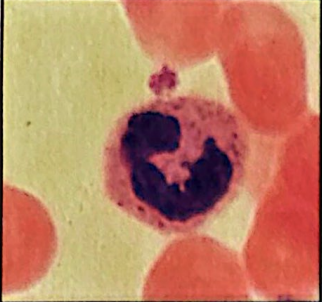
neutrophils (granulocyte)
release hormones called cytokines that attract other phagocytes to a site of injury
phagocytize microbes such as bacteria at local wound sites
cells are short lived (about 10 hours in blood) and may only live 30 minutes until they succumb to the toxins released by the pathogens they have ingested
make potent oxidizing agents and peptides capable of destroying bacteria
has 2 to 5 lobed nucleus (MULTI-LOBED)
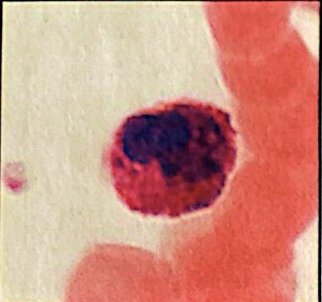
eosinophils (granulocyte)
fight multicellular PARASITIC infections and PARASITIC eukaryotes (ex. worms) in the gut
releases destructive enzymes that digest their targets
bi-lobed nucleus & cytoplasm filled with orangish granules
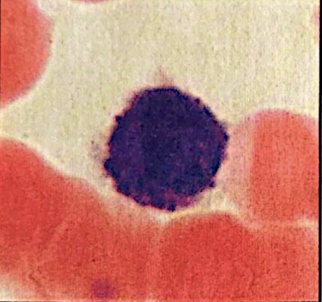
basophils (granulocyte)
migrate to injured tissue and release histamine (vasodilator) and heparin (anticoagulant)
histamine initiate a localized inflammatory response
mast cells in the tissues are very similar to basophils and induce a similar inflammatory response
bi-lobed nucleus & cytoplasm filled with violet-blue granules
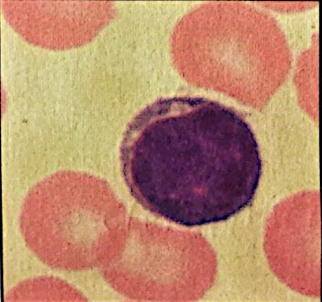
lymphocytes (agranulocyte)
main cells that populate lymph nodes, glands and other lymphatic tissue
responsible for the specific immune response to infection
2nd most abundant leukocytes and mature into T cells and B cells that orchestrate cellular and humoral (antibody) immunity
some T cells attach to and destroy foreign cells by releasing cytotoxic chemicals
B cells become sensitive to a specific antigen, then synthesize and release antibodies into the blood
has large, round, dark staining nucleus that takes up NEARLY the entire cell
size of lymphocyte is variable
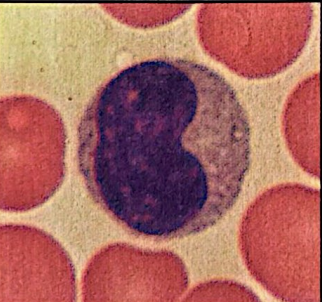
monocytes (agranulcoyte)
when monocytes migrate out of the bloodstream, they become large, phagocytic cells called macrophages
have little function in circulating blood
highly phagocytic toward bacteria and viruses
present antigens (from previously phagocytized material) that help activate the immune system
kidney shaped/round nucleus and large amount of cytoplasm