3.1-3.3 The Periodic Table, Orbital Energies, Electron Configurations and Orbital Diagrams
 Call Kai
 Learn
Learn Practice Test
 Spaced Repetition
 Match
Match Flashcards
 Knowt Play
1/22

There's no tags or description
Looks like no tags are added yet.
Name | Mastery | Learn | Test | Matching | Spaced | Call with Kai | Chat |
|---|
No analytics yet
Send a link to your students to track their progress
23 Terms
periodic properties of the elements
predictable properties based on an element’s position (row and column)
which energy orbits get occupied by electrons first?
the lowest energy orbitals available
ground state
when all electrons are in the lowest energy orbitals possible
excited state
some electron(s) are in higher energy orbitals
in hydrogen atoms, the sublevels are _____
degenerate (of equal energy) (3s=3p=3d)
in multi-electron atoms, the energy of an electron depends on both the values of ___ and ___(principal level and sublevel)
n and l
(for given value of n: s<p<d<f
Coulomb’s Law
gives the potential energy between 2 charged particles (q1 and q2)
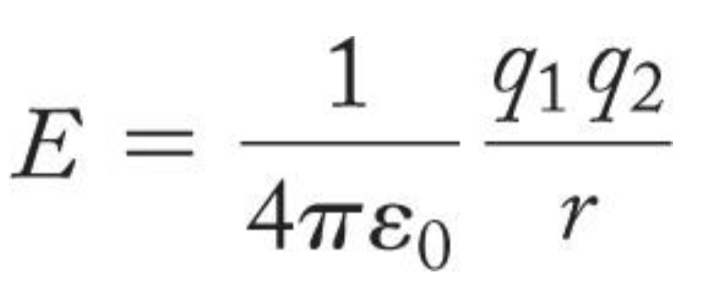
E(+) repulsion
increases energy of a system…destabilizing effect
E(-) attraction
decreases energy of a system…stabilizing effect…energetically favorable
|E| potential energy between 2 charges
is proportional to magnitude of charges and inversely proportional to the distance between the charged particles
2 orbital effects that impact electron energies
shielding and orbital penetration
the closer the electron to the nucleus, the ____ energy it has
LESS
less energy =
CALMER AND STABLE ATOM!
shielding
when electrons in energy levels with larger values of n do not “feel” the full effects of the nucleus because of the charge shielding from inner electrons (they feel a weaker net positive charge)

orbital penetration
the ability of an electron in a specific orbital to get physically close to the nucleus by slipping past the electron density of inner-shell (core) electrons

order of orbital penetration
ns > np > nd > nf…
so s-orbital electron is CLOSER to nucleus —> LOWER, MORE STABLE ENERGY
orbital diagram
a visual tool that shows how electrons are organized inside an atom's energy levels (boxes with arrows inside)
up down half arrows
represent electron spin (ms=+1/2 or -1/2)
Aufbau Principle
lowest energy orbitals are filled first
Hund’s Rule
when filling individual orbitals of a given sublevel, electrons fill them singly first with parallel spins
2 electrons sharing an orbital MUST have _______ spins
OPPOSITE
Pauli exclusion principle
no 2 electrons in an atom can have the same 4 quantum numbers
Electron Configurations
the arrangement of electrons in the energy levels, subshells, and orbitals of an atom