Imaging Procedure-Test #4 (facial bones)
 Call Kai
 Learn
Learn Practice Test
 Spaced Repetition
 Match
Match Flashcards
 Knowt Play
1/83

There's no tags or description
Looks like no tags are added yet.
Name | Mastery | Learn | Test | Matching | Spaced | Call with Kai | Chat |
|---|
No analytics yet
Send a link to your students to track their progress
84 Terms
MSP IOML
What positioning lines are parallel to the IR for a lateral facial bone
inter pupillary line
what line is perpendicular to the IR for a lateral facial bone
zygoma half way between outer cants and EAM
where does the CR enter for a lateral facial bone
sella turcia
when performing a lateral facial bone collimation needs to include back to what structure
37
the OML forms a ___ degree angle to the IR for a parietoacanthial projection, water method
MML almost perpendicular and MSP
what positioning line is almost perpendicular to the IR for a parietoacanthial projection, waters method?
perpendicular and exits the acanthion
where does the CR exit for a parietoacanthial projection, waters method?
below the maxillary sinuses
where should the petrous ridges be demonstrated on a parietoacanthial projection waters method
55 degree
the OML forms a ___ degree angle to the IR for a modified parietoacanthial projection modified waters method
CR exits acanthion
where does the CR exit for a modified parietoacanthial projection modified water method
halfway ill the maxillary sinuses
where are the petrous ridges demonstrated on a parietoacanthial projection modified waters method
OML is perpendicular to IR
what positioning line is perpendicular to the IR for a PA axial caldwell method of the facial bones
15 degrees caudal
what tube angle/direction for a PA axial caldwell method of the facial bones?
CR exits at nasion
where does the CR exit for a PA axial caldwell method of the facial bones?
in lower third of orbit
where are the petrous ridges demonstrated on a PA axial Caldwell method of the facial bones
for comparison
why is it important to image both R and L lateral nasal bones
MSP parallel to IR, IP line perpendicular, IOML parallel with axis of IR
what positioning line is parallel to the IR for a lateral nasal bones?
enters bridge of nose ½ distal to nasion
where does the CR enter for a lateral nasal bones
IOML
what positioning line should be parallel to the IR for SMV zygoma
perpendicular to IOML and enters MSP of throat at a level 1 in posterior to outer canthus
where does the CR enter for SMV zygoma
they should be symmetrical and no foreshortening - they form overlaying arches
what happens to the zygomatic arch if there is rotation
MSP of head 15 degrees towards the side being examined rotate
what is the patient rotation for tangential zygoma
tilt the tip of the head 15 degree away from side being examined
what is the patient tilt for tangential zygoma
perpendicular to IOML and centered to the zygomatic arch at point 1 in posterior to outer canthus
where does the CR enter for the tangential projection zygomatic arch
MML
what positioning line is perpendicular for acanthioparietal projection reverse waters method
that there is magnification and more distorted when done AP
what is the major different between parietoacanthial projection and acanthioparietal projection reverse waters method
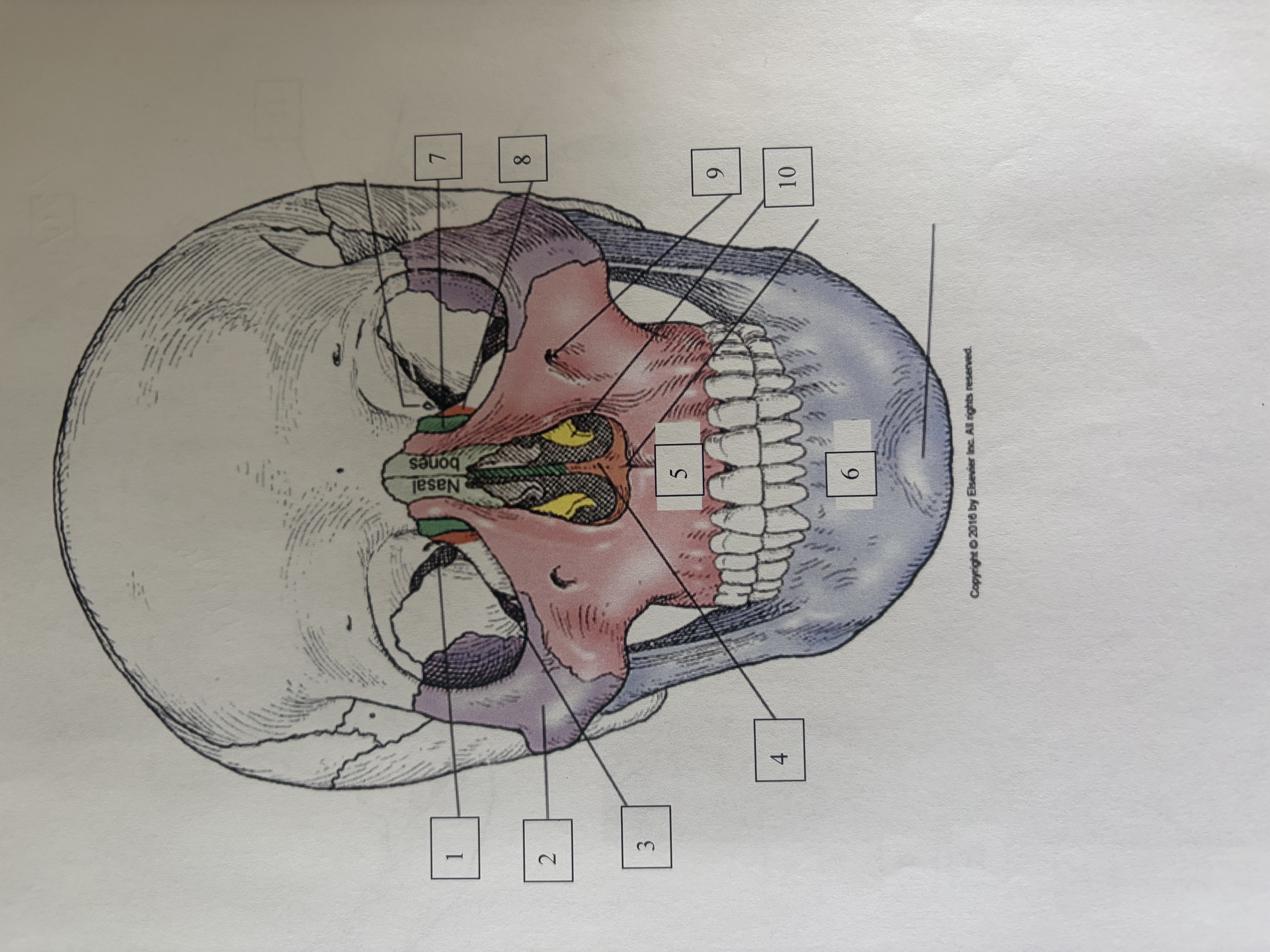
superior orbital fissure
1
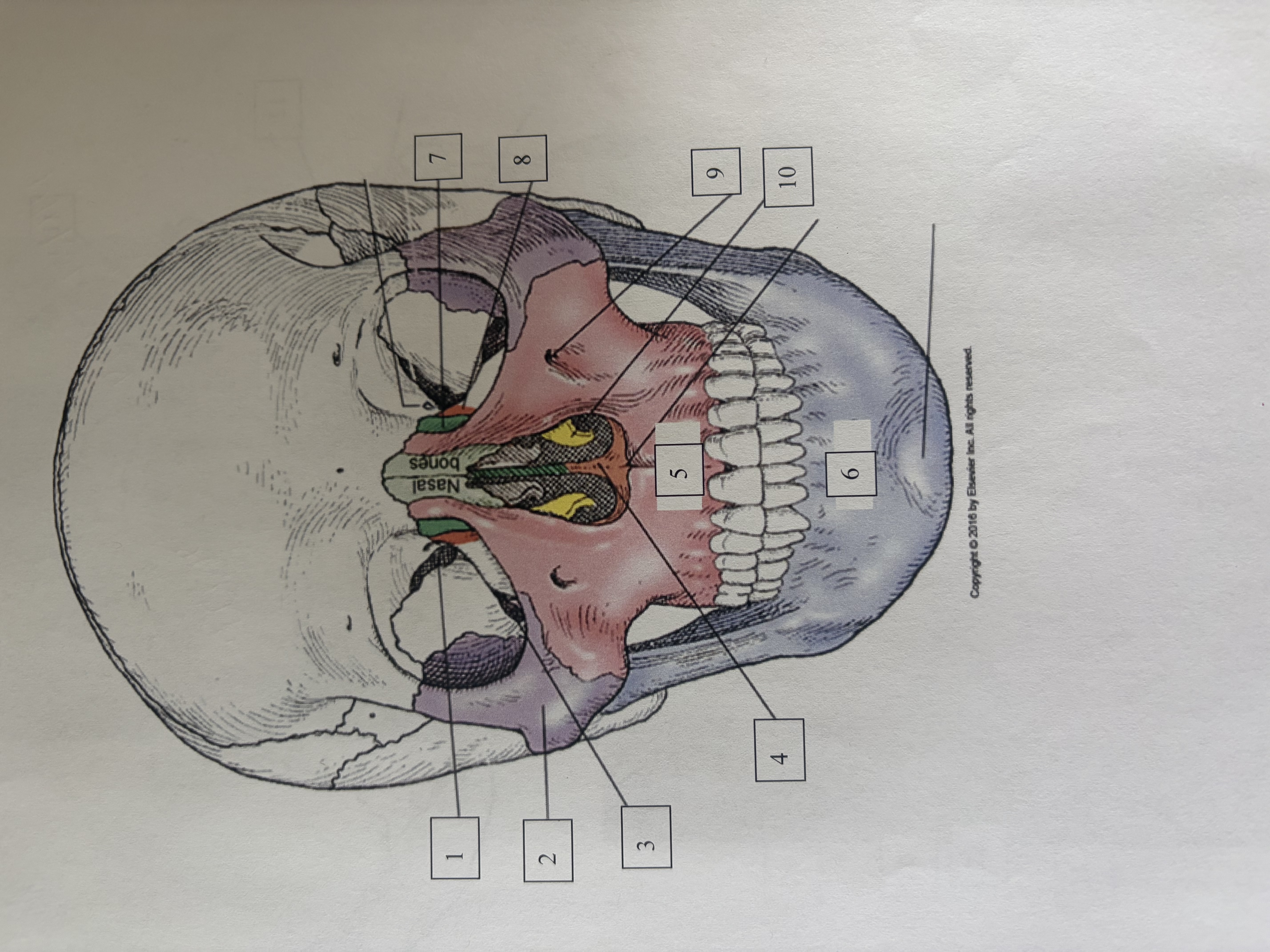
zygoma
2
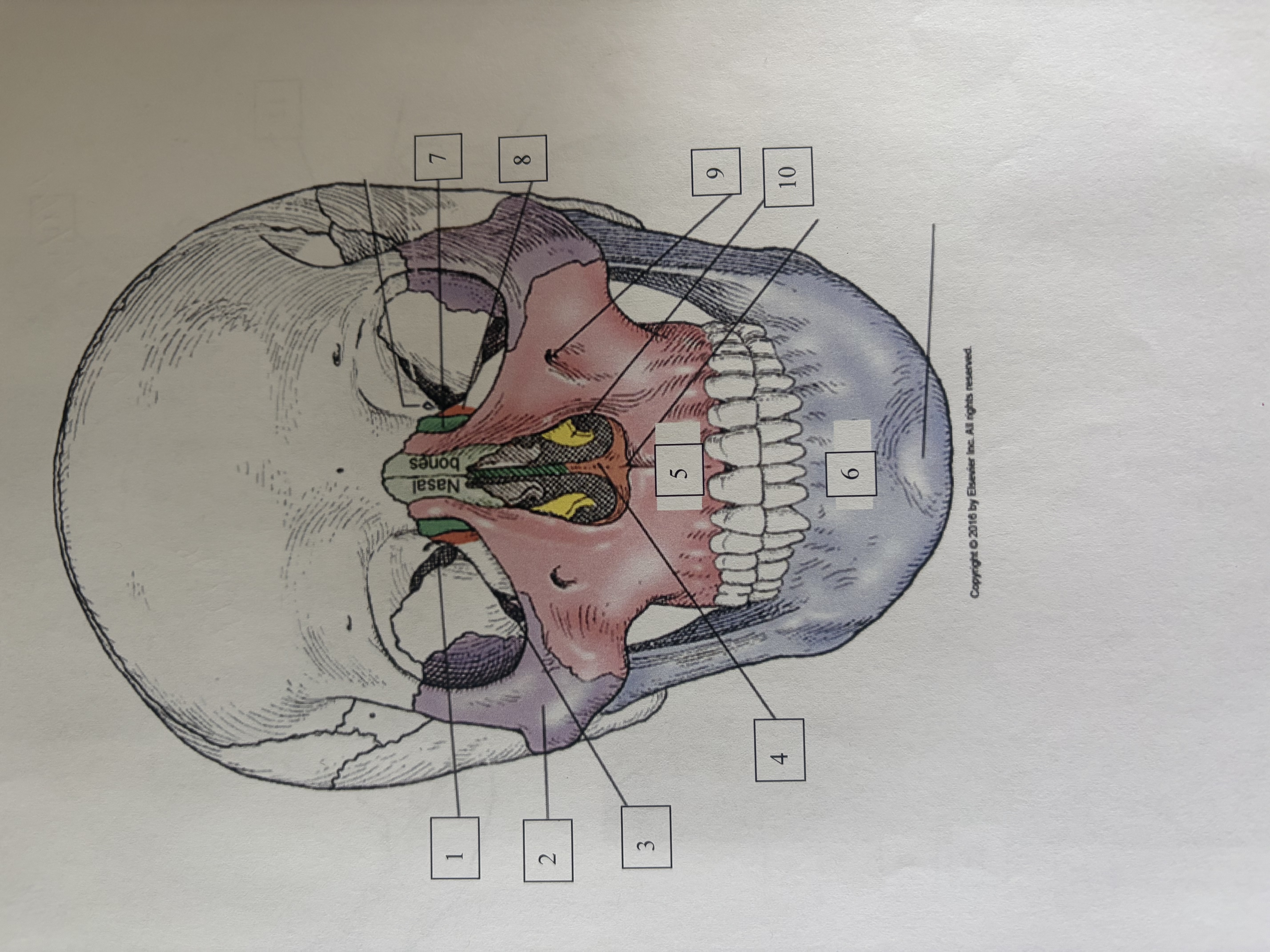
inferior orbital fissure
3
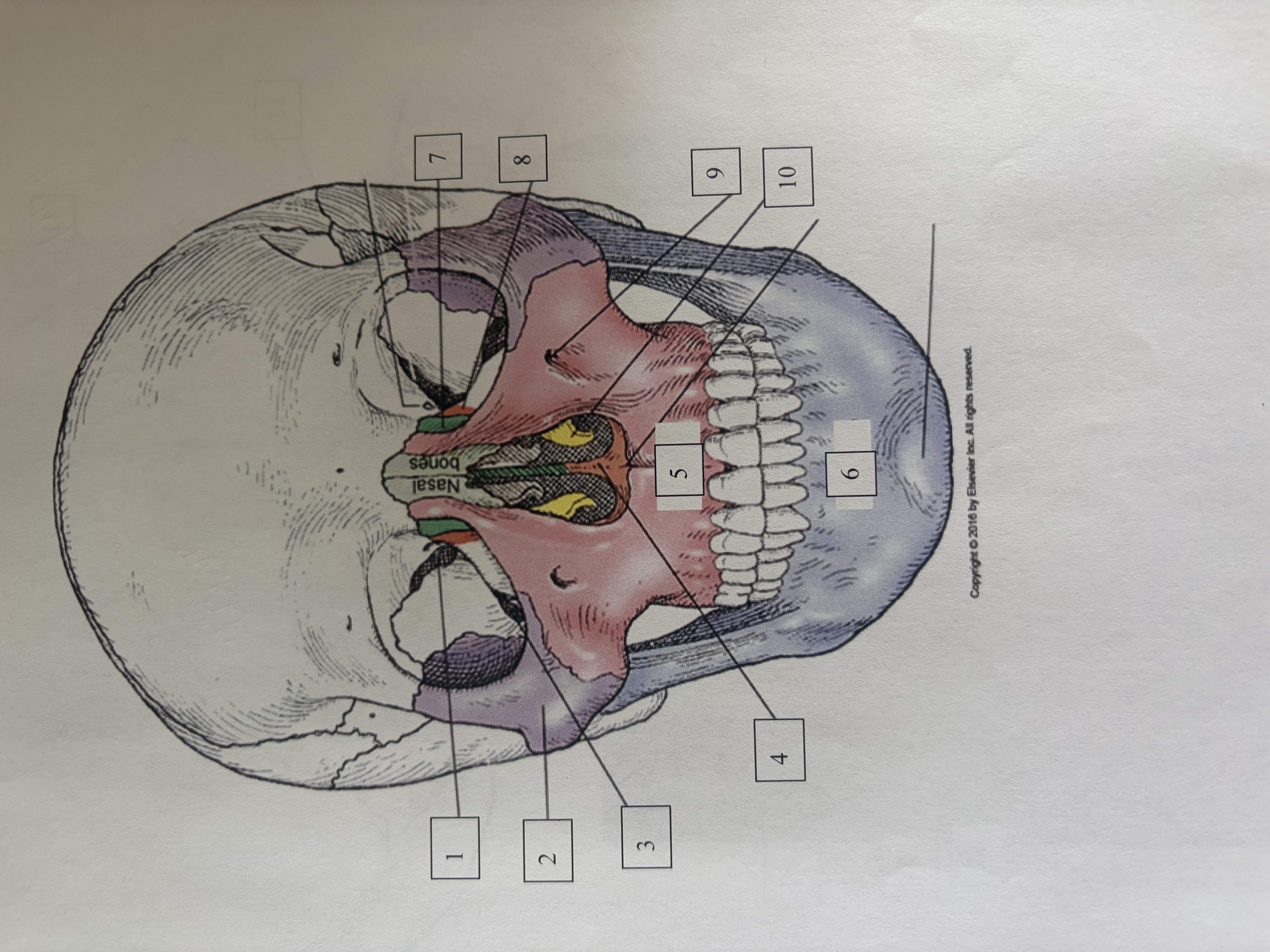
vomer
4
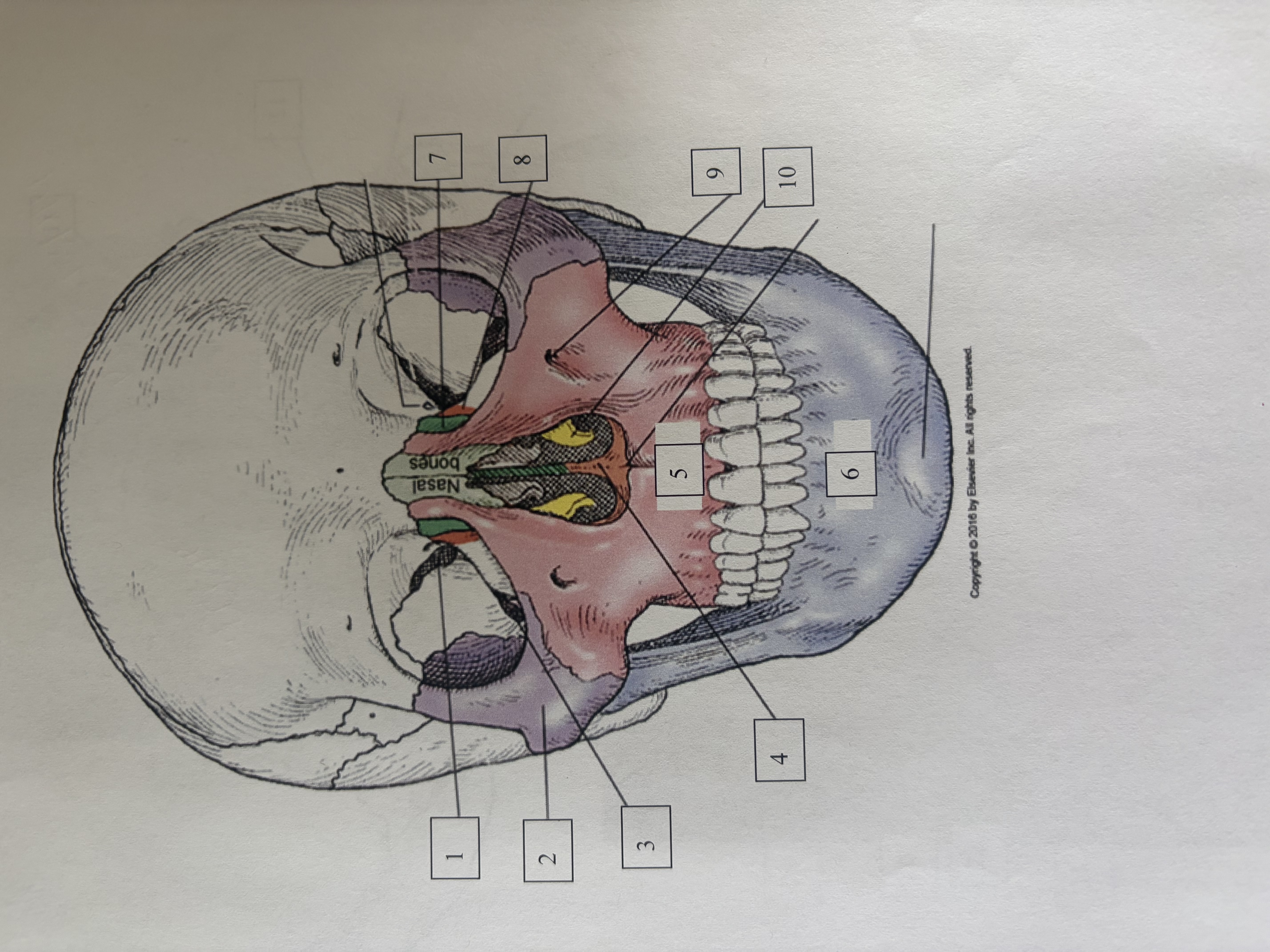
maxilla
5
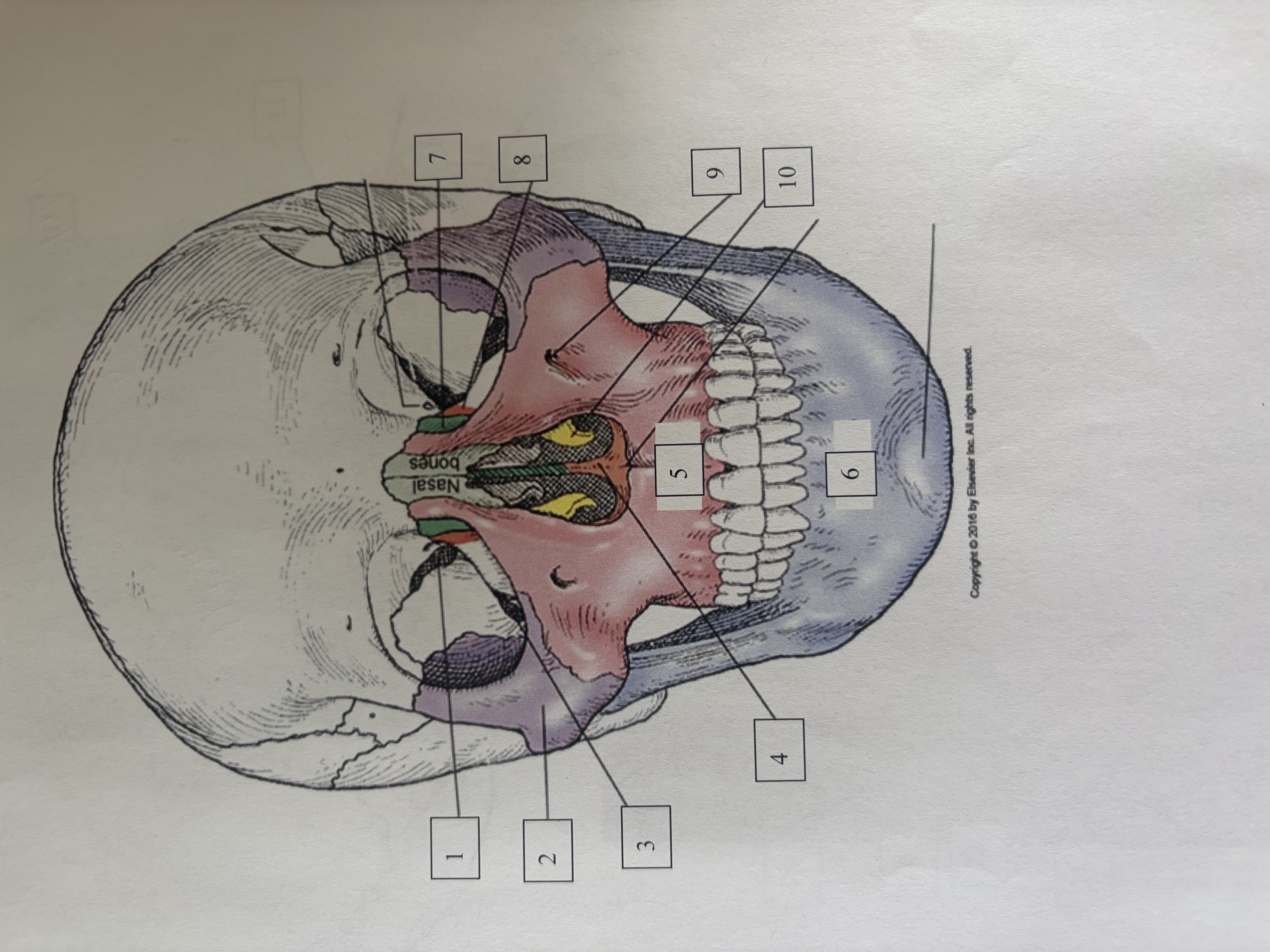
mandible
6
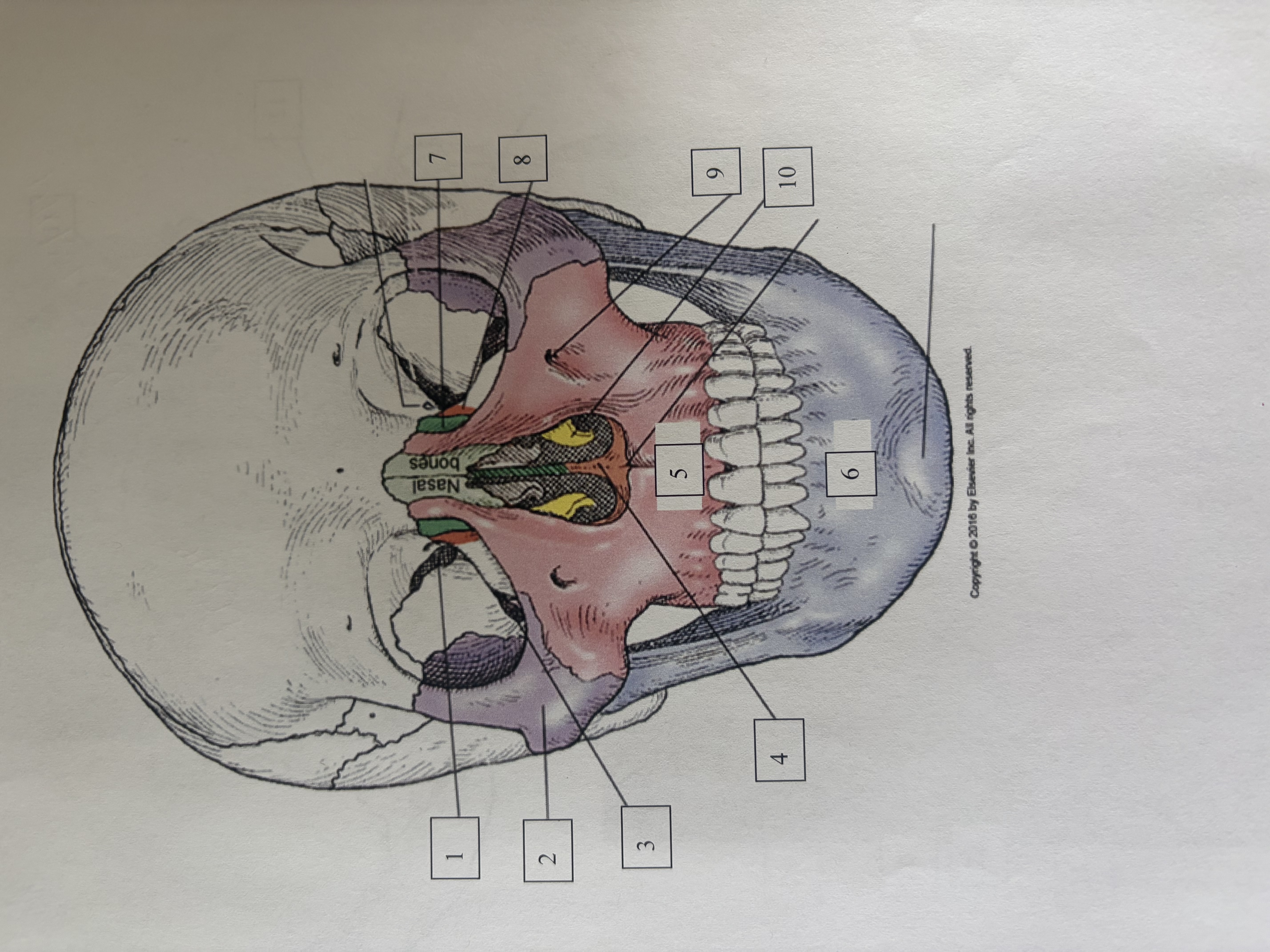
lacrimal bone
7
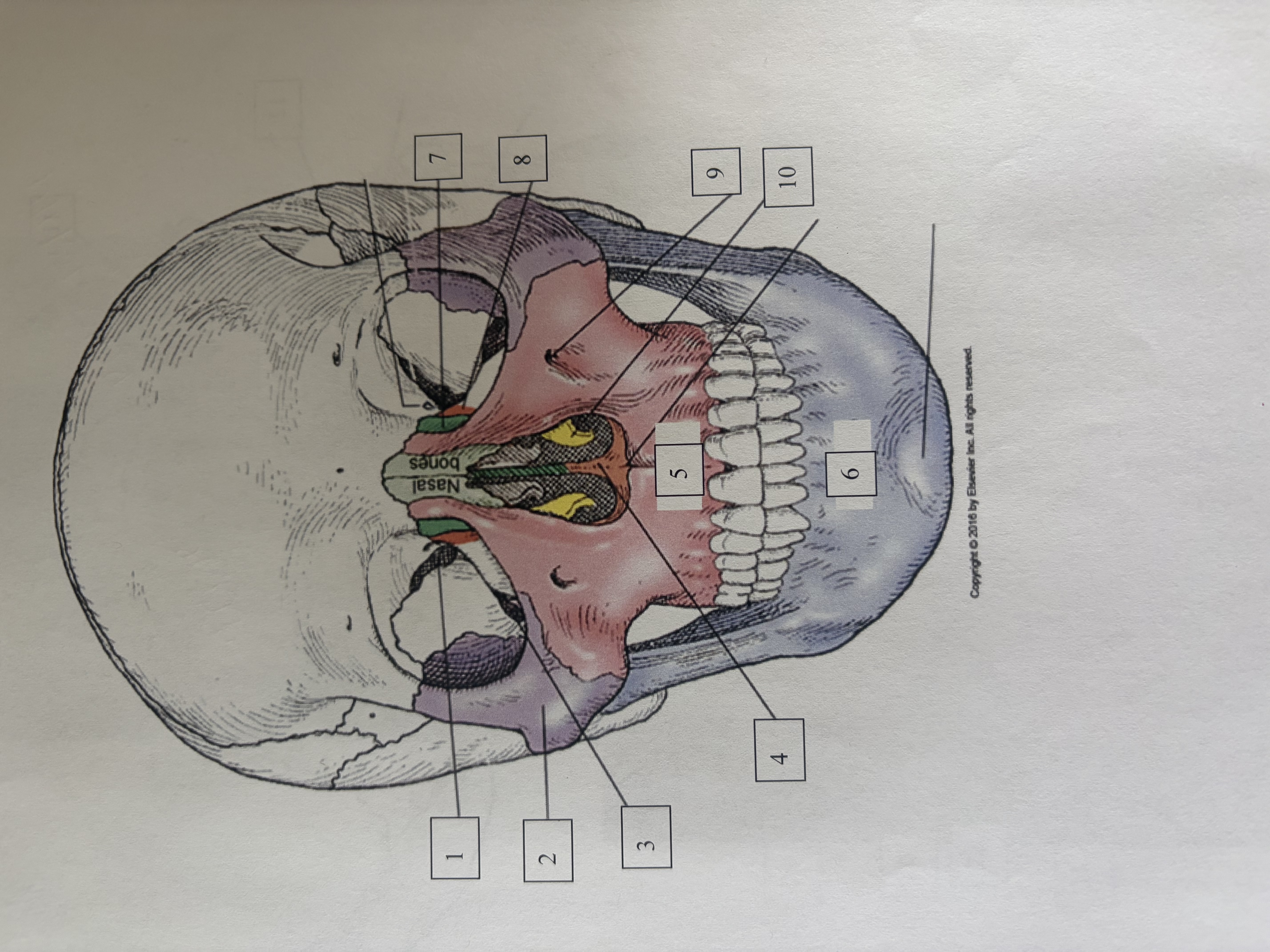
ethmoid bone
8
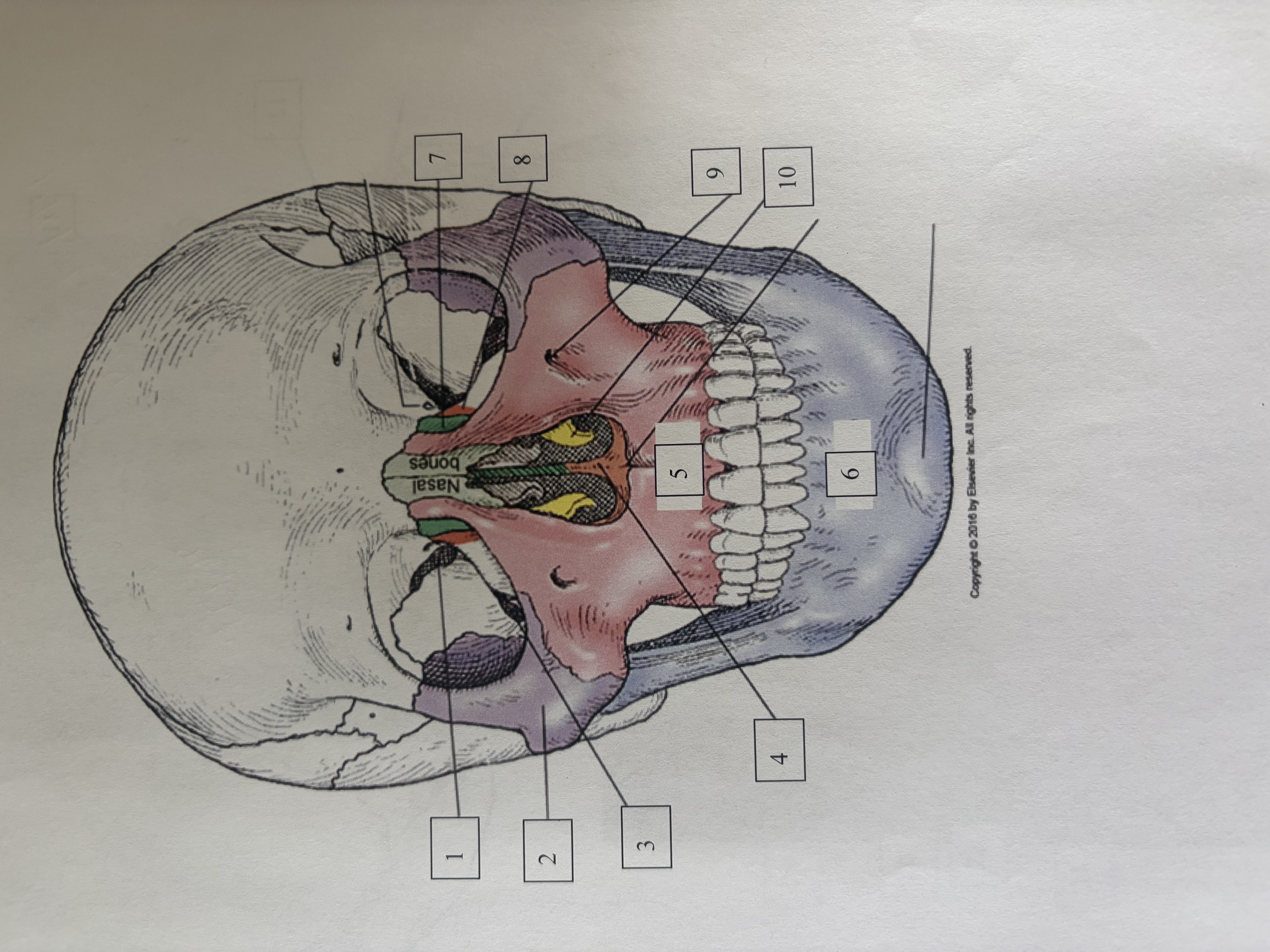
infraorbital foramen
9
inferior nasal spine
10
lacrimal bone
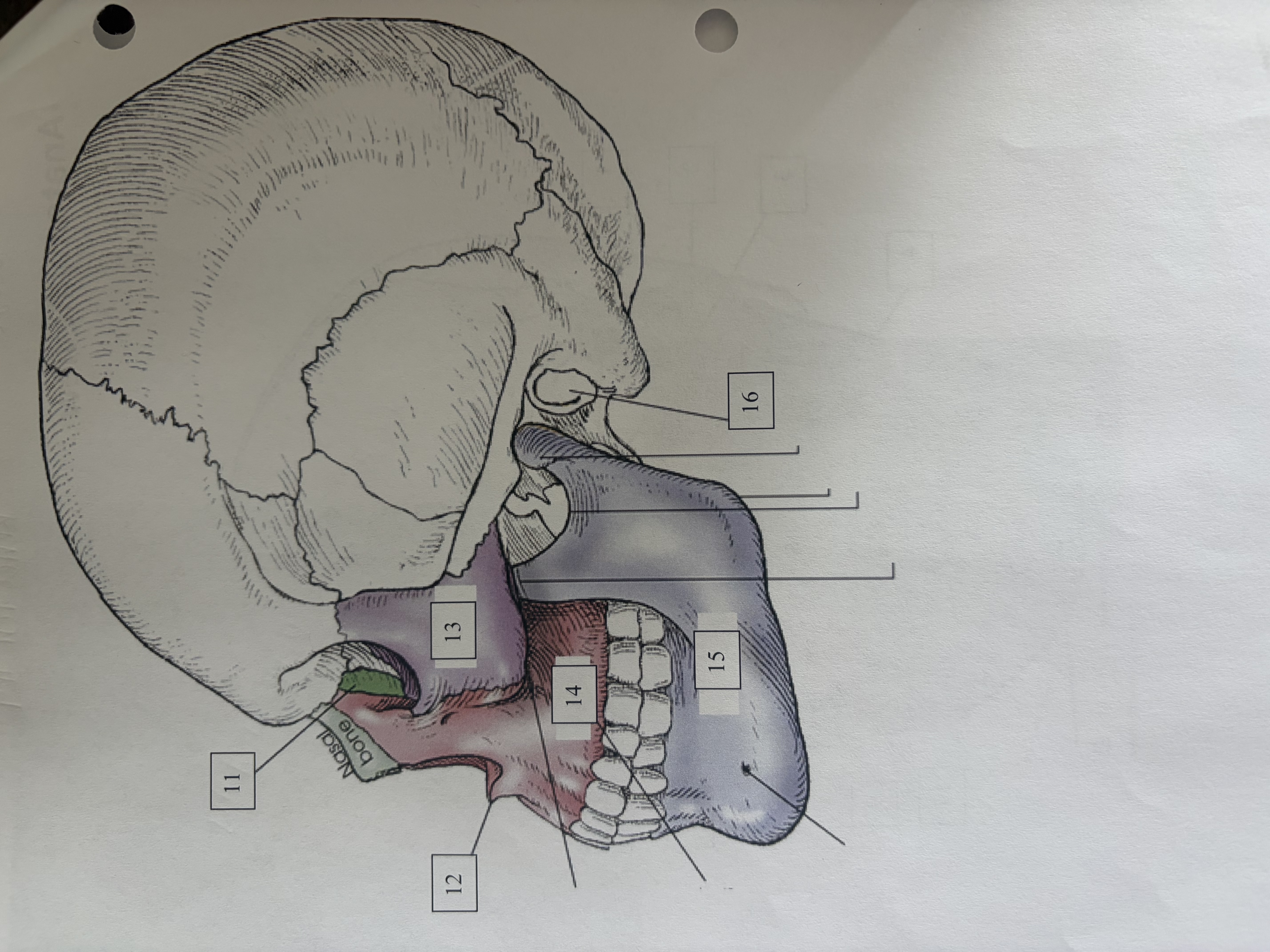
11
anterior nasal spine (acanthion)
12
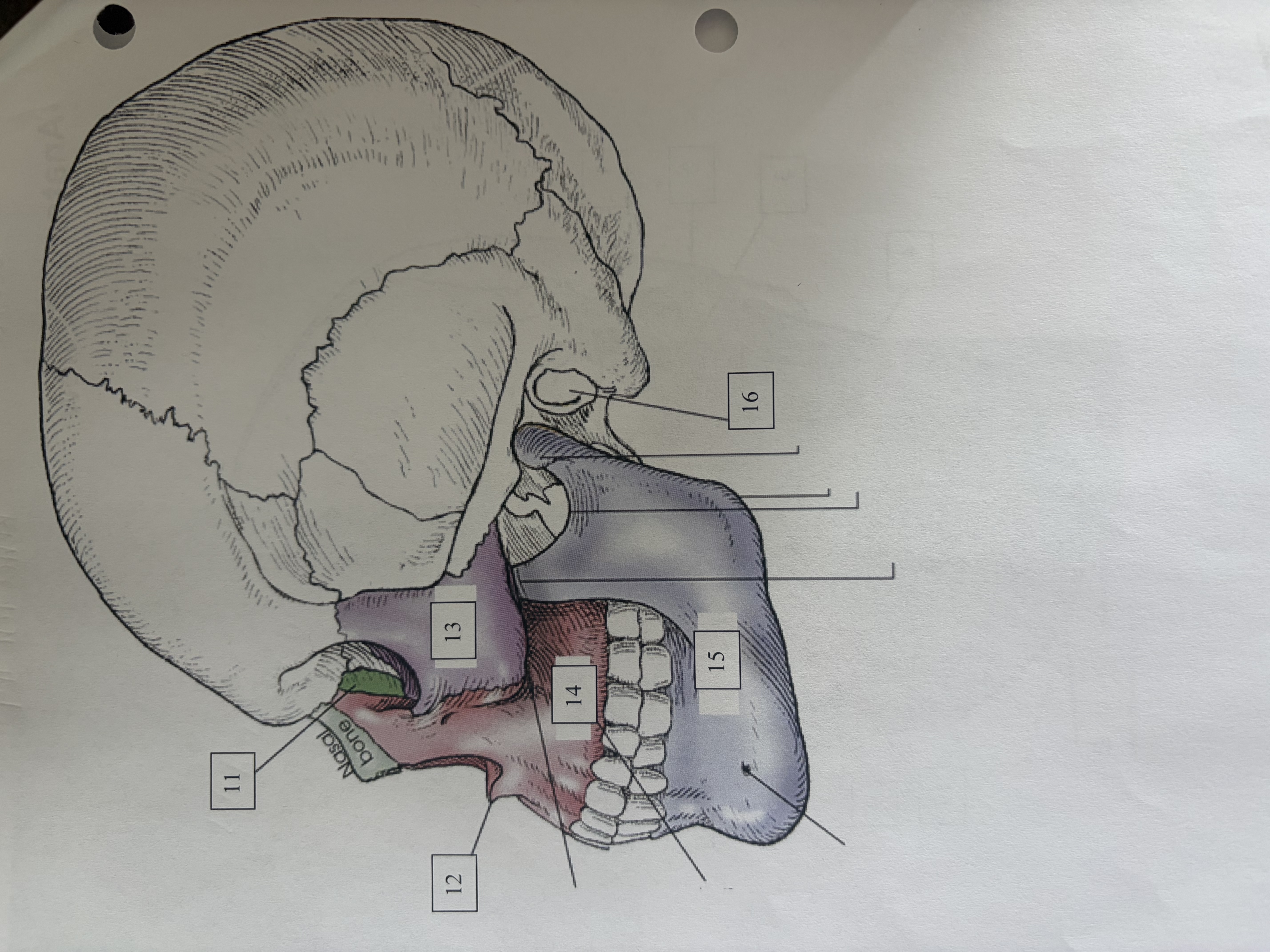
zygoma
13
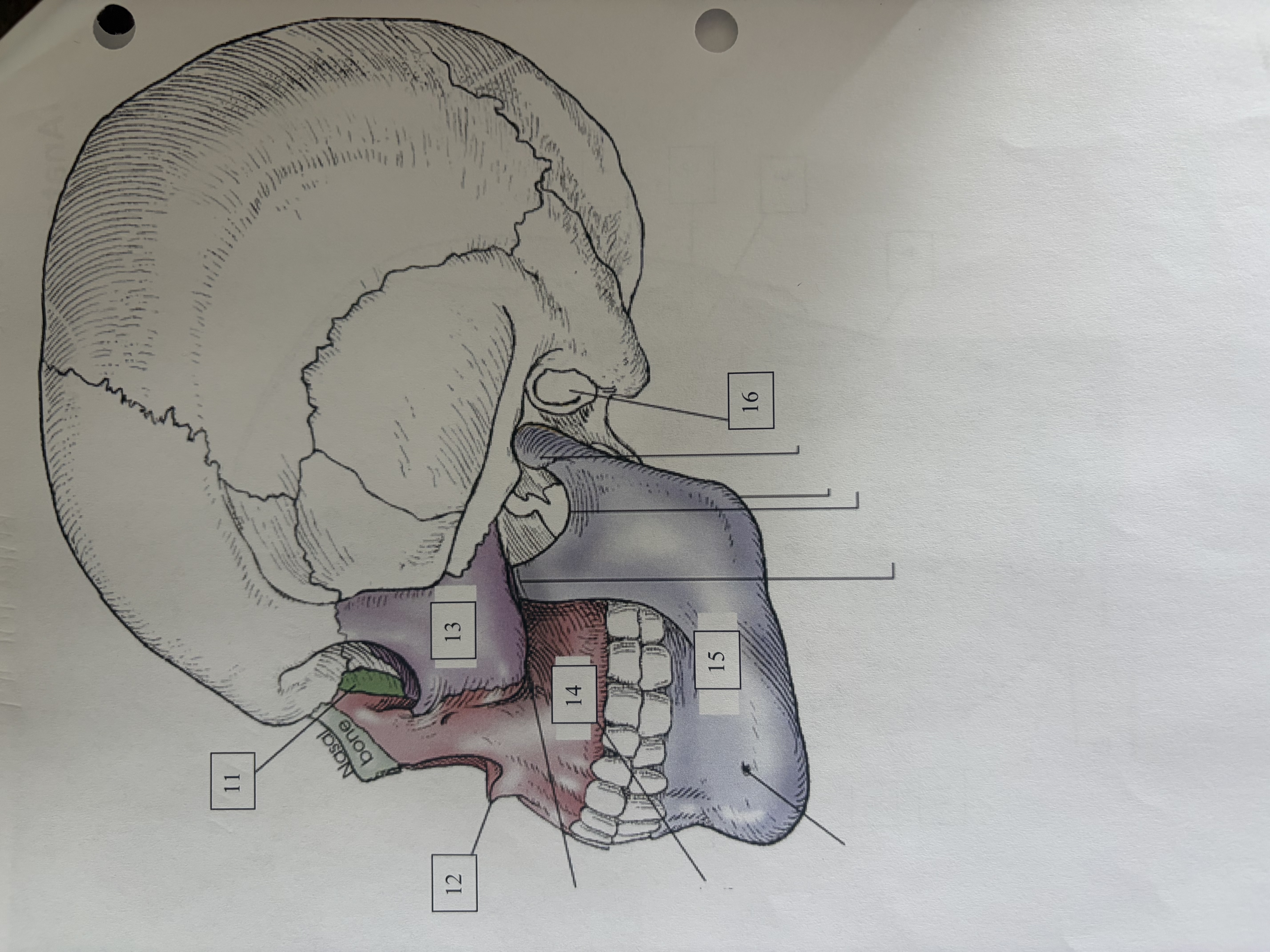
maxilla
14
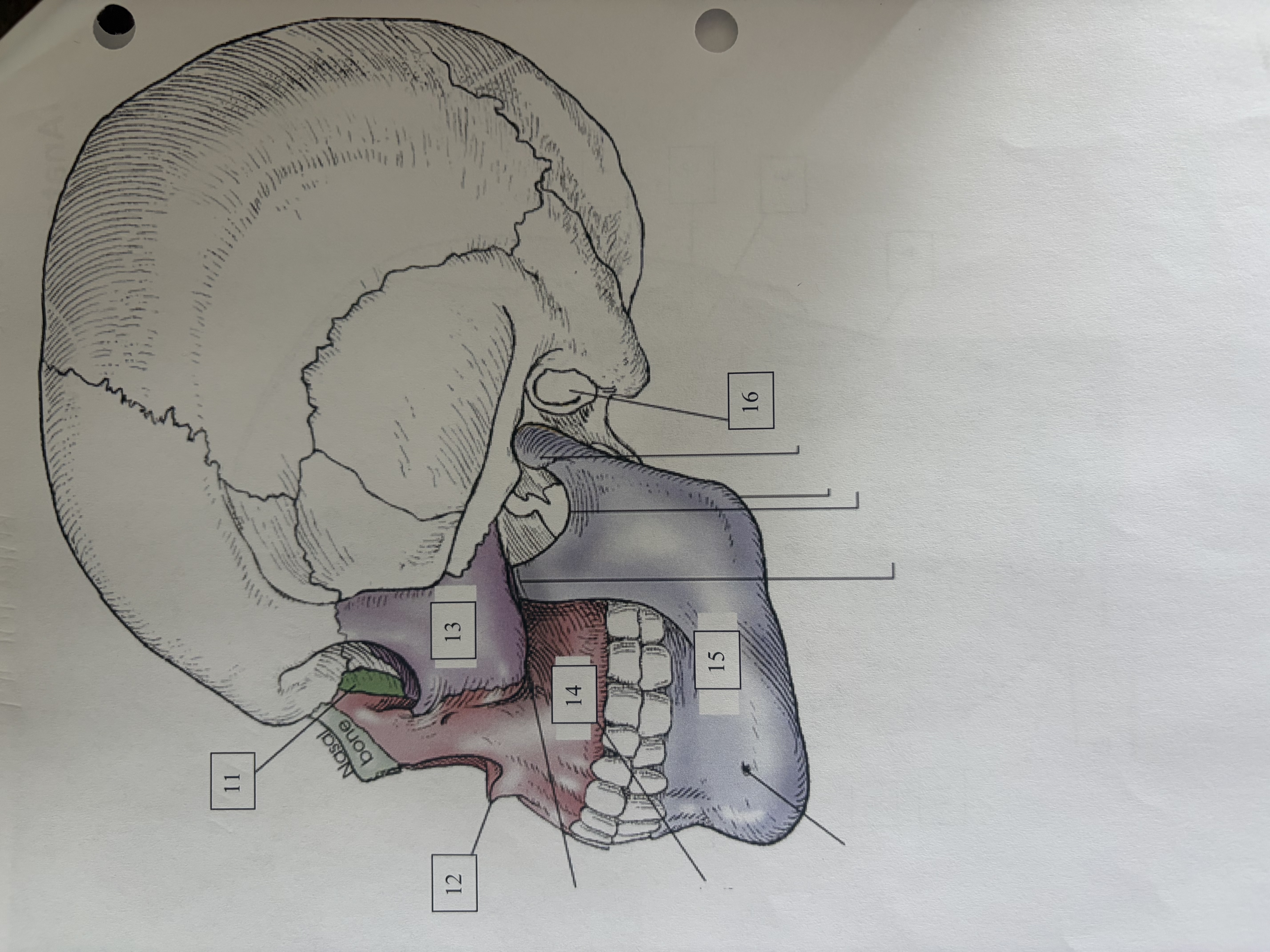
mandible
15
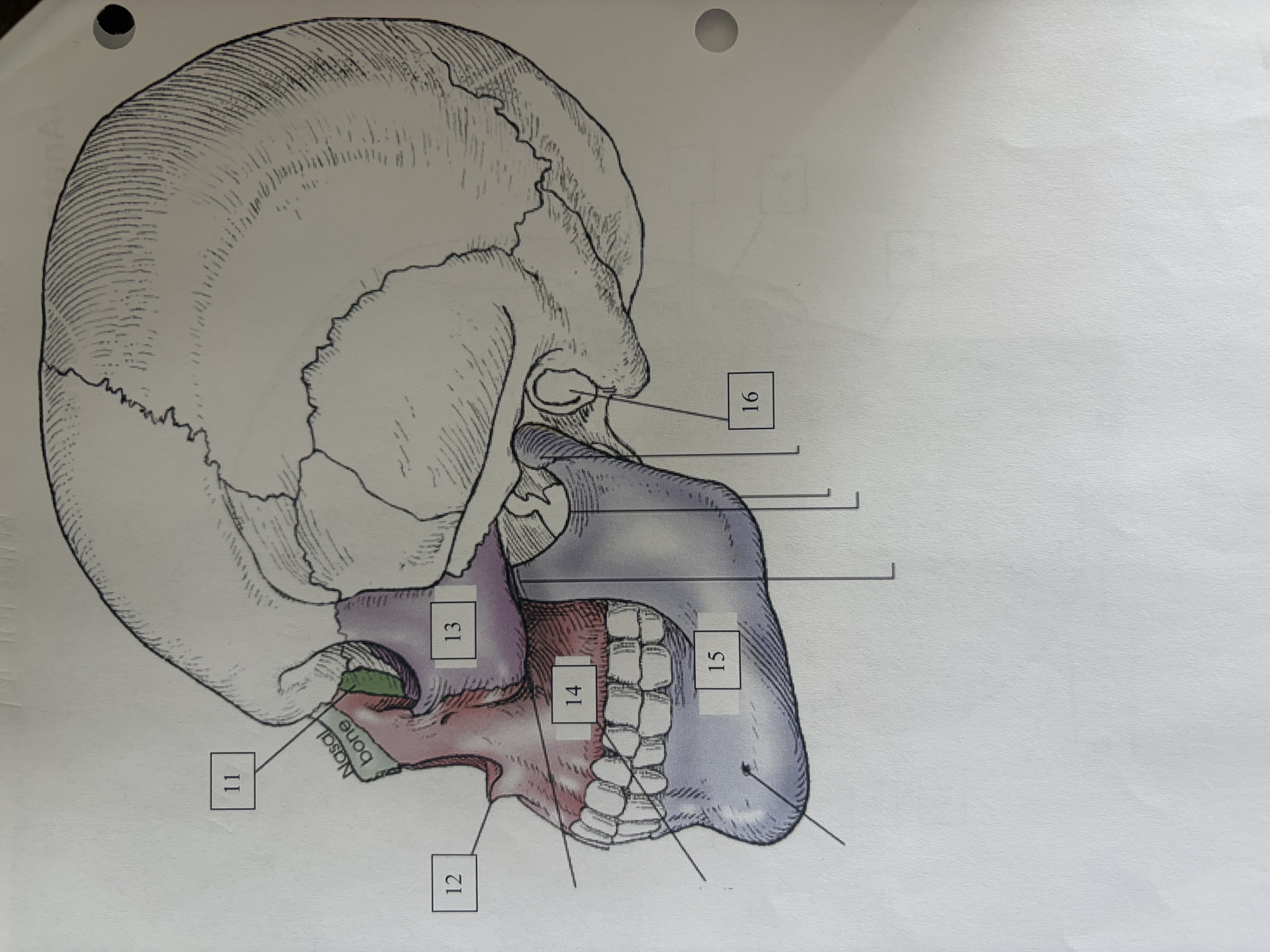
external acoustic meatus
16
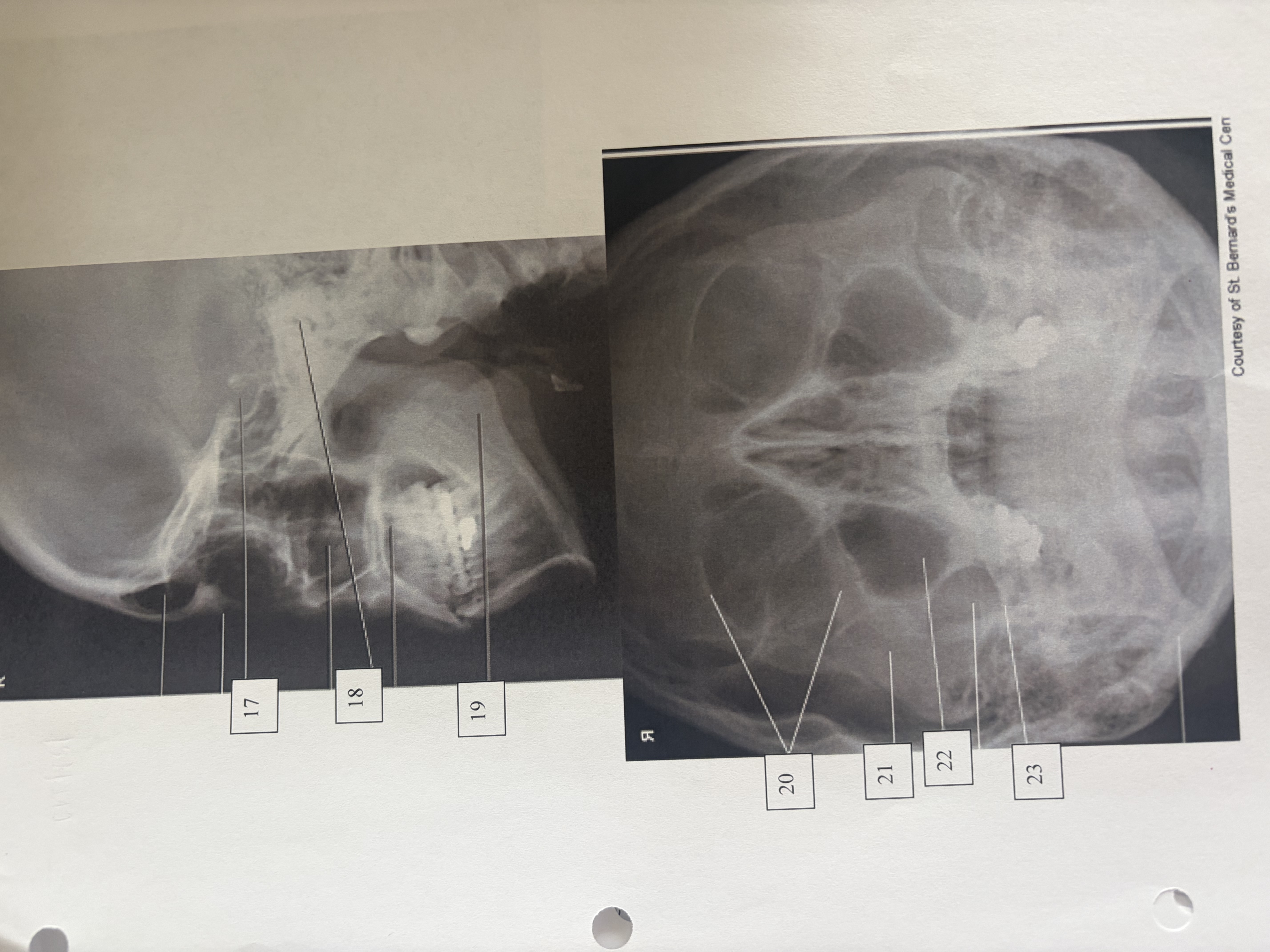
sella turcica
17
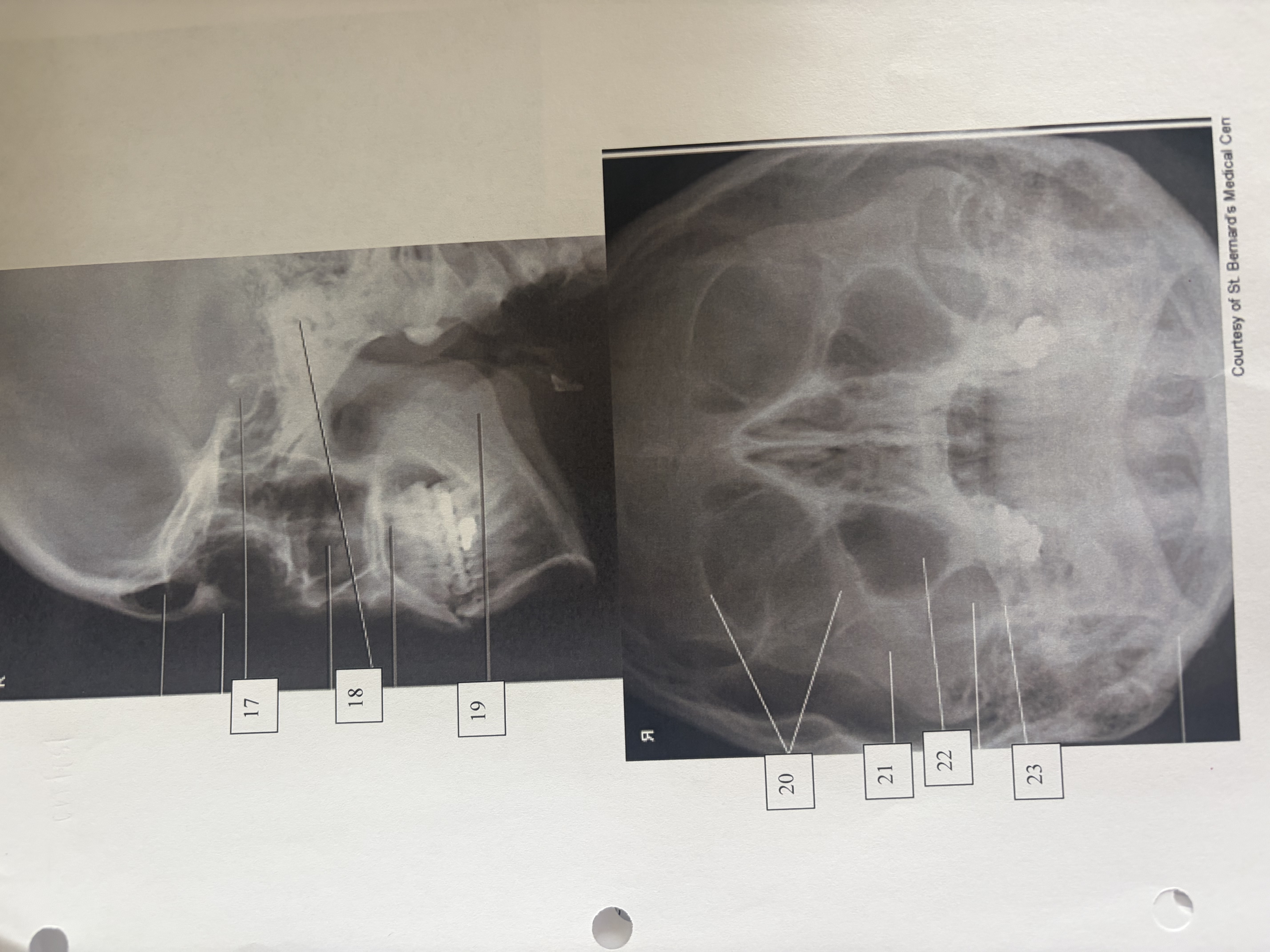
eam
18
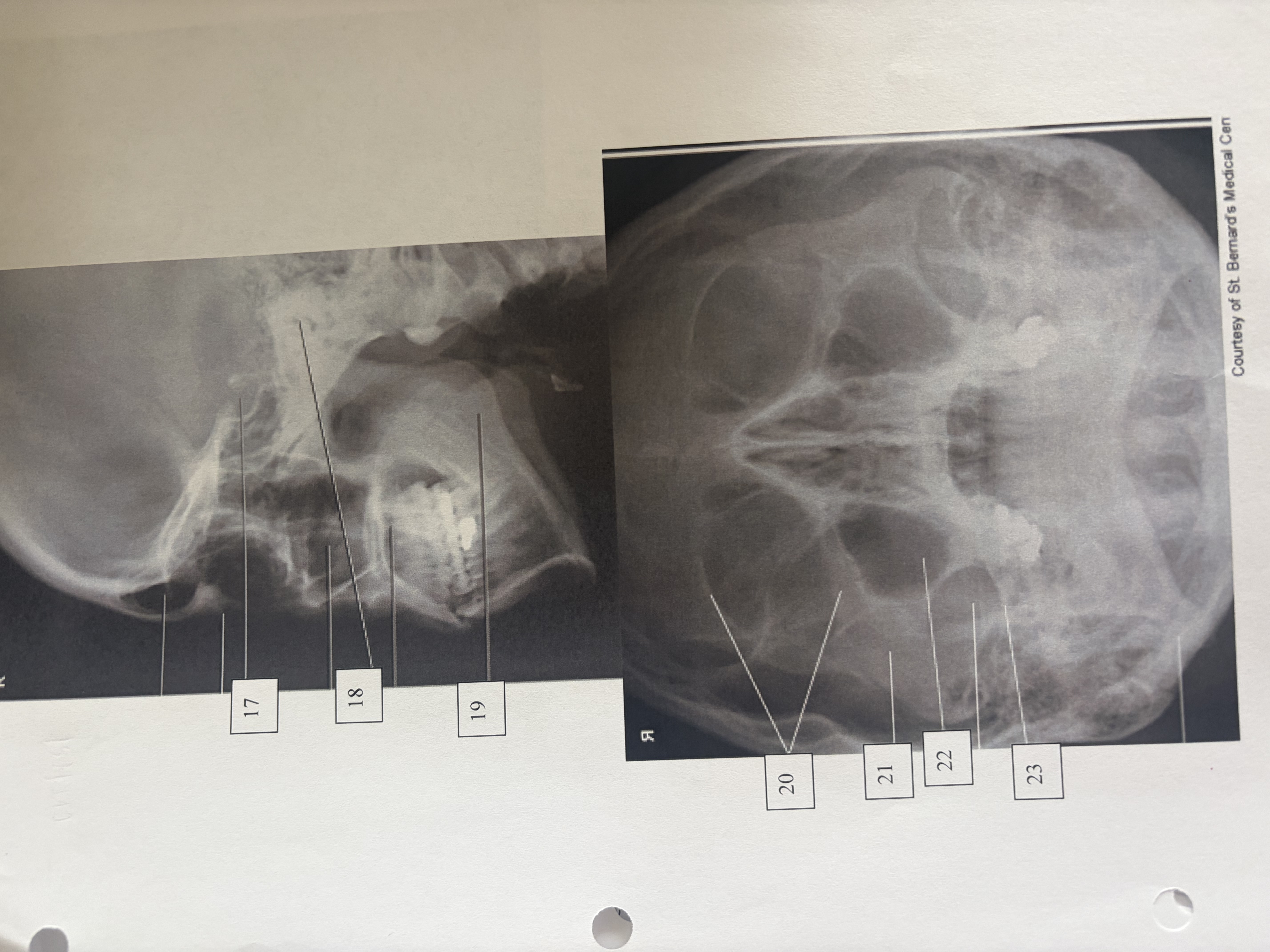
mandible
19
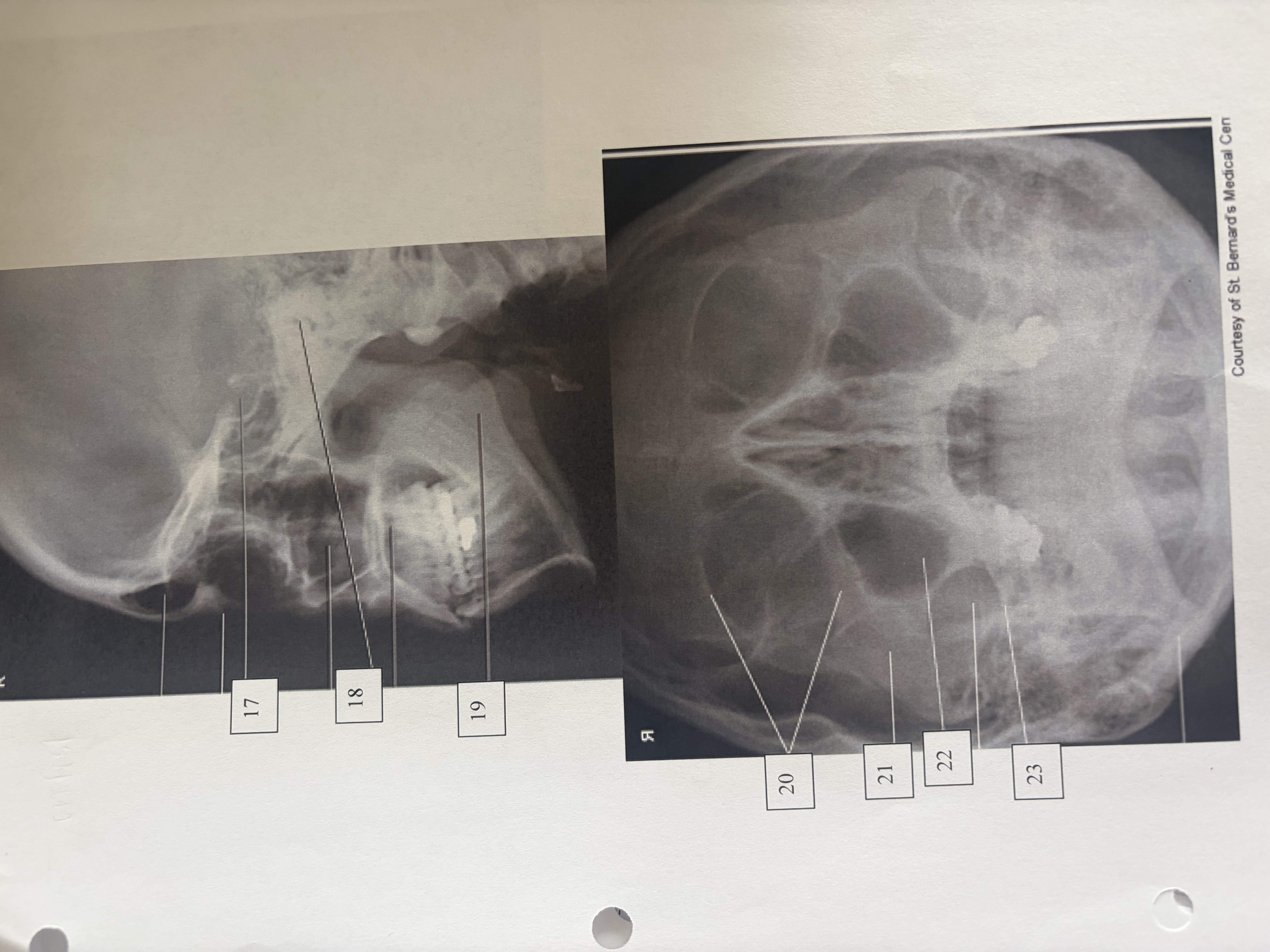
orbit
20
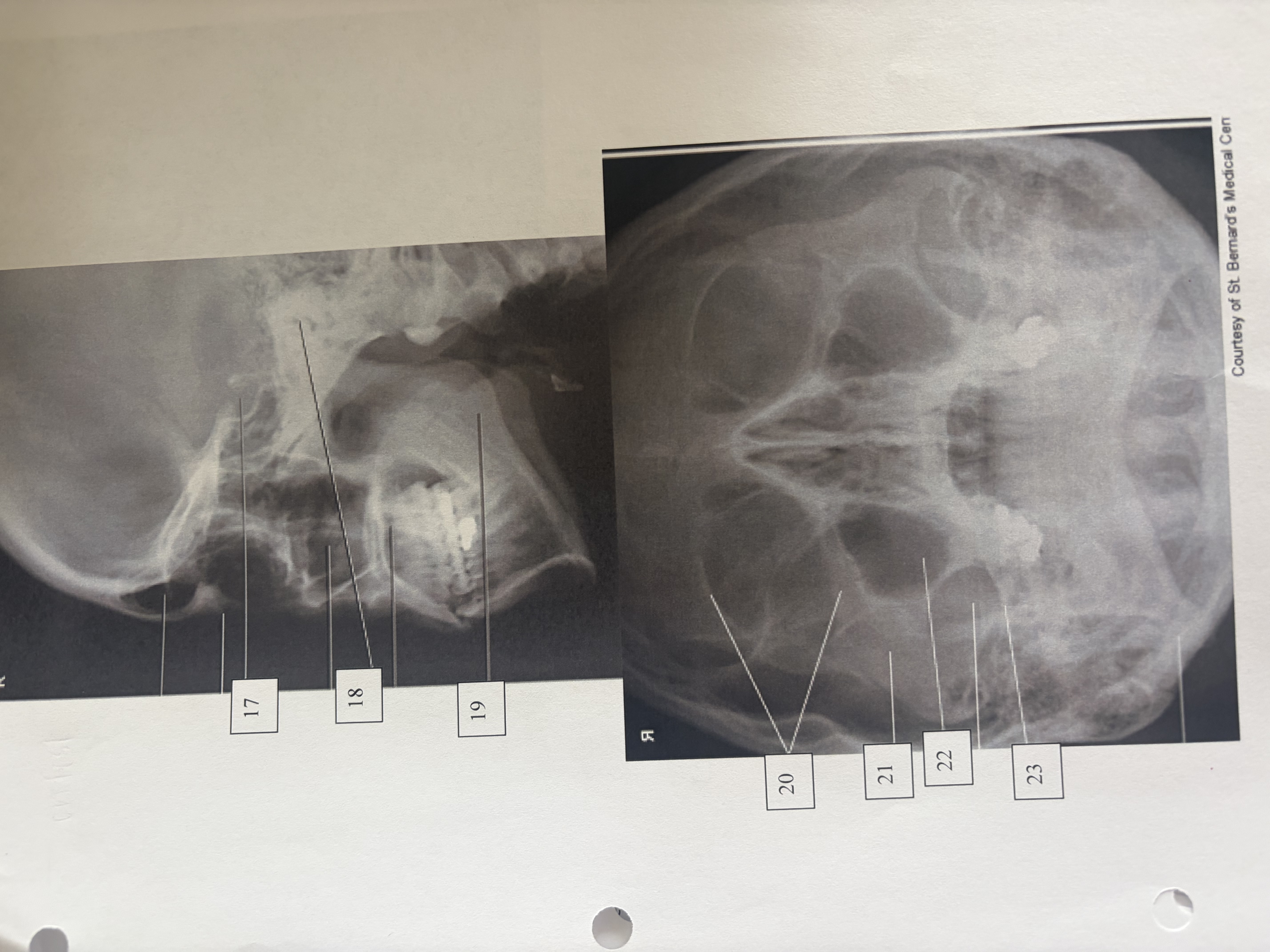
zygomatic arch
21
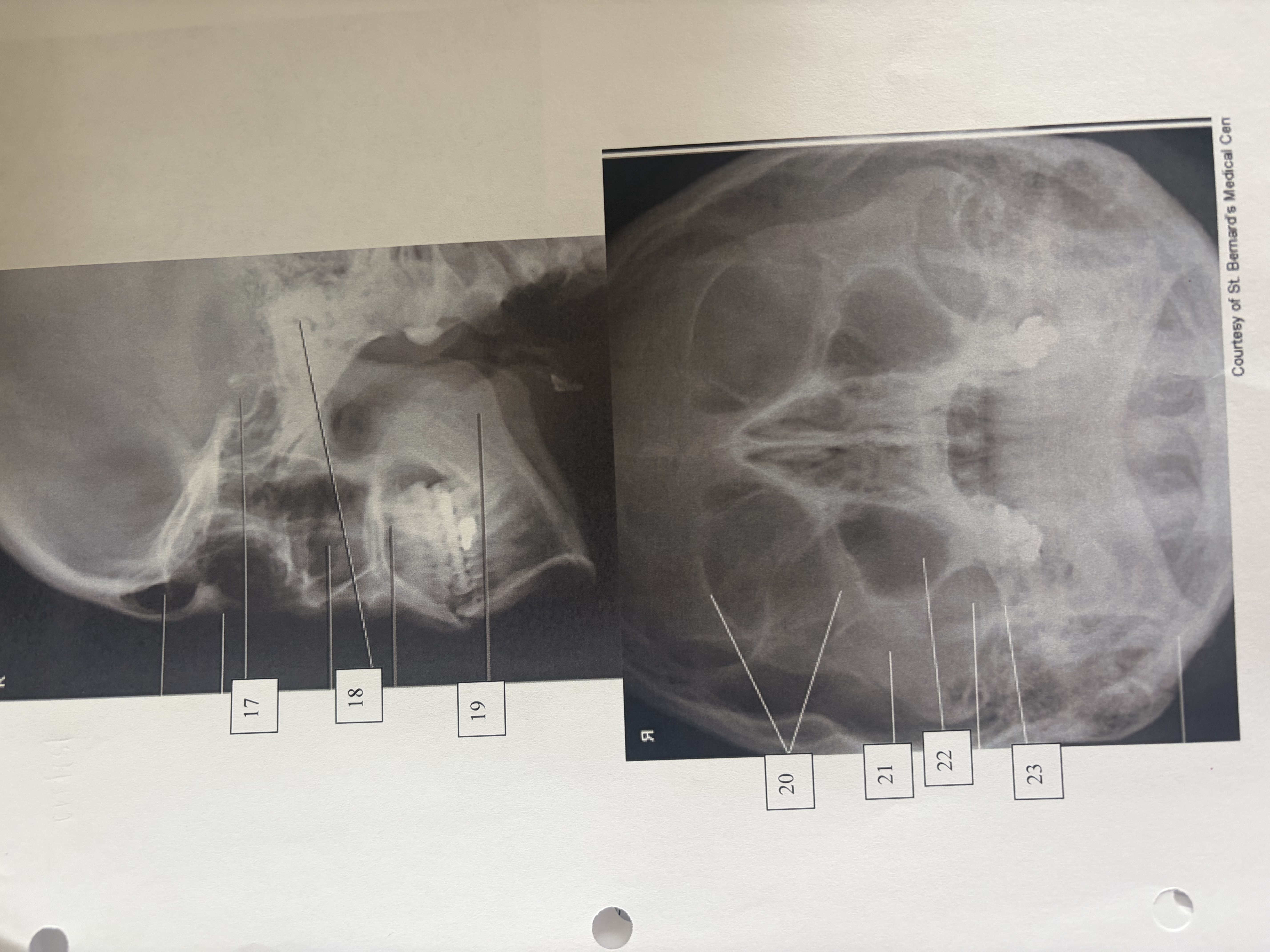
maxillary sinus
22
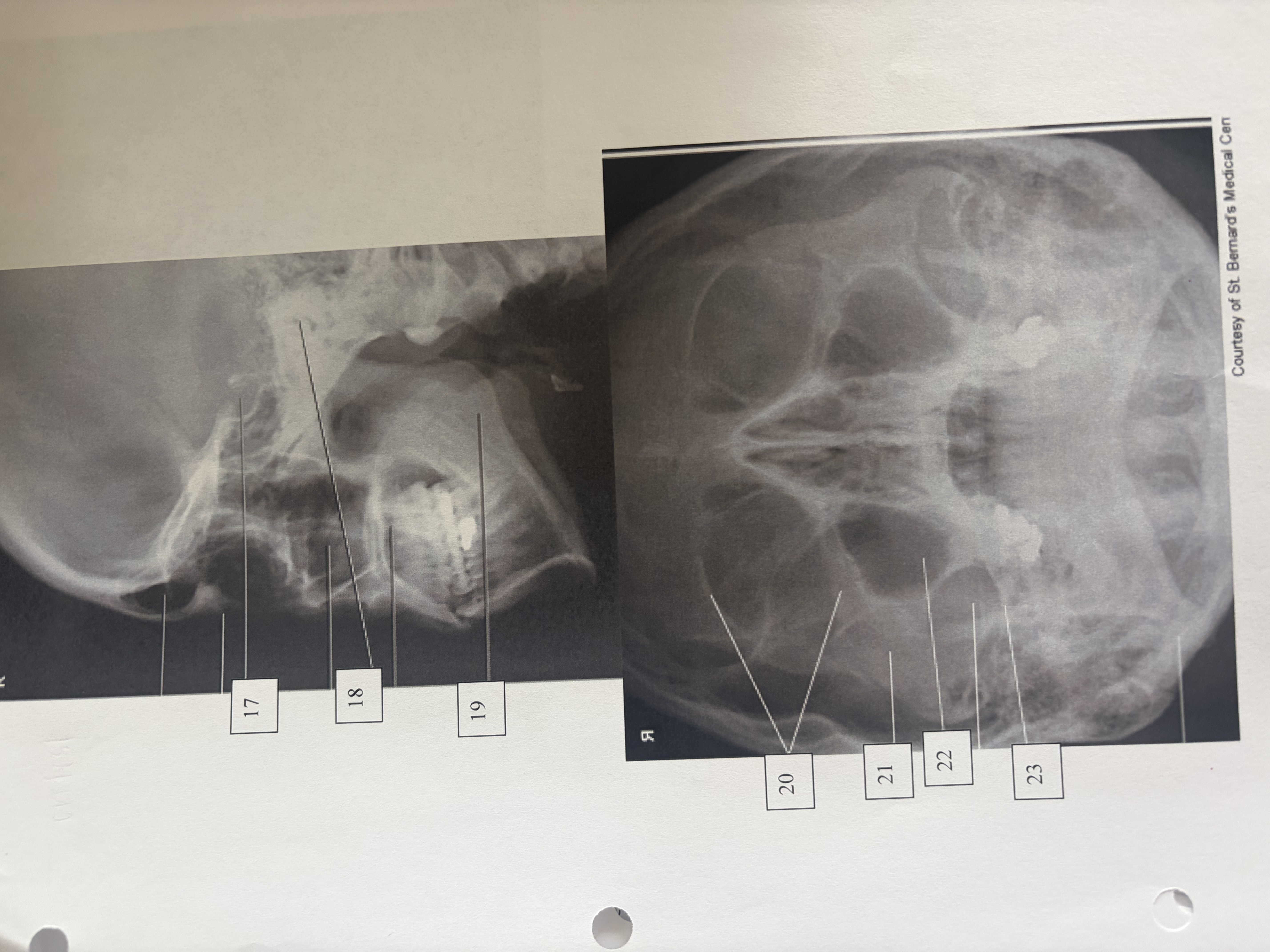
petrous ridges
23
zygomatic arch
24
temporal bone
25
nasal bone
26
2
how many nasal bones
2
how many lacrimal bones
lacrimal bones, form lacrimal fossa with mail and lacrimal foramen
what are the smallest bones of the skull
2
how many maxillary
maxillary
what is the largest immoveable bone of the face
floor of nasal cavity and forms inferior nasal septum
what is vomer and what does it form
2, long thin scroll like appearance, warm moisten clean inhaled air
what is the inferior nasal conchae, how many and what does it do
2, L shaped with horizontal and vertical plates, forms part of roof of the mouth and posterior nasal cavity, tip of vertical plate forms part of posteromedial orbit
how may palatine bones are they are what are they and what do they form
prominence of cheek, part of side wall and floor of orbit, forms zygomatic arch with temporal bone
what are the zygomatic bones and how many are they and what they form
glabellomeatal line, starts at EAM and ends at the glabella
What is the GML where it starts and ends
Orbitomeatal line, starts at EAM and ends at outercanthus
What is the OML where it starts and ends
infraorbitomeatal line starts at EAM and ends at the infraorbital margin which is the bony ridge directly beneath eye socket
What is the IOML where it starts and ends
acanthiomeatal line, starts at EAM and ends at the acanthion the midpoint of the base of the nose
What is the AML where it starts and ends
labiomeatal line starts at the EAM and ends at the lip margin where the lips meet
What is the LML where it starts and ends
mentomeatal line starts at the EAm and ends at the mentum which is the prominent point of the chin
What is the MML where it starts and ends
Get
Over
It
And
Love
Me
what is a way to remember the lines of the face top to bottom
maxillary bones
The largest immovable facial bones are the:
palatine
Which facial bone is located at the posterior portion of the roof of the mouth?
vomer
Which facial bone is located in the midline at the floor of the nasal cavity?
lateral projection of the facial bones
The patient is positioned upright, with the MSP of the head parallel and the interpupillary line perpendicular to the image receptor. The central ray is perpendicular and enters the zygomatic bone. What projection is being used, and which anatomy is best demonstrated?
OML perpendicular
Which baseline is used to position the PA axial projection (Caldwell method) of the facial bones, and how is it positioned in relation to the image receptor?
all of the above
Which of the following items would leave an artifact on a facial bone image?
(1) Eyeglasses
(2) Hearing aid
(3) Dentures
perpendicular to image receptor
What is the central ray direction for the parietoacanthial projection (Waters method) of the facial bones?
Parietoacanthial projection (modified Waters method) of the facial bones
Which special projection requires the OML to be positioned 55 degrees from the plane of the image receptor?
SMV of the zygomatic arches
Which of the following projections provides a bilateral view of the zygomatic arches?
lacrimal
which facial bone is located on the anterior and medial wall of the orbit
tangential projection of the zygomatic arch
Which of the following projections is used to provide an image of a single zygomatic arch without superimposition?
nasal bones
What anatomy is best demonstrated when the patient’s head is positioned in a true lateral with the central ray perpendicular to enter ½ inch (1.3 cm) distal to the nasion?
-MSP paraelle to IR
-IP line perpendicular
-IOML parallel to IR
-Cr enters zygoma halfway b/w outer cantos and EAM, collimate
Lateral facial bones info
-OML perpendicular TO IR
-15 degree caudal angle
-CR exits nasion
-collimate
PA axial caldwell info
-OML forms 37 degree angle to IR
-MML is perpendicular to IR
-MSP is perpendicular
-CR exit acanthion
-collimate
parietoacanthial water facial bones
-OML forms a 55-degree angle to the IR
-Cr exits acanthion
-Collimate
Parietoacanthial modified waters facial bones