Lab 2: Microscope and Cell
 Call Kai
 Learn
Learn Practice Test
 Spaced Repetition
 Match
Match Flashcards
 Knowt Play
1/43

There's no tags or description
Looks like no tags are added yet.
Name | Mastery | Learn | Test | Matching | Spaced | Call with Kai | Chat |
|---|
No analytics yet
Send a link to your students to track their progress
44 Terms

type of microscope?
compound microscope

identify microscope parts
eyepiece (ocular lenses), interpupillar distance scale, objective lens, stage, iris diaphragm knob, slide holder, stage movement knobs

identify microscope parts
main light switch, light intensity control knob, coarse focus knob, fine focus knob, objective lenses, stage holder, stage, iris diaphragm knob, stage movement knob

function of eyepiece (ocular lenses)
10x magnifying power; allows user to view magnified image produced by microscope’s objective lens

function of interpupillar distance scale
adjusts the distance between the eyepiece to match the distance between the user's eyes

function of objective lens
forms magnified image of specimen on slide; has 4 magnifciation lenses
4 types of objective lenses
scanning objective (red), low power objective (yellow), high power objective (blue), and hi-dry objective (purple/dark blue)
magnification of (red) scanning objective lens
4x magnifying power and 40x total magnification
magnification of (yellow) low power objective lens
10x magnifying power and 100x total magnification
magnification of (blue) high power objective lens
40x magnifying power and 400x total magnification
magnification of (purple/dark blue) high-dry objective lens
60x magnifying power and 600x total magnification
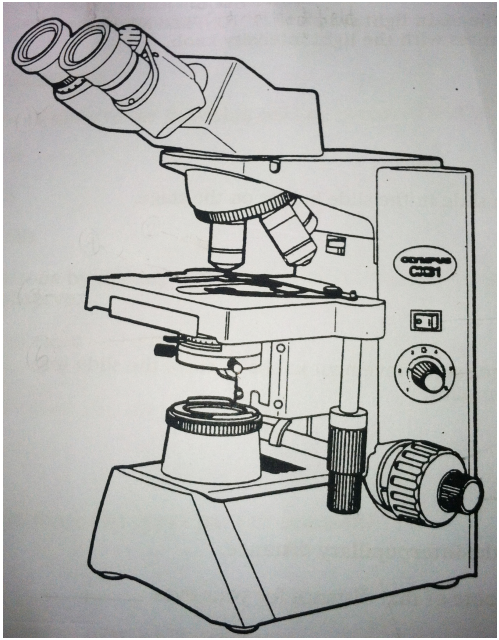
function of main light switch
turns the microscope light source on and off (o is off and | is on)

function of light intensity control knob
adjusts intensity of the microscope’s light source from 1-6; “dimmer switch”

function of stage
where the slide is placed on the microscope
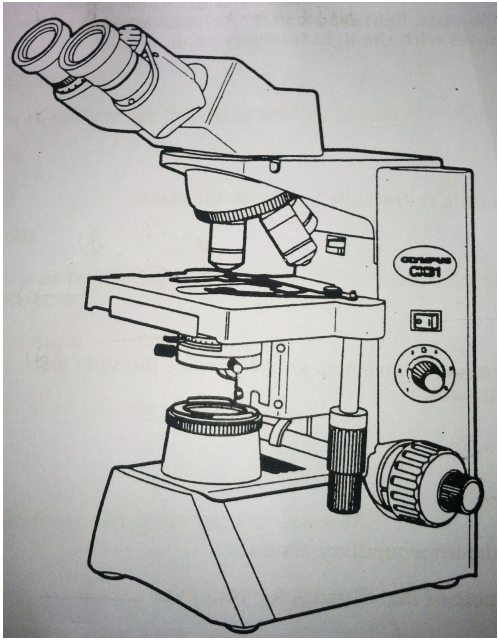
function of stage holder
holds the slide on the stage

function of stage movement knob
moves the slide on the stage up down, left right

function of iris diaphragm knob
regulates the amount of light that passes from the light source to the stage; adjust to match the numerical aperture (NA) of the objective lens


function of coarse focus knob
knob used to bring the object on the slide into appropriate focus; used ONLY with scanning power objective
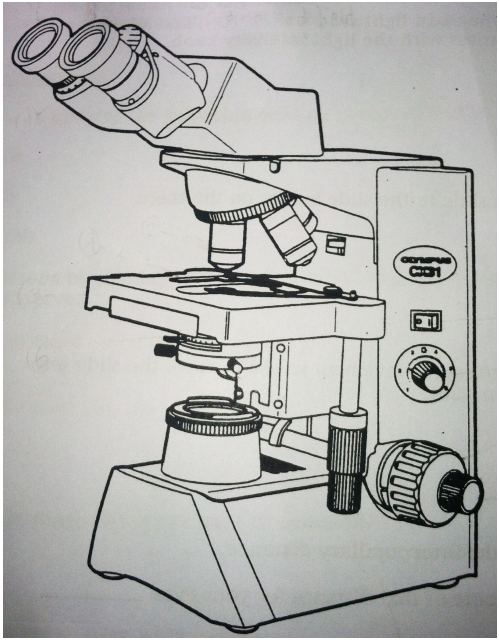
function of fine focus knob
knob used to bring the object on the slide into appropriate more detailed focus; used with ALL objective lenses
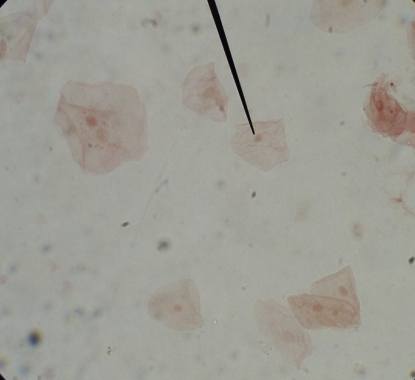
what cells? what at pointer?
epithelial cells; pointer is at nucleus of a epithelial cell
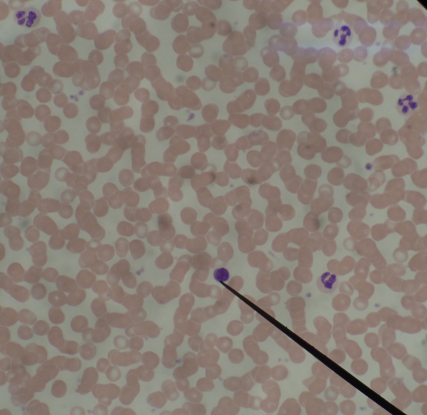
what cells visible? what cell at pointer?
pointer: white blood cell (leukocyte)
erythrocytes (red blood cells) and leukocytes (white blood cells)
erythrocytes (red blood cells) don’t have nuclei
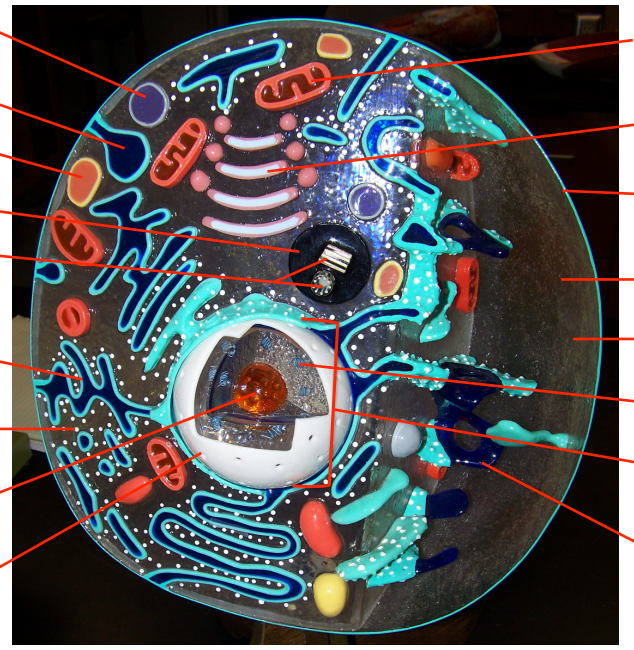
name cell structures


name functions of cell structures

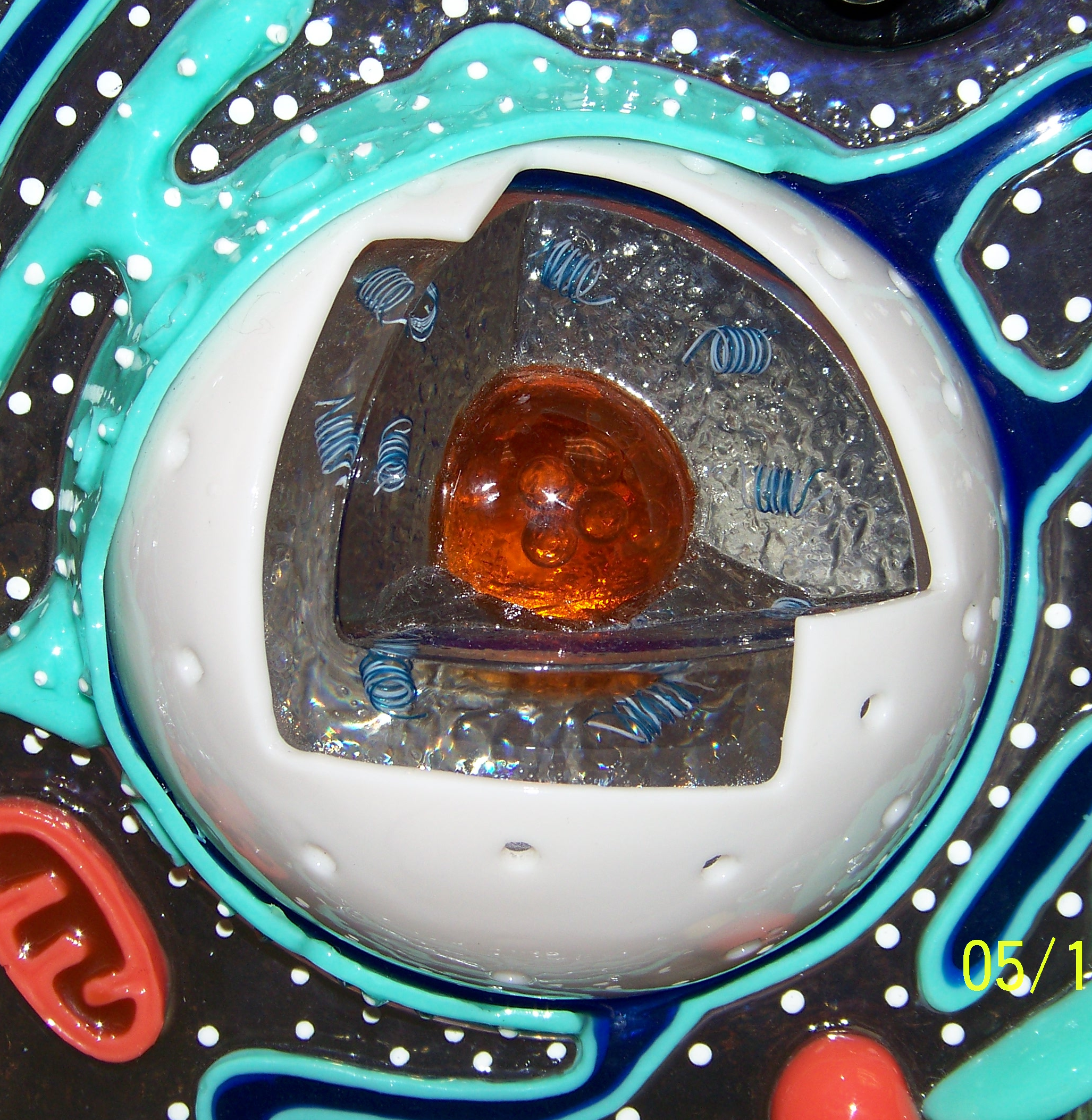
name cell structure and its parts
nucleus, nuclear envelope, nucleolus, chromatin

name cell structures

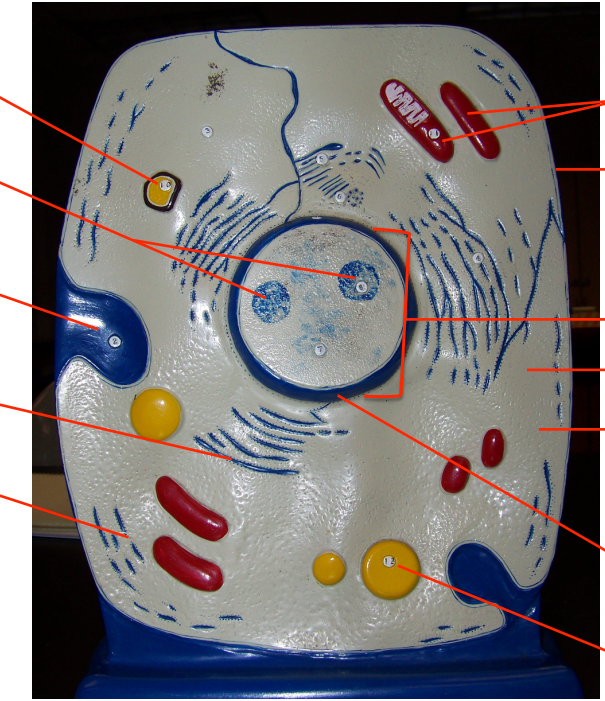
name cell structures


name functions of cell structures

cell membrane (plasma membrane)
protects the cell and regulates what comes in and out of the cell
nucleus
control center of the cell; contains DNA
nuclear envelope
regulates what comes in and out of nucleus
nucleolus
produce the large and small ribosomal subunits
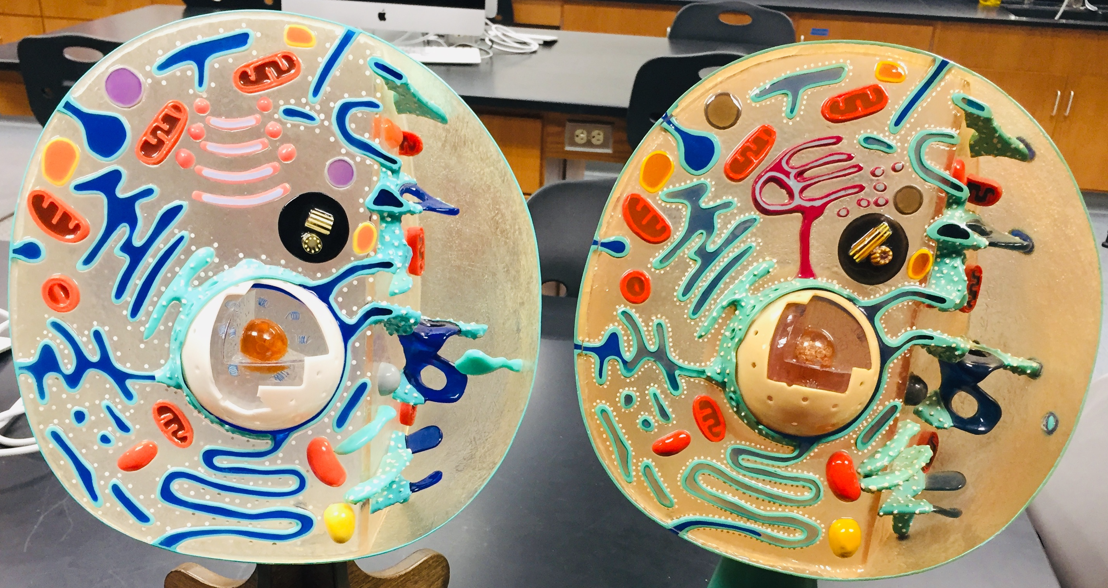
chromatin
genetic information
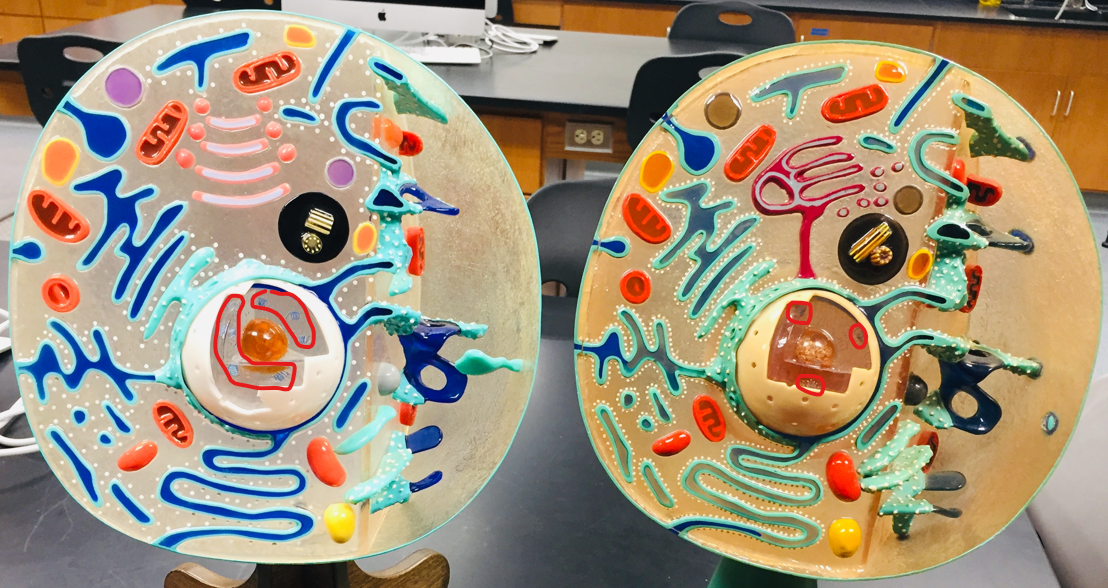
cytoplasm
everything inside the cell except the nucleus
cytosol
fluid that suspends the cellular elements
rough endoplasmic reticulum
produces membrane-bound proteins and membranes
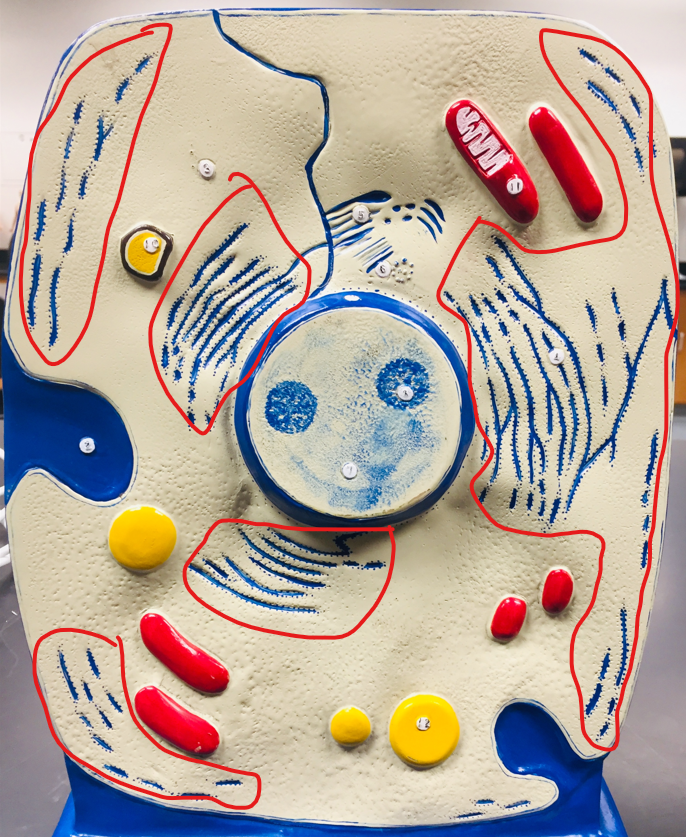
smooth endoplasmic reticulum
calcium storage and lipid metabolism


ribosomes
site of translation (protein synthesis)

Golgi apparatus
packages and ships membrane-bound proteins
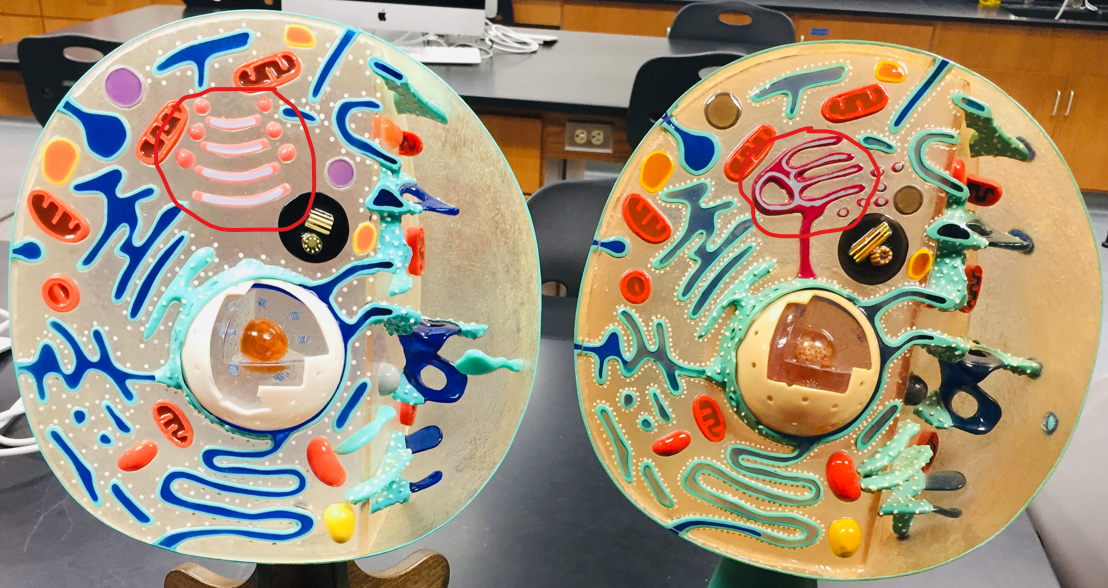
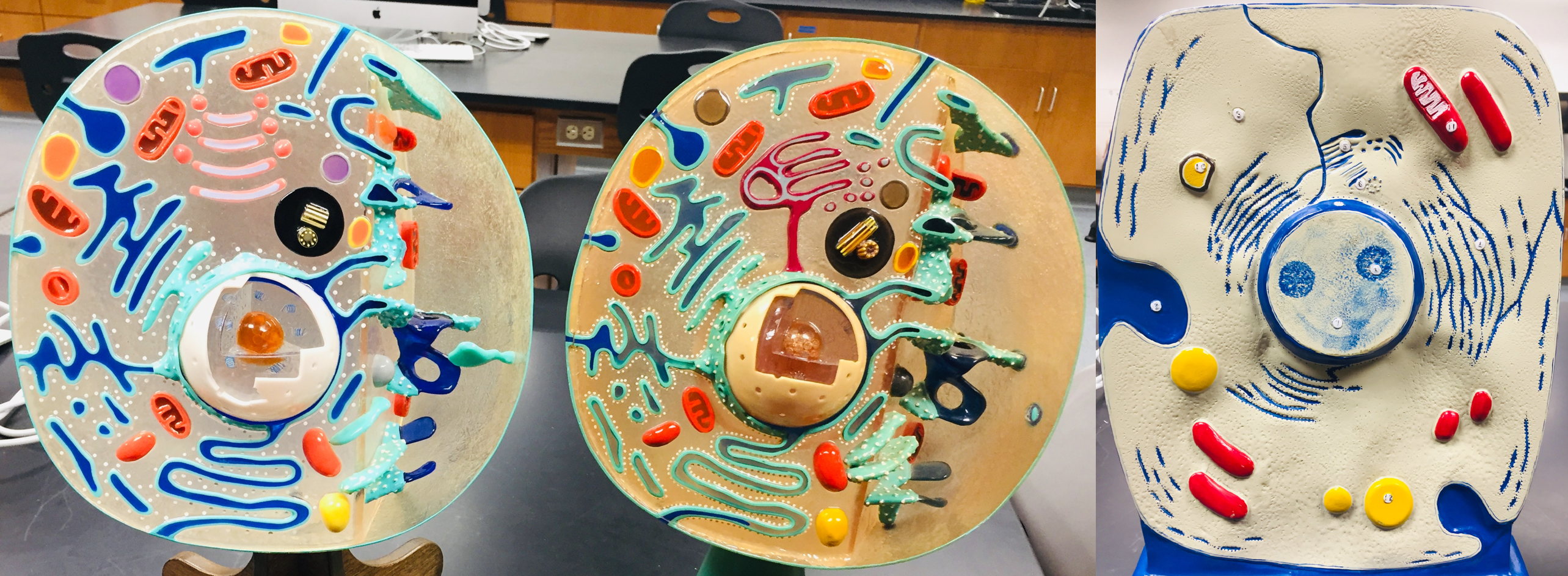
mitochondria
produces ATP


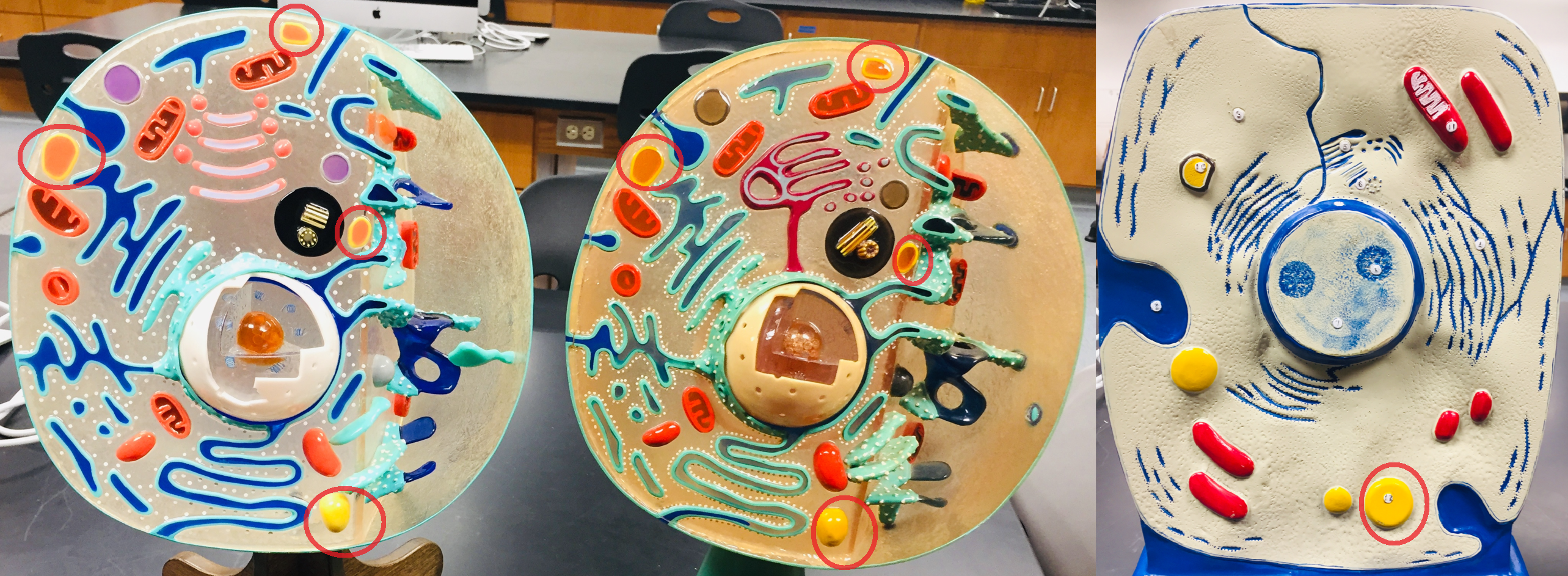
lysosomes
intracellular digestion

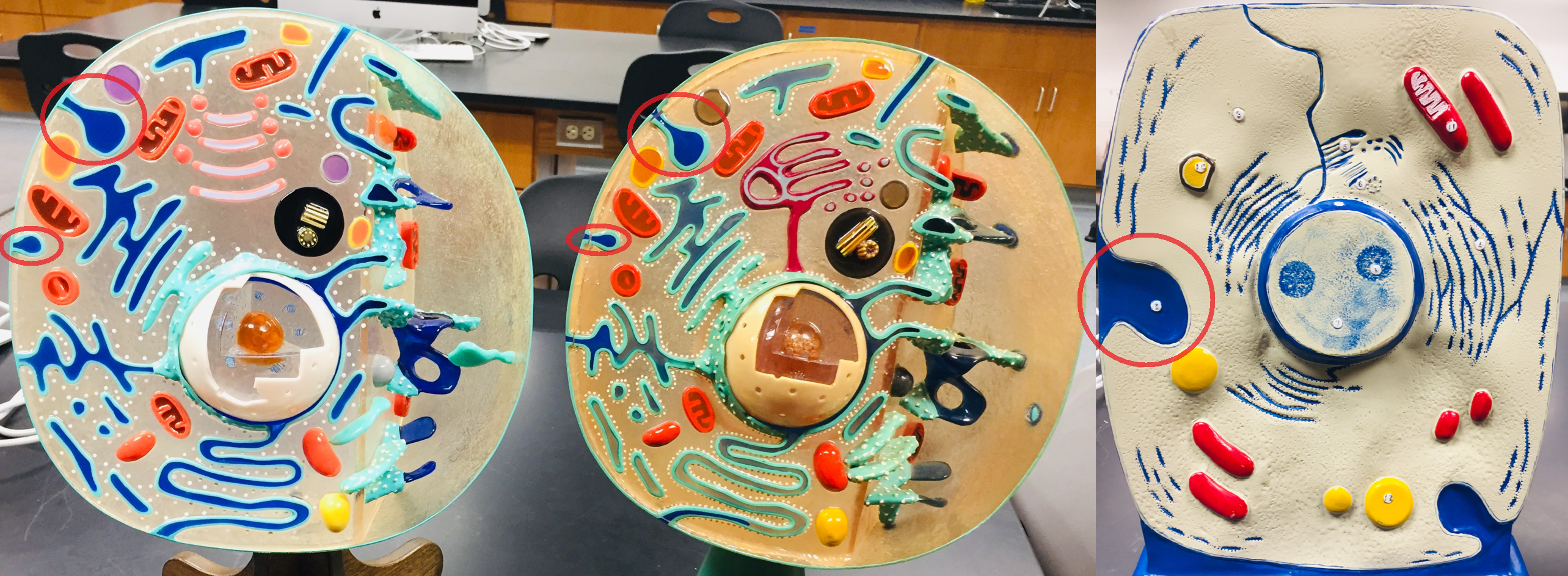
vesicles
intracellular transport

centrosome
involved in cell division


centrioles
involved in cell division, HINT: striped


peroxisomes
detoxification
