Microbiology Lab - Intro to microscope stuf
 Call Kai
 Learn
Learn Practice Test
 Spaced Repetition
 Match
Match Flashcards
 Knowt Play
1/37

There's no tags or description
Looks like no tags are added yet.
Name | Mastery | Learn | Test | Matching | Spaced | Call with Kai | Chat |
|---|
No analytics yet
Send a link to your students to track their progress
38 Terms

What part of the microscope is this
Ocular lens
What does the ocular lens do
Re magnifies the image formed by the objective lens (10x)
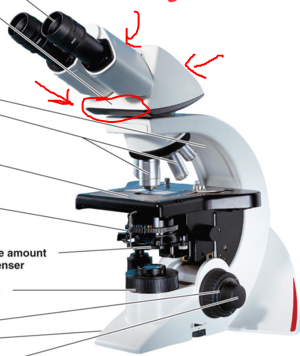
What part of the microscope is this
Body tube
What does the Body tube do
Transmits the image from the objective lens to the ocular lens
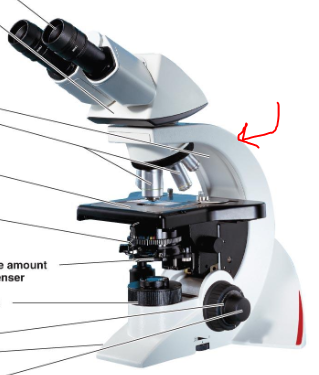
What [part of the microscope is this
The arm
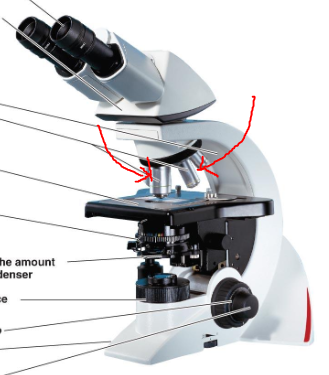
What part of the microscope is this
Objective lenses
What do the Objective lenses do
They are the primary lenses that magnify the specimen
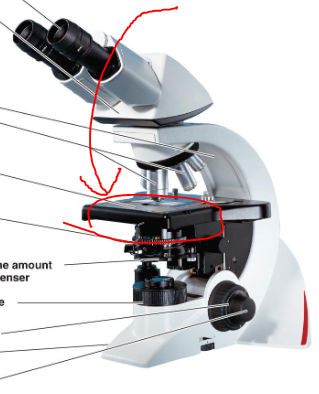
What part of the microscope is this
Stage
What does the stage do
Holds the microscope slide in position

What part of the microscope is this
Condenser
What does the Condenser do
Focuses light through the specimen
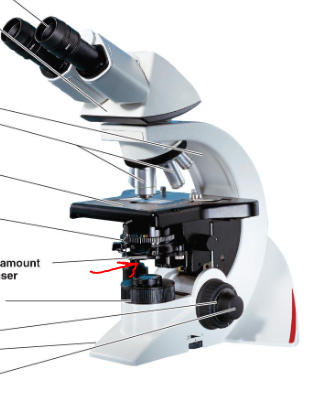
What part of the microscope is this
Diaphragm
What does the Diaphragm of the microscope do
Controls the amount of light entering the condenser

What part of the microscope is this
Illuminator
What does the Illuminator do
the light source for the microscope

What part of the microscope is this
Fine focusing knob

What part of the microscope is this
Coarse focusing knob

What part of the microscope is this
Base
What is the magnification of the eyepiece
10x
What is the magnification for scanning power
4x
What is the magnification for low power
10x
What is the magnification for High power
40x
What is the magnification for oil immersion
100x
How to calculate TOTAL magnification
objective magnification times eyepiece magnification
What does parfocal mean
The ability to go from one objective to another with little focusing
What is Resolution/Resolving power (RP)
The ability to distinguish detail clearly and to be able to tell 2 points as separate and not as one
What is Numerical Aperture (always a constant)
The cone of light that enters the lens so we can see fine detail
What two things make up Numerical Aperture
Angular Aperture and Refractive Index
What is Refractive Index
How light travels through a medium
What is Angular Aperture
The angle of light as it goes through the lenses and the filters of the condenser and into the objective
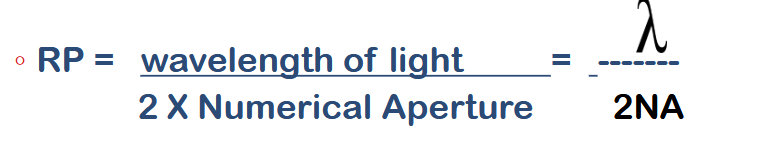
How to calculate Resolution/Resolving power
Wavelength divided by 2x the numerical aperture
What does having a shorter wavelength mean
it means you get a higher resolving power/resolution
What does having a lower resolution (distance) mean
You get a better clarity
Why do blue filters give the best resolution
Because they have the shortest wavelength
Why is having a higher refractive index good
because you get a lower resolution (distance) so you get better clarity
Why do you get better resolution with Oil instead of Air
Because it has a higher Refractive Index
What is the purpose of Immersion oil and how does it affect the image
prevents light from bending as it passes through the slide to the lens, increases resolution and clarity