Cell Communication & Cancer
 Call Kai
 Learn
Learn Practice Test
 Spaced Repetition
 Match
Match Flashcards
 Knowt Play
1/41

There's no tags or description
Looks like no tags are added yet.
Name | Mastery | Learn | Test | Matching | Spaced | Call with Kai | Chat |
|---|
No analytics yet
Send a link to your students to track their progress
42 Terms
plasma membrane functions
determines composition of cytoplasm by isolation from external environment
controls interactions between cell and environment (cell - cell or cell - matrix attachments)
plasma membrane structure
lipid (~50%) - forms phospholipid bilayer; major structural component
proteins (~50%) - imbedded within bilayer to carry out specific functions, such as attachment, transport, and signaling; have lateral mobility
carbohydrate (~5-10%) - glycoproteins and glycolipids on external face of membrane; cell-cell interactions
peripheral membrane proteins
associated via other plasma membrane proteins (not associated with hydrophobic interior)
integral membrane proteins
imbedded within the plasma membrane interior
functions of membrane proteins
transport
enzymatic activity
signal transduction
cell-cell recognition
intercellular joining
attachment to the cytoskeleton and extracellular matrix (ECM)
unsaturated fatty acids
have double bonds that form bends, causing hydrocarbon tails of the inside of the plasma membrane to kink, preventing packing and enhancing membrane fluidity
cholesterol in animal cell membrane
reduces membrane fluidity at moderate temperatures by reducing phospholipid movement; at low temps, hinders solidification by disrupting the regular packing of phospholipids
passive transport
molecules move across cell membrane without energy, from an area of high concentration to an area of low concentration (until equilibrium reached); gases, small non-polar molecules, polar molecules
simple diffusion
facilitated diffusion
osmosis
facilitated diffusion
passive transport across a plasma membrane with help of a membrane protein (ex: aquaporins)
large macromolecules (ex: glucose), polar molecules, and charged molecules
osmosis
passive transport diffusion of water across plasma membrane
from higher free water concentration to lower free water concentration
isotonic solution
(osmosis)
equal concentration of water on both sides = no net movement
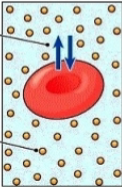
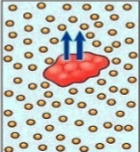
hypertonic solution
(osmosis)
higher free water concentration on the inside = water leaves cell = shrivel
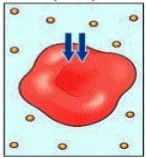
hypotonic solution
(osmosis)
higher free water concentration on the outside = water enter cell = cell can swell and lyse (explode)
girlie gets huge
active transport
requires energy to move from low to high concentration against the gradient
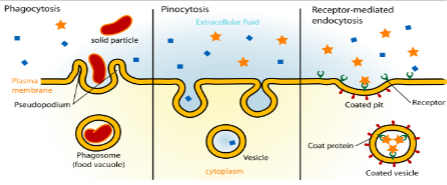
bulk transport (endocytosis, exocytosis)
exocytosis
bulk active transport where cell expels large macromolecules
endocytosis
cell intaking materials
pinocytosis (fluid with solutes; “cell drinking)
phagocytosis (large solids; “cell eating”)
receptor mediated endocytosis (molecules based off ligand)
cell communication
signal molecules (cytokines, growth factors, hormones) = words
receptors = ears
signal pathways = nerves
nucleus = brain
endocrine signaling pathway
a cell targets a distant cell through the bloodstream; “cell shouting”
hormones and other signaling molecules secreted
ex: estrogen produced by ovaries acts on breast and uterus
paracrine signaling pathway
a cell targets a nearby cell; normal “cell conversation”
cytokines and growth factors released by one cell act on adjacent
juxtacrine signaling pathway
a cell targets a cell connected by gap junctions; “tapping your friend on the shoulder”
some signal molecules inserted into membrane
2 cells touch, one cytokine activates receptor on adjacent cell
common mechanism for growth factors
autocrine signaling pathway
a cell targets itself; “cells talking to themselves”
release signals that bind to receptors on same cell
happy cells make growth factors that stimulate proliferation
important in cancer
classes: steroids (intracellular receptors) and polypeptides (cell surface receptors)
acromegaly
hormonal disorder when pituitary gland produces excess growth hormone (GH)
can result in premature death
slow onset = infrequently correctly diagnosed
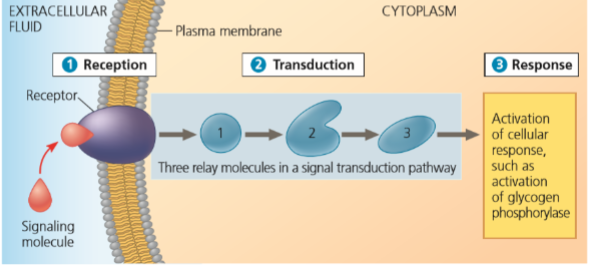
signal transduction pathway steps
signaling molecule binds receptor
signal cascade triggers several reactions
required response achieved
G protein-coupled receptors
activate guanine nucleotide binding proteins (G proteins)
include receptors for neuropeptides and hormones in brain; receptors for sight, taste, and smell, and many polypeptide growth factors
attached to cytoplasmic side of membrane, can move
inactive with GDP; GTP binds to activate = shape change = G protein activate = binds to other enzyme = cellular response
cholera locks G-proteins in active forms (prevent salt + water reabsorption = dehydrate)
human epidermal growth factor receptor 2 (HER2)
tyrosine kinase; key component for regulating normal cell growth; too much produced = over expression = increased cell growth = aggressive breast cancer
herceptin
antibody that binds HER2 receptors on plasma membrane, preventing receptors from receiving growth signals
ion channel receptors
ligand binds receptor, opening channel, allowing ions to diffuse across membrane
steroid hormones
lipophilic molecules that pass through cell membrane easily; receptors usually in cytoplasm or nucleus (transcription factors)
ex: estradiol, testosterone, other derivatives of cholesterol
phosphorylation in signaling
kinases required for protein phosphorylation
phosphatases required for dephosphorylation
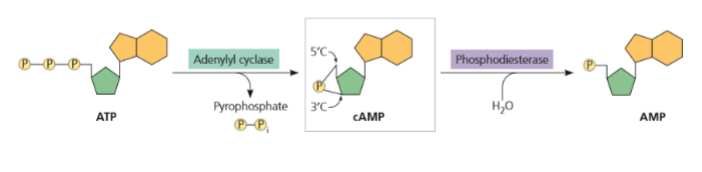
second messengers
non-protein water soluble signaling molecules
adenylyl cyclase removes 2 phosphates from ATP, making it cAMP
phosphodiesterase converts cAMP to AMP
cell cycle checkpoints
monitor internal conditions; “brakes”
ex: is the cell large enough, has DNA been replicated, has every chromosome attached to spindle fiber
cell cycle stimulators
accelerator of cell cycle
cell growth stimulators (external factors)
ex: growth factor hormones; hormone receptors
carcinogens
radiation - UV, X-rays
chemicals - cigarette smoke, nitrate and nitrate preservatives, barbecuing (mutagenic chemicals), benzoyl peroxide (acne products)
infectious agents - human papillomavirus (HPV), Helicobacter pylori (bacteria in contaminated food)
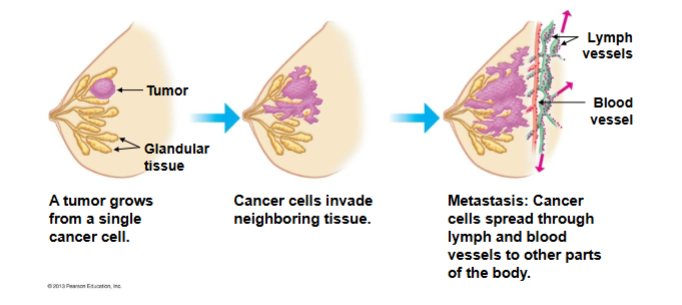
cancer
broken regulation of cell cycle
properties of cancerous tumor cells
reduced need for growth factors (make autocrine ones)
protease secretion (digest extracellular matrix = easier metastasize)
less adhesive (fewer surface adhesion molecules = move around)
lose contact inhibition (grow on top of other cells; foci piles of cells)
angiogenesis (develop blood vessels for supply inside tumor)
resist apoptosis/programmed cell death (resist chemotherapy/ radiotherapy)
carcinoma
arise from epithelial cells; more than 90% of cancers
solid tumors: lung, breast, colon
sarcoma
arise from connective tissue including bone, muscle, and fibrous tissue; rare <2% of cancers
ex: fibrosarcoma, osteosarcoma
leukemias/lymphomas
arise from blood cells or immune cells, respectively; make up 8% of total cancers
lung cancer
lung cells interact with capillaries for gas exchange, but mutated lungs can’t properly do this
largest carcinogen associated: smoke
cervical cancer
cervix cells constantly replacing themselves can lead to cancer
pap smear - take sample from cervix to test
prostate cancer
prostate gland above the penis produces key androgen hormone, key in semen production
cancer treatments
surgery (slash)
radiation (burn)
chemotherapy (poison)