Lab Test #1
 Call Kai
 Learn
Learn Practice Test
 Spaced Repetition
 Match
Match Flashcards
 Knowt Play
1/101

There's no tags or description
Looks like no tags are added yet.
Name | Mastery | Learn | Test | Matching | Spaced | Call with Kai | Chat |
|---|
No analytics yet
Send a link to your students to track their progress
102 Terms
Cytoskeleton
Internal Framework: gives cell strength, support, and flexibility. Determines shape and allows for movement of internal structures
Centrosome
Cytoplasm around centrioles, microtubules originate here and radiate throughout cytoplasm
Ribosome
rRNA + proteins. Fixed and free. Protein synthesis.
Centrioles
Responsible for the movement of chromosomes during cell division
Rough ER
Membranous channels extend throughout the cytoplasm. Has bound ribosomes. Modification and packing of newly synthesized proteins.
Smooth ER
Membranous channels extend throughout the cytoplasm. Lacks ribosomes. Lipid and carbohydrate synthesis.
Golgi Apparatus
Stacks of flattened membranes (cisternae). Modifies & packages secretory products and lysosomal enzymes. Functions in membrane renewal.
Lysosome
Vesicle with powerful digestiving enzymes. Clean-up & recycle worn out/damaged organelles or pathogens.
Peroxisome
Vesicle containing degradative enzymes. Break down of fat and neutralizes toxic chemicals.
Mitochondria
Double membrane with inner cristae. ATP production.
Nucleus
Controls metabolism. Storage and processing of genetic information. Controls protein synthesis.
Nucleolus
Dense region of nucleoplasm. Site of rRNA synthesis and ribosome assembly.
Posterior
Toward the back
Superior
Toward the head
Inferior
toward the tail/feet
Proximal
closer to the point of origin (generally the trunk)
Distal
further away from the point of origin (generally the trunk)
Medial
closer to the midline of the body or body part
Lateral
farther away from the midline of the body or a body part
Superficial
closer to the surface
Deep
farther below the surface
Posterior Body Cavity
contains the cranial and vertebral cavities
Anterior Body Cavities
contains the thoracic cavity and the abdominopelvic cavity
Sagital Plane
divides the body or body part into right or left sections
Frontal (Coronal) Plane
divides the body or body part into superior and inferior parts
Pariteal Pleurae
serous membrane attached to the body around the lungs
Visceral Pleurae
serous membrane attached to the lungs
Mediastinum
cavity that holds the trachea, bronchi, and the esophagus
Parietal Pericardium
serous membrane attached to structures surronding the heart
Visceral Pericardium
serous membrane attached to the heart
Abdominal Cavity
contains the liver, gallbladder, small intestines, stomach, pancreas, kidneys, adrenal glands, spleen, and much of the large intestine
Pelvic Cavity
contains s e x organs, urinary bladder, rectum, and part of the large intestine
Ocular Lens
the lens through which you look to view the slide
Iris Diaphragm
controls the amount of light that passes through the slide
Condenser
Lens under the stage thay focuses light from the lamp on the specimen
Objective Lens
Lenses of various powers of magnification
Coarse Adjustment Knob
moves the stage up and dows; provides gross focusing
Stage
the surface on which the slide sits
Fine Adjustment Knob
allows fine-tuning on the focus
Lamp
the microscopes light source
Low Power Magnification
4x
Medium Power Magnification
10x
High Power Magnification
40x
Anterior
towards the front
Functions of Epithelial Tissue
provide physical protection, control permeability, provide sensation, secrete
Tight Cell Junctions
help to make the spaces between cells impermeable
Desmosomes
increase the resistance of the tissue to mechanical stress
Gap Junctions
allow small substances to move from one cell to another
Simple Squamous Epithelia Function
rapid diffusion barrier, make serous fluid
Simple Squamous Epithelia Location
lung alveoli, serous membranes, kidney

Simple Squamous Epithelia
Simple Cuboidal Epithelia Function
Absorption and secretion
Simple Cuboidal Epithelia Location
kidney tubules, lung lower bronchioles, glands
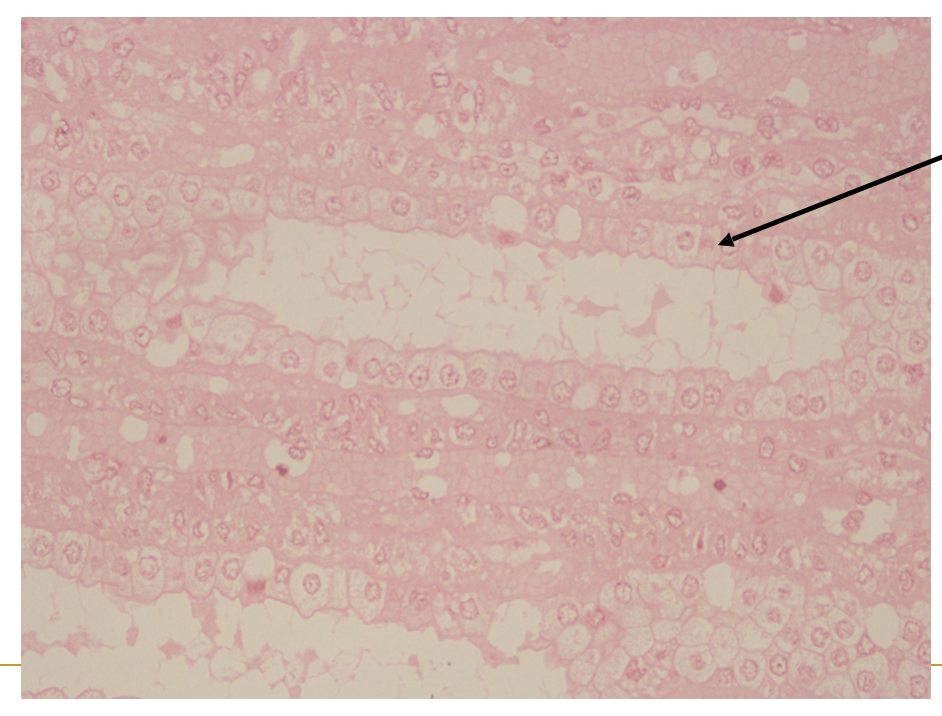
Simple Cuboidal Epithelium
Simple Columnar Epithelia Function
absorption and secretion
Simple Columnar Epithelia Location
digestive tract, gall bladder, kidney tubules

Simple Columnar Epithelia
Pseudostratified Columnar Epithelia Function
secrete mucus, propel mucus
Pseudostratified Columnar Epithelia Location
upper airways

Pseudostratified Columnar Epithelia
Nonkeratinized Stratified Squamous Epithelia Fucntion
protection
Nonkeratinized Stratified Squamous Epithelia Location
inside mouth, pharynx, esophagus, vag ina, a n a l canal

Keratinized Stratified Squamous Epithelia
Transitional Epithelia Location and Function
allows organ to stretch, urinary bladder

Transitional Epithelia
Endocrine glands
release hormones into interstitial fluid (no ducts)
Exocrine Glands
produce secretions onto epithelial surfaces through ducts
Connective Tissue Functions
connects/binds, support, protect, and transport
Matrix
the substances surrounding cells in connective tissues the matrix, drives the function, not the cells
Fibroblasts
build and maintain the structural framework of the body by creating the extracellular matrix
Adipocytes
cells that primarily compose adipose tissue (Body Fat)
Phagocyte
a vital type of white blood cell that defends your body by finding, engulfing, and destroying harmful bacteria, foreign objects, and dead cells
Loose Connective Tissue (areolar) Function
support and protect
Loose Connective Tissue (areolar) Location
papillary dermis

Loose Connective Tissue (areolar)
Dense Irregular Connective Tissue Location
reticular dermis, around joints and organs
Dense Irregular Connective Tissue Function
resist stretch in multiple planes, strength

Dense Irregular Connective Tissue
Dense Regular Connective Tissue Function
resist stretch in one plane, strength
Dense Regular Connective Tissue Location
tendons and ligaments

Dense Regular Connective Tissue
Adipose Tissue Function
insulations, cushioning, store energy
Adipose Tissue Location
fat stores in the body

Adipose Tissue
Hyaline Cartilage Function
support, protection, reduced friction
Hyaline Cartilage Location
articular joint surfaces, tracheal rings

Hyaline Cartilage
Fibrocartilage Function
support, protect, resist compression
Fibrocartilage Location
intervertebral discs, pubic symphasis

Fibrocartilage
Elastic Cartilage Function
hold shape
Elastic Cartilage Location
ears, epiglottis

Elastic Cartilage
Bone Function
support, protect, leverage, store calcium
Bone Locatio
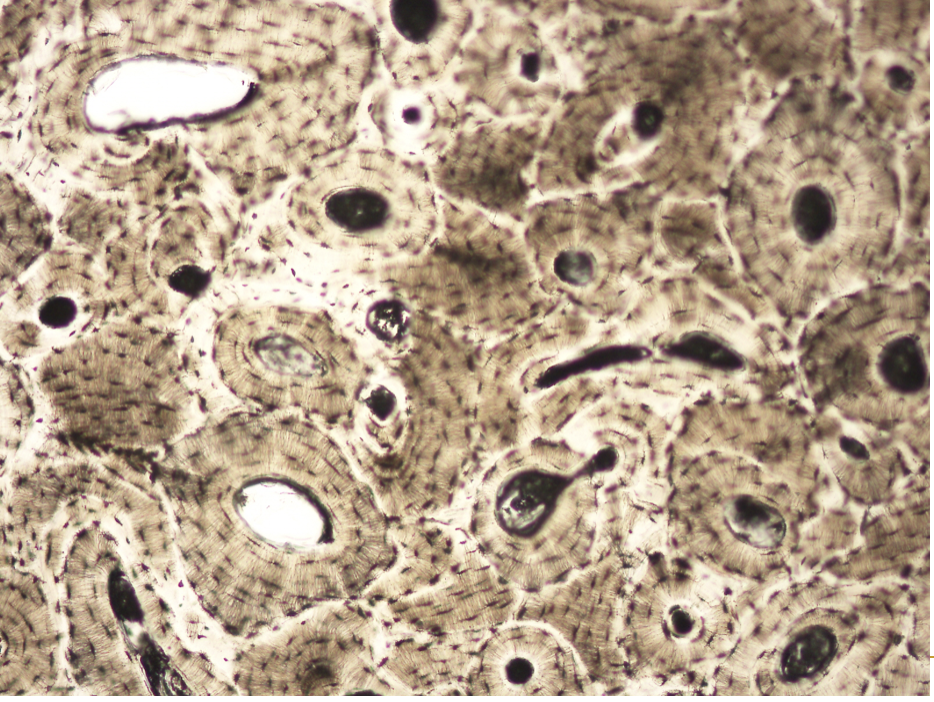
Bone
Fluid Connective Tissues Function
transport
Fluid Connective Tissues Location
blood, lymph

Fluid Connective Tissues

Skeletal Muscle

Cardiac Muscle