1) Autoimmunity
 Call Kai
 Learn
Learn Practice Test
 Spaced Repetition
 Match
Match Flashcards
 Knowt Play
1/53

There's no tags or description
Looks like no tags are added yet.
Name | Mastery | Learn | Test | Matching | Spaced | Call with Kai | Chat |
|---|
No analytics yet
Send a link to your students to track their progress
54 Terms
What is autoimmunity? Why do autoimmune reactions persist?
→ inappropriate adaptive immune response characterized by the loss of self-tolerance and the large production of autoantibodies and autoreactive T cells
usually persist once initiated b/c the inciting self-antigen can’t be cleared without the complete destruction of the target tissue
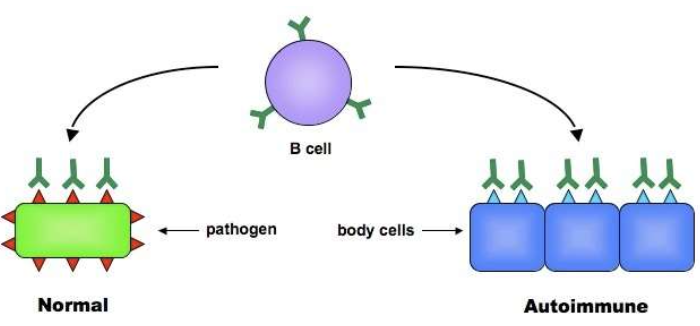
What are the 2 important contributors in an autoimmune reaction?
Autoantibodies
Autoreactive T cells
What is the threat from destruction of an organ/tissue in an autoimmune reaction?
inciting self-antigen remains present and continues to drive the immune response → can’t be cleared unless the target tissue is completely destroyed
Classify the 2 types of autoimmune disease with some examples?
Organ-specific
reaction is localized to a particular organ
e.g., Hashimoto’s thyroiditis, 1er myxedema, thyrotoxicosis, pernicious anemia, Addison's disease, insulin-dependent DM, MG
Non-organ specific (systemic)
reaction involves many tissues throughout the body
e.g., systemic lupus erythematosus (SLE), RA, scleroderma, dermatomyositis
What are the changes in thyroid gland as a result of Hashimoto’s thyroiditis?
→ normal architecture of the gland is destroyed and replaced by invading cells (e.g., lymphocytes, macrophages, and plasma cells)
characterized by infiltration of inflammatory lymphoid cells and 2er lymphoid follicles formation with germinal centers
gland appears pale and firm rather than the normal red and soft texture
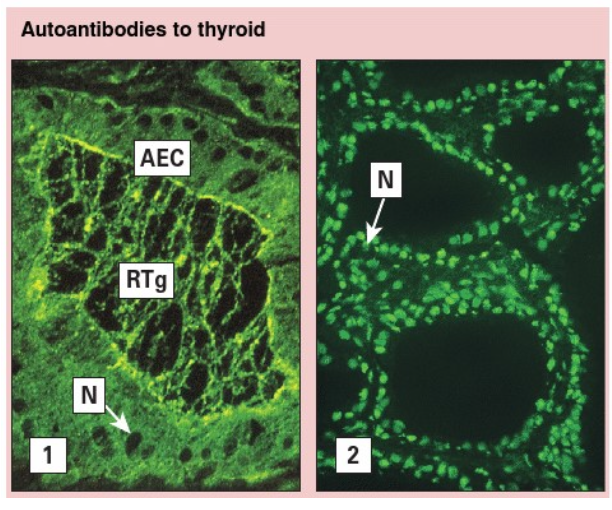
What are its sx of Hashimoto’s Thyroiditis?
goiter formation (enlarged thyroid)
hypothyroidism (low TH produced)
upper eyelid retraction
What are the 2 targets for autoantibodies in Hashimoto’s thyroiditis?
Thyroglobulin
Thyroid peroxidase
What are the 2 main consequences of Hashimoto’s thyroiditis?
Hypothyroidism
Goiter formation
What is Grave’s disease and its characteristic features?
→ common cause of hyperthyroidism resulting from the over-production of TH
thyroid enlargement (diffuse goiter), exophthalmos (bulging eyes), heat intolerance & anxiety
Identify thyroid diseases that involve thyroid destruction vs stimulation of TH synthesis.
Thyroid destruction
Hashimoto's thyroiditis
Hashimoto's persistent goiter
"hashitoxicosis"
1er myxedema
.
Stimulation of TH synthesis
Graves' disease
Non-goitrous hyperthyroidism
"hashitoxicosis"
What type of disorders is SLE? What is the target of SLE antibodies in a tissue?
→ systemic autoimmune disease
antibodies target the cell nucleus
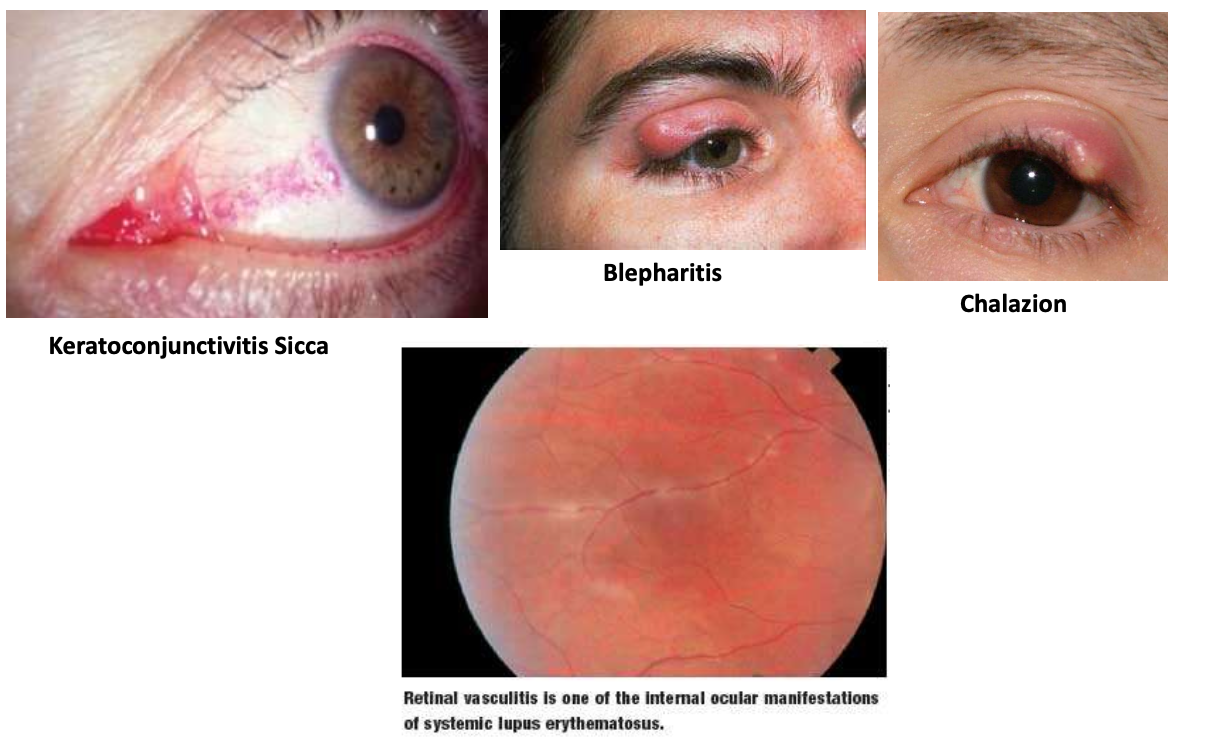
What are the common ocular manifestations of SLE?
Keratoconjunctivitis Sicca (dry eye)
Retinal vasculitis
Blepharitis
Chalazion
Give some examples of diseases where autoimmune conditions can coexist.
Pernicious anemia (gastric autoimmunity) can have ↑ thyroid antibodies
1er Sjogren’s syndrome can have concomitant autoimmune hypothyroidism
SLE and Sjogren’s syndrome have a 2nd, 3rd, or 4th autoimmune disease
What are the ocular manifestations of Myasthenia Gravis?
Ptosis
Diplopia
What are the ocular manifestations of RA?
Dry eye
Scleritis
Uveitis
Identify the autoantibodies existing in bronchial asthma and Guillain-Barre syndrome.
Bronchial asthma: Autoantibodies to α-adrenergic receptors
Guillain-Barré syndrome: Na+ channel autoantibodies
What are the 2 major types of dry eye?
Aq-deficient (Sjogren's & non-Sjogren's)
Evaporative (lipid-deficient, lid-related & surface change)
How do cytokines influence inflammation in dry eye?
→ affect both the ocular surface & lacrimal gland
↓ tear production & clearance lead to:
inflammatory cell infiltration
ocular surface inflammation
activates surface epithelium to release more adhesion molecules & cytokines
Identify the common cytokines found in patients with dry eye vs allergic conjunctivitis.
Dry eye: TNF-α, IFN-γ, IL-1, IL-6, IL-8
Allergic conjunctivitis: IL-4
What are the 2 common subsets of T cells and their cytokine secretions?
T helper 1 (TH1) cells makes IFN-γ & TNF-α
T helper 2 (TH2) cells makes IL-4, IL-5, IL-13
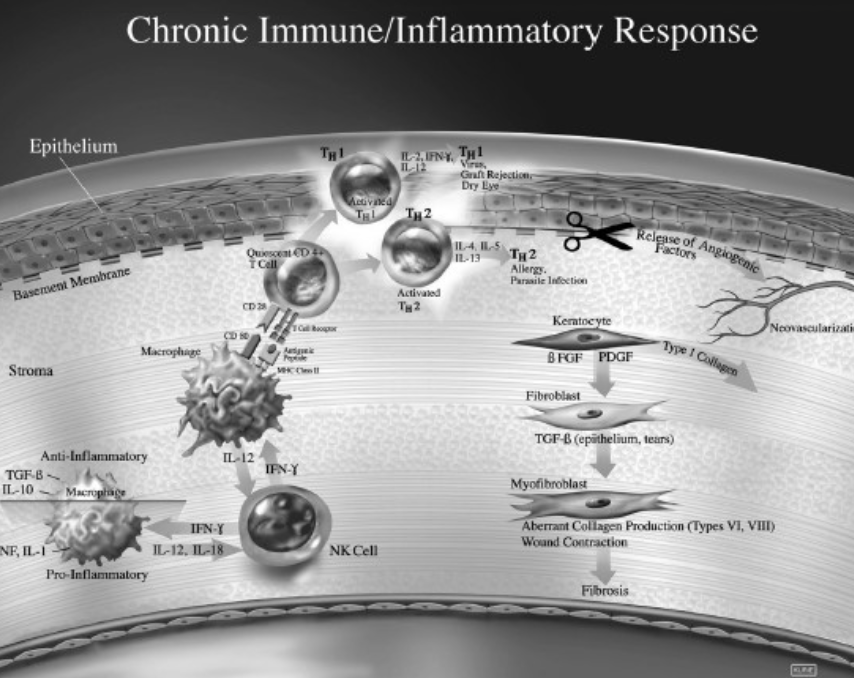
Briefly explain the sequence of events involved in dry eye mediated inflammation involving APCs and T cells.
APCs (e.g., macrophages) infiltrate inflamed tissue and engulf foreign antigens
Process the antigens into peptides and present them via MHC II molecules
T cells with specific receptors recognize these antigens and become activated via costimulatory molecules
In the desiccating atmosphere of a dry eye, a TH1-inducing environment is created → CD4+ T cells differentiate into TH1 cells
What are the 2 pathways activated in Type I hypersensitivity response and the end products of the pathways?
Granule Release - releases preformed mediators (e.g., histamine, tryptase, cytokines)
Phospholipase A2 Activation - makes newly synthesized mediators (e.g., prostaglandins, thromboxane A & leukotrienes)
Name some common mediators released due to activation of mast cells.
Histamine
Cytokines
tryptase
Prostaglandins
Leukotrienes
Heparin
Chymase
What are the 2 phases involved in Type 1 hypersensitivity response and their main effects?
Sensitization phase - Initial exposure to an antigen → IgE binding to mast cells/basophils
Activation phase -Reexposure to the antigen triggers degranulation → ↑ vessel permeability, bronchial constriction, mucus secretion, urticaria
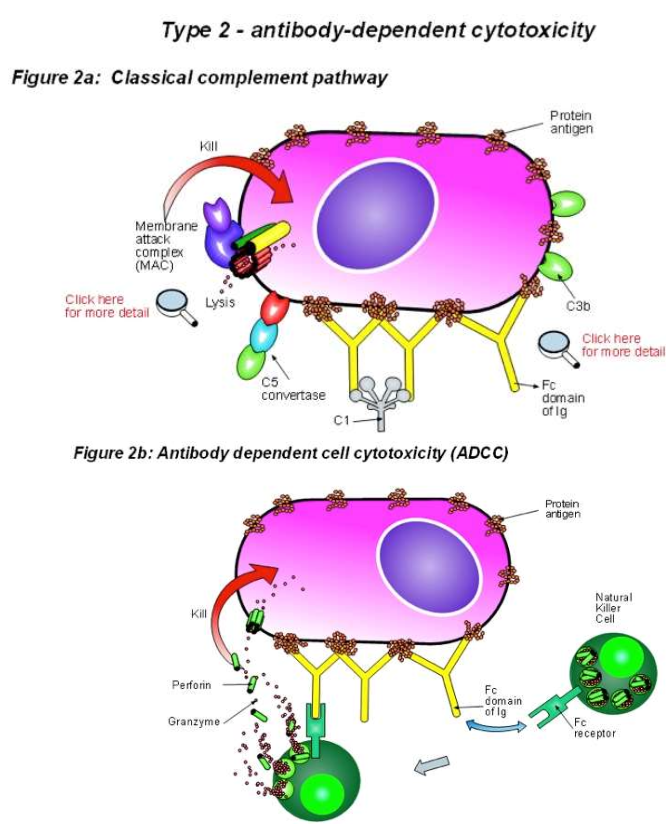
What are the 2 main mechanisms of immunopathological damage in Type 2 hypersensitivity reaction?
Classical complement pathway - causes lysis via the MAC
Antibody-dependent cell cytotoxicity (ADCC) - NK cells release perforin & granzyme
What is the mechanism involved in Type 3 hypersensitivity reaction?
involves the deposition of antigen-antibody (Ag-Ab) complexes in tissues → induces complement activation and massive neutrophil infiltration
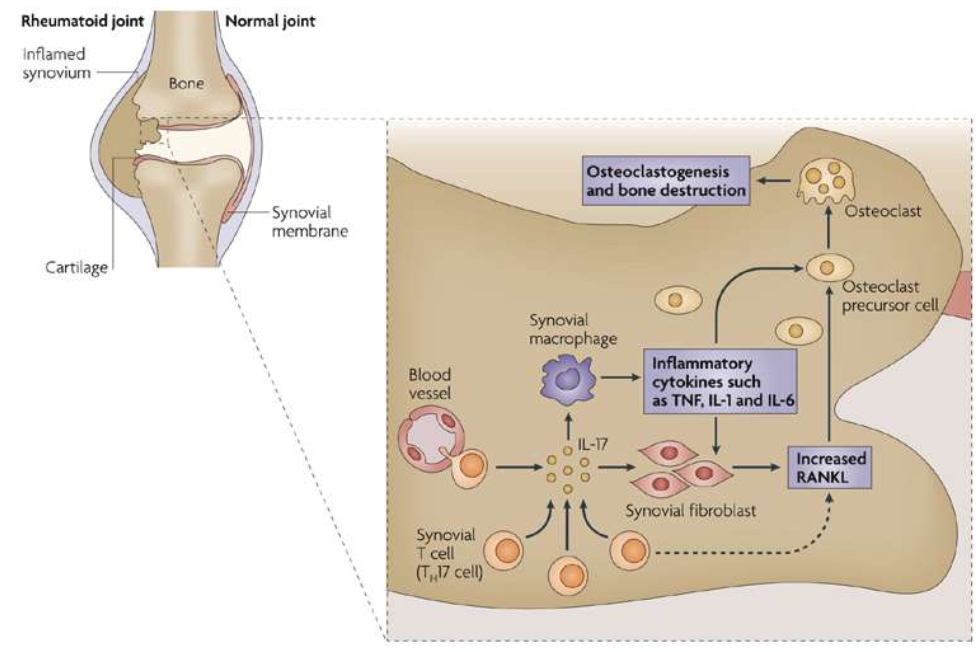
Identify 2 diseases involving that uses a Type 3 hypersensitivity reaction.
SLE
RA
What is the mechanism involved in Type 4 hypersensitivity reaction?
cell-mediated reaction where sensitized TH1 cells release cytokines that activate macrophages or cytotoxic T cells (CTLs) → direct cellular damage and tissue injury
Identify a disease involving Type 4 hypersensitivity reaction.
Type 1 insulin-dependent diabetes
What are the 2 important influential factors involved in autoimmune disease?
Genetic factors
Environmental influences
Explain with an example how genetic factors can play a role in manifestation of additional autoimmune disorders.
→ Genetic factors predispose individuals to autoimmunity→ clustering of distinct autoimmune diseases within families
e.g., families with RA may show other autoimmune disorders, and relatives of patients with Hashimoto’s thyroiditis or pernicious anemia have a higher incidence of thyroid autoantibodies
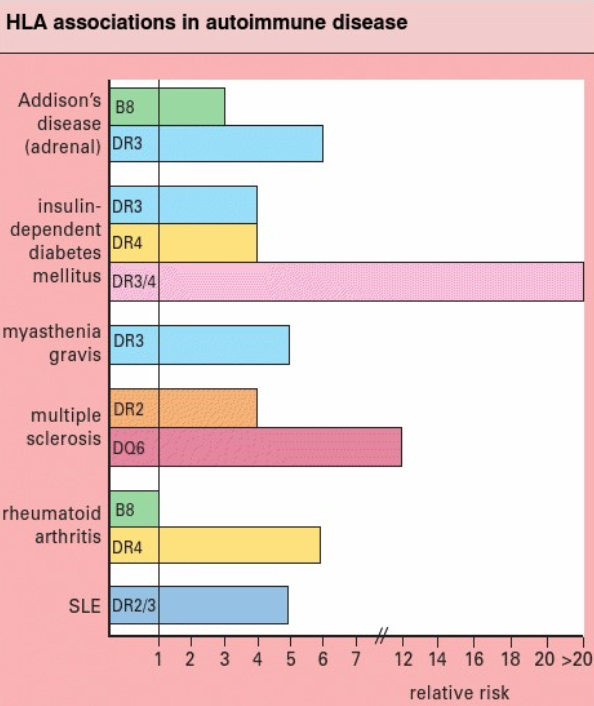
Specify the chromosome number and location of MHC region that contributes to disease susceptibility in several autoimmune disorders?
MHC region is located on the short arm of chromosome 6
What disease-associated alleles are associated with type 1 DM?
DR3/4
What disease-associated alleles are associated with RA?
DR4
What disease-associated alleles are associated with SLE?
HLA-A1
B8
DR3
What is the HLA gene associated with ankylosing spondylitis?
HLA-B27
Name some autoimmune diseases associated with PTPN22.
T1D
RA
Briefly explain the stages during progression of autoimmune disease.
Genetic and other factors create a predisposition to autoimmunity
Environmental trigger (e.g., infection or UV radiation) initiates the loss of self-tolerance + autoantibody production
Autoimmune attack causes tissue damage → release of more self-antigens, propagation of the response, and clinical sx
Briefly explain the autoimmune mechanism involving APCs and B cells.
An immune complex of autoantigen and a natural autoantibody is taken up by an APC
APC presents processed segments of the antibody to TH cells
B cells that express “pathogenic autoantibodies” capture these complexes and receive help from the TH cells to begin autoantibody synthesis
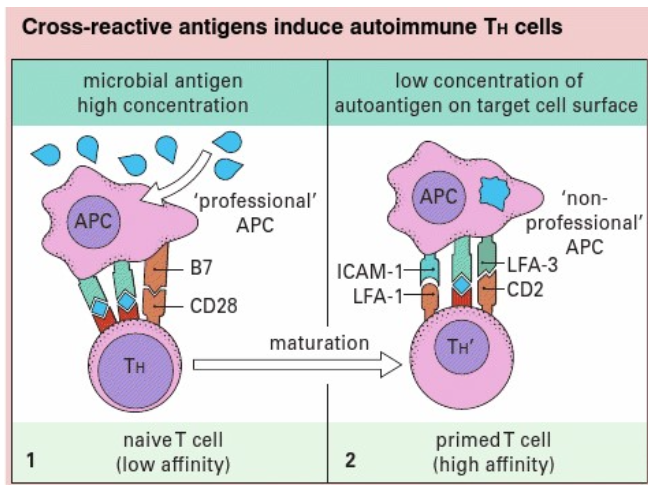
Identify the sequential events involved in induction of autoimmunity by microbial antigens.
Naive TH cells initially fail to recognize ↓ [autoantigen] on tissue cells
↑ [Cross-reacting microbial antigen] is presented by a "professional" APC with co-stimulators like B7
This primes the TH cells, ↑affinity and expression of accessory molecules like LFA-1 & CD2
Primed T-cells no longer require co-stimulatory signals and can now react with self-epitopes on "nonprofessional" APCs (like epithelial cells) → disease
How do cross-reactive foreign antigens induce autoantibody production?
B-cellsrecognize an epitope shared by an autoantigen and a foreign antigen
While they normally receive no help b/c autoreactive TH cells are deleted, they can present peptides from a cross-reacting foreign antigen to non-autoreactive T cells
T-cells drive the B-cells to proliferate and secrete autoantibodies
How is direct stimulation of autoreactive cells by foreign antigen achieved? Give an example.
→ autoreactive effector cells can be directly triggered by an antigen or stimulator, bypassing the need for T-cell help
e.g., LPS or Epstein–Barr virus → directly stimulate B-cells
What is the influence of infection in an autoimmune disease? Give an example.
→ Infection may trigger a relapse in autoimmune diseases
e.g., chronic S. aureus nasal carriage is associated with more frequent relapses of upper resp tract disease
What is the gene influencing cytokines that is implicated in autoimmune disease?
IL2RA
How can introduction of a transgene induce an autoimmune reaction? Give an example.
→ transgene cause MHC upregulation in specific cells
e.g., introducing a transgene for IFN γ into pancreatic β-islet cells upregulates MHC class 2 genes → autoimmune destruction of those cells
What class of MHC molecules is implicated in Grave’s disease?
MHC class 2
What changes occur during myasthenia gravis? Give examples.
→ Autoantibodies block Ach receptors on the post-synaptic membrane, acting as antagonists → muscle weakness & fatigability
e.g., occurswhen these antibodies cross the placenta, causing transient muscle weakness in newborns
What do autoantibodies target in bronchial asthma and Guillain-Barre syndrome?
Bronchial asthma: α-adrenergic receptors
Guillain–Barre syndrome: Na+ channels
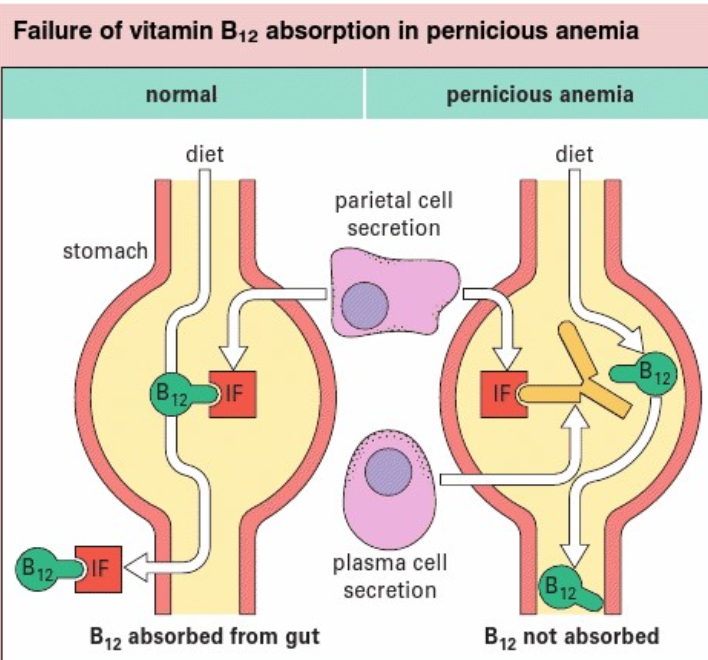
Describe the mechanism involved in development of Pernicious anemia.
Plasma cells in the gastric mucosa secrete autoantibodies against intrinsic factor into the stomach lumen
This antibody interferes with the binding of Vitamin B12 to intrinsic factor → prevents the complex from being transported across the intestinal mucosa for absorption
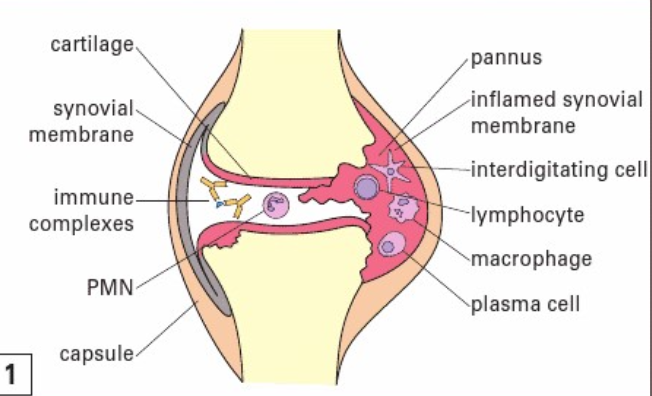
How do autoantibodies bring about the damage in RA?
Autoantibodies provoke damage by stimulating macrophages & fibroblasts via cytokines and immune complexes
Complexes formed by IgG rheumatoid factors specific for Fcγ domains, are often deficient in terminal galactose on Fc oligosaccharides
This "agalacto" glycoform causes inflammation by reacting with mannose-binding lectin & inducing TNF α production
How is pernicious anemia and Mg controlled metabolically?
Pernicious anemia: Vitamin B12 injection
MG: Administrating cholinesterase inhibitors
What are the 2 approaches of targeting B cells in SLE?
Anti-CD20 (e.g., Rituximab)
Anti-CD22/anti-Blys (transmembrane activator-IgG)
What are the 4 biological agents used to target TNF α?
Infliximab
Adalimumab
Etanercept
Certolizumab
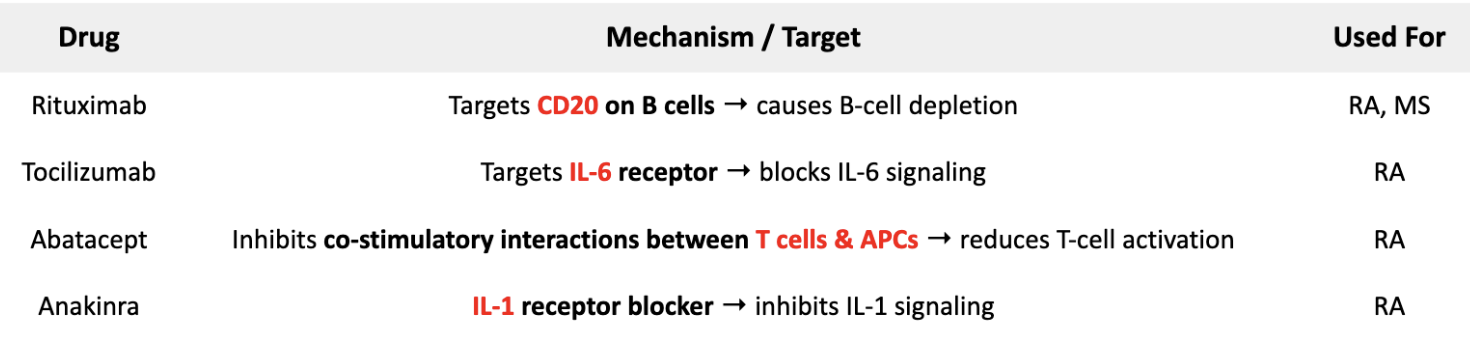
What are the targets of Rituximab, toclizumab, abatacept and anakinra? Give their application.