Botany Exam 1
 Call Kai
 Learn
Learn Practice Test
 Spaced Repetition
 Match
Match Flashcards
 Knowt Play
1/169

There's no tags or description
Looks like no tags are added yet.
Name | Mastery | Learn | Test | Matching | Spaced | Call with Kai | Chat |
|---|
No analytics yet
Send a link to your students to track their progress
170 Terms
protoplast
contents of the cell which push against the cell wall for structure
middle lamella
how cells are glued together, it is a pectin layer
cell wall composition (3 main things, 5 more)
cellulose, hemicellulose, pectin
lignins, callose, cutins, suberins, waxes
cellulose
repeating monomers of glucose that make up the principle component of cell walls. microfibrils that bundle together like cable (high strength)
hemicellulose
determines how stretchy a cell can be. microfibrils linked via H+ bonds that regulate cell enlargement.
pectin
hydrophilic polysaccharides which gives the wall pliability (stretchy). Cross linked with calcium after elongation prevents further stretching.
callose
spirally wound chains of glucose that rapidly accumulate following wounding. seals off plasmodesmata. QUICK
cutins, suberins, and waxes
protective tissues
lignin
complex polymer that makes cell walls stronger, more waterproof, and more resistant to damage from pests. found in later formed cells with supportive functions
pits
where secondary wall is not laid because there is thin primary cell wall for both cells that are connected
plasma membrane
regulates the in and out, located on the inside of the cell wall
symplast
when protoplasts are interconnected so cytoplasm is continuous
apoplast
all intercellular space and cell walls together
nucleus
contains genome and is surrounded by nuclear envelope
mitochondria
double membrane, site of aerobic respiration, creates ATP
vacuole
most plant cells have a large central vacuole. it is surrounded by a membrane called the tonoplast. immature cells have many that then fuse into one with maturity. contains a liquid called the cell sap, stores ions and creates turgor pressure to keep the cell rigid.
plastids
organelles involved with photosynthesis and storage, double membrane, divide by fission, originated by endosymbiosis
primary endosymbiosis
one cell is taken up by another and retained internally so the two cells live together and integrate
endosymbiotic theory
mitochondria and plastid evolved from prokaryotes that took up an endosymbiotic relationship with the host cell
both of them are double membraned
both replicate by fission (what bacteria does)
have their own genome
secondary endosymbiosis
free living organism engulfs product of primary endosymbiosis
have 4 membranes
types of plastid (5)
proplastid, chloroplast, chromoplast, leucoplast, etioplast
proplastid
undifferentiated, precursor to all other types, found in young and rapidly dividing cells.
chloroplast
have their own DNA, function for photosynthesis, also involved with amino acid and fatty acid synthesis
chromoplasts
pigmented plastid, forms from chloroplasts and internal membranes and chlorophylls disappear, carotenoides accumulate
leucoplasts
colorless plastid, most undifferentiated type, lack pigment and internal structure, storage and synthesis of materials
starch = amyloplast (synthesis and long term starch storage)
lipids = elaioplast (form when development of chloroplast is arrested by absence of light, quicky convert back after light exposure)
proteins = proteinplasts
etioplast
form when there is no light exposure to the plant, converts back to chloroplast after light exposure
when cells are unicellular…
each cell must perform all tasks
when cells are multicellular…
allows for specialization and division of labor among different cell types
2 steps of plant development
growth- irreversible increase in size, cell division and cell expansion
differentiation- cells assume a particular identity and function
meristems
region of specialization where new cells arise. These new cells are totipotent which means they have the potential to differentiate into any cell type

Major types of meristems
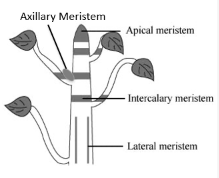
apical, axillary, secondary/lateral, intercalary
apical meristem
produce primary tissues at stem and root tips, increase the length of the plant
axillary meristem
produce primary tissues in the axis of leaves, also forms branches
secondary/lateral meristem
produce secondary tissue, vascular cambium and cork cambium, increase the girth of the plant
intercalary meristem
middle of differentiated tissue, increase length of stem from within, found in grasses
root apical meristem
found at the tips of roots
shoot apical meristem
found at the tips of stems and branches
organized in layers and in radial zones
SAM organization
central zone- infrequent cell division, no differentiation
peripheral zone- cell division and differentiation, give rise to cells that will contribute to leaves, inflorescence and flower meristems
rib zone- cell division and differentiation,, gives rise to cells that will contribute to stems

meristematic divisions
anticlinal and periclinal

three types of plant tissue
ground, dermal, and vascular
ground tissue
bulk of plant body, can be specialized for many functions including storage
parenchyma, collenchyma, and sclerenchyma
dermal tissue
outer protective layer
epidermis and periderm
vascular tissue
conducting tissues
xylem and phloem
xylem
transports water, on the inside, cell types are tracheary elements, fibers, and parenchyma
phloem
transports sugar and other solutes, on the outside
simple tissues
composed of only one cell type
ground tissue
complex tissue
composed of multiple cell types
vascular and dermal tissues
three tissues location in eudicot stem image
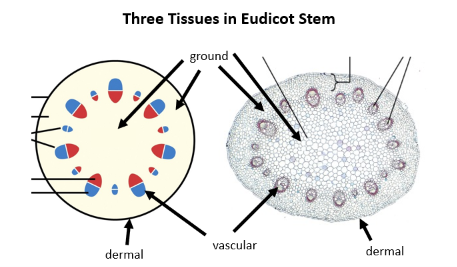
three tissues in eudicot root image

three tissues in eudicot leaf image

what primary meristem did each of the three tissues develop from
ground = ground meristem
dermal = protoderm
vascular = procambium
parenchyma
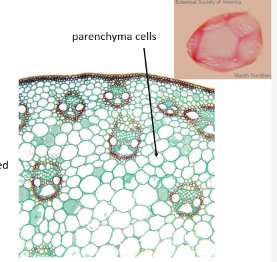
thin primary cells wall, totipotent (all other cells differentiate from parenchyma), have two functional types
meristematic parenchyma: totipotent, abundant cytolplasm
chlorenchyma: chloroplasts containing cells, function in photosynthesis
aerenchyma
intercellular air space in parenchyma, common in aquatic plants because it helps with buoyancy, gas exchange and structure
secretory parenchyma
lines secretory canals, secretes nectar, fragrances, mucilage, resins and oils
collenchyma
living cells at maturity, unevenly thickened primary cell wall with no lignified secondary cell wall, more differentiated than parenchyma, function in flexible support, primarily in cortex of young plants
sclerenchyma
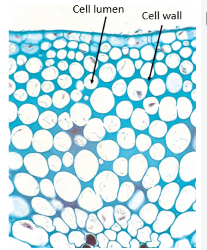
dead cells at maturity, uniformly thick cell walls, rigid support, found in mature plant organs
two types are sclereids and fibers
tracheary elements
cell type of xylem, dead at maturity, transport water and inorganic nutrients from ground to crown
tracheids are narrow, tapering end wall, long and in all vascular plants, form a series, water flows through pit pairs
vessel elements are wide, blunt end wall, shorter, stack to form a vessel, water flows through pit pairs and perforations

sieve elements
principle conducting cells of phloem, living at maturity
gymnosperms have sieve cells
flowering plants have sieve tube elements with sieve plates
companion cells
each sieve tube element is associated with one, they deliver information, proteins and ATP to sieve element
epidermis
outer protective layer of plant, compact, typically covered with cuticle (cutin and wax)
stomata
allow gas exchange through the epidermis and cuticle
trichomes
hairlike appendages, for protection, slow transpiration and absorption
5 functions of the stem
support leaves
transport water and solutes
storage
photosynthesis
produce flowers
turgor pressure
cells are so full of water it pushes against cell wall to make them more rigid, how the plants stands up
shoot
above ground part of plant (stem, leaves, flowers)
nodes
where leaves are attached
internodes
regions between nodes
leaf axil
above point of leaf attachment, contains the axillary bud, miniature shoot with dormant apical meristem and several young leaves
terminal bud
at the extreme tip of each stem
typical eudicot stem image

stele
axial cylinder of vascular tissue in stems and roots

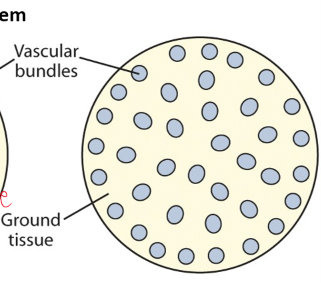
typical monocot stem image
no stele, less structure
tendrils
slender threadlike stem of a climbing plant
cladophyll
flattened, leaflike stem
corm
short, fat, underground stem

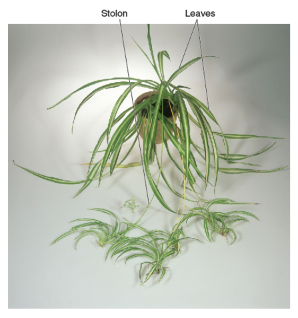
stolen
horizontal, above ground stem
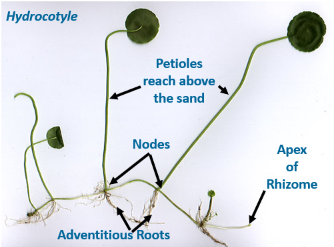
rhizome
horizontal, underground stem
tuber
storage end of a rhizome (potato)
image of leaf buttresses location
occur further back in development

image of leaf primordia location

phyllotaxis
leaf pattern of movement when they come off (spiral, opposite (decussate), alternate (distichous), whorled)

alternate phyllotaxis
1 leaf per node, distichous is two opposite vertical rows
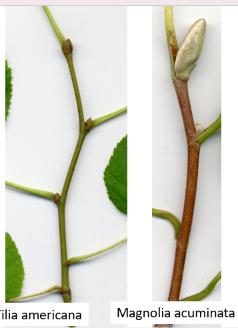
spiral phyllotaxis
1 leaf per node, organs come off 1 per node but do not form two ranks

opposite phyllotaxis
2 leaves per node, decussate is successive leaf pairs are at a 90-degree angle
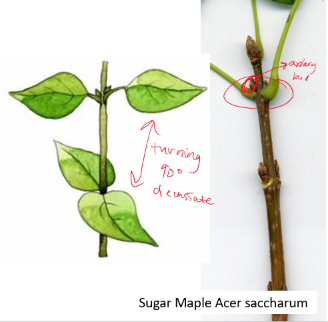
whorled phylootaxis
3+ leaves per node, rare

incipient place
place where next primordium will form, then leaf develops from leaf primordium
plastochron
time between development of successive primordia
abaxial surface vs adaxial surface
abaxial is the bottom that faces away from the sky (lower epidermis, where the stomata is) and adaxial faces toward the sky (upper epidermis)
petiole
leaf stalk that connects the lamina to the stem, allows leaves to flutter in the wind

sheathing leaves
leaves that have no petiole, base wraps around the stem

simple leaves
undivided blade, could still be lobed or unlobed
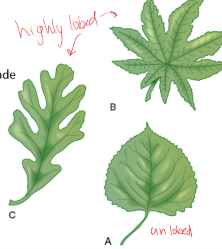
compound leaves
divided blade, prevent tearing, increase heat removal and CO2 uptake, pests or disease spreads less quickly
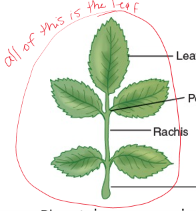
pinnately compound leaf
leaflets come out of different locations
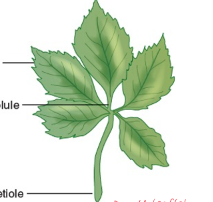
palmately compound
all leaflets come out of the same location
doubly compound leaf
two leaflets coming out of each location (pinnately x2)
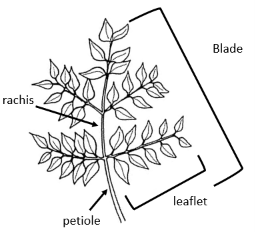
how to determine a simple leaf from a pinnately compound leaf
leaflets never bear buds in the axils of their petioles
the tip of the rachis (stem part of the leaflet) never has a terminal bud
leaflets are always arranged in two rows, never in a spiral, whorled, or decussate phyllotaxy
ovate leaf shape
your basic leaf
ovate, obviously

cordate leafe shape
heart shape leaf, common in red buds, also called cordiform
cordate, can I ask you on a date

lanceolate leaf shape
skinny, very veiny
sir lanceolate is very skinny

needle like leaf shape
obviously just a needle (pine)
