1. Income Statement and Earnings Analysis
 Call Kai
 Learn
Learn Practice Test
 Spaced Repetition
 Match
Match Flashcards
 Knowt Play
1/10

There's no tags or description
Looks like no tags are added yet.
Name | Mastery | Learn | Test | Matching | Spaced | Call with Kai | Chat |
|---|
No analytics yet
Send a link to your students to track their progress
11 Terms
Deferred revenue
Advance payment for goods or services not yet delivered
Credit
Accounts receivable - if its 30 days credit then that means customers need to pay you
Prepaid expense
advance payments made for goods or services that will be received
formula for operating working capital
Inventory + AR - AP
negative owc
providing a source of cash to the company
owc becoming more negative
this is a cash inflow
base calculation for inventory
Beginning Inventory + Purchases - COGS
make sure to use year 2 purchases!
days calcs
inventory days = inventory/cogs *365
payableCOGS
recievable days are over sales RS
working capital
currnet asset - current liabilities
operating cycle/cash cycle
CASH CYCLE is rd+id-pd
accrued expenses vs AP
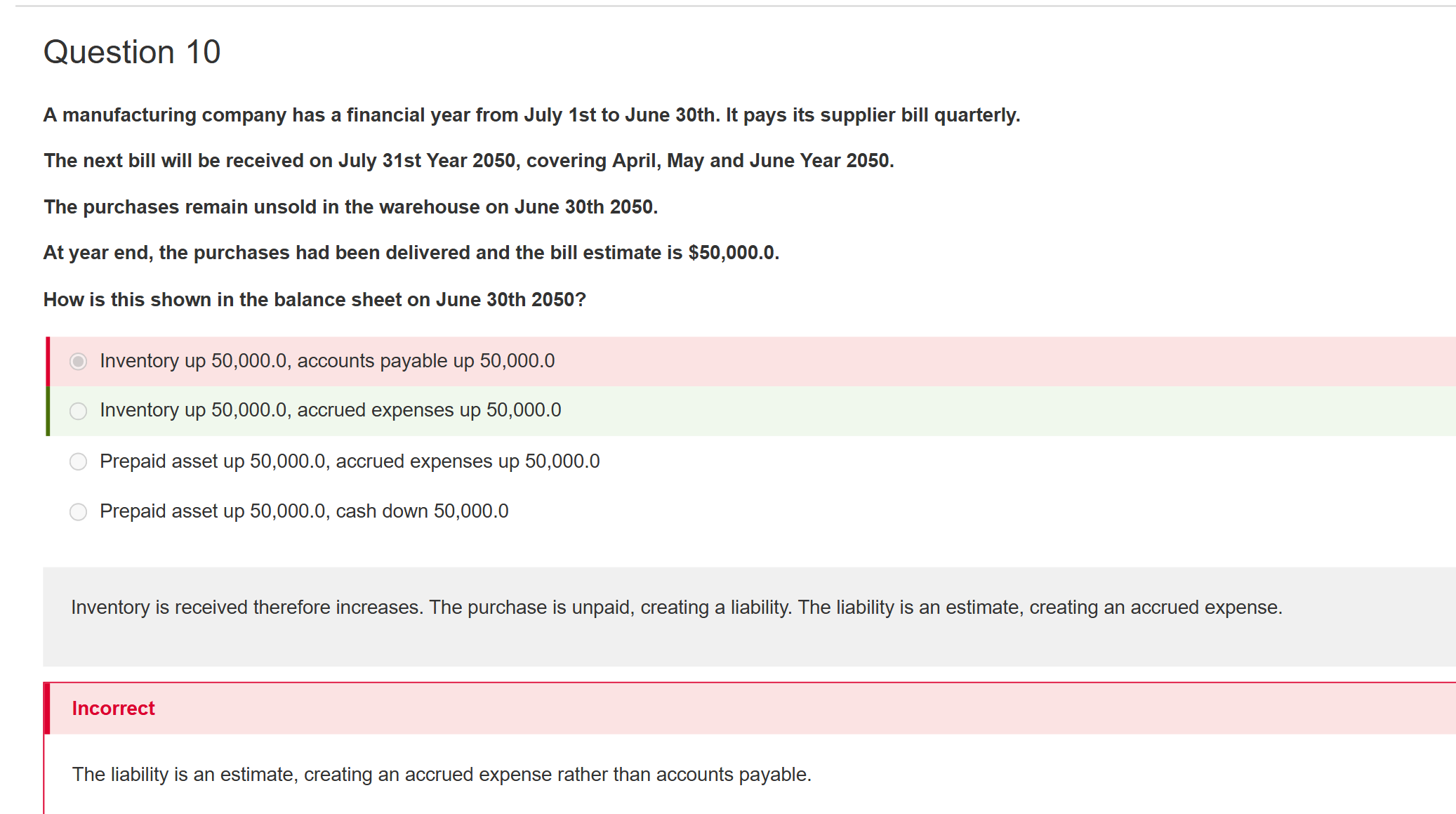
The goods have been delivered, so inventory increases by $50,000.
The supplier bill for that period has not yet been received at year-end, so the amount owed is not yet a formal trade payable.
Because the amount is estimated at year-end, the liability is recorded as an accrued expense, not accounts payable.
Key distinction
Accounts payable = invoice received / amount specifically billed by supplier.
Accrued expense = obligation exists, but the bill is not yet received, so it is estimated.