1. Dental Anatomy & Nomenclature
 Call Kai
 Learn
Learn Practice Test
 Spaced Repetition
 Match
Match Flashcards
 Knowt Play
1/199

There's no tags or description
Looks like no tags are added yet.
Name | Mastery | Learn | Test | Matching | Spaced | Call with Kai | Chat |
|---|
No analytics yet
Send a link to your students to track their progress
200 Terms
having short crowns, well-developed short roots, and only narrow canals in the roots (short teeth)
brachydont
What animals have brachydont teeth?
D
C
P
H
dogs
cats
primates
humans
high crowns that erupt throughout life providing extra material for grinding food particulates down
hypsodont
What animals have hypsodont teeth?
H
C
O
horses
cows
other herbivores
Animals have what categories of teeth?
incisors, canines, premolars, and molars
pronounced point on the occlusal or most coronal portion of a tooth
cusp
holds the tooth in
periodontal ligament
anything below the gingiva
root
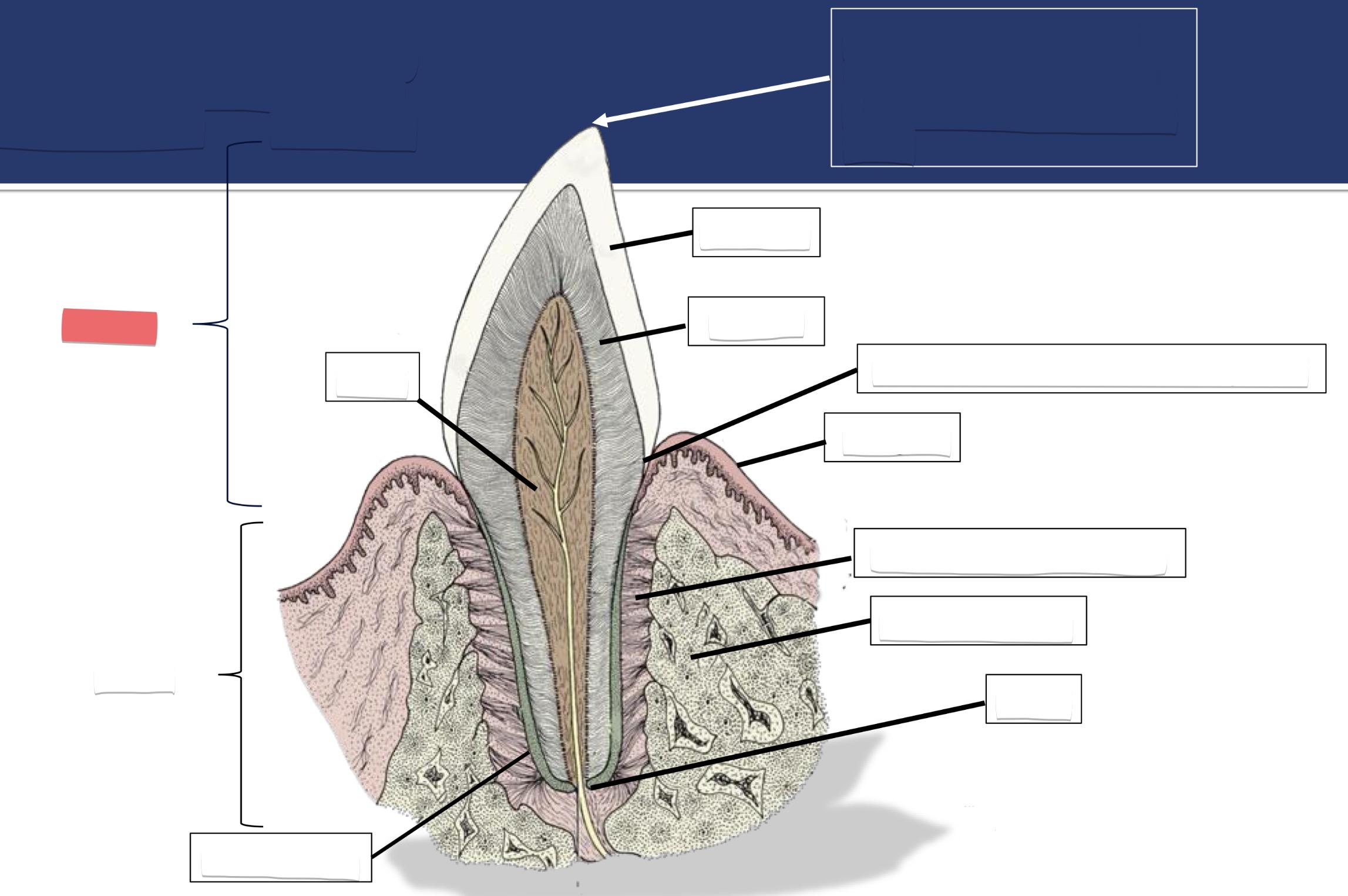
Label this part of the tooth.
crown
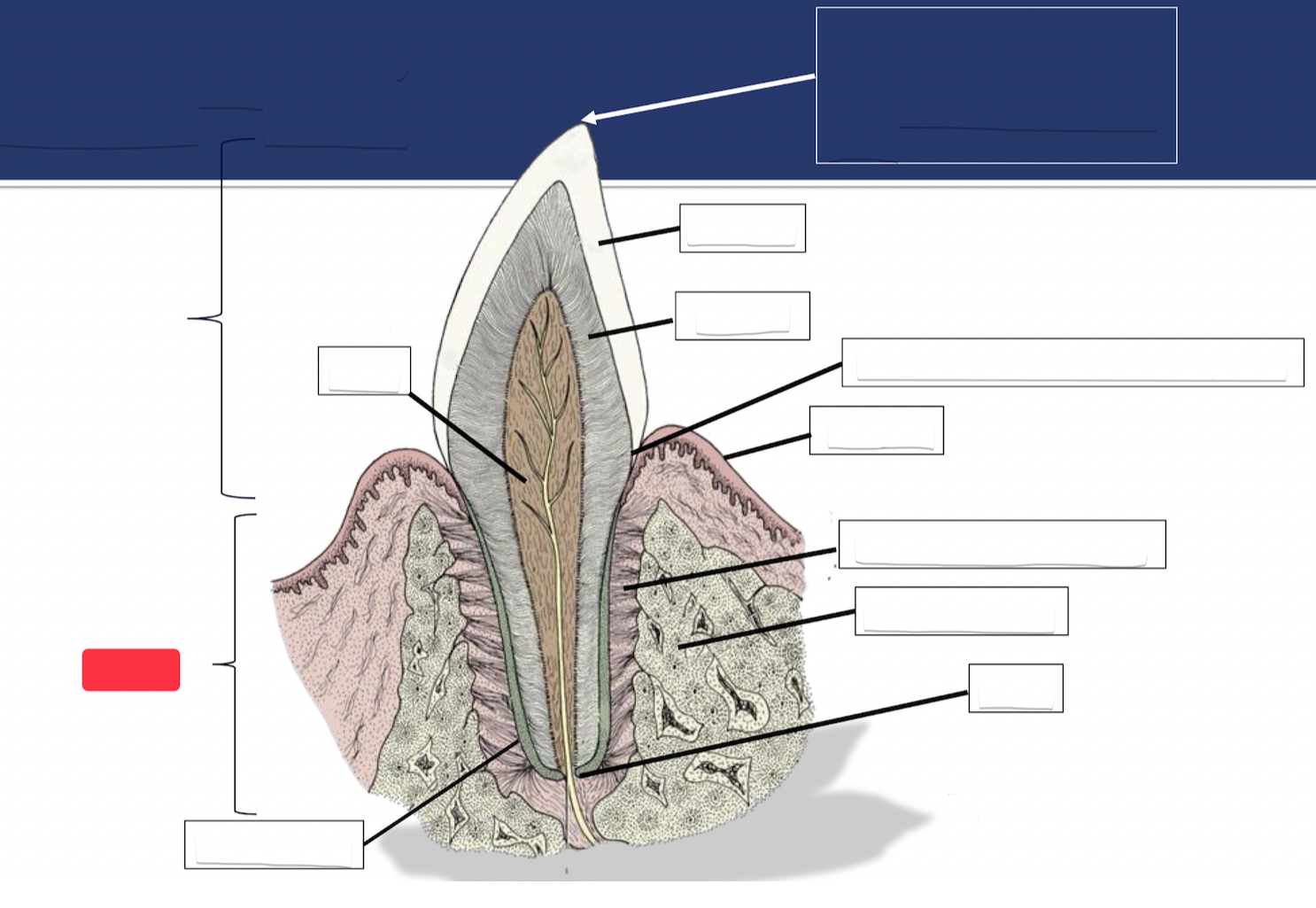
Label this part of the tooth.
root
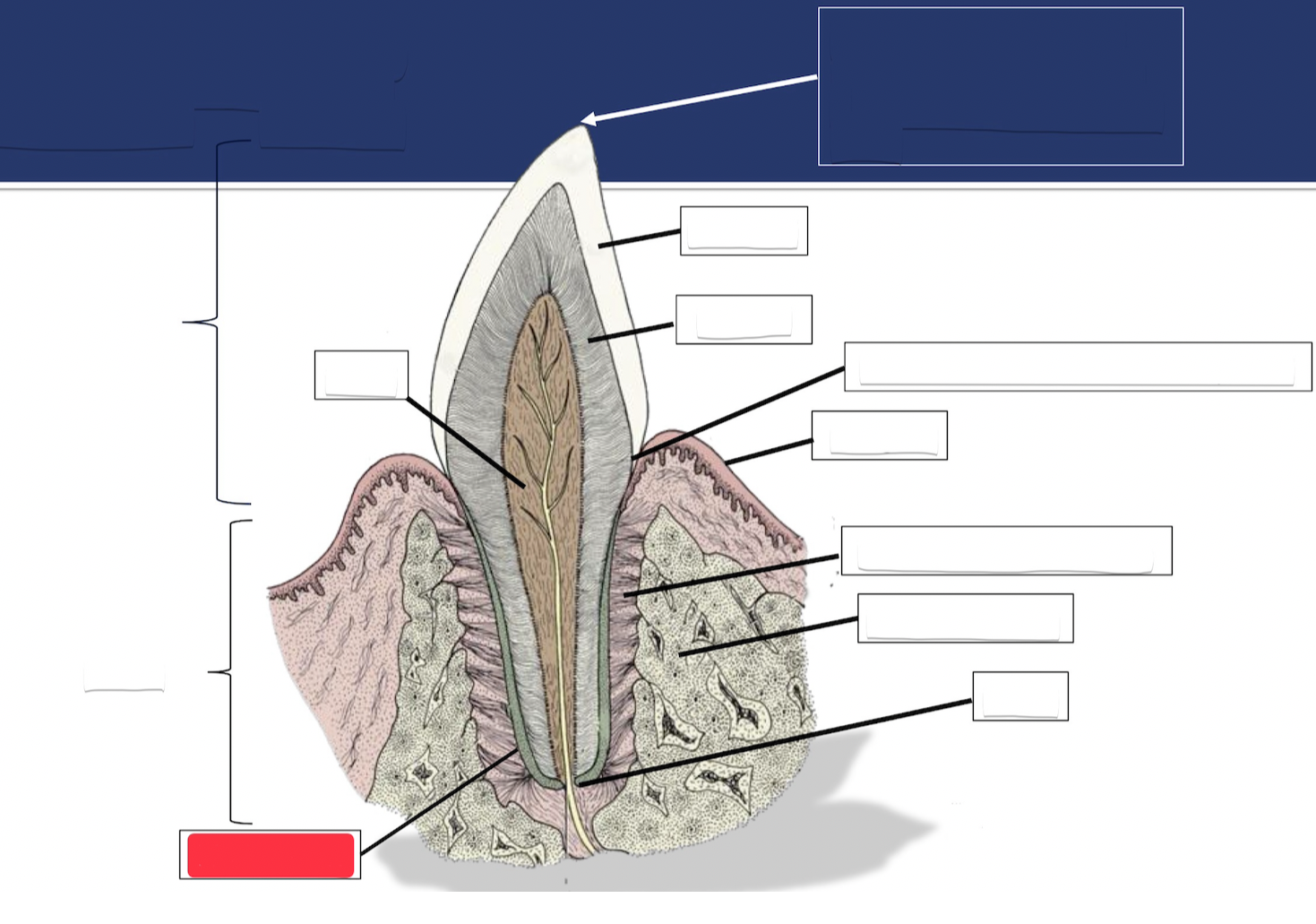
Label this part of the tooth.
cementum
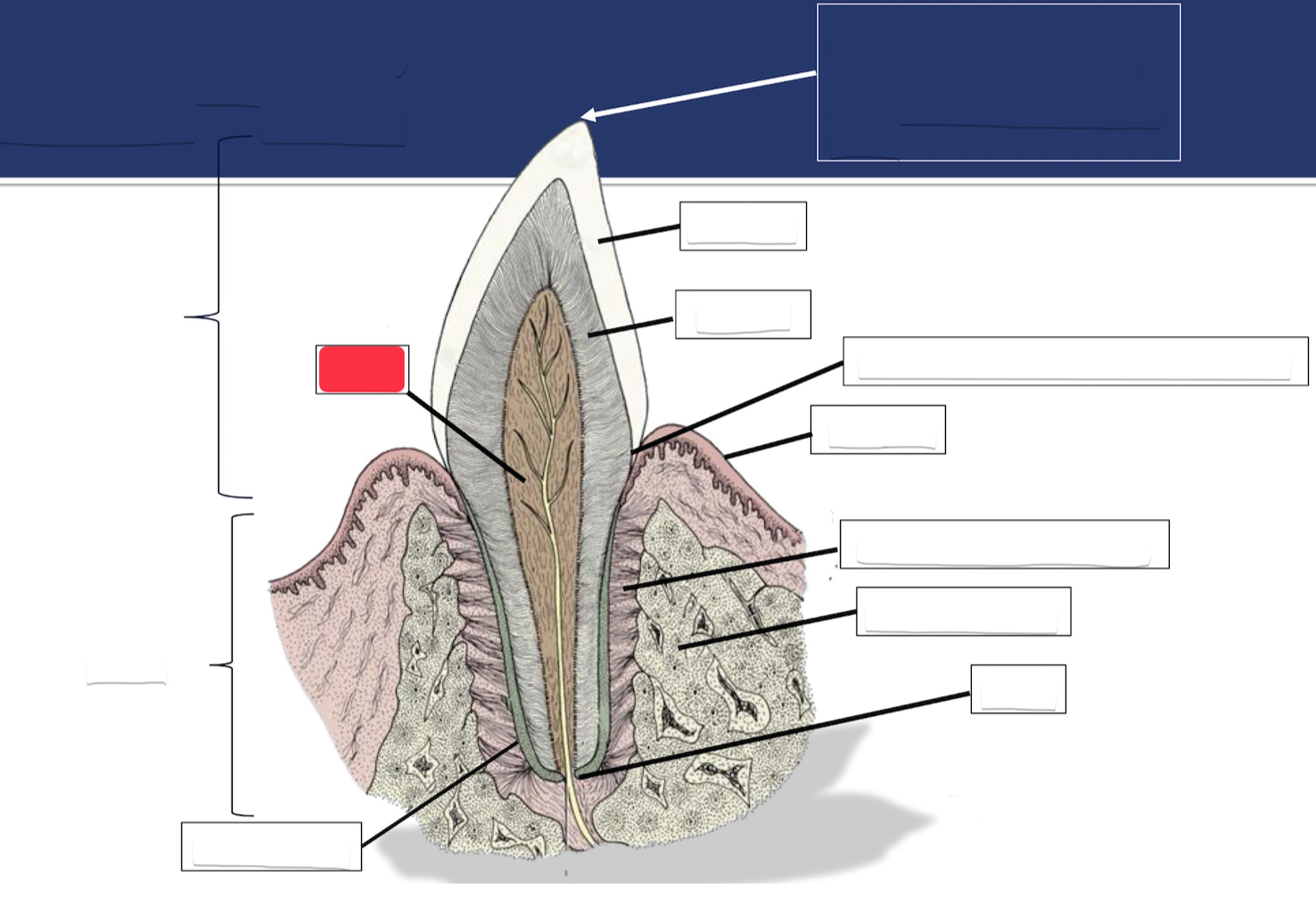
Label this part of the tooth.
pulp
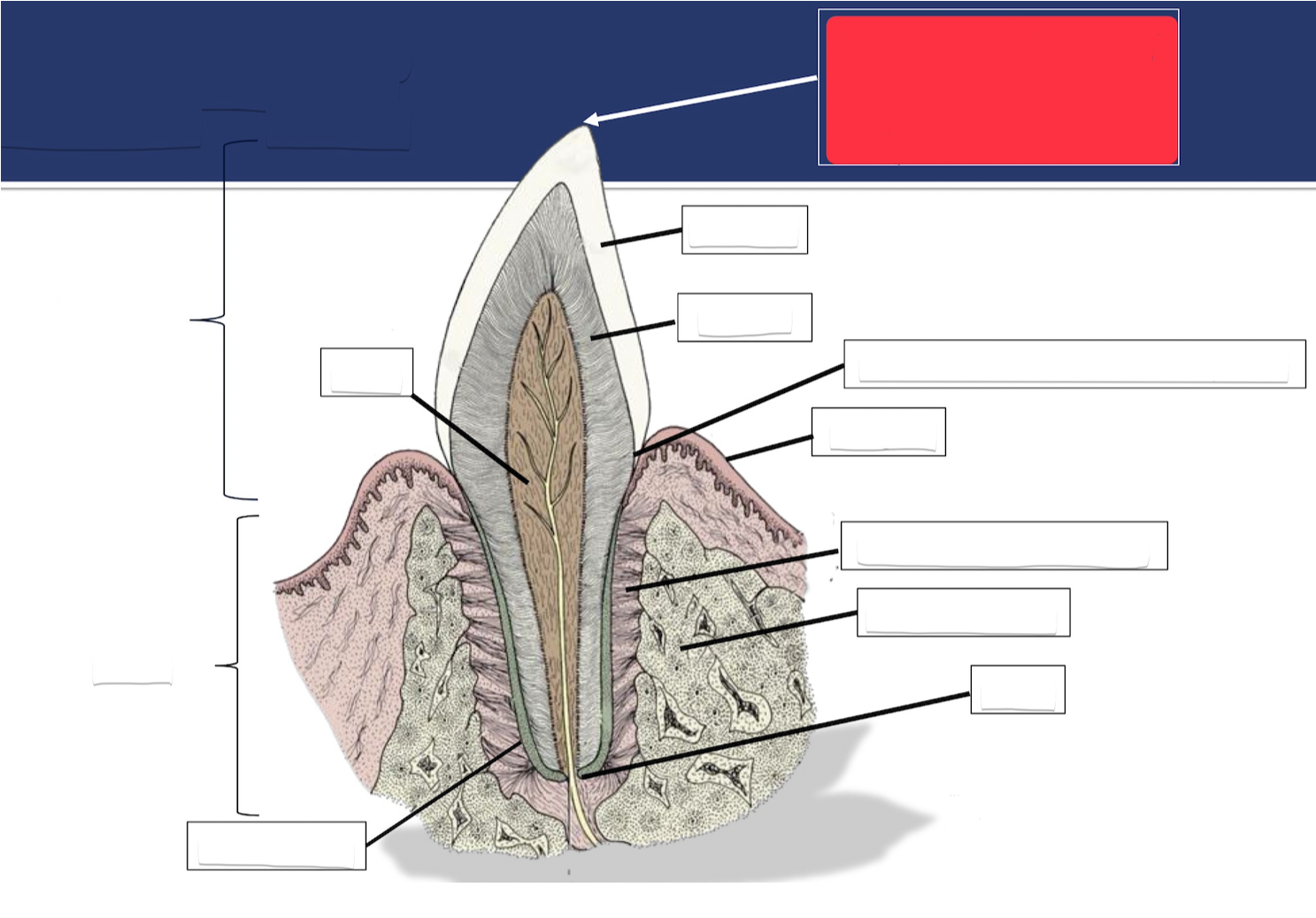
Label this part of the tooth.
cusp
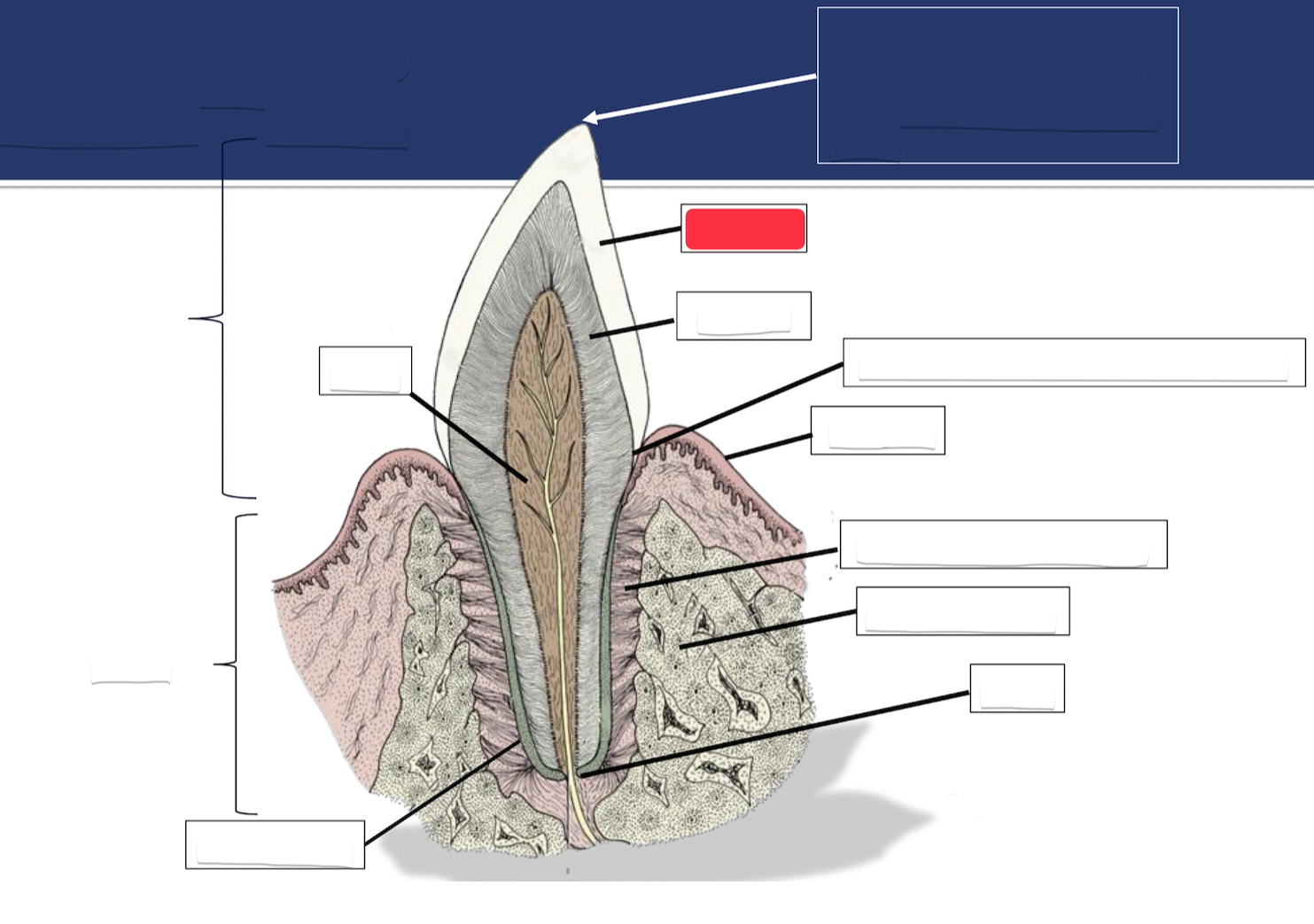
Label this part of the tooth.
enamel
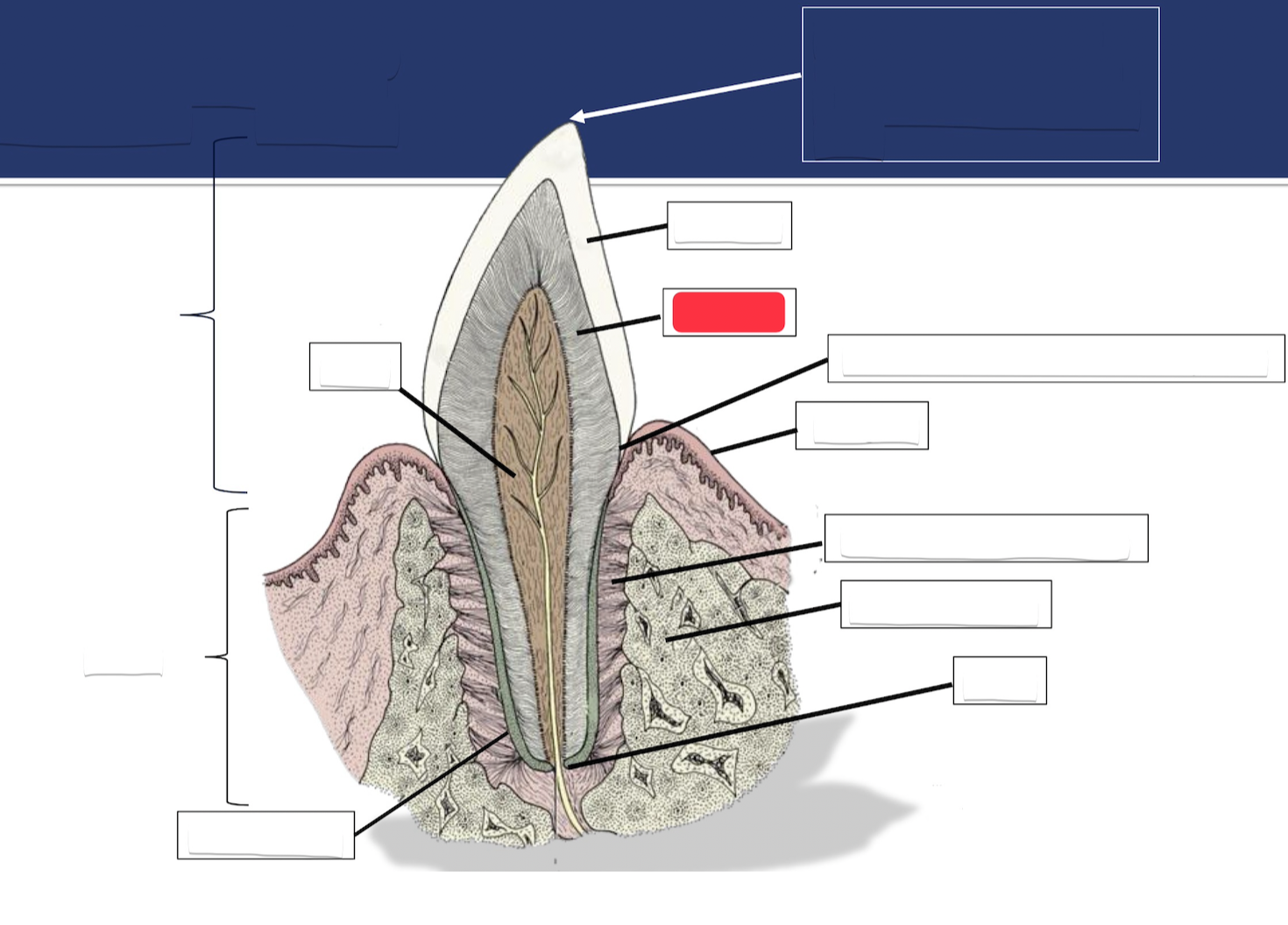
Label this part of the tooth.
dentin
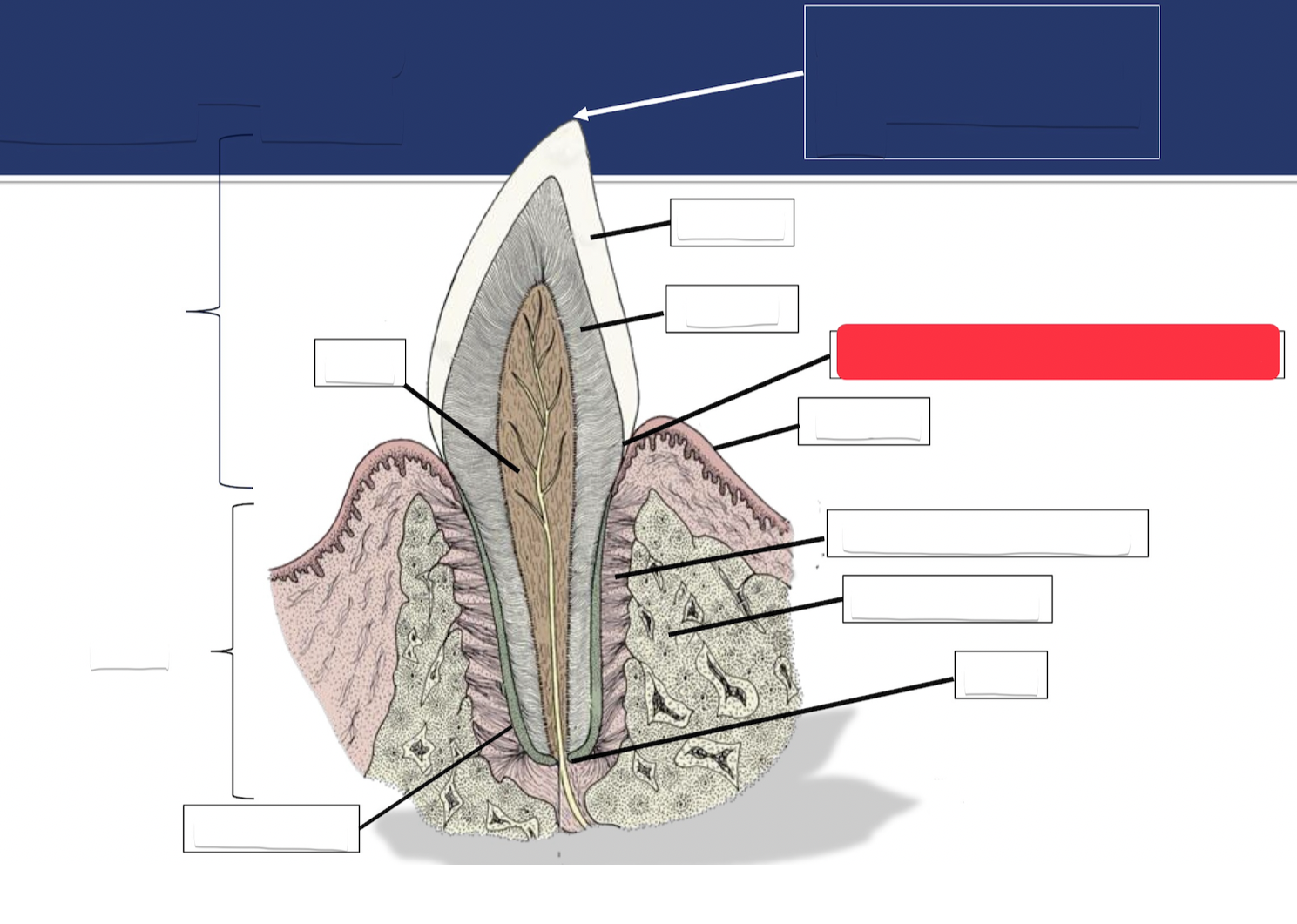
Label this part of the tooth.
cementoenamel junction (neck)
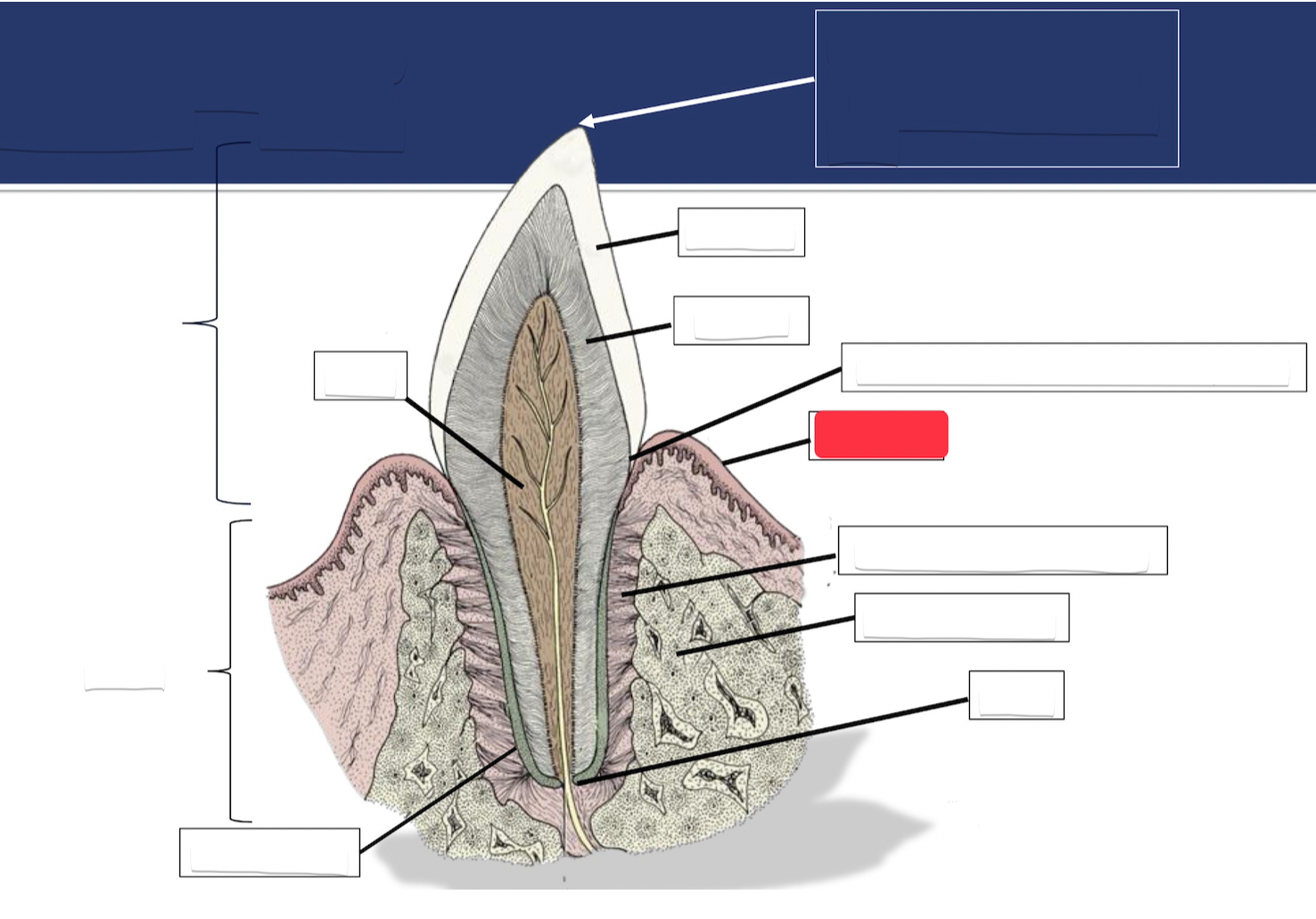
Label this part of the tooth.
gingiva
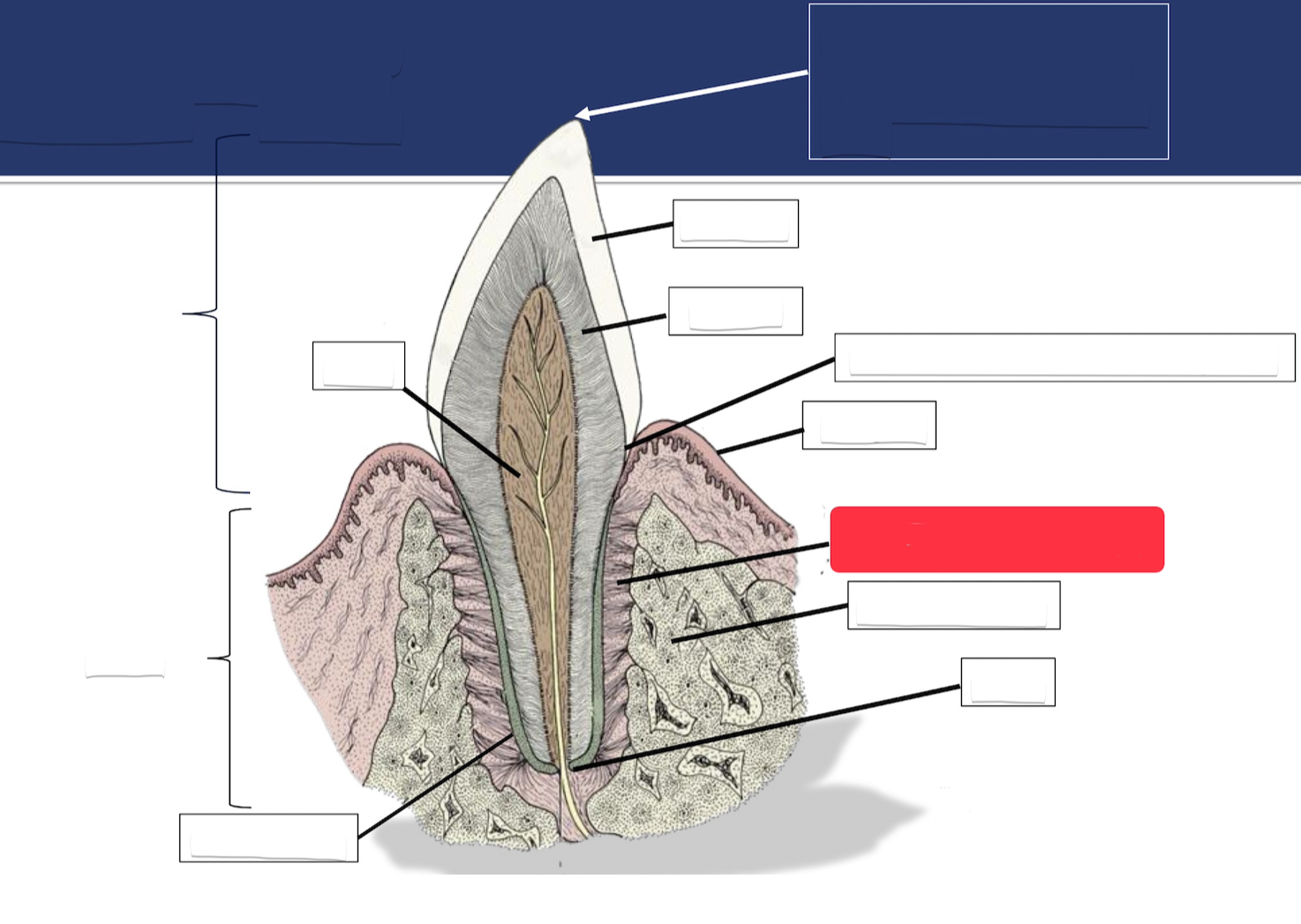
Label this part of the tooth.
periodontal ligament
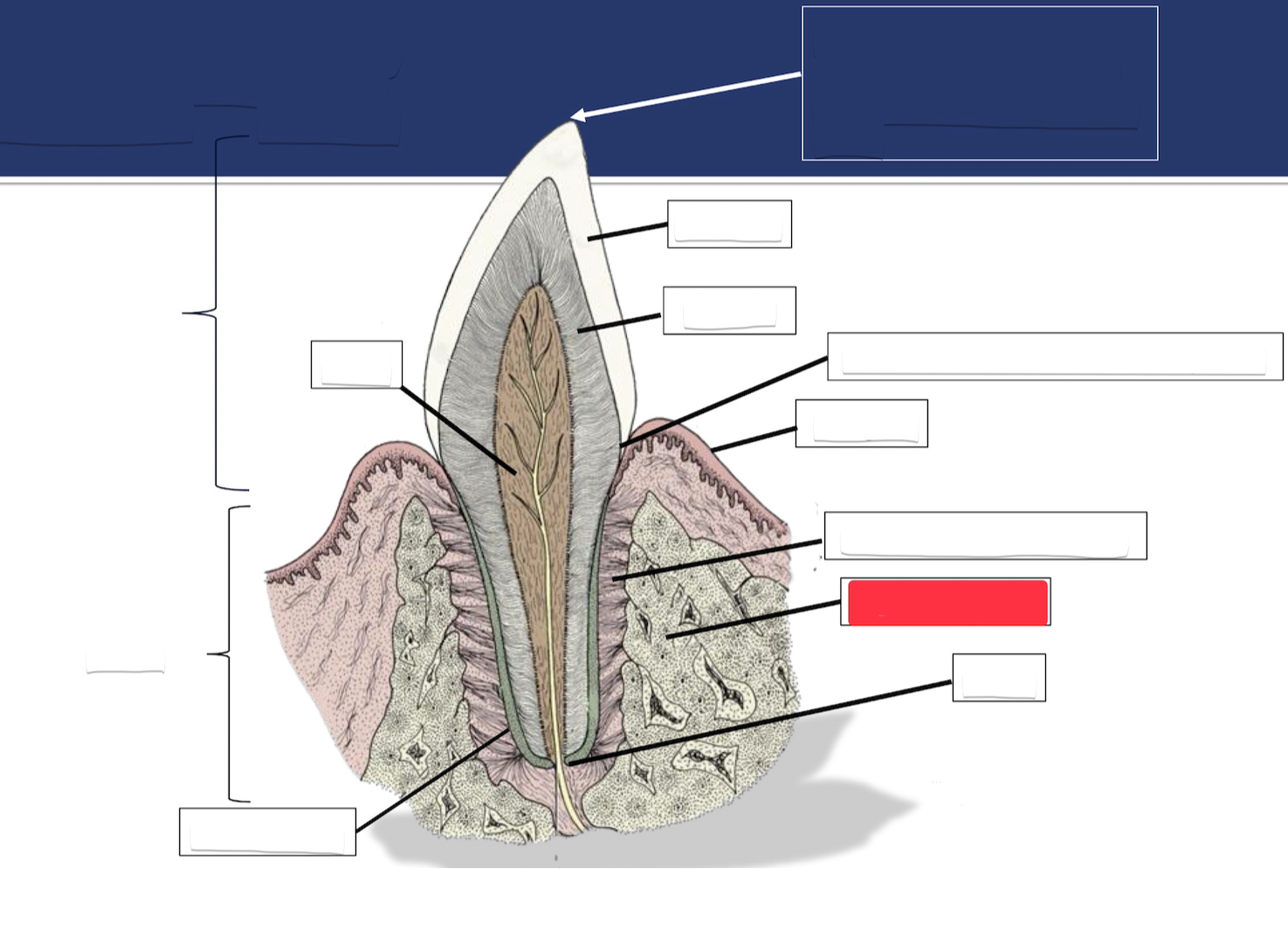
Label this part of the tooth.
alveolar bone
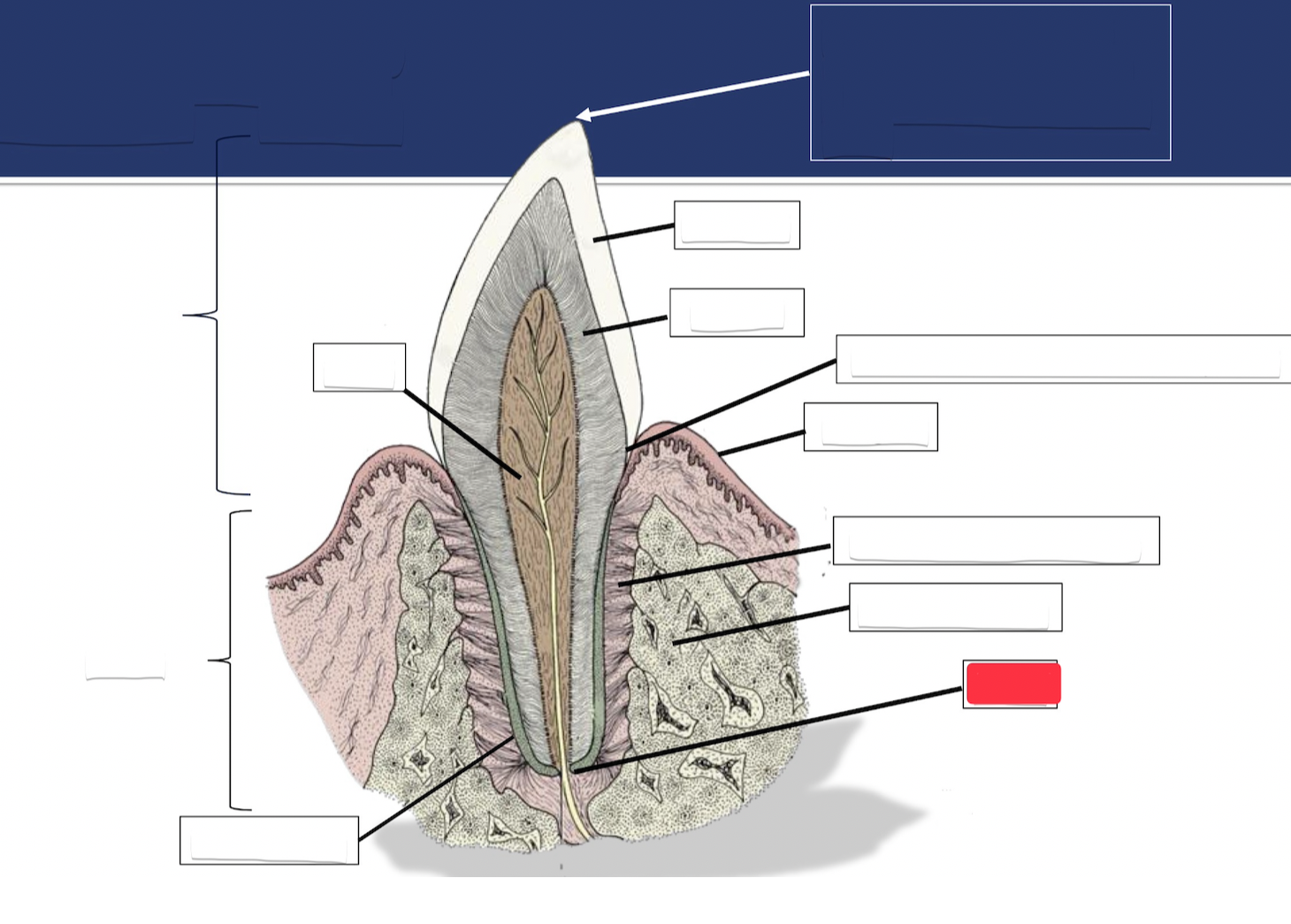
Label this part of the tooth.
apex
What covers the tooth crown?
enamel
What is the hardest substance in the body and is 96% mineral by weight (hydroxyapatite crystals)?
enamel
What is enamel formed by?
amebloblasts in root bud
When does amelogenesis stop?
prior to tooth eruption
When is the enamel incapable of repair?
after eruption (enamel you have after eruption is all you get)
What is normal enamel thickness in cats?
< 0.1 to 0.3 mm
What is normal enamel thickness in dogs?
< 0.1 mm to 0.6 mm
What is the purpose of the enamel?
effective barrier to heat/cold/sweet sensitivities and bacterial entrances into the tooth
What makes up the bulk of the tooth?
dentin
What percent of dentin is inorganic (mineral)? What percent is organic (water, collage, and mucopolysaccharides)?
70%; 30%
Dentin is comprised of _____ _____ that communicate between pulp and dentin, dentin/enamel, and dentin/cementum junctions.
dentinal tubules
What is significant about the dentinal tubules?
contain odontoblasts that produce dentin throughout the life of the tooth when the the tubule is exposed
What causes sensitivity within the dentin?
odontoblast processes that extend into the dental tubules along with fine nerve endings
What are the types of dentin?
primary, secondary, and tertiary (reparative) dentin
When enamel and dentin is gradually lost as the result of a local insult (mechanical wear), what do odontoblasts or odontoblast-like cells product? Why?
tertiary (reparative) dentin; to protect pulp
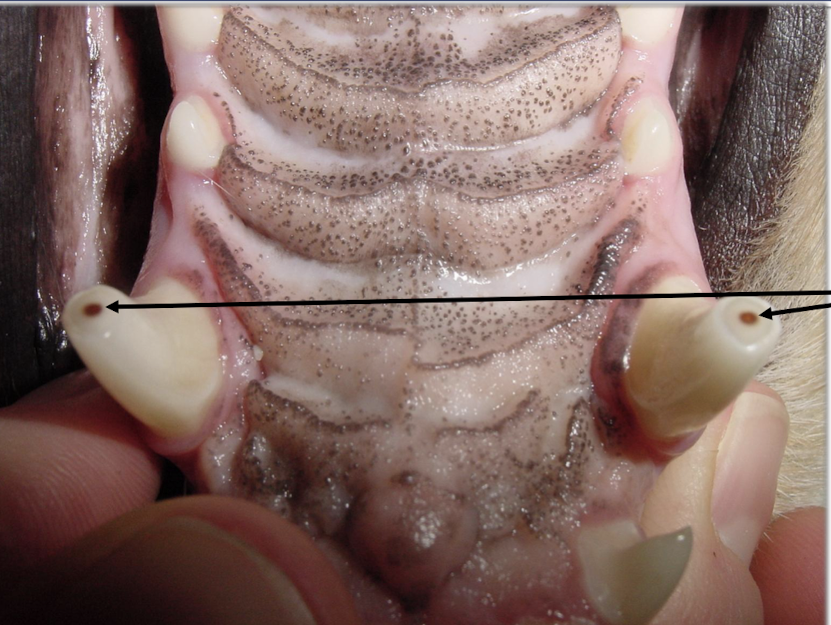
What is being shown here?
tertiary (reparative) dentin
hard tissue forming the surface of the root
cementum
What attaches to the cementum?
periodontal ligament and gingiva
________ produce cementum at the ________ of the ________.
cementoblasts; apex; root
For how long is cementum produced?
throughout life
What happens to cementum with age?
increases the width with age
What is the effect of chronic irritation on cementum?
can cause hypercementosis and lock the tooth into the alveolar socket
What is the effect of the loss of cementum?
prevents reattachment of the periodontal ligament
fibrous connective tissue which fills space between cementum of the tooth root and alveolar bone
periodontal ligament
What is the periodontal ligament composed of?
Sharpey’s fibers (collagen bundles in various shapes and orientations)
What are the functions of the periodontal ligament?
S
T
A
S
P
shock absorption
transmits occlusal forces
attaches tooth to bone and cementum
supplies nutrients
provides tactile and proprioceptive information
What are you stretching when removing a tooth?
periodontal ligament
soft tissue connective tissue encased in root canal containing nerves, fibroblasts, collagen fibers, blood, and odontoblasts, which produce dentin throughout the life of the tooth
pulp
What happens to the pulp chamber/root canal as the animal ages?
it narrows
What fills in the pulp as the animal ages?
secondary dentin
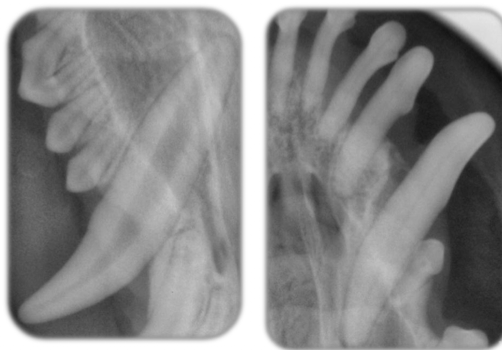
Which tooth is from a young animal and which is from an old animal?
left = young tooth
right = old tooth
________ lining the pulp chamber and root canal produce ________ ________, causing the pulp to become ________ as the animal ages.
odontoblasts; secondary dentin; narrower
What is the purpose of the enamel bulge?
protects from things going into the gums
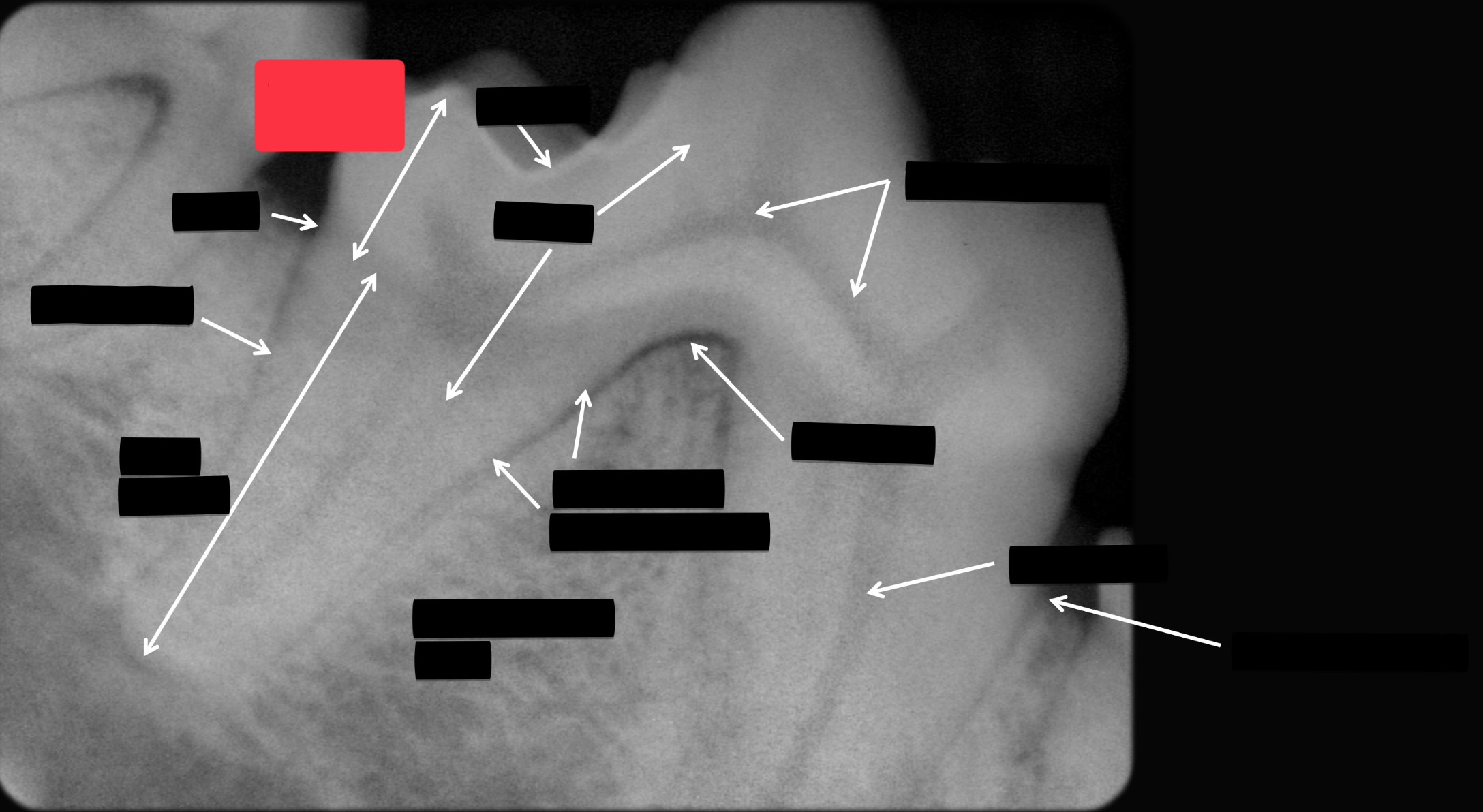
Label this part of the tooth.
crown (coronal)
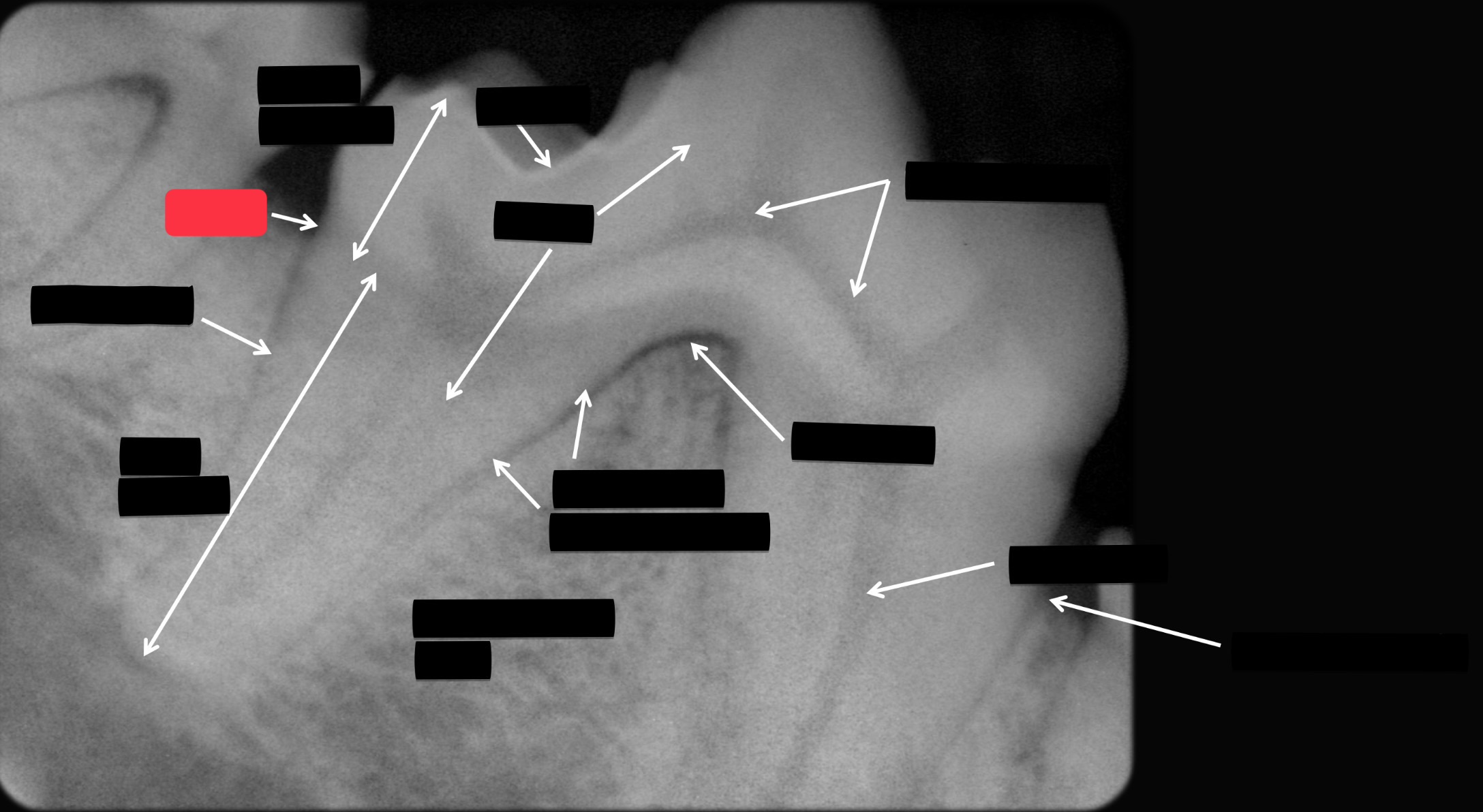
Label this part of the tooth.
neck
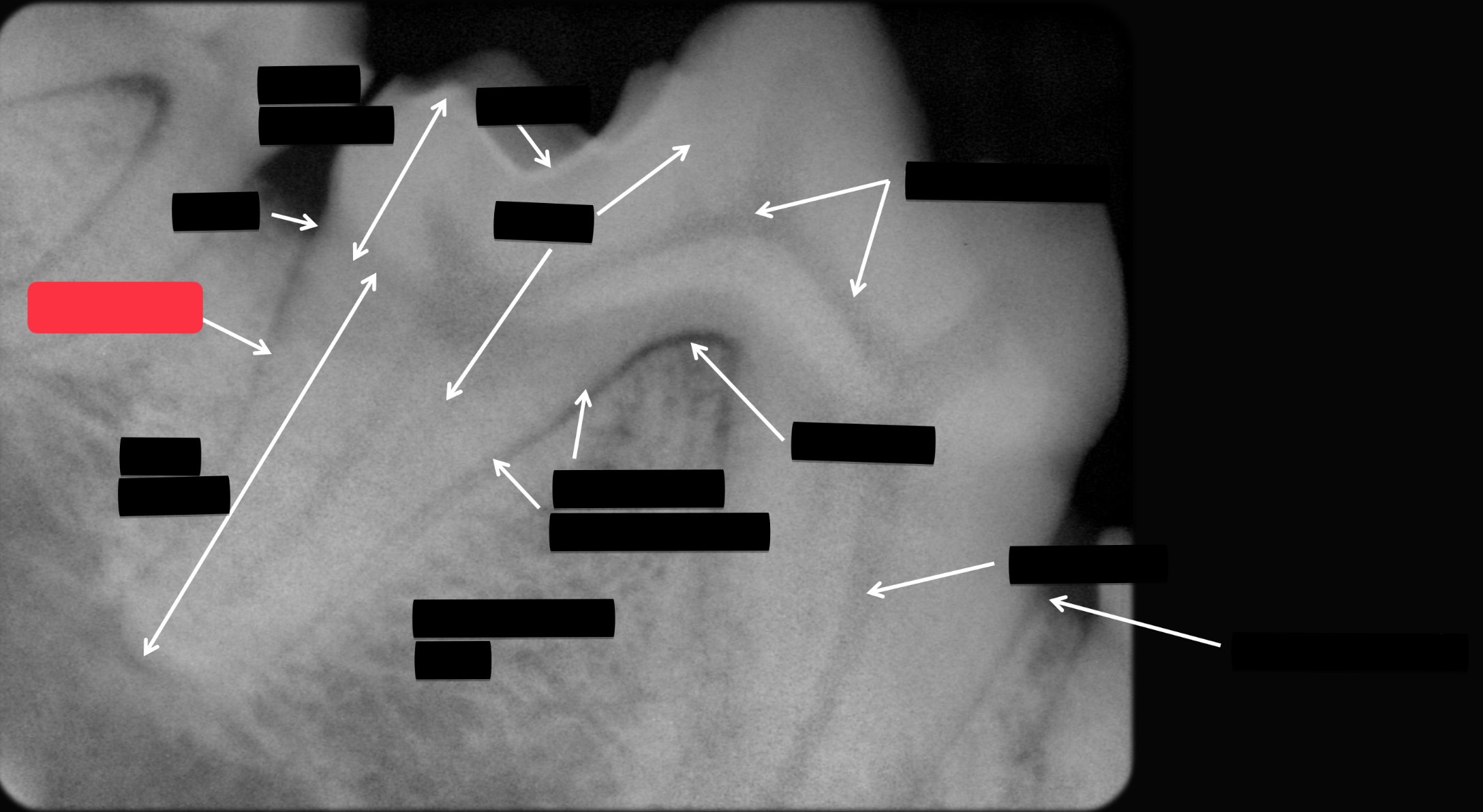
Label this part of the tooth.
cementum
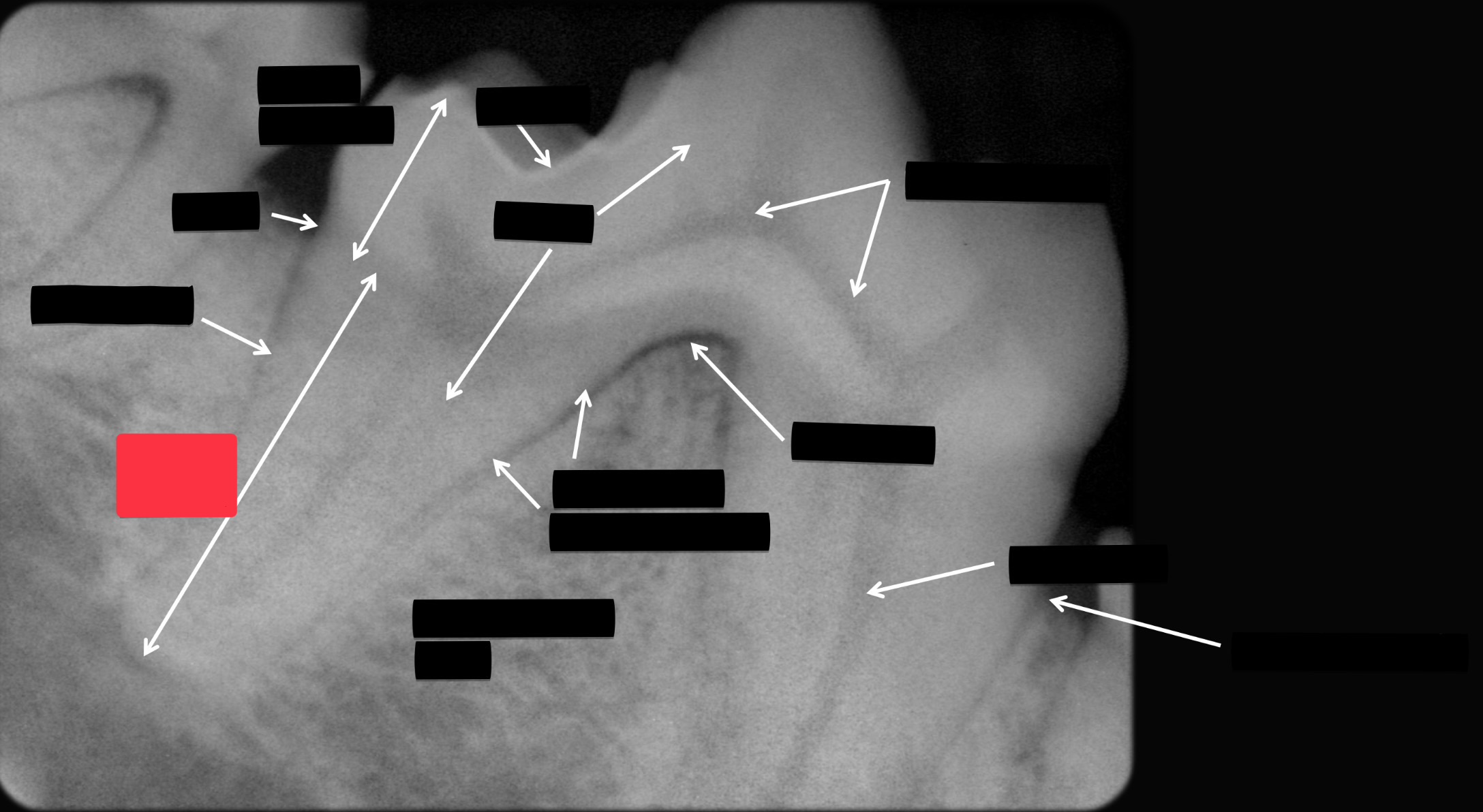
Label this part of the tooth.
root (apical)
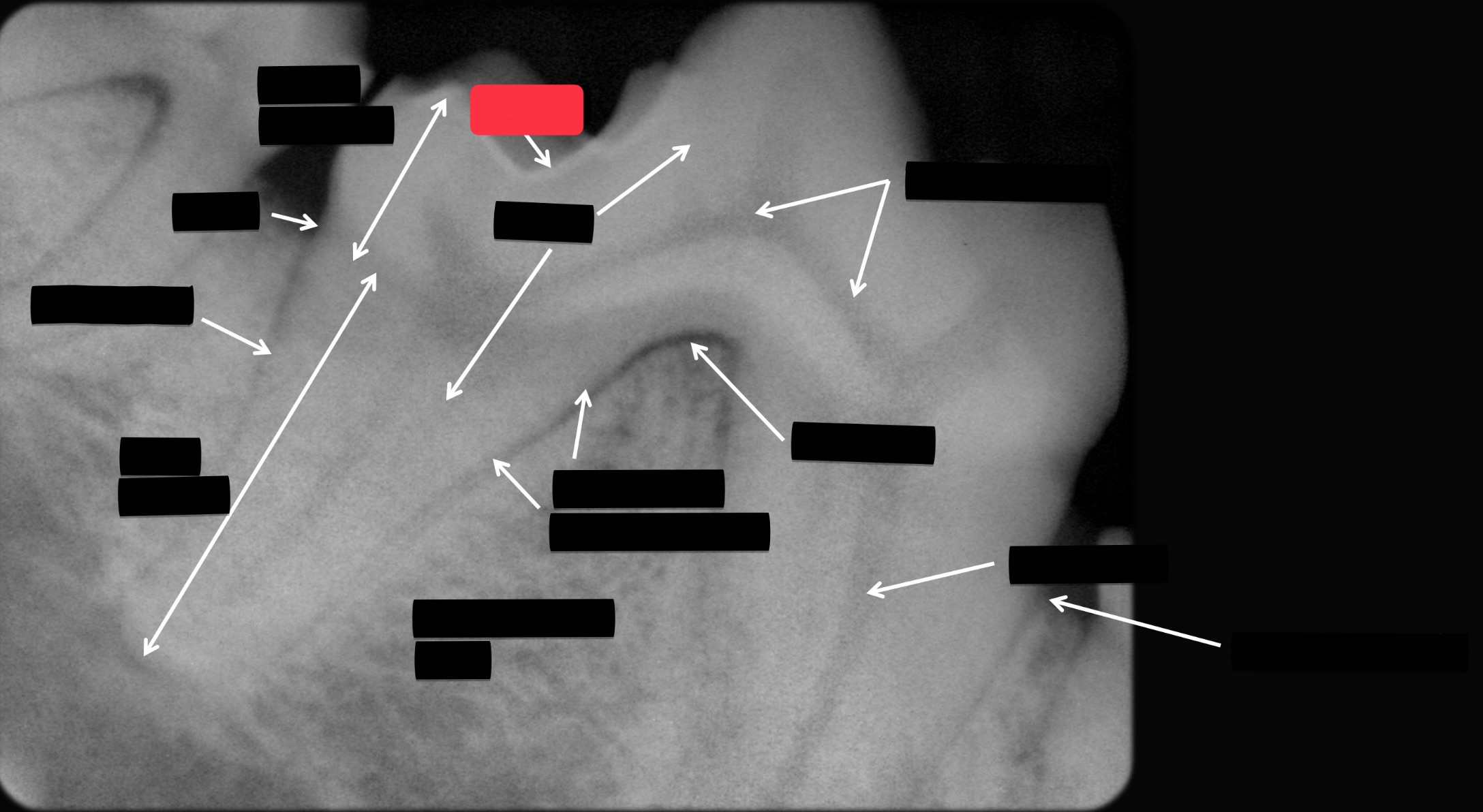
Label this part of the tooth.
enamel
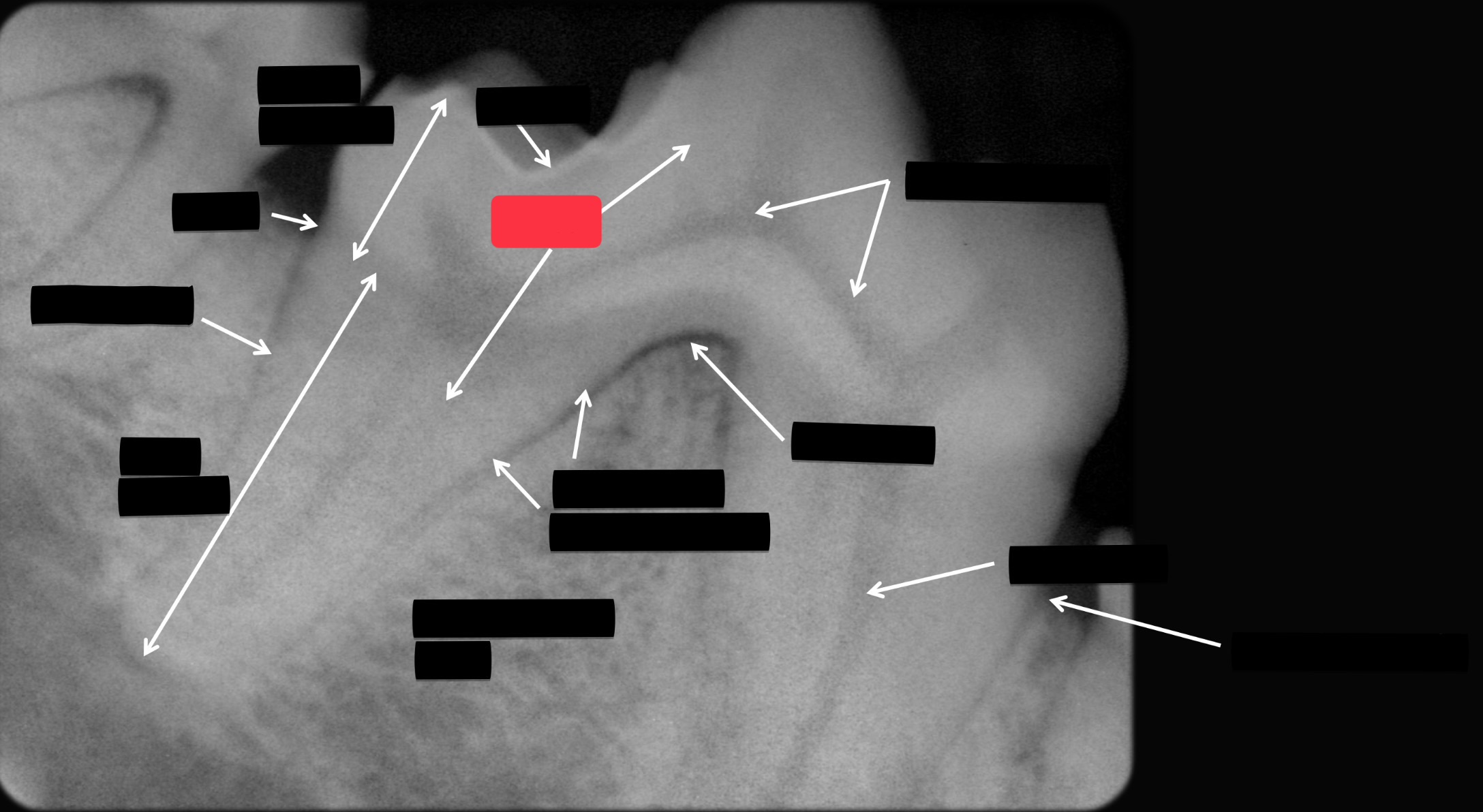
Label this part of the tooth.
dentin
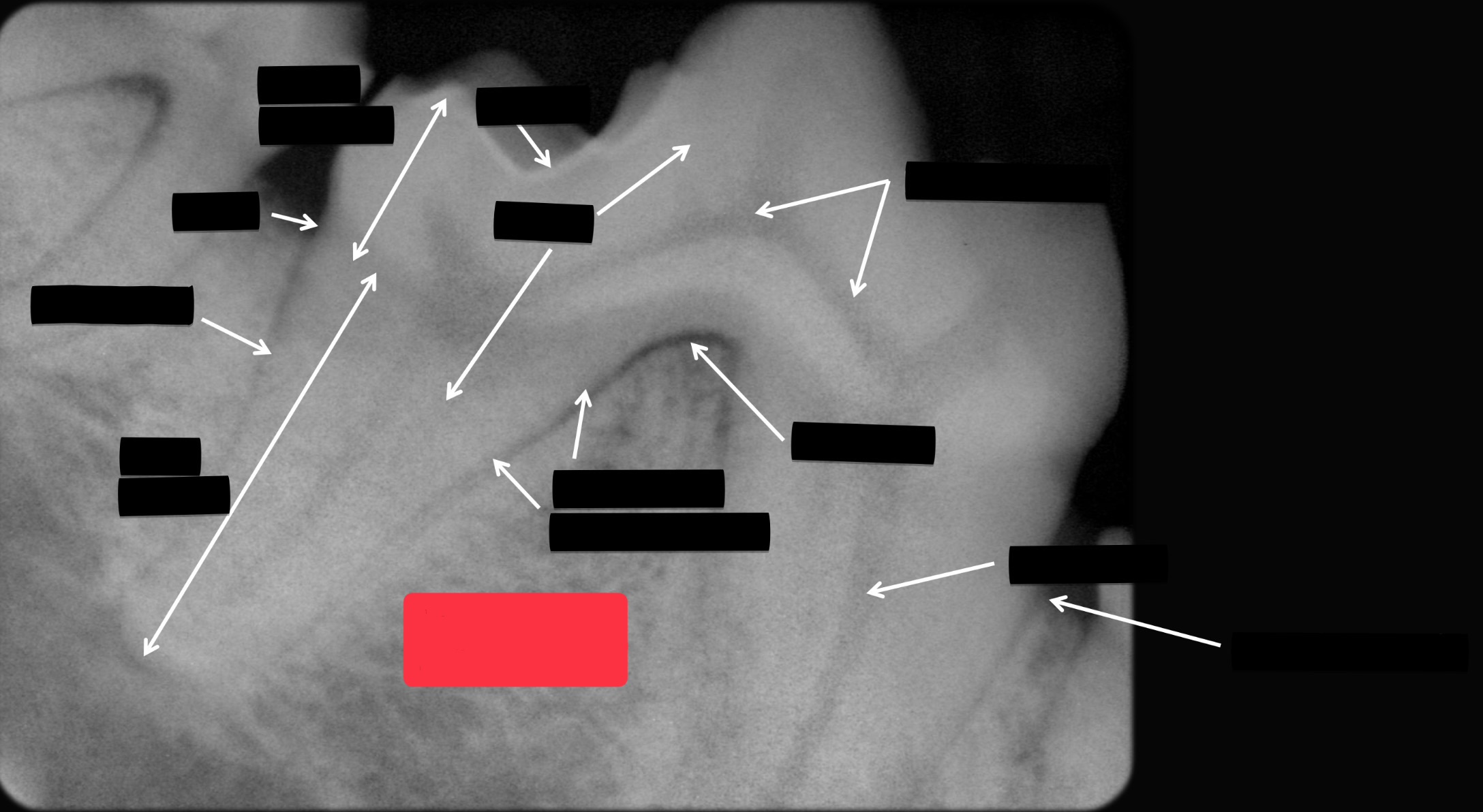
Label this part of the tooth.
interradicular bone
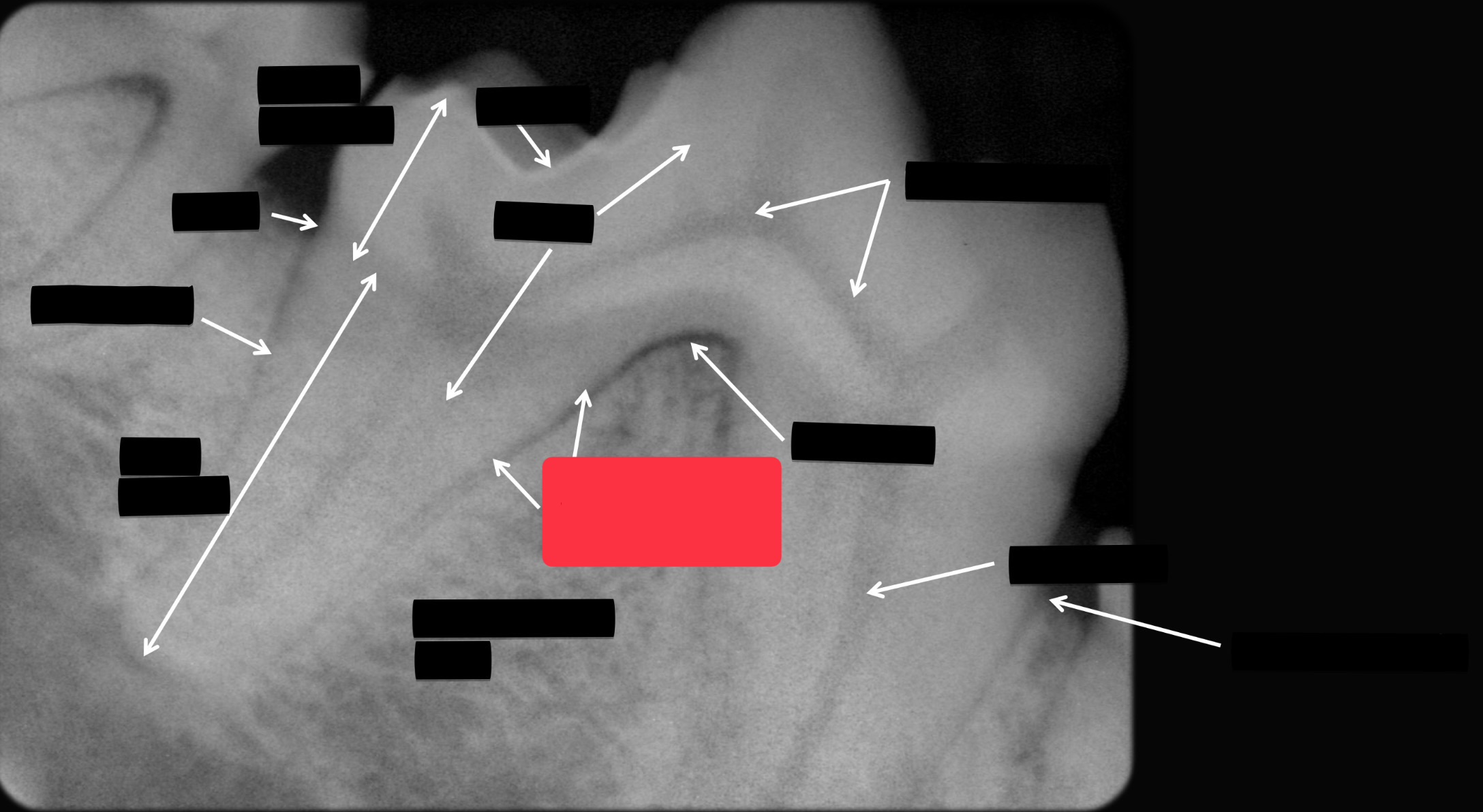
Label this part of the tooth.
periodontal ligament space
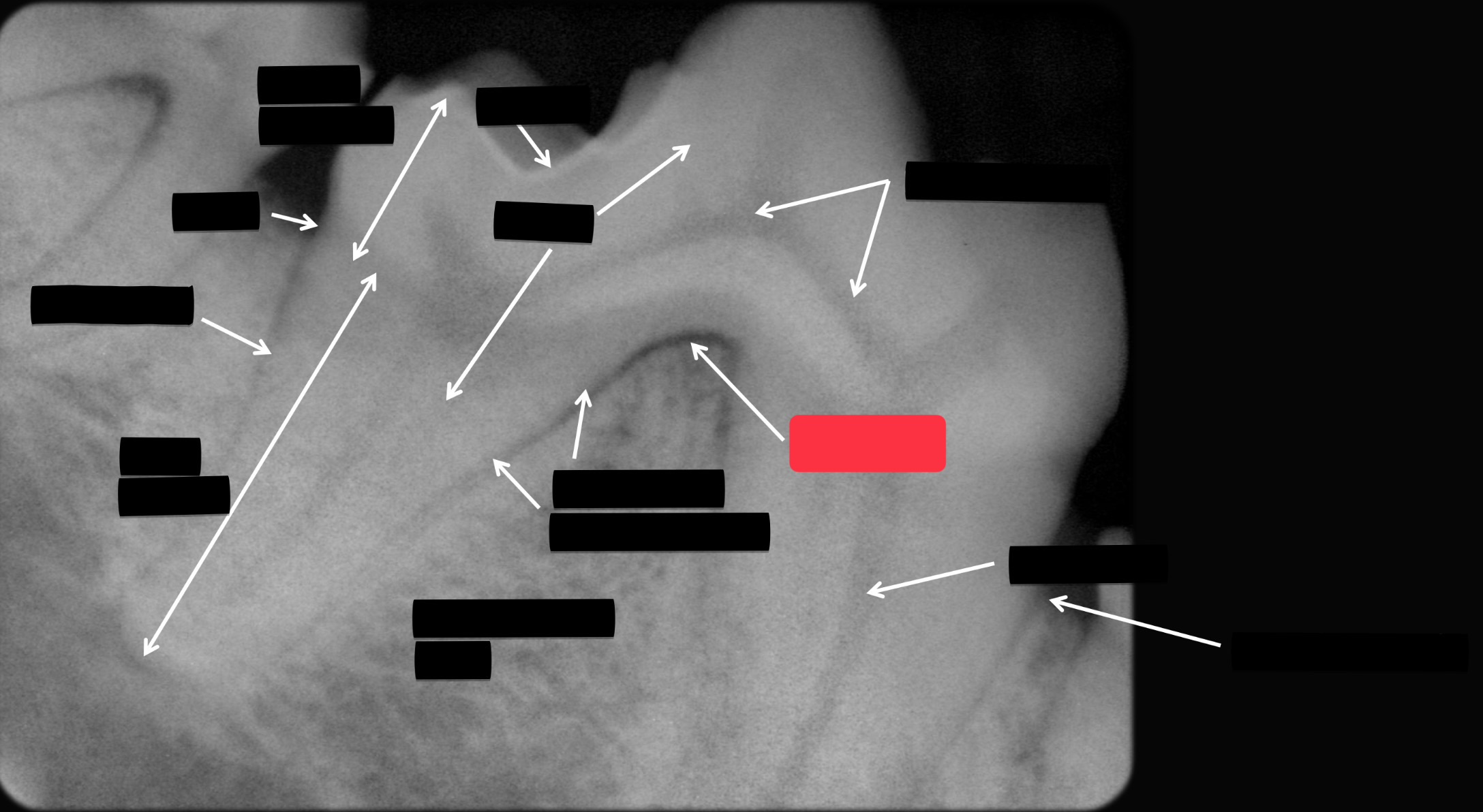
Label this part of the tooth.
furcation
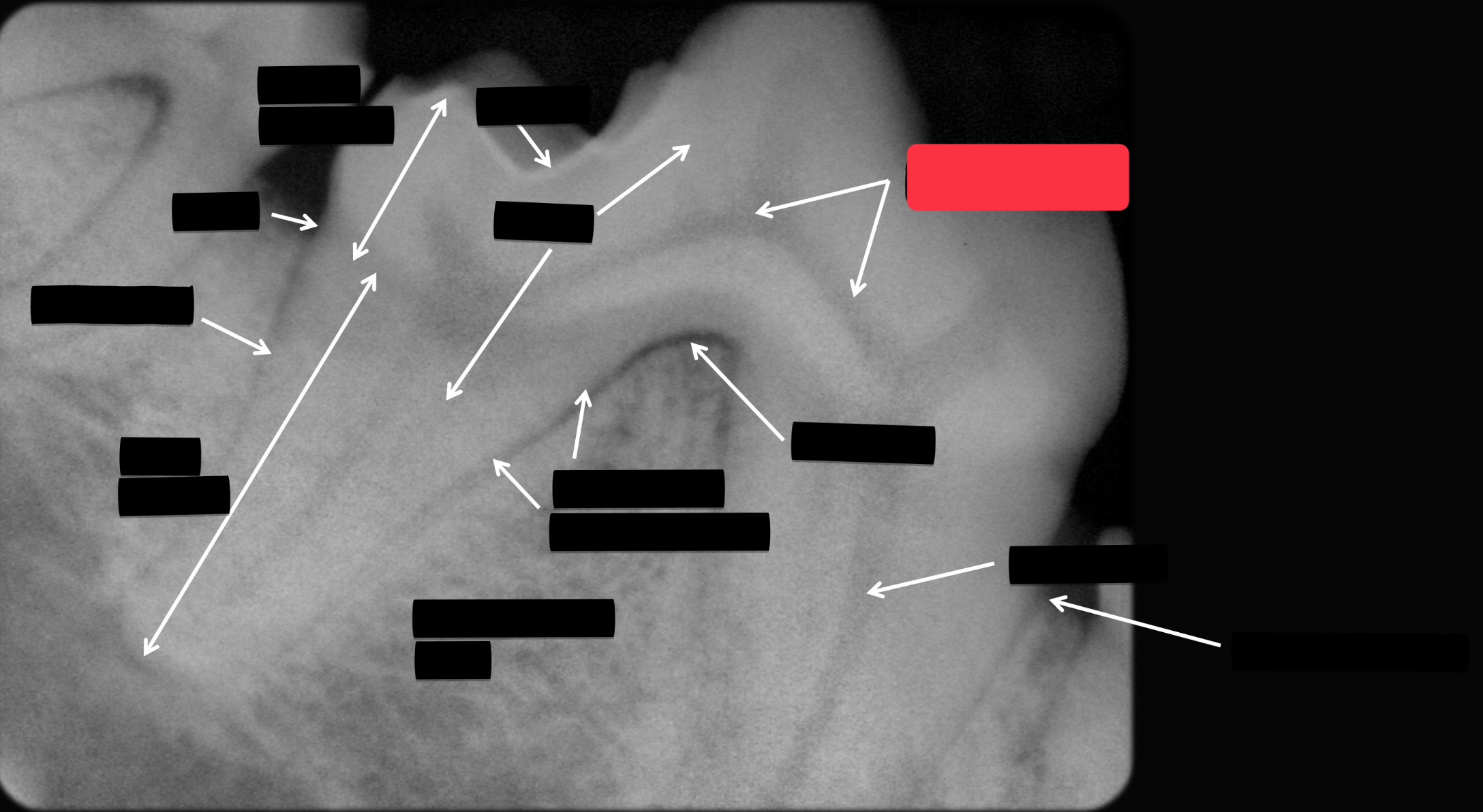
Label this part of the tooth.
pulp chamber
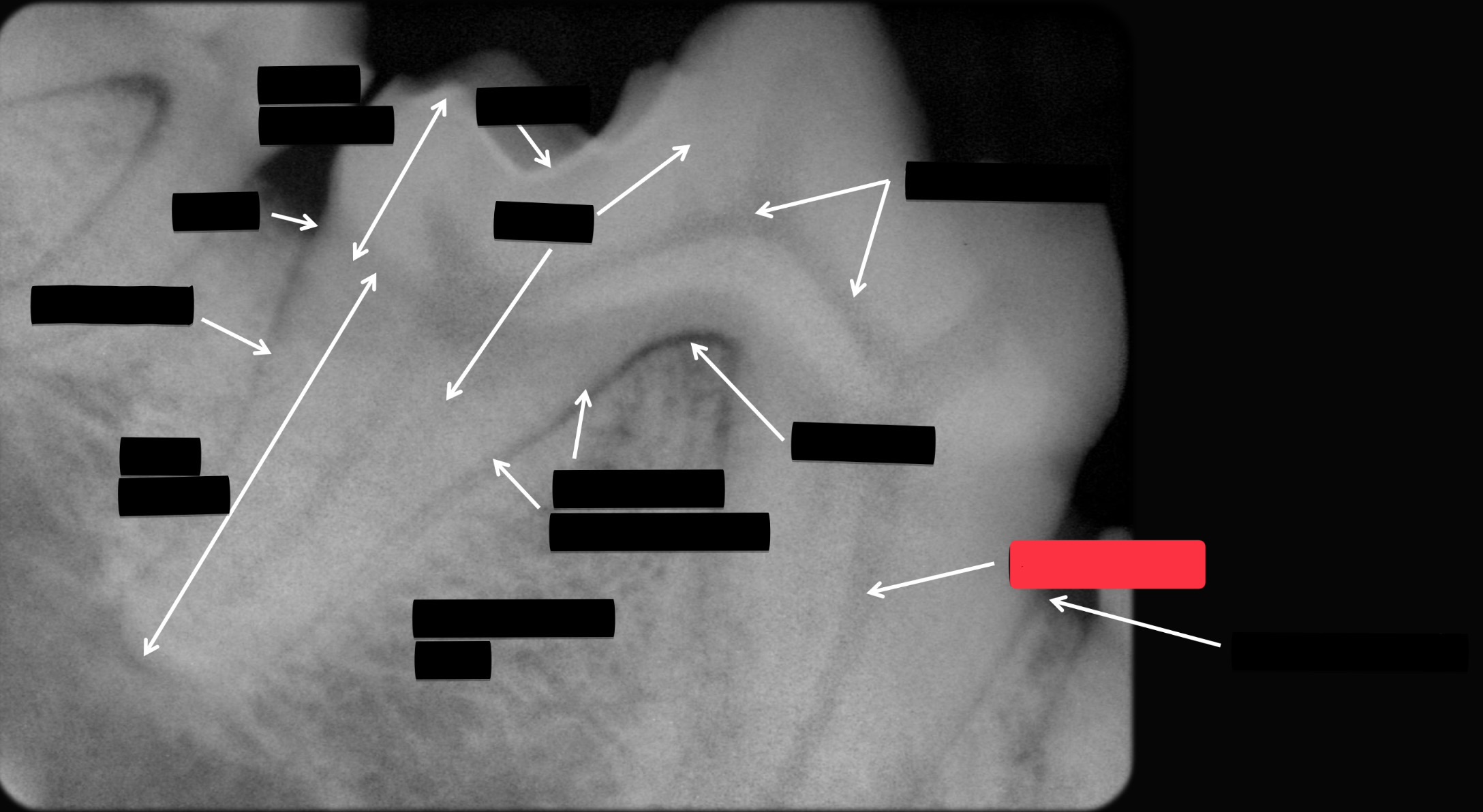
Label this part of the tooth.
root canal
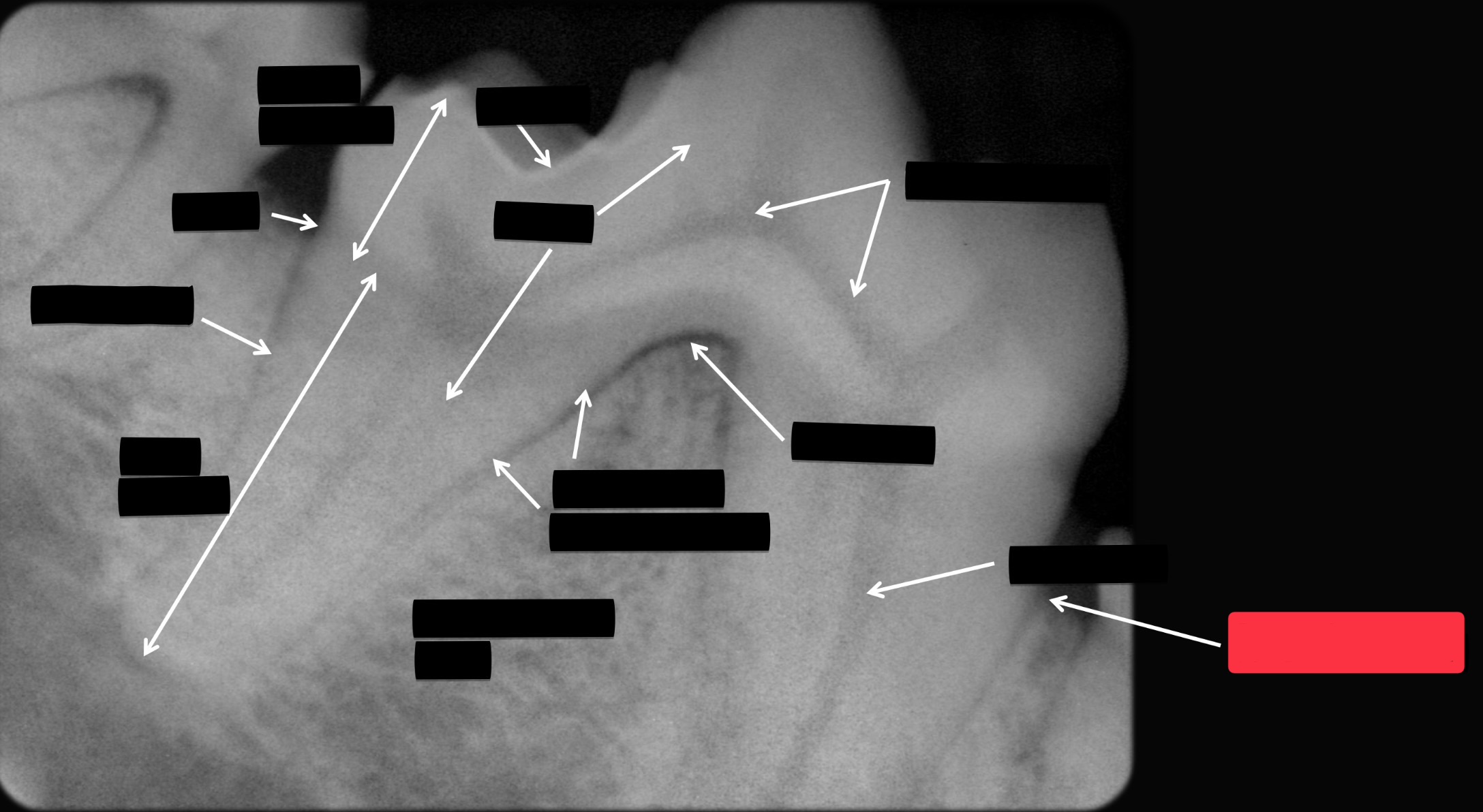
Label this part of the tooth.
alveolar canal
What are the 4 components of the periodontum?
G
C
P
A
gingiva
cementum
periodontal ligament
alveolar bone
What is affected by and ultimately lost from periodontal disease?
the periodontium
normal, physiological space between the free gingiva and the tooth surface
gingival sulcus
What is the normal sulcus depth for dogs?
less than 3 mm
What is the normal sulcus depth for cats?
less than 1 mm
Where are you probing?
gingival sulcus
gingiva that is attached to the bone
attached gingiva
gingiva that goes on to the tooth
free gingival margin
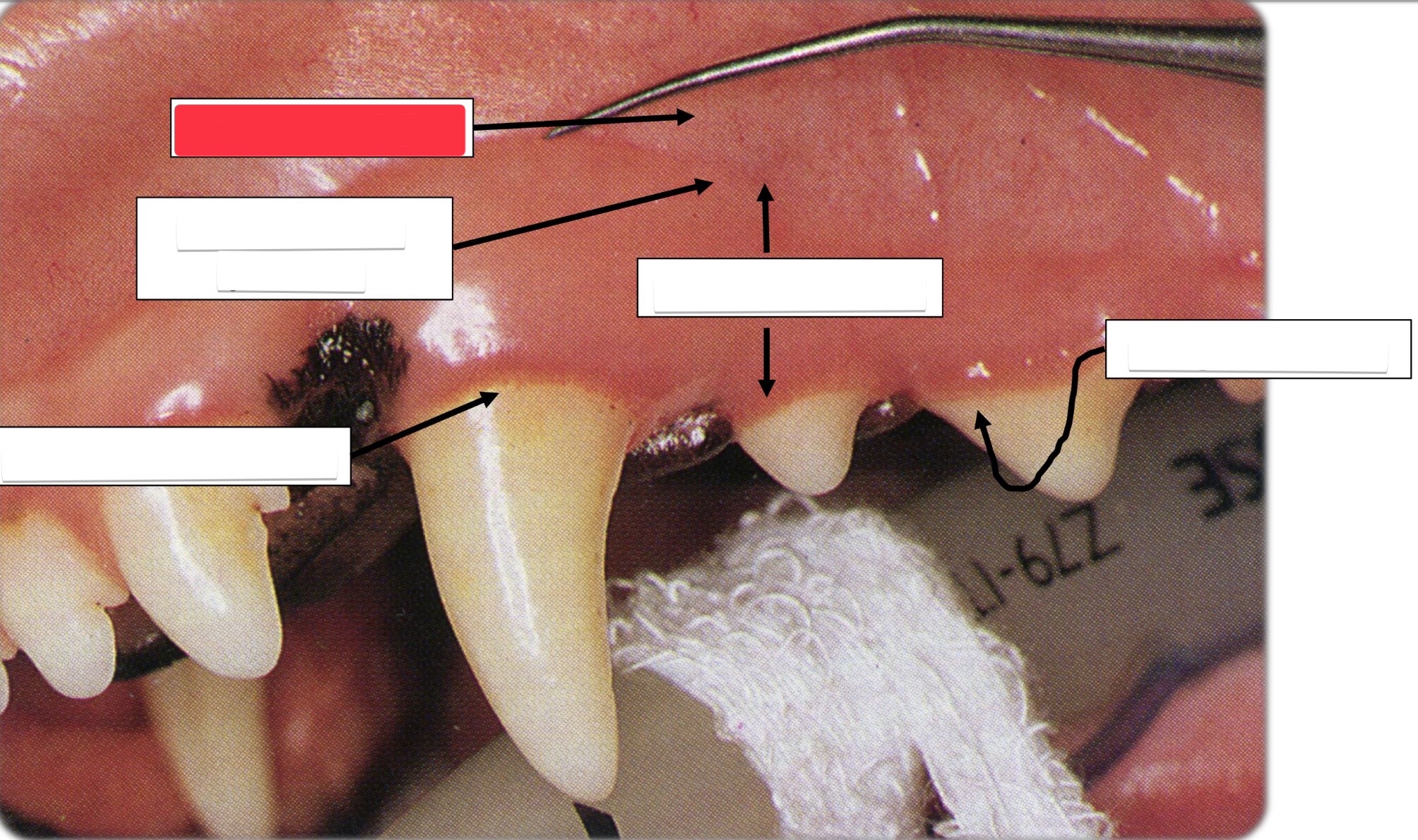
Label this part of the gingiva.
alveolar mucosa
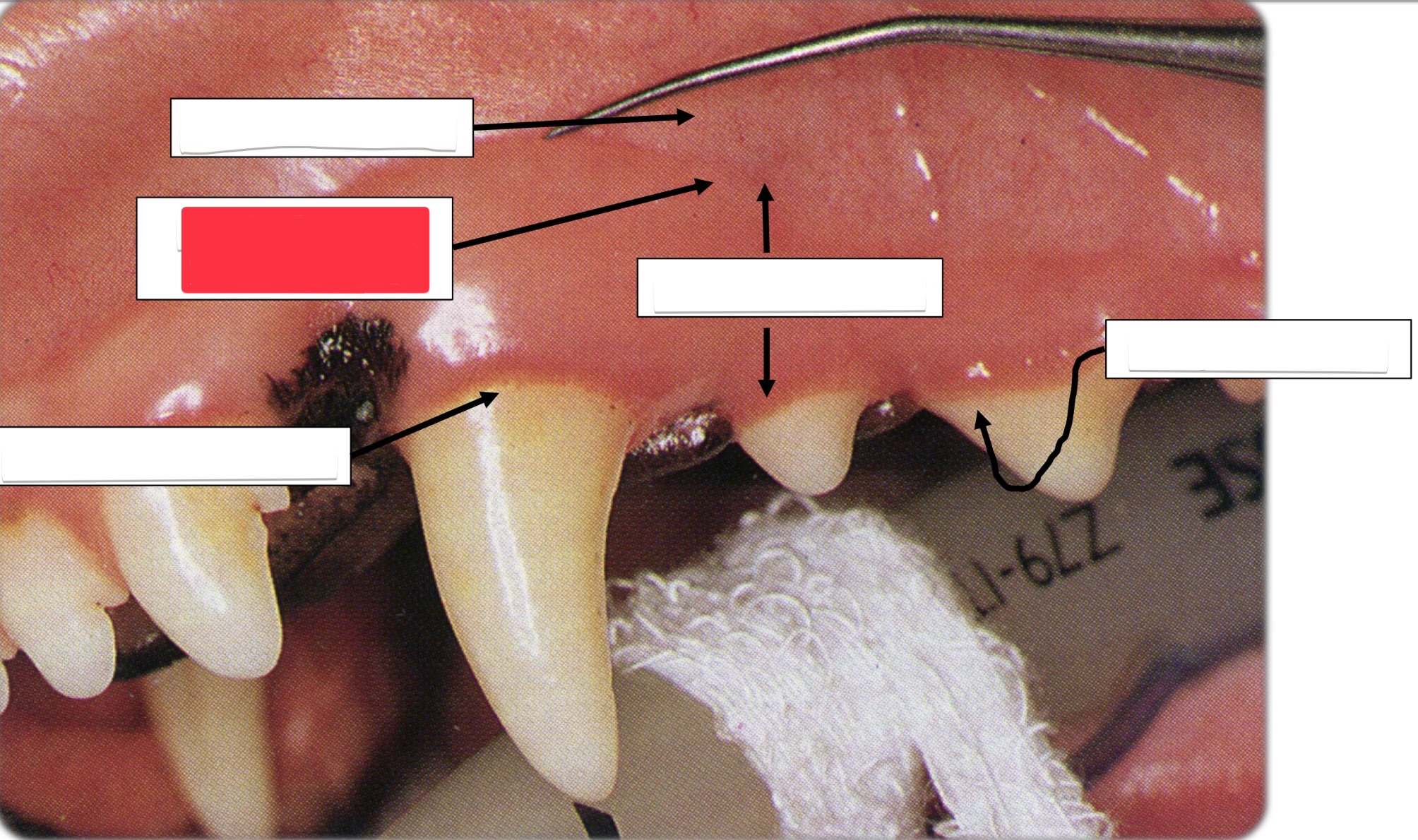
Label this part of the gingiva.
mucogingival junction
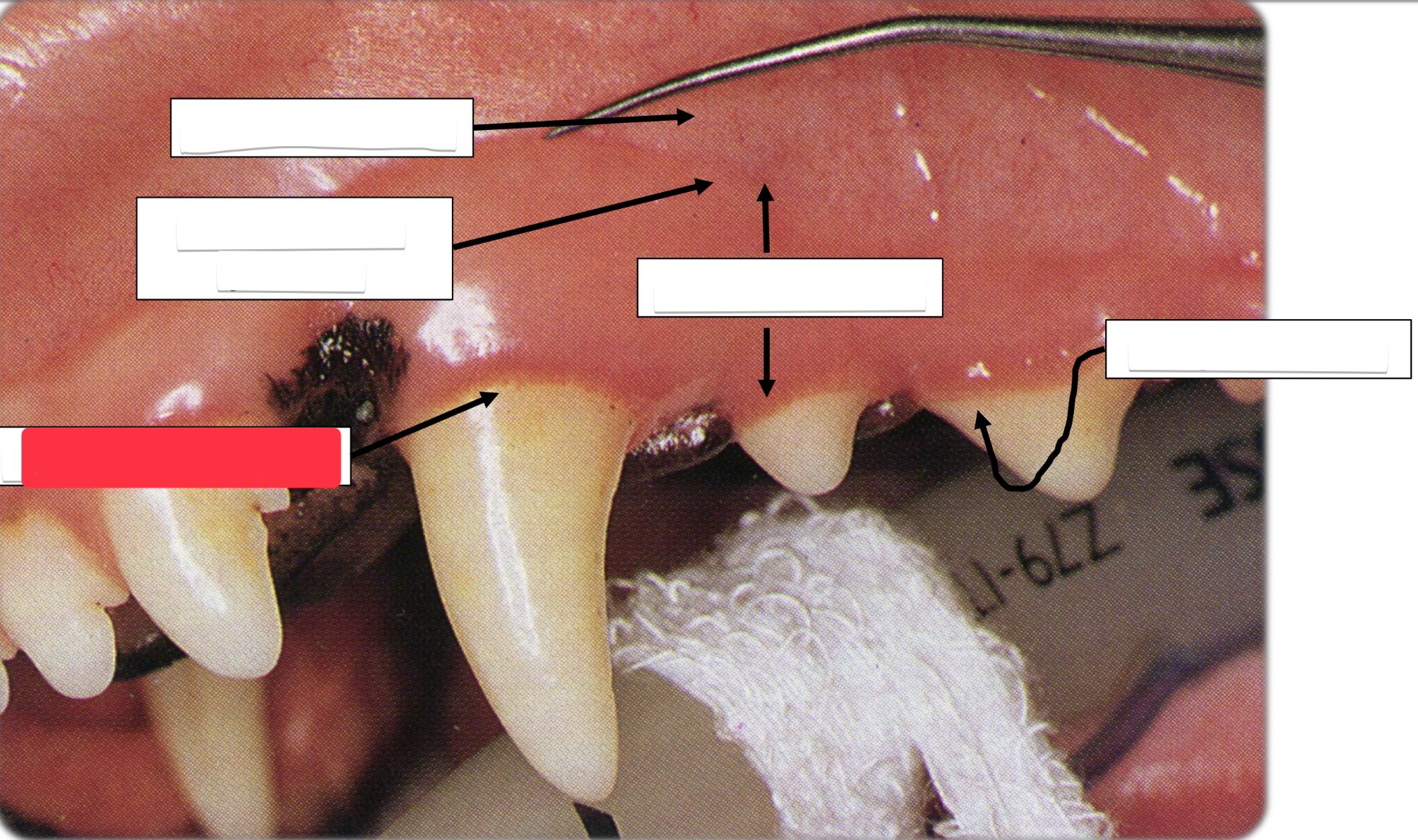
Label this part of the gingiva.
free gingival margin
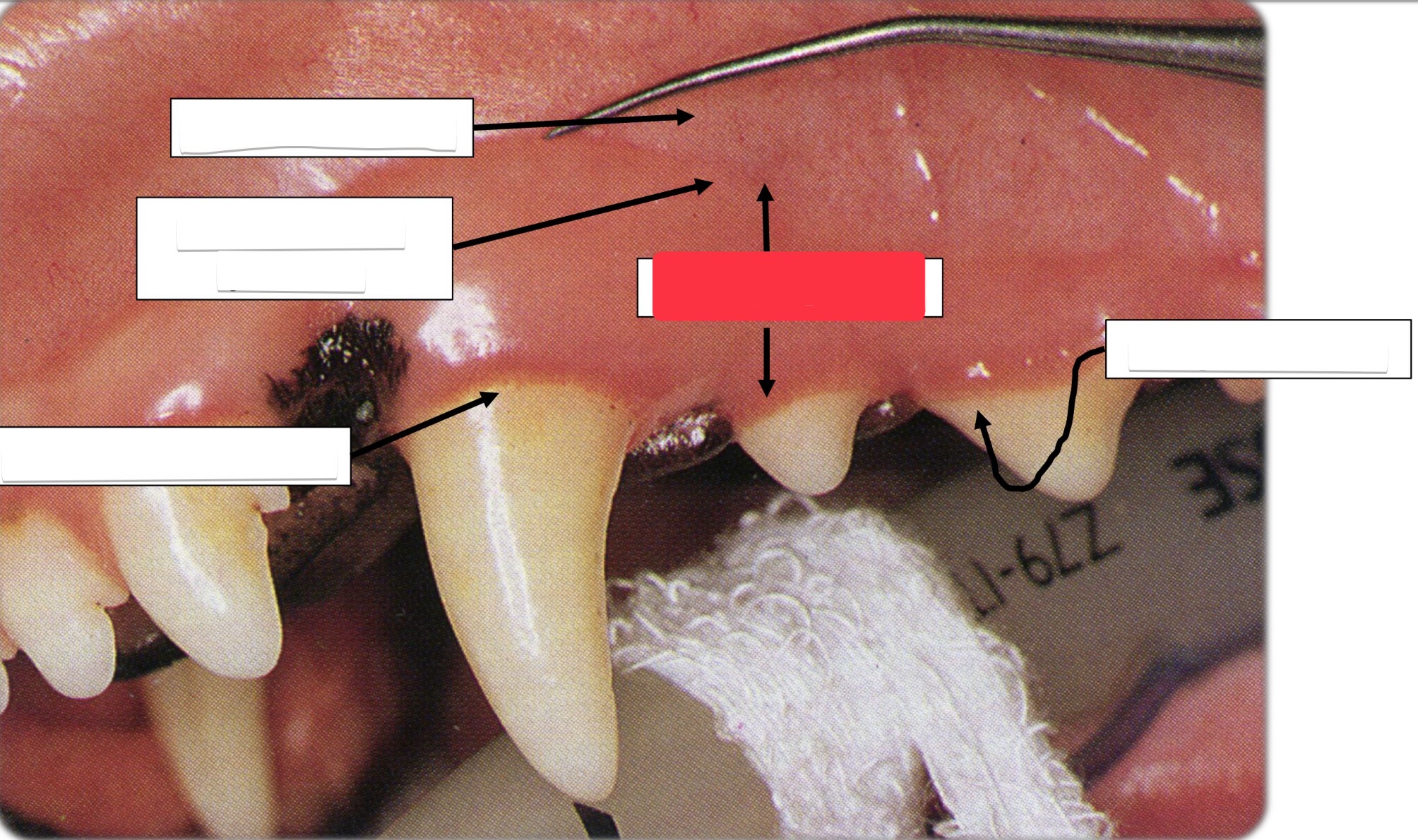
Label this part of the gingiva.
attached gingiva
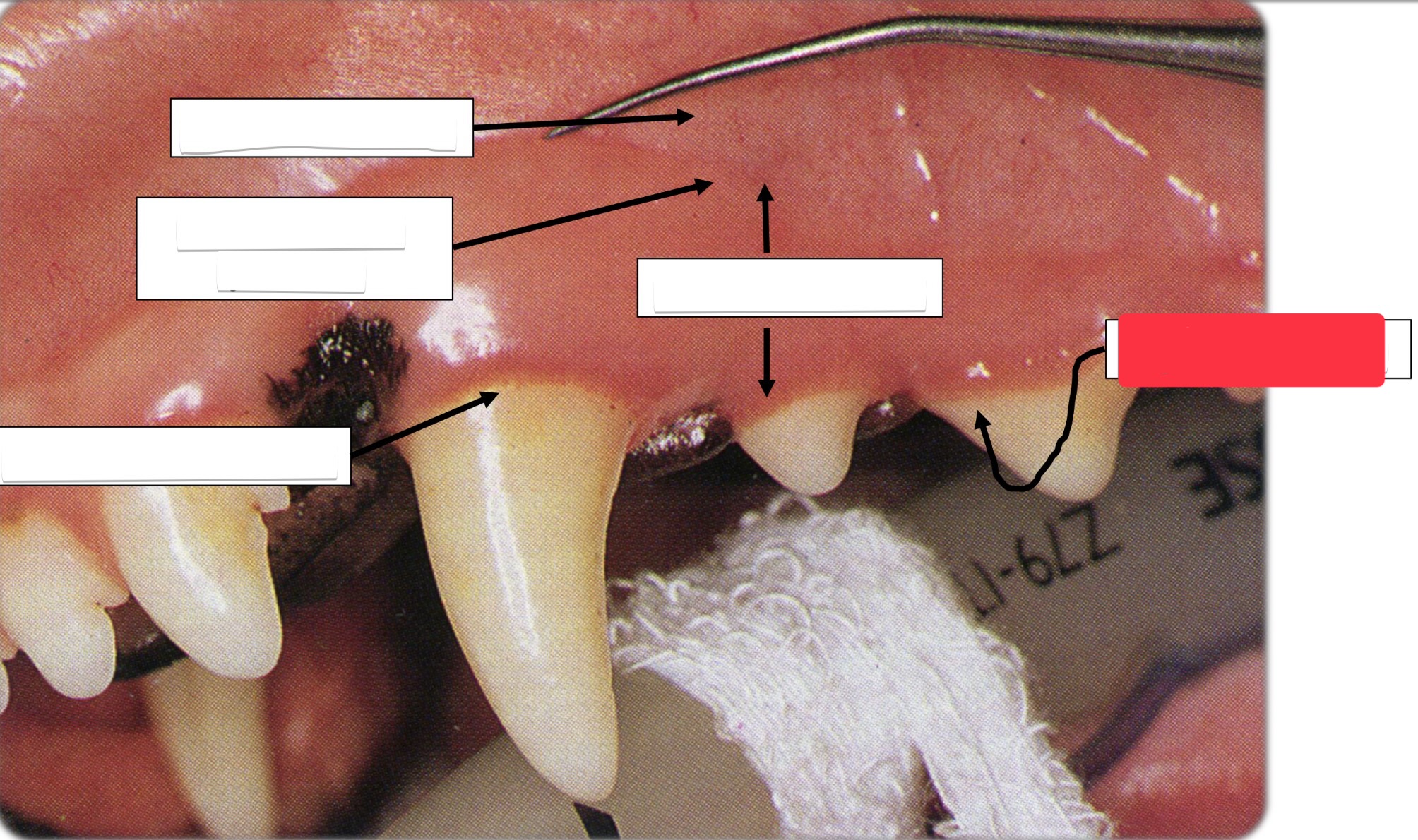
Label this part of the gingiva.
gingival sulcus
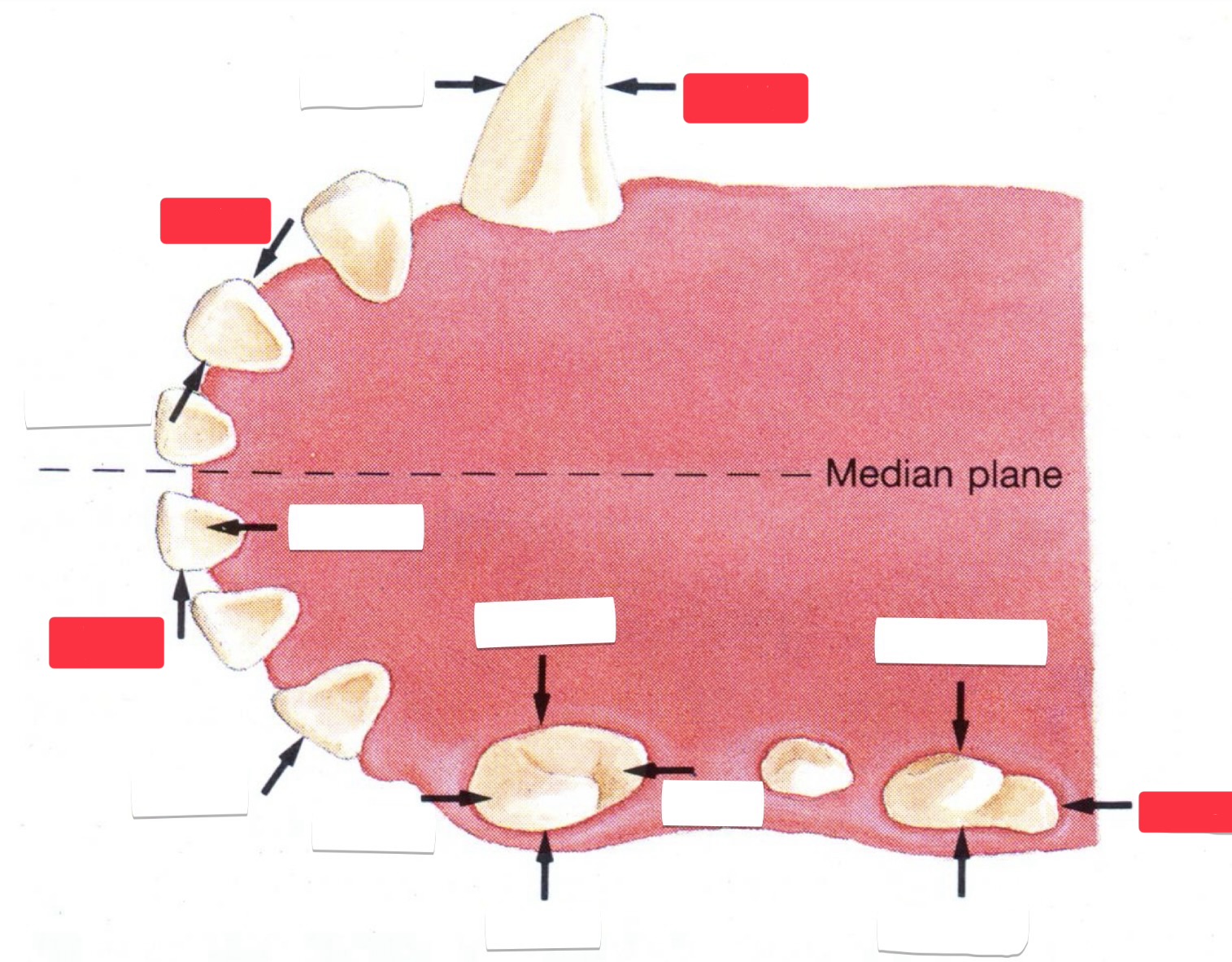
What directional term is this?
distal
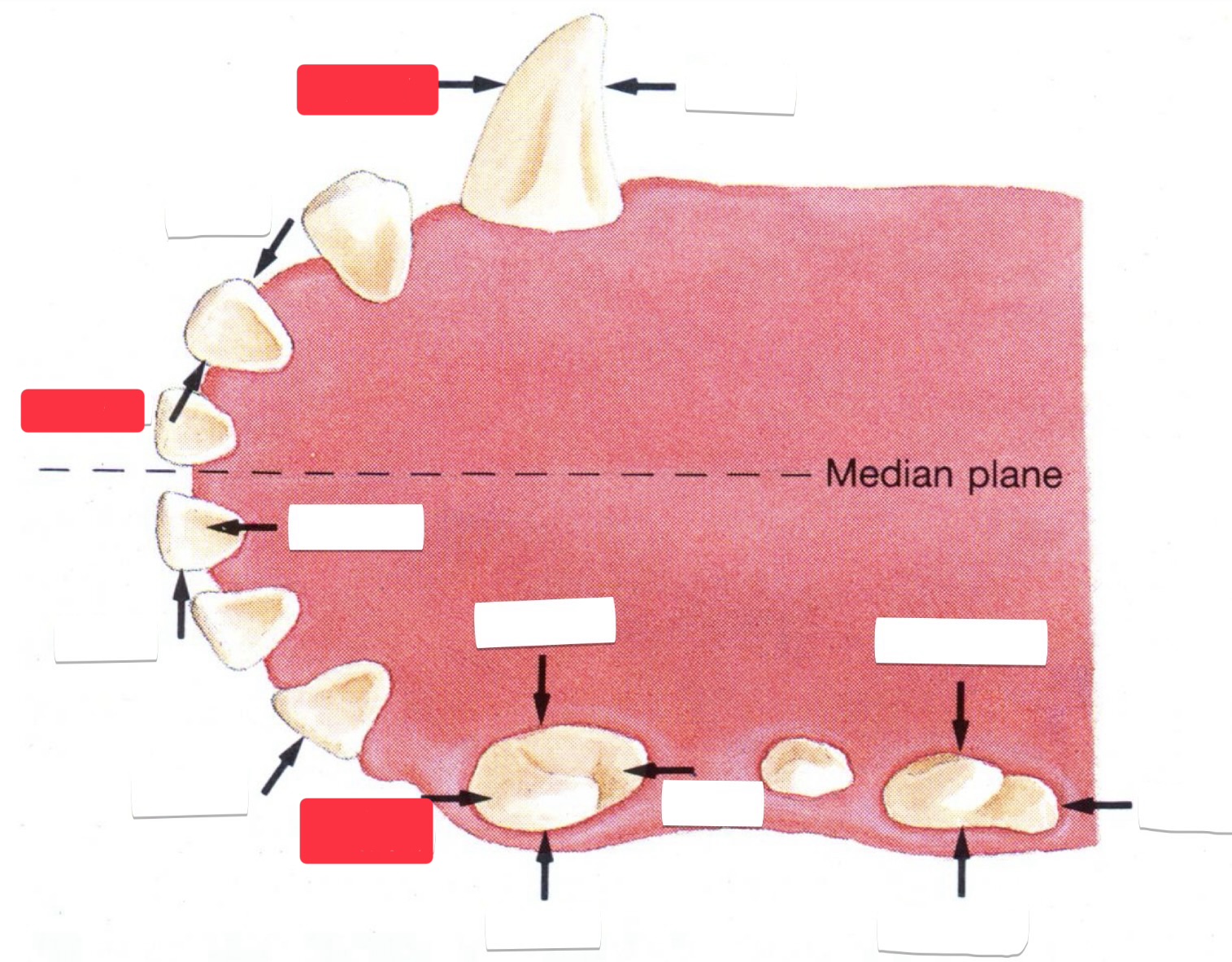
What directional term is this?
mesial
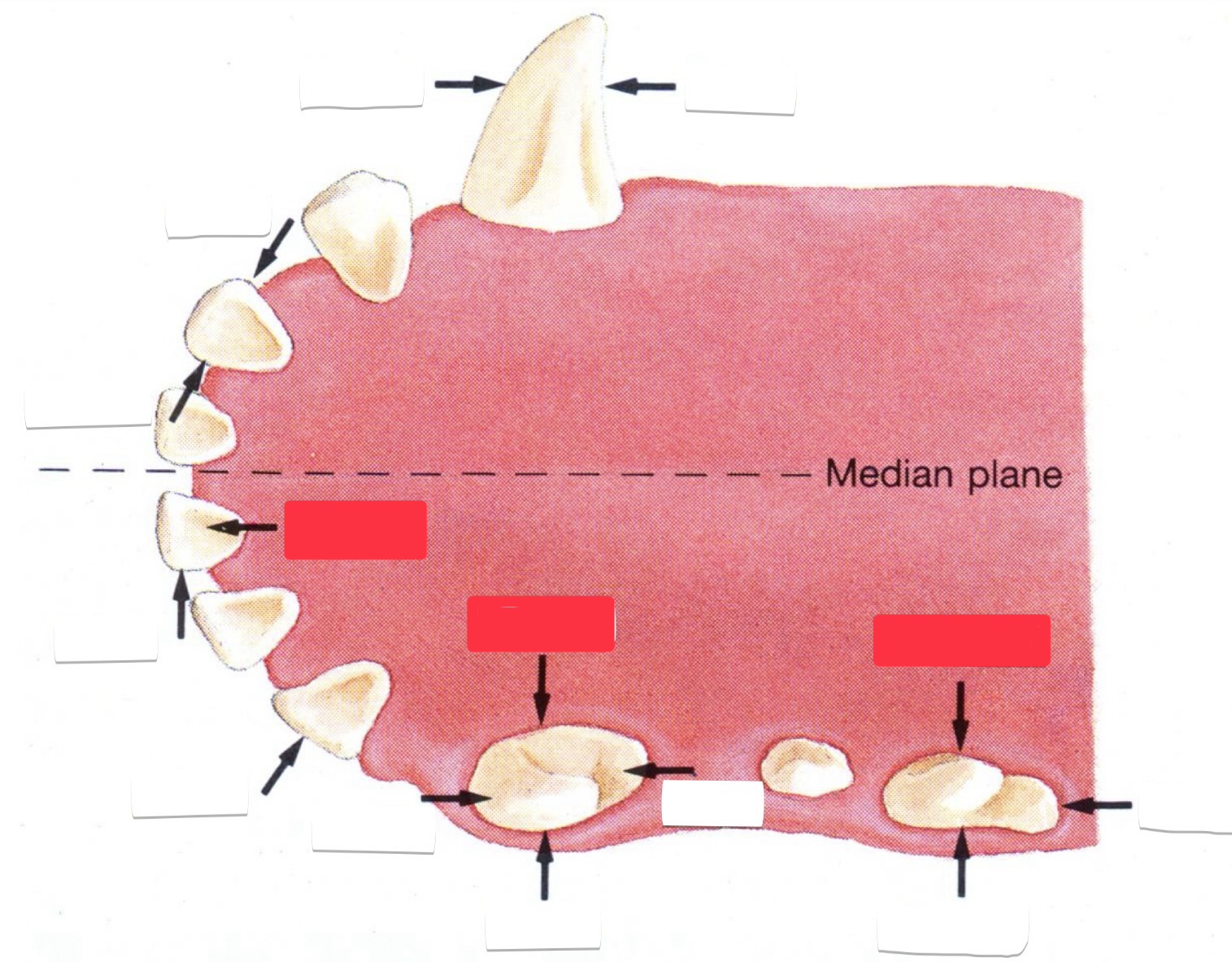
What directional term is this?
lingual
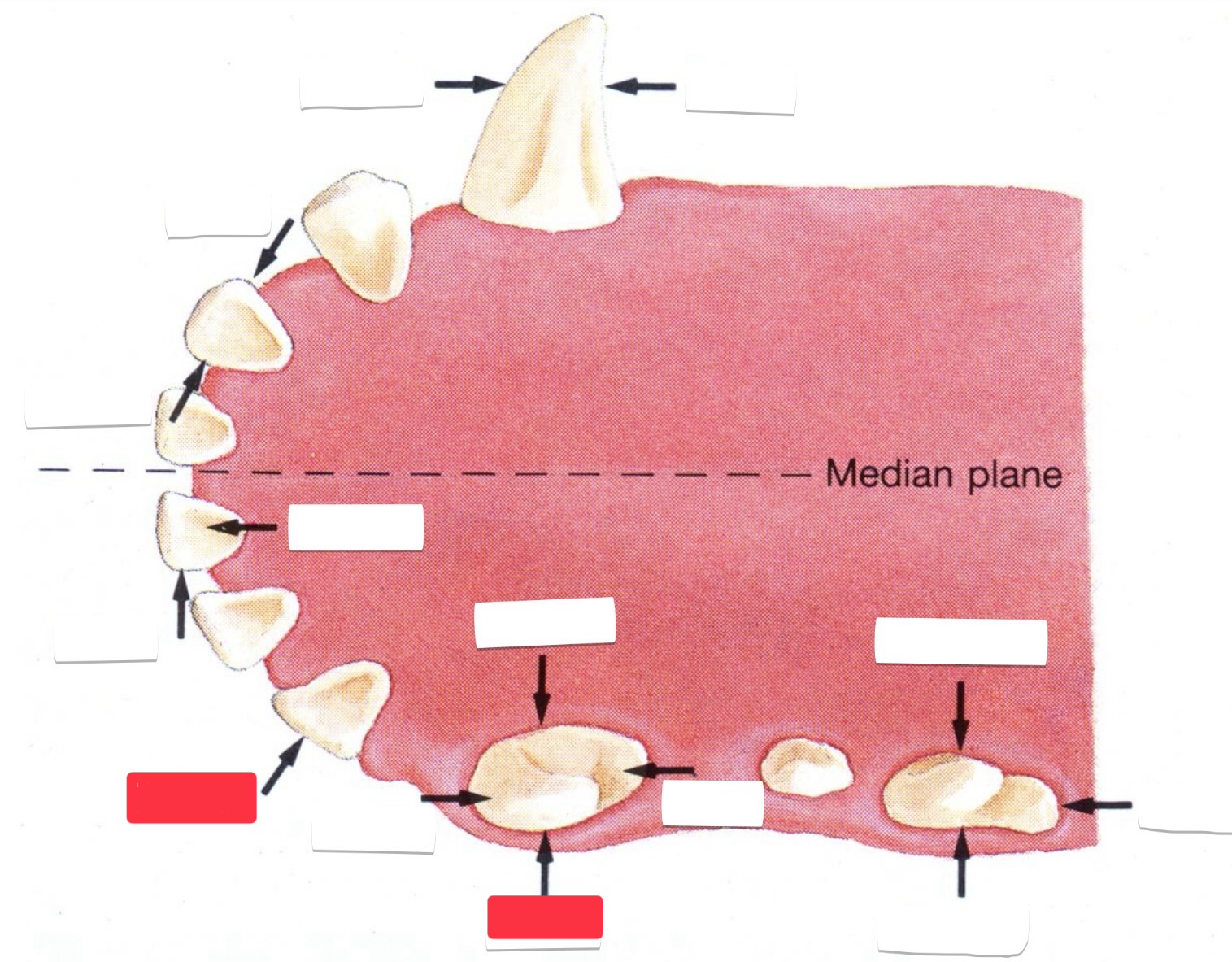
What directional term is this?
labial
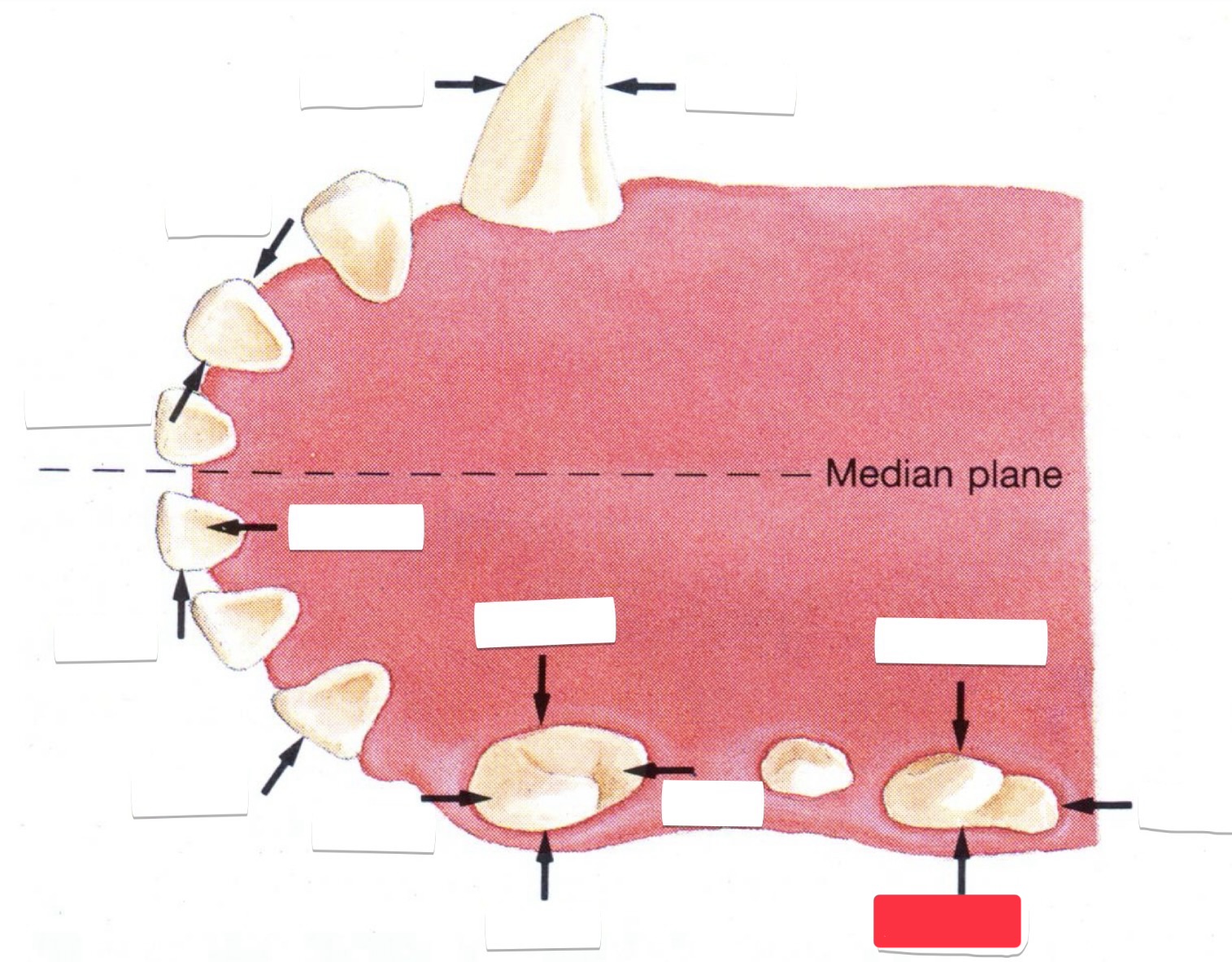
What directional term is this?
buccal
toward the apex of the root
apical
toward the tip of the crown
coronal
area or structure apical to the gingival margin
subgingival
area or structure coronal to the gingival margin
supragingival
mesial or distal surfaces of a tooth in close contact with an adjacent tooth
proximal
space between adjacent teeth
interproximal
surface of a tooth that faces the tooth of the opposing arcade
occlusal
refers to the surface of the tooth facing the vestibule or lips
vestibular (buccal and labial are acceptable alternatives)
surface of a mandibular tooth facing the tongue
lingual
surface of a maxillary tooth facing the palate
palatal
interproximal surface of a tooth that faces rostrally or towards midline of the dental arch
mesial
interproximal surface of a tooth that faces caudally or away from the midline of the dental arch
distal
refers to a structure closer to, or a direction toward the tip of the nares
rostral
refers to a structure closer to, or a direction toward the tail
caudal
What is the modified triadan tooth numbering system for permanent teeth in dogs and cats? What about deciduous teeth?
100s, 200s, 300s, 400s; 500s, 600s, 700s, 800s
What is the modified triadan tooth numbering system for the permanent upper right maxillary teeth?
100s
What is the modified triadan tooth numbering system for the permanent upper left maxillary teeth?
200s