BIO 115 - Histology Flashcards
 Call Kai
 Learn
Learn Practice Test
 Spaced Repetition
 Match
Match Flashcards
 Knowt Play
1/88

Earn XP
Description and Tags
Vocabulary and slide identification practice flashcards for BIO 115 Histology Lab Exam #1.
Name | Mastery | Learn | Test | Matching | Spaced | Call with Kai | Chat |
|---|
No analytics yet
Send a link to your students to track their progress
89 Terms
Epithelial Tissue
A primary tissue type consisting of closely packed cells that cover body surfaces, line internal cavities and organs, and form glands.

Simple Squamous Epithelium

Simple Squamous Epithelium

Simple Cuboidal Epithelium

Simple Cuboidal Epithelium
Simple Cuboidal Epithelium
A single layer of cube-shaped cells with round, central nuclei, specialized for secretion and absorption.
Simple Columnar Epithelium

Simple Columnar Epithelium
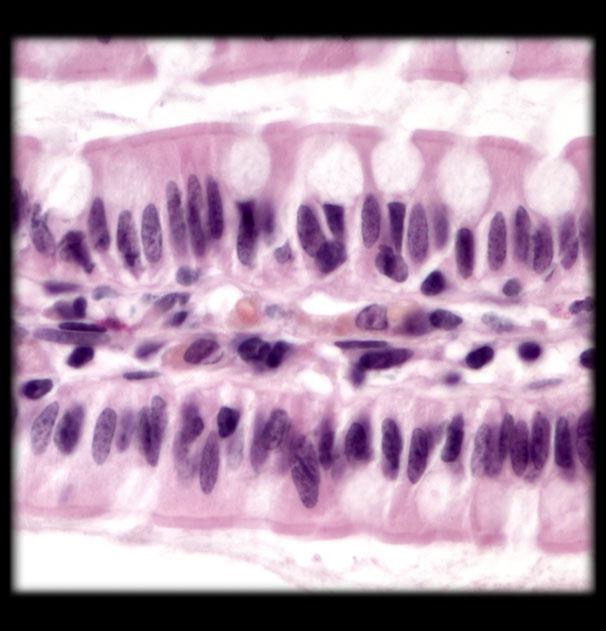
Pseudostratified Ciliated Columnar Epithelium
A single layer of cells of varying heights that appears stratified; features cilia on the apical surface to move mucus.

Pseudostratified Ciliated Columnar Epithelium

Pseudostratified Ciliated Columnar Epithelium
Stratified Squamous Epithelium
Multiple cell layers with flattened surface cells, providing protection against abrasion and mechanical wear.

Stratified Squamous Epithelium

Stratified Squamous Epithelium
Stratified Cuboidal Epithelium
Epithelium typically consisting of two layers of cube-shaped cells, providing protection in duct linings.

Stratified Cuboidal Epithelium
Stratified Columnar Epithelium
Multiple layers of cells where superficial cells are columnar, providing protection and secretion in select regions.

Stratified Columnar Epithelium
Transitional Epithelium
A specialized stratified tissue capable of stretching and changing shape, lining urinary structures.

Transitional Epithelium

Transitional Epithelium
Connective Tissues
A primary tissue class that supports, protects, binds, and insulates body organs, consisting of cells within an extracellular matrix.
Areolar Connective Tissue
A loose connective tissue containing fibroblasts, collagen, and elastic fibers that cushions organs and holds tissue fluid.

Areolar Connective Tissue

Areolar Connective Tissue
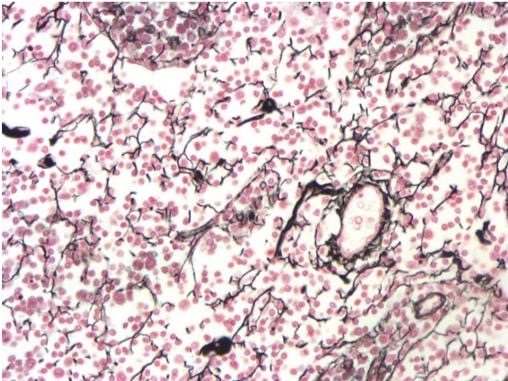
Reticular Connective Tissue
A loose connective tissue with a network of reticular fibers that forms a supportive framework (stroma) for lymphoid organs.

Reticular Connective Tissue
Reticular Connective Tissue
Adipose Tissue
A connective tissue composed predominantly of adipocytes storing lipid droplets, functioning in insulation and energy storage.

Adipose Tissue

Adipose Tissue
Dense Regular Connective Tissue
Connective tissue packed with parallel bundles of collagen fibers, providing high tensile strength in one direction.

Dense Regular Connective Tissue

Dense Irregular Connective Tissue
Dense Irregular Connective Tissue
Connective tissue featuring randomly arranged collagen fibers, providing structural strength against multidirectional tension.
Elastic Connective Tissue
Dense connective tissue rich in elastic fibers, allowing recoil after stretching in arteries and certain ligaments.

Elastic Connective Tissue

Elastic Connective Tissue
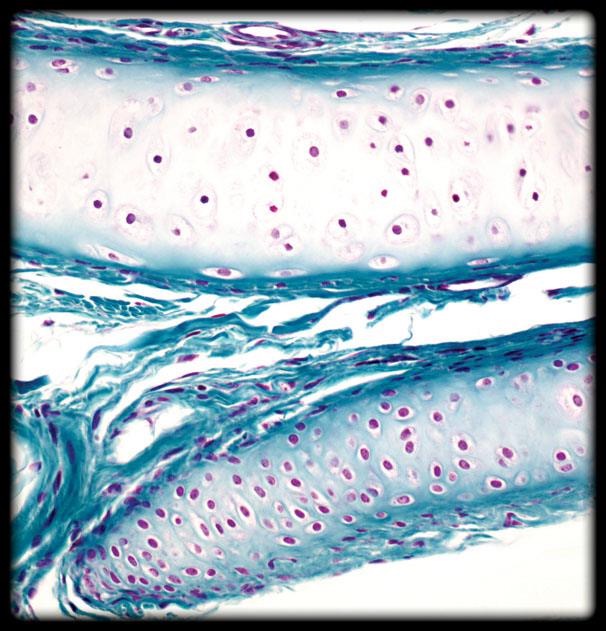
Hyaline Cartilage
A firm cartilage with a glossy, smooth matrix containing collagen microfibrils, supporting and reducing friction in joints.
Hyaline Cartilage

Hyaline Cartilage
Fibrocartilage
A shock-absorbing cartilage with thick, coarse collagen fibers arranged in parallel, resisting compression.

Fibrocartilage

Fibrocartilage
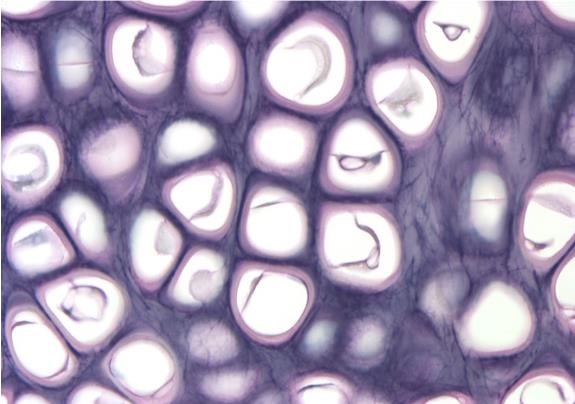
Elastic Cartilage
A flexible cartilage tissue containing abundant elastic fibers, maintaining shape and structure in flexible organs.
Elastic Cartilage
Bone
A rigid connective tissue with a calcified matrix arranged in osteons, serving to support and protect the body.

Bone
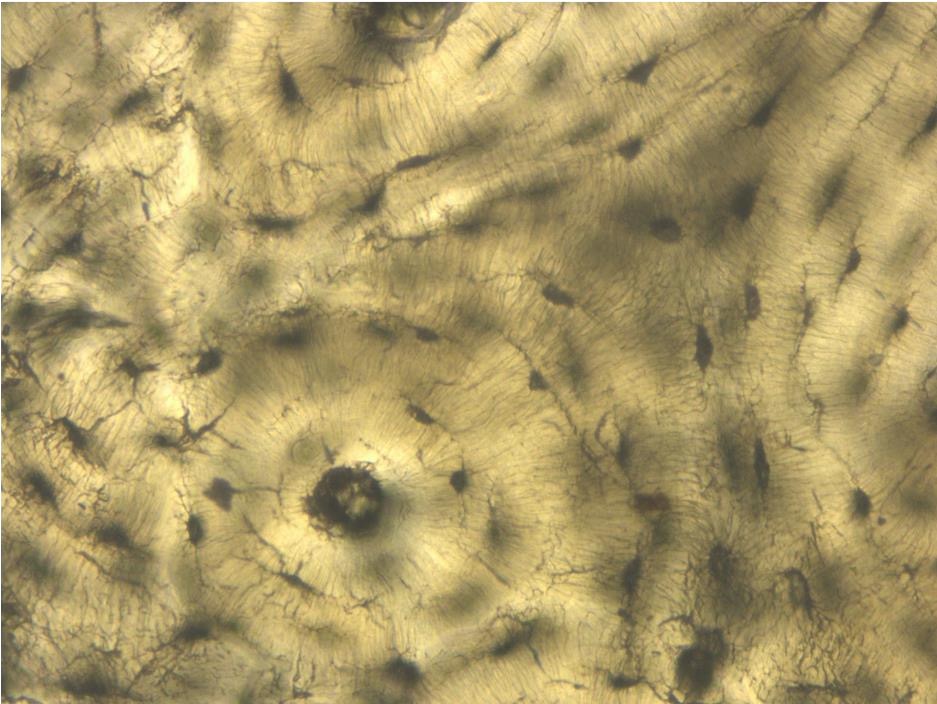
Bone
Blood
A fluid connective tissue consisting of cellular formed elements (red blood cells, white blood cells, platelets) in liquid plasma.

Blood

Blood
Muscle Tissue
A primary tissue type composed of contractile cells specialized for movement and generating physical force.
Skeletal Muscle
Striated, voluntary muscle tissue consisting of long, cylindrical, multinucleated cells.

Skeletal Muscle

Skeletal Muscle
Cardiac Muscle
Striated, involuntary muscle tissue found in the heart walls, featuring branching cells, intercalated discs, and single nuclei.

Cardiac Muscle

Cardiac Muscle
Smooth Muscle
Non-striated, involuntary muscle tissue consisting of spindle-shaped cells with central nuclei, found in hollow organs.

Smooth Muscle

Smooth Muscle
Nervous Tissue
A primary tissue composed of neurons and supporting neuroglial cells, specialized for conducting electrical impulses.

Nervous Tissue

Nervous Tissue
Simple Squamous Epithelium
Location: Capillaries, alveoli, serous membrane
Function: diffusion, filtration, secretion
Simple Cuboidal Epithelium
Location: thyroid gland, kidney, ducts of glands
Function: absorption, Secretion
Simple Columnar Epithelium
Location: Lining of the digestive tract
Function: Absorbtion, secretion
Pseudostratified Ciliated Columnar Epithelium
Location: Respiratory tract
Function: Protection & secretion
Stratified Squamous Epithelium- Keratinized
Location: skin (dermis)
Function: Protection of underling tissues
Stratified squamous Epithelium -Nonkeratinized
Location: oral cavity, esophagus, anus, cervix, vagina, urethra
Function: Protection of underlying tissues
Stratified Cuboidal Epithelium
Location: Ducts of sweat and salivary glands
Function: Protection
Stratified Columnar Epithelium
Location: large salivary gland ducts, parts of the male urethra, conjunctive of the eye, nasopharynx.
Function: protection & secretion
Transitional Epithelium
Location: urinary system
Function: stretch & recoil
Areolar Connective Tissue
Function: surrounds and protects. Connects epithelia to deeper tissues
Location: Surrounding nerves, vessels, subcutaneous layer
Reticular Connective Tissue
Function: provides supportive framework
Location: spleen, liver, lymph nodes, Bone marrow
Adipose Tissue
Function: Stores energy, cushions organs, insulates
Location: subcutaneous layer; surrounding Kidneys, and selected other organs
Dense Regular Connective Tissue
Function: provide strength and flexibility in A single direction
Location: tendons and ligaments
Dense Irregular Connective Tissue
Function: provides tensile strength and resist stress
Location: dermis and capsules of organs
Elastic Connective Tissue
Function: provides framework and supports organs
Location: found between vertebrae, vocal cords, walls of large arteries
Hyaline Cartilage
Located: End of bones, nose, tracheal rings
Function: most abundant type of cartilage, but the weakest. Forms pre-natal bones, provides support through flexibility
Fibrocartilage
Located: intervertebral discs, pubic symphysis, and menisci of the knee
Formed by dense, interwoven collagen fibers. Extremely durable, can take large amounts of pressure
Elastic Cartilage
Located: epiglottis and ear
Contains a high concentration of densely packed elastin fibers, very resilient and flexible
Bone
Located: bones
Made up or organic and organic components. contain bone cells called osteocytes
Blood- Fluid Connective Tissue
Location: heart and blood vessels
Functions: transports respiratory gases, nutrients, wastes, hormones and governs immune response
Skeletal Muscle
Voluntary
multi-nucleated
striated
long, cylindrical cans
Cardiac Muscle
Involuntary
One nucleus
Branched, striated fibers
Intercalated discs
Smooth Muscle
Involuntary
One nucleus
Non-striated
Short, thin, spindle shaped fibers (Pointed ends)
Nervous Tissue
Helps information transfer and integration in the body. Made of 2 primary cell types: neurons, glial cells.