Gait: Functions & Analysis
 Call Kai
 Learn
Learn Practice Test
 Spaced Repetition
 Match
Match Flashcards
 Knowt Play
1/34

There's no tags or description
Looks like no tags are added yet.
Name | Mastery | Learn | Test | Matching | Spaced | Call with Kai | Chat |
|---|
No analytics yet
Send a link to your students to track their progress
35 Terms
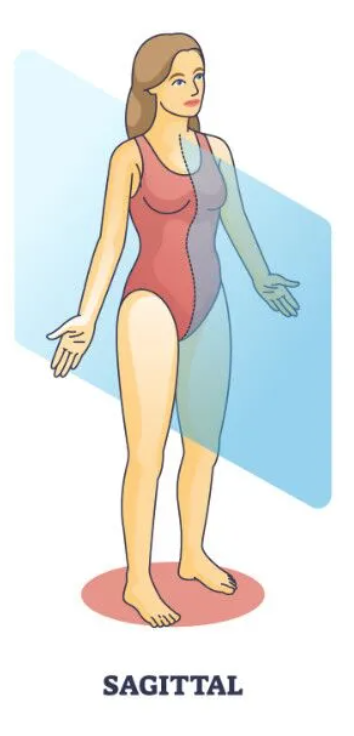
Sagittal plane
The x plane
MOTION
Flexion / Extension
e.g., knee flexion
MEASURED
within the anteroposterior plane
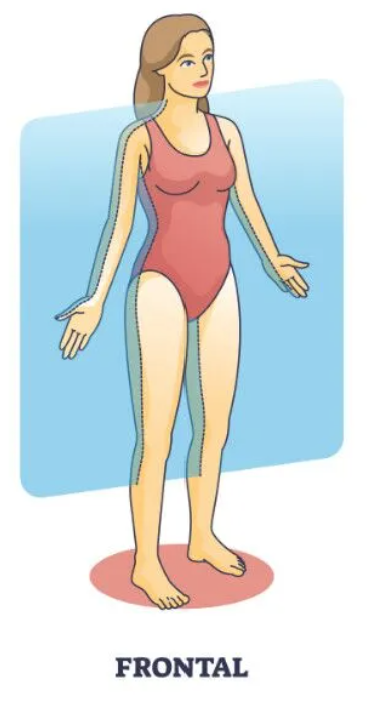
Frontal / coronal plane
The y plane
MOTION
Adduction / Abduction
e.g., knee valgus
MEASURED
within the mediolateral plane
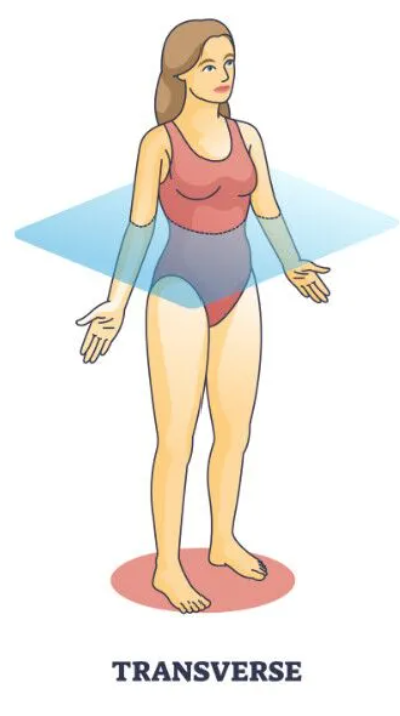
Transverse plane
The z plane
MOTION
Internal / External rotation
e.g., knee rotation
MEASURED
within the axial / horizontal plane
Phases of the Gait Cycle
Stance 0%-62%
Swing 62%-100%
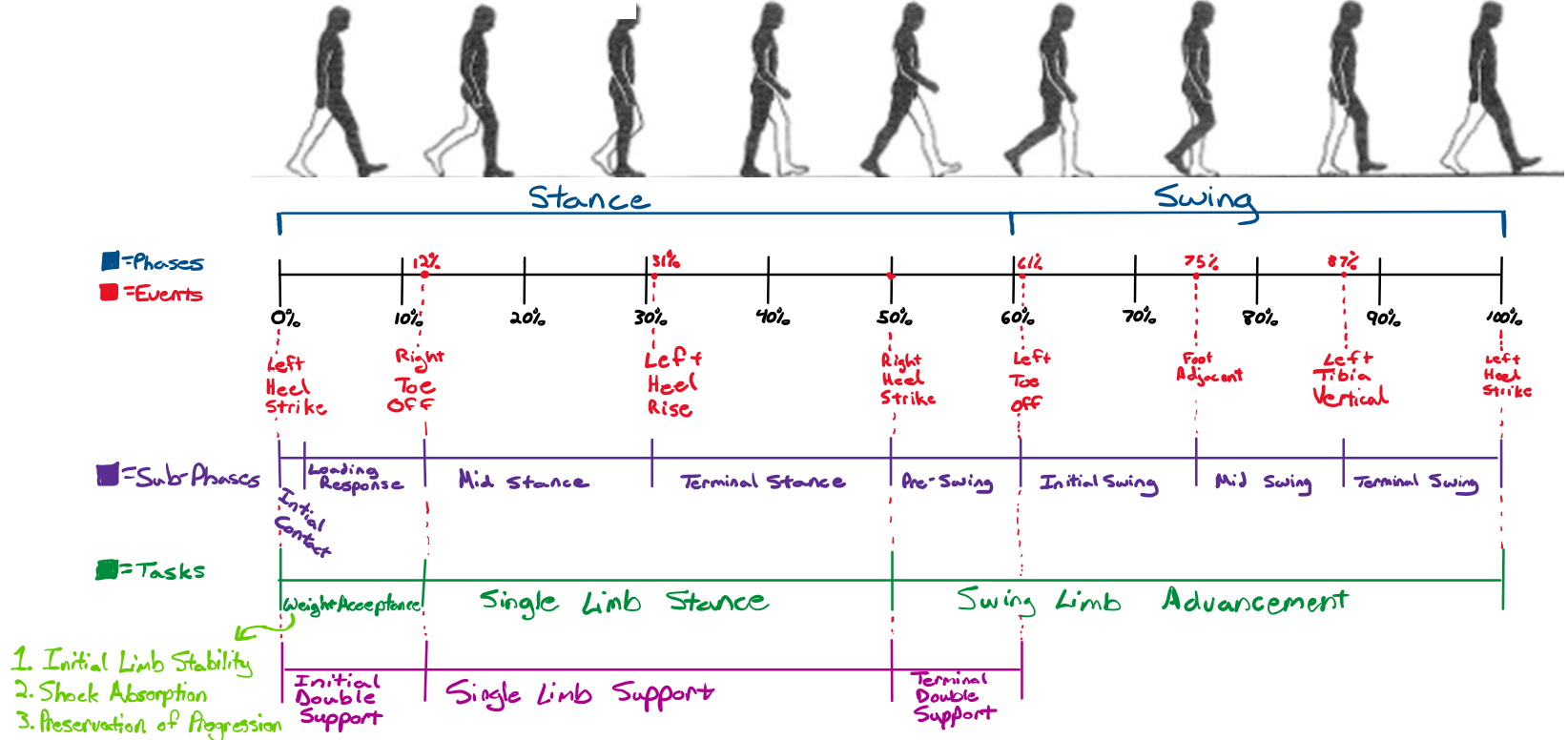
Subphases of the Gait Cycle
Initial Contact 0%-2%
Loading Response 2%-12%
Mid Stance 12%-31%
Terminal Stance 31%-50%
Pre Swing 50%-62%
Initial Swing 62%-75%
Mid Swing 75%-87%
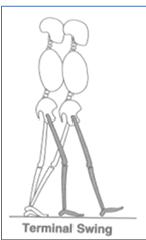
Terminal Swing 87%-100%
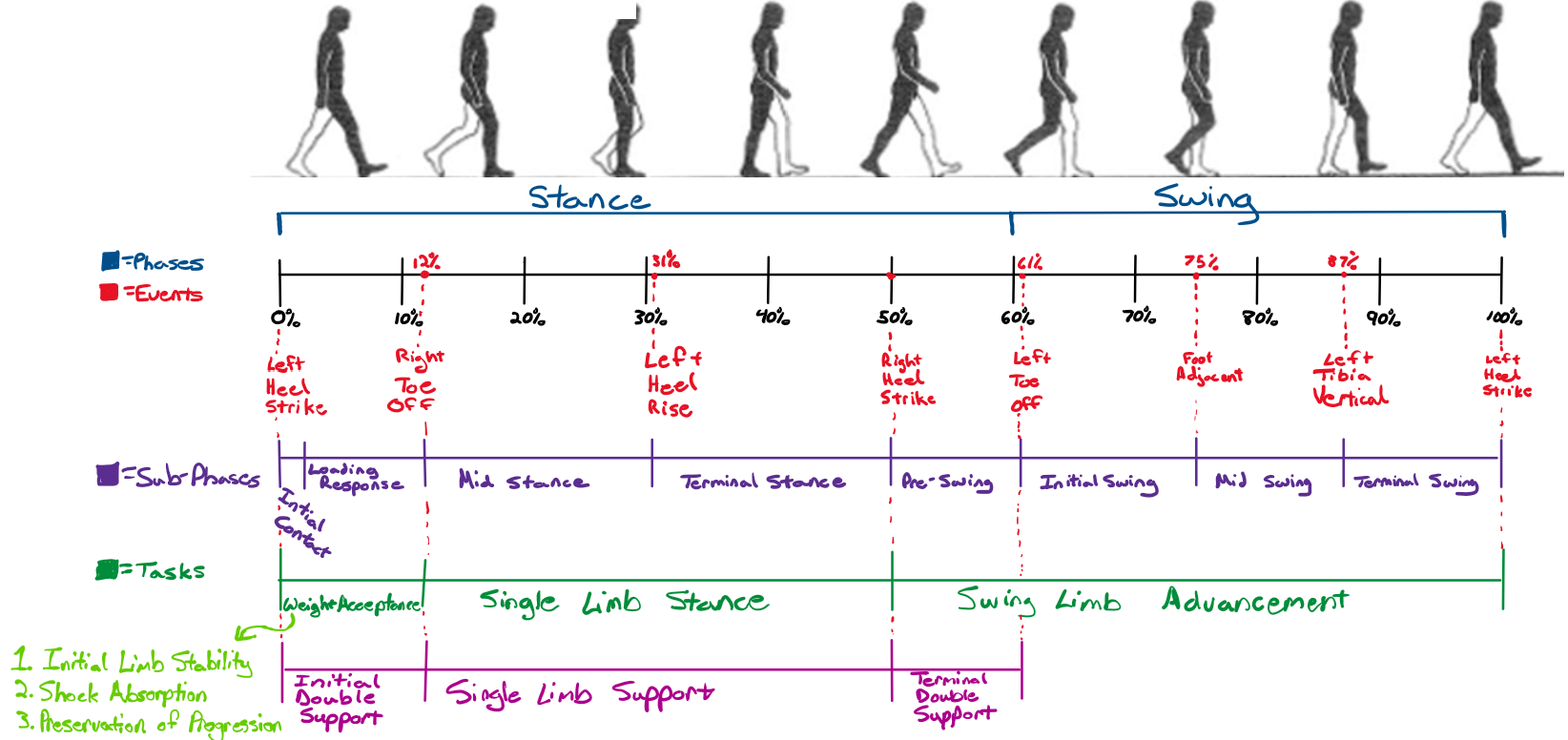
Events of Gait Cycle
Left Heel Strike (Initial Contact) - 0%
Right Toe Off (Opposite Foot) - 12%
Left Heel Rise - 31%
Right Heel Strike (Opposite Foot) - 50%
Left Toe Off - 61%
Foot Adjacent - 75%
Left Tibia Vertical - 87%
Left Heel Strike (Initial Contact) - 100%
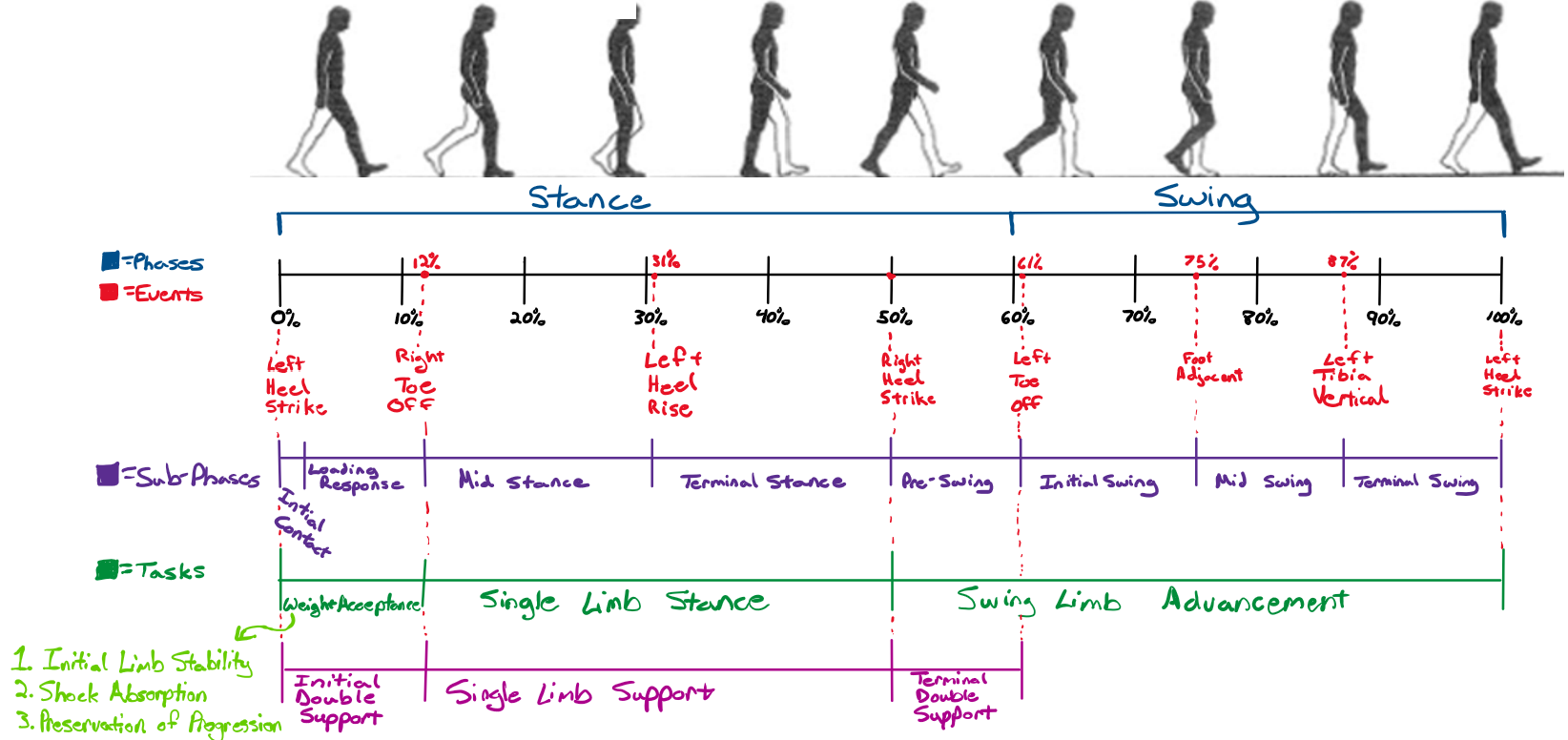
Tasks of Gait Cycle
Weight Acceptance 0%-12%
Single Limb Stance 12%-50%
Swing Limb Advancement 50%-100%
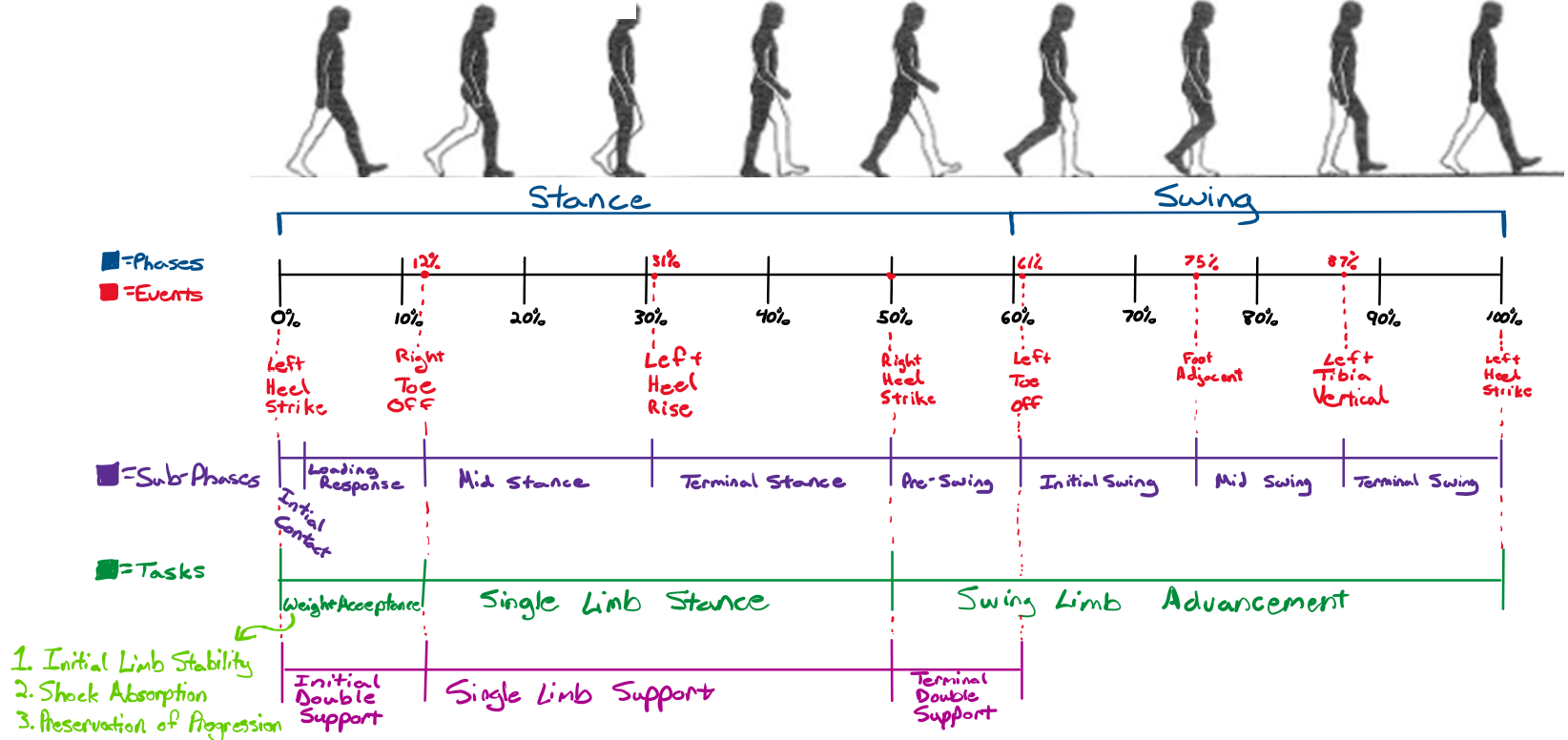
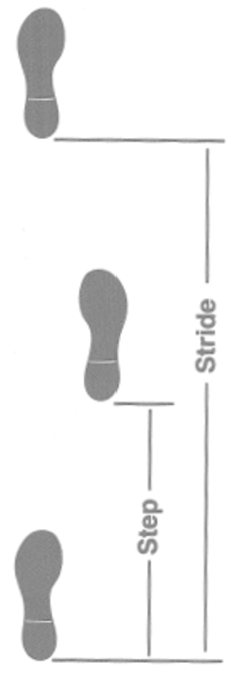
Stride
One full gait cycle — same foot, contact to contact.
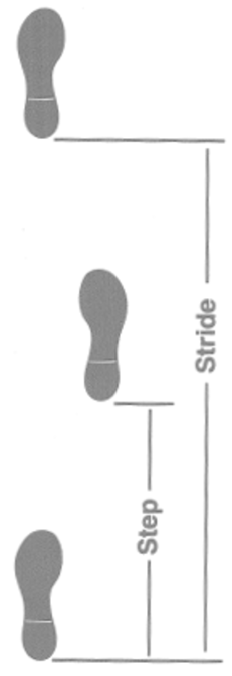
Step
One foot’s contact to the other foot’s contact
Two steps make a stride
they should be equal in normal gait.
Stride width
Side-to-side distance between the two feet.

Temporal parameters
Cadence
Velocity
Walking Speed
Comfortable Walking Speed
Cadence
Steps per minute
approx. 100–115 steps/min in healthy adults
Walking speed
Distance over time
approx. 1.2–1.3 m/s in healthy adults
Velocity
cadence × step length
Comfortable walking speed
Self-selected pace
least energy consumed per unit distance
What happens as you change from walking to running
Walking faster
Stance phase → decreases
Swing phase → increases
Double support → decreases
Running
Fast walking without double support
Double support disappears — a double-float
Stance / swing ratio reverses
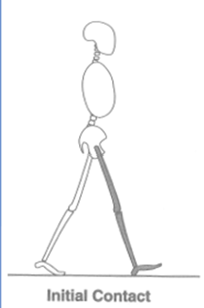
Subphase: Initial Contact
0-2%
The instant the foot meets the floor.
Limb position here sets the loading pattern.
OBJECTIVES
Start the stance phase
Decelerate the impact
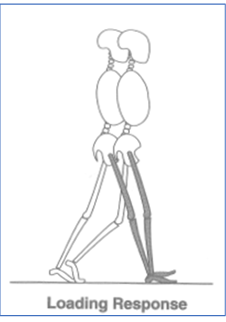
Subphase: Loading Response
2–12%
First double-support period.
Body weight transfers onto the limb.
OBJECTIVES
Shock absorption
Weight-bearing stability
Preserve progression
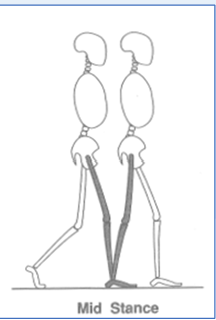
Subphase: Mid-Stance
12-30%
First half of single-limb support.
Ends as weight aligns over the forefoot.
OBJECTIVES
Progress over a stationary foot
Limb & trunk stability
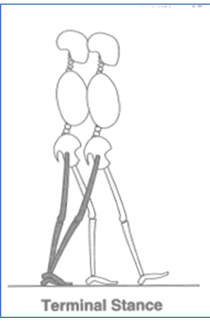
Subphase: Terminal Stance
31-50%
Begins with heel rise
Body moves ahead of the forefoot
OBJECTIVES
Progress over a stationary foot
Limb and trunk stability
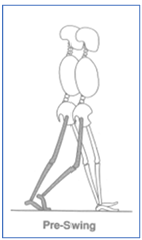
Subphase: Pre-Swing
51-62%
Second double support; the limb unloads and readies to swing.
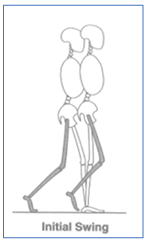
Subphase: Initial-Swing
63-75%
Foot lifts and clears the floor; the limb advances
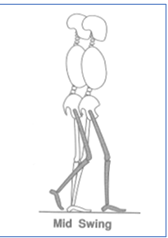
Subphase: Mid-Swing
76-87%
Limb advances until the tibia is vertical.
Subphase: Terminal-Swing
88-100%
Shank moves ahead of the thigh; limb readies for contact.
The body as two working subunits
Passenger
Head, arms & trunk (HAT) — carried along, kept balanced over the limbs.
Locomotor
Pelvis & the two lower limbs — the machinery that produces walking.

Passenger unit
aka HAT
Head, neck, trunk & arms — about 70% of body mass
Muscles keep the spine aligned with minimal postural change
Balance depends on instantaneous alignment
Center of mass sits ~1/3 of the way from hip to shoulder joint center
Locomotor unit
Two lower limbs plus the pelvis
11 major joints, controlled by 57 muscles
Pelvis links the limbs to the passenger unit
Advances the limb during swing