BIOC*3560 Part D: Fatty Acid Metabolism
 Call Kai
 Learn
Learn Practice Test
 Spaced Repetition
 Match
Match Flashcards
 Knowt Play
1/200

There's no tags or description
Looks like no tags are added yet.
Name | Mastery | Learn | Test | Matching | Spaced | Call with Kai | Chat |
|---|
No analytics yet
Send a link to your students to track their progress
201 Terms
What are the two systems for naming fatty acids? When would you use each?
1) Greek letters -> used mainly for talking about sites of chemical reactivity
2) Numbering carbons -> used for locations of features (e.g., double bonds)
Is 18:0 a saturated or unsaturated fatty acid?
saturated (0 double bonds)
Is 18:1 a saturated or unsaturated fatty acid?
unsaturated (1 double bond)
What is the main energy storage form in humans?
TAGs (adipose)
What is the main energy storage form in humans?
a) simple TAGs
b) mixed TAGs
c) glycogen
d) free fatty acids
e) phospholipids
b) mixed TAGs
What are TAGs in adipocytes coated in to form lipid globules?
perilipin (protein)
Where does fatty acid degradation occur?
mitochondria (e.g., of muscle cells)
List the steps in the mobilization of fatty acids from adipocytes to target cells
1) Hormone binds receptor (e.g., glucagon)
2) Receptor sends signal, kinase is activated
3) PKA phosphorylates a lipase (hormone sensitive lipase (HSL))
4) PKA phosphorylates perilipin
5) Phosphorylated perilipin releases the protein CGI
6) CGI activates adipocyte triacyl glycerol lipase (ATGL), which releases the first FA
7) HSL releases the second FA from diacylglycerol
8) Monoacyl glycerol lipase (MGL) cleaves the third FA from monoacyl glycerol
9) Released fatty acids enter the bloodstream, where they bind to serum albumin
10) FA transporter in teh muscle takes up fatty acid
11) FA will then be oxidized in the muscle via beta-oxidation
How would a fatty acid w/ 10 C get into the mitochondria?
a) aspartate shuttle
b) carnitine shuttle
c) malate shuttle
d) ion channels
e) no transporter
e) no transporter
____Recall____
≤12 C FA need no transporter
≥14 C FA must go through the carnitine shuttle
How would a fatty acid w/ 14 C get into the mitochondria?
a) aspartate shuttle
b) carnitine shuttle
c) malate shuttle
d) ion channels
e) no transporter
b) carnitine shuttle
____Recall____
≤12 C FA need no transporter
≥14 C FA must go through the carnitine shuttle
How would a fatty acid w/ 18 C get into the mitochondria?
a) aspartate shuttle
b) carnitine shuttle
c) malate shuttle
d) ion channels
e) no transporter
b) carnitine shuttle
____Recall____
≤12 C FA need no transporter
≥14 C FA must go through the carnitine shuttle
How would a fatty acid w/ 16 C get into the mitochondria?
a) aspartate shuttle
b) carnitine shuttle
c) malate shuttle
d) ion channels
e) no transporter
b) carnitine shuttle
____Recall____
≤12 C FA need no transporter
≥14 C FA must go through the carnitine shuttle
How would a fatty acid w/ 20 C get into the mitochondria?
a) aspartate shuttle
b) carnitine shuttle
c) malate shuttle
d) ion channels
e) no transporter
b) carnitine shuttle
____Recall____
≤12 C FA need no transporter
≥14 C FA must go through the carnitine shuttle
How would a fatty acid w/ 12 C get into the mitochondria?
a) aspartate shuttle
b) carnitine shuttle
c) malate shuttle
d) ion channels
e) no transporter
e) no transporter
____Recall____
≤12 C FA need no transporter
≥14 C FA must go through the carnitine shuttle
How would a fatty acid w/ 8 C get into the mitochondria?
a) aspartate shuttle
b) carnitine shuttle
c) malate shuttle
d) ion channels
e) no transporter
e) no transporter
____Recall____
≤12 C FA need no transporter
≥14 C FA must go through the carnitine shuttle
An 18 carbon long fatty acid in the cytoplasm needs to be transported into the mitochondria. It must go through the carnitine shuttle, due to its size (≥14 C FA must go through the carnitine shuttle). Describe the steps it would take to get into the mitochondria.
1) The cytoplasmic fatty acid is converted to fatty acyl-CoA (by acyl CoA synthetase)
2) The fatty acyl group is then transferred to carnitine (by carnitine acyl transferase I)
3) Fatty acyl-carnitine enters the mitochondria (via acyl-carnitine transporter)
4) Fatty acyl-CoA is regenerated within the mitochondrion (by carnitine acyltransferase II)
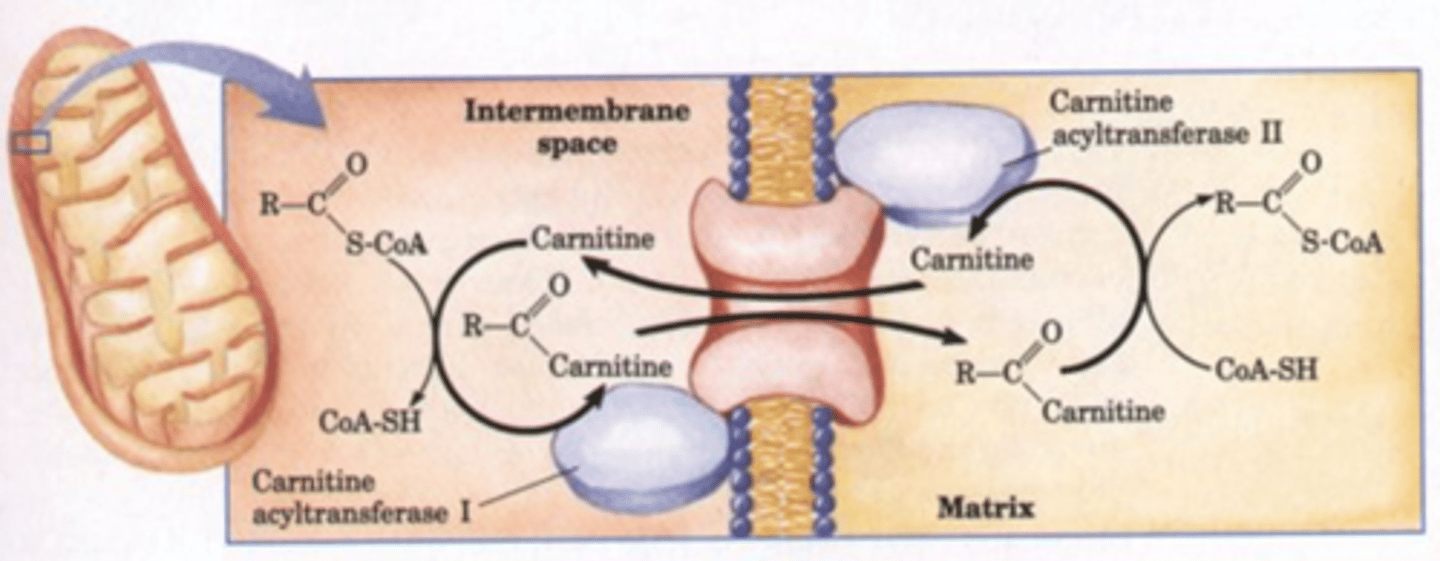
What does the carnitine shuttle do?
It transporters fatty acids into the mitochondria
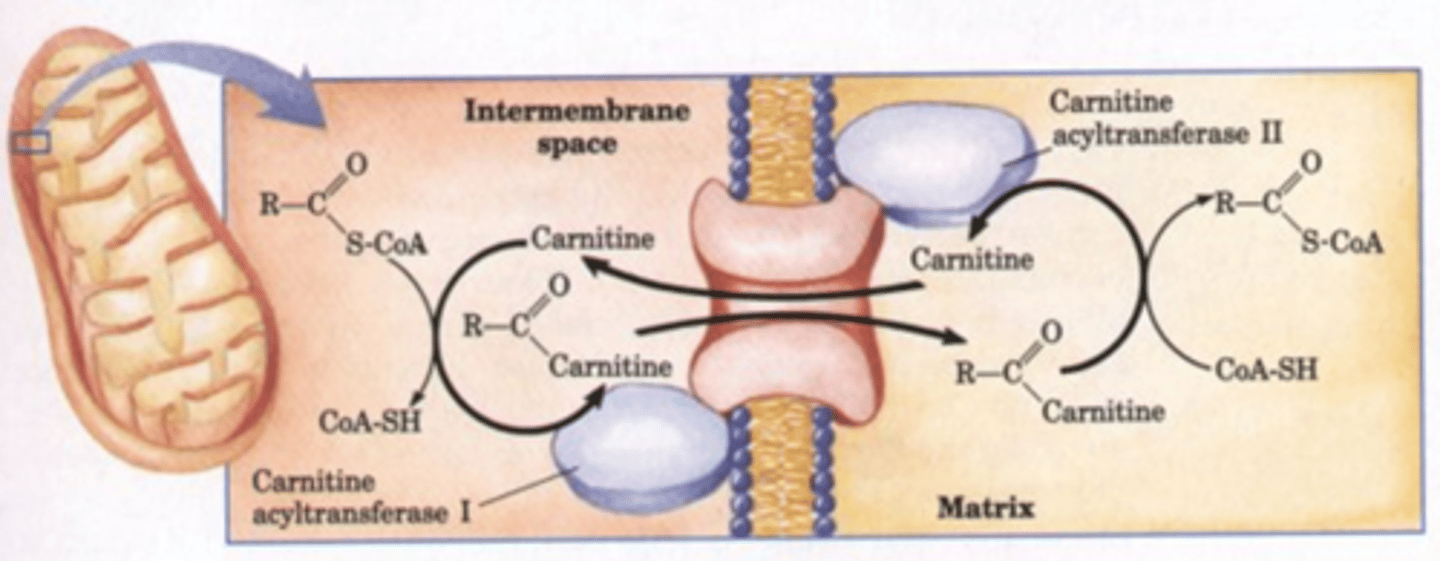
In the carnitine shuttle, where is fatty acyl-carnitine formed?
at the outer membrane or intermembrane space of the mitochondrion
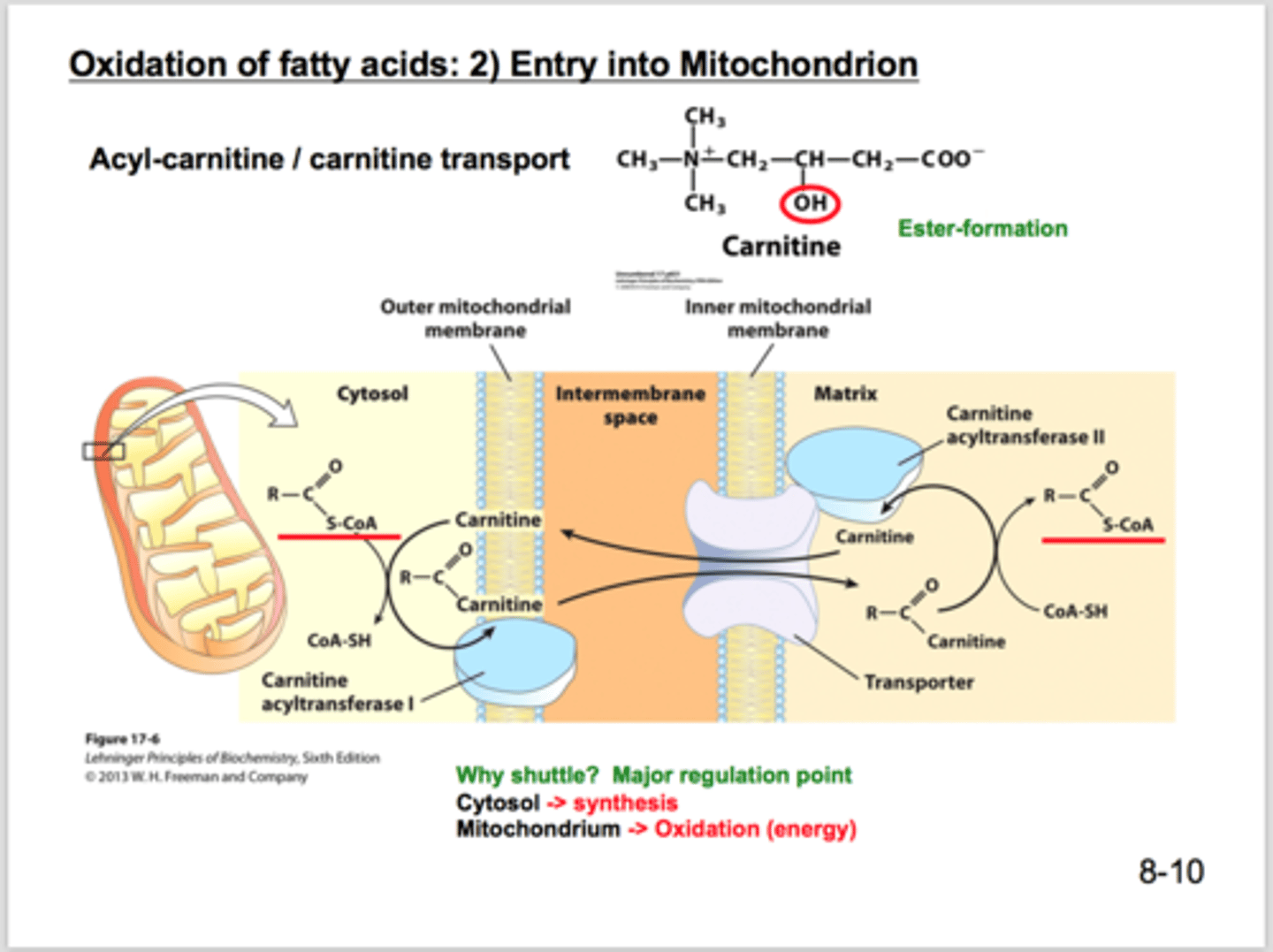
In the carnitine shuttle, how does fatty acyl-carnitine move into the mitochondria matrix, after being formed a the outer membrane/ intermembrane space?
It moves into the matrix by facilitated diffusion
Which enzyme is responsible for converting cytoplasmic fatty acids to fatty acyl-CoA? [carnitine shuttle]
acyl CoA synthetase
Which enzyme is responsible for trasferring the fatty acyl group from fatty acyl-CoA onto carnitine to form fatty acyl-carnitine? [carnitine shuttle]
carnitine acyltransferase I
How does fatty acyl-carnitine enter the mitochondria?
via the acyl-carnitine transporter (a.k.a. "carnitine transporter")
Which enzyme is responsible for transferring the fatty acyl group from fatty acyl-carnitine to coenzyme A to form fatty acyl-CoA, in the mitochondrion?
carnitine acyltransferase II
Which of the following enzymes is inhibited by malonyl CoA?
a) acyl CoA synthetase
b) carnitine acyltransferase I
c) carnitine acyltransferase II
d) acyl-carnitine transporter
e) 2 of the above
b) carnitine acyltransferase I
Why does malonyl CoA inhibit acyltransferase I?
inhibition prevents simultaneous synthesis and degradation of fatty acids
What are the three stages in the complete oxidation of fatty acids?
1) beta oxidation
2) citric acid cycle
3) electron transport chain
What is produced from beta oxidation?
acetyl CoA
In the complete oxidation of fatty acids, what happens to the acetyl CoA produced from beta-oxidation?
it is oxidized in the citric acid cycle
How many acetyl CoA molecules are produced per round of beta oxidation?
1
Which end are carbons removed from during beta oxidation?
the carboxyl end
How many ATP would be produced from the complete oxidation of a 16C fatty acid?
~108 ATP
How many carbon atoms are removed from a fatty acid during each pass of beta oxidation?
2
Briefly list the 4 steps of beta oxidation.
1. Dehydrogenation (oxidation)
2. Hydration
3. Dehydrogenation (oxidation)
4. Cleavage (thiolysis)
State the enzyme that catalyzes each of the following steps of beta oxidation:
a) step 1: dehydrogenation
b) step 2: hydration
c) step 3: dehydrogenation
d) step 4: cleavage
a) step 1: dehydrogenation - acyl CoA dehydrogenase
b) step 2: hydration - enol-CoA hydratase
c) step 3: dehydrogenation - β-hydroxyacyl-CoA dehydrogenase
d) step 4: cleavage - acyl-CoA acetyltransferase (thiolase)
What happens in the first step of beta oxidation?
_____Dehydrogenation (Oxidation)_____
The fatty acyl-CoA is converted to trans-Δ2-enoyl-CoA, producing one molecule of FADH2
^ basically, a double bond is formed between the α and β carbons (which were previously connected by a single bond).
The electrons striped from this (LEO -> losing electrons is oxidation) are added to FAD, to be taken to the electron transport chain.
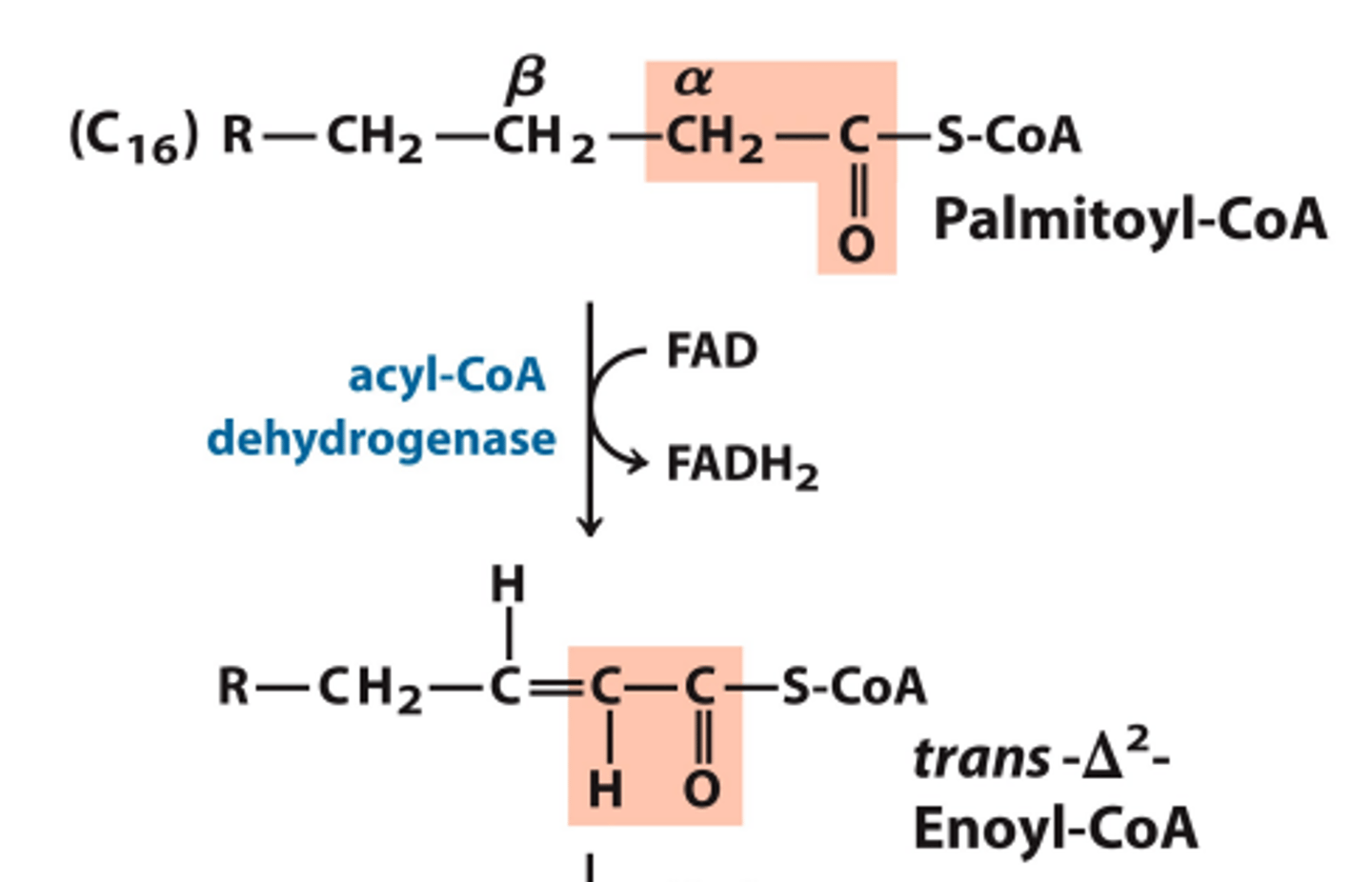
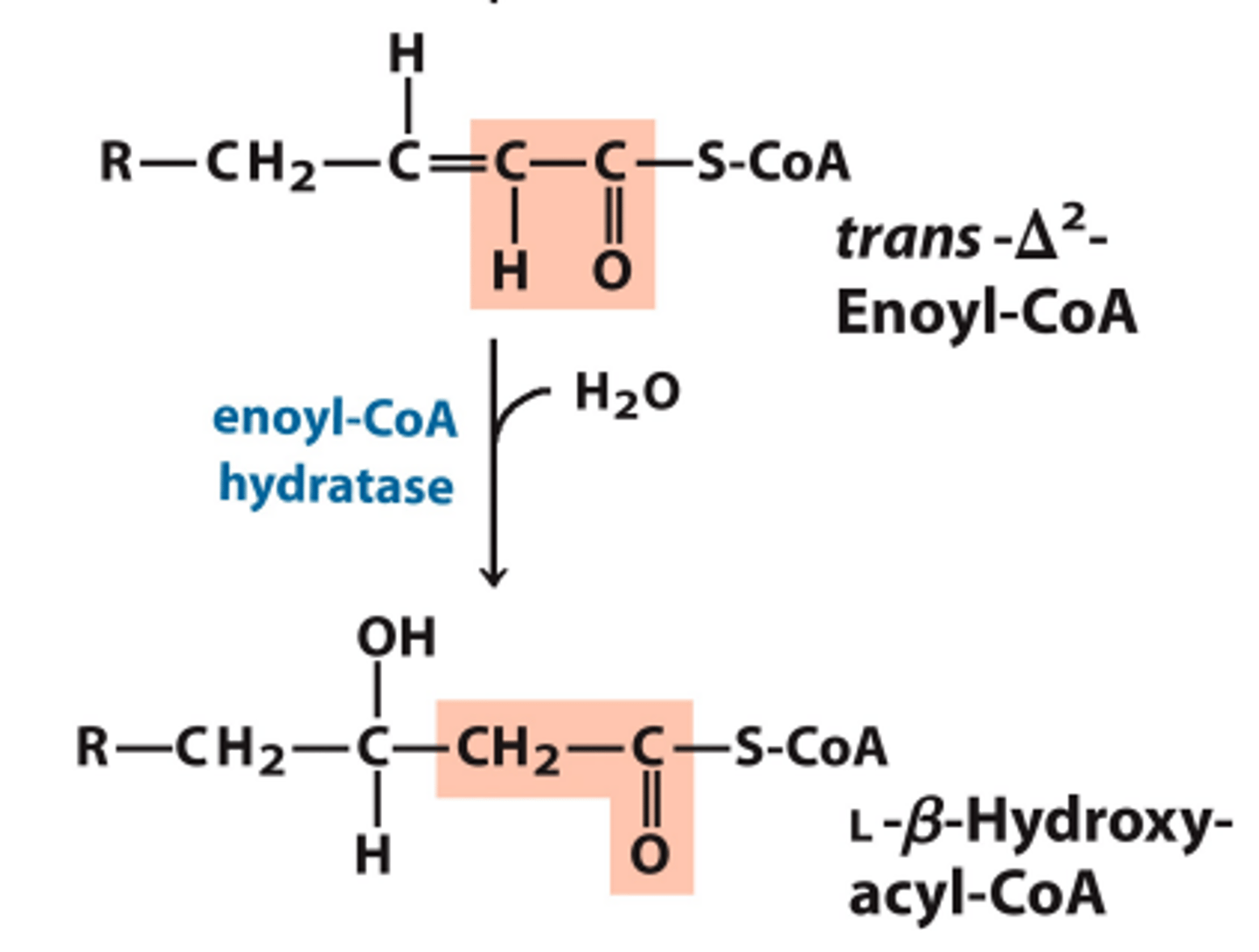
What happens in the second step of beta oxidation?
______Hydration____
Trans-Δ2-enoyl-CoA is combined with a molecule of water to form L-β-hydroxyacyl-CoA
^the double bond b/w the α and β carbons is changed back into a single bond. The OH from water gets added to the β-carbon, and the H from the H2O gets added to the α-carbon.
What happens in the third step of beta oxidation?
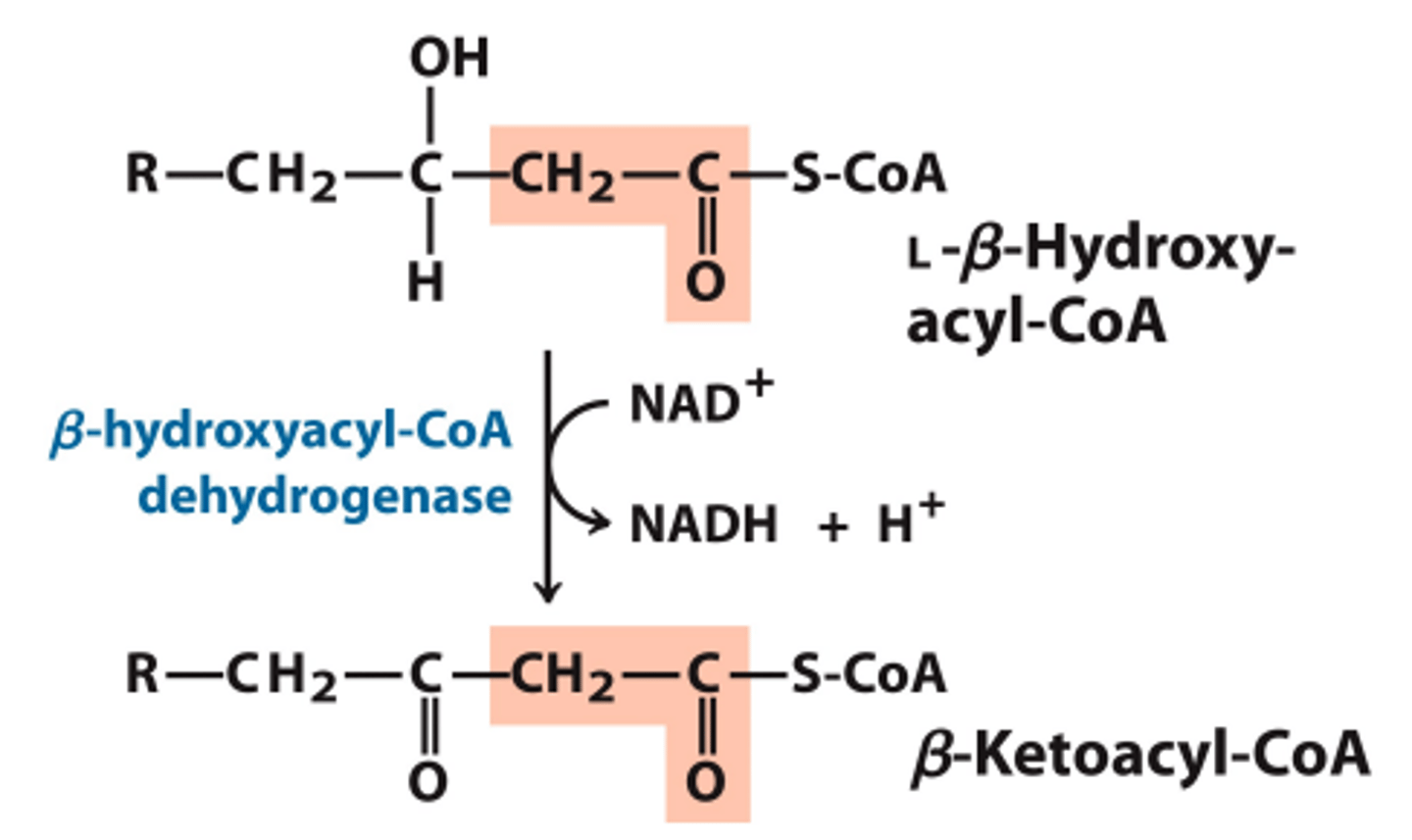
_____Dehydrogenation (Oxidation)_____
L-β-hydroxyacyl-CoA gets converted to β-ketoacyl-CoA, producing one molecule of NADH.
^in L-β-hydroxyacyl-CoA, there is an OH group on the β-carbon, and a saturated α-carbon. In this step, two H's are removed from the β-carbon (hence "dehydrogenation"). As a result, the β-carbon is left as a ketone group, instead of w/ a hydroxyl group. The 2 H's are used to make NADH + H+.
What happens in the fourth step of beta oxidation?
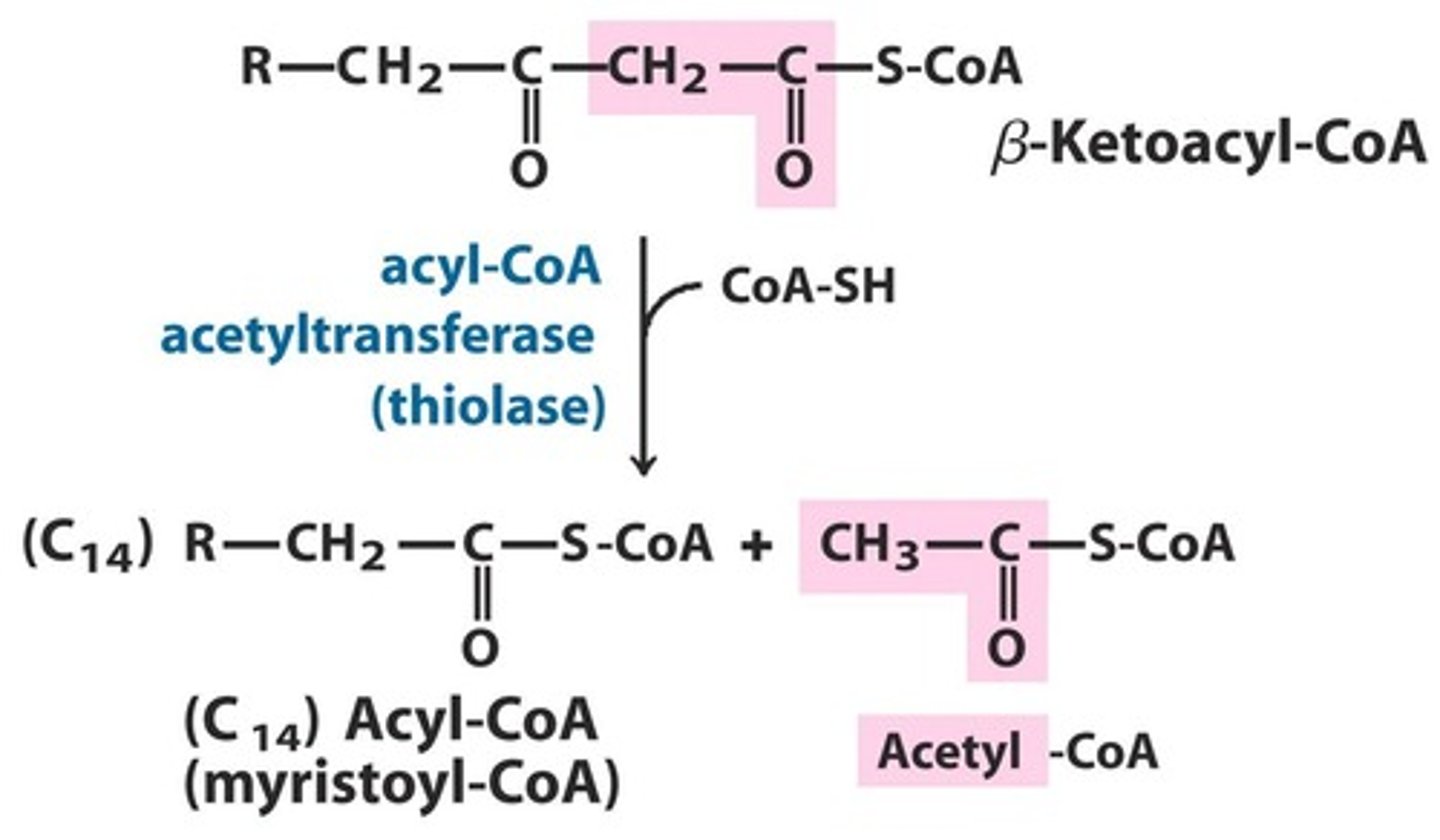
____Cleavage (Thiolysis)____
β-ketoacyl-CoA has an acetyl-CoA molecule cleaved off, leaving behind a fatty acyl-CoA 2 C shorter than when it entered that pass of beta oxidation.
Briefly list the three problem cases that can occur in beta oxidation.
Problem 1: Odd number of carbons
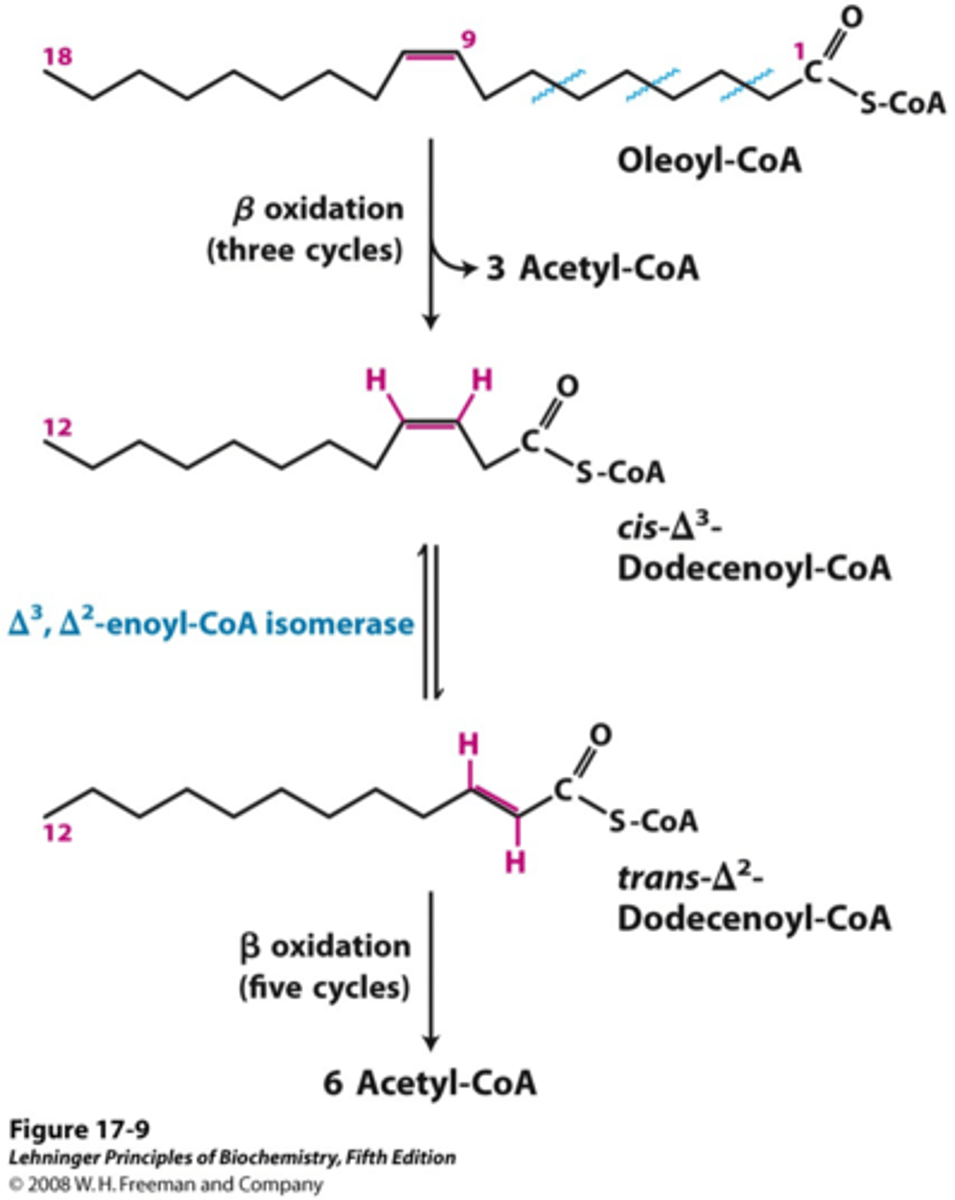
Problem 2: Cis ∆3 double bond
Problem 3: Two cis double bonds in a row
How are fatty acids with an odd number of carbons oxidized?
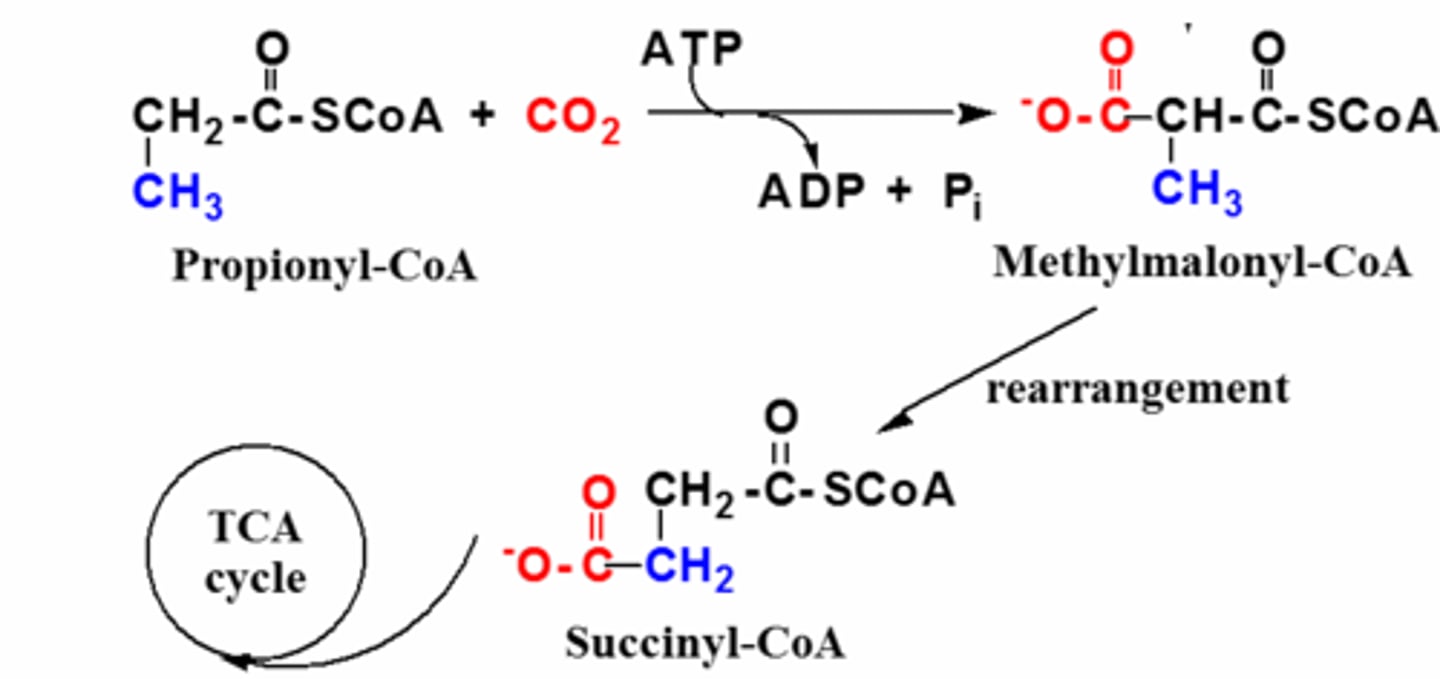
🔹 Initially, β-oxidation proceeds normally.
🔹 When it gets down to the last three carbons, it leaves propionyl-CoA (3C) instead of acetyl-CoA (2C).
🔹 Acyl-CoA dehydrogenase cannot oxidize propionyl-CoA --> instead, there is a separate 3 enzyme pathway that carboxylates propionyl CoA (3C) to succinyl CoA (4C)
🔹 Succinyl CoA is a TCA cycle intermediate ∴ gets oxidized that way
Why are cis ∆3 fatty acids not substrates for acyl CoA dehydrogenase (enzyme for step 1 of beta-oxidation)?
Because acyl CoA dehydrogenase's job is to put a double bond b/w the α and β carbons, but in cis ∆3 fatty acids, C3 (the β carbon) is already in a double bond.
How are fatty acids with a cis double bond oxidized?
Initially, the beta oxidation enzymes ignore the kink and process the fatty acid normally.
Once the fatty acid has been cleaved down to where the cis double bond is at C3 (the beta carbon) acyl CoA dehydrogenase can no longer use the FA as a substrate.
A different enzyme is then required: ∆3,∆2-enoyl-CoA isomerase. It moves the double bond, such that the cis∆3 fatty acid becomes a trans ∆2 fatty acid.
The normal beta oxidation enzyme for step 2, enoyl-CoA hydratase, can then use the trans ∆2 fatty acid as a substrate. As a result, beta oxidation proceeds normally after this point.
HOWEVER, one fewer FADH2 is produced, overall, since one acyl-CoA dehydrogenase step was skipped.
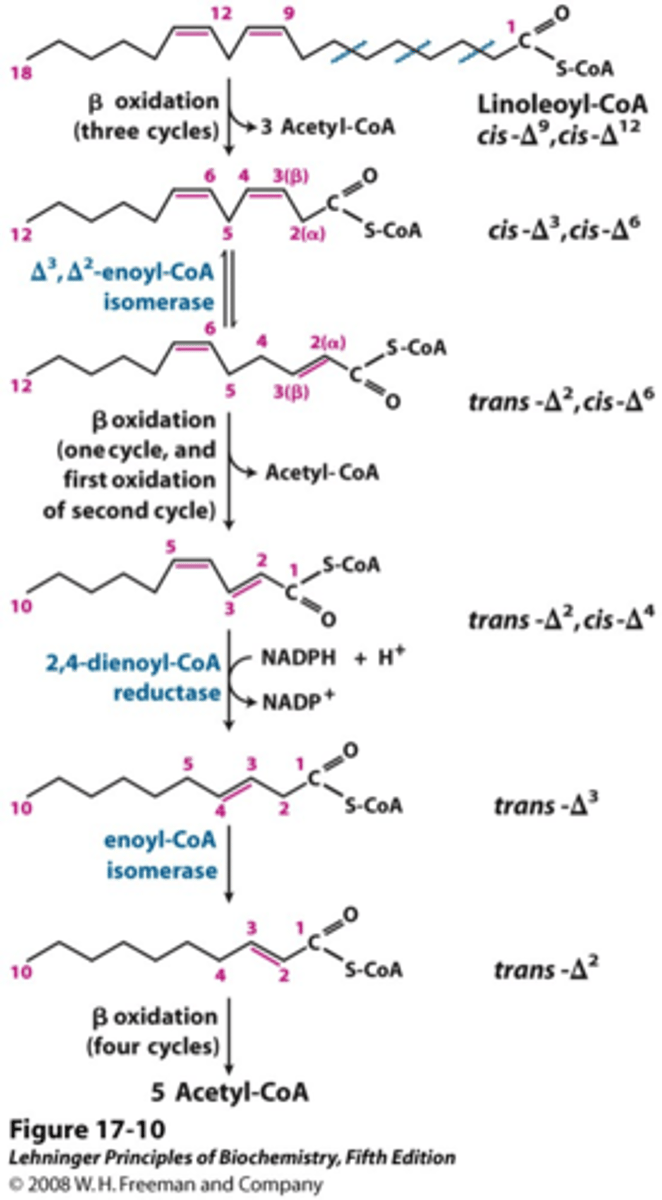
How would a fatty acid with two double bonds, one at C9 (odd) and the other at C12 (even), be oxidized?
Beta oxidation would proceed normally, up until it produced a cis-∆3,∆6 fatty acid.
The cis-∆3,∆6 fatty acid would at this point be converted to a trans-∆2 cis-∆6 fatty acid by ∆3,∆2-enoyl-CoA isomerase
The trans-∆2 cis-∆6 fatty acid is a substrate for the normal hydratase enzyme in step 2 of beta oxidation (enoyl-CoA hydratase).
This beta oxidation cycle then proceeds normally, leaving a cis-∆4 fatty acid.
In the next cycle:
With a cis-∆4 FA substrate, acyl-CoA dehydrogenase produces a trans-∆2 cis-∆4 fatty acid.
The resulting conjugated double bond cannot be hydrated by enoyl-CoA hydratase --> instead, it is reduced by 2,4-dienoyl-CoA reductase, yielding a trans-∆3 fatty acid.
The trans-∆3 fatty acid is then converted to a trans-∆2 fatty acid by ∆3,∆2-enoyl-CoA isomerase.
After this, beta oxidation proceeds normally.
T/F: "Acetyl CoA can enter the TCA cycle."
True
T/F: "Succinyl CoA can enter the TCA cycle."
True, it is an intermediate.
________________________ can be turned into ketone bodies
a) α-ketoglutarate
b) succinyl CoA
c) acetyl CoA
d) oxaloacetate
e) all of the above
c) acetyl CoA
Where in the body are ketone bodies made?
a) small intestine
b) liver
c) brain
d) muscles
e) all of the above
b) liver
T/F: "The brain prefers glucose as a fuel source, and will only use fatty acids if blood sugar levels are very low."
False. The brain does prefer glucose as a fuel source; however, it cannot use fatty acids at all. The alternative fuel to glucose is ketone bodies.
List the three ketone bodies
◾acetoacetate
◾D-β-hydroxybutyrate
◾acetone
Which of the following is formed by reducing acetoacetate?
a) acetyl CoA
b) acetone
c) D-β-hydroxybutyrate
d) none of the above
c) D-β-hydroxybutyrate
Which of the following is formed by oxidizing acetoacetate?
a) acetyl CoA
b) acetone
c) D-β-hydroxybutyrate
d) none of the above
d) none of the above
^However, D-β-hydroxybutyrate is formed byreducing acetoacetate.
Which of the following is formed by condensing three acetyl-CoA molecules, then cleaving one?
a) acetone
b) acetoacetate
c) D-β-hydroxybutyrate
d) none of the above
b) acetoacetate
Which of the following is a minor product of ketone anabolism, formed by decarboxylation, and is subsequently exhaled?
a) acetone
b) acetoacetate
c) D-β-hydroxybutyrate
d) none of the above
a) acetone
State the number of carbons in each of the following molecules:
a) acetoacetate
b) D-β-hydroxybutyrate
c) acetone
a) acetoacetate - 4
b) D-β-hydroxybutyrate - 4
c) acetone - 3
What is the end product of ketone body catabolism?
2 acetyl-CoA
What happens to the acetyl CoA produced from ketone catabolism? How is it oxidized?
TCA cycle
Where in the cell does fatty acid biosynthesis occur?
a) Rough ER
b) Smooth ER
c) Mitochondria
d) Cytoplasm
e) none of the above
d) Cytoplasm
Fatty acid synthesis is:
a) oxidative, using NADPH
b) oxidative, using NADH
c) reductive, using NADPH
d) reductive, using NADH
e) oxidative, using FADH2
c) reductive, using NADPH
What is the starting substrate for fatty acid biosynthesis?
acetyl CoA
Which molecule is acetyl CoA converted to, in the committed step of fatty acid biosynthesis?
malonyl CoA
T/F: "Acetyl CoA is transported directly from the mitochondria to the cytosol."
False. Acetyl-CoA is not directly transported from the mitochondria to the cytosol
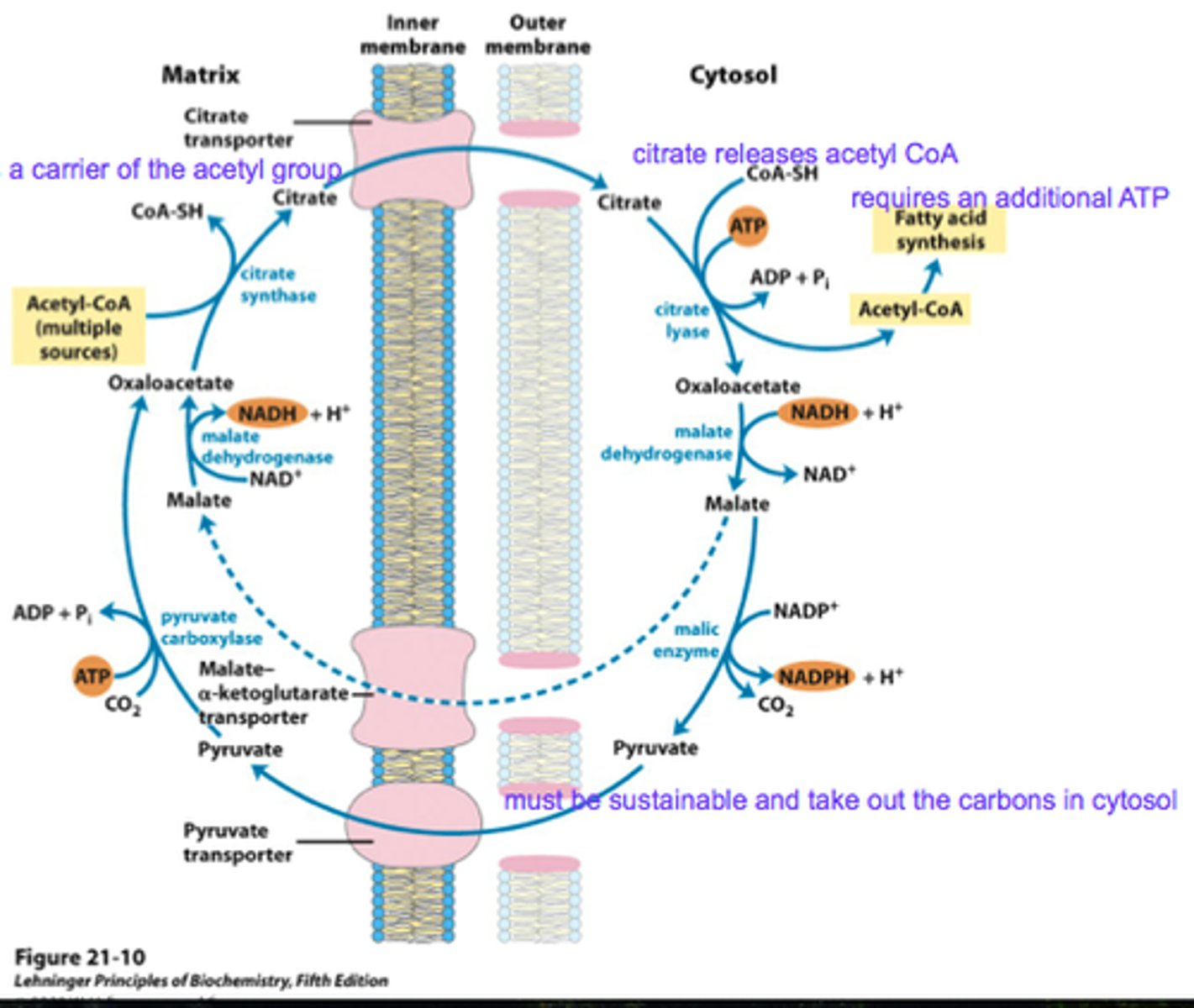
How does mitochondrial acetyl CoA get to the cytosol?
_______The ACETYL GROUP SHUTTLE______
(1)Mitochondrial acetyl CoA is combined with oxaloacetate to produce citrate
(2) Citrate is transported to the cytosol
(3) Citrate lyase in the cytosol produces acetyl CoA
(4) Oxaloacetate is reduced to malate, which can then return to the mitochondria, either directly, or after decarboxylation to pyruvate.
(5) Mitochondrial enzymes use malate/ pyruvate to regenerate oxaloacetate
note: most of these enzymes are part of other metabolic pathways, e.g., TCA, gluconeogenesis
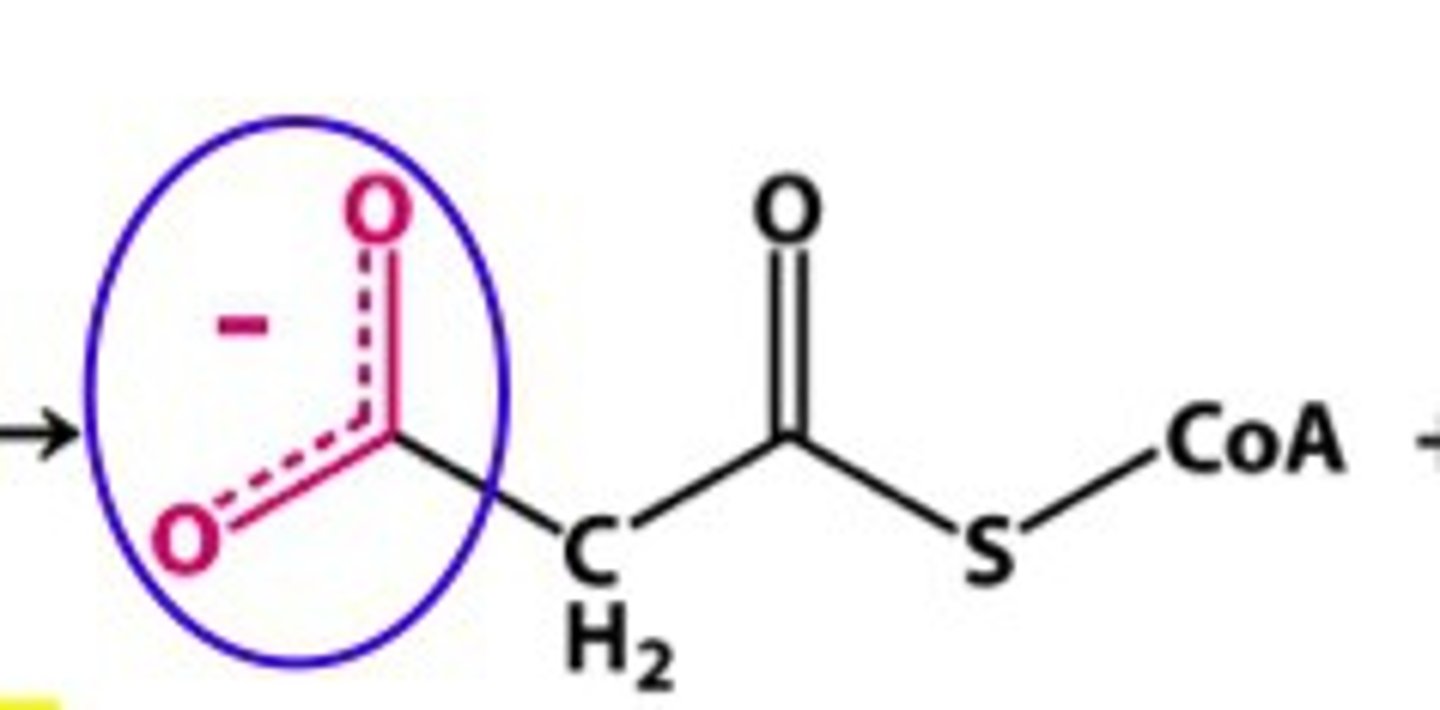
T/F: "Fatty acids are synthesized from the activated intermediate malonyl CoA, which is also found in fatty acid degradation."
False.
The first half is true: Fatty acids ARE synthesized from the activated intermediate malonyl CoA; however, malonyl CoA is NOT found in fatty acid degradation.
State how many of each of the following are found in malonyl CoA:
a) carbons
b) ketone groups
c) carboxyl groups
d) CoA's
a) carbons - 3
b) ketone groups - 1
c) carboxyl groups - 1
d) CoA's - 1
T/F: "The committed step of fatty acid biosynthesis, is an ATP-dependent reaction."
True.
Recall that the first/ committed step is:
Acetyl CoA + HCO3 --> malonyl CoA
^which requires ATP
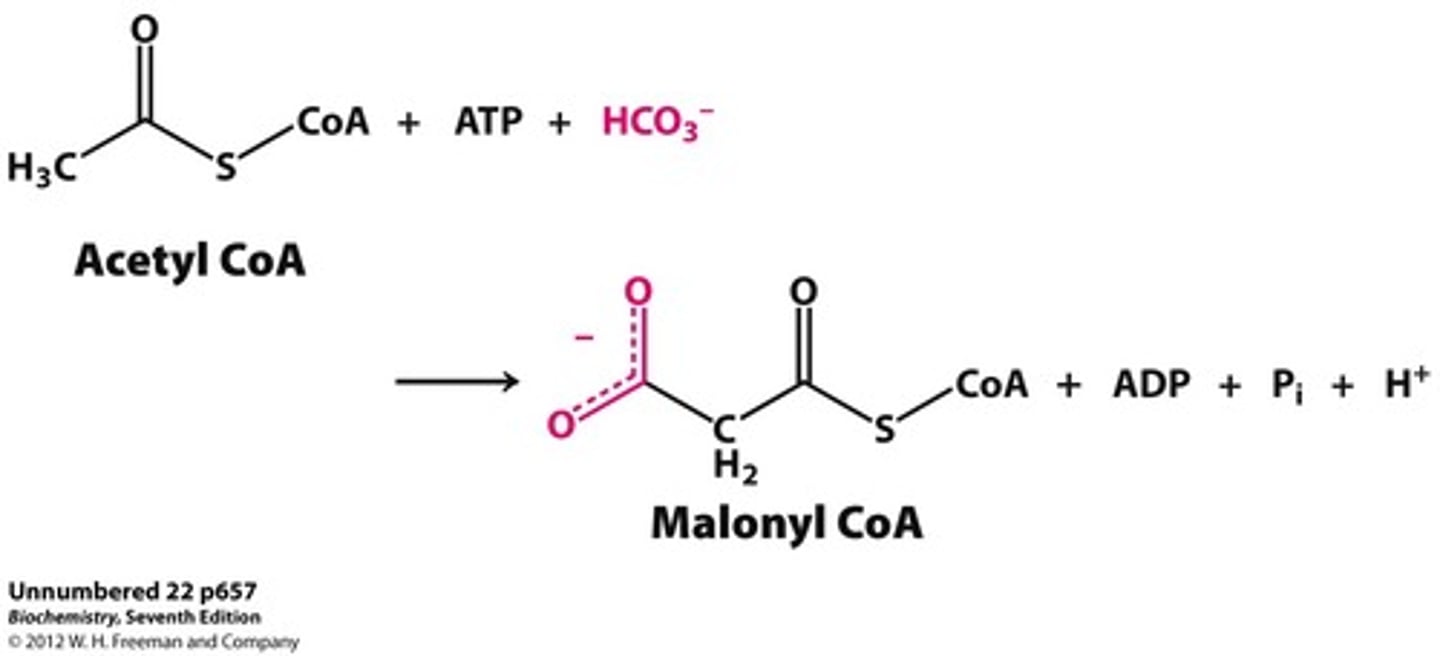
Which enzyme catalyses the committed step in fatty acid biosynthesis (the one that produces malonyl CoA)?
acetyl-CoA carboxylase
What are the three functional regions of acetyl-CoA carboxylase?
1. Biotin carrier protein
2. Biotin carboxylase
3. Transcarboxylase
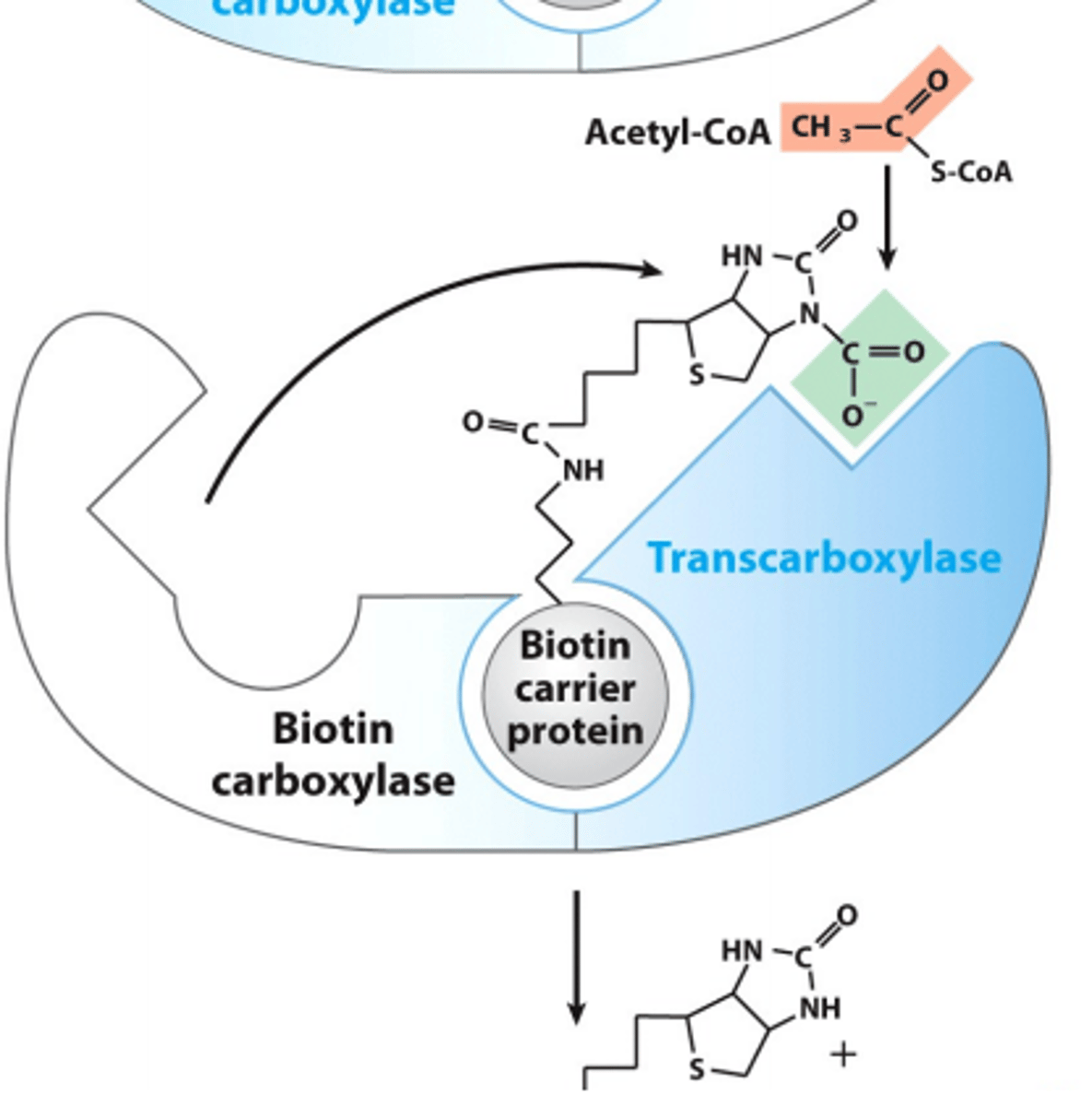
State the function of each of the following functional regions of acetyl-CoA carboxylase:
a) Biotin carrier protein
b) Biotin carboxylase
c) Transcarboxylase
a) Biotin carrier protein -> carries the biotin cofactor
b) Biotin carboxylase -> enzyme that uses ATP to activate biotin w/ CO2
c) Transcarboxylase -> transfers CO2 from biotin to acetyl CoA, to form malonyl CoA
In the fatty acid biosynthesis cycle, carbon atoms are added _____ at a time in a repeating ____ step sequence.
a) 1, 8
b) 2, 8
c) 4, 8
d) 1, 4
e) 2, 4
e) 2, 4
Briefly list the four steps in the fatty acid biosynthesis cycle.
0) Charging of FA synthase w/ acetyl CoA and malonyl-CoA
1) Condensation of malonyl CoA w/ growing FA
2) Keto reduction
3) Dehydration
4) Enoyl reduction
What are the substrates of the fatty acid biosynthesis cycle?
Saturated acyl groups + activated malonyl CoA
Which cofactor is used as the reducing agent in the fatty acid biosynthesis cycle?
a) NADH
b) NADPH
c) FADH2
d) NAD+
e) FAD
b) NADPH
In the fatty acid biosynthesis cycle, where is the growing fatty acid chain covalently attached?
a small protein called the Acyl Carrier Protein (ACP)
Which enzyme in the fatty acid biosynthesis cycle charges fatty acid synthase w/ acetyl-CoA and malonyl-CoA?
malonyl/acetyl-CoA-ACP transferase
Which enzyme in the fatty acid biosynthesis cycle is responsible for the condensation of the activated acyl group w/ malonyl CoA?
β-ketoacyl-ACP synthase
Which enzyme in the fatty acid biosynthesis cycle catalyzes the reduction of the β-keto to β-alcohol?
β-ketoacyl-ACP reductase
Which enzyme in the fatty acid biosynthesis cycle catalyzes the elimination of H2O to form a C=C double bond b/w the α and β carbons?
β-hydroxyacyl-ACP dehydratase
Which enzyme in the fatty acid biosynthesis cycle catalyzes the reduction of the C=C double bond b/w the α and β carbon to saturated acyl groups?
enoyl-ACP reductase
State which enzyme catalyzes the reaction in each step of the fatty acid biosynthesis cycle:
a) step 0
b) step 1
c) step 2
d) step 3
e) step 4
a) step 0 - malonyl/ acetyl-CoA-ACP transferase
b) step 1 - β-ketoacyl-ACP synthase
c) step 2 - β-ketoacyl-ACP reductase
d) step 3 - β- hydroxyacyl-ACP dehydratase
e) step 4 - enoyl-ACP reductase
What does acetyl-CoA carboxylase do?
It catalyzes the formation of malonyl-CoA from acetyl-CoA and bicarbonate
How does the structure of fatty acid synthase differ in each of the following organisms?
a) Plants & bacteria
b) Vertebrates
c) Fungi
a) Plants & bacteria - made of separate polypeptides
b) Vertebrates - single polypeptide, bilobed dimer
c) Fungi - two separate chains (double ring)
Fatty acid synthase (FAS) is a multi-enzyme complex. How many functional domains does it contain?
6 enzymes functions + ACP
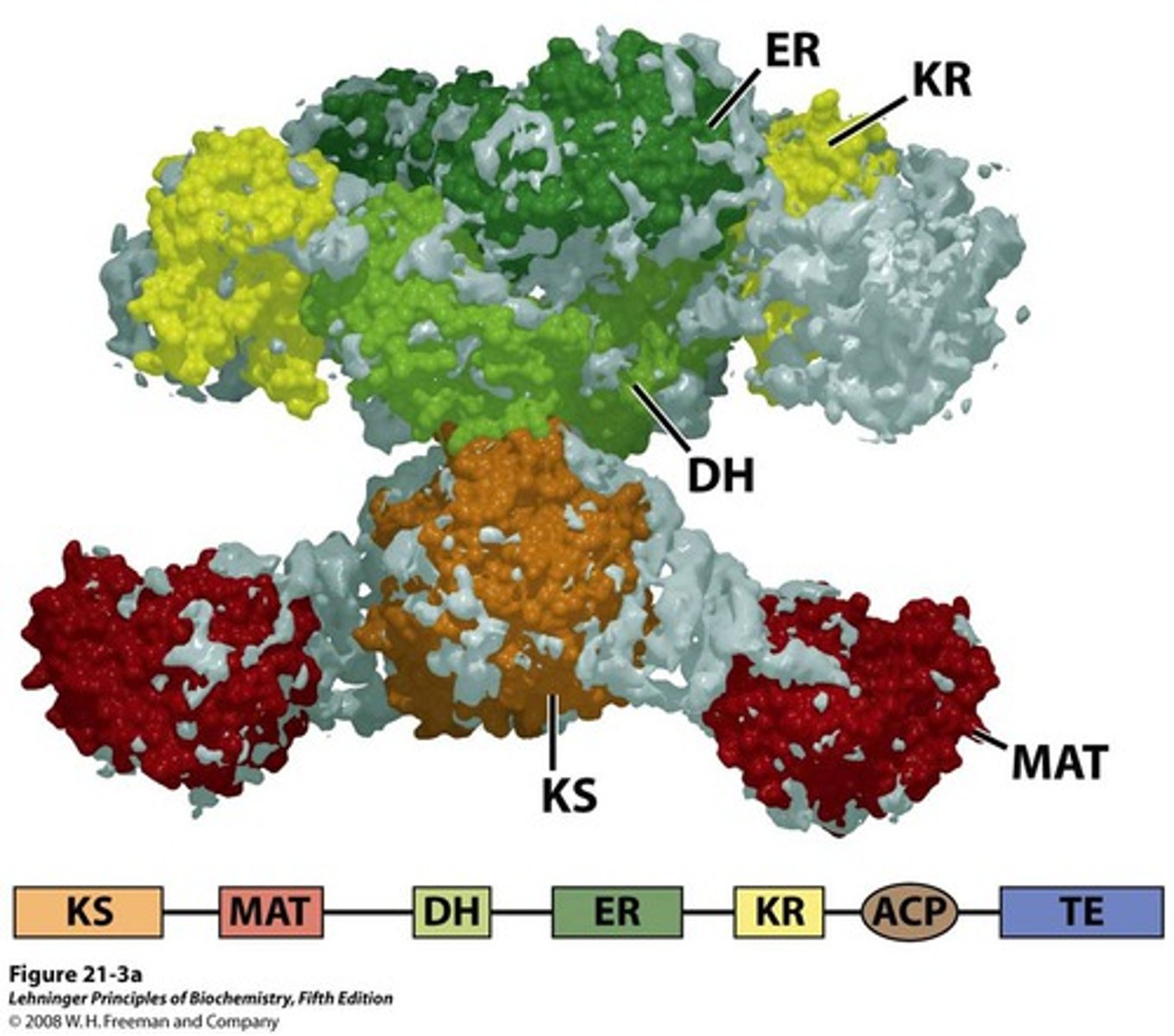
List all of the functional domains of fatty acid synthase (FAS)
KS = β-ketoacyl-ACP synthase
MAT = malonyl/acetyl-CoA-ACP transferase
DH = β-hydroxyacyl-ACP dehydratase
ER = enoyl-ACP reductase
KR = β-ketoacyl-ACP reductase
ACP = acyl carrier protein
TE = thioesterase
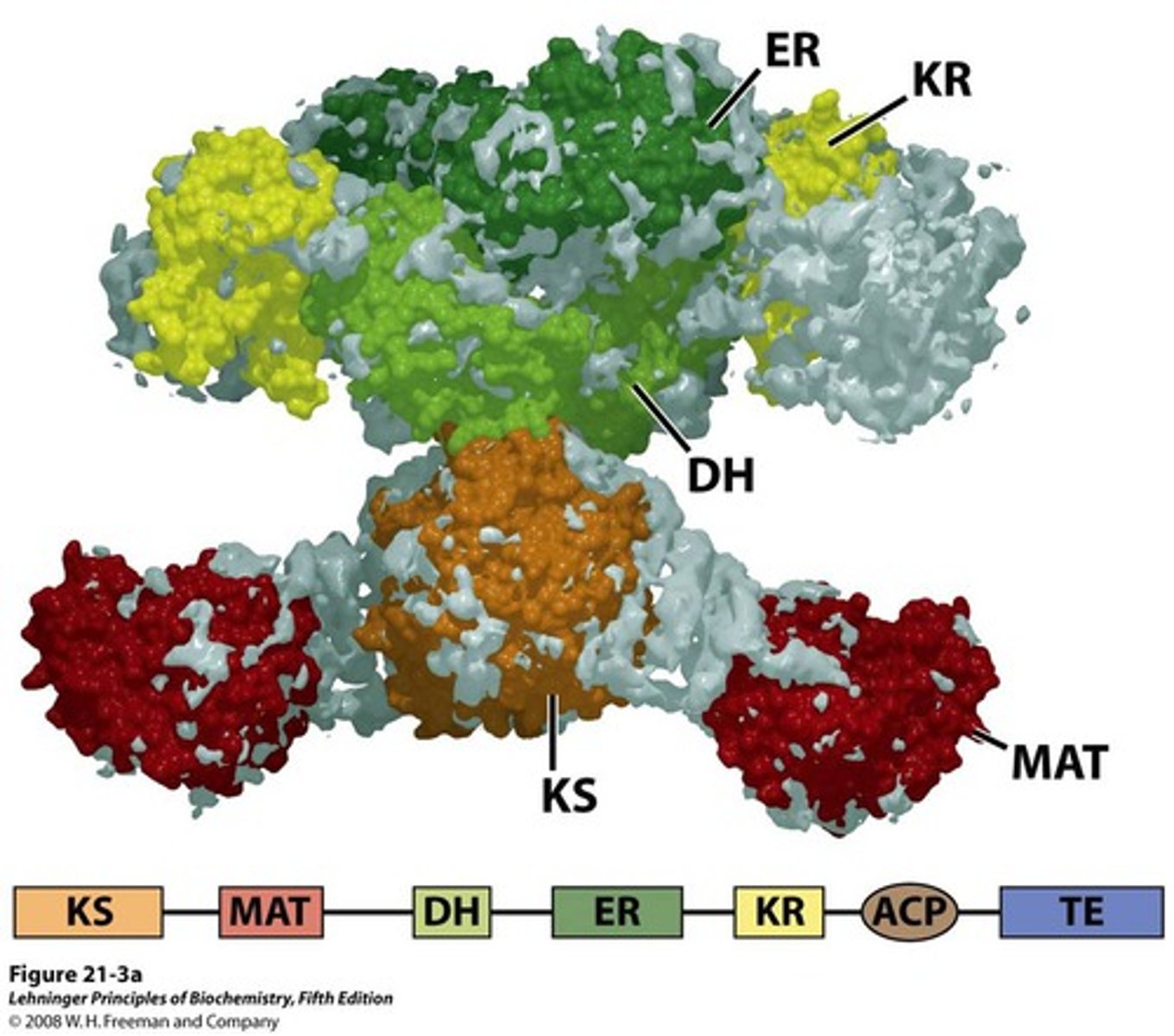
Describe how fatty acid synthesis is initiated (i.e., "Step 0")
Malonyl/acetyl-CoA-ACP transferase (MAT) transfers acetyl (from acetyl-CoA) to the acyl carrier protein part of FAS.
β-ketoacyl-ACP synthase (KS) then transfers the acetyl group from the acyl carrier protein (ACP) to itself.
MAT then moves the malonyl group to the ACP.
KS is then ready for the first condensation step.
After one round of fatty acid biosynthesis has occurred, there is a butyryl group on ACP. From this point, describe how the second round of fatty acid synthesis begins.
KS transfers the butyryl group from ACP to itself.
MAT transfers a new malonyl group onto ACP.
KS then condenses the new malonyl group with the butyryl group from the first round.
In the synthesis of palmitate (C16), where does the first acetyl group end up in the final fatty acid?
a) closest to the carboxylate group
b) furthest from the carboxylate group
c) part of the carboxylate group
d) highly variable
b) furthest from the carboxylate group
T/F: "In fatty acid biosynthesis, the substrate is physically linked to fatty acid synthase (FAS) throughout the whole process."
True
How is a complete fatty acid removed from fatty acid synthase?
Cleavage by the last enzyme, thioesterase (TE)
Which of the following cofactors is involved in fatty acid biosynthesis, but not fatty acid oxidation?
a) NADH
b) NADPH
c) FADH2
d) all of the above
e) none of the above
b) NADPH
T/F: "The fatty acid biosynthesis cycle can produce fatty acids of any length."
False. Longer chain fatty acids (>16C) are synthesized from palmitate through fatty acid elongation systems.
Why is palmitate important in fatty acid synthesis?
Palmitate is the principle product of fatty acid synthase (FAS) in animal cells, and is the precursor of other long chain fatty acids.
State the acyl carrier for each of the following processes:
a) beta oxidation
b) fatty acid biosynthesis cycle (w/ FAS)
c) fatty acid elongation systems (w/ palmitate)
a) beta oxidation - CoA
b) fatty acid biosynthesis cycle (w/ FAS) - ACP
c) fatty acid elongation systems (w/ palmitate) - CoA
In the synthesis of longer chain fatty acids via fatty acid elongation systems, what are the generic names for the types of enzymes involved in the steps?
elongases & desaturases
(for elongation & desaturation steps)
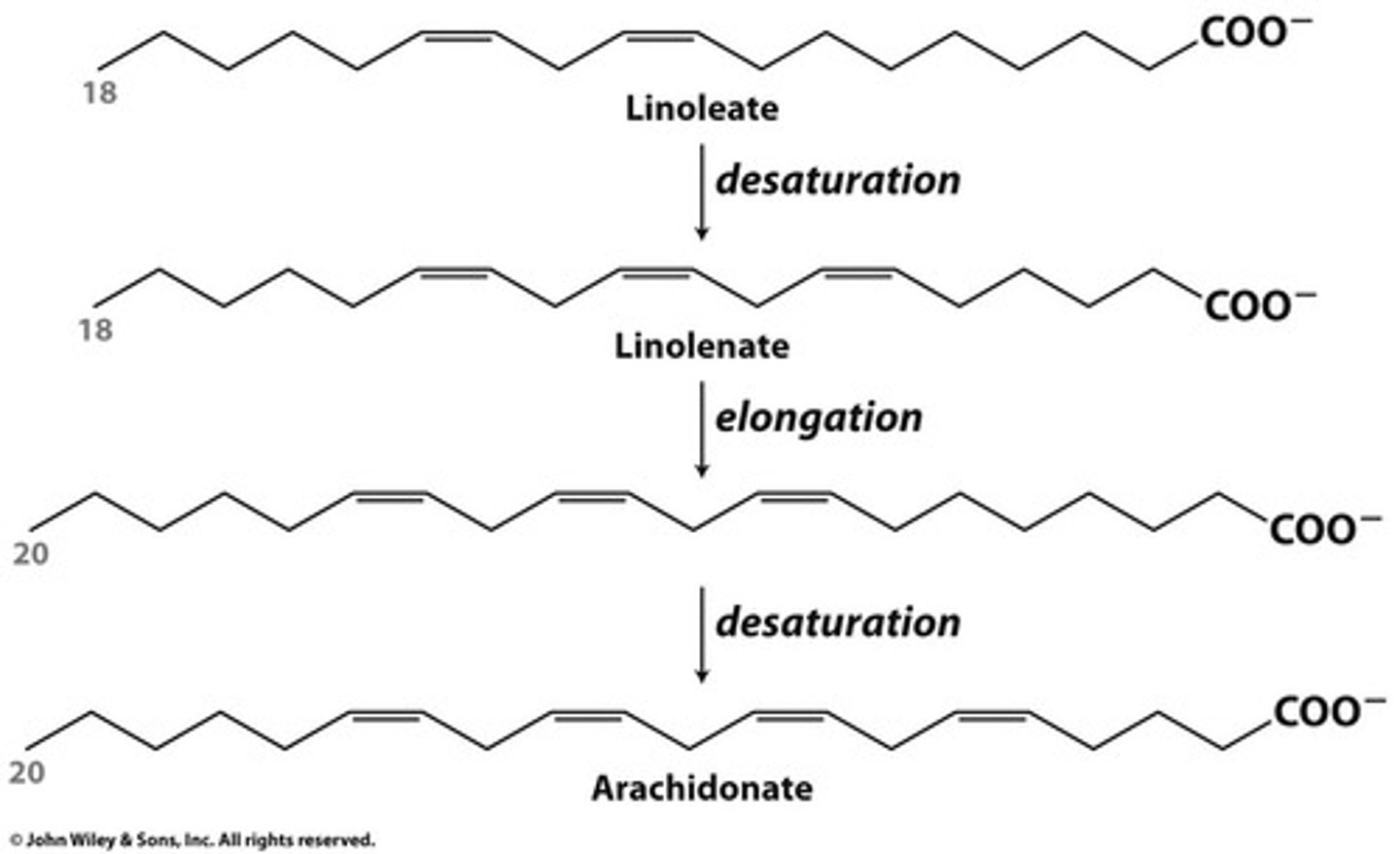
In mammals, fatty acyl-CoA desaturases ....
a) make cis double bonds only
b) make trans double bonds only
c) make both cis and trans double bonds
d) are incapable of making double bonds
a) make cis double bonds only
^specifically, they desaturate only at the 9 position (make Δ9 FAs)
Fatty acyl-CoA desaturases require...
a) Pi & cytochrome b4
b) Pi & cytochrome a2
c) Pi, oxygen, and cytochrome b
d) oxygen & cytochrome a1
e) oxygen & cytochrome b5
e) oxygen & cytochrome b5
Fatty acid desaturases require oxygen and cytochrome b5, which must be....
a) re-reduced using NADPH
b) oxidized using NADP+
c) re-reduced using NADH
d) oxidized using NAD+
e) hydrated w/ H2O
a) re-reduced using NADPH
Which of the following molecules is NOT necessary for the production of Δ9 unsaturated fatty acids?
a) O2
b) H+
c) Cyt b5
d) Fe2+
e) none of the above
e) none of the above
Which of the following molecules is NOT necessary for the production of Δ9 unsaturated fatty acids?
a) cyt b5 reductase
b) FADH2
c) fatty acyl-CoA desaturase
d) CoA
e) none of the above
e) none of the above
T/F: "Mammals cannot further desaturate Δ9 fatty acids."
True
T/F: "Mammals can only further desaturate Δ9 fatty acids in the case of linoleate production, as linoleate is an essential fatty acid."
False. Linoleate is a necessary fatty acid, but humans still can't produce it. It is obtained from the diet.
Recall that linoleate is 18:2Δ9,12 (has 2 double bonds, one at the 9C position and the 12C position)