CM 2/3/4 : Viral Attachment, Entry, & Replication Strategies
 Studied by 0 people
 Call Kai
 Learn
Learn Practice Test
 Spaced Repetition
 Match
Match Flashcards
 Knowt Play
1/81

Earn XP
Description and Tags
Myco/Viro
Name | Mastery | Learn | Test | Matching | Spaced |
|---|
No study sessions yet.
82 Terms
What is the first step in viral replication?
Attachment
What is the role of receptors in viral tropism?
Receptors determine the specific host cells that a virus can infect.
What is the attachment protein of HIV?
gp120
Which receptor does HIV bind to?
CD4

What is the attachment protein of the Epstein-Barr virus?
GP350/220
Which cells does Epstein-Barr virus primarily infect?
B lymphocytes
What is the attachment protein of the Influenza virus?
Hemagglutinin
What receptor does the Influenza virus bind to?
Sialic acid
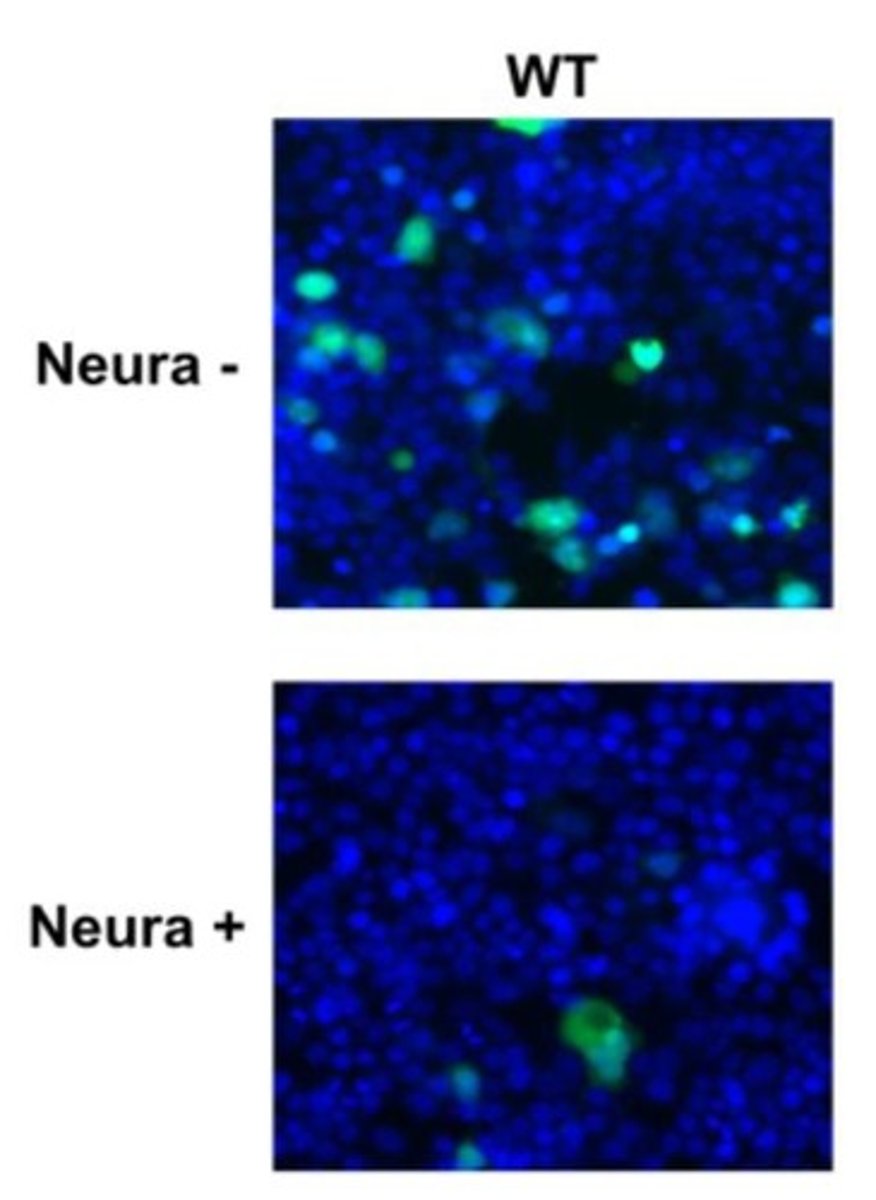
What is the attachment protein of SARS-CoV-2?
Spike
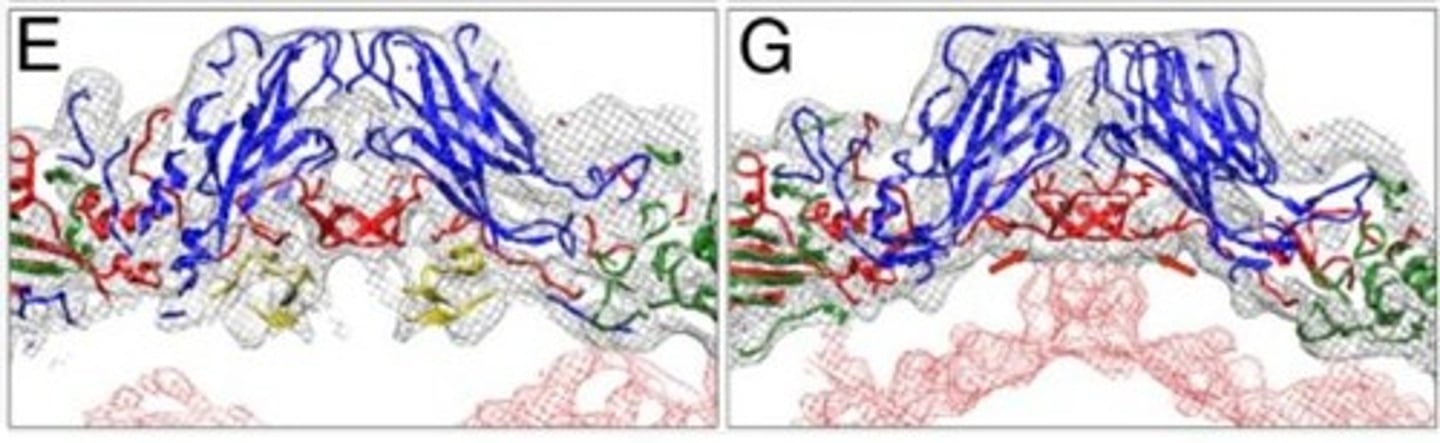
What receptor does SARS-CoV-2 use for entry?
ACE2
What is the entry mechanism for non-enveloped viruses?
Portal formation or disintegration of the capsid.
What is the first step in identifying a virus receptor using a biochemical approach?
Treat susceptible cells with proteases/glycosidases.
What is the role of pH in the triggering of membrane fusion for some viruses?
A decrease in pH can trigger membrane fusion.
What is the function of the hemagglutinin (HA) protein in Influenza A?
It binds to sialic acid on glycoproteins for viral entry.
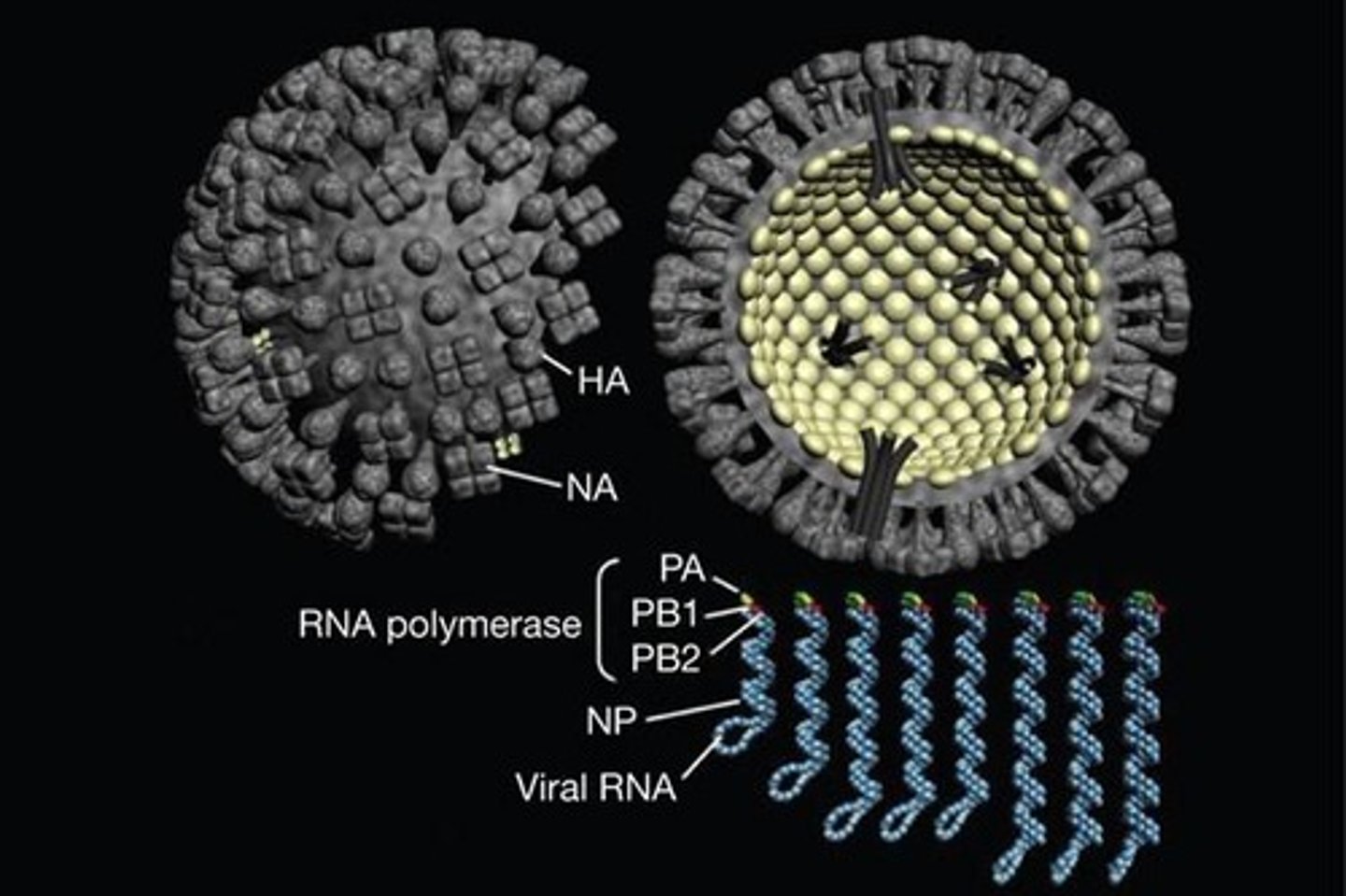
What is the structure of the hemagglutinin protein?
It consists of a globular head (HA1) and an elongated stem (HA2).
What is the mechanism of membrane fusion for enveloped viruses?
Membrane fusion is mediated by glycoproteins that facilitate the merging of viral and host membranes.
What is the role of the fusion protein in viruses?
It facilitates the fusion of the viral envelope with the host cell membrane.
What is syncytium formation?
A cytopathic effect caused by certain enveloped viruses where infected cells fuse with neighboring cells.
What is the primary receptor for rhinoviruses?
ICAM-1 protein
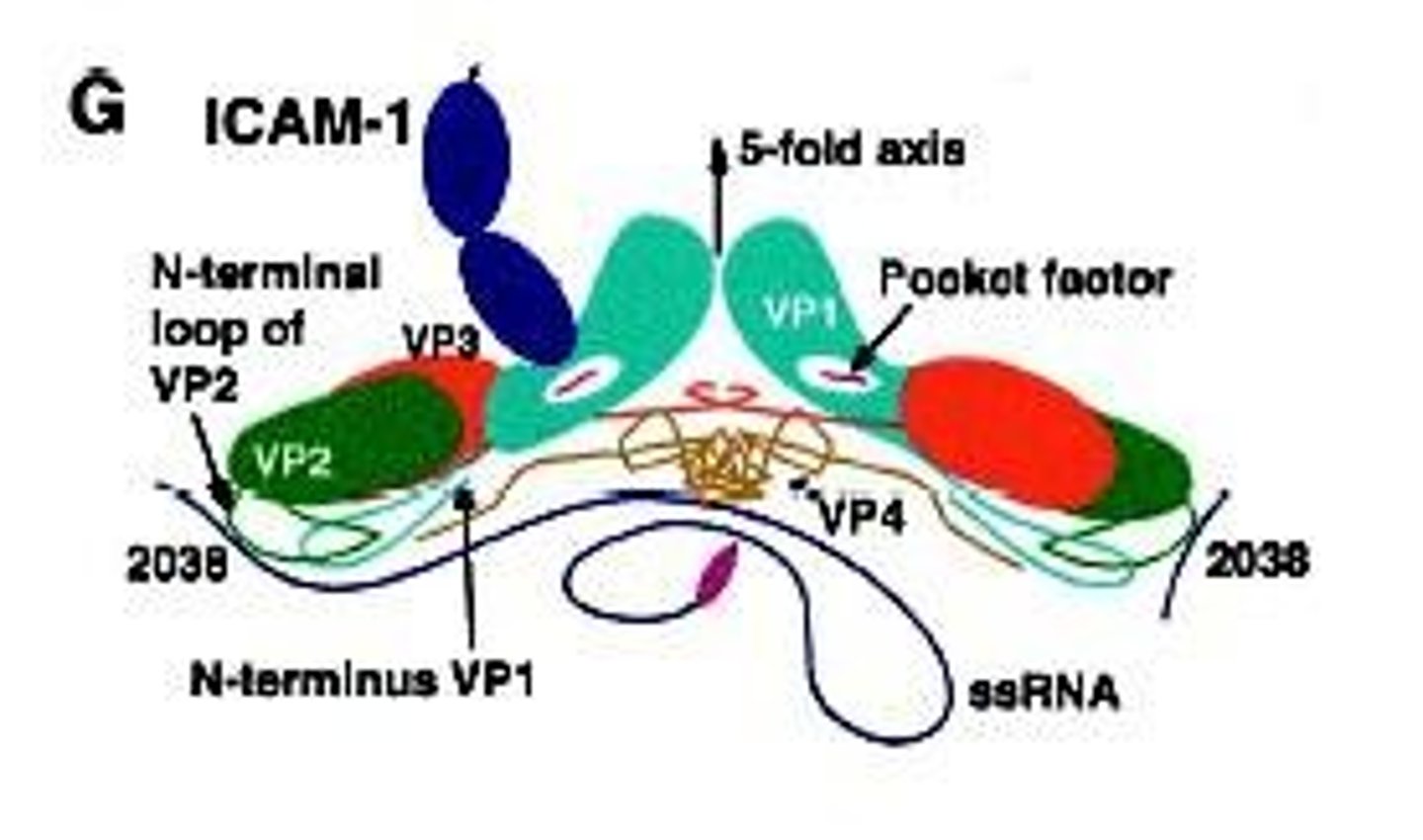
What happens to the capsid of rhinoviruses during entry?
Acidification causes reorganization of capsid proteins, forming a pore that allows viral RNA to enter the cytosol.
What is the role of co-receptors in viral entry?
Co-receptors assist the primary receptor in facilitating viral entry into host cells.
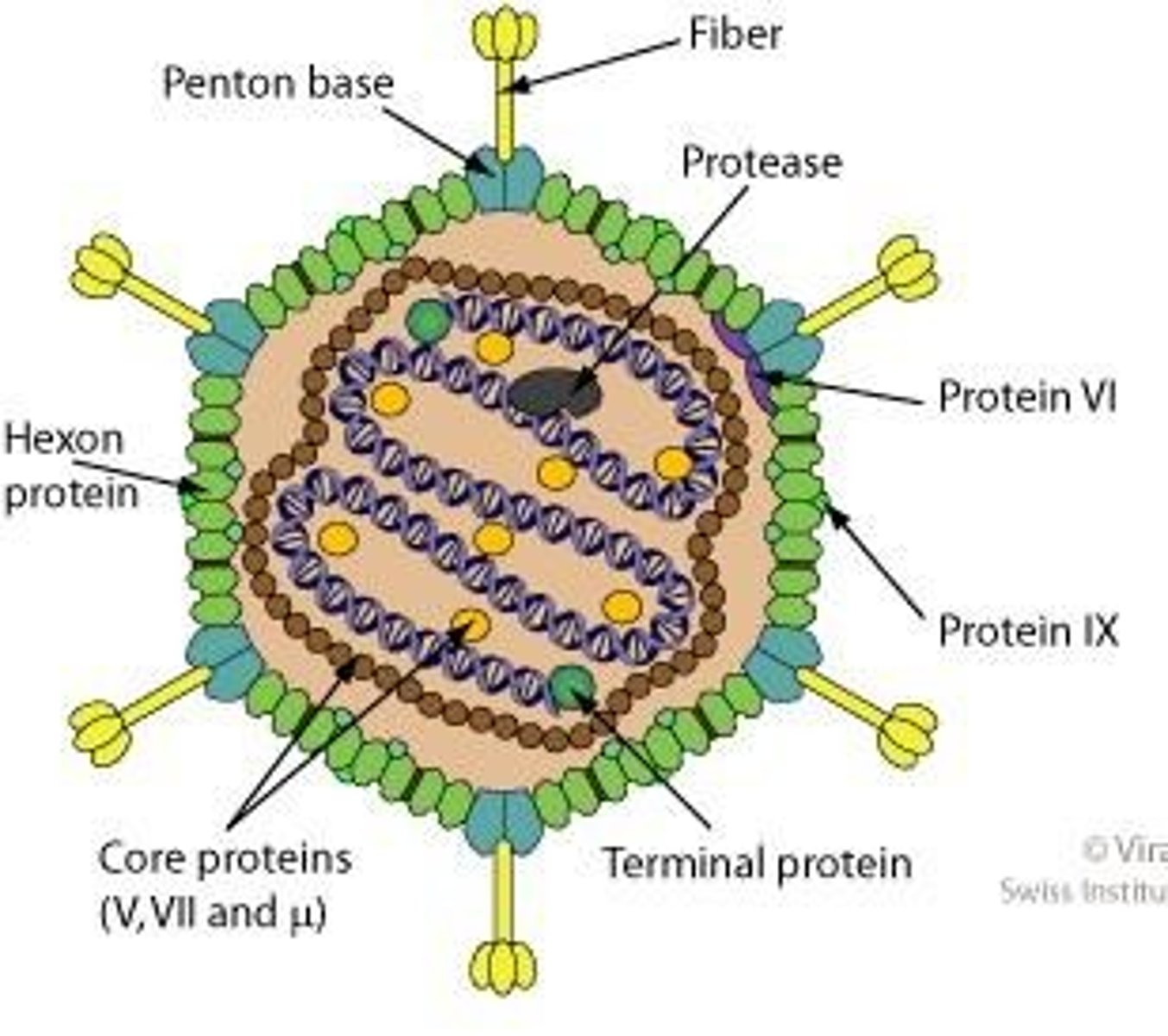
What is the mechanism of entry for adenoviruses?
Adenoviruses attach to CAR and co-receptors, followed by endocytosis and transport to the nucleus.
What are the classes of viral fusion proteins?
Type I, Type II, and Type III fusion proteins.
What is the significance of the 'prehairpin' conformation in viral fusion?
It represents an extended conformation crucial for membrane fusion.
What is the total genome size of the Influenza virus?
Total 13.5 kb, consisting of 8 segments.
What is the role of proteolytic cleavage in viral entry for coronaviruses?
Proteolytic cleavage activates the spike protein, facilitating membrane fusion.
What are the two distinct envelope glycoproteins in the measles virus?
Hemagglutinin (H) and Fusion protein (F).
What is the significance of the viral particle structure in determining entry mechanisms?
The structure dictates whether the virus will use membrane fusion or capsid disintegration for entry.
What are the main categories of viruses based on their replication strategies?
DNA viruses, RNA viruses, and Retroviruses.
What is the Baltimore Classification?
A classification system for viruses based on their type of genome and method of replication.
What is required for DNA replication in DNA viruses?
Enzymes such as DNA polymerase, helicase, and dNTPs, along with a viral origin of replication.
What is the difference between early and late gene expression in DNA viruses?
Early genes are expressed directly after decapsidation to modify host biology, while late genes are expressed after DNA replication and involve structural proteins.
What is the role of LT-Ag in Polyomaviridae?
LT-Ag activates the cell cycle, allowing for viral DNA replication.
What is the significance of the lytic cycle in DNA viruses?
The lytic cycle leads to the destruction of the host cell and release of new viral particles.
How do RNA viruses replicate their genomes?
RNA viruses use RNA-dependent RNA polymerase (RdRP) to replicate their genomes.
What is the function of the IRES in Picornaviridae?
IRES allows for cap-independent translation of viral proteins by hijacking the host's translation machinery.
What is the general structure of Picornaviridae?
Icosahedral, non-enveloped viruses with a positive-sense single-stranded RNA genome.
What is the role of RdRP in (-) strand RNA viruses?
RdRP is essential for synthesizing a complementary (+) strand copy of the genome.
How do Influenza viruses add 5' caps to their mRNA?
Influenza viruses 'snatch' 5' caps from host cell mRNAs using PA and PB2 proteins.
What is the genome composition of Orthomyxoviridae?
Enveloped viruses with segmented, negative-sense RNA genomes.
What is the function of the viral proteins in the assembly of viral particles?
Viral proteins are involved in the structural formation and liberation of infectious particles.
What are the two types of infections that can occur in non-permissive cells infected by Polyomaviridae?
Abortive infection and malignant transformation.
What is the typical genome size of Poxviridae?
130-380 kb.
What is the primary function of early genes in DNA viruses?
To modify the host cell's biology and initiate viral DNA replication.
What is the significance of alternative splicing in small DNA viruses?
It allows for the maximization of coding capacity from a small genome.
What are the examples of ds DNA viruses with small genomes?
Polyomaviridae, Papillomaviridae, and Adenoviridae.
How do viruses like Herpes Simplex 1 regulate transcription during the lytic cycle?
Through immediate-early, early, and late gene expression phases.
What is the role of host enzymes in the replication of certain DNA viruses?
Host enzymes can be utilized for viral DNA replication if they are available and active.
What is the general structure of RNA viruses?
RNA viruses can be either single-stranded or double-stranded, and may be enveloped or non-enveloped.
What is the function of the capsid in viruses?
To protect the viral genome and facilitate the delivery of the genome into host cells.
What is the main characteristic of Retroviruses?
They replicate through a DNA intermediate using reverse transcriptase.
What is the role of transcription factors in viral gene expression?
Transcription factors are required to initiate the transcription of viral genes.
What is the typical genome size of Adenoviridae?
30-38 kb.
What is the function of the primase in DNA replication?
To synthesize RNA primers necessary for DNA polymerase to initiate replication.
What is the outcome of the lytic cycle in permissive cells?
It results in the production of new viral particles and cell lysis.
What class do retroviruses belong to?
Class VI
What is the structure of retroviruses?
Enveloped with an icosahedral capsid
What type of genome do retroviruses have?
Single-stranded positive-sense RNA (ss (+) strand RNA) genome
Name two human retroviruses.
HTLV-1 (1978) and HIV-1 (1983)
What enzyme is required for retrovirus genome replication?
RNA-dependent DNA polymerase (Reverse Transcriptase)
What is the result of reverse transcription in retroviruses?
Formation of double-stranded DNA (dsDNA) provirus
How is mRNA expressed from the proviral DNA in retroviruses?
mRNA is transcribed by host cell RNA polymerase II
What is the role of integrase in retroviruses?
Integration of proviral DNA into the host cell chromosome
What does unspliced gRNA in HIV code for?
Gag and gag-pol proteins
What is the function of spliced transcripts in HIV?
To produce one protein per mRNA
What is the significance of the LTR in retroviruses?
It contains the promoter for gene expression
What is the mechanism of viral assembly for DNA viruses?
Nuclear assembly with viral proteins carrying nuclear localization signals (NLS)
Where are (+) strand RNA viruses produced?
Within the endoplasmic reticulum
What is a unique feature of the assembly of helical capsids?
They assemble around the nucleic acid
What is the role of packaging sequences in viral genomes?
They ensure specific packaging of the viral genome into virions
What is the problem associated with segmented genomes in viruses?
Random incorporation of genomic segments can lead to defective viruses
How do enveloped viruses typically release from host cells?
By budding from the cell membrane
What is the role of L domains in viral particle release?
They recruit cellular proteins required for the release of budding viral particles
What happens during the maturation of viral particles?
Proteolytic cleavage of polyproteins occurs to produce functional proteins
What is the significance of the ESCRT complexes in viral release?
They are involved in the membrane scission required for budding
What is the role of glycoproteins in the release of enveloped viruses?
They interact with matrix proteins to facilitate budding
What is a common method of release for non-enveloped viruses?
Cell lysis
What is the function of the viral protease in HIV maturation?
It cleaves Gag and Pol polyproteins into functional proteins
What is the importance of the Y sequence in retroviruses?
It is recognized by the viral nucleocapsid protein for packaging the full-length genome
What is the role of the terminase in herpesvirus assembly?
It connects DNA replication to its packaging
What is the result of proteolytic cleavage in adenovirus maturation?
Cleavage of viral proteins inside the virion
How does HIV-1 bud from infected T lymphocytes?
At the contact site between the infected T lymphocyte and antigen-presenting cell (APC)